
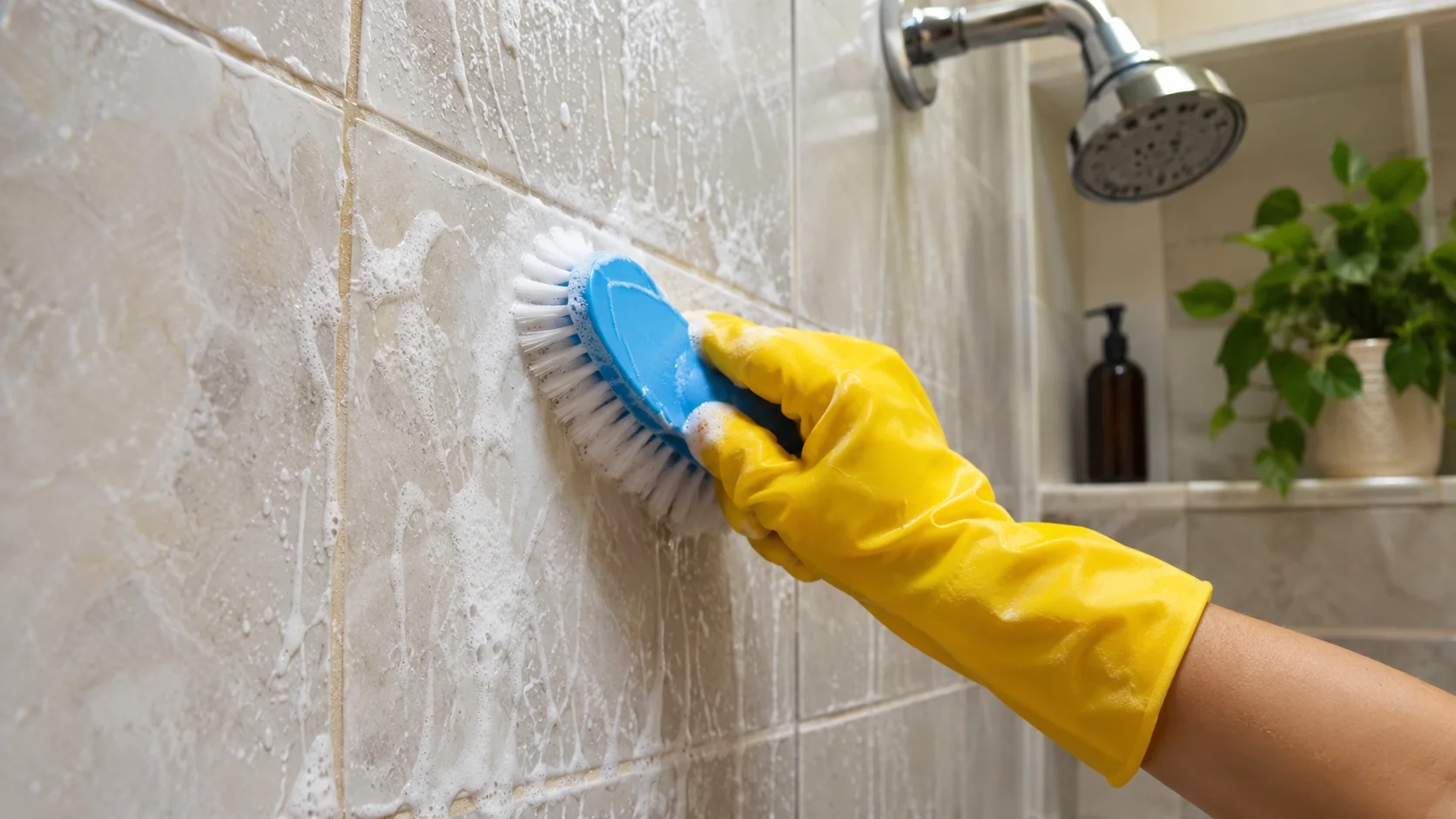
Shower tiles can gradually lose their shine as soap scum, body oils, hard-water deposits, and everyday grime collect on their surfaces. Grout lines often become discolored, too, because their porous texture can hold moisture and residue. The right cleaning method depends on the type of tile you have: a solution that works well on ceramic may damage natural stone such as marble or travertine.
The good news is that you do not need harsh chemicals or heavy scrubbing for every shower-cleaning job. With the right cleaner, a soft brush, and a few regular habits, you can remove common buildup while protecting your tiles and grout. This guide explains how to clean shower tiles, deal with stubborn stains, and maintain different surfaces without causing avoidable damage.
What You Need to Clean Shower Tiles
Gather a few basic supplies before starting. You may not need every item for every shower.
- Mild, pH-neutral bathroom or tile cleaner
- Warm water
- Microfiber cloths
- A soft-bristled brush or non-scratch sponge
- A small grout brush
- Rubber gloves
- A squeegee
- A clean towel for drying
Check the cleaner’s label to make sure it is suitable for your tile and grout. Avoid abrasive pads and scouring powders on polished or delicate surfaces. For natural stone, use a cleaner specifically labeled as safe for that stone.
Safety tip: Never mix cleaning products. In particular, do not mix bleach with vinegar, ammonia, acids, or other cleaners, because dangerous gases or reactions can result. Keep the bathroom ventilated while cleaning.
How to Clean Shower Tiles Step by Step
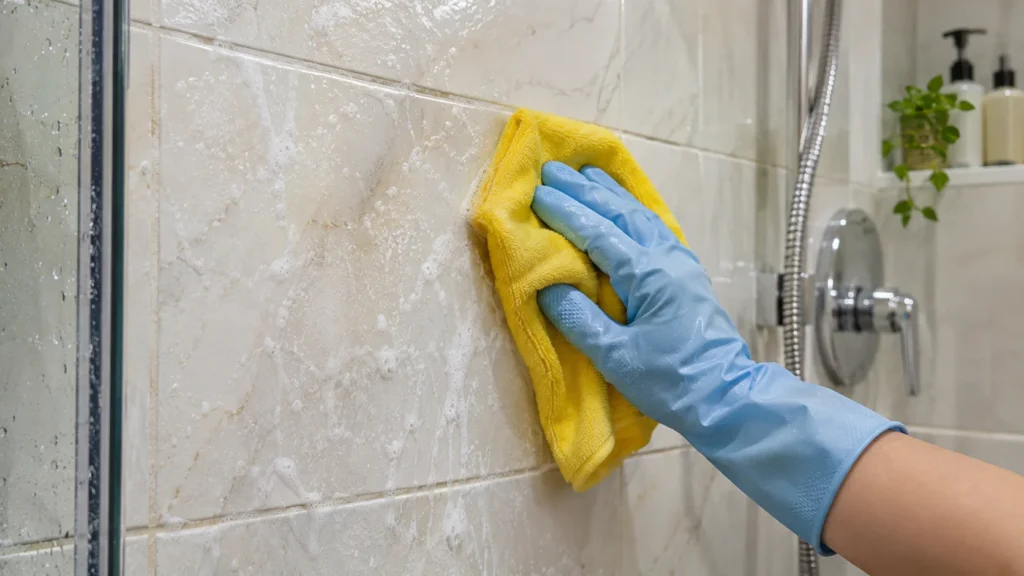
1. Rinse the Tiles With Warm Water
Start by rinsing the walls and floor with warm water. This loosens some surface dirt and softens soap residue, making it easier to clean without aggressive scrubbing.
Avoid very hot water on surfaces that may be sensitive to sudden temperature changes. If your shower has natural stone, follow the stone supplier’s care instructions.
2. Apply a Suitable Tile Cleaner
Spray or apply a tile-safe cleaner according to its label. Work in manageable sections so the product does not dry before you rinse it away.
Let the cleaner sit for the recommended contact time. Longer is not always better: leaving a product on too long can damage certain finishes or leave a film.
3. Wipe With a Non-Scratch Sponge
Use a microfiber cloth or soft sponge to loosen dirt from the tile surface. Move gently over the tiles, paying attention to corners, around fixtures, and along the edges where residue can accumulate.
For ordinary buildup, a suitable cleaner and light wiping are often enough. If grime remains, repeat the application as directed rather than immediately switching to a harsh abrasive.
4. Clean the Grout Lines
Grout can trap dirt more readily than glazed tile. Apply a grout-compatible cleaner, then gently work it into the joints with a soft grout brush. Avoid aggressive scrubbing that may wear down grout or damage surrounding sealant.
Rinse thoroughly so cleaner and loosened residue do not remain in the joints.
5. Rinse and Dry the Shower
Rinse the cleaned surfaces with fresh water, removing all remaining product. Use a squeegee on suitable smooth tile and glass, then dry corners, ledges, and grout lines with a clean cloth.
Drying helps reduce water spots and limits the moisture that contributes to mildew growth.
How to Clean Shower Tiles Without Scrubbing
If you want to clean shower tiles with minimal effort, focus on softening the buildup before wiping it away. This works best for light soap residue and routine dirt, not thick deposits or deeply stained grout.
- Rinse the tiles with warm water.
- Apply a tile-safe bathroom cleaner according to its label.
- Leave it on for the specified contact time.
- Wipe the surface with a microfiber cloth or soft sponge.
- Rinse thoroughly and dry with a squeegee or towel.
For everyday maintenance, a quick wipe after showering can prevent soap scum from accumulating. If the tiles have heavy mineral deposits, ingrained grime, or mold in porous grout, some gentle brushing may still be necessary.
Avoid relying on strong chemicals simply to eliminate scrubbing. Using the wrong cleaner can damage the tile finish, grout, or nearby metal fixtures.
Jump into Other Related Article
- Laundry Dryer Vent Installation
- How to Remove Coffee Stains
- Best Stain Remover for Clothes
- How to Clean Stainless Steel
- How to Clean Carpet Stains
- Oxygen Bleach
- How to Get Bleach Out of Clothes
- Homemade Laundry Detergent
- Are Dryer Sheets Bad?
How to Clean Shower Floor Tiles and Grout
Shower floors need special attention because soap, body oils, shampoo, and minerals can accumulate in textured surfaces and grout joints. Floors can also become slippery when cleaning products are not rinsed away completely.
Clean the tile surface first
Remove hair and loose debris before applying a cleaner. Use a product suitable for the floor tile, then wipe or brush gently to loosen the dirt. Small mosaic tiles may have many grout joints, so work in sections rather than spreading cleaner across the entire floor at once.
Clean dirty grout between shower tiles
Apply a grout-compatible cleaner and use a soft grout brush to work along the joints. Follow the product’s instructions, rinse away the residue, and allow the floor to dry.
If the grout remains dark, the discoloration may be caused by staining, deteriorated grout, or mold beneath or within the surface. Cleaning may improve its appearance, but it cannot always restore the original color.
Rinse carefully
Make sure all cleaning solution is removed, especially from the shower floor. Residue can leave a slippery film. Keep the shower out of use until the floor is clean and safe to walk on.
If grout is cracked, crumbling, or repeatedly darkens because of moisture, consider having it inspected and repaired rather than relying on stronger cleaning products.
How to Clean Soap Scum Off Shower Tiles
Soap scum forms when soap ingredients react with minerals in water, while body oils and product residue can add to the film. It often appears as a cloudy, dull coating on shower walls and around fixtures.
To remove it:
- Use a bathroom cleaner labeled for soap scum and compatible with your tile.
- Allow the cleaner to work for the stated time.
- Wipe with a non-scratch sponge or microfiber cloth.
- Rinse thoroughly with clean water.
- Dry the surface to reduce water spots.
For stubborn deposits, repeat the treatment as directed instead of scraping the tile with a blade or abrasive pad.
Be careful with vinegar-based cleaners. Acidic products may be appropriate for some ceramic or porcelain surfaces when their manufacturers permit them, but they can etch marble, travertine, limestone, and other acid-sensitive stone. When you do not know the tile material, use a pH-neutral product labeled for it.
How to Clean Mold and Mildew From Shower Tiles
Mold or mildew may appear as dark, greenish, pinkish, or other colored spots on tile and grout. Color alone cannot reliably identify the organism. On a hard, nonporous tile surface, ordinary cleaning with an appropriate product may remove the visible growth, but the moisture problem must also be addressed.
The U.S. Environmental Protection Agency recommends scrubbing mold from hard surfaces with detergent and water, then drying them completely. It also notes that bleach is not routinely recommended for mold cleanup.
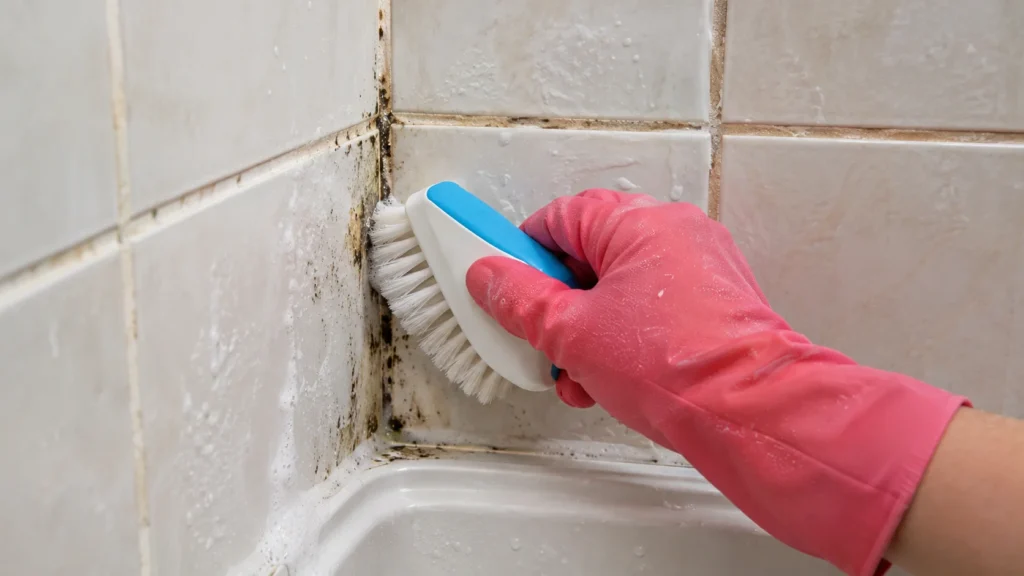
For small areas on suitable surfaces:
- Ventilate the bathroom and wear appropriate gloves.
- Use detergent and water or a tile-compatible mold cleaner.
- Gently scrub the affected hard surface without damaging the grout.
- Rinse as directed and dry the area completely.
- Repair leaks and improve ventilation to discourage regrowth.
Never mix bleach with vinegar, ammonia, or any other cleaning product. Follow all label directions and keep people away from the area if fumes or irritation occur.
If mold covers a large area, keeps returning despite cleaning, or appears to extend behind tiles or into damaged walls, seek professional advice. People with asthma, significant allergies, immune suppression, or underlying lung disease should avoid taking part in mold cleanup. The CDC’s mold cleanup guidance explains additional precautions.
How to Clean Ceramic and Porcelain Shower Tiles
Ceramic and porcelain tiles are common in showers because many varieties have durable, water-resistant surfaces. However, the best cleaner still depends on whether the tile is glazed, unglazed, textured, or finished with a special coating.
Ceramic shower tiles
For most glazed ceramic tiles, use warm water and a mild tile cleaner. Wipe with a soft sponge, then rinse and dry. If soap scum has collected around the edges, use a cleaner specifically labeled for that type of buildup.
Avoid harsh abrasives that could scratch the glaze or dull decorative finishes. Unglazed ceramic may need a different care approach, so consult the manufacturer’s recommendations if you are unsure.
Porcelain shower tiles
Porcelain tiles can often be cleaned with a mild, pH-neutral tile cleaner. Use a soft cloth for smooth finishes and a soft brush for textured surfaces where dirt may settle.
For matte porcelain tiles, avoid waxes, oily products, and cleaners that leave a glossy film unless the manufacturer approves them. These products may change the appearance of the finish or make it look uneven.
Black shower tiles
Black tiles can show white mineral deposits, soap film, and dried water spots more clearly than lighter surfaces. Use a compatible cleaner and a clean microfiber cloth, then rinse and dry thoroughly.
Avoid abrasive powders and rough scouring pads that may leave visible scratches. If the tiles look hazy after cleaning, remove any remaining product residue before trying a stronger treatment.
How to Clean Marble and Other Natural Stone Shower Tiles
Natural stone requires more careful cleaning than many glazed tiles. Marble, travertine, limestone, slate, and granite differ in porosity, mineral composition, and surface finish, so one cleaner should not automatically be used on all of them.
Marble shower tiles
Use a pH-neutral cleaner specifically approved for marble. Apply it according to the label, wipe gently with a soft cloth, rinse if directed, and dry the surface.
Do not use vinegar, lemon juice, or acidic bathroom cleaners on marble. Acid can etch the stone, leaving dull marks that ordinary cleaning will not remove. Abrasive powders and scouring pads may also damage a polished finish.
If marble looks cloudy after cleaning, the problem could be etching rather than dirt. A stone-care professional may be needed to restore the finish.
Travertine and limestone tiles
Travertine and limestone are also sensitive to acids. Clean them with a stone-safe, pH-neutral product and a soft cloth or brush. Avoid household remedies that contain vinegar or other acids, even when they are recommended for ordinary bathroom tile.
Because some stone surfaces have natural pits or filled areas, use products approved by the stone supplier and avoid aggressive scrubbing that could damage the finish.
Slate shower tiles
Slate varies in texture and finish. Use a cleaner labeled for natural stone and follow the supplier’s instructions. Avoid unapproved acidic products, harsh abrasives, and oil-based treatments that could change the surface appearance.
If the slate has a special sealer, confirm that the cleaner is compatible with it.
Granite shower tiles
Granite is generally more resistant to acids than marble, but it is still important to use a cleaner approved for the specific stone and its sealant. A pH-neutral stone cleaner is a sensible starting point.
Avoid assuming that every product advertised as a bathroom cleaner is suitable for granite. Check the label and stone manufacturer’s recommendations first.
Porous or unsealed stone
Some natural stone is more absorbent than glazed tile. Do not use harsh chemicals or allow an unapproved cleaner to sit on the surface. If water appears to soak into the stone quickly, or the surface darkens when wet, ask the supplier about appropriate cleaning and sealing products.
For any natural stone shower, manufacturer guidance should take priority over generic DIY recipes.
How to Clean Mosaic Tiles in a Shower
Mosaic showers contain many small tiles and grout joints, which means dirt can accumulate in narrow spaces. The cleaning method depends on the mosaic material: ceramic, porcelain, glass, and natural stone all have different care requirements.
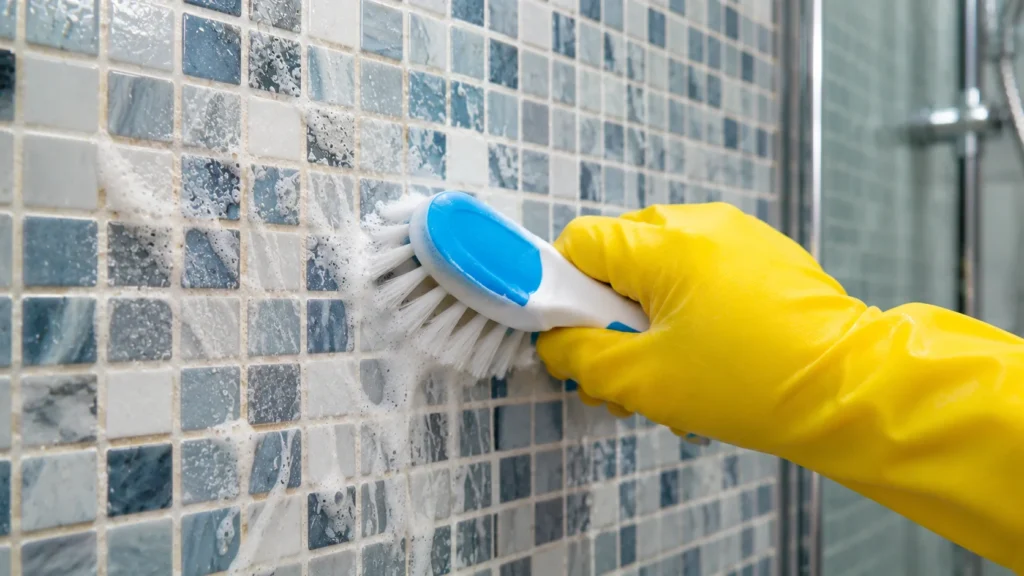
- Ceramic or porcelain mosaics: Use a suitable mild tile cleaner and a soft brush.
- Glass mosaics: Choose a non-abrasive cleaner approved for glass tile and its grout.
- Stone mosaics: Use a pH-neutral natural-stone cleaner.
- Mosaic grout: Clean gently with a grout-compatible product, paying attention to the manufacturer’s guidance.
Work in small sections so that cleaner does not dry before rinsing. Avoid rough brushes that may scratch glass, loosen delicate grout, or damage a stone finish.
If the mosaic is installed on a flexible surface or contains decorative metal accents, check the installation and care instructions before using chemical cleaners.
How to Remove Stains and Grime From Shower Tiles
Not every mark on shower tile has the same cause. Identifying the type of buildup helps you choose a cleaner without unnecessarily damaging the surface.
| Problem | Recommended approach |
| White, chalky deposits | Use a compatible mineral-deposit cleaner; avoid acids on natural stone. |
| Cloudy soap film | Apply a tile-safe soap-scum remover, then rinse thoroughly. |
| Dark grout lines | Clean with a grout-compatible product and a soft brush. |
| Oily or sticky residue | Use a mild detergent or cleaner suitable for the tile. |
| Mold-like spots | Clean hard surfaces safely and address the source of moisture. |
| Dull patches on marble | Consider etching or finish damage rather than assuming it is dirt. |
If a stain remains after the correct cleaning method, avoid repeatedly increasing the cleaner’s strength. Some marks are permanent discoloration, mineral damage, or deterioration of the grout rather than removable surface dirt.
How to Keep Shower Tiles Clean Longer
Regular maintenance prevents the thick buildup that makes shower cleaning difficult. You can keep the routine simple without deep-cleaning the entire shower every day.
- Squeegee after showering: Remove excess water from suitable wall tiles and glass.
- Wipe wet surfaces: Use a clean microfiber cloth on ledges and corners where water collects.
- Run the exhaust fan: Use a bathroom fan that vents outdoors during showers and afterward, following its instructions.
- Address leaks promptly: Persistent moisture can damage grout and encourage mold growth.
- Rinse away products: Do not allow shampoo, soap, or cleaning solution to build up on the tiles.
- Clean grout before buildup becomes heavy: Light, regular cleaning is easier than removing deeply ingrained dirt.
- Use suitable products: Keep natural-stone cleaners separate from general-purpose bathroom products.
- Inspect the grout and sealant: Repair cracked grout or failing caulk so water does not continue entering vulnerable areas.
The EPA recommends improving bathroom ventilation, fixing water problems, and cleaning and drying damp surfaces to help prevent mold from returning.
Conclusion
Knowing how to clean shower tiles starts with choosing the right cleaner for the surface. Mild, tile-compatible products and gentle wiping are usually a good starting point for routine dirt, while grout and stubborn soap scum may need more focused attention. Marble, travertine, and other natural stones require particular care because acidic cleaners can damage them.
For a cleaner shower that stays fresh, remove water after use, ventilate the bathroom, rinse away residue, and deal with leaks or mold promptly. Consistent maintenance is usually easier and safer for your tiles than relying on aggressive cleaning methods after buildup becomes severe.
What is the easiest way to clean shower tiles?
Rinse the tiles with warm water, apply a compatible tile cleaner, wipe with a soft sponge, rinse again, and dry the surface. For regular maintenance, removing water after each shower helps prevent soap scum and mineral deposits from building up.
How do you clean shower tiles without scrubbing?
Use a tile-safe cleaner and let it sit for the contact time specified on the label. Then wipe with a microfiber cloth and rinse thoroughly. This can work for light residue, but heavy grime, stained grout, and textured surfaces may require gentle brushing.
How do you clean shower floor tiles and grout?
Remove loose debris, apply a cleaner suitable for the tile and grout, and gently brush the joints. Rinse away all residue and dry the floor as much as possible. Make sure the surface is not slippery before using the shower again.
Can you clean shower tiles with vinegar and baking soda?
Vinegar may be suitable for some compatible ceramic or porcelain surfaces, but it can etch marble, travertine, limestone, and other acid-sensitive stone. Baking soda is mildly abrasive and may not be appropriate for every finish. Check the tile manufacturer’s recommendations before using either product, and never mix cleaning products together.
How do you clean mold from shower tiles?
For a small area on a hard surface, clean with detergent and water or a compatible mold cleaner, following its label. Dry the area completely and correct the moisture problem. If mold is widespread, recurring, or appears to extend behind the tile, consider professional help.
How do you clean marble shower tiles without damaging them?
Use a pH-neutral cleaner labeled safe for marble and a soft cloth. Avoid vinegar, lemon juice, acidic bathroom cleaners, and abrasive pads. If the stone has developed dull patches, consult a stone-care specialist because the surface may be etched rather than dirty.
How do you clean matte porcelain tiles in a shower?
Use a cleaner approved for porcelain and wipe with a soft cloth or non-scratch sponge. Rinse well and dry the surface. Avoid waxes, oily treatments, and products that leave residue unless the tile manufacturer specifically recommends them.
Why do my shower tiles look cloudy after cleaning?
Cloudiness can come from leftover cleaner, soap scum, hard-water deposits, or surface damage. Rinse the tiles thoroughly and dry them with a microfiber cloth. If the haze remains on natural stone, especially marble, it may be etching that requires specialist treatment.
How often should you clean shower tiles?
Lightly rinse or wipe the shower regularly, especially after use, and clean the tile surface as needed to prevent buildup. Grout may need more focused attention because it can trap residue. The ideal frequency depends on how often the shower is used, water hardness, ventilation, and tile material.