

Stainless steel looks sleek and durable, but fingerprints, grease, water spots, food residue, coffee marks, and burnt-on messes can quickly make it look dull. The best way to clean stainless steel depends on whether you are dealing with an appliance, sink, pan, bottle, jewelry, or another stainless steel surface.
For everyday cleaning, warm water, mild dish soap, and a soft cloth are usually enough. The American Cleaning Institute recommends rinsing and towel-drying stainless steel after cleaning, while appliance-care experts emphasize wiping with the grain and avoiding abrasive products that can damage the finish.
How to Clean Stainless Steel
For everyday stainless steel surfaces, begin with the gentlest method. Remove loose crumbs or dirt, dampen a microfiber cloth with warm water, and wipe the surface in the direction of the grain. If grease or fingerprints remain, add a small amount of mild dish soap to the water.
After cleaning, rinse away soap residue and dry the surface immediately. This is especially important for appliances because water can leave mineral spots and streaks as it evaporates. The American Cleaning Institute specifically recommends towel-drying stainless steel to prevent water spots.
15-Step Stainless Steel Cleaning Method
Use these steps for routine cleaning of compatible stainless steel surfaces:
- Remove loose crumbs, dust, and debris.
- Check the manufacturer’s care instructions.
- Identify the direction of the stainless steel grain.
- Dampen a clean microfiber cloth with warm water.
- Wipe gently in the direction of the grain.
- Add a small amount of mild dish soap if grease remains.
- Work over fingerprints and oily marks gently.
- Avoid harsh pressure and aggressive scrubbing.
- Rinse the cloth with clean water.
- Wipe away remaining soap residue.
- Use a second clean cloth for drying.
- Dry the surface immediately.
- Inspect for streaks or remaining spots.
- Repeat gentle cleaning where necessary.
- Buff lightly with a clean, dry microfiber cloth.
For appliances, Good Housekeeping recommends microfiber cloths and wiping with the grain to minimize streaking and scratches.
How to Clean Stainless Steel Appliances Without Streaks
Stainless steel refrigerators, dishwashers, ovens, and stoves often have a more delicate decorative finish than stainless steel cookware. That means a cleaner that is suitable for a sink or pan may not be appropriate for an appliance exterior.

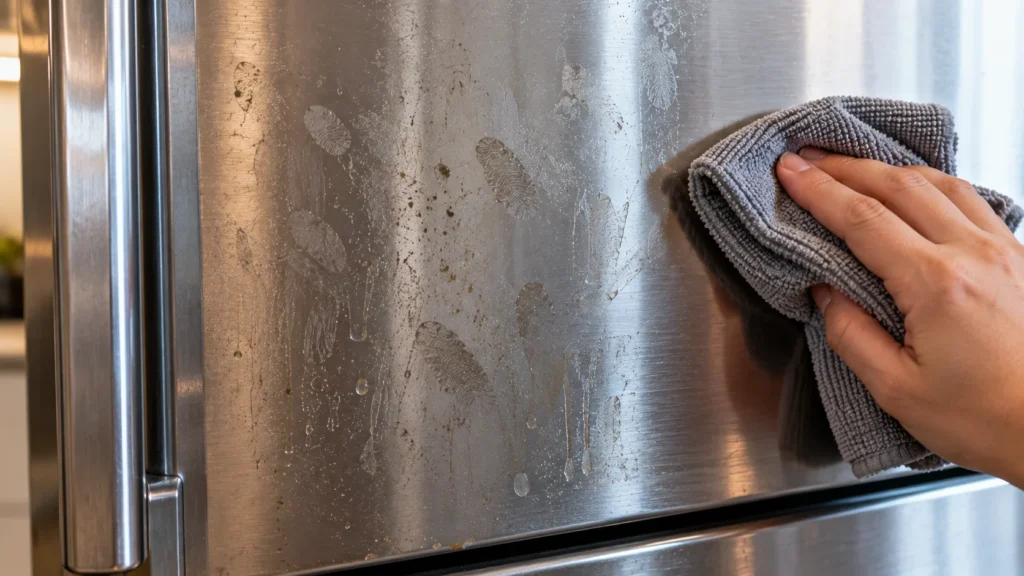
For routine cleaning, use warm water and a microfiber cloth, or a cleaner specifically designed for stainless steel appliances. Work with the grain instead of wiping randomly across the surface. Good Housekeeping notes that streaks can result from dirty cloths, incorrect wiping direction, insufficient removal of greasy residue, or inadequate buffing.
Avoid abrasive scouring powders, steel wool, bleach, and ammonia on appliance finishes. Also check the appliance manufacturer’s instructions before using vinegar because some stainless steel appliance finishes are sensitive to acids.
How to Clean a Stainless Steel Sink
Stainless steel sinks can generally tolerate more scrubbing than decorative appliance surfaces. Start by rinsing away food debris, then use warm water and dish soap to remove everyday grease and residue.
For stuck-on material, a nonabrasive cleanser and suitable scrub pad can be used when permitted by the sink manufacturer. The American Cleaning Institute also recommends baking soda and water for cooked-on food and grease, followed by thorough rinsing and drying.
After cleaning, rinse the sink completely and dry it rather than allowing mineral-rich water to evaporate. This helps reduce water spots and keeps the surface looking brighter.
How to Clean Stainless Steel Pans and Cookware
Stainless steel pans are different from appliance exteriors because they regularly encounter high heat, food residue, oil, and burnt material. Allow a hot pan to cool appropriately before cleaning rather than placing extremely hot cookware directly under cold water, which can cause thermal shock or warping. All-Clad specifically warns against putting a hot pan under cold water.
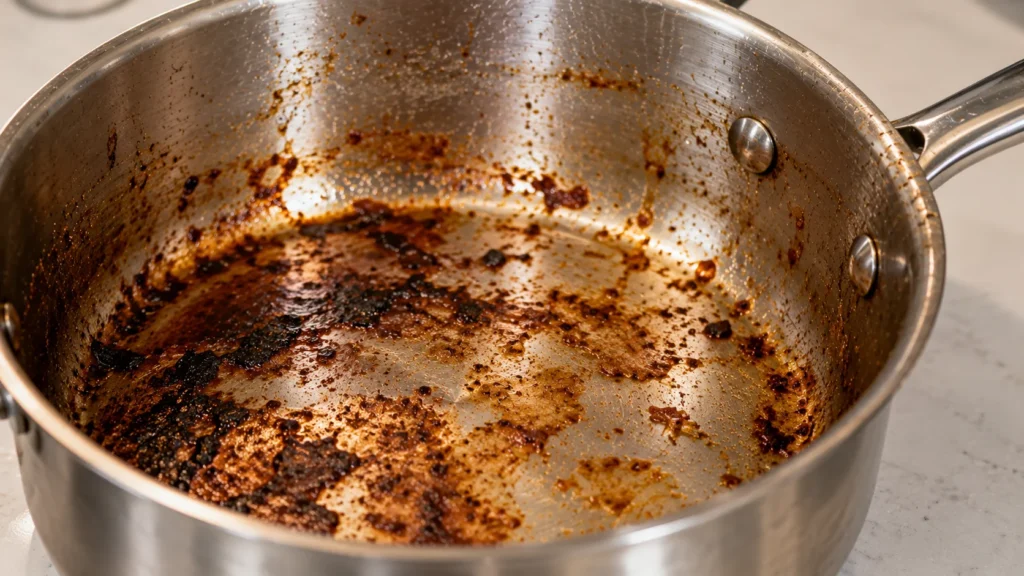
For ordinary cleaning, soak the pan in warm, soapy water and use a soft sponge or cloth. Stubborn food can often be loosened by soaking before attempting more aggressive cleaning.
For tough stainless steel cookware stains, All-Clad recommends nonabrasive, non-chlorine cleaners, while baking soda and water can be used for burnt food.
How to Clean a Burnt Stainless Steel Pan
Burnt food can leave a dark, stuck-on layer that ordinary dish soap cannot remove. Instead of immediately attacking it with steel wool, loosen the residue first.
For stainless steel cookware, All-Clad recommends sprinkling baking soda over the burnt area, adding water, and bringing the mixture to a boil. A wooden spoon can then be used to loosen the softened food particles.
Another option for difficult marks is a nonabrasive stainless steel cookware cleanser. Always follow the manufacturer’s instructions because cookware finishes and construction can vary.
Jump into Other Related Article
- How to Clean Stainless Steel Sink | Stains, Hard Water, Rust & Scratches
- How to Remove Egg Stains | Easy Methods for Clothes, Pans, Walls & More
- How to Remove Dog Hair from Clothes | Easy Methods for Wash, Dryer & Home
How to Remove Rust from Stainless Steel
Although stainless steel is corrosion-resistant, rust-colored spots can sometimes appear, particularly if the protective surface has been damaged or contaminants remain on the metal.
For a small rust spot on an appliance, Good Housekeeping recommends lightly rubbing baking soda with a damp cloth, then wiping clean and using an appropriate stainless steel polish.
Do not use steel wool to remove rust from stainless steel. Scratching the surface can create additional areas where corrosion or staining may occur.
If rust repeatedly returns, investigate the cause instead of repeatedly scrubbing the same area.
How to Clean Stainless Steel Water Bottles
A stainless steel water bottle needs cleaning beyond the outside surface. Empty the bottle, separate removable components such as lids, seals, and straws, and wash them according to the manufacturer’s instructions.

Use warm water and dish soap with a bottle brush to reach the interior. Pay particular attention to the mouthpiece, lid, threads, and gasket because moisture and residue can collect in these areas.
Good Housekeeping recommends disassembling reusable water bottles and paying particular attention to mouthpieces and straws during cleaning.
Allow all components to dry completely before reassembling the bottle.
How to Clean Stainless Steel Grill Grates
Stainless steel grill grates can accumulate grease, char, and food residue. Allow the grates to cool according to the grill manufacturer’s safety instructions before cleaning.
Remove loose debris first, then use a grill-appropriate brush or cleaning tool. For stubborn residue, a suitable degreaser or mild cleanser may be necessary.
Do not automatically use the same abrasive product you would use on a heavy-duty stainless steel sink. The finish and manufacturer’s recommendations should determine which tools and cleaners are appropriate.
How to Clean Coffee Stains from Stainless Steel
Coffee can leave brown residue inside stainless steel pots, coffee makers, bottles, and travel mugs. Start with warm water and dish soap, then use a soft sponge or bottle brush depending on the item.
For stubborn discoloration inside stainless steel cookware, manufacturer-approved baking soda or stainless steel cleaning products may help. All-Clad recommends baking soda and water for difficult burnt food and appropriate nonabrasive cleaners for stubborn marks.
Always rinse thoroughly after using a cleaning product, especially on cookware or drinkware.
How to Clean Discolored Stainless Steel Pots
Blue, rainbow-colored, cloudy, or white marks on stainless steel cookware do not necessarily mean the pan is ruined. Heat exposure and mineral deposits can produce visible discoloration.
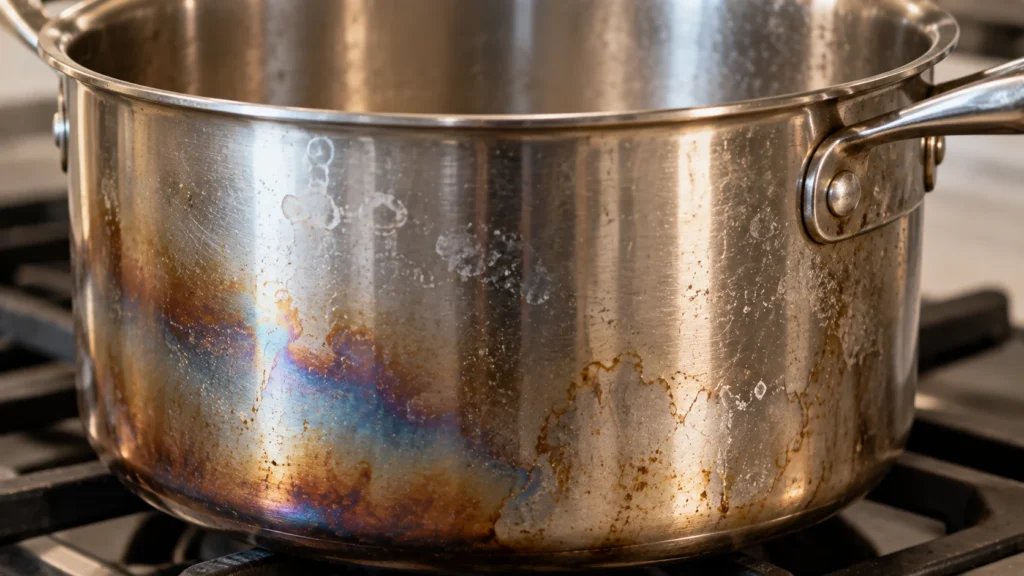
For blue or rainbow discoloration, All-Clad recommends wiping the cookware with white vinegar and a soft cloth or sponge. For cloudy white hard-water spots, its care instructions recommend boiling a 1:1 solution of white vinegar and water.
After treating the discoloration, wash the cookware with warm soapy water, rinse thoroughly, and dry it completely.
How to Clean Stainless Steel Jewelry and a Watch
Stainless steel jewelry, necklaces, and watches should be cleaned more gently than a heavily soiled kitchen sink. Wipe the surface with a soft, slightly damp microfiber cloth and mild soapy water when the manufacturer’s instructions permit it.
Avoid abrasive powders, rough scrubbers, and harsh chemicals that can scratch or alter the finish. For watches, take extra care around crowns, buttons, seals, and areas that should not be exposed to water.
If the jewelry contains gemstones, coatings, plating, or other materials, follow the manufacturer’s specific cleaning instructions rather than treating it as plain stainless steel.
How to Clean Black Stainless Steel
Black stainless steel usually has a decorative finish or coating, so it should be treated more carefully than ordinary stainless steel cookware.
Use a soft microfiber cloth and a mild, manufacturer-approved cleaner. Avoid abrasive pads, powdered cleaners, steel wool, and aggressive rubbing because scratches may be particularly visible on dark finishes.
Before using vinegar or any homemade solution, check the appliance manufacturer’s instructions. Good Housekeeping notes that stainless steel appliance finishes can differ and that some may be damaged by acidic cleaners.
What Not to Use on Stainless Steel
Choosing the wrong cleaner can create scratches, dullness, discoloration, or damage to a protective finish. This is particularly important for appliances and coated stainless steel.
Avoid these unless the manufacturer specifically approves them:
- Steel wool on appliance surfaces.
- Harsh abrasive powders.
- Aggressive scouring pads.
- Chlorine bleach.
- Harsh ammonia-based cleaners.
- Oven cleaner on stainless steel cookware.
- Abrasive products on black stainless steel.
- Excessive force while scrubbing.
- Dirty cloths that redistribute grease.
- Rough brushes on polished finishes.
- Unapproved acidic cleaners on appliances.
- Leaving cleaning products on the surface longer than directed.
- Mixing different cleaning chemicals.
- Using cookware cleaners on delicate appliance finishes.
- Cleaning without checking the manufacturer’s instructions.
The American Cleaning Institute specifically advises avoiding abrasive cleaners on stainless steel appliances, while All-Clad warns against steel wool, harsh detergents, oven cleaners, and bleach- or peroxide-containing detergents on its stainless steel cookware.
How to Maintain Stainless Steel and Keep It Clean
Regular light cleaning is easier than trying to remove months of accumulated grease and residue. Wipe fingerprints and splashes when they appear, especially on refrigerator doors and other frequently touched surfaces.
For cookware, wash after use and remove food films before they become baked onto the surface. All-Clad recommends cleaning its stainless steel cookware after each use and drying it thoroughly after washing.
A few simple habits can make stainless steel easier to maintain:
- Wipe spills promptly.
- Clean in the direction of the grain on appliances.
- Use clean microfiber cloths.
- Dry surfaces after washing.
- Avoid abrasive tools.
- Use appliance-specific cleaners where appropriate.
- Follow cookware manufacturer instructions.
- Do not leave salty or acidic food residue sitting for long periods.
- Soak burnt cookware instead of immediately scraping aggressively.
- Check for water spots before they become mineral deposits.
Conclusion
Learning how to clean stainless steel is mainly about using the right method for the specific surface. Warm water and mild dish soap are excellent starting points for everyday cleaning, while stainless steel cookware may need baking soda, soaking, or a manufacturer-approved nonabrasive cleaner for burnt food and stubborn marks.
For stainless steel appliances, focus on gentle cleaning, microfiber cloths, wiping with the grain, and immediate drying. Avoid steel wool, harsh abrasives, bleach, and unapproved chemicals, and always check the manufacturer’s instructions before using a stronger treatment.
What is the best way to clean stainless steel?
For routine cleaning, use warm water with a small amount of mild dish soap and a soft microfiber cloth. Wipe with the grain, rinse away residue, and dry immediately.
How do you clean stainless steel appliances without streaks?
Use a clean microfiber cloth and wipe in the direction of the grain. Remove greasy residue completely and buff the surface dry with another clean cloth.
Can you use vinegar to clean stainless steel?
Vinegar can be appropriate for some stainless steel sinks and cookware, but it is not recommended as a universal cleaner for appliance exteriors because some finishes can be damaged by acids. Always follow the manufacturer’s instructions.
How do you clean a burnt stainless steel pan?
For compatible stainless steel cookware, baking soda and water can be heated to loosen burnt food. A wooden utensil can then help remove softened residue.
How do you remove rust from stainless steel?
For small rust spots, a gentle baking-soda treatment may help on compatible appliance surfaces. Avoid steel wool and aggressive abrasives, and investigate recurring rust rather than repeatedly scratching the surface.
How do you clean stainless steel sinks without scratching them?
Use a soft cloth or sponge for routine cleaning and a manufacturer-approved nonabrasive cleaner for stubborn residue. Avoid steel wool and excessively aggressive scrubbing.
How do you clean stainless steel pans properly?
Allow the pan to cool appropriately, soak stuck-on food in warm soapy water, clean with a soft sponge, rinse thoroughly, and dry immediately. For burnt or discolored areas, use the cookware manufacturer’s recommended treatment.