
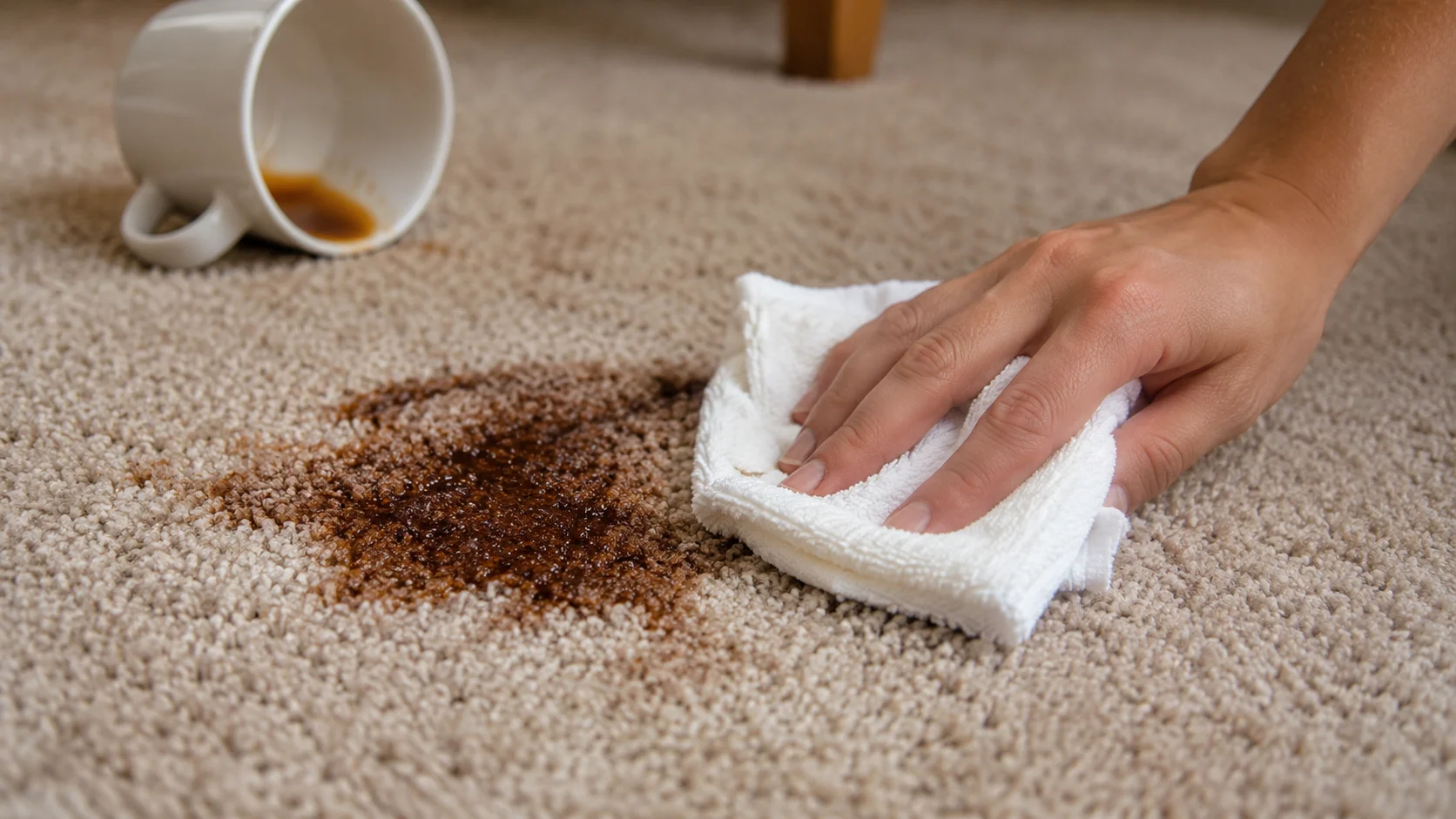
Carpet stains are much easier to manage when you identify the type of spill, remove excess material quickly, and use the least aggressive cleaning method that is appropriate for the carpet. Whether you are dealing with coffee, wine, pet urine, blood, mud, food, water marks, or an old set-in stain, aggressive scrubbing can make the problem worse by spreading the stain or damaging carpet fibers. The Carpet and Rug Institute recommends absorbing spills with a clean white cloth, treating the spot gently, and avoiding excessive scrubbing.
The best approach also depends on the carpet fiber. Synthetic carpets may tolerate products that should never be used on wool, silk, or other delicate materials. Always check the carpet manufacturer’s care instructions and test a cleaning solution in an inconspicuous area before treating a visible stain.
How to Clean Carpet Stains Step by Step
The basic process is similar for most household carpet stains, but the cleaning solution should be selected according to the substance and carpet type. Start by removing as much of the spill as possible without pushing it deeper into the fibers. For liquids, use a dry white towel or paper towel and blot repeatedly rather than rubbing. For solids, gently scoop them up before treating the remaining mark.
Next, apply a small amount of an appropriate carpet-safe cleaner to a white cloth and work from the outside of the stain toward the center. This helps limit spreading. After treatment, rinse away cleaner residue with clean water and blot the area dry. Excess cleaning solution can leave residue that attracts soil, so thorough but controlled rinsing is important.
Jump into Other Related Article
- How to Remove Chocolate Stains | Clothes, Carpet, Couch & More
- How to Remove Coffee Stains | Easy Methods for Clothes, Teeth, Carpet & More
- How to Remove Stains from Carpet | Complete Guide for Coffee, Pet, Wine, Urine & More
15 Rules for Cleaning Carpet Stains Safely
Before trying any home remedy or commercial carpet stain remover, keep these practical rules in mind:
- 1. Act quickly: Fresh stains are generally easier to remove than old, dried stains.
- 2. Blot liquids: Use a clean, white absorbent towel instead of rubbing.
- 3. Remove solids first: Scoop food, mud, or other semisolids gently with a spoon.
- 4. Vacuum dry debris: Dried particles can often be removed before adding moisture.
- 5. Test first: Apply the cleaner to a hidden area to check colorfastness.
- 6. Use a white cloth: Colored towels can transfer dye to damp carpet.
- 7. Work from outside inward: This helps prevent the stain from spreading.
- 8. Use small amounts: Overwetting can push moisture deeper into carpet and padding.
- 9. Follow product directions: Stronger concentrations are not automatically better.
- 10. Rinse after treatment: Clean water can help remove remaining cleaning-product residue.
- 11. Blot dry: Continue using clean towels until the area is only slightly damp.
- 12. Avoid aggressive scrubbing: Excessive rubbing can damage fibers and change carpet texture.
- 13. Check the carpet fiber: Wool and other delicate fibers require specialized care.
- 14. Keep pets away: Do not allow children or animals onto a treated area until it is dry and the product label permits use.
- 15. Call a professional when necessary: Large, deeply embedded, or recurring stains may require professional equipment and treatment.
The Carpet and Rug Institute specifically recommends blotting rather than scrubbing and advises testing cleaning products before use.
How to Clean Common Carpet Stains
Different substances behave differently, so there is no single cleaner that is ideal for every stain. Protein-based stains, colored beverages, oily substances, and pet urine can require different approaches. Treating an unknown stain with a strong chemical can cause discoloration or damage, especially on delicate carpet.
How to Clean Coffee, Tea and Wine Stains from Carpet
For coffee stains from carpet, start by blotting as much liquid as possible with a dry white towel. Then use a carpet-safe spot cleaner according to its label, working gently from the outside toward the center. Rinse with clean water and blot dry.
The same general process works for tea stains and many fresh beverage spills. For red wine stains, speed matters because the pigments can penetrate the carpet. Do not scrub the wine deeper into the pile; absorb first, then use an appropriate carpet stain treatment.

For an old coffee stain from carpet, first remove loose debris and lightly rehydrate the affected area if the carpet-care instructions allow it. A suitable carpet cleaner may need more than one application. Old stains can be chemically altered or permanently discolor the fiber, so complete removal cannot always be guaranteed.
How to Clean Pet, Pee and Dog Poop Stains from Carpet
Pet stains require special attention because the visible discoloration may not be the only problem. Dog urine stains from carpet can penetrate into the backing or cushion, while lingering urine can create persistent odors. The Carpet and Rug Institute notes that urine can also damage carpet dyes and backing, and some old urine stains may not be completely removable.
For a fresh accident, remove solid material first and blot excess liquid. A carpet-specific pet stain and odor product can then be used according to its directions. Enzyme-based products are commonly available for pet odors, but the product must be compatible with the carpet and used exactly as directed.
For dog poop stains, remove the solid material without grinding it into the carpet, then blot moisture. A product specifically labeled for carpet and the particular stain can be used. OxiClean, for example, provides carpet-specific directions for pet urine and feces products and instructs users to test an inconspicuous area first.
If an old pet stain keeps returning, smells strongly, or appears to extend into the carpet pad, professional treatment may be more appropriate than repeatedly soaking the surface.
How to Clean Old, Tough and High-Traffic Carpet Stains
Old carpet stains are often harder because the material has had time to dry, bond with fibers, or migrate deeper into the carpet. Begin by vacuuming the area and identifying what caused the stain if possible. Apply a suitable carpet cleaner in small amounts and give it the label-recommended contact time rather than repeatedly scrubbing.

For tough carpet stains, patience is usually safer than increasing the amount of cleaner. Carpet Exchange advises continuing treatment while there is still transfer to the towel and repeating appropriate steps when necessary. It also recommends rinsing thoroughly to reduce cleaning residue that can attract soil.
High-traffic carpet stains may not be ordinary spills at all. Dark areas around hallways and entrances can result from accumulated soil rather than one particular substance. Regular vacuuming and periodic whole-carpet cleaning can therefore be more effective than treating these areas as isolated spots. The Home Depot recommends regular vacuuming and notes that deeper cleaning can help maintain carpet appearance.
How to Clean Carpet Stains with Baking Soda, Vinegar or OxiClean
Home remedies are frequently recommended for carpet stains, but they should not automatically be considered safe for every carpet. Baking soda can help absorb moisture and odors, but it should not be aggressively worked into delicate carpet fibers. Vacuum thoroughly after using dry products.
Vinegar can be appropriate for some specific stain situations, but it is not a universal carpet cleaner. The Carpet and Rug Institute’s stain guide includes a diluted white-vinegar solution for certain types of spots, demonstrating why the substance being treated matters.
If using OxiClean to clean carpet stains, follow the specific product directions rather than creating a stronger homemade mixture. OxiClean’s carpet instructions say to test first, use the product only on water-washable rugs, rinse with clean water, and avoid wool, leather and silk for its carpet products.
Never combine cleaning chemicals simply because each product works independently. In particular, avoid experimenting with mixtures involving bleach, ammonia, acids, or other strong chemicals.
How to Clean Wool Carpet Stains
Wool carpet stains require more caution than ordinary synthetic carpet. WoolSafe recommends blotting spills promptly with a clean white cloth, using approved spot-removal products, applying small quantities, and avoiding over-wetting.

For a wool carpet, do not assume that a product labeled “all carpets” is automatically safe. WoolSafe specifically recommends looking for its approval mark on products intended for wool carpets and still testing the product in an inconspicuous location.
If you have a valuable wool rug, an extensive old stain, or a large spill, professional cleaning is often the safer option.
How to Clean White, Car and Water-Stained Carpet
White carpet stains are highly visible, so avoid using colored towels or untested household chemicals. Blot the stain, test a suitable cleaner, rinse carefully, and dry thoroughly. Do not assume that bleach is appropriate for white carpet; carpet fibers and dyes can react differently to chemicals.
For car carpet stains, remove loose debris and blot liquids before using a product designed for automotive carpet or compatible fabric. Avoid soaking the carpet because moisture can remain underneath the surface and create unpleasant odors.

Water stains on carpet can sometimes result from mineral deposits, uneven drying, or moisture that has reached the backing. Lightly treating and rinsing the area may help, but recurring water marks should be investigated for the underlying moisture source rather than repeatedly cleaned.
Common Mistakes That Make Carpet Stains Worse
Several cleaning habits can turn a manageable spot into a larger or more permanent problem. The biggest mistake is aggressive scrubbing because it can spread the substance and damage carpet fibers. Another is applying too much cleaning solution, which can leave residue or drive moisture into the padding.
Using an unsuitable product is another common problem. WoolSafe warns that ordinary household detergents such as dishwashing liquids and general soaps can cause rapid re-soiling, color bleeding, or other damage to wool carpets.
Avoid these mistakes:
- Scrubbing vigorously.
- Using a colored towel.
- Skipping the hidden-area test.
- Saturating the carpet.
- Mixing different cleaning chemicals.
- Using bleach without checking carpet instructions.
- Using ordinary household detergent on wool.
- Ignoring the manufacturer’s cleaning instructions.
- Leaving cleaning residue behind.
- Walking on the area while it is still wet.
- Assuming every old stain can be completely removed.
- Ignoring odors after pet accidents.
- Treating wool like synthetic carpet.
- Repeatedly soaking a stain that has penetrated the padding.
- Waiting too long before treating a fresh spill.
When Should You Call a Professional Carpet Cleaner?
Professional cleaning is worth considering when a stain covers a large area, has penetrated the carpet padding, keeps returning, produces a persistent odor, or has remained after appropriate spot treatment. Professional cleaners have access to specialized equipment and stain-removal chemistry that may be unsuitable for casual home use. Carpet Exchange also recommends professional help for difficult spot-removal situations.
Professional help is particularly sensible for valuable wool rugs, delicate fibers, extensive pet urine contamination, recurring stains, or stains caused by unknown chemicals. WoolSafe maintains a network of approved service providers trained in caring for wool carpets and rugs.
Conclusion
The safest answer to how to clean carpet stains is not to use the strongest cleaner available. Start by identifying the stain, remove excess material, blot instead of scrubbing, test the treatment, use a carpet-appropriate product, rinse away residue, and dry the area thoroughly. Fresh stains usually offer the best opportunity for successful removal, while old, chemically altered, or deeply penetrated stains may require professional treatment.
For pet urine, wool, white carpet, car carpet, and other specialized situations, follow the relevant manufacturer’s instructions rather than relying on a universal home remedy. Proper technique protects both the appearance and the long-term condition of the carpet.
Can I clean carpet stains with vinegar?
Vinegar can be useful for certain carpet stains when appropriately diluted, but it is not suitable for every carpet or stain. Always check the carpet manufacturer’s instructions and test an inconspicuous area first.
How do I clean old carpet stains?
Vacuum the area first, identify the stain if possible, test a suitable carpet cleaner, and treat it gradually rather than aggressively scrubbing. Some old stains may have permanently altered the carpet.
How do I clean dog urine stains from carpet?
Blot fresh urine immediately, then use a carpet-compatible pet stain and odor treatment according to its directions. Deep or recurring urine contamination may require professional treatment because urine can reach the backing and padding.
How do I clean blood stains from carpet?
Treat fresh blood promptly and use cold water rather than hot water as an initial step. If using a commercial product, follow its specific instructions and test the carpet first.
Can baking soda remove carpet stains?
Baking soda may help with moisture or odor in some situations, but it is not a universal stain remover. Avoid aggressive rubbing and always consider the carpet fiber and manufacturer’s care instructions.
Can I use OxiClean on carpet?
Some OxiClean products are specifically labeled for water-washable carpets and rugs. However, product restrictions vary; for example, OxiClean’s carpet stain-remover guidance says not to use its product on wool, leather, or silk. Always check the exact product label.
How do I clean stains from wool carpet?
Blot the spill quickly with a clean white cloth and use a WoolSafe-approved product appropriate for the carpet. Avoid over-wetting and ordinary household detergents.
Why do carpet stains come back after cleaning?
Residue or moisture left in the carpet can contribute to rapid re-soiling or recurring marks. Thoroughly rinsing and drying the treated area can help, while stains originating in the padding may need deeper treatment.