
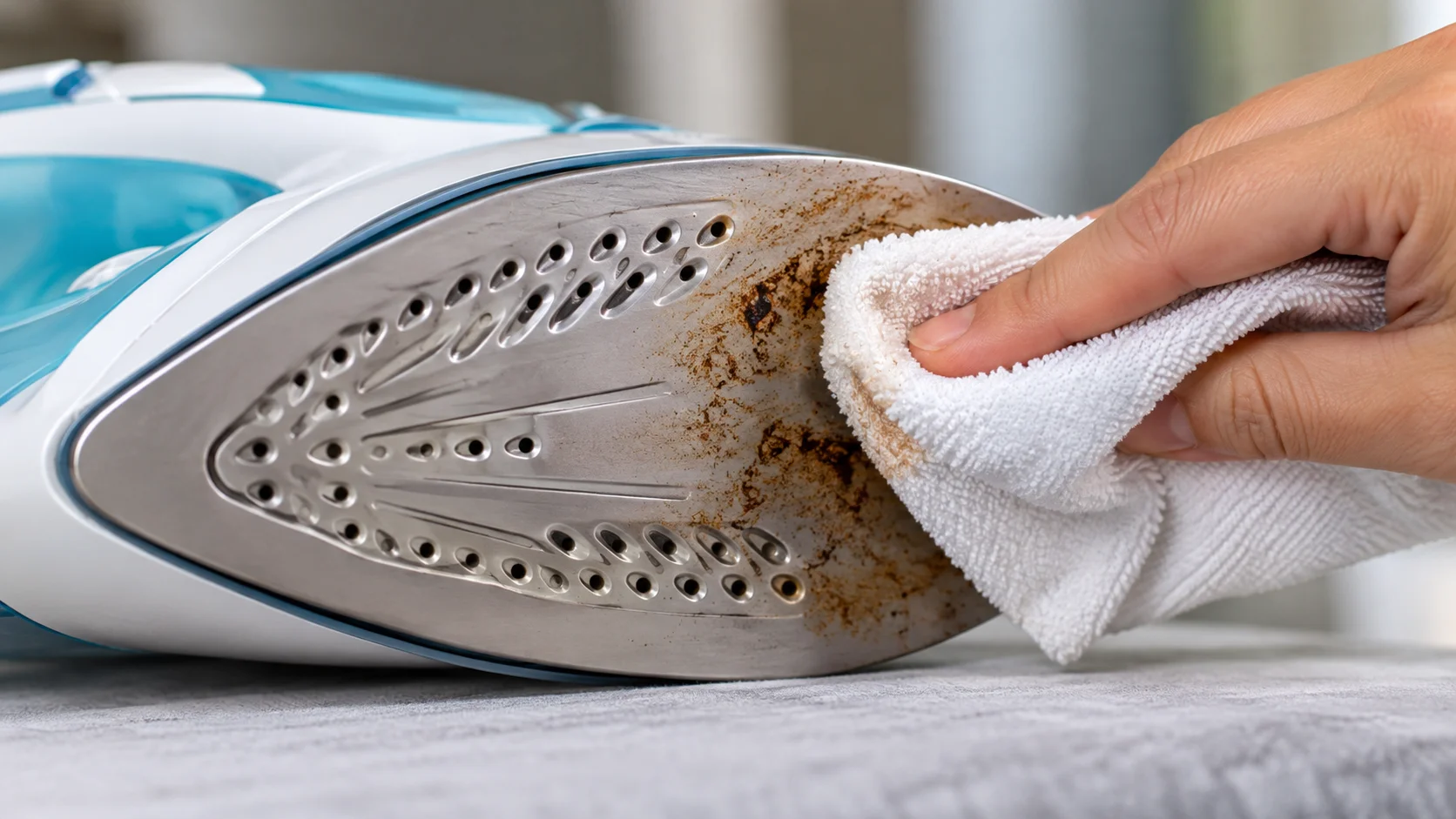
Knowing how to clean an iron properly can help prevent dirty marks from transferring onto freshly washed clothes, improve the way the soleplate glides, and reduce problems caused by starch, melted synthetic fibers, mineral deposits, and other residue. The most important distinction is between cleaning the garment iron itself and cleaning cast iron cookware. A steam iron has electrical and water-containing components, while a cast iron skillet or pan needs an entirely different cleaning and seasoning routine.
The safest approach is to begin with the manufacturer’s instructions for your particular model. Rowenta, for example, recommends unplugging the iron, allowing the soleplate to cool, and avoiding abrasive or metallic cleaning tools because they can damage protective coatings. Its guidance also separates ordinary soleplate cleaning from anti-scale maintenance, showing why the inside of a steam iron should not automatically be treated like its outside surface.
What You Need Before Cleaning an Iron
Before learning how to clean an iron, collect only gentle materials that are appropriate for the surface you are cleaning. You generally do not need an aggressive chemical cleaner or a metal scraper to remove ordinary residue. The goal is to loosen buildup without scratching the soleplate or forcing liquid into electrical components.
For a garment iron, the following supplies can be useful:
- A soft microfiber or cotton cloth
- A clean damp cloth
- Cotton swabs for accessible steam holes
- A soft, non-abrasive sponge
- Clean water
- Baking soda only when the manufacturer’s instructions allow it
- White vinegar only for uses specifically permitted by your iron’s manufacturer
- A manufacturer-approved soleplate cleaner when needed
- A sink or suitable container for emptying the water reservoir
- The iron’s user manual for model-specific descaling instructions
Rowenta specifically advises using soft cloths or non-abrasive tools and warns against metal tools and harsh chemicals.
How to Clean an Iron Safely
Safety should come before stain removal because an iron combines high heat, electricity, and, in steam models, water. Never start cleaning a hot iron simply because you want to remove a fresh mark quickly. Allow the appliance to cool and disconnect it from power before working on the soleplate or exterior.
Follow this basic sequence:
- Turn the iron off.
- Unplug it from the electrical outlet.
- Place it securely on its heel rest.
- Allow the soleplate to cool completely.
- Empty the water tank if the manufacturer’s instructions call for it.
- Work over a sink when dealing with water or scale.
- Keep moisture away from electrical connections and controls.
- Use only soft or manufacturer-approved cleaning materials.
- Do not scrape the soleplate with a knife or other sharp object.
- Do not use steel wool or abrasive metal pads.
Rowenta’s current cleaning guidance states that the soleplate should be unplugged and cooled before cleaning and that abrasive or metallic pads can damage the protective coating.
How to Clean the Bottom of an Iron
The bottom of an iron is usually called the soleplate, although people also search for terms such as iron plate, faceplate, base, sole, or bottom of the iron. This is the part that directly contacts clothing, so it is also the area most likely to collect starch, fabric residue, melted fibers, and other buildup.
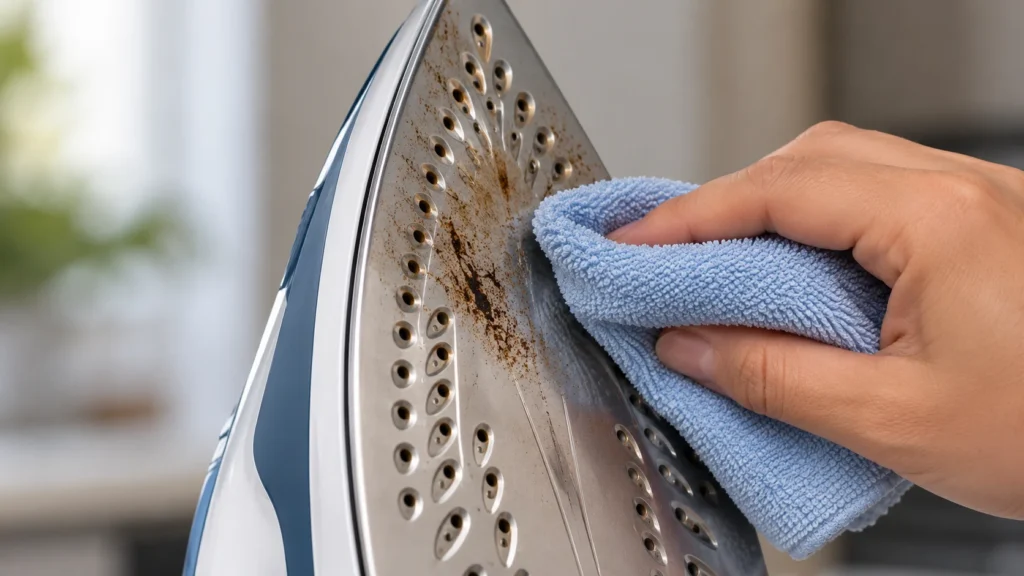
For ordinary surface dirt, start with the least aggressive method:
- Unplug the iron.
- Let the soleplate cool completely.
- Dampen a soft cloth with water.
- Wipe the entire soleplate gently.
- Pay attention to the edges and around the steam holes.
- Use a second clean cloth to remove loosened residue.
- Dry the surface before storing the appliance.
- Inspect the holes for mineral buildup.
- Repeat gentle wiping rather than immediately reaching for abrasive products.
Rowenta recommends wiping a cooled soleplate with a damp cloth or sponge and specifically advises against detergent and sharp or abrasive accessories for its irons. Because soleplate materials and coatings vary, the instructions for your own model should take priority.
How to Clean an Iron Soleplate With Stubborn Residue
When a damp cloth is not enough, the correct method depends on the type of soleplate and the manufacturer’s instructions. Some guides mention mild household methods such as baking soda or diluted vinegar for particular situations, while some manufacturers specifically recommend their own soleplate cleaner instead. Therefore, a popular online cleaning hack should not automatically be considered safe for every iron.
For stubborn buildup:
- Identify the iron model if possible.
- Check its care instructions first.
- Cool and unplug the appliance.
- Test any permitted cleaner on a small area.
- Apply the product to the cloth rather than flooding the appliance.
- Rub gently.
- Avoid forcing cleaner into steam holes.
- Wipe away all residue.
- Follow with a clean damp cloth if the instructions permit rinsing.
- Allow the soleplate to dry completely before use.
Rowenta’s 2026 cleaning guide says baking soda and water may be used for light residue on certain stainless-steel or coated plates, while its broader care guidance emphasizes model-specific instructions.
How to Clean an Iron That Has Burnt Fabric
Burnt fabric can be one of the most difficult types of residue because synthetic fibers may melt and stick firmly to a hot soleplate. Continuing to iron with that residue attached can transfer the material to another garment, so it is better to clean the soleplate before using the appliance again.
Use this safer approach:
- Unplug the iron immediately.
- Allow it to cool completely.
- Never pull aggressively at melted material while the soleplate is hot.
- Once cool, gently loosen accessible residue with a soft cloth.
- Follow your manufacturer’s instructions for stubborn deposits.
- Use an approved soleplate cleaner if necessary.
- Avoid knives, razor blades, and metal scrapers.
- Never immerse the iron in water.
- Clean around, rather than inside, steam openings.
- Wipe the soleplate clean before the next ironing session.
Rowenta warns that metal tools and abrasive cleaning materials can permanently damage the protective surface of an iron.
How to Clean an Iron After Burning Clothes
If you accidentally burn a garment, do not immediately press another piece of clothing to see whether the iron still works cleanly. A dark or sticky mark can remain on the soleplate even when the iron appears visually clean.
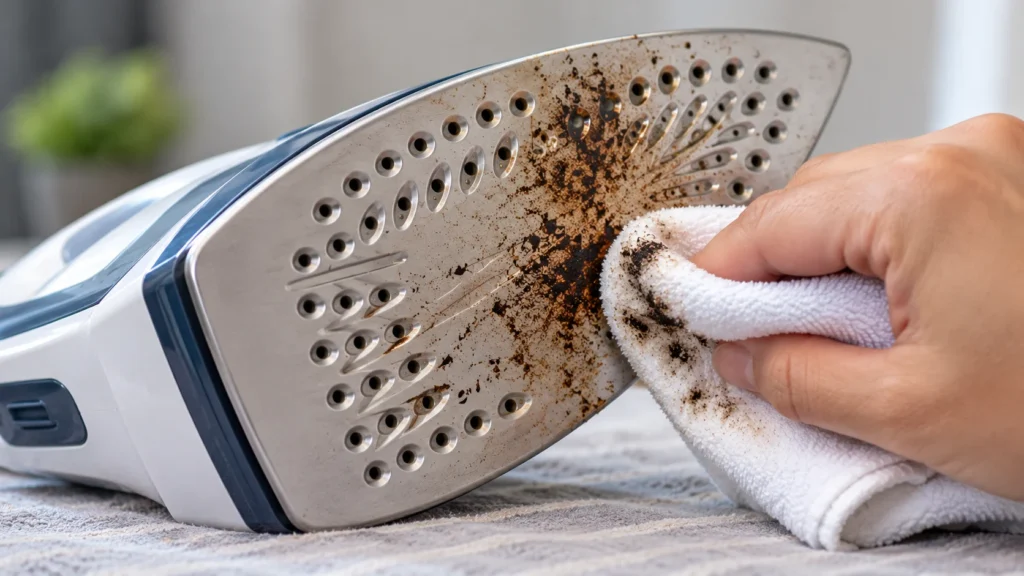
After the appliance has cooled:
- Disconnect it from power.
- Inspect the entire soleplate.
- Look for black, brown, shiny, or sticky areas.
- Wipe with a soft damp cloth.
- Repeat as necessary.
- Use a manufacturer-approved cleaner for persistent residue.
- Check the steam holes for debris.
- Clean the outside of the iron as well.
- Make sure no residue remains before ironing clothing.
- Test the iron on an old, clean piece of fabric before returning to important garments.
This approach is especially useful when the keyword how to clean an iron that is burnt refers to a garment iron rather than a cast iron pan.
How to Clean an Iron With Sticky Stuff on It
Sticky residue may come from synthetic fibers, starch, fusible interfacing, adhesive, or products transferred from clothing. The most important step is identifying that the residue is on the soleplate rather than inside the steam system.
For sticky buildup:
- Unplug the iron.
- Let the soleplate cool.
- Wipe it with a soft damp cloth.
- Avoid rubbing with abrasive powders unless your manual permits them.
- Do not use a sharp scraper.
- Do not pour solvent onto the soleplate.
- Do not spray household cleaner into the steam holes.
- Use a dedicated iron cleaner if the manufacturer recommends one.
- Wipe away the cleaning product completely.
- Test the clean iron on an unwanted cloth.
A smooth soleplate is important because residue can cause dragging and can transfer back onto garments. Rowenta notes that starches and synthetic fibers may stick to an iron’s surface and recommends cleaning the soleplate with a damp cloth or sponge.
How to Clean Starch or Spray Starch Off an Iron
Spray starch can leave a film on the soleplate, particularly when the iron is used at an unsuitable temperature or when product accumulates over repeated ironing sessions. If you notice increasing drag or a faint residue on clothes, inspect the soleplate before adding more cleaning chemicals.
A practical cleaning sequence is:
- Unplug the iron.
- Cool the soleplate.
- Wipe it with a damp soft cloth.
- Concentrate on areas where starch has accumulated.
- Repeat instead of applying excessive pressure.
- Clean around the steam holes carefully.
- Follow the manufacturer’s instructions for persistent residue.
- Use an approved soleplate cleaner when necessary.
- Remove all cleaner residue.
- Test the iron on an old fabric after cleaning.
Regular light cleaning is generally preferable to allowing several layers of starch to accumulate.
How to Clean an Iron With Vinegar
Vinegar should not be treated as a universal iron-cleaning solution. This is particularly important for steam irons because manufacturers can have different requirements for their water tanks, anti-scale systems, valves, and boilers.
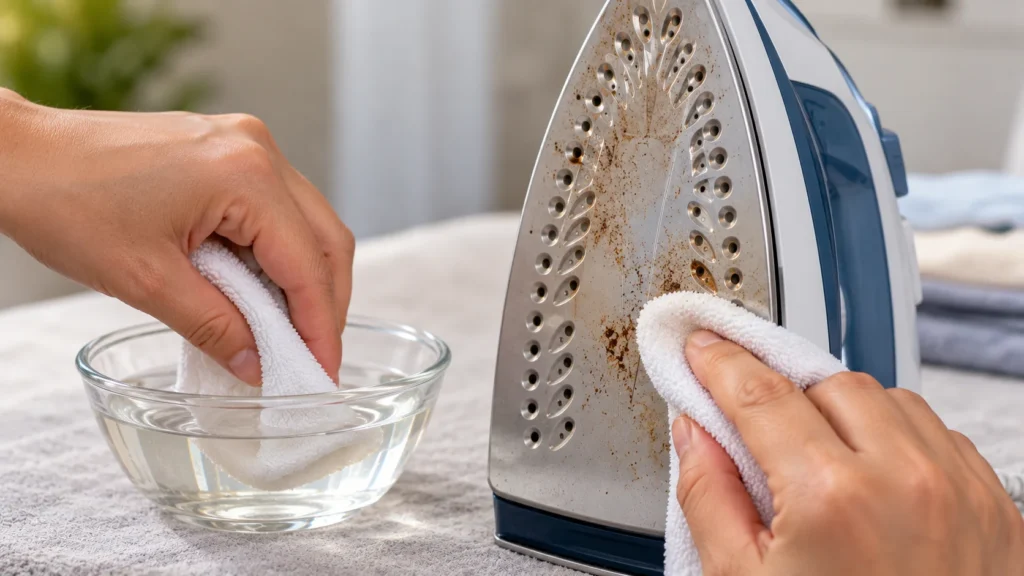
Some Rowenta guidance permits vinegar for particular anti-scale components, while its steam-station guidance specifically warns against using vinegar or industrial descaling products in certain steam-station systems. That difference demonstrates why the manual for the exact appliance matters.
If your manufacturer explicitly permits vinegar:
- Use the stated dilution and procedure.
- Keep the appliance unplugged when handling it.
- Do not pour vinegar into a reservoir unless the manual says to.
- Never assume vinegar is suitable for every steam iron.
- Rinse components as directed.
- Never mix vinegar with other cleaning chemicals.
- Do not use vinegar simply because an online recipe recommends it.
If your manual does not approve vinegar for internal cleaning, use the appliance’s self-clean, anti-calc, or manufacturer-recommended descaling procedure instead.
How to Clean the Steam Holes of an Iron
Steam holes can accumulate mineral deposits and debris, particularly when an iron is frequently used with water containing dissolved minerals. Blocked holes may contribute to uneven steam or marks on clothing.
To clean accessible steam holes:
- Unplug the iron.
- Allow it to cool completely.
- Inspect the holes under good lighting.
- Wipe the soleplate with a soft cloth.
- Use a cotton swab for accessible surface debris.
- Use only tools specifically recommended by the manufacturer.
- Never push a pin or needle deep into a steam opening.
- Never force debris farther into the appliance.
- Follow the model’s anti-calc instructions.
- Perform a self-clean cycle if the appliance has one and the manual recommends it.
Rowenta describes self-clean and anti-calc systems for clearing scale from steam pathways and cautions against using sharp objects in the openings.
How to Clean an Iron Inside
Cleaning the inside of an iron is different from wiping its soleplate. Internal cleaning usually concerns mineral deposits, scale, or residue inside the water and steam system. Because the internal design differs substantially between models, there is no single homemade recipe that is safe for every appliance.
Instead:
- Read the iron’s manual.
- Find its anti-scale or self-clean instructions.
- Empty the reservoir as directed.
- Remove an anti-calc valve or collector only if the manual says to.
- Use the manufacturer’s recommended water or descaling method.
- Flush the system according to the instructions.
- Never open the electrical housing yourself.
- Never immerse the iron.
- Do not introduce random household chemicals.
- Stop using the appliance if water or residue appears to be coming from an electrical area.
Rowenta’s support guidance shows that some models have anti-scale valves or self-clean functions, while steam stations may use completely different maintenance procedures.
How to Descale a Steam Iron
Descaling addresses mineral buildup rather than ordinary dirt on the soleplate. Signs can include reduced steam, visible deposits, uneven steam output, or white or brown marks appearing on fabric. The exact descaling frequency depends on the iron, water quality, and frequency of use.
A safe maintenance routine is:
- Check the manual for the recommended descaling procedure.
- Determine whether your iron has an anti-calc valve, collector, or self-clean function.
- Use only an approved method.
- Empty the water tank when instructed.
- Flush scale through the designated system.
- Clean removable anti-scale parts as directed.
- Rinse components when required.
- Avoid unapproved acids or descaling products.
- Never mix different descaling substances.
- Repeat maintenance at the manufacturer’s recommended interval.
Rowenta notes that scale can reduce steam performance and that model-specific anti-calc instructions should be followed.
How to Clean the Outside of an Iron
The outside of an iron collects fingerprints, dust, starch residue, and occasional splashes. Exterior cleaning is much simpler than internal cleaning because you normally only need to wipe the housing rather than introduce liquid into the appliance.
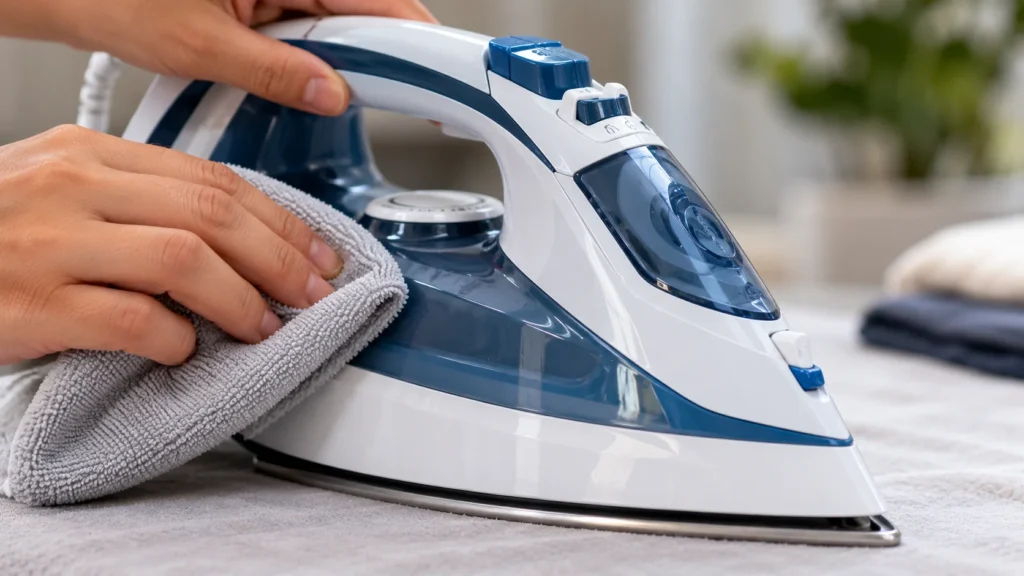
For the exterior:
- Unplug the iron.
- Let it cool.
- Use a soft, slightly damp cloth.
- Wipe the handle.
- Clean around the controls carefully.
- Wipe the heel rest.
- Clean the cord only as directed by the manufacturer.
- Keep liquid away from openings.
- Do not spray cleaner directly onto the appliance.
- Dry the exterior before storage.
Rowenta recommends a soft damp cloth for the exterior and advises against holding an iron or steam-station base under running water.
How to Clean an Iron for Clothes Without Damaging It
The best way to keep an iron safe for clothing is to prevent heavy buildup rather than waiting until the soleplate becomes heavily stained. Fabric-care labels, appropriate temperature settings, and correct maintenance all matter.
To protect your clothes:
- Use the temperature appropriate for the fabric.
- Avoid ironing over unknown sticky substances.
- Clean starch residue periodically.
- Empty or maintain the water system according to the manual.
- Do not use an abrasive pad on a coated soleplate.
- Check for residue before pressing delicate garments.
- Test a newly cleaned iron on an old cloth.
- Keep the soleplate smooth and clean.
- Follow manufacturer-specific water recommendations.
- Store the iron upright when instructed.
Rowenta’s care guidance emphasizes proper temperature selection, correct water use, soleplate maintenance, and upright storage.
Jump into Other Related Article
- How to Remove Peanut Butter Stains | Easy Ways to Clean Clothes, Fabric & More
- Does Rayon Shrink? What Happens in the Washer and Dryer
- How to Clean Suede Shoes | Easy Ways to Clean Suede at Home
Can You Clean an Iron With Toothpaste or Salt?
Toothpaste and salt are common internet suggestions for cleaning irons, but they should not automatically be considered safe for modern coated soleplates. Abrasive materials can scratch or alter a surface that was designed to glide smoothly over fabric.
Instead of relying on a viral cleaning hack:
- Check the manufacturer’s instructions first.
- Prefer a soft damp cloth for light residue.
- Use an approved soleplate cleaner for stubborn buildup.
- Avoid abrasive scrubbing.
- Do not use salt unless your specific manufacturer recommends it.
- Do not use toothpaste unless the appliance instructions explicitly permit it.
- Never scrape with metal.
- Never clean a powered or hot iron.
- Remove all cleaning residue before use.
- Replace a severely damaged soleplate rather than aggressively sanding it.
Rowenta explicitly warns against abrasive and metallic cleaning accessories, making caution particularly important with coated surfaces.
How to Clean an Iron Door or Metal Iron Surface
If you mean an iron or metal door, rather than a garment iron, do not use the steam-iron cleaning procedure above. A metal door is a household surface and may have paint, powder coating, enamel, or another finish that reacts differently to cleaning products.
For a metal door:
- Identify the finish first.
- Remove loose dust with a soft cloth.
- Use mild soapy water when compatible with the finish.
- Wipe gently.
- Avoid abrasive pads.
- Rinse away soap residue when appropriate.
- Dry the surface.
- Treat rust according to the door manufacturer’s recommendations.
- Do not use a garment iron on the door.
- Test any cleaning product in an inconspicuous area first.
This distinction prevents the keyword how to clean an iron door from being confused with cleaning an electric clothing iron.
How to Clean an Old Cast Iron Skillet
A cast iron skillet requires a completely different process from a garment iron. Traditional cast iron is maintained through a layer of seasoning, so the goal is to remove food residue while protecting or restoring that seasoned surface.
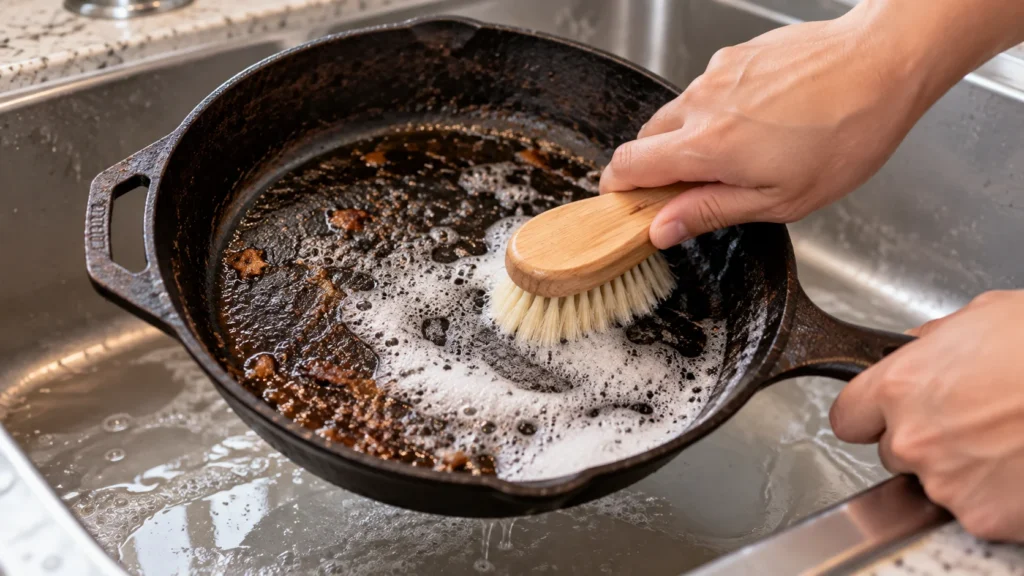
For routine cleaning:
- Let the pan cool enough to handle safely.
- Wash it with warm water.
- Use a small amount of soap if appropriate.
- Scrub away food residue.
- Dry the skillet thoroughly.
- Heat it briefly if needed to remove remaining moisture.
- Apply a very thin layer of cooking oil.
- Store it completely dry.
- Avoid leaving water sitting in the pan.
- Re-season when the cooking surface needs restoration.
Lodge’s care guidance confirms that a little soap can be used when cleaning cast iron and recommends thorough drying followed by a thin layer of oil when restoring or seasoning the surface.
How to Clean an Old Rusty Cast Iron Skillet
Rust does not necessarily mean that an old cast iron skillet is beyond recovery. The restoration process involves removing the rust, washing and drying the cookware, applying a thin layer of oil, and re-seasoning it.
Lodge recommends:
- Scouring rusty sections with steel wool or an appropriate rust-removal tool.
- Washing the skillet with warm, soapy water.
- Drying it completely.
- Applying a very thin layer of cooking oil.
- Baking the oiled skillet to rebuild its seasoning.
- Repeating seasoning when necessary.
The important point is that this process is for cast iron cookware, not the coated soleplate of a household clothing iron.
How to Clean an Enameled Cast Iron Pan or Dutch Oven
Enameled cast iron should not be treated exactly like bare cast iron. The enamel is a glass-like coating that can be scratched or damaged by harsh abrasives, metal tools, or thermal shock.
For an enameled cast iron pan:
- Allow the cookware to cool before cleaning.
- Wash with warm water.
- Use mild dish soap.
- Choose a soft sponge or nylon brush.
- Avoid metal scouring pads.
- Avoid abrasive utensils.
- Soak stuck-on food when appropriate.
- Use baking soda according to the cookware manufacturer’s guidance.
- Rinse thoroughly.
- Dry completely.
- Do not pour cold water into a very hot enamel-coated pan.
Le Creuset recommends allowing enameled cast iron to cool before cleaning and advises using soft or nylon cleaning tools instead of metal abrasives. For stubborn food, it also describes soaking or simmering with baking soda as an option.
How to Clean an Old Cast Iron Pan Without Ruining It
Old cast iron often needs restoration rather than ordinary wiping. If the pan has heavy rust, sticky seasoning, or years of accumulated residue, aggressive restoration can remove portions of the existing seasoning—but that does not necessarily mean the cookware is ruined.
A restoration routine can include:
- Removing rust mechanically.
- Washing with warm soapy water.
- Drying thoroughly.
- Applying an extremely thin oil layer.
- Heating or baking according to a proven seasoning procedure.
- Repeating the process for additional seasoning layers.
- Avoiding thick oil coatings.
- Keeping the pan dry between uses.
- Re-seasoning when food begins sticking excessively.
- Following the cookware manufacturer’s care instructions.
Lodge explains that rust restoration may remove portions of the old seasoning and that this is acceptable when preparing the skillet for re-seasoning.
How to Steam Clean a Couch or Mattress With an Iron
Using a household garment iron as a substitute for a steam cleaner is not a good general cleaning method for mattresses or upholstered furniture. An iron is designed to deliver concentrated heat and steam through a small soleplate, while upholstery and mattress materials can have different moisture, heat, adhesive, foam, and care requirements.
For mattresses or couches:
- Check the item’s care label.
- Do not press a hot iron directly onto upholstery.
- Do not assume steam is safe for foam.
- Avoid saturating mattresses.
- Use a purpose-designed upholstery or steam-cleaning machine when appropriate.
- Follow the furniture or mattress manufacturer’s instructions.
- Spot-test any permitted cleaning method first.
- Allow fabric and padding to dry completely.
- Never use an iron to replace a professional cleaning method when the manufacturer prohibits moisture or heat.
If your search for how to clean a mattress with an iron comes from a viral cleaning trick, verify the mattress manufacturer’s instructions before trying it.
Common Mistakes When Cleaning an Iron
Many damaged soleplates are the result of using too much force or the wrong product rather than using too little cleaning power. Modern irons may have coatings that are particularly sensitive to scratching, so a method that worked on an old metal iron may not be suitable for a newer model.
Avoid these mistakes:
- Cleaning while the iron is plugged in.
- Working on a very hot soleplate.
- Using steel wool on a coated surface.
- Scraping with a knife.
- Pouring liquid directly over the appliance.
- Putting vinegar into a water tank without manufacturer approval.
- Mixing household cleaning chemicals.
- Pushing sharp objects into steam holes.
- Ignoring the anti-scale instructions.
- Using an iron with a visibly damaged soleplate.
Manufacturer instructions should always take priority over generic internet recipes because the same cleaning method is not suitable for every iron.
How Often Should You Clean an Iron?
There is no single cleaning schedule that applies to every iron. Frequency depends on how often you iron, whether you use starch, the fabrics you press, the type of water used in a steam iron, and the manufacturer’s maintenance recommendations.
A practical routine is:
- Wipe visible residue whenever you notice it.
- Inspect the soleplate periodically.
- Clean starch buildup before it becomes heavy.
- Empty or maintain the water tank as instructed.
- Use the anti-scale system at the recommended interval.
- Pay greater attention to scale if you live in a hard-water area.
- Clean steam holes when buildup becomes visible.
- Perform deeper maintenance according to the manual.
- Check the soleplate before ironing delicate clothes.
- Stop and investigate if the iron begins leaving marks.
Rowenta’s current guidance recommends regular soleplate maintenance and model-specific anti-scale care, with frequency affected by usage and water hardness.
Quick Iron Cleaning Checklist
If you simply need a short version of how to clean an iron, use this checklist as a starting point, then compare it with your model’s instructions.
- Unplug the iron.
- Let it cool completely.
- Empty the water reservoir when required.
- Wipe the soleplate with a soft damp cloth.
- Remove permitted residue gently.
- Clean accessible steam-hole debris carefully.
- Use only manufacturer-approved descaling methods.
- Never use metal scrapers on a coated soleplate.
- Never immerse the appliance.
- Never introduce unapproved chemicals into the water tank.
- Wipe the exterior with a soft cloth.
- Dry the appliance completely.
- Store it upright when recommended.
- Test a cleaned iron on an old cloth.
- Investigate recurring stains or steam problems instead of repeatedly adding cleaning chemicals.
Conclusion
Learning how to clean an iron is mainly about using the gentlest effective method and knowing which part needs attention. For the soleplate, start with a cool, unplugged appliance and a soft damp cloth, then move to a manufacturer-approved cleaner when residue is stubborn. Burnt fabric, starch, glue, and sticky buildup should be removed carefully rather than scraped aggressively, while steam holes and the inside of a steam iron should be maintained through the model’s anti-scale or self-clean system.
It is equally important not to confuse a clothing iron with cast iron cookware. A cast iron skillet may need washing, drying, oiling, and seasoning, while enameled cast iron requires protection of its enamel surface. Following the correct method for the object you are cleaning helps prevent scratches, rust, damaged coatings, mineral buildup, and unnecessary wear while keeping your household equipment in better condition.
1. How do you clean an iron soleplate?
2. How do you clean an iron that has burnt fabric on it?
3. Can you clean an iron with vinegar?
Sometimes, but not every iron should be cleaned with vinegar. Some manufacturers permit vinegar for specific anti-scale components, while other models or steam stations specifically prohibit vinegar or unapproved descaling products. Always follow the instructions for your exact model before putting vinegar inside an iron.
4. How do you clean the inside of a steam iron?
5. How do you clean an old cast iron skillet?
For traditional cast iron, wash the pan with warm water, dry it thoroughly, apply a very thin layer of cooking oil, and re-season it when necessary. If it is rusty, remove the rust first and then restore the seasoning. Enameled cast iron requires different care and should be cleaned with softer, non-abrasive tools.