Egg stains can be surprisingly stubborn because an egg contains proteins and fats that can cling to fabric and porous surfaces. Fresh egg is usually easier to remove than dried egg, but the cleaning method matters. In particular, hot water can cause egg proteins to coagulate, making the residue harder to remove from some materials. Ariel specifically recommends cold water for fresh egg stains on clothing for this reason.
Whether you need to know how to remove egg stains from clothes, clean egg from a pan, or remove splattered egg from a wall, car, or brickwork, the first step is to avoid spreading the mess. Remove the excess gently, choose a cleaner appropriate for the surface, and test unfamiliar products before treating a large area.
Why Are Egg Stains Difficult to Remove?
Egg stains are different from many ordinary food stains because they contain both protein and fat. When egg dries, the protein can form a stubborn residue that adheres to fibers or porous surfaces. On carpet and upholstery, liquid can also penetrate below the visible surface, making the affected area larger than it initially appears.
Temperature is particularly important when cleaning egg. Several stain-removal sources advise avoiding hot water on egg because heat can coagulate the proteins. Cold or appropriately lukewarm water is generally a safer starting point for fresh egg contamination, especially on textiles.
The age of the stain also matters. Fresh egg can often be removed before it dries, while old egg may need gentle scraping and repeated treatment. Vanish recommends scraping dried egg carefully with the side of a spoon before applying a suitable stain-treatment product.
How to Remove Egg Stains from Clothes
If raw egg, egg white, or egg yolk gets onto clothing, start by removing any excess without rubbing it deeper into the fibers. Ariel recommends scraping off excess material and rinsing the garment under cold running water before pre-treating it with detergent.
Once the excess has been removed, apply a suitable liquid laundry detergent or fabric-safe stain remover. Work gently and follow the product instructions. For washable clothing, wash using the temperature permitted by the garment’s care label. Ariel’s egg-stain instructions recommend washing at the hottest temperature indicated by the garment label after pre-treatment.
Always inspect the garment before putting it in the dryer. If the stain is still visible, repeat the appropriate treatment rather than using heat immediately. Tide similarly advises checking stained garments before drying because drying can set remaining stains.
15 Steps to Remove Egg Stains from Washable Clothes
Use this checklist for shirts, T-shirts, trousers, uniforms, jeans, and other washable garments:
- Remove the garment as soon as practical.
- Scrape away excess egg with a spoon or dull edge.
- Avoid rubbing the egg farther into the fabric.
- Rinse fresh egg under cold running water.
- Work from the back of the stained fabric when practical.
- Check the garment’s care label.
- Test a stain remover on an inconspicuous area.
- Apply an appropriate liquid laundry detergent.
- Gently work the detergent into the affected fibers.
- Allow the product to work according to its label.
- Place the garment in the washing machine.
- Select a cycle suitable for the fabric.
- Use the highest temperature permitted by the care label.
- Inspect the stain immediately after washing.
- Repeat treatment before drying if any egg residue remains.
For colored or delicate clothing, follow the manufacturer’s care instructions carefully. Vanish also recommends checking the garment label and testing its product on a small hidden area before use.
How to Remove Egg White and Egg Yolk Stains
Egg white stains and egg yolk stains have slightly different appearances, but both should be treated as food/protein contamination rather than simply scrubbing them away. Egg white can dry into a relatively clear, sticky residue, while yolk can leave a more noticeable yellow mark because it also contains fat.
For either type, remove excess egg first. Use cold water for a fresh clothing stain and then pre-treat with an appropriate laundry detergent. Ariel identifies egg as a protein stain and recommends an enzyme-containing detergent for breaking down egg proteins.
If the yolk has dried, carefully scrape away the hardened residue before treatment. Don’t use excessive force, because aggressive scraping can damage delicate fibers.
For persistent discoloration, a fabric-specific stain remover can be used according to its instructions. Vanish recommends a suitable stain-removal treatment for both fresh and dried egg stains, with fabric testing beforehand.
How to Remove Dried Egg Stains
Dried egg needs a little more patience because the residue has already hardened. Begin by carefully lifting the dried material with the edge of a spoon. Avoid sharp tools that could cut or pull textile fibers.
For washable clothing, rinse or treat the area according to the garment’s care instructions and apply an appropriate detergent. Vanish specifically recommends scraping dried egg from clothing or carpet before beginning its stain-treatment process.
On carpet or upholstery, don’t immediately saturate the stain with water. Excess moisture can spread dissolved residue and create a larger ring when the material dries. James recommends testing a suitable stain product first and using controlled treatment rather than aggressive scrubbing.
How to Remove Egg Stains from Carpet and Upholstery
Egg spilled on carpet or a sofa can be more challenging than egg on washable clothing because the liquid may penetrate the fibers. Start by removing loose or dried material with a spoon.
For a fresh stain, James recommends using a clean white cotton cloth with water, while cautioning that the method should not be used where water could damage or discolor the material.
For dried stains, use a product specifically suitable for the carpet or upholstery and test it first in an inconspicuous location. Avoid aggressive scrubbing and excessive foaming, both of which can spread contamination and potentially leave rings.
Vanish also recommends blotting excess liquid from carpet, applying a suitable carpet-and-upholstery stain remover, and blotting with a clean absorbent cloth rather than simply rubbing the affected area.
How to Remove Egg Stains from a Pan
If cooked or raw egg is stuck to a pan, allow the pan to cool before cleaning it. Remove loose pieces with a suitable spatula or scraper that will not damage the cookware’s surface.
For ordinary cookware, soak the pan with warm water and an appropriate amount of dish detergent to soften the residue. A non-abrasive sponge can then be used to loosen remaining egg.
Avoid aggressive metal tools on non-stick coatings. For cast iron, follow the manufacturer’s or cookware maker’s seasoning-care instructions rather than treating it like stainless steel or glass.
The key is to soften the protein residue rather than burning or scraping it aggressively. If food is badly stuck, repeated soaking and gentle cleaning are generally safer than forcing it off in one attempt.
How to Remove Egg Stains from Brickwork and Exterior Surfaces
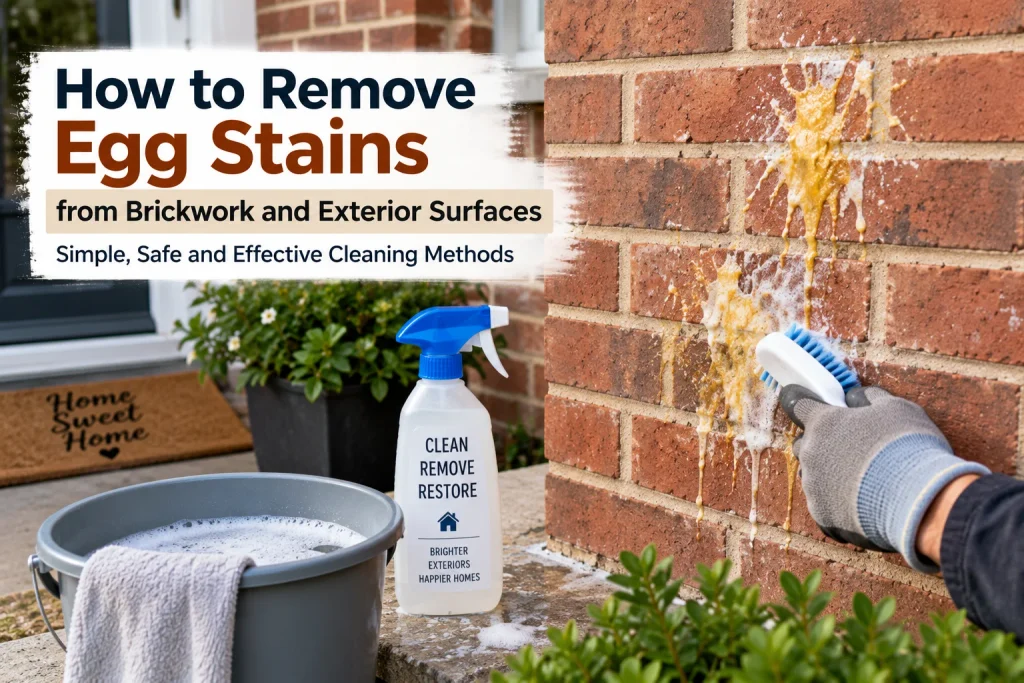
Egg thrown or splashed onto brickwork, render, or an exterior wall can be difficult because these materials are porous. Egg proteins can penetrate surface pores and become harder to remove once dry. Benz Softwash explains that egg stains on render can bind within the mineral surface and recommends breaking down the protein before attempting stronger follow-up treatment.
For render, a suitable enzyme-based cleaner may be used according to the manufacturer’s instructions, followed by thorough rinsing. Benz Softwash also emphasizes testing a small area first and avoiding unnecessarily aggressive pressure washing, which can damage render.
Brickwork can vary considerably in porosity and finish, so don’t assume that a strong bleach or pressure washer is appropriate. Test the proposed cleaning method on an inconspicuous area first, particularly with painted, rendered, or coated exterior surfaces.
How to Remove Egg Stains from a House Wall
If egg has been thrown onto an interior wall, remove the bulk without spreading it. For washable painted surfaces, start with a soft cloth dampened with an appropriate amount of water and a mild cleaner compatible with the paint finish.
Avoid soaking drywall or repeatedly scrubbing painted surfaces. Excess moisture can damage some wall finishes, while aggressive rubbing can remove paint or leave a shiny patch.
For textured walls, wallpaper, matte paint, or specialty finishes, check the manufacturer’s cleaning instructions first. If the egg has dried and the wall is porous, several gentle treatments may be safer than one aggressive cleaning session.
How to Remove Egg Stains from a Car
Egg on a car should be cleaned as soon as possible because dried organic residue can be difficult to remove and may affect the vehicle’s finish if handled aggressively. Start by gently rinsing away loose contamination with water.
Don’t scrape dried egg with a sharp object or aggressively rub the surface. Instead, soften the residue and use a car-safe shampoo or cleaner compatible with the vehicle’s exterior finish.
For stubborn marks, test the cleaning product in a less visible area before treating the entire affected section. If the paint has already been damaged or the stain remains after careful cleaning, professional automotive detailing may be appropriate.
Common Mistakes to Avoid When Removing Egg Stains
The biggest mistake is treating egg like an ordinary dirt stain. Hot water can coagulate proteins, and aggressive scrubbing can push contamination deeper into fibers or porous surfaces.
Another mistake is leaving dried egg untreated for too long. As the residue dries, it can become harder to remove and may develop an unpleasant odor, particularly when organic material remains in absorbent materials.
Avoid mixing cleaning products, and don’t assume that a powerful household chemical is automatically better. The safest method depends on the material, its finish, and the manufacturer’s cleaning instructions.
Conclusion
Knowing how to remove egg stains starts with removing the excess carefully and choosing a method suitable for the affected surface. For clothes, cold water is a useful first step for fresh egg, followed by an appropriate detergent or stain remover and a wash based on the garment’s care label. Avoid drying the garment until you have checked that the stain is gone.
For pans, walls, cars, brickwork, carpet, and upholstery, the method needs to change according to the material. Dried egg may require gentle scraping and repeated treatment, while porous exterior surfaces may need specialized cleaning. Testing products first and avoiding excessive heat, pressure, or scrubbing can help remove the stain without damaging the surface.
How do you remove egg stains from clothes?
Scrape off excess egg, rinse a fresh stain with cold water, pre-treat with an appropriate laundry detergent, and wash according to the garment’s care label. Check the stain before putting the clothing in the dryer.
How do you remove egg white stains from clothes?
Remove the excess egg white, rinse with cold water, and pre-treat the fabric with a suitable detergent. Wash according to the garment’s care instructions and repeat the treatment if necessary.
How do you remove egg yolk stains from clothes?
Gently remove excess yolk, rinse the affected area with cold water, and use an appropriate laundry detergent or stain remover. Check the fabric label before washing.