How to Remove Oil Stains from Fabric. Instead of simply rinsing away, oily residue can cling tightly to textile fibers and leave a darker or greasy-looking patch. This is why an ordinary wash cycle may not completely remove cooking oil, olive oil, coconut oil, or other greasy stains.
The right treatment depends on both the type of oil and the fabric. A washable cotton shirt can usually be pre-treated and laundered, while silk, wool, satin, rayon, or dry-clean-only materials require much more caution. Upholstery also needs a controlled approach because excessive moisture can damage backing or create a visible water ring.
Why Are Oil Stains So Difficult to Remove from Fabric?
Oil and grease are lipids, so they tend to resist water and attach themselves to fabric fibers. Simply rinsing an oily mark with water may therefore leave most of the stain behind. Detergents work more effectively because surfactants help surround and lift oily soil so it can be carried away during washing.
Fresh oil stains are generally easier to treat because there has been less time for the oil to penetrate the material. However, even an older or previously washed stain may still respond to appropriate pre-treatment. OxiClean notes that set-in grease and oil stains can sometimes still be removed after washing and drying.
The most important rule is to check the care label before treating the fabric. Some commercial stain removers are specifically unsuitable for silk, wool, leather, or dry-clean-only garments. Always test a product on an inconspicuous area first.
How to Remove Oil Stains from Fabric
For ordinary washable fabric, begin by removing any excess oil without spreading it. If the spill is fresh and there is visible liquid or food residue, gently blot or lift it away with a clean absorbent material.
Next, apply a suitable laundry pre-treatment or detergent directly to the stain. OxiClean recommends pre-treating grease and oil stains before washing and then laundering in the warmest water the garment can safely accept according to its care label.
For a simple household approach, some laundry guidance also uses liquid dishwashing detergent because it is formulated to cut grease. ARM & HAMMER, for example, recommends applying colorless liquid dish soap to grease stains and then rinsing before laundering.
15-Step Method for Removing Oil Stains from Washable Fabric
Use this checklist for cotton, many polyester garments, denim, and other washable fabrics, provided the care label permits the treatment:
- Treat the oil stain as soon as practical.
- Remove any excess oil or food residue.
- Blot rather than aggressively rubbing the stain.
- Place a clean towel behind the stained fabric if useful.
- Check the garment’s care label.
- Test your chosen cleaner on an inconspicuous area.
- Apply a suitable liquid laundry detergent or pre-treatment.
- Gently work the product into the stained area.
- Allow the product to work according to its instructions.
- Wash using the temperature permitted by the garment label.
- Use an appropriate laundry detergent during the wash.
- Inspect the garment immediately after washing.
- Do not put the garment in the dryer while the stain remains.
- Repeat pre-treatment if an oily shadow is still visible.
- Dry the garment only after checking that the stain has been removed.
Pretreatment is especially important for grease and oil because ordinary washing may not remove heavily attached oily residue in one cycle.
How to Get Rid of Oil Stains on Clothes
If you’re wondering how to get rid of oil stains on clothes, the process is similar whether the source is cooking oil, olive oil, coconut oil, or another household oil. First remove excess material, then use a grease-cutting pre-treatment and wash according to the garment’s care instructions.
For a fresh cooking-oil stain, don’t immediately soak the entire garment in water. Concentrate on the stained area first so the cleaning product can work directly on the oily residue.
After washing, inspect the fabric under good lighting. An oil stain may appear as a darker patch even when the surface feels clean. If you can still see the mark, repeat treatment rather than relying on the dryer.
Heat can be useful during an appropriate wash cycle, but dryer heat should not be used as a way to set or test a stain. ARM & HAMMER recommends checking a garment before drying and treating it again if the stain remains.
How to Remove Old or Set-In Oil Stains from Fabric
Old oil stains can be more challenging because the oil may have penetrated deeply or become partially set. That does not necessarily mean the garment is beyond recovery. OxiClean states that set-in grease and oil stains can sometimes still be treated after a complete laundry cycle.
Start by applying a suitable stain remover designed for grease or oily stains. Follow the product’s recommended dwell time rather than leaving it on indefinitely. OxiClean’s current instructions recommend different treatment times depending on the product and stain severity.
For color-sensitive materials, always perform a hidden-area test first. Some stain removers can alter color or finish, and manufacturers specifically exclude certain delicate materials from their products.
If the garment is expensive, vintage, delicate, or labeled dry clean only, professional cleaning is a safer option than experimenting with household remedies.
How to Remove Cooking Oil Stains from Fabric
Cooking oil can leave a translucent or dark greasy mark on shirts, table linens, aprons, and other fabrics. Remove excess oil first, then apply a suitable laundry pre-treatment.
A grease-cutting liquid detergent can help loosen oily soil. After treatment, wash the garment according to its care label. OxiClean recommends using the warmest water the fabric safely accepts for its grease-stain treatment, while emphasizing that the manufacturer’s garment instructions take priority.
For olive oil stains, coconut oil stains, or similar food oils, the same general principle applies: remove excess oil, pre-treat, wash, inspect, and repeat if necessary.
Don’t assume that natural oils are easier to remove simply because they come from food. They can still bind strongly to fabric fibers.
How to Remove Oil Stains from Nylon and Polyester Fabric
Nylon and polyester are synthetic fibers, but that does not mean every stain remover is automatically safe for them. Always check the garment label and the cleaning product’s permitted fabrics.
For washable polyester or nylon, pre-treat the oily area with a compatible stain remover or detergent and wash according to the label. If the garment is colorfast and the product permits it, a specialized stain remover may provide additional cleaning power.
Avoid assuming that stronger chemicals will produce better results. A product can remove oil while simultaneously damaging dye, coatings, elastic components, or the fabric’s finish.
How to Remove Oil Stains from Silk, Satin, Rayon & Other Delicate Fabrics
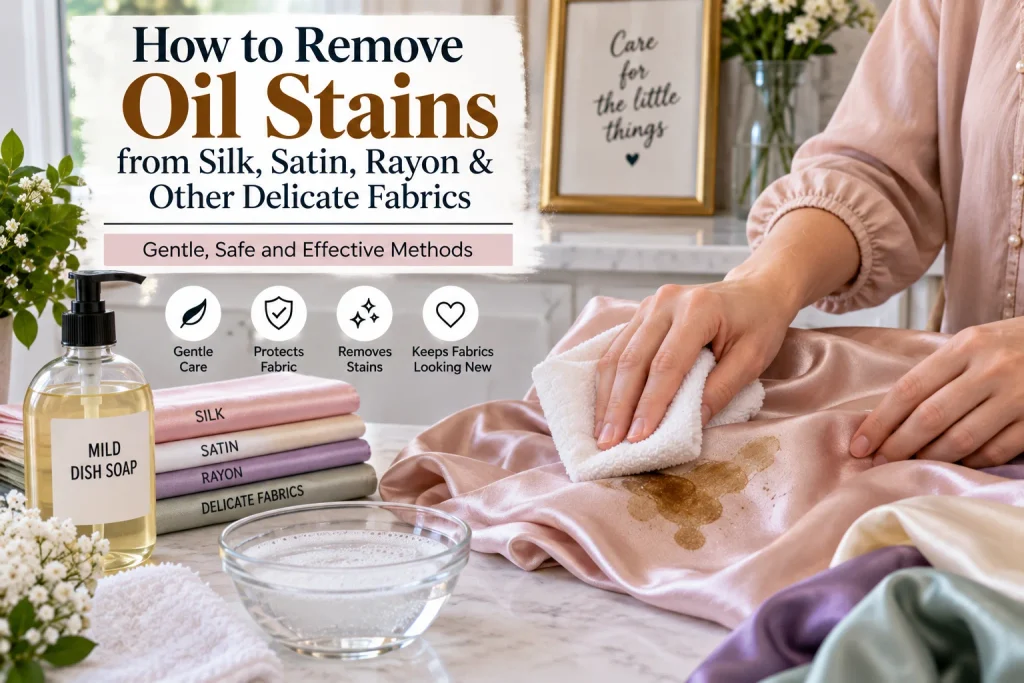
Delicate fabrics require a different strategy. Silk, satin, rayon, sheer fabrics, and some crepe materials can be damaged by aggressive rubbing, excessive moisture, heat, or inappropriate stain removers.
Many commercial oxygen-based stain products specifically warn against use on silk and other delicate materials. OxiClean, for example, says its grease-stain spray should not be used on silk, wool, leather, or dry-clean-only fabrics.
For these materials, check the care label first. If professional cleaning is recommended, take the garment to a qualified cleaner and explain what type of oil caused the stain.
Avoid experimenting with multiple household chemicals on an expensive delicate garment. A small stain is generally easier to deal with than damage caused by an incompatible cleaning method.
How to Remove Oil Stains from Upholstery, Sofa & Couch Fabric
Oil on a sofa, couch, chair, headboard, or other upholstery needs controlled treatment because the fabric may be attached to foam or other backing materials. Excessive moisture can migrate through the upholstery and leave a visible ring or damage the underlying material.
First remove excess oil. Then check the manufacturer’s upholstery-cleaning instructions. For water-washable upholstery, OxiClean recommends preparing an appropriate solution, applying it to a clean white towel rather than directly flooding the stain, and blotting the affected area. It then recommends using another damp white towel to rinse.
Do not saturate a couch simply because the surface stain looks large. Work gradually and allow the fabric to dry properly. Always test a cleaning solution on an inconspicuous area first.
For expensive furniture or upholstery labeled as requiring professional cleaning, professional treatment is the safer choice.
How to Remove Oil Stains from Fabric Furniture and Shoes
Fabric shoes can often be treated similarly to other washable textiles, but footwear frequently contains adhesives, foam, leather, suede, or coatings that change the cleaning requirements. Check the manufacturer’s care instructions before applying liquid cleaners.
For washable fabric shoes, remove excess oil, apply a compatible stain treatment, and clean according to the manufacturer’s instructions. Don’t soak the entire shoe unless it is specifically designed to tolerate immersion.
For fabric furniture, use the upholstery method rather than treating it like a shirt. Keep moisture controlled and blot instead of aggressively scrubbing.
If the stain is on suede, leather, or another specialty material, use a cleaner specifically intended for that material or consult a professional.
How to Remove Dried Oil Stains from Fabric
Dried oil stains can often still be treated, but they may need repeated applications. Begin by gently removing any surface residue and then apply a suitable grease stain remover.
OxiClean recommends pretreatment for set-in grease and oil stains and washing afterward in the warmest water permitted by the fabric. It also advises testing the product first and avoiding use on silk, wool, leather, and dry-clean-only materials.
If one treatment doesn’t work, repeat the process rather than escalating immediately to a harsh solvent. Persistent stains on valuable clothing should be handled by a professional cleaner.
Common Mistakes When Removing Oil Stains
One of the most common mistakes is washing without pretreating. Because oil repels water, a normal wash may not completely remove a concentrated oily mark.
Another mistake is drying the garment while the stain is still visible. Check the fabric after washing and repeat treatment if necessary.
Avoid using the same cleaner on every fabric. A product that is appropriate for cotton may be unsuitable for silk or wool. Also avoid combining cleaning products unless the manufacturer specifically states that they can be combined.
Conclusion
Learning how to remove oil stains from fabric starts with treating the oily residue rather than relying on water alone. For washable clothes, remove excess oil, pre-treat with a compatible detergent or stain remover, wash according to the care label, and check the garment before drying. Even older or set-in oil stains may sometimes respond to repeated treatment.
For silk, satin, rayon, wool, upholstery, sofas, couches, and other delicate materials, caution is more important than using a stronger cleaner. Check the manufacturer’s instructions, test products where appropriate, and use professional cleaning when the fabric requires it. This approach gives you a better chance of removing the oil without replacing the stain with permanent fabric damage.
How do you remove oil stains from fabric?
Remove excess oil, apply a suitable laundry detergent or pre-treatment, allow it to work according to its instructions, and wash according to the fabric care label. Check the stain before drying.
How do you remove old oil stains from fabric?
Use a suitable grease or oil stain pre-treatment and launder according to the fabric’s instructions. Older stains may require repeated treatment.
How do you remove cooking oil stains from clothes?
Blot or remove excess oil, pre-treat the affected area with a compatible detergent or stain remover, then wash at the warmest temperature permitted by the garment label.