

Finding the best stain remover for clothes depends on the stain, fabric, color, and how long the mark has been there. No single formula is guaranteed to remove every type of stain equally well. Enzyme-based products can be useful for protein and food stains, oxygen-based products can help with many organic stains, while concentrated sprays and gels are convenient for targeted pretreatment.
Recent testing supports this stain-specific approach. Good Housekeeping tested more than 40 laundry stain removers and evaluated effectiveness, ease of use, and value across stains such as blood, grass, coffee, tomato sauce, ink, and grease. Consumer Reports has also found that pretreating with certain laundry detergents can perform surprisingly well compared with dedicated stain removers.
What Is the Best Stain Remover for Clothes?
There is no universal best stain remover for every garment. For a general-purpose option, current testing from Good Housekeeping highlights products such as Carbona Laundry Stain Scrubber, Lively Probiotic Laundry Stain Remover, OxiClean Stain Remover Powder, Shout Advanced, and OxiClean Max Force Spray for different uses.
Consumer Reports’ testing also found OxiClean MaxForce performed better than the other spray-on removers it tested, while Persil ProClean Stain Fighter and Tide Plus Ultra Stain Release performed strongly when used as pretreatments.
The important point is that these results come from specific tests, dates, stains, and fabrics. A product that performs well on ink may not be the ideal choice for every grease, blood, or delicate-fabric stain.
15 Things to Check Before Buying a Stain Remover
Before chooider these factors:
- Identify the type of stain first.
- Check whether the formula is suitable for your fabric.
- Look for color-safe instructions when treating colored clothes.
- Check whether the product contains enzymes.
- Consider oxygen-based formulas for suitable washable fabrics.
- Choose a spray for quick spot treatment.
- Consider a gel for concentrated pretreatment.
- Look for a powder if you prefer soaking.
- Check the recommended contact time.
- Read the garment-care label.
- Check whether the product is suitable for delicate fabrics.
- Look for clear safety instructions.
- Consider fragrance preferences.
- Compare the product’s intended stain categories.
- Never assume a higher price guarantees better stain removal.
Good Housekeeping specifically evaluates effectiveness, ease of application, instructions, and safety information when testing stain removers.
Best Stain Remover for Stubborn Clothes Stains
For stubborn or set-in stains, a concentrated product that can remain on the fabric before washing can be useful. Good Housekeeping’s testing found Shout Advanced with Scrubber Brush particularly effective on set stains, while OxiClean Max Force Spray also performed strongly across difficult stains.
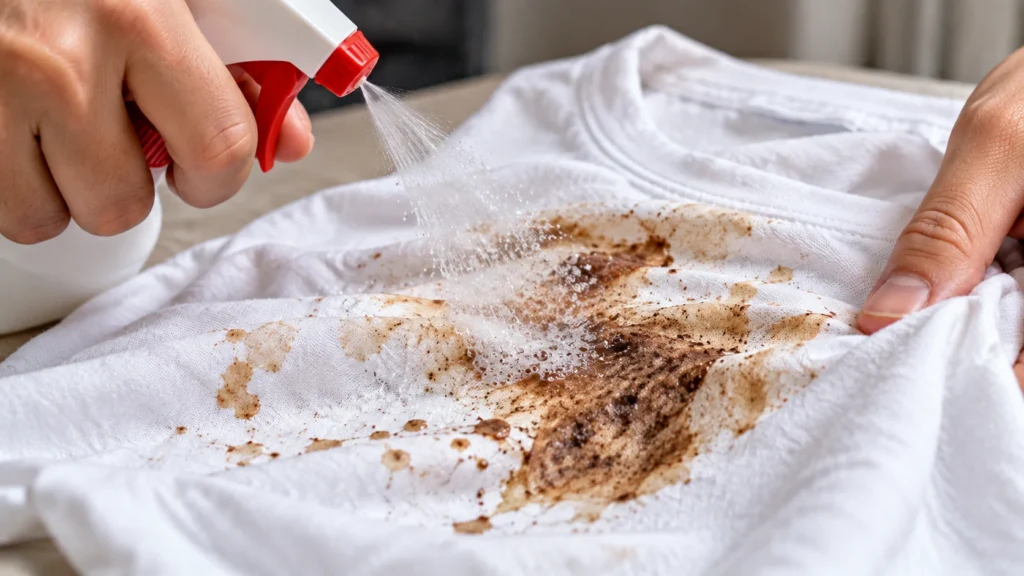
The treatment time matters as much as the product. A stain remover needs enough contact time to work, but the label should determine how long it can safely remain on the fabric.
For an old stain, you may need to pretreat, wash, inspect, and repeat instead of expecting one application to completely remove it. The American Cleaning Institute recommends treating stains as early as possible and repeating treatment if necessary.
Best Stain Remover for Grease and Oil
Grease and oil require a product capable of dealing with oily soils. A liquid laundry detergent or dedicated prewash stain remover can be effective when used before laundering.
The American Cleaning Institute recommends pretreating light grease and oil stains with a prewash stain remover, liquid laundry detergent, or liquid detergent booster, followed by washing at the hottest temperature safe for the fabric.
For heavily soiled clothing, pretreatment is especially important because simply adding the garment to a normal wash may not give the stain enough concentrated cleaning action.
Good Housekeeping’s 2026 testing also found OxiClean Max Force effective against difficult stains including oil, while its broader testing found several products useful for different stain categories.
Best Stain Remover for Blood, Food and Protein Stains
Protein-based stains such as blood, dairy, egg, and some food residues can benefit from enzyme-containing products. Enzymes are formulated to break down particular types of organic soils, making them useful in many laundry pretreatments.
For fresh blood, cold water is important because hot water can set the stain. The American Cleaning Institute recommends soaking fresh blood stains in cold water before laundering.
For older protein stains, ACI recommends pretreating or soaking with an enzyme-containing product before washing.
Do not use the same method for every stain simply because a product is labeled powerful. Always match the treatment to the stain and fabric.
Best Stain Remover for White Clothes
White clothing gives you more treatment options than many colored garments, but that does not mean every stain remover or bleach is automatically safe. The fabric label still determines which products and temperatures are appropriate.
Oxygen-based stain removers can be useful for many washable white fabrics, while chlorine bleach is suitable only for fabrics that specifically permit it. ACI advises using bleach only when it is safe for the fabric.
For yellow discoloration caused by rust, chlorine bleach can actually make the problem worse. ACI recommends a fabric-safe rust remover instead.
Best Stain Remover for Baby and Kids’ Clothes
Baby and children’s clothing often encounters food, milk, formula, grass, dirt, and bodily-fluid stains. An effective stain remover should therefore be compatible with the garment rather than simply being the strongest formula available.
Good Housekeeping’s testing identified Lively Probiotic Laundry Stain Remover as a value-oriented option and noted its performance on stains including spaghetti sauce, chocolate syrup, and coffee. It is not intended for wool or silk.
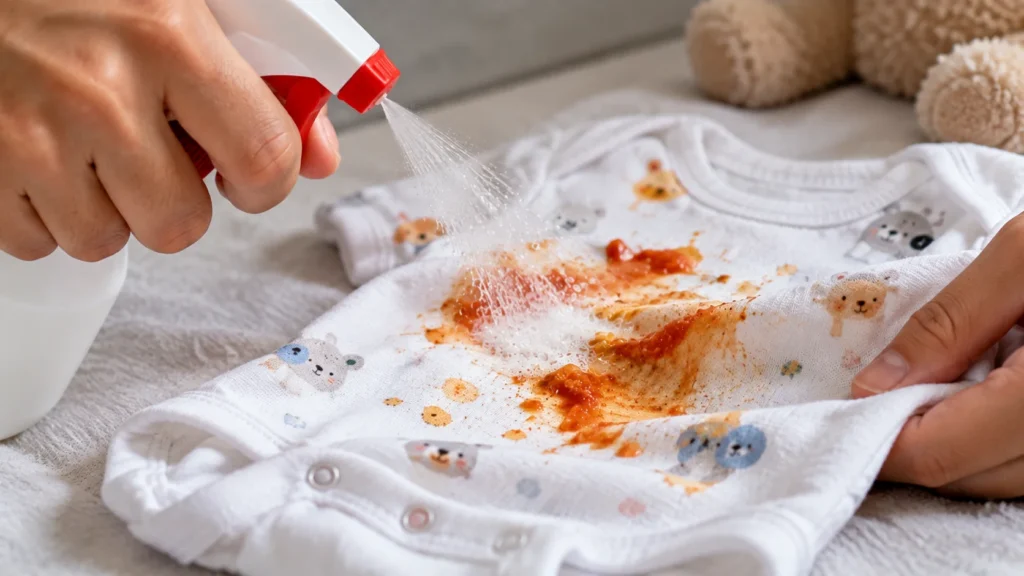
For baby clothes, always follow the care label and rinse thoroughly after treatment. If a child has particularly sensitive skin, choosing a fragrance-free option may be worth considering, but the product’s label should still be followed.
Best Stain Remover Spray for Clothes
A spray is convenient when you want to target a small area without treating an entire garment. OxiClean Max Force Spray is one example that has received strong results in independent testing.
Good Housekeeping rated it highly for its performance on difficult stains and found it effective on stains including grass and oil. Its manufacturer says to test an inconspicuous area first and provides specific instructions for washable whites and colored fabrics.
Consumer Reports’ earlier testing also found OxiClean MaxForce outperformed the other spray-on stain removers included in its comparison.
Best Stain Remover for Old and Set-In Stains
Old stains are more difficult because they may have already dried, been washed, or been exposed to dryer heat. That does not necessarily mean the garment is beyond saving, but expectations should be realistic.
The American Cleaning Institute recommends pretreating stains before they dry and warns against putting stained garments in the dryer because drying can permanently set some stains.
For set-in stains, Good Housekeeping found Shout Advanced useful because its concentrated gel can remain on fabric for an extended period before washing, while OxiClean Max Force also performed strongly in testing.
Best Stain Remover for Carpet, Upholstery and Pet Stains
A laundry stain remover should not automatically be used on carpets, couches, mattresses, or upholstery. These materials can have different fibers, backing materials, dyes, and cleaning requirements.

For pet stains, an enzyme-based product designed specifically for carpet or upholstery is generally more appropriate than a regular clothing stain remover. For hard-water marks, use a surface-specific mineral remover rather than a laundry product.
Likewise, products designed for tear stains on dogs or cats should not be confused with laundry stain removers. The keyword best tear stain remover represents a different cleaning problem and requires animal-safe product guidance.
How to Use the Best Stain Remover Correctly
Even an effective product can perform poorly when it is applied incorrectly. Start by removing excess material without spreading it, then pretreat according to the product directions.
The American Cleaning Institute recommends identifying the stain, treating it promptly, pretreating before laundering, and using the warmest water that is safe for the particular fabric.
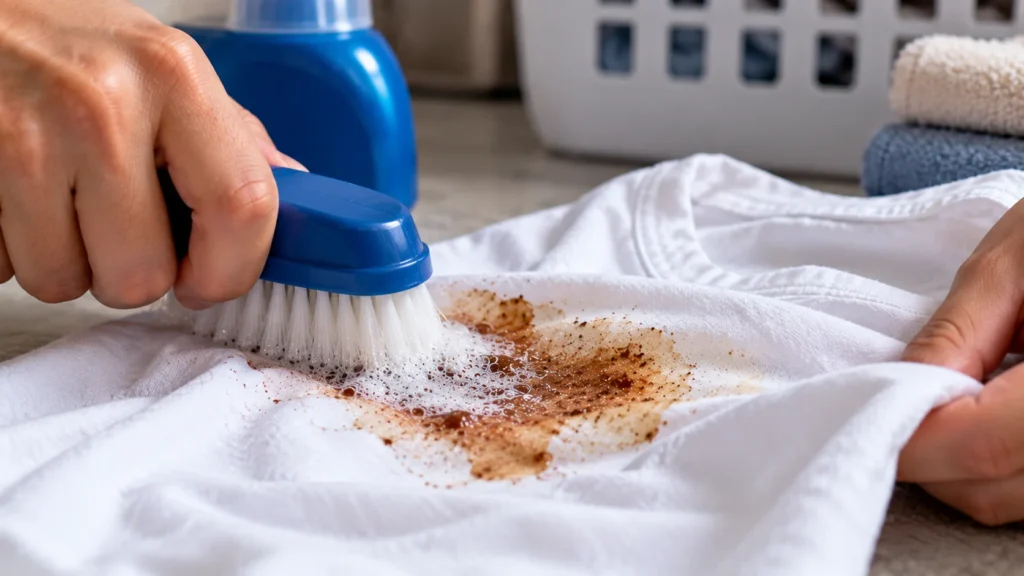
Most importantly, check the garment before drying. If the stain remains, treat and wash it again instead of applying heat.
Common Stain-Removal Mistakes
Avoiding mistakes is just as important as choosing the right product. Never assume that stronger chemicals automatically produce better results.
- Do not rub a fresh stain aggressively.
- Do not wait unnecessarily before pretreating.
- Do not ignore the fabric-care label.
- Do not use hot water on fresh blood.
- Do not use chlorine bleach on rust stains.
- Do not dry clothing while the stain remains.
- Do not use laundry products on unsuitable upholstery.
- Do not mix different stain removers.
- Do not use bleach unless the fabric permits it.
- Do not leave products on fabric longer than their labels allow.
- Do not skip a hidden-area colorfastness test.
- Do not assume every color-safe product works on every fabric.
- Do not use abrasive applicators on delicate garments.
- Do not use a laundry stain remover as a treatment for pet tear stains.
- Do not judge a product from one stain alone.
Jump into Other Related Article
- How to Clean Granite Countertops | Complete Guide for Stains, Sealing & Daily Care
- How to Remove Coffee Stains | Easy Methods for Clothes, Teeth, Carpet & More
- How to Clean a Sink Drain | Remove Odors, Hair, Grease & Clogs
How to Choose the Best Stain Remover for Your Needs
| Stain-remover type | Useful for | Main consideration |
| Carbona Laundry Stain Scrubber | General stains, ink, makeup | May be too harsh for silk |
| OxiClean Max Force Spray | Tough, oily and general stains | Test first; follow fabric restrictions |
| OxiClean Stain Remover Powder | Presoaking and stubborn stains | Requires soaking time |
| Shout Advanced | Set-in stains | Scrubber can be harsh on delicates |
| Lively Probiotic | Everyday food and pet-related laundry stains | Not for wool or silk |
| Liquid laundry detergent | Grease, dirt and pretreatment | Must be suitable for the fabric |
These descriptions reflect published testing and manufacturer instructions rather than a guarantee that one product will work best on every garment. Good Housekeeping’s 2026 testing and Consumer Reports’ testing both demonstrate that results vary according to stain and treatment method.
Conclusion
The best stain remover for clothes depends on what you are trying to remove. Current testing highlights different strengths: Carbona for a broad range of stains and particularly difficult ink, OxiClean products for tough and set-in stains, Shout Advanced for older stains, and Lively for certain everyday laundry messes.
The most reliable strategy is to identify the stain, pretreat it promptly, follow the garment’s care instructions, and inspect the clothing before drying. A good stain remover can make laundry easier, but correct application and stain-specific treatment are just as important as the product itself.
What is the best stain remover for clothes?
There is no single product that is best for every stain and fabric. Current Good Housekeeping testing highlights Carbona, Lively, OxiClean, Shout, and OxiClean Max Force for different laundry needs.
What is the best stain remover for old stains?
A concentrated pretreatment can be useful for set-in stains. Good Housekeeping found Shout Advanced particularly effective for set stains, while OxiClean Max Force also performed strongly in testing.
What is the best stain remover spray?
OxiClean Max Force is a strong option based on published testing. Consumer Reports found it outperformed the other spray-on stain removers in its test group, while Good Housekeeping also rated it highly in more recent testing.
What is the best stain remover for grease on clothes?
A liquid laundry detergent or dedicated prewash stain remover can work well for grease and oil. ACI recommends pretreating grease stains and washing at the hottest temperature safe for the fabric.
What is the best stain remover for blood?
For fresh blood, start with cold water rather than hot water. An enzyme-containing pretreatment can be useful for older blood stains when the fabric permits it.
What is the best stain remover for white clothes?
A suitable oxygen-based stain remover can be useful for many washable white garments, while chlorine bleach should only be used when the fabric-care label permits it. Rust stains require different treatment because chlorine bleach can intensify them.
What is the best stain remover for baby clothes?
Choose a product that is compatible with the garment’s fabric and care instructions. A fragrance-free option may be preferable for some households, while enzyme-based treatments can be useful for food, milk, and formula stains.
Can laundry detergent work as a stain remover?
Yes. Consumer Reports found that some detergents performed strongly when applied directly as a pretreatment before washing.