
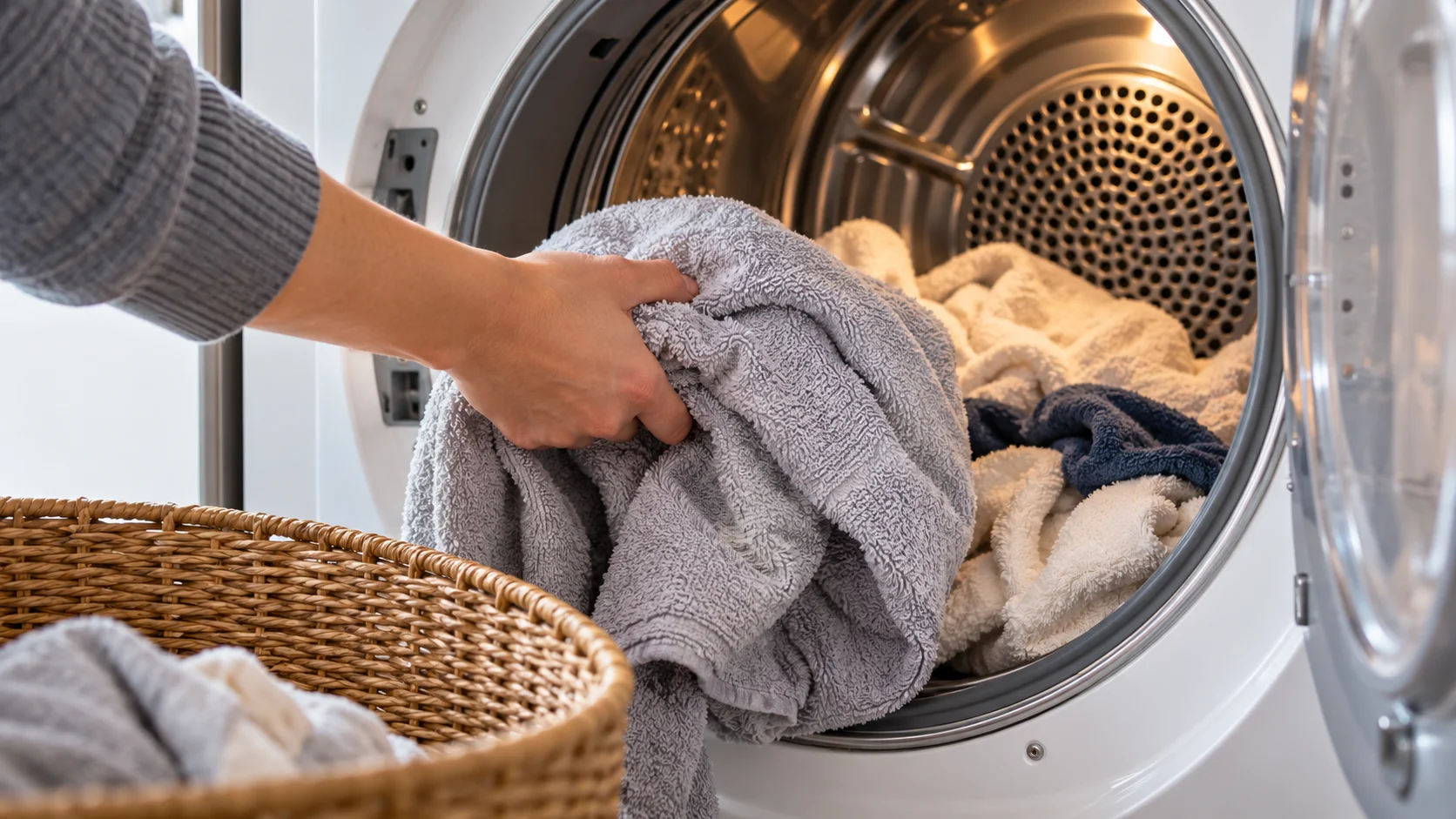
If you are wondering how long do dryers last, a modern clothes dryer can usually provide many years of service when it is correctly installed, not overloaded, and regularly maintained. The U.S. Department of Energy currently estimates an average lifetime of about 14 years for consumer clothes dryers, although individual machines can fail earlier or continue working well beyond that point.
The exact answer to how long does a dryer last depends on the type of dryer, how frequently you use it, ventilation, load size, maintenance, repair history, and the specific model. Gas and electric dryers, heat-pump models, compact machines, and washer-dryer combinations can have different designs and service requirements, so the age of the appliance should always be considered alongside its condition.
How Long Do Dryers Last on Average?
For a typical household clothes dryer, about 13 to 14 years is a reasonable planning figure. The U.S. Department of Energy’s 2024 clothes-dryer rulemaking estimated an average lifetime of approximately 14 years using field data and appliance-age information. Older industry and consumer references commonly place dryer life around 13 years, which shows that there is broad agreement that a well-maintained dryer can last well over a decade.
This does not mean a dryer automatically needs to be replaced when it reaches its 14th birthday. Some machines develop inexpensive problems that are worth repairing, while others can become unreliable earlier because of heavy use, restricted airflow, poor installation, or neglected maintenance. Consumer Reports also describes clothes dryers as durable appliances that can last 13 years or more.
A practical way to think about dryer lifespan is:
- Under 5 years: A major failure is relatively early, so diagnosis and repair are often worth considering.
- 5–8 years: The machine is entering the middle portion of its service life, but a repair can still make sense.
- 8–12 years: Condition, repair history, reliability, and repair cost become increasingly important.
- 12–15 years: The dryer is approaching or passing common lifespan estimates, so replacement should be considered alongside major repairs.
- 15+ years: Continued use is possible, but age, parts availability, energy efficiency, and repeated repairs become more important.
The important point is that average lifespan is a planning benchmark, not an expiration date.
What Determines How Long a Dryer Usually Lasts?
Two dryers of the same age can be in completely different condition. A lightly used dryer with excellent airflow may remain dependable for years, while a heavily used machine with a restricted vent can develop problems much sooner.
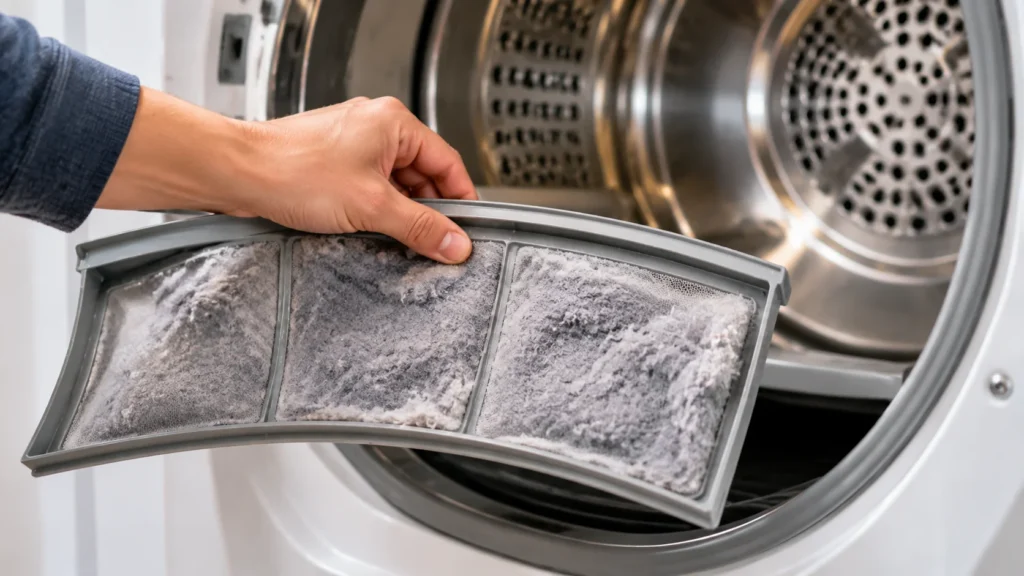
Several factors have an especially strong effect on how long dryers last:
- Frequency of use: A household running several loads every day puts more operating cycles on the dryer than a household drying clothes only a few times per week.
- Load size: Repeatedly stuffing the drum with oversized loads can make drying less efficient and increase mechanical stress.
- Ventilation: Restricted airflow forces the dryer to work under poor drying conditions and can extend cycle times.
- Lint-filter care: A blocked filter reduces airflow and can increase drying time.
- Installation quality: Crushed, excessively long, or poorly configured venting can reduce performance.
- Maintenance: Cleaning the filter, vent system, sensors, and other accessible areas helps preserve performance.
- Repair history: A dryer with several major repairs may be closer to replacement than a similar-age machine with little repair history.
- Model design: Simpler dryers may have fewer components that can fail, while feature-rich models can have more electronics and sensors.
- Parts availability: A machine may remain mechanically repairable but become less practical to keep when replacement parts are difficult to obtain.
- Operating environment: Excessive dust, humidity, poor ventilation around the appliance, or unsuitable installation conditions can contribute to problems.
Whirlpool specifically notes that excessive vent length can shorten dryer life while also reducing performance and increasing drying time and energy use.
How Long Do Electric Dryers Last?
How long do electric dryers last? A properly maintained electric clothes dryer can commonly operate for around 13 to 14 years, with some machines lasting substantially longer. The DOE’s current average lifetime estimate applies to consumer clothes dryers and includes multiple dryer classes rather than assigning a separate universal lifespan to every electrical configuration.
Electric dryers use electrical heating components, a motor, drum-support components, controls, sensors, and other parts. When one component fails, the entire dryer does not necessarily need to be replaced.
Common problems can include:
- Failed heating element
- Thermal fuse problems
- Worn drum belt
- Drum rollers or glides wearing out
- Motor problems
- Faulty moisture sensors
- Damaged door switches
- Control-board failures
- Restricted exhaust airflow
- Excessive lint buildup
A dryer that stops heating does not automatically need replacement. The cause might be a repairable component or a ventilation problem.
Jump into Other Related Article
- Laundry Dryer Vent Installation
- Does Rayon Shrink?
- How to Remove Coffee Stains
- How to Clean Suede Shoes
- Best Stain Remover for Clothes
- How to Clean Stainless Steel
- How to Clean Carpet Stains
- Oxygen Bleach
- Homemade Laundry Detergent
How Long Do Gas Dryers Last?
How long do gas dryers last? Gas dryers can also provide roughly a decade or more of household service when properly installed and maintained. There is no reliable basis for saying that every gas dryer will automatically outlast every electric dryer.
Gas models have some different components, including a burner system and ignition-related parts, while still sharing many mechanical components with electric dryers. Because of these differences, troubleshooting should follow the manufacturer’s instructions for the specific model.
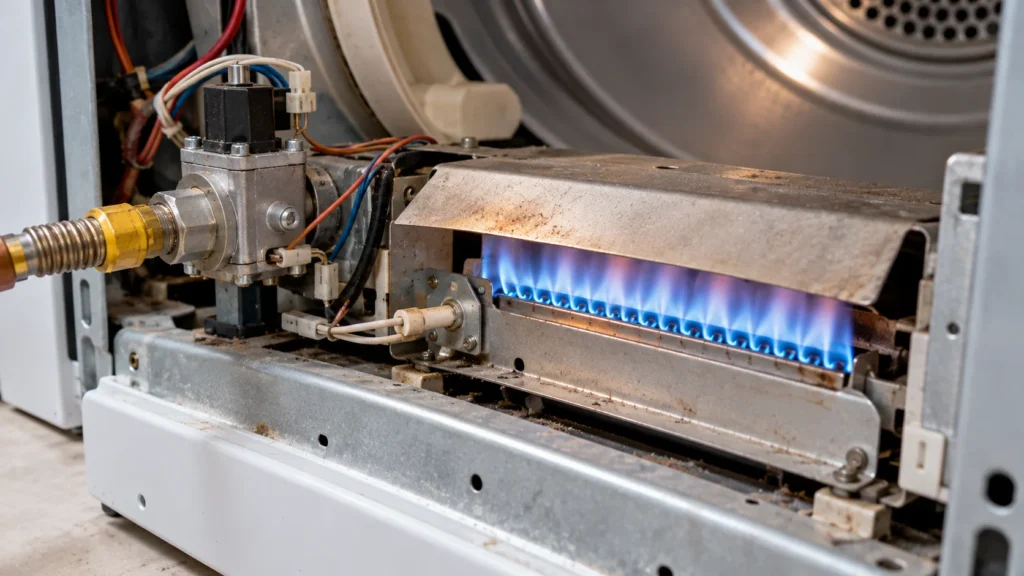
Gas dryer maintenance deserves particular attention because the appliance involves both heat and a gas supply. The U.S. Department of Energy’s dryer safety material recommends professional installation and servicing and says gas dryers should be inspected professionally to ensure the gas line and connection are intact and free of leaks.
If a gas dryer develops a gas smell, unusual combustion behavior, or a suspected gas-line problem, stop using it and arrange appropriate professional service rather than attempting an unsafe repair.
How Long Do Washers and Dryers Last Together?
The question how long do washers and dryers last is slightly misleading because a washer and dryer are two separate appliances. Buying them as a matching set does not mean they will fail at exactly the same time.
Consumer Reports says washers and dryers typically last more than a decade, but its large owner surveys also show that reliability varies among brands and appliance types.
A useful planning comparison is:
| Appliance | General planning lifespan |
| Clothes dryer | About 13–14 years |
| Washing machine | Often around a decade or more |
| Washer-dryer pair | Each appliance should be evaluated separately |
| Compact dryer | Depends heavily on model and usage |
| Heat-pump dryer | No universal lifespan should be assumed |
| Washer-dryer combination | Depends strongly on design and serviceability |
Older published appliance-life data has commonly placed dryers around 13 years and washing machines around 10 years, but these figures should be treated as general estimates rather than guarantees.
This is why replacing a dryer simply because the matching washer is being replaced is not always necessary. If the dryer is functioning properly and is still in good condition, keeping it may be financially sensible.
How Long Do Dryers Typically Last by Type?
Different dryer technologies can have different maintenance requirements, but there is no trustworthy universal lifespan number for every dryer type.
| Dryer type | What to expect |
| Electric vented dryer | Commonly around 13–14 years as a broad planning figure |
| Gas dryer | Similar decade-plus service potential when properly maintained |
| Heat-pump dryer | Service life varies by model, usage, maintenance, and parts support |
| Compact dryer | Depends on model, load frequency, and design |
| Stackable dryer | Stacking itself does not establish a separate lifespan |
| Washer-dryer combo | Different design; do not assume it has the same lifespan as a standalone dryer |
| Commercial-style residential dryer | Depends heavily on construction, workload, and maintenance |
The DOE’s current analysis includes standard electric, compact electric, gas, ventless electric, and combination washer-dryer product classes, demonstrating that dryers are not a single uniform category.
How Long Do Heat Pump Dryers Last?
There is no single authoritative number that should be used for how long do heat pump dryers last across all brands and models. Heat-pump dryers use a different drying system from conventional vented dryers, and serviceability can depend on the specific model.
Consumer NZ notes that heat-pump and condenser dryers are more complicated than vented models but remain repairable, while parts availability can affect how long an appliance remains practical to repair.
For a heat-pump dryer, pay particular attention to:
- Cleaning the lint filter as directed.
- Keeping airflow paths and heat-exchange areas clean.
- Following the manufacturer’s maintenance schedule.
- Watching for unusually long drying cycles.
- Cleaning condensate-related components when the manual requires it.
- Using the recommended load sizes.
- Keeping the appliance level and properly ventilated where required.
- Checking whether replacement parts remain available.
Do not assume that a heat-pump dryer automatically lasts longer simply because it is newer or more energy efficient.
How Long Do Stackable Washer and Dryers Last?
How long do stackable washer and dryers last? Stacking is primarily a configuration rather than a separate durability category. A properly installed stackable dryer can have a service life comparable to a similar standalone model.
The more important questions are whether the specific washer and dryer are designed for stacking, whether the manufacturer’s approved stacking hardware is used, and whether the installation meets the product requirements.
For a stackable setup:
- Use the manufacturer’s approved stacking kit.
- Do not improvise a stacking method.
- Make sure the appliances are properly leveled.
- Keep the dryer vent correctly installed.
- Avoid crushing or sharply bending the exhaust duct.
- Leave the required clearances around the appliances.
- Follow the weight and installation limitations in the manual.
- Keep the lint filter clean after every load.
Poor ventilation can shorten dryer life regardless of whether the appliance is stacked or placed side by side. Whirlpool states that excessive vent length and too many bends can reduce airflow and shorten dryer life.
How Long Do LG, Samsung, Maytag, Whirlpool and GE Dryers Last?
Searches for how long do Maytag dryers last, how long do LG dryers last, how long do Samsung dryers last, how long do Whirlpool dryers last, and how long do GE dryers last often produce very specific numbers online. Those numbers should be treated cautiously.
There is no reliable universal lifespan that applies to every dryer sold under one brand. A manufacturer’s product range can include basic, premium, compact, gas, electric, vented, ventless, and heat-pump models with different components.
Consumer Reports’ current dryer research evaluates predicted reliability, rather than claiming that every dryer from a particular brand will last a fixed number of years. Its 2026 survey covered more than 96,000 dryers purchased new between 2015 and 2025.
The same principle applies to these searches:
- How long do LG washer and dryers last? Evaluate the washer and dryer separately.
- How long do Samsung washer and dryers last? Check the exact model and its service history.
- How long do Maytag washer and dryers last? Do not assume the washer and dryer will fail together.
- How long do Whirlpool washer and dryers last? Use the model’s maintenance and service guidance.
- How long do GE washer and dryers last? Consider reliability data for the exact appliance category.
- How long do Amana dryers last? Model-specific condition matters more than a universal brand number.
- How long do Kenmore dryers last? Identify the actual manufacturer/model before estimating parts and service support.
- How long do Electrolux dryers last? Consider the exact model, maintenance requirements, and local parts/service availability.
- How long do Speed Queen dryers last? Do not turn brand reputation into a guaranteed number of years.
For example, LG recommends cleaning the lint filter after every load and cleaning dryer ducts regularly to help maintain performance and long life. Samsung similarly recommends regular exhaust-vent cleaning and explains that blocked ducting can extend drying time.
What Are the Signs Your Dryer Is Wearing Out?
A dryer does not always fail suddenly. Many machines provide warning signs that performance is declining.
Watch for these symptoms:
- Clothes take much longer to dry than they used to.
- The dryer becomes unusually hot.
- The drum makes new grinding, squealing, scraping, or banging sounds.
- The drum stops turning correctly.
- The dryer repeatedly stops during a cycle.
- The appliance produces unusual burning smells.
- The dryer has repeated error codes.
- Clothes remain damp after a normal cycle.
- The machine needs increasingly frequent repairs.
- The vent repeatedly becomes restricted.
- The motor struggles to start or maintain operation.
- The control panel behaves unpredictably.
- A major internal component fails on an older machine.
- Replacement parts are becoming difficult to find.
- Repair costs approach the value of a replacement dryer.
However, a longer drying time is not automatically proof that the dryer itself is failing. Whirlpool identifies restricted airflow, blocked filters, crushed vents, incorrect venting, and excessive vent length as common causes of poor drying performance.
Why Is My Dryer Taking Longer to Dry?
One of the most useful troubleshooting questions is whether the appliance is genuinely wearing out or simply struggling with airflow.
A clogged lint filter can restrict airflow, while a blocked exhaust duct can prevent moist air from leaving the dryer efficiently. Whirlpool recommends cleaning the lint screen after every use and checking the vent system when drying performance decreases.
Before replacing an older dryer because of long cycles, check:
- Clean the lint filter.
- Check for residue blocking the filter.
- Inspect the exhaust hose for crushing or kinks.
- Check the outside exhaust hood for lint or debris.
- Confirm that the exterior flap can open.
- Check whether the vent has excessive bends.
- Make sure the load is not too large.
- Confirm that the selected cycle is appropriate.
- Check for manufacturer airflow warnings.
- Arrange professional vent cleaning when necessary.
LG’s troubleshooting guidance also identifies restricted airflow as a cause of extended drying times and recommends checking the lint filter, exhaust hose, outdoor vent, and internal ductwork.
How to Make a Dryer Last Longer
The best way to extend dryer life is not complicated. Consistent maintenance prevents small airflow and cleanliness problems from becoming persistent performance issues.
Follow these dryer-care habits
- Clean the lint filter after every load. This is one of the simplest and most important maintenance steps.
- Clean the filter more thoroughly when residue builds up. Detergent and fabric-softener residue can reduce effective airflow.
- Keep the exhaust system clear. Restricted airflow can increase drying time and place unnecessary strain on the machine.
- Inspect the vent hose. It should not be crushed, kinked, or improperly configured.
- Clean the dryer vent regularly. Manufacturer guidance commonly recommends periodic inspection or cleaning, with frequency depending on use and performance.
- Avoid overloading. Large loads can restrict movement and airflow.
- Use appropriate drying cycles. Follow the garment-care instructions and your dryer’s manual.
- Keep the area around the dryer clear. Adequate clearance supports proper operation and access for maintenance.
- Clean sensors when your model requires it. Sensor contamination can affect automatic drying.
- Pay attention to warning lights. Do not repeatedly ignore airflow or filter warnings.
- Investigate unusual noises early. A small mechanical repair can be easier than waiting for a larger failure.
- Use qualified service for major repairs. Gas-related work in particular should be handled appropriately.
- Keep the dryer level if required by the manufacturer.
- Follow the owner’s manual. Maintenance requirements vary by model.
- Do not continue operating a dryer with a serious safety problem.
LG specifically recommends cleaning the lint filter after every load, maintaining the dryer duct, and keeping moisture sensors clean for proper performance.
How Often Should You Clean a Dryer Vent?
There is no single interval that is perfect for every home because dryer use, vent length, pet hair, lint production, and installation all affect how quickly the system becomes restricted.
Whirlpool recommends cleaning the vent going to the exterior every one to two years or as needed when drying performance decreases, while other manufacturer guidance can call for annual inspection or cleaning.
Samsung recommends cleaning the exhaust vent once or twice a year, even on models equipped with a vent-blockage test.
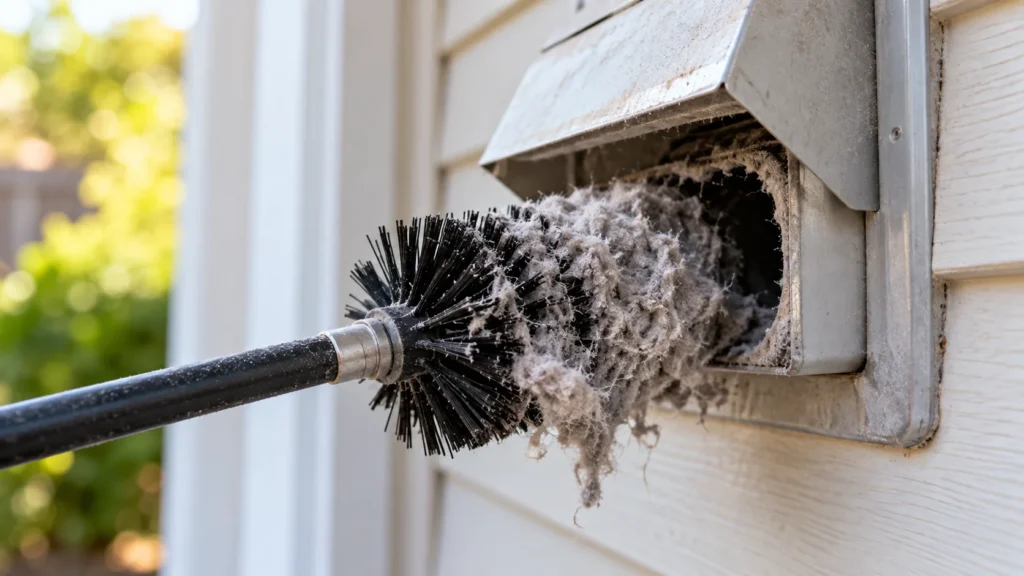
The practical rule is to follow your model’s manual and clean sooner when you notice:
- Longer drying times
- Weak airflow at the outside vent
- Excessive heat
- Repeated airflow warnings
- Heavy lint accumulation
- A vent blockage message
- A dryer that becomes hotter than normal
The U.S. Department of Energy’s dryer safety guidance also recommends cleaning the lint filter before or after each use and keeping the exhaust system unrestricted.
Should You Repair or Replace an Old Dryer?
Age alone should not decide whether a dryer is repaired or replaced. The better question is whether the expected cost and reliability of continued ownership make sense.
Consumer Reports’ 2026 repair-or-replace guidance emphasizes considering the dryer’s age, original cost, type, and potential repair cost instead of automatically replacing the appliance after a breakdown. Its survey data also found that 90% of dryers purchased from 2015 through 2025 were still in use, illustrating that many machines remain serviceable beyond the early years.
Repair is often worth considering when:
- The dryer is relatively young.
- The problem is a single replaceable component.
- The machine has otherwise been reliable.
- The repair cost is modest compared with replacement.
- Replacement parts are readily available.
- The drum, motor, cabinet, and controls remain in good condition.
- The dryer has good reliability for its model.
- There are no unresolved safety problems.
Replacement becomes more attractive when:
- The dryer is already well beyond its expected service life.
- It has repeated major failures.
- Repair costs are high.
- Multiple expensive components are failing.
- Parts are difficult to obtain.
- The cabinet or drum has serious damage.
- The dryer has persistent airflow or overheating problems.
- A replacement would substantially improve efficiency or functionality.
- You are spending money repeatedly without restoring dependable operation.
A nine-year-old dryer needing one reasonably priced repair is a very different situation from a 15-year-old dryer that has already required several major repairs.
How Long Do Hair Dryers and Blow Dryers Last?
The phrase how long do hair dryers last refers to a completely different type of appliance from a clothes dryer. There is no strong standardized industry lifespan that can be applied to every hair dryer.
Consumer Reports notes that proper maintenance can help a good hair dryer last for years and specifically recommends keeping the filter clear when the model has one because a blocked filter can cause overheating.
For example, Dyson currently provides a two-year limited warranty for its hair dryers in the U.S., but a warranty period should not be interpreted as the product’s expected lifespan.
For Dyson hair dryers, maintenance is particularly relevant because the manufacturer provides filter-care instructions for its machines. A hair dryer that begins overheating, losing airflow, producing unusual electrical smells, or repeatedly shutting off should be inspected rather than continuously operated.
What About Freeze Dryers?
A freeze dryer is completely different from a household clothes dryer. It uses a low-temperature drying process involving freezing and removal of moisture under controlled conditions.
Therefore, the keyword how long do freeze dryers last should not be treated as another way of asking how long clothes dryers last. Freeze-dryer lifespan depends on the equipment type, vacuum system, refrigeration components, pump maintenance, workload, and manufacturer.
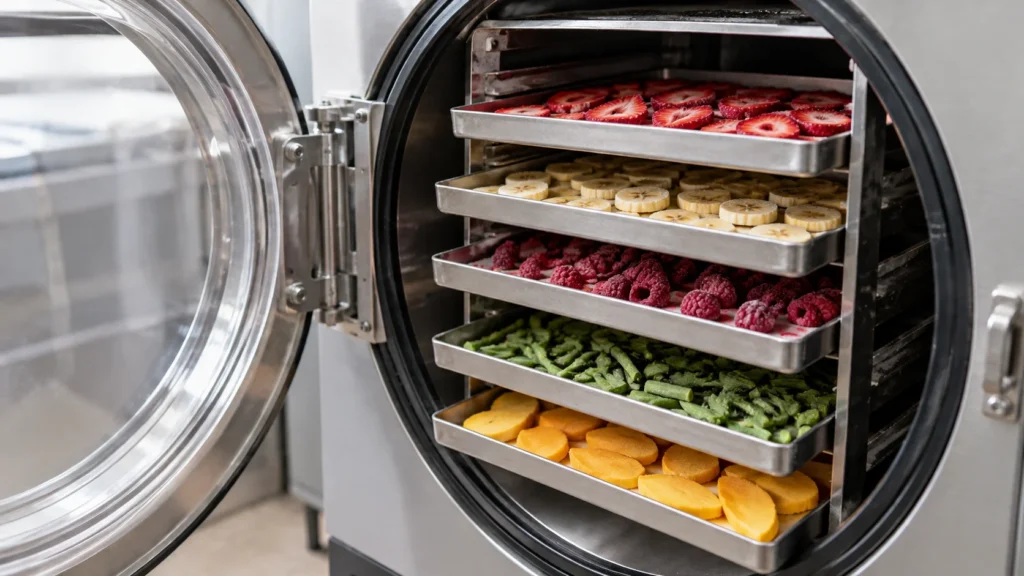
For a household laundry article, the relevant lifespan question is the clothes dryer, not the freeze-drying equipment used for food or other materials.
Dryer Lifespan Comparison at a Glance
| Question | Best general answer |
| How long do dryers last? | About 13–14 years is a useful planning figure |
| How long does a dryer last? | Often more than a decade with proper care |
| How long do dryers usually last? | Commonly around 13–14 years, but individual results vary |
| How long do electric dryers last? | Often around 13–14 years as a broad benchmark |
| How long do gas dryers last? | Typically a decade or more with proper maintenance |
| How long do clothes dryers last? | Around 13–14 years is a reasonable general estimate |
| How long do washers and dryers last? | Both can last a decade or more, but each appliance varies |
| How long do heat pump dryers last? | No universal lifespan; model and maintenance matter |
| How long do stackable dryers last? | Similar general lifespan to comparable standalone models |
| How long do hair dryers last? | Varies widely; good maintenance can help them last for years |
| How long do Dyson hair dryers last? | No fixed lifespan published; Dyson currently offers a 2-year limited warranty |
| How long do new dryers last these days? | Modern dryers can still provide decade-plus service, but reliability varies by model |
When Should You Replace Your Dryer?
There is no magic age at which every dryer should be replaced. A 12-year-old dryer that operates quietly, dries efficiently, and has a clean vent may be a better ownership proposition than a seven-year-old dryer that requires repeated expensive repairs.
Consider replacement when age, repair cost, reliability, safety, and performance all point in the same direction.
A useful decision checklist is:
- Is the dryer close to or beyond its expected lifespan?
- Is it still drying clothes efficiently?
- Has the vent been professionally or thoroughly inspected?
- Has the machine required several repairs recently?
- Is the current repair expensive?
- Are replacement parts available?
- Is the drum and motor in good condition?
- Does the dryer have persistent overheating or airflow problems?
- Would a newer model offer meaningful operating-cost savings?
- Can the existing installation support the replacement model?
- Is the dryer under warranty or covered by another service plan?
- Does the replacement have better reliability data?
If the dryer is old but otherwise healthy, maintenance may be the better choice. If it is old, repeatedly failing, inefficient, and expensive to repair, replacement becomes much easier to justify.
Final Answer: How Long Do Dryers Last?
So, how long do dryers last? A good general answer is around 13 to 14 years, based on current U.S. Department of Energy lifetime analysis and other widely cited appliance-life data. Some dryers fail sooner, while well-maintained machines can continue working beyond the average.
The most important factors are not simply the brand name or the number of years on the clock. Proper ventilation, regular lint-filter cleaning, reasonable load sizes, correct installation, timely repairs, and model-specific maintenance can make a significant difference. If your dryer is taking longer to dry, becoming unusually hot, making new noises, or repeatedly breaking down, diagnose the underlying problem before deciding whether to repair or replace it.
Conclusion
A clothes dryer is a long-term household appliance, and how long a dryer lasts depends on much more than its purchase date. A reasonable expectation is roughly 13–14 years for a typical consumer dryer, but actual service life can vary considerably with usage, maintenance, installation quality, airflow, model design, and repair history.
If you want your dryer to reach or exceed its expected lifespan, focus on the basics: clean the lint filter after every load, maintain the exhaust system, avoid overloading, watch for changes in drying performance, and address unusual noises or overheating promptly. When a repair is needed, compare its cost with the dryer’s age and overall condition rather than replacing the appliance automatically.
1. How long do dryers last on average?
2. How long do electric dryers last compared with gas dryers?
Both electric and gas dryers can provide more than a decade of service when properly maintained. The exact lifespan depends more on the individual model, workload, installation, ventilation, maintenance, and repair history than on the fuel type alone.
3. How long do washers and dryers usually last?
Washers and dryers can both last a decade or more, but they should be evaluated separately because they have different mechanical systems and failure patterns. Consumer Reports describes washers and dryers as appliances that typically last more than a decade, while reliability varies by model and brand.
4. Is a 10-year-old dryer worth repairing?
Often, yes. A 10-year-old dryer does not automatically need replacement. If the repair is relatively inexpensive and the machine has otherwise been reliable, repairing it may make sense. If it has repeated failures or requires a costly repair, compare that expense with the price and expected reliability of a replacement.
5. What is the best way to make a dryer last longer?
The most important habits are cleaning the lint filter after every load, maintaining the exhaust vent, preventing restricted airflow, avoiding excessive loads, following the manufacturer’s maintenance instructions, and fixing performance problems early. Restricted ventilation can increase drying time and may shorten dryer life.