
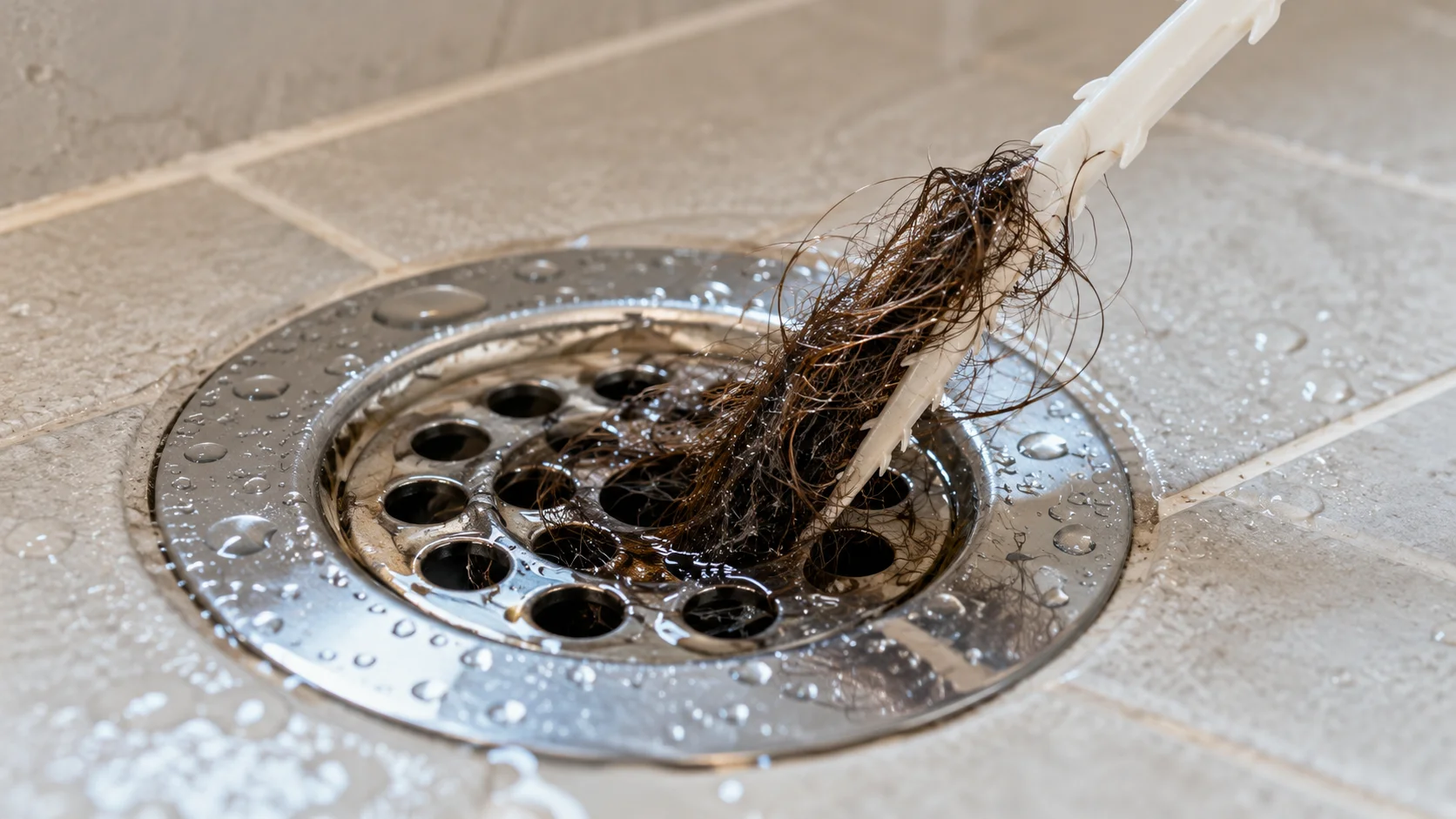
Knowing how to clean a shower drain helps prevent unpleasant odors, slow drainage, and stubborn buildup in your bathroom. Hair, soap residue, body oils, and other debris can collect around the drain opening and inside the drainpipe. Over time, this material may restrict water flow and create an environment where odor-causing residue accumulates. Regular cleaning can remove much of this buildup before it becomes a more difficult plumbing problem.
The best cleaning method depends on what is causing the issue. If you have visible hair near the drain opening, removing it manually is often the simplest first step. If your shower drain smells bad, you may need to clean the drain cover and accessible surfaces, check for accumulated organic debris, and investigate whether the trap is holding water correctly. For a clogged shower drain, start with mechanical removal and avoid mixing household chemicals. If water remains standing, several fixtures drain slowly, or sewage odors persist, professional plumbing help may be necessary. Let’s understand how to clean shower drain.
Why Does a Shower Drain Get Dirty or Clogged?
A shower drain collects more than water. Every shower can carry hair, soap residue, skin oils, shampoo, conditioner, and small particles toward the drain opening. Some debris passes through the plumbing, while other material catches on the drain cover, hair catcher, or pipe surfaces.
Hair is a particularly common cause of shower drain clogs because strands can tangle together and trap other material. Soap residue and oils can cling to the hair, creating a compact mass that gradually restricts drainage. If the drain is not cleaned regularly, the buildup may become harder to remove.
Common causes of a dirty shower drain
- Hair buildup: Loose strands collect around the drain cover or inside the pipe.
- Soap scum: Soap ingredients can combine with minerals in hard water and leave residue.
- Shampoo and conditioner: Product residue can contribute to a sticky film.
- Body oils and skin cells: These can accumulate with other organic debris.
- Standing water: Slow drainage allows debris to remain around the drain for longer.
- Biofilm: Microorganisms can grow within a moist layer of organic material.
- Mold or mildew: Persistent moisture and organic residue may encourage unwanted growth on nearby surfaces.
- Poor drain maintenance: Infrequent cleaning allows small deposits to accumulate.
A dirty drain does not always mean the pipe is seriously clogged. Sometimes the problem is limited to the removable cover or hair catcher. Before using a drain cleaner, inspect the accessible parts and determine whether the water is draining normally.
How to Clean a Shower Drain Step by Step
For routine maintenance, you usually do not need an aggressive chemical cleaner. Start by removing the visible debris, clean the drain cover, and inspect the accessible opening. If the drain is clogged, use a suitable plastic drain tool or a hand-operated drain snake to remove hair before considering any other method.
You will need: rubber gloves, a small bucket or bowl, an old toothbrush, a microfiber cloth, a flashlight, and a plastic drain-cleaning tool or suitable hand snake.
Step 1: Remove Standing Water and Prepare the Area
If water is pooling around the shower drain, allow as much as possible to drain before beginning. Put on rubber gloves and remove bath mats, shampoo bottles, and other items that could get in the way.
Open a window or turn on the bathroom exhaust fan if available, especially if you will be using a cleaning product. The EPA recommends following product labels and improving ventilation when using household cleaners.
- Keep children and pets away from cleaning products.
- Do not use your hands to reach blindly into the drain.
- If you recently used a chemical drain cleaner, do not insert a tool or pour another product into the drain until you have checked the product instructions.
- If the drain contains standing water mixed with an unknown chemical, avoid direct contact.
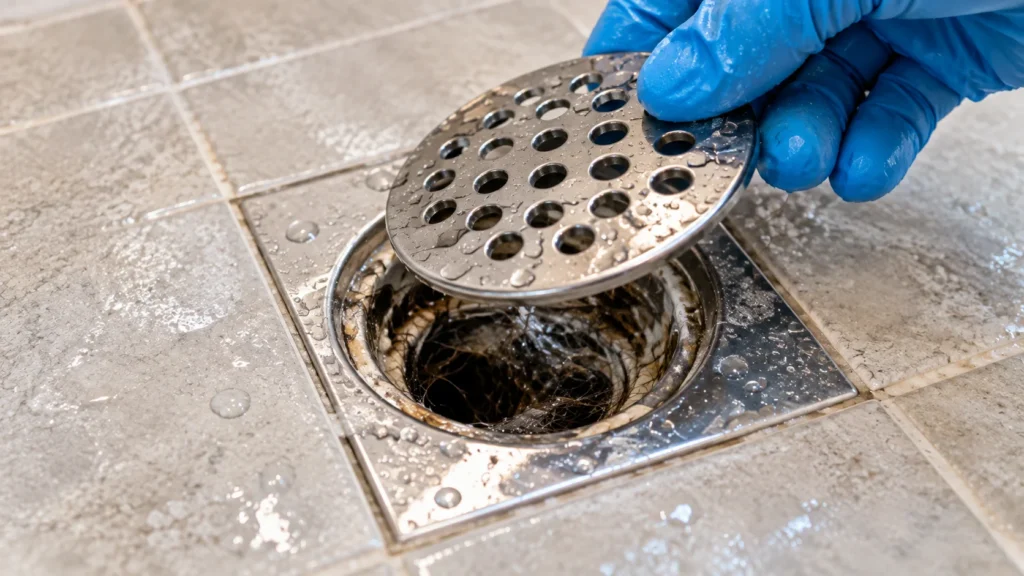
Step 2: Remove the Shower Drain Cover
Look at the drain to determine how its cover is attached. Some covers lift out, some are held by screws, and others have a locking mechanism. Linear shower drains may have a long removable grate or a separate hair-catching insert.
- Check the visible edges of the cover.
- Look for screws or a designated lifting point.
- Use the appropriate screwdriver if screws are present.
- Lift the cover gently without bending it.
- Put screws and small components in a safe place.
- If the cover does not move easily, check the manufacturer’s instructions rather than forcing it.
Do not assume every shower drain cover is removable. Some designs include concealed fasteners, fixed grates, or components that should not be disturbed. If the cover is sealed in place or connected to a specialized waterproofing system, clean the accessible surfaces instead.
Step 3: Remove Hair and Loose Debris
Use a flashlight to inspect the drain opening. If you can see hair near the surface, remove it with gloved fingers or a plastic drain-cleaning tool.
- Pull visible hair upward instead of pushing it deeper.
- Use a plastic hook designed for drain cleaning.
- Remove small amounts at a time.
- Place the debris in a trash bag.
- Do not flush collected hair down another drain.
- Avoid sharp metal objects that could scratch surfaces or damage components.
- Never force a tool into a narrow opening.
- Stop if you encounter an obstruction that will not move easily.
Hair removal is particularly important when the shower is draining slowly. Cleaning the opening may restore normal flow if the obstruction is near the top, but a deeper blockage may require a drain snake or a plumber.
Step 4: Scrub the Drain Cover and Accessible Surfaces
Mix a small amount of ordinary dishwashing liquid with warm water in a separate container. Dip an old toothbrush into the solution and scrub both sides of the drain cover, focusing on corners, grooves, and areas where hair or residue has collected.
Wipe the surrounding shower floor with a suitable bathroom cleaner. If the cover is made from a special finish, natural stone, or a material that can be scratched, use a product approved for that surface.
- Scrub away visible soap residue.
- Clean around the drain opening.
- Wipe the underside of the cover.
- Rinse away cleaning solution.
- Dry accessible surfaces with a clean cloth.
- Inspect the cover for damage before replacing it.
Cleaning products can damage some surfaces if they are incompatible, so follow the product label and the drain manufacturer’s care instructions.
Step 5: Clean the Accessible Drain Interior
Once loose hair has been removed, use a soft brush or cloth to clean surfaces that are safely reachable. Do not push a brush deeply into the plumbing or attempt to dismantle the trap without knowing how the assembly works.
If the drain has a removable hair catcher, clean it separately and reinstall it correctly. A clean catcher can reduce the amount of hair that enters the pipe during future showers.
Step 6: Rinse and Test the Drain
Reinstall the cover or hair catcher according to the manufacturer’s instructions. Run a small amount of warm water and observe how quickly it drains.
- If the water flows normally, the blockage may have been near the surface.
- If the water still drains slowly, debris may remain farther down the pipe.
- If water backs up immediately, stop running the shower.
- If you hear unusual gurgling or notice water backing up into another fixture, investigate the plumbing rather than repeatedly rinsing the drain.
Do not pour boiling water into the shower drain. Very hot water may damage certain plastic plumbing components, seals, or nearby finishes. Warm water is the more conservative choice unless the plumbing manufacturer specifies otherwise.
How to Clean Hair Out of a Shower Drain
Hair is one of the most common reasons a shower drain becomes slow. Long strands can tangle together, catch on the drain cover, and collect soap residue and other debris. The most effective first step is usually to remove the hair mechanically rather than trying to dissolve it with a household mixture.
Method 1: Use a Plastic Drain-Cleaning Tool
A plastic drain-cleaning strip typically has small barbs that catch hair when the tool is inserted and withdrawn.
- Remove the drain cover if the design allows.
- Insert the plastic tool gently into the accessible opening.
- Follow the tool’s directions and avoid forcing it.
- Pull the tool upward slowly.
- Remove any trapped hair.
- Dispose of the debris in the trash.
- Repeat only as needed.
- Rinse the accessible area with warm water.
- Test drainage.
- Clean and store the tool according to its instructions.
Use a tool of suitable length for your drain. A short plastic strip is often enough for hair near the opening, while a deeper blockage may require a proper drain snake.
Method 2: Remove Hair From the Drain Catcher
If your shower has a removable hair catcher, lift it out and remove the accumulated strands.
- Put on gloves.
- Lift the catcher carefully.
- Pull away hair and debris.
- Wash the catcher with warm water and mild detergent.
- Scrub its openings with a soft brush.
- Rinse thoroughly.
- Reinstall it securely.
A hair catcher is particularly useful in households with long hair or several people using the same shower. Cleaning it regularly is easier than waiting until hair builds up inside the pipe.
Method 3: Use a Hand-Operated Drain Snake
If the clog is deeper, a hand-operated drain snake may help reach hair that a short plastic tool cannot remove.
- Choose a snake suitable for shower drains.
- Follow the tool manufacturer’s instructions.
- Feed it slowly into the drain.
- Avoid excessive force when turning or withdrawing it.
- Remove the tool carefully.
- Dispose of the collected material.
- Rinse the drain and check the flow.
If the snake repeatedly meets a hard obstruction, becomes stuck, or seems to damage the drain assembly, stop. A plumber can determine whether the blockage is farther down the pipe or caused by a different plumbing problem.
Jump into Other Related Article
- Laundry Dryer Vent Installation
- Does Rayon Shrink?
- How to Remove Coffee Stains
- How to Clean Suede Shoes
- Best Stain Remover for Clothes
- How to Clean Stainless Steel
- How to Clean Carpet Stains
- Oxygen Bleach
- Homemade Laundry Detergent
- All in One Washer Dryer
- Small Laundry Room Ideas
How to Clean a Shower Drain With Baking Soda and Vinegar
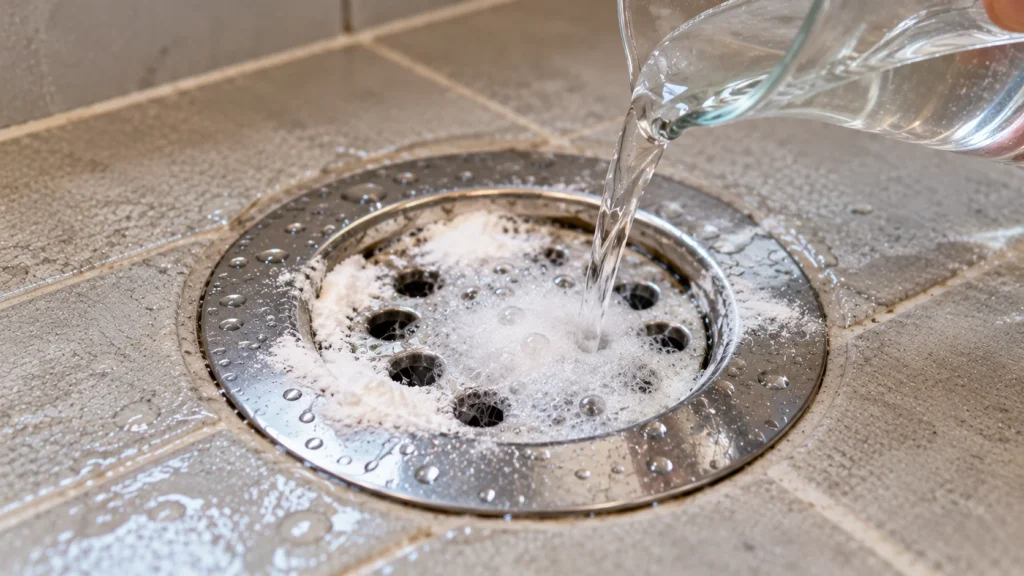
Searching for how to clean shower drain with baking soda and vinegar often leads to a familiar home-cleaning recipe. Baking soda and vinegar react when combined, producing bubbles as carbon dioxide is released. However, the fizzing reaction does not guarantee that a hair clog will dissolve or that the pipe will become clear.
The EPA notes that homemade cleaning products do not always perform as well as commercially formulated products and advises against mixing cleaning products indiscriminately.
A cautious approach to baking soda and vinegar
For routine cleaning of accessible drain surfaces, it is better to remove hair first and use a suitable cleaner according to its label. If you still choose to use baking soda and vinegar for a light surface-cleaning task, understand that this is not a reliable method for clearing a solid blockage.
- Remove the drain cover if permitted.
- Pull out visible hair and debris.
- Clean the cover separately with mild detergent and water.
- Avoid adding vinegar if a chemical drain cleaner or bleach has recently been used.
- Never combine multiple cleaning products in the drain.
- Rinse accessible surfaces according to the product instructions.
- Test whether the water drains normally.
- Use a mechanical tool or call a plumber if the clog remains.
Important: Never mix vinegar with chlorine bleach or pour vinegar into a drain that may contain residual chemical drain cleaner. Mixing incompatible products can release dangerous fumes. The EPA specifically advises never mixing cleaning products.
Does baking soda and vinegar unclog hair?
It may help loosen some light residue on accessible surfaces, but it should not be relied on to remove a compact mass of hair deep inside the drainpipe. For a hair blockage, manually removing the material or using a suitable drain snake is usually the more direct approach.
If the drain is completely blocked, repeatedly adding home remedies may delay the actual repair. Stop experimenting if the water is not moving, and choose a method appropriate for the obstruction.
How to Clean a Smelly Shower Drain
A shower drain that smells bad may have a buildup of hair, soap scum, body oils, or other organic debris. The smell can also come from a dirty or dry P-trap, a plumbing vent problem, or an issue farther down the drain line. Identifying the cause is more effective than simply trying to cover the odor with fragrance.
The P-trap is the curved section of plumbing that holds water to help prevent sewer gases from entering the bathroom. A dry trap or a plumbing fault can allow unpleasant odors to travel back through the drain.
Step 1: Remove Organic Buildup
Start by removing the drain cover, if it is designed to be removed, and pulling out visible hair. Scrub the cover and accessible surfaces with a soft brush and a suitable bathroom cleaner.
Pay attention to slimy residue around the drain opening. Biofilm can collect on moist surfaces where hair, soap, skin oils, and other debris accumulate. Scrubbing away the material is important because spraying a product over visible grime may not remove the underlying buildup.
Step 2: Rinse the Accessible Area
Use warm tap water to rinse the cleaned surfaces, provided the drain and cleaning product instructions permit it. Avoid boiling water, and do not add a second cleaning chemical if you have already used a commercial drain cleaner.
Step 3: Check Whether the Trap May Be Dry
If the shower has not been used for a long time, run water briefly to see whether the odor improves. Water in the P-trap normally forms a barrier against sewer gases. If the smell continues, the trap may be dirty, losing water, or affected by a venting or plumbing problem.
Step 4: Investigate Persistent Odors
Call a plumber if the drain continues to smell like sewage after you have cleaned the accessible parts. A persistent odor can indicate a deeper blockage, a dry trap caused by a plumbing fault, or a leaking pipe. Do not rely on air fresheners or repeated chemical treatments to solve an unexplained sewer smell.
How to clean a shower drain that smells like rotten eggs
A rotten-egg odor deserves particular attention because it may be associated with hydrogen sulfide or other sewer-related gases. A clogged drain, organic buildup, a dry trap, or a plumbing fault can be possible causes.
- Remove visible hair and debris.
- Clean the accessible drain cover and surrounding surfaces.
- Check whether the shower has been unused for an extended period.
- Run water briefly if the drain is otherwise functioning normally.
- Do not mix bleach, vinegar, or commercial drain cleaners.
- Arrange a plumbing inspection if the smell persists or other drains are affected.
If the odor is strong, persistent, or accompanied by gurgling or wastewater backup, leave the area if you feel unwell and seek appropriate professional assistance rather than continuing to experiment with cleaning products.
How to Clean a Clogged or Slow Shower Drain
A slow shower drain can indicate a partial obstruction caused by hair, soap residue, or another object. If water drains slowly but does not back up into other fixtures, you can begin with basic cleaning methods.
Method 1: Use a Drain-Cleaning Tool
Remove the cover if possible, then use a plastic hair-removal tool or suitable hand snake to extract the obstruction. Follow the tool’s directions and do not force it past resistance. A drain snake is designed to reach and remove blockages that are beyond the reach of a simple surface-cleaning tool.
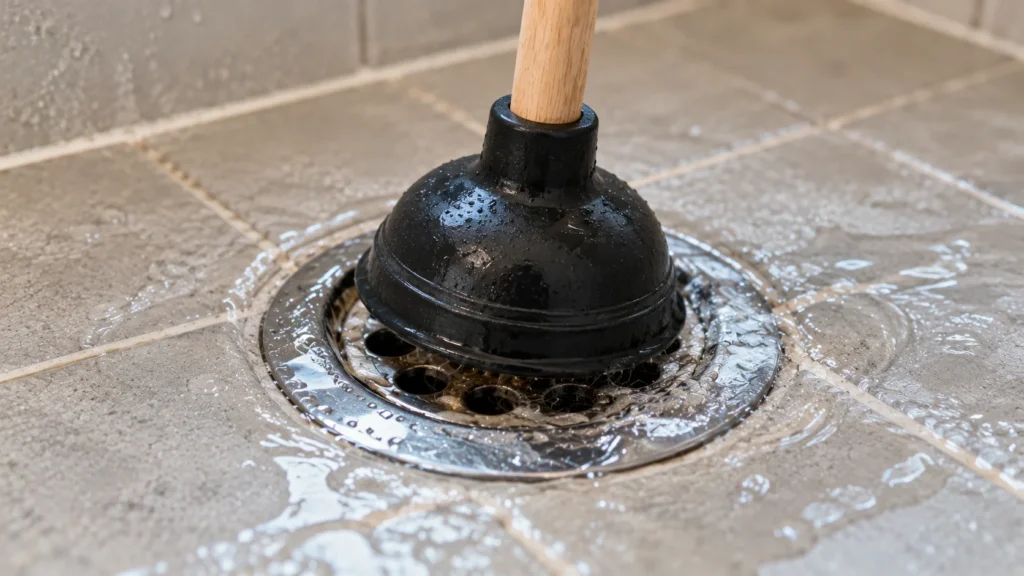
Method 2: Try a Cup-Style Plunger
A cup-style plunger may help with some minor blockages if the drain design allows an effective seal.
- Remove visible hair from the drain opening.
- Add enough water to cover the plunger’s rubber cup, if necessary.
- Position the plunger over the drain.
- Keep the cup sealed against the surface.
- Use controlled, gentle plunging movements.
- Lift the plunger and check whether the water drains.
- Stop if the water backs up elsewhere or the fixture behaves unusually.
Do not plunge a drain that contains standing water mixed with chemical drain cleaner. Splashing a corrosive product can injure your skin or eyes. If you have already used a chemical product, follow its label instructions before attempting another method.
Method 3: Use a Suitable Drain Snake
If the obstruction is deeper in the pipe, a hand-operated snake may be more effective. Feed the tool in gradually, turn it according to its instructions, and withdraw it slowly once it catches or loosens the blockage.
Plumb Smart recommends selecting the appropriate snake, inserting it carefully, and avoiding force that could damage the pipe or cause the tool to become stuck.
When a slow drain needs professional help
Contact a plumber if:
- The shower remains clogged after careful hair removal.
- The drain repeatedly clogs within a short time.
- Water backs up into other fixtures.
- Multiple drains in the home are slow.
- You hear persistent gurgling from the plumbing.
- You suspect a deeper pipe obstruction.
- A drain-cleaning tool becomes stuck.
- There is a persistent sewage smell or suspected leak.
Multiple slow drains or wastewater backing up can indicate a problem beyond the shower’s immediate drain opening.
How to Clean a Shower Drain Without Removing the Cover
Sometimes the drain cover is fixed, difficult to access, or not designed to be removed by the homeowner. You can still clean the exposed surface and remove debris that is visible through the openings.
Follow these steps
- Put on rubber gloves.
- Remove loose hair from the top of the drain with tweezers or a plastic cleaning tool.
- Use a soft toothbrush to scrub around the drain slots.
- Apply a suitable bathroom cleaner to the accessible surface according to its label.
- Wipe away the loosened residue.
- Rinse with warm tap water if appropriate for the surface and product.
- Dry the surrounding area.
- Check whether the shower drains normally.
Do not force a long tool through narrow slots or try to pry up a fixed cover. If hair is trapped below the grate and cannot be reached safely, consult the drain manufacturer’s instructions or a plumber.
What if the drain has a hidden hair catcher?
Some shower drains have a removable insert beneath the visible grate. If the manufacturer identifies the insert as user-removable, follow the specified removal and cleaning procedure. If you cannot determine how the parts fit together, do not dismantle the assembly by trial and error.
How to Clean a Linear Shower Drain
A linear shower drain has a long, narrow opening rather than a traditional round drain. It may include an elongated grate, an internal channel, and a removable hair-catching component.
Because linear drains have different designs, the manufacturer’s instructions should determine which parts you can remove and how they should be cleaned.
Cleaning a linear shower drain
- Remove the grate only if it is designed to be lifted out.
- Set the grate on a soft surface to avoid scratching it.
- Remove hair and debris from the grate.
- Lift out a removable hair catcher if the instructions allow.
- Clean the channel with a soft brush.
- Pay attention to the corners and ends where debris can collect.
- Use a cleaner compatible with the grate’s finish.
- Rinse away the cleaning solution.
- Check that the outlet is free of visible debris.
- Reinstall all components correctly.
How to clean a linear shower drain without damaging it
Avoid sharp metal tools and abrasive pads on decorative finishes. Stainless steel, coated metal, tile, and natural stone may require different cleaning methods. If the grate has a specialized finish, check the manufacturer’s care instructions before using acidic or alkaline cleaners.
If the linear drain remains slow after surface cleaning, the obstruction may be inside the outlet or connecting pipe. A suitable drain snake or professional inspection may be necessary.
How to Clean a Shower Drain Cover
A shower drain cover can collect soap scum, mineral deposits, hair, and a slimy film. Cleaning the cover separately makes it easier to reach the edges and grooves where grime tends to accumulate.
Cleaning method
- Remove the cover only if the design permits.
- Pick off hair and larger debris.
- Soak the cover in warm water with a little mild dishwashing liquid, if the material allows.
- Scrub the grooves with a soft toothbrush.
- Rinse the cover thoroughly.
- Wipe it dry with a microfiber cloth.
- Clean the surrounding drain rim.
- Check the screws, clips, or locking components.
- Reinstall the cover correctly.
- Test that the cover is secure and water drains normally.
If you have a brass, brushed nickel, coated metal, or natural-stone drain surround, check its care instructions before using an acidic cleaner. The wrong product can dull or damage certain finishes.
How to Clean Mold or Biofilm From a Shower Drain
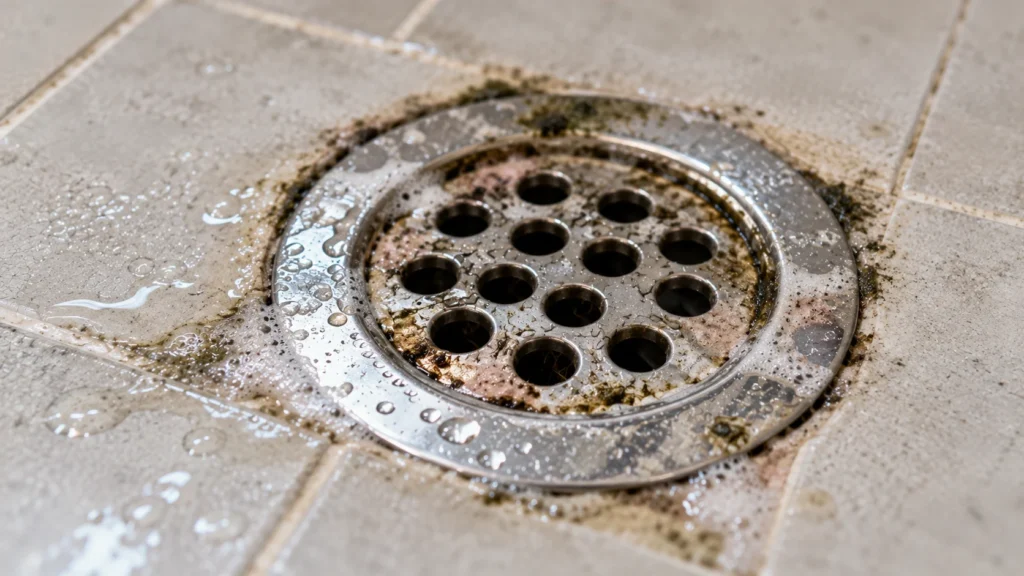
Dark spots, pink or orange slime, and musty smells around a shower drain may indicate organic buildup or microbial growth. Not every discolored deposit is mold, however, and appearance alone cannot identify the organism.
The EPA recommends cleaning visible mold from suitable hard surfaces with water and detergent and drying the area completely. It also emphasizes correcting moisture problems so mold does not continue to grow.
Safe cleaning steps
- Wear gloves and keep the bathroom ventilated.
- Remove visible hair and debris first.
- Scrub accessible hard surfaces with a suitable detergent and soft brush.
- Clean the underside of the drain cover if it is removable.
- Rinse the surfaces as directed by the cleaner’s label.
- Dry the surrounding area.
- Fix leaks or persistent moisture problems.
- Avoid spraying chemicals blindly into the pipe.
- Do not mix bleach with vinegar, ammonia, or other cleaners.
- Contact a professional if growth keeps returning or appears to originate behind walls or beneath the shower floor.
Important: Killing microorganisms is not the same as removing the residue they leave behind. Physical cleaning and moisture control are important parts of addressing visible mold.
How to Clean a Shower Drain Trap or P-Trap
The P-trap is a curved section of plumbing that holds water to help prevent sewer gases from entering the bathroom. It can also collect debris, and a problem with the trap or the plumbing vent may contribute to unpleasant odors.
Unlike a readily removable hair catcher, a shower’s P-trap is usually below the shower floor and may not be accessible without plumbing work.
What homeowners can do
- Remove hair and debris from the drain opening.
- Clean the accessible drain cover.
- Run water briefly if the shower has been unused and the drain is otherwise functioning normally.
- Observe whether the odor disappears.
- Check for repeated clogs, gurgling, or water backup.
- Contact a plumber if the smell persists.
Do not attempt to dismantle concealed plumbing through the drain opening. If the trap is blocked, damaged, leaking, or losing its water seal, a plumber can identify the cause and clean or repair it safely.
How to Clean Cement or Other Hard Material From a Shower Drain
If you suspect cement, grout, tile adhesive, or another construction material has entered your shower drain, treat the situation differently from a normal hair clog.
Some building materials harden as they cure. Adding household cleaners or repeatedly flushing water may not remove hardened material and could move the obstruction farther into the plumbing.
- Do not force a plastic hair-removal tool into a hard obstruction.
- Do not pour acids or harsh chemicals into the drain to dissolve cement.
- Avoid repeatedly flushing a drain that is already blocked.
- If the material is still soft and visible, remove only what can be safely reached without pushing it farther inside.
- Contact a plumber if hardened material has entered the pipe.
A plumber may need to inspect the drain to determine whether the obstruction can be removed mechanically or whether repair is necessary.
How to Clean Poop or Sewage Contamination From a Shower Drain
If fecal matter or sewage has entered a shower drain, ordinary hair removal is not enough. Treat the area as potentially contaminated and avoid direct contact with the waste.
- Keep children and pets away from the affected area.
- Wear suitable protective gloves.
- Remove visible contamination only if you can do so safely.
- Clean affected hard surfaces with an appropriate detergent.
- Use a suitable disinfectant only according to its label.
- Ventilate the area.
- Never mix disinfectants or other cleaning products.
- Wash your hands thoroughly after cleaning.
- Contact a plumber if sewage is backing up through the drain.
The EPA advises cleaning contaminated surfaces before applying a disinfectant and following the product’s instructions. It also warns that mixing cleaning chemicals can produce toxic vapors.
If sewage has spread across the bathroom floor, entered wall cavities, or repeatedly backed up through the drain, professional cleanup and plumbing assessment may be appropriate.
How Often Should You Clean a Shower Drain?
The ideal cleaning frequency depends on how often the shower is used, how much hair enters the drain, and whether the plumbing has a history of clogging.
A household with several people who have long hair may need to clean the hair catcher much more frequently than someone who showers alone and has short hair.
| Cleaning task | Practical frequency |
| Remove visible hair | After showers when needed |
| Empty a hair catcher | Weekly or whenever debris accumulates |
| Clean the drain cover | Weekly or every two weeks |
| Inspect for slow drainage | Weekly |
| Clean accessible drain surfaces | Every few weeks, or when buildup appears |
| Inspect recurring odor problems | As soon as the smell appears |
| Deep-clean accessible components | Monthly or as needed |
| Seek professional help | When clogs, odors, or backups persist |
These are practical starting points rather than universal plumbing requirements. Adjust the schedule according to your shower’s condition and the manufacturer’s recommendations.
How to Prevent Shower Drain Clogs and Bad Smells
Preventing buildup is usually easier than clearing a fully blocked drain. A few simple habits can reduce the amount of hair and residue entering the plumbing.
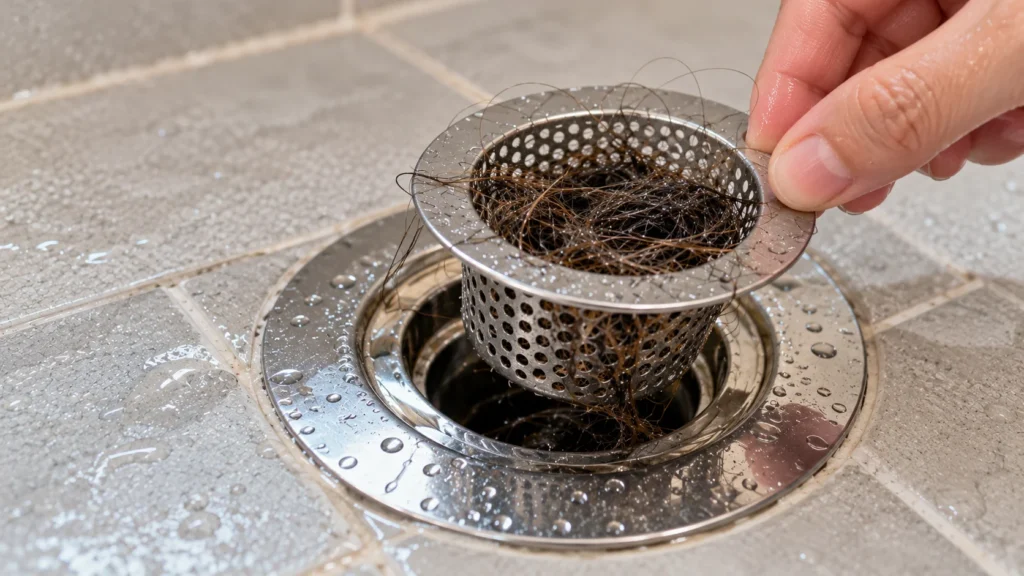
- Install a suitable hair catcher: Choose one that fits your drain without obstructing water flow.
- Remove hair regularly: Do not wait until the catcher is completely covered.
- Clean the drain cover: Remove soap residue before it accumulates.
- Brush long hair before showering: This can reduce loose strands entering the drain.
- Rinse away surface residue: Use normal warm tap water after showering.
- Keep the shower area dry: Wipe away excess water from nearby surfaces when practical.
- Address leaks promptly: Persistent moisture can contribute to mold growth.
- Avoid flushing debris: Hair and cleaning wipes should go into the trash, not the drain.
- Avoid unnecessary chemical treatments: Use products only for their intended purpose.
- Respond to slow drainage early: A partial blockage is generally easier to address than a fully blocked drain.
A hair catcher is especially useful because it collects strands before they enter the pipe. Remember to clean the catcher itself, since a dirty catcher can also develop residue and odors.
When Should You Call a Professional Plumber?
Not every shower drain problem can be solved with a brush, baking soda, or a plastic hair-removal tool. Some blockages are located deeper in the drain line, while others may involve a plumbing vent, damaged pipe, or main sewer line.
Contact a professional plumber if:
- The shower drain remains blocked after careful cleaning.
- Clogs return frequently.
- Water backs up into the shower when another fixture is used.
- Multiple drains in the home are slow.
- The drain makes persistent gurgling sounds.
- A sewage smell remains after the accessible surfaces have been cleaned.
- You suspect a broken or leaking pipe.
- A drain snake becomes stuck.
- Construction material has hardened inside the drain.
- Water appears around the shower base or nearby walls.
Professional plumbers may use drain snakes, augers, or camera inspections to locate and remove deeper obstructions. The appropriate method depends on the location and severity of the blockage.
Conclusion
Learning how to clean a shower drain starts with identifying the problem. For ordinary buildup, remove visible hair, clean the drain cover, scrub accessible surfaces, and rinse with warm water. If the shower drain is clogged with hair, a plastic drain-cleaning tool or suitable hand snake is often a more direct solution than relying on baking soda and vinegar. For bad smells, clean the accessible drain surfaces and investigate whether the P-trap or plumbing system may be contributing to the odor.
Regular maintenance can help prevent clogs and unpleasant smells from returning. Clean the hair catcher frequently, inspect the drain for residue, and address slow drainage before it becomes a complete blockage. Avoid mixing cleaning chemicals, forcing tools into the pipe, or using harsh treatments without checking compatibility. If the drain remains blocked, sewage odors persist, or several fixtures drain slowly, contact a professional plumber to identify the underlying issue.
1. How do you clean a shower drain quickly?
Remove the drain cover if it is designed to come off, pull out visible hair with a suitable plastic tool, and scrub the cover and accessible surfaces with a mild cleaner. Rinse with warm water and test the drainage. If water remains backed up, the clog may be deeper in the pipe.
2. How do you clean hair out of a shower drain?
Use gloved fingers or a plastic hair-removal tool to pull visible hair upward. For a deeper blockage, use a suitable hand-operated drain snake according to its instructions. Avoid forcing tools into the pipe, and stop if the obstruction will not move.
3. Does baking soda and vinegar clean a shower drain?
Baking soda and vinegar produce a bubbling reaction, but the fizz does not guarantee that a hair clog will be removed. Mechanical hair removal is generally a more direct approach for a blockage caused by tangled strands. Never mix vinegar with bleach or residual chemical drain cleaner.
4. Why does my shower drain smell bad even after cleaning?
A persistent odor may come from hidden organic buildup, a dirty or dry P-trap, a plumbing vent problem, or a leak. Clean the accessible parts first. If the odor resembles sewage or keeps returning, arrange a plumbing inspection.
5. How often should you clean a shower drain?
Inspect the drain regularly and remove visible hair whenever it accumulates. Clean the drain cover and hair catcher about weekly, adjusting the frequency for household use and hair buildup. Clean accessible surfaces more thoroughly every few weeks or whenever residue appears.