
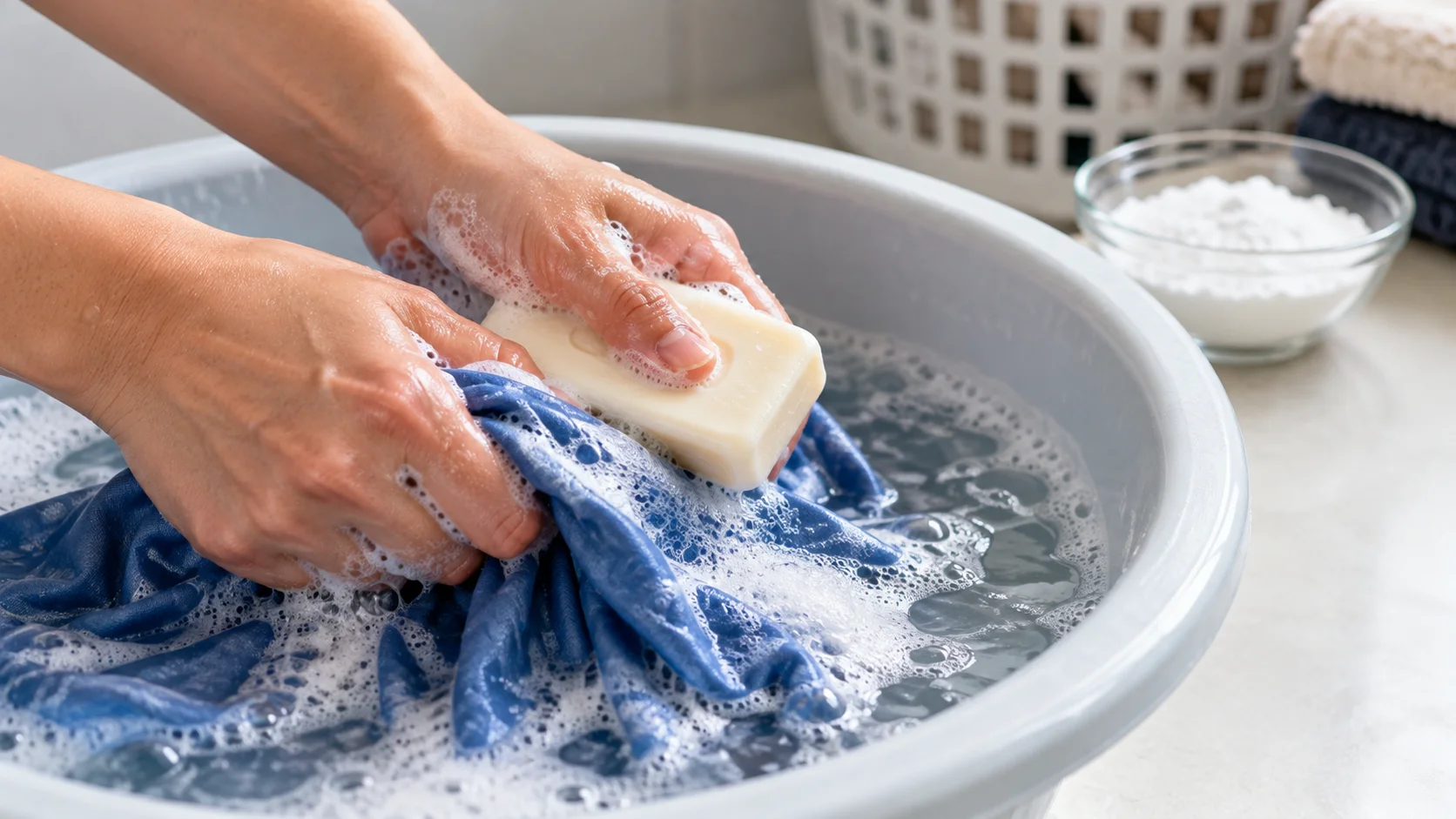
Running out of laundry detergent can happen at the worst possible time, especially when you already have a full hamper waiting to be washed. If you are wondering, “what can I use instead of laundry detergent?”, the answer depends on whether you are washing clothes by hand or using a washing machine. Some household products can help in an emergency, while others can create excessive suds, leave residue, damage fabrics, or potentially cause problems for the appliance.
The safest approach is to choose an alternative based on the type of laundry, the washing method, and your machine manufacturer’s instructions. Baking soda can help freshen and deodorize laundry, while mild soap or shampoo can be useful for hand-washing small loads. However, products such as dish soap and vinegar should not automatically be treated as direct replacements for laundry detergent. Washing-machine manufacturers generally recommend using the correct low-sudsing detergent for the appliance. Let’s learn what can I use instead of laundry detergent, including baking soda, soap, shampoo, and other emergency options.
What Can I Use Instead of Laundry Detergent?
If you need to wash clothes immediately and have no detergent, your best option depends on how dirty the clothing is. For lightly worn clothes, a temporary method can freshen them until you can purchase proper detergent. For heavily soiled clothing, towels, underwear, or stained garments, an emergency substitute may not provide the same cleaning performance as a purpose-formulated laundry detergent.
Commercial laundry detergent is designed specifically for washing machines and fabrics, while many household products are designed for completely different purposes. Electrolux notes that using too little detergent can contribute to poor cleaning, while an unsuitable detergent can create excessive foam and unsatisfactory results.
Quick choices when you are out of detergent
- Baking soda: Useful for freshening and neutralizing odors, but better viewed as a laundry aid than a complete detergent replacement.
- Mild bar soap: Can be useful for hand-washing small amounts of lightly soiled clothing.
- Liquid hand soap: May work for hand washing when used sparingly and rinsed thoroughly.
- Shampoo: A practical emergency option for hand-washing delicate or lightly soiled items.
- Soap flakes or suitable laundry soap: Can work in some situations, but machine compatibility matters.
- Soap nuts: Contain natural saponins and can provide gentle cleaning, although results vary by load and water conditions.
- Washing soda: A strong alkaline laundry ingredient that is better considered part of a laundry formulation or booster rather than an automatic one-to-one detergent replacement.
- White vinegar: Better suited to certain pretreatment or rinse applications than replacing detergent inside a washing machine.
- Lemon juice: Sometimes used for brightening or spot treatment, particularly on suitable white fabrics.
- Plain water: For lightly worn clothing that only needs a quick refresh, washing with water is safer than adding an unsuitable high-sudsing product to your machine.
1. Baking Soda Is One of the Most Practical Emergency Options
When people ask what else can I use instead of laundry detergent, baking soda is often one of the first household products that comes to mind. Sodium bicarbonate is mildly alkaline and can help neutralize odors, freshen fabrics, and assist with some stains. Whirlpool says baking soda is generally safe for most washing machines when used appropriately and recommends checking the washer manual and clothing care labels first.
However, baking soda should not be presented as an exact chemical equivalent to laundry detergent. It does not provide the complete formulation of surfactants, enzymes, builders, and other ingredients found in many commercial detergents. It is therefore most useful as a temporary laundry aid, particularly for lightly soiled clothing.
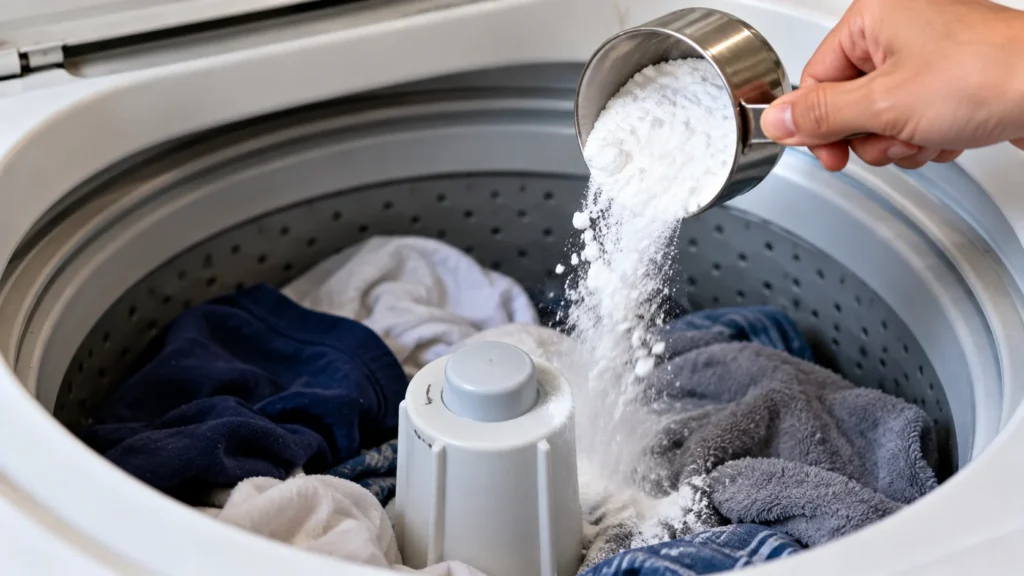
How to use baking soda when you have no detergent
- Check your washing machine’s owner manual before adding anything unusual.
- Check the care label on every garment.
- Add about ½ cup of baking soda directly to the washer tub, rather than automatically putting it in the detergent dispenser.
- Use it primarily for lightly soiled clothing that needs freshening.
- Do not assume it will remove heavy grease, deep stains, or heavily embedded dirt.
- For a localized stain, make a paste from baking soda and water.
- Test a stain-treatment mixture on an inconspicuous area first.
- Avoid experimenting with delicate fabrics such as silk, wool, or cashmere unless their care instructions permit it.
- Do not mix baking soda with vinegar expecting a stronger detergent.
- Remember that baking soda can help with odor even when it cannot replace all of detergent’s cleaning functions.
- Restock proper laundry detergent before the next heavily soiled load.
Whirlpool specifically advises putting baking soda directly into the washer tub rather than the dispenser because powder can potentially cause clogging.
2. Mild Bar Soap Can Work for Hand-Washing
If you have ran out of laundry detergent what can I use instead, a mild bar soap can be useful when washing clothes by hand. Safeway lists mild bar soap as an emergency option and recommends hand washing as the preferred method rather than automatically putting bar soap into a washing machine.
Bar soap can loosen some everyday body oils and dirt, but ordinary bath soap is not formulated in the same way as laundry detergent. It may also behave differently depending on water hardness and fabric type.
For this reason, hand washing gives you much more control over how much soap you use and how thoroughly you rinse it.
A simple hand-washing method
- Fill a clean sink, basin, or tub with suitable water.
- Add a small amount of mild soap.
- Dissolve or work the soap into the water before adding clothes.
- Put lightly soiled garments into the water.
- Gently agitate the clothing with your hands.
- Pay extra attention to collars, cuffs, and visibly dirty areas.
- Avoid aggressive rubbing on delicate fabrics.
- Let the clothing soak briefly if appropriate for the fabric.
- Drain the dirty water.
- Refill the basin with clean water.
- Gently move the garments through the clean water.
- Continue rinsing until visible soap is removed.
- Do not twist delicate fabrics aggressively.
- Press out excess water carefully.
- Dry according to the garment’s care instructions.
Safeway notes that bar soap is better suited to lightly soiled loads in an emergency and that hand washing is the preferable approach.
Jump into Other Related Article
- Laundry Dryer Vent Installation
- Does Rayon Shrink?
- How to Remove Coffee Stains
- How to Clean Suede Shoes
- Best Stain Remover for Clothes
- How to Clean Stainless Steel
- How to Clean Carpet Stains
- Oxygen Bleach
- Homemade Laundry Detergent
- All in One Washer Dryer
- Small Laundry Room Ideas
3. Shampoo Can Help When You Need to Hand-Wash Clothes
If you are asking what soap can I use instead of laundry detergent, shampoo is another emergency optionbut primarily for hand washing. A small amount of shampoo can help clean lightly soiled clothing when there is no laundry detergent available. Safeway specifically describes shampoo as an option for hand-washing delicate garments or small batches of laundry.
Shampoo is not an ideal long-term laundry detergent because it is formulated for hair and scalp rather than washing large fabric loads. Some formulas also contain conditioning ingredients, oils, fragrances, or other components that may leave residues.
When shampoo makes sense
- You only need to wash one or two garments.
- The clothing is lightly soiled.
- You are washing by hand.
- The fabric’s care label allows hand washing.
- You can rinse the garment thoroughly.
- You need an emergency solution until you can buy detergent.
Avoid pouring a large amount of shampoo into a washing machine. Products that create substantial foam can cause problems in appliances designed for low-sudsing laundry products. Electrolux warns that unsuitable detergents can produce excessive foam and interfere with washing performance.
4. Liquid Hand Soap Can Be Used for Small Hand-Wash Loads
Liquid hand soap may also answer the question out of laundry detergent what can I use instead, particularly if you need to clean a small item immediately. Safeway suggests using a small amount of liquid hand soap for hand washing and emphasizes thorough rinsing.
The important word here is small. Hand soap is not a good reason to fill your washing machine with a large quantity of sudsy product.
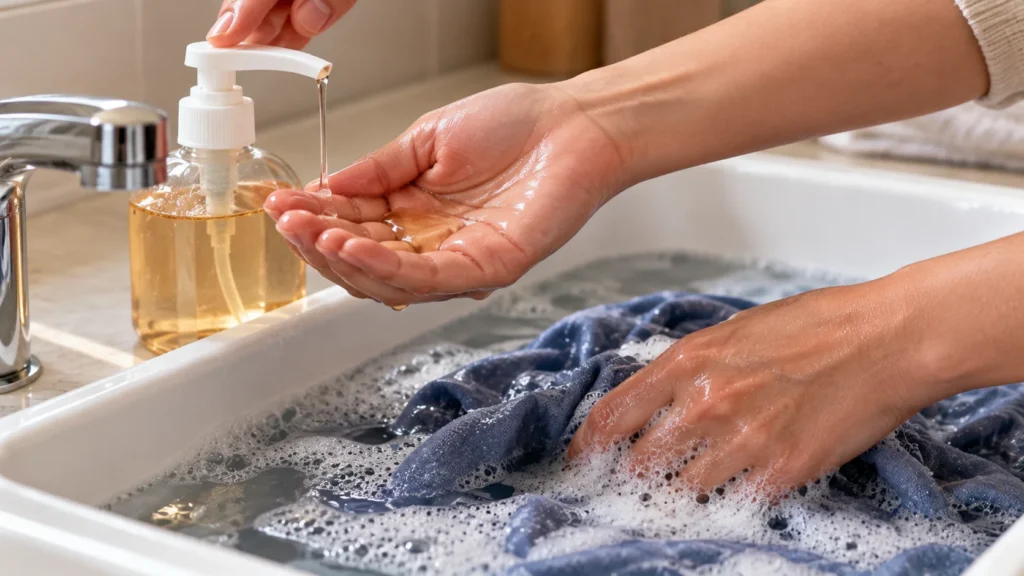
For a sink or basin, you can control the concentration, watch the amount of foam, and rinse the clothes manually. That makes it much easier to avoid residue.
Use hand soap carefully
- Choose a mild formula when possible.
- Start with a very small amount.
- Dilute it in water rather than applying a large amount directly.
- Wash only lightly soiled garments.
- Agitate gently.
- Rinse several times.
- Check that no slippery soap residue remains.
- Do not use excessive amounts to make more foam.
- Follow the garment’s care instructions.
- Avoid using hand soap as a regular machine-washing replacement.
5. Soap Nuts Are a Natural Alternative Worth Knowing About
Soap nuts, sometimes called soap berries, contain naturally occurring saponins, which can produce a mild cleansing effect in water. They are frequently discussed as a natural alternative to conventional laundry products and are particularly suited to people interested in low-sudsing washing methods.
Neakasa describes soap nuts as a natural, biodegradable laundry option and explains that the dried fruits can be placed in a small cloth bag with laundry.
The main limitation is that soap nuts do not necessarily provide the same cleaning performance as a modern detergent, especially for heavy stains, grease, or heavily soiled loads.
Soap nuts may be useful for
- Lightly worn everyday clothing.
- People interested in natural laundry products.
- Low-sudsing washing.
- Small or moderately dirty loads.
- A reusable laundry alternative.
- Clothes that do not contain difficult stains.
- People who prefer minimal ingredients.
- Situations where conventional detergent is unavailable.
For heavily stained work clothes, greasy garments, towels with substantial buildup, or laundry requiring specialized stain removal, a purpose-made detergent is generally a more reliable choice.
6. Washing Soda Can Help, but It Is Not the Same as Detergent
Washing soda, or sodium carbonate, is sometimes confused with baking soda. They are different substances, and washing soda is more strongly alkaline.
It is commonly used as an ingredient in laundry formulations because it can help with cleaning and water softening. Maytag explains that sodium carbonate, also known as washing soda or soda ash, is used in laundry detergent and other cleaning products.
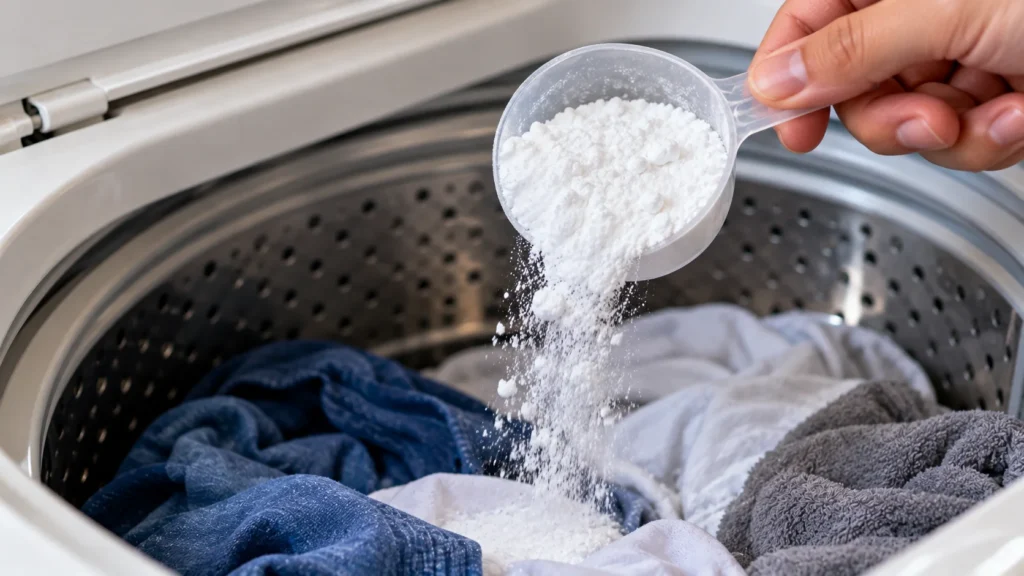
That does not mean you should automatically use a large amount of washing soda as a one-to-one replacement for your normal detergent.
If you already have washing soda
- Read the package directions first.
- Check whether the product is intended for laundry.
- Follow your washer manufacturer’s instructions.
- Consider it a laundry ingredient or booster rather than an identical detergent substitute.
- Avoid guessing at large quantities.
- Keep it away from children and pets.
- Store it in its original labeled container.
- Check fabric care labels.
- Be especially careful with delicate fabrics.
- Use a proper laundry detergent when you restock.
A homemade laundry mixture may seem convenient, but appliance manufacturers caution that DIY detergent formulations can create compatibility issues. Maytag specifically notes that homemade detergent alternatives may potentially affect an appliance warranty and recommends checking the user manual.
7. White Vinegar Is Not the Best Direct Detergent Replacement
White vinegar appears on many lists of laundry detergent alternatives, but it needs an important qualification. Vinegar is an acidic product and can have useful roles in some laundry-related applications, but that does not make it a complete substitute for laundry detergent.
Whirlpool advises against routinely putting vinegar directly into a washing machine because it can potentially damage rubber seals and hoses on some machines. The manufacturer recommends checking the owner’s manual for compatibility.
So if you are out of laundry detergent what can you use instead, vinegar should not be your automatic answer.
Why vinegar is often misunderstood
- It can help with certain odors or stains.
- It is acidic rather than a complete detergent formulation.
- It does not provide the same cleaning system as laundry detergent.
- It may not be suitable for every fabric.
- It can potentially affect some washer components.
- It should not be mixed casually with other cleaning chemicals.
- It should never be mixed with chlorine bleach because dangerous fumes can result.
- Manufacturer instructions should take priority.
Whirlpool also notes that combining vinegar and baking soda can neutralize the properties that make each useful, so using both together does not automatically create a stronger cleaning solution.
8. Lemon Juice May Help With Certain White-Fabric Stains
Lemon juice is another household ingredient sometimes suggested when people search for what can I use instead of laundry detergent. Its acidic nature and natural bleaching properties make it more appropriate as a limited stain or brightening treatment than as a universal laundry detergent.
Some alternative-laundry guides recommend lemon juice for white or light-colored garments.
However, this is not an option I would recommend as a routine replacement for detergent. The acidity and potential lightening effect mean you should be cautious with colors and delicate fabrics.
If you use lemon juice for laundry
- Reserve it for suitable light-colored fabrics.
- Test it on a hidden area first.
- Do not assume it is safe for every material.
- Avoid treating delicate fabrics without checking their care instructions.
- Use it for a specific stain or brightening purpose rather than as a complete detergent.
- Rinse treated clothing thoroughly.
- Do not combine it with random cleaning chemicals.
- Avoid using it on garments where color stability is uncertain.
- Follow the manufacturer’s instructions for the garment.
- Use normal laundry detergent once you have restocked.
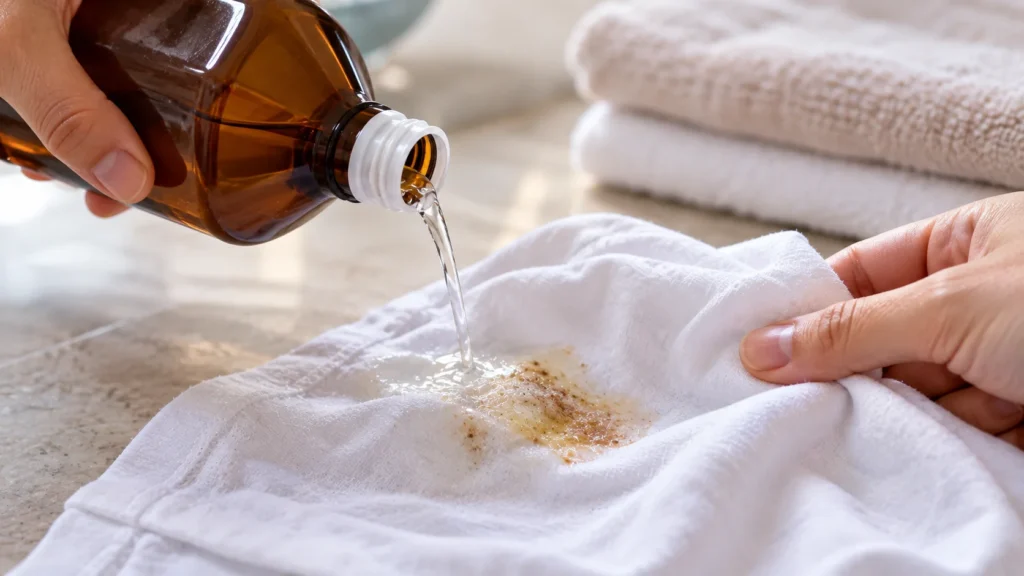
9. Hydrogen Peroxide Is Better Considered a Stain Treatment
Hydrogen peroxide is sometimes included in lists of natural or homemade laundry alternatives, particularly for white clothing and stain treatment. However, it should not be treated as a universal substitute for laundry detergent.
Its suitability depends on concentration, fabric, color, and the intended use. Some laundry guides discuss hydrogen peroxide as an oxygen-based stain treatment for appropriate white garments, but that is different from using it as the sole cleaning product for an entire load.
Before using hydrogen peroxide
- Check the product concentration.
- Read the garment care label.
- Test an inconspicuous area.
- Be cautious with colored fabrics.
- Do not assume it is suitable for wool or silk.
- Use it for appropriate stain-treatment purposes rather than blindly replacing detergent.
- Never mix cleaning chemicals without confirming compatibility.
- Keep chemical products away from children and pets.
- Follow the product label.
- Use conventional laundry detergent when possible.
For a normal machine load, a properly formulated laundry detergent remains the more predictable option.
10. What About Dish Soap Instead of Laundry Detergent?
This is one of the most common questions behind what can I use instead of laundry detergent?
The answer is: avoid putting dish soap in your washing machine.
Dish soap is designed to create substantial suds. Washing machines, particularly high-efficiency machines, are designed around controlled, low-sudsing laundry detergents. Whirlpool specifically says dish soap is not recommended for cleaning a washing machine because it produces significantly more suds than products designed for washers.
Electrolux likewise warns that unsuitable or excessive detergent can create excessive foam and interfere with proper appliance operation.
Can dish soap ever be useful?
Yesbut primarily as a spot-treatment product for certain greasy stains, not as a full washing-machine detergent replacement. Maytag recommends liquid dishwashing soap for treating some grease stains before hand rinsing the garment thoroughly.
If you accidentally use dish soap in the washer and it starts producing excessive foam, stop the cycle if your machine’s instructions permit and follow the manufacturer’s guidance for clearing the suds.
What Should You Avoid Using Instead of Laundry Detergent?
Not every cleaning product in your home belongs in the washing machine. The biggest mistake is assuming that anything capable of cleaning a countertop, dish, hair, or bathroom surface can automatically clean clothing safely.
Avoid these common mistakes
- Do not use a large amount of dish soap in the washing machine.
- Do not pour shampoo into a full-size machine load.
- Do not assume hand soap is compatible with an HE washer.
- Do not mix vinegar and chlorine bleach.
- Do not combine random cleaning chemicals.
- Do not use baking soda in the detergent dispenser unless your manual specifically permits it.
- Do not ignore fabric care labels.
- Do not use strong alkaline products on delicate fabrics without checking compatibility.
- Do not overload the washer because you are trying to finish laundry quickly.
- Do not assume a homemade detergent recipe is automatically safe for your appliance.
- Do not use an alternative simply because it creates lots of bubbles.
- Do not use a stain remover as a complete detergent without checking its label.
- Do not use vinegar in your washer without checking the manufacturer’s instructions.
- Do not treat every alternative as suitable for baby clothes, wool, silk, or specialty fabrics.
- Do not keep experimenting if your washer begins overflowing with foam.
Electrolux specifically states that low-sudsing detergent is required for certain front-loading machines and that excessive foam can contribute to poor washing performance and appliance problems.
What Can I Use Instead of Laundry Detergent in an HE Washer?
If you have a high-efficiency (HE) washing machine, be more conservative with alternatives. HE machines are designed to work with low-sudsing detergents, and excessive foam can cause poor rinsing, longer cycles, or other problems.
Electrolux recommends HE detergent formulated to reduce suds and support proper cleaning.
If you have completely run out of detergent, the safest temporary strategy may be to avoid putting a high-sudsing household soap into the machine. For lightly worn clothes, you can consider a manufacturer-compatible laundry aid such as baking soda if the owner’s manual permits it. For anything heavily soiled, waiting until you have the correct detergent may be preferable to risking excessive suds or residue.
HE washer emergency checklist
- Check your owner’s manual.
- Confirm the machine requires HE detergent.
- Avoid dish soap.
- Avoid large amounts of hand soap.
- Avoid large amounts of shampoo.
- Avoid homemade liquid formulas unless specifically approved.
- Consider baking soda only if the manufacturer permits it.
- Keep the load appropriately sized.
- Select the cycle appropriate for the clothing.
- Use a normal laundry detergent once you restock.
What Is the Best Substitute for Different Types of Laundry?
There is no single answer to what can I use instead of laundry detergent because a sweaty workout shirt, a silk blouse, a greasy work uniform, and a lightly worn T-shirt have very different cleaning requirements.
| Laundry type | Emergency approach | What to watch |
| Lightly worn T-shirts | Baking soda or careful hand washing | May not remove heavy soil |
| Small hand-wash load | Mild soap or shampoo | Rinse extremely well |
| Delicates | Appropriate mild hand-washing product | Follow care label |
| White clothing | Baking soda or suitable stain treatment | Test before use |
| Greasy clothing | Spot treatment first | Dish soap only as a controlled stain treatment, not washer detergent |
| Towels | Proper detergent preferred | Alternatives may not remove buildup well |
| Workout clothing | Proper detergent preferred | Odor and body oils may require stronger cleaning |
| Heavily stained clothes | Wait for suitable detergent if possible | Emergency substitutes may be inadequate |
| Wool or silk | Use the product specified for the fabric | Avoid random household substitutes |
| HE washer load | Manufacturer-approved low-sudsing product | Avoid high-foam soaps |
The type of soil matters because laundry detergent is formulated for broader cleaning performance than many household substitutes. Electrolux notes that insufficient detergent can contribute to poor washing results and greasy or gray laundry.
How to Wash Clothes When You Have Absolutely No Detergent
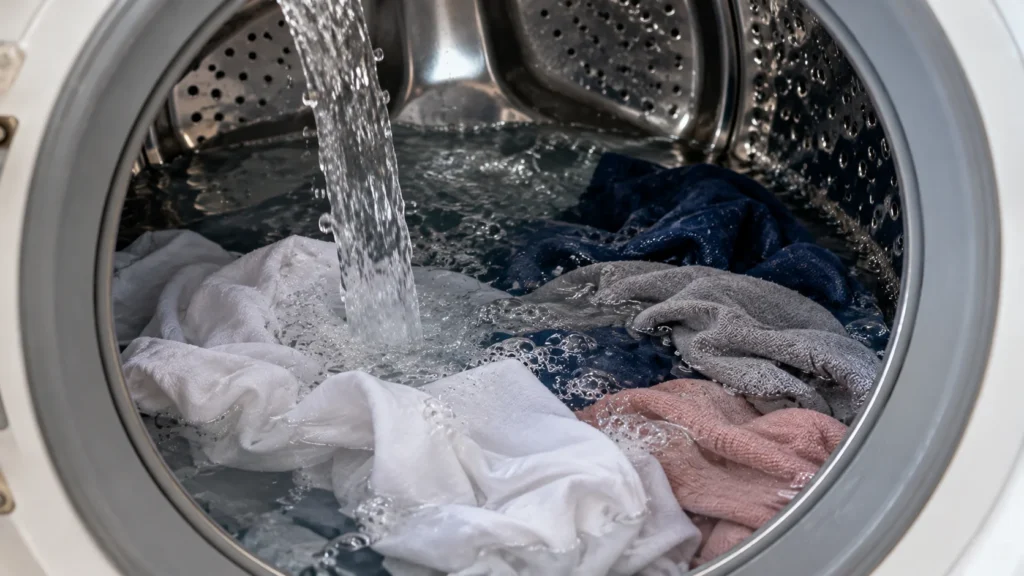
If you have no detergent or suitable laundry product at all, you still have an option for lightly worn clothing: wash the garments with water only.
Water and mechanical action can remove some loose dirt, sweat, and surface particles, although water alone should not be expected to perform like detergent. This can be preferable to putting a high-sudsing product into a machine that was not designed for it.
For a temporary water-only wash
- Separate whites, colors, and dark garments.
- Check the care labels.
- Do not overload the machine.
- Choose an appropriate cycle.
- Use the recommended water temperature.
- Run the wash normally without adding an unsuitable soap.
- Inspect the clothing afterward.
- Air-dry or dry according to the care label.
- Rewash heavily soiled garments with proper detergent when available.
- Give particularly dirty items priority when you restock.
This approach is especially reasonable for clothing that was worn briefly and does not contain visible stains, heavy sweat, grease, or strong odors.
How to Choose the Safest Laundry Detergent Alternative
The best emergency choice is not necessarily the product that sounds the most natural. Instead, consider fabric safety, soil level, washing method, machine type, and manufacturer instructions.
A simple decision process can help:
If you are hand washing:
Choose a small amount of mild soap or shampoo for lightly soiled clothing, then rinse thoroughly.
If you are using an HE washing machine:
Avoid high-sudsing soaps. Check the manual before using any alternative.
If your clothes mainly smell:
Baking soda may help neutralize odors when the washer manufacturer permits its use.
If you have a stain:
Treat the stain separately rather than trying to turn a stain remover or household cleaner into a complete detergent.
If the clothing is heavily soiled:
Use proper laundry detergent when possible. An emergency substitute may simply not provide adequate cleaning.
If the garment is delicate:
The care label should determine what you use, rather than a generic internet recipe.
Final Tips for Avoiding Another Detergent Emergency
Keeping a small backup supply can save you from having to experiment with household products. If your normal detergent is almost empty, add it to your shopping list before the bottle runs out.
It is also worth knowing what your washing machine requires. Electrolux recommends using the correct detergent type and quantity, while excessive or unsuitable products can create too much foam.
Keep these emergency supplies available
- A suitable HE laundry detergent if your machine requires it.
- Baking soda for approved laundry uses.
- A mild soap for appropriate hand washing.
- A suitable stain remover.
- Clean basins for hand washing.
- Mesh laundry bags for delicate items.
- A small measuring cup.
- Fabric-specific laundry products when needed.
- Your washing machine owner’s manual.
- Garment care instructions.
Having these items available makes it much easier to deal with a surprise empty detergent bottle without risking your clothes or washing machine.
Conclusion
If you are wondering what can I use instead of laundry detergent, the safest answer depends on the situation. Baking soda can be useful for freshening and deodorizing lightly soiled laundry, while mild bar soap, liquid hand soap, or shampoo can be practical for small hand-washing jobs. Soap nuts and washing soda are other alternatives worth understanding, but they should not automatically be treated as identical replacements for a commercial laundry detergent.
Most importantly, avoid putting high-sudsing products such as dish soap into a washing machine simply because you have run out of detergent. Modern washers, especially HE models, are designed around specific low-sudsing detergent requirements. When in doubt, check your owner’s manual and the garment care label, use the gentlest appropriate emergency method, and return to a properly formulated laundry detergent for your next regular load.
1. What can I use instead of laundry detergent?
For a temporary solution, baking soda can help freshen lightly soiled laundry if your washing machine manufacturer permits it. For hand washing, a small amount of mild soap or shampoo can be used for suitable garments. These options do not necessarily provide the same cleaning performance as a purpose-formulated laundry detergent.
2. What can I use instead of laundry detergent if I ran out?
If you ran out of detergent, consider hand washing a small amount of lightly soiled clothing with mild soap or shampoo. For a machine load, check your owner’s manual before using an alternative such as baking soda. Avoid putting dish soap into the washing machine because it can create excessive suds.
3. Can I use dish soap instead of laundry detergent?
Dish soap is not recommended as a regular washing-machine detergent substitute because it can create significantly more suds than laundry products designed for washing machines. A small amount may be useful for treating certain greasy stains before thoroughly rinsing the garment by hand.
4. Can I use baking soda instead of laundry detergent?
Baking soda can help freshen laundry, neutralize odors, and assist with some stains, but it is not a complete replacement for all the cleaning functions of laundry detergent. Whirlpool recommends checking your washer manual and adding baking soda directly to the tub rather than the detergent dispenser.
5. Can I use vinegar instead of laundry detergent?
Vinegar should not automatically be used as a direct detergent replacement. Whirlpool warns that vinegar can potentially damage rubber seals and hoses in some washing machines and recommends checking the owner’s manual. It also should never be mixed with chlorine bleach.