
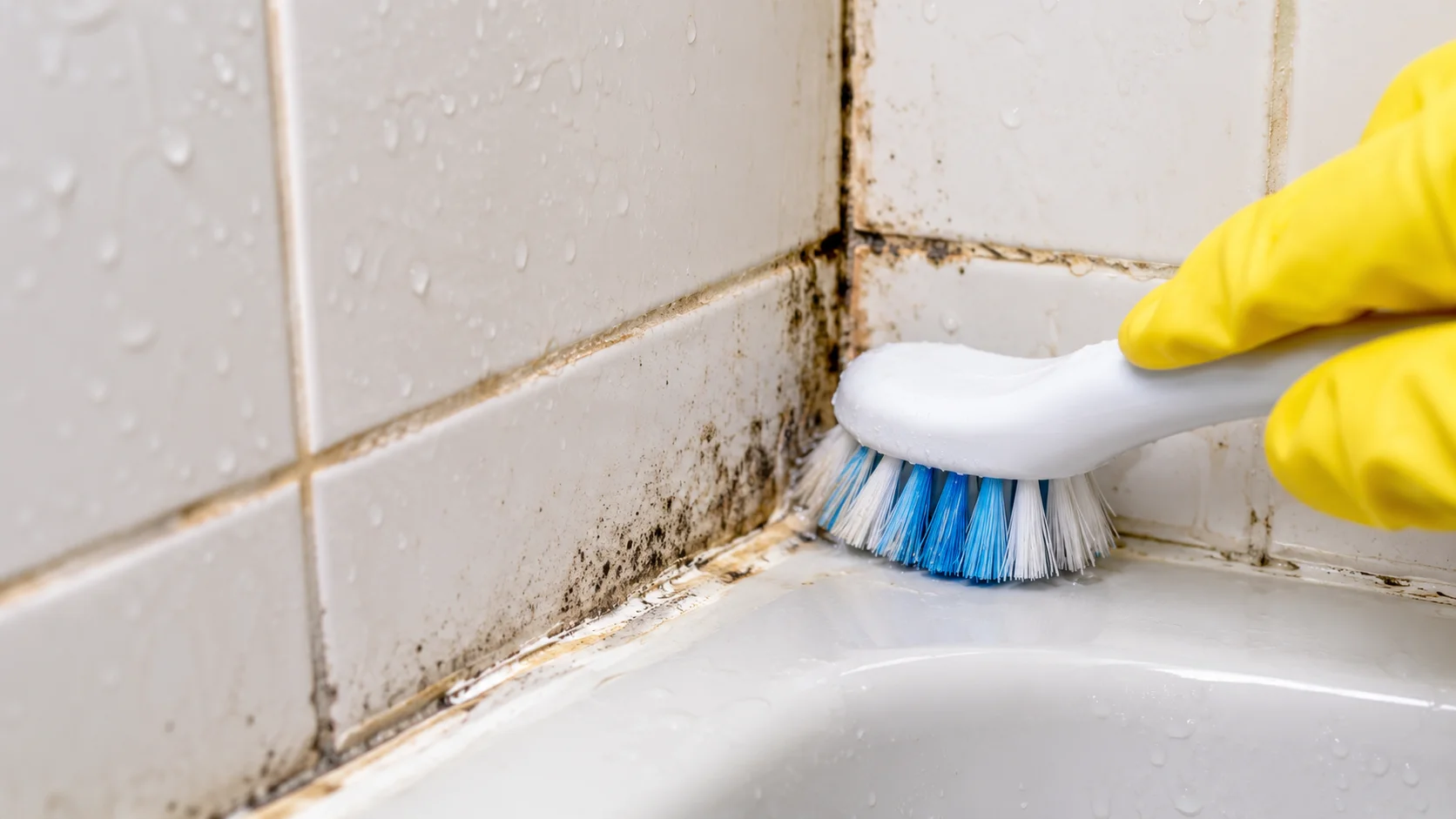
Shower mold can appear as black spots along grout lines, dark patches around caulk, or discoloration on walls and ceilings. Warm temperatures, frequent moisture, soap residue, and limited ventilation create conditions where mold can grow. Small areas on washable, nonporous surfaces can often be cleaned with suitable products and techniques. The key is to choose a method that suits the affected material rather than using the strongest cleaner on every surface.
If you want to learn how to clean shower mold without damaging your bathroom, start by identifying the surface, protecting yourself, and addressing the moisture that allowed the growth to develop. This guide explains how to clean mold from shower tiles, grout, caulk, curtains, and other common areas, along with important chemical safety precautions and ways to prevent future growth.
How to Clean Shower Mold Step by Step
For small areas of mold on hard, washable shower surfaces, follow these steps:
- Ventilate the bathroom. Open a window or door and use an exhaust fan if available.
- Protect yourself. Wear suitable gloves and eye protection. Avoid direct contact with mold and cleaning products.
- Choose a compatible cleaner. Use detergent or a product labeled for the affected surface. Follow its instructions.
- Apply and scrub. Allow the cleaner to work for the time specified on its label, then gently scrub with a nonabrasive brush or sponge.
- Rinse the surface. Remove loosened residue and cleaning-product remnants as directed.
- Dry thoroughly. Use a clean towel and improve airflow to reduce lingering moisture.
The U.S. Environmental Protection Agency (EPA) recommends scrubbing mold from hard surfaces with detergent and water, then drying them completely. Cleaning alone will not solve the problem if a leak or persistent dampness remains.
How to Clean Mold in Shower Grout
Grout is particularly prone to discoloration because its texture can hold moisture, soap residue, and dirt. Mold may appear as scattered dark spots or lines between tiles.
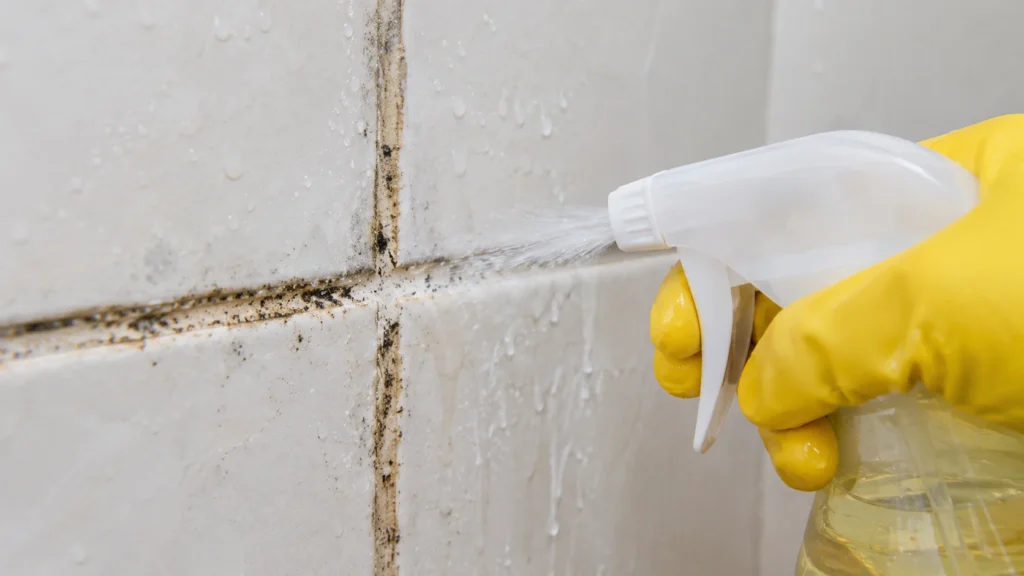
To clean mold in shower grout:
- Apply a grout-compatible bathroom cleaner according to its label.
- Gently scrub the grout with a small nylon grout brush.
- Work in short sections to control the application and avoid spreading residue.
- Rinse as directed and dry the area thoroughly.
For stubborn discoloration, choose a product specifically labeled for your grout type. Test it in an inconspicuous area first, especially if the grout is colored or the installation is old.
How to Clean Shower Grout Mold With Vinegar
White vinegar is often suggested as a household cleaning option, but it is not appropriate for every shower. Do not use vinegar on travertine or other acid-sensitive natural stone. It can etch or dull the surface. Repeated acidic cleaning may also damage some cement-based grout and surrounding finishes.
If you are considering vinegar on a compatible, non-stone surface, check the material manufacturer’s care guidance first. Never combine vinegar with bleach or other cleaners. A surface-compatible bathroom product may be a better choice when the material or existing finish is uncertain.
How to Clean Mold Out of Shower Grout
If mold appears to extend beneath the grout surface, repeated scrubbing may not solve the underlying issue. Crumbling, cracked, missing, or persistently discolored grout may indicate deterioration or moisture intrusion.
Clean the accessible surface first, but do not simply cover mold with fresh grout or sealant. The affected area must be cleaned and dried, and any underlying water problem must be corrected. Damaged grout may need repair or replacement.
How to Clean Black Mold in Shower Areas
Black discoloration in a shower does not automatically identify a particular mold species. The EPA explains that “black mold” is not a precise scientific identification, and appearance alone cannot establish whether a growth is more dangerous than another type.
For small patches on suitable hard surfaces, clean with detergent and water or an appropriate labeled bathroom cleaner. Scrub away the visible material, rinse as directed, and dry thoroughly. Avoid dry brushing, sanding, or scraping mold in ways that may spread particles.
If the affected material is soft, deteriorating, repeatedly becomes moldy, or appears to conceal a deeper moisture problem, investigate the cause rather than repeatedly treating the surface. Extensive growth or suspected contamination behind walls may require a qualified remediation professional.
Jump into Other Related Article
- How to Remove Peanut Butter Stains | Easy Ways to Clean Clothes, Fabric & More
- How to Clean a Dryer | Lint Trap, Drum, Vent, Duct & Deep Cleaning Guide
- How to Clean an Iron | Soleplate, Steam Holes, Burnt Fabric, Starch & Cast Iron Guide
How to Clean Pink Mold in Shower Areas
Pink or salmon-colored buildup is not necessarily mold. Pink growth in showers is often associated with Serratia marcescens, a bacterium that can grow on damp surfaces where soap residue and other organic material accumulate.
To clean pink growth:
- Put on gloves and ventilate the bathroom.
- Use a bathroom cleaner appropriate for the affected material.
- Scrub the buildup away with a suitable brush or sponge.
- Rinse and dry the surface.
- Reduce lingering moisture and remove soap residue regularly.
If you use a disinfectant, choose one labeled for the intended surface and follow its directions, including any required contact time. Do not assume that a product designed for mold will automatically be suitable for every bacterial growth or material.
How to Clean Mold From Shower Caulk
Shower caulk seals joints around tubs, shower trays, corners, and fixtures. Mold can grow on its surface, but discoloration may also extend into damaged or deteriorating caulk.
For surface growth:
- Apply a compatible bathroom cleaner according to its label.
- Gently scrub with a soft brush or cloth.
- Rinse as directed and dry the joint thoroughly.
Avoid aggressive scraping that could tear the caulk or break the seal. If black staining remains embedded in the material, or the caulk is cracked, loose, peeling, or soft, cleaning may not be enough. The affected caulk may need to be removed and replaced after the area is properly cleaned and dried.
Do not apply new caulk over moldy or damp material. Sealing over the problem can conceal it without correcting the cause.
How to Clean Mold Off a Shower Curtain
Fabric and plastic shower curtains can develop mold or mildew where water and soap residue remain for long periods. Always check the manufacturer’s care label before washing.
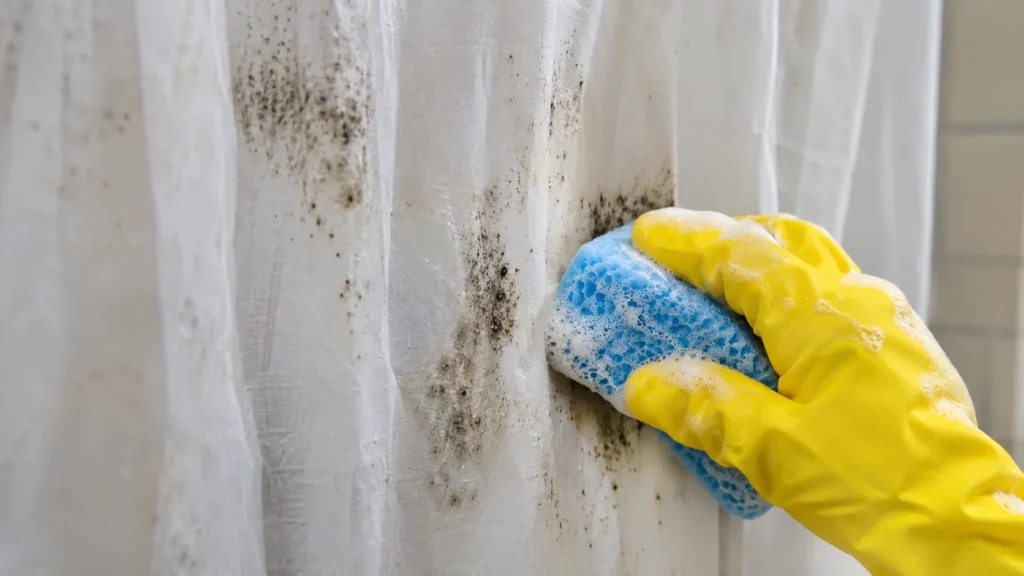
Cleaning a Washable Shower Curtain
- Remove the curtain and inspect the care instructions.
- If machine washing is permitted, wash it using the recommended settings and a suitable detergent.
- Follow any instructions about compatible accompanying items.
- Rinse thoroughly and dry as directed before rehanging.
Cleaning a Plastic Shower Curtain
For a washable plastic curtain or liner, use a compatible detergent and a soft sponge or cloth. Rinse away residue and allow it to dry fully. Avoid abrasive tools that could damage the material.
If the curtain remains heavily stained, smells musty after cleaning, or has deteriorated, replacing it may be more practical than repeated treatment. Keep the curtain spread out after showers so water does not remain trapped in folded sections.
How to Clean Orange Mold in Shower Areas
Orange or reddish-orange deposits may be associated with bacterial growth, mineral deposits, soap residue, or a combination of these. Color alone cannot confirm the cause.
Start with a general bathroom cleaner that is safe for the surface. Gently scrub the affected area, rinse as directed, and dry it. If the discoloration resembles a hard, crusty mineral deposit rather than a soft film, it may require a different cleaning approach.
Do not automatically use acidic cleaners on natural stone, and do not mix products to try to remove the stain faster. If the buildup repeatedly returns around a fixture, check for persistent leaks, trapped water, and residue accumulation.
How to Clean Mold Off a Shower Ceiling
Mold or dark spots on a bathroom ceiling can result from condensation, inadequate ventilation, or a leak from above. Before cleaning, check whether the ceiling surface is intact and washable.
For a small area on a sound, washable surface, use a compatible cleaner and follow its instructions. Avoid soaking drywall, textured finishes, or other materials that can absorb water. Dry the area thoroughly and improve ventilation.
A ceiling that is sagging, crumbling, persistently damp, or repeatedly developing mold needs further investigation. Do not disturb a large moldy area or a potentially contaminated ceiling material yourself. A qualified professional can help identify the moisture source and determine whether repairs or remediation are necessary.
How to Clean Mold From a Travertine Shower
Travertine is a natural stone that can be damaged by acidic products. Vinegar, lemon juice, and other acid-based cleaners can etch its surface, leaving dull spots or changes in texture.
For travertine shower mold:
- Check the stone manufacturer’s or installer’s care recommendations.
- Choose a cleaner specifically labeled as safe for natural stone.
- Test the product on a small, inconspicuous area.
- Clean gently with a soft cloth or nonabrasive brush.
- Rinse according to the product instructions and dry with a clean towel.
Avoid abrasive scouring pads and unapproved household mixtures. If mold is growing in porous stone, deteriorated grout, or areas affected by water intrusion, consult a stone-care or remediation professional rather than repeatedly applying stronger chemicals.
Can You Clean Shower Mold Without Bleach?
Yes. Small areas of mold on suitable hard surfaces can often be cleaned with detergent and water or a compatible bathroom cleaner. Bleach is not automatically necessary for every mold-cleaning job.
The EPA does not recommend routine use of biocides, including chlorine bleach, as a standard mold-cleanup practice. The important steps are to remove the visible growth, dry the surface, and correct the moisture problem.
If you choose a bleach-based product, use only the product’s labeled directions, ventilate the room, and wear the recommended protective equipment. Never mix bleach with vinegar, ammonia, hydrogen peroxide, or any other cleaning product. Mixing cleaners can release hazardous gases or cause dangerous reactions.
How to Prevent Shower Mold From Returning
Once the shower is clean, prevention depends on keeping the area dry and fixing the conditions that encourage growth.
- Run the exhaust fan: Use it during showers and afterward according to the fan’s instructions.
- Improve airflow: Open a window or bathroom door when practical and safe.
- Remove standing water: Wipe wet walls, corners, and ledges with a squeegee or towel.
- Spread out the curtain: Allow it to dry instead of leaving it bunched together.
- Clean soap residue: Remove buildup from tile, grout, fixtures, and curtain surfaces regularly.
- Repair leaks promptly: Check showerheads, plumbing connections, and damaged seals.
- Inspect grout and caulk: Repair deteriorating joints after cleaning and drying the affected area.
- Monitor recurring spots: Repeated growth in the same place may indicate trapped moisture, poor ventilation, or a hidden leak.
If the bathroom remains damp despite regular cleaning, consider checking the ventilation system and investigating moisture behind affected surfaces.
When Should You Call a Mold Remediation Professional?
Professional help may be appropriate when mold covers a large area, keeps returning despite proper cleaning, or appears to extend behind tiles, drywall, or other building materials. You should also seek help if water damage has weakened the structure or if cleaning would require disturbing extensive mold growth.
People with asthma, significant allergies, immune suppression, or other relevant health concerns should take extra care to avoid exposure during cleanup. Follow current public-health guidance and seek medical advice if exposure causes concerning symptoms.
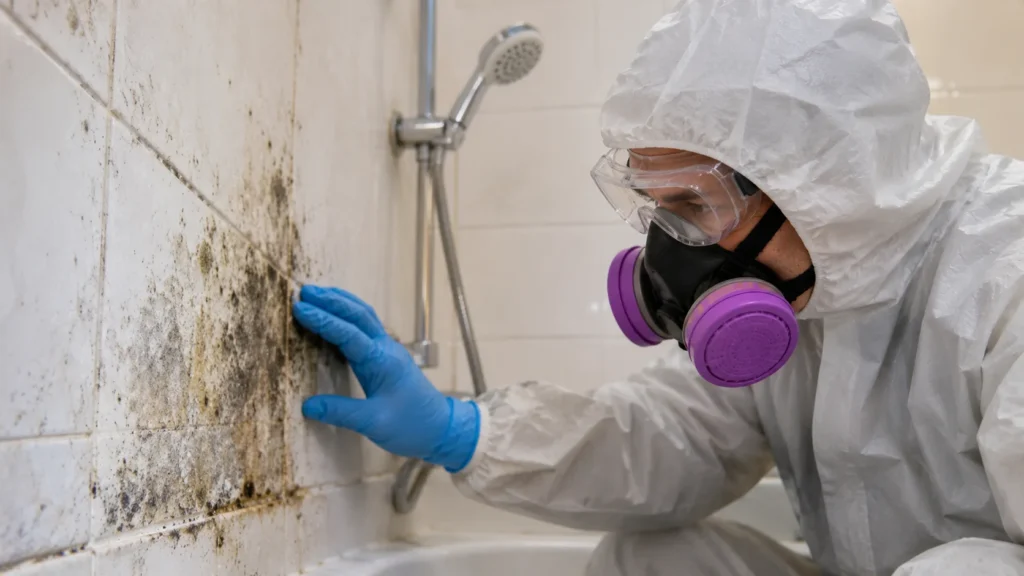
The EPA’s homeowner guidance uses approximately 10 square feet as a general threshold for considering professional mold remediation, but the right response also depends on the material, water source, location, and occupants’ health. A smaller affected area can still require professional assessment when hidden damage or contaminated water is involved.
Conclusion
Learning how to clean shower mold starts with choosing the right cleaning method for each surface. Detergent and water or an appropriate bathroom cleaner can help remove small areas of growth from suitable hard surfaces, while grout, caulk, shower curtains, and natural stone may require different care. Avoid mixing cleaning chemicals, follow product labels, and protect yourself during cleanup.
Most importantly, do not stop at removing visible spots. Improve ventilation, dry wet surfaces, repair leaks, and investigate recurring growth. Addressing the underlying moisture problem is the most reliable way to help keep your shower cleaner over time.
1. What is the best way to clean shower mold?
For small areas on hard, washable surfaces, scrub with detergent and water or a surface-compatible bathroom cleaner. Rinse as directed, dry completely, and address the moisture source to help prevent regrowth.
2. How do you remove black mold from shower grout?
Apply a grout-compatible cleaner, gently scrub with a nylon grout brush, and rinse according to the product directions. If the grout is cracked, crumbling, or repeatedly develops mold, investigate possible moisture damage.
3. Does vinegar kill mold in the shower?
Vinegar is commonly used for household cleaning, but it is not suitable for every surface and should not be relied on as a universal mold treatment. Avoid it on travertine and other acid-sensitive stone, and never combine it with bleach or other cleaners.
4. How do you clean shower mold without bleach?
Use detergent and water or a bathroom cleaner suitable for the affected material. Scrub away visible growth, rinse as directed, and dry thoroughly. Fixing leaks and improving ventilation are essential to preventing recurrence.
5. Why does mold keep coming back in my shower?
Recurring mold often indicates that moisture remains after cleaning. Poor ventilation, leaking plumbing, wet grout, damaged caulk, and trapped water can all contribute. Check the affected area for underlying damage if the growth repeatedly returns.
6. Is pink buildup in the shower mold?
Not always. Pink or reddish buildup is often associated with bacteria such as Serratia marcescens. Clean the affected surface with a suitable bathroom cleaner, rinse as directed, and keep the area dry to discourage regrowth.
7. Can you use bleach on shower grout?
A bleach-based product may be suitable for some grout, but compatibility depends on the grout, surrounding materials, and product instructions. Use it only as directed, ventilate the area, and never mix bleach with other cleaning products.`
8. When should shower mold be professionally removed?
Consider professional help when growth is extensive, repeatedly returns, appears behind building materials, or accompanies significant water damage. Damaged porous materials and hidden moisture problems may require more than surface cleaning.