
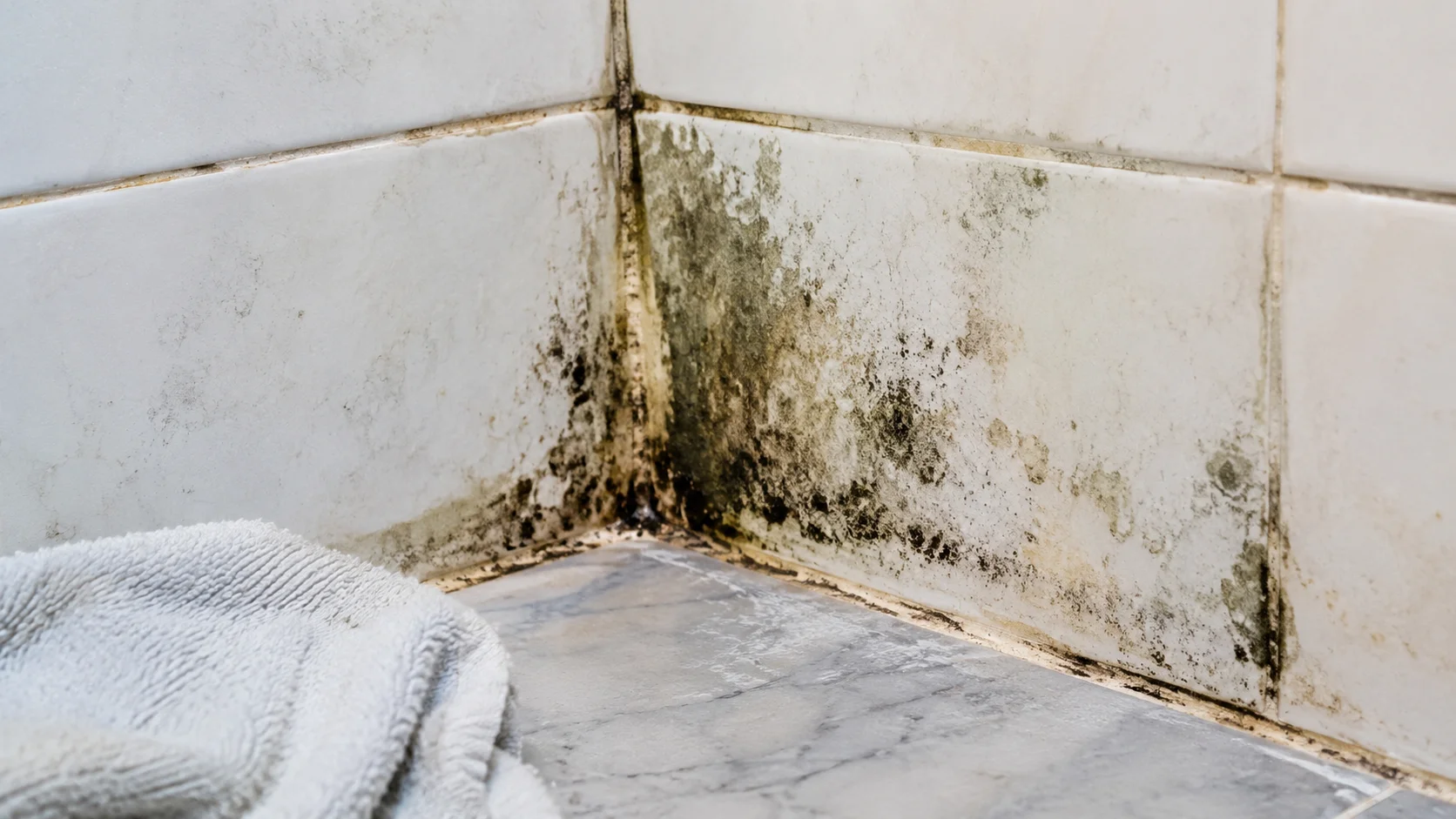
Mildew and mold are common types of fungal growth that can develop in damp homes, appearing on bathroom walls, window sills, ceilings, fabrics, wood, and other surfaces. Although people often use these terms interchangeably, they do not always describe the same growth. Mildew is commonly used for certain superficial fungal growths, while mold is a broader term for fungi that can grow in different forms and on various materials.
Understanding mildew vs mold can help you decide how to approach a stain, what cleaning precautions to take, and when a moisture problem needs professional attention. Color and smell can offer clues, but they cannot reliably identify a fungus or determine its health risks. This guide explains the differences, common locations, safe cleaning options, and signs that a problem may require more than routine household cleaning.
Mildew vs Mold: What Is the Difference?
The main difference between mildew and mold is how the terms are used and how fungal growth appears. According to the U.S. Environmental Protection Agency, mildew refers to certain kinds of mold or fungus and is often used to describe growth with a relatively flat appearance. Mold is a broader term for microscopic fungi that can grow on many materials when moisture and other conditions are suitable.
Mildew is often associated with superficial growth on bathroom surfaces, window frames, and fabrics. Other mold growth can develop on wood, paper, drywall, carpets, and materials affected by water damage. However, these patterns are not reliable enough to identify a fungus based on appearance alone.
Here is a quick comparison:
| Feature | Mildew | Mold |
| Typical appearance | Often flat or powdery | May be flat, fuzzy, or textured |
| Common colors | White, gray, or yellowish | White, green, brown, gray, or black |
| Common locations | Showers, windowsills, damp fabrics | Walls, wood, ceilings, carpets, and other damp materials |
| Cleaning difficulty | May be easier to remove from washable surfaces | Can be difficult to remove from porous or damaged materials |
| Main concern | Persistent moisture and possible irritation | Potential health effects, material damage, and hidden moisture |
| Identification | Appearance alone is inconclusive | Appearance alone is inconclusive |
Important: These are general tendencies, not diagnostic rules. Both mold and mildew can vary in color, texture, and location. A dark patch is not automatically toxic black mold, and a white patch is not automatically harmless mildew.
What Does Mildew Look Like?
Mildew is commonly described as a flat, powdery, or lightly textured growth. It may appear white, pale gray, or yellowish, although its appearance can change as it develops.
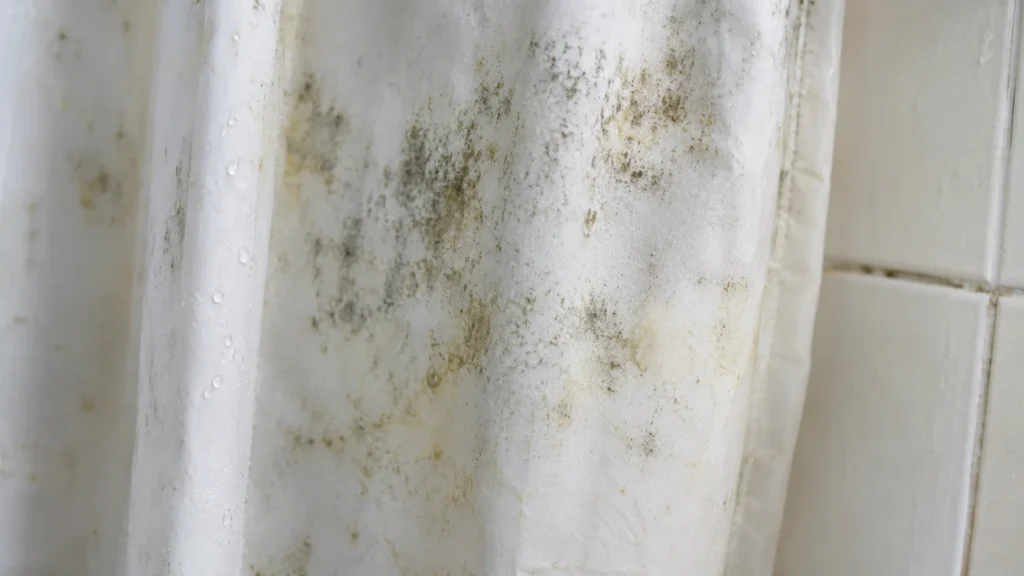
You might notice mildew as:
- Pale patches on bathroom tile or grout.
- Powdery-looking growth around a damp window frame.
- Discoloration on a shower curtain or fabric.
- Spots on surfaces that stay wet or poorly ventilated.
Mildew can sometimes be removed from suitable washable surfaces with an appropriate cleaner and gentle scrubbing. However, a powdery appearance does not guarantee that the growth is mildew or that the affected material is undamaged.
If the same spots return after cleaning, examine the area for condensation, leaks, and inadequate airflow.
What Does Mold Look Like?
Mold can have a wide range of appearances. Depending on the species, surface, and growth conditions, it may look flat, fuzzy, slimy, spotted, or irregular. Colors can include white, gray, green, brown, and black.
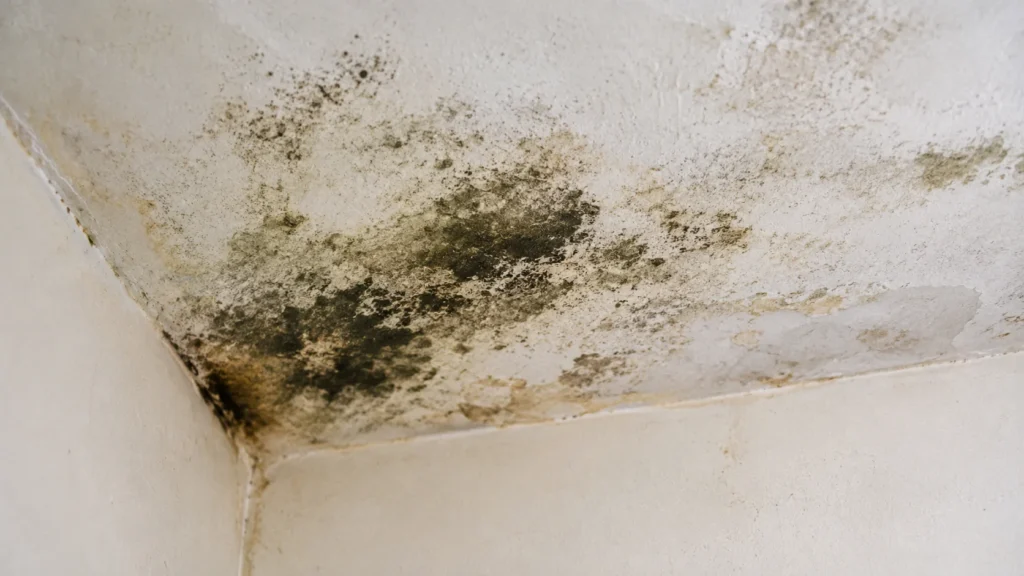
Indoor mold may appear in places such as:
- Behind furniture placed against damp walls.
- Around leaking windows and plumbing.
- On water-damaged drywall or ceiling materials.
- Beneath carpets or flooring affected by moisture.
- On wooden furniture, cardboard, and other materials that retain moisture.
Visible growth may be only part of the problem. If moisture has entered porous building materials, mold can develop in places that are not immediately visible.
Do not scrape, sand, or dry-brush suspected mold to identify it. Disturbing the growth can spread particles. Instead, investigate the moisture source and assess whether the affected material can be safely cleaned.
Black Mold vs Mildew: How Can You Tell Them Apart?
Black mold vs mildew is a common comparison because dark spots can look alarming when they appear in a bathroom, basement, or bedroom.
Black mold may appear dark greenish-black, while mildew is often described as white or gray and powdery. But color is not a dependable way to distinguish them. Several types of mold can appear black or dark, and growth can change as it develops.
Consider these clues without treating them as proof:
- Color: Black or dark green patches may be mold, but color alone cannot establish the species.
- Texture: Powdery growth may resemble mildew, while fuzzy growth may suggest a different type of fungal colony. Neither appearance confirms an identification.
- Location: Growth near a leak, inside a damp wall, or beneath flooring raises concern about moisture damage.
- Material condition: Soft, crumbling, swollen, or peeling materials may indicate that moisture has affected more than the surface.
- Odor: A persistent musty smell may indicate dampness or microbial growth, even when no visible patch can be found.
The phrase “toxic black mold” is often used in everyday discussions, but it should not be applied to a patch simply because it looks black. The EPA advises that mold type cannot be reliably determined by color alone.
If the growth is extensive, repeatedly returns, or appears inside a wall or ventilation system, consider professional assessment rather than attempting to identify it by sight.
Jump into Other Related Article
- Oxygen Bleach | What Is Oxygen Bleach, How It Works, Uses, Ingredients & Laundry Guide
- How to Clean an Iron | Soleplate, Steam Holes, Burnt Fabric, Starch & Cast Iron Guide
- Homemade Laundry Detergent | Easy Recipes, Ingredients, Benefits & Washer Safety
Bathroom Mold vs Mildew: Where Does Each Grow?
Bathrooms provide the moisture that allows both mold and mildew to develop. Steam from showers, wet towels, condensation, soap residue, and inadequate ventilation can contribute to persistent dampness.
Mildew-like growth is often noticed on shower curtains, window sills, tile surfaces, and grout. Mold may also develop in these locations, as well as on damp drywall, wooden trim, ceilings, and materials behind bathroom fixtures.
To manage growth in your bathroom:
- Run the exhaust fan during showers and afterward.
- Wipe standing water from suitable surfaces.
- Spread out shower curtains so they can dry.
- Clean soap residue and dirt regularly.
- Repair leaking fixtures and damaged caulk.
- Investigate stains that return despite routine cleaning.
Do not assume that bathroom growth is harmless because it appears small or pale. The important questions are whether the surface can be cleaned safely and whether the moisture problem has been resolved.
Mold vs Mildew on Walls and Ceilings
Wall and ceiling stains can be especially difficult to assess because discoloration may come from fungal growth, water staining, dirt, or a combination of problems.
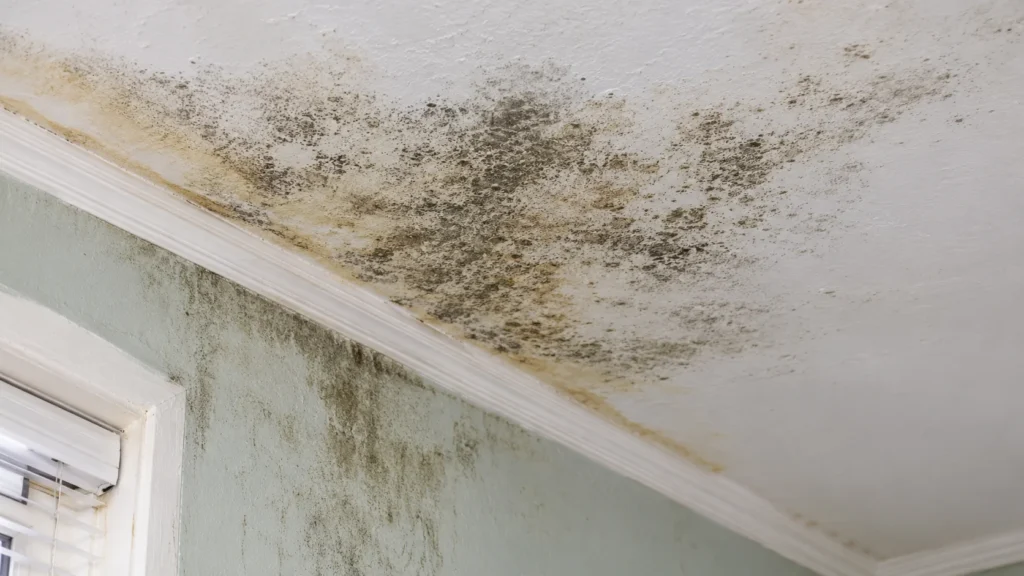
Mold vs Mildew on Walls
Growth on a washable painted wall may sometimes be cleaned with a suitable detergent solution. First, check whether the paint and underlying surface are intact. Use as little moisture as practical, and dry the area thoroughly.
If the wall is bubbling, peeling, soft, swollen, or repeatedly developing spots, investigate for leaks or moisture inside the wall. Drywall and other porous materials can be difficult to clean thoroughly once contaminated.
Mold vs Mildew on a Ceiling
Ceiling growth may result from condensation, poor ventilation, or a roof or plumbing leak. Bathroom ceilings are particularly vulnerable when humid air is not adequately removed.
Do not soak ceiling materials or disturb extensive growth overhead. If the ceiling is sagging, crumbling, or visibly water-damaged, arrange for the underlying problem to be assessed before attempting cosmetic cleaning.
When Wall or Ceiling Growth Needs Professional Attention
Professional help may be appropriate when growth covers a large area, involves porous materials, follows flooding or contaminated-water damage, or appears to extend behind the visible surface. A persistent musty smell without an obvious source can also justify further investigation.
The goal is not simply to remove a stain. It is to identify and correct the moisture source so the problem does not return.
Mold vs Mildew on Wood, Furniture, and Fabric
Mold and mildew can develop on materials that remain damp, but cleaning methods depend on the material and how deeply the moisture has penetrated.
Mildew vs Mold on Wood
Wooden furniture, window frames, and flooring can develop fungal growth when exposed to leaks, condensation, or high humidity. A light surface patch may be easier to clean than growth associated with swollen, soft, or decaying wood.
For sound, finished wood, use a cleaner approved for the finish and avoid saturating the material. Dry the surface completely. If growth has penetrated unfinished wood or the material is deteriorating, professional assessment may be necessary.
Mold vs Mildew on Clothes and Fabric
Damp clothing, towels, curtains, and upholstery can develop visible growth or a persistent musty odor. Check the item’s care label before cleaning.
- Wash washable clothing with suitable laundry detergent according to its care instructions.
- Dry the item completely before storing it.
- Clean washable curtains according to the manufacturer’s guidance.
- Seek specialist advice for valuable upholstery or delicate fabrics that cannot be washed safely.
If an item remains musty after cleaning or shows extensive growth, it may need further treatment or disposal. Do not assume that removing visible spots has eliminated contamination throughout a porous item.
Mold vs Mildew on Carpets and Mattresses
Carpets, mattress padding, and other absorbent materials can be difficult to clean thoroughly once moisture reaches their inner layers. Surface treatment may not address growth inside the material.
If these items become wet, dry them promptly. When mold has developed within a mattress or carpet padding, replacement may be necessary. The EPA notes that porous materials can be difficult or impossible to clean completely once mold grows into their spaces and crevices.
Mold vs Mildew Smell: What Should You Notice?
Both mold and mildew can produce a musty odor. Some people describe it as damp, earthy, stale, or similar to the smell of clothing left wet for too long.
The strength of the smell does not reliably indicate the type of fungus or the level of health risk. A strong odor may point to a moisture problem, including hidden growth, but it cannot identify the source on its own.

If you notice a persistent musty smell:
- Check for leaks beneath sinks and around plumbing fixtures.
- Inspect window frames, ceilings, and walls for dampness.
- Look behind furniture near exterior walls, where accessible.
- Check carpets, stored fabrics, and closets for moisture.
- Investigate the source if the smell remains despite routine cleaning.
Avoid masking the odor with air fresheners. Identifying and correcting the moisture source is more important than covering up the smell.
Does Mold Pose More Health Risks Than Mildew?
It is not accurate to assume that all mold is dangerous while all mildew is harmless. Health effects depend on several factors, including the type and amount of growth, exposure conditions, and an individual’s sensitivity.
The Centers for Disease Control and Prevention (CDC) explains that exposure to damp and moldy environments can cause health effects in some people. Possible symptoms include nasal congestion, coughing, wheezing, eye irritation, and skin irritation. People with asthma, mold allergies, chronic lung conditions, or weakened immune systems may face greater risks.
There is also no reliable way to determine the health risk of a patch simply by looking at its color. Black growth is not automatically a specific toxic species, and white growth is not automatically safe.
If visible growth is present, focus on safe cleanup and moisture control rather than trying to diagnose the fungus by appearance. Anyone experiencing persistent or concerning symptoms should consult a healthcare professional.
How to Clean Mold and Mildew Safely
Small patches on hard, washable surfaces can often be cleaned using detergent and water, followed by thorough drying. The appropriate approach depends on the affected material, the extent of growth, and any underlying water damage.
Follow these precautions:
- Wear protective equipment: Use suitable gloves and eye protection. For mold cleanup, the CDC recommends appropriate respiratory protection, including an N95 respirator in its guidance.
- Ventilate the area: Open windows and doors when safe, and follow the cleaning product’s directions.
- Never mix cleaners: Combining bleach with ammonia or other cleaning products can release dangerous fumes.
- Avoid covering growth: Do not paint or caulk over moldy surfaces without cleaning and drying them first.
- Address the moisture source: Repair leaks and correct persistent condensation or ventilation problems.
- Know when to stop: Extensive growth, contaminated water damage, or mold inside porous building materials may require professional remediation.
The EPA generally suggests considering professional guidance when the affected area exceeds approximately 10 square feet, although the appropriate response also depends on the circumstances.
How to Prevent Mold and Mildew in Your Home
Preventing both types of growth starts with managing moisture rather than relying on repeated cleaning.
Improve ventilation. Use bathroom and kitchen exhaust fans that vent outdoors. Keep air moving through damp areas where practical.

Repair leaks promptly. Check plumbing, windows, roofs, and other areas where water can enter the building.
Dry wet materials quickly. After a leak or flooding event, clean and dry affected items as soon as possible. The CDC recommends drying the home and its contents within 24–48 hours when feasible.
Control indoor humidity. Use an air conditioner or dehumidifier when necessary, and monitor humidity if dampness is a recurring problem.
Inspect vulnerable areas. Check bathrooms, basements, closets, window sills, and spaces around plumbing for signs of persistent moisture.
Avoid storing damp belongings. Let clothing, towels, and other washable fabrics dry completely before putting them away.
These steps help reduce the conditions that support fungal growth, although they cannot guarantee that mold or mildew will never appear.
Conclusion
Understanding mildew vs mold helps you respond to suspicious growth without relying on misleading assumptions about color, smell, or appearance. Mildew is commonly associated with flatter, superficial growth, while mold can develop in many forms and on a wide range of materials. However, these descriptions are not enough to identify a specific fungus or establish its health risk.
For small areas on suitable washable surfaces, careful cleaning and thorough drying may be sufficient. Growth that returns repeatedly, affects porous materials, or accompanies significant water damage requires closer investigation. By correcting leaks, improving ventilation, and controlling indoor moisture, you can reduce the conditions that allow both mold and mildew to develop.
1. What is the main difference between mildew vs mold?
Mildew is commonly used to describe certain relatively flat fungal growths, while mold is a broader term for fungi that can grow in different forms. Their appearance can overlap, so visual inspection alone cannot reliably distinguish them.
2. Is black mold the same as mildew?
No. Black mold describes dark-colored mold growth, while mildew is a general term often associated with certain superficial fungal growths. Dark color alone cannot establish the species or determine its health risks.
3. Can mildew turn into mold?
Mildew is itself a term used for certain types of mold or fungal growth. Rather than thinking of mildew as necessarily turning into another fungus, consider whether the growth is spreading because moisture remains present.
4. How can you tell if a stain is mold or mildew?
Color, texture, location, and odor may provide clues, but none is conclusive. If you see or smell suspected mold, address the moisture problem and clean the affected area safely rather than relying on visual identification.
5. Is mildew easier to clean than mold?
Superficial growth on washable surfaces may be easier to remove than growth embedded in porous materials. The difficulty depends more on the surface, moisture damage, and extent of contamination than on the name used for the growth.
6. Does vinegar remove mold and mildew?
Vinegar is sometimes used for household cleaning, but it is not suitable for every material or every situation. Follow the surface manufacturer’s care instructions, and never mix vinegar with bleach or other cleaning products.
7. Can mold or mildew grow on dry surfaces?
Fungal growth needs sufficient moisture to develop, although a surface that looks dry may still have moisture within it or may become damp repeatedly. Fix leaks, reduce condensation, and investigate recurring growth.
8. Should I test my home to identify mold?
Routine home mold testing is not always necessary. The CDC does not recommend routine mold testing as a substitute for addressing visible growth and moisture problems. Professional assessment may be useful when growth is hidden, extensive, or associated with building damage.