
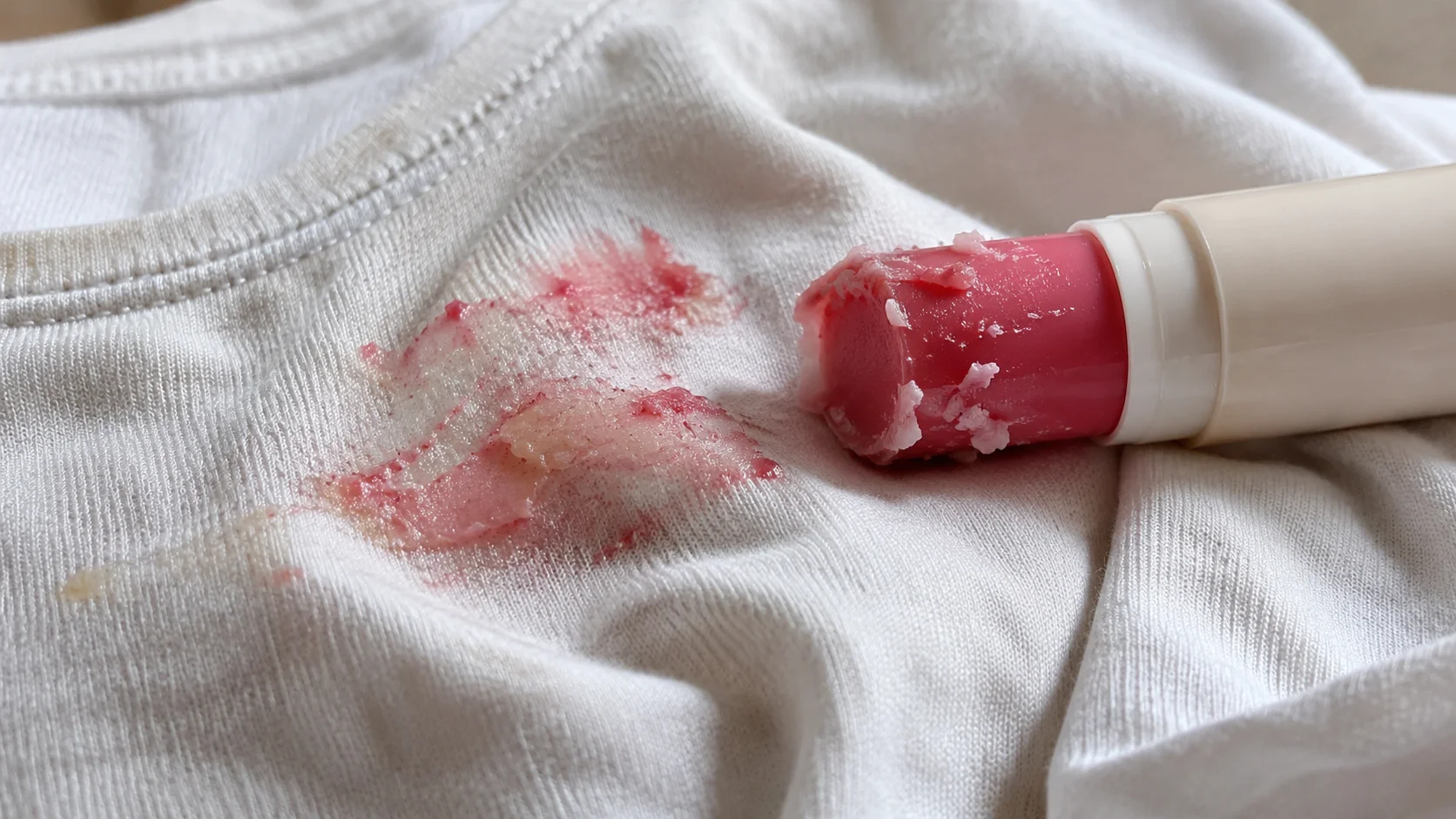
Learning how to get Chapstick out of clothes is especially important when a lip balm accidentally goes through the washing machine or dryer. ChapStick contains oily and waxy ingredients, including petrolatum in its Classic formula, so the resulting mark is not simply a water-based stain. The oil can spread through fabric during washing, while dryer heat can melt the balm and transfer it to multiple garments. ChapStick itself recommends removing excess balm, absorbing oil, pretreating the area, and following the clothing care label.
A fresh Chapstick stain is generally easier to handle because the wax and oil have not yet been driven deeply into the fibers. A melted Chapstick stain that has gone through a dryer is more challenging because the heat liquefies the balm and allows it to spread. Clorox explains that dryer heat can liquefy lip balm, allowing it to move into fabric fibers and transfer to other clothing in the load.
The good news is that Chapstick stains are not necessarily permanent. The most effective approach is to remove solid wax first, absorb or break down the oily residue, pretreat the stain, wash using a fabric-appropriate temperature, and check the clothing before applying more heat. This guide covers fresh Chapstick, melted Chapstick, stains after washing or drying, red and tinted lip balm, beeswax formulas, white clothing, old stains, and situations where Chapstick has contaminated an entire dryer load.
Why Chapstick Leaves Stubborn Stains
Chapstick stains are difficult because the product is designed to remain on the lips as a protective, moisturizing barrier. ChapStick explains that its formulas can contain petrolatum, mineral oil, lanolin, waxes, and other ingredients, depending on the product. These ingredients are useful in lip care but can behave like oily or waxy residues when they get onto clothing.
A normal washing cycle may not completely remove a large amount of lip balm because water alone does not readily remove oily substances. Once the garment enters a dryer, the problem can become considerably worse. Clorox explains that heat liquefies the lip balm, allowing it to flow into fabric fibers before solidifying again as the dryer cools.
Tinted and colored products add another challenge because the stain may contain both oily residue and dye or pigment. ChapStick specifically recommends an oxygen-based bleach treatment for dye-containing products such as Classic Cherry when the garment and product instructions allow it.
15 Things That Make Chapstick Stains Difficult
- Chapstick contains oily ingredients.
- Many formulas also contain waxes.
- Petrolatum can leave an oily mark.
- Mineral oil can cling to fibers.
- Lanolin can contribute to greasy residue.
- Heat can melt the product.
- Melted balm can spread across a garment.
- A dryer can transfer Chapstick to other clothes.
- Colored lip balm can leave pigment behind.
- Tinted formulas may require a second stain-removal stage.
- Dried balm can harden around individual fibers.
- Ordinary water alone may not remove oily residue.
- Repeated heat can make a remaining mark harder to treat.
- Delicate fabrics cannot tolerate every stain-removal product.
- Different Chapstick formulas can leave different types of residue.
Understanding these characteristics makes it easier to choose the right treatment rather than simply washing the garment repeatedly.
How to Get Fresh Chapstick Out of Clothes
Fresh Chapstick that has not yet been washed or dried is the easiest situation to address. The first objective is to remove as much of the solid balm as possible without pushing it deeper into the fabric. ChapStick recommends gently scraping away remaining wax or solid material with a spoon or butter knife and specifically advises against scrubbing at this stage.
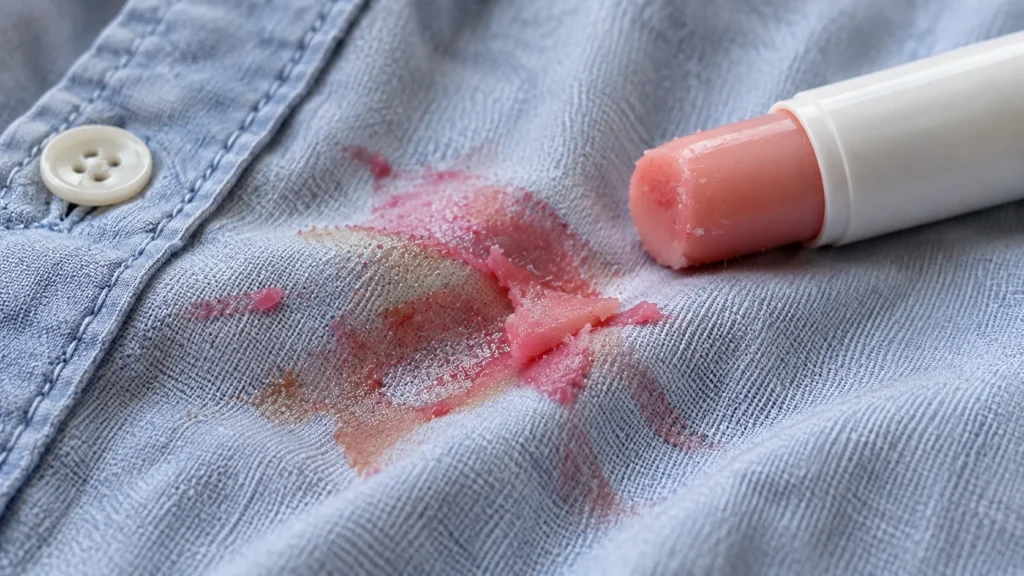
Once the visible balm has been removed, the remaining stain is primarily an oily residue. ChapStick suggests using an absorbent powder such as baking soda or baby powder to draw out oil before applying a stain pretreatment. The powder can be gently worked into the stain and removed repeatedly until it no longer clumps with absorbed oil.
After oil absorption, apply an appropriate stain pretreatment and allow it to work before laundering. ChapStick recommends a commercial pretreatment or a diluted dish-soap or vinegar approach, while the exact treatment should always be checked against the garment’s care instructions.
15-Step Fresh Chapstick Removal Method
- Remove the garment from use immediately.
- Locate all visible Chapstick residue.
- Do not rub the fresh stain.
- Scrape away solid balm with a spoon.
- Keep the scraping tool dull rather than sharp.
- Remove as much wax as possible.
- Sprinkle baking soda or another suitable absorbent powder over the oily area.
- Gently work the powder into the stain.
- Brush or shake away the used powder.
- Repeat the absorption step when necessary.
- Apply an appropriate laundry stain pretreatment.
- Allow the pretreatment to work according to its directions.
- Wash according to the garment care label.
- Inspect the clothing before drying.
- Repeat treatment if an oily mark remains.
This process separates the problem into two stages: physical wax removal first and oily-stain treatment second.
How to Get Chapstick Stains Out of Clothes After Washing
A Chapstick stain that has already been washed may look like a greasy patch, translucent spot, or darker area on the fabric. At this stage, the original wax may no longer be obvious because some of it has melted and redistributed through the fibers. The remaining problem is often the oily residue rather than a visible chunk of Chapstick.
ChapStick recommends treating the oily area with an absorbent powder and then using a stain pretreatment before washing again. The company notes that older or already-laundered stains may require repeated treatment.
Do not automatically put the garment back into the dryer after the second wash. If the stain is still visible, additional heat can make the remaining oil more difficult to remove. Clorox likewise recommends air-drying and checking the result before applying more dryer heat.
15 Steps for Washed Chapstick Stains
- Check the garment care label.
- Identify the entire affected area.
- Place the garment on a clean surface.
- Apply baking soda or another suitable absorbent.
- Gently brush the powder into the oily residue.
- Allow the powder time to absorb oil.
- Remove the used powder.
- Repeat the absorption process if necessary.
- Apply a grease-cutting pretreatment.
- Allow the treatment to sit as directed.
- Wash with suitable detergent.
- Use the warmest safe temperature.
- Inspect the garment while damp.
- Air-dry if the stain remains.
- Repeat the treatment rather than immediately using more heat.
How to Get Melted Chapstick Out of Clothes
Melted Chapstick creates a more widespread stain than a simple spot because heat allows the lip balm to become liquid. If the tube was left in a pocket during washing, the melted product can coat the original garment and potentially transfer to other items. Clorox specifically explains that dryer heat liquefies lip balm and allows it to flow into fabric fibers before solidifying as the dryer cools.
Start by removing any visible wax or residue. If the Chapstick has cooled and hardened again, freezing can make it easier to scrape away without smearing it. Martha Stewart’s current laundry guidance recommends wrapping the garment in a clean towel, freezing it for several hours, and then scraping away the hardened Chapstick with a dull knife or spoon.
After physical removal, treat the oily residue. Martha Stewart recommends grease-fighting dish detergent followed by baking soda and an enzyme detergent when compatible with the garment.
15 Melted Chapstick Removal Steps
- Stop using the dryer.
- Remove the garment from the dryer.
- Let the fabric cool completely.
- Inspect for solid wax.
- Place the garment in a clean towel.
- Freeze it for several hours if appropriate.
- Remove hardened Chapstick with a spoon.
- Avoid sharp blades that could cut fibers.
- Apply grease-fighting dish detergent to the oily area.
- Allow the treatment to sit.
- Add baking soda when appropriate.
- Gently work the treatment into the fabric.
- Wash with suitable detergent.
- Inspect before drying.
- Air-dry until you are certain the stain is gone.
How to Get Chapstick Out of Clothes After Drying
Getting Chapstick out of clothes after drying is one of the most difficult versions of this stain because the dryer may have melted the lip balm and distributed it throughout the fibers. However, a dried Chapstick stain does not automatically mean the garment is ruined. Both ChapStick and Clorox provide methods for dealing with previously laundered garments.
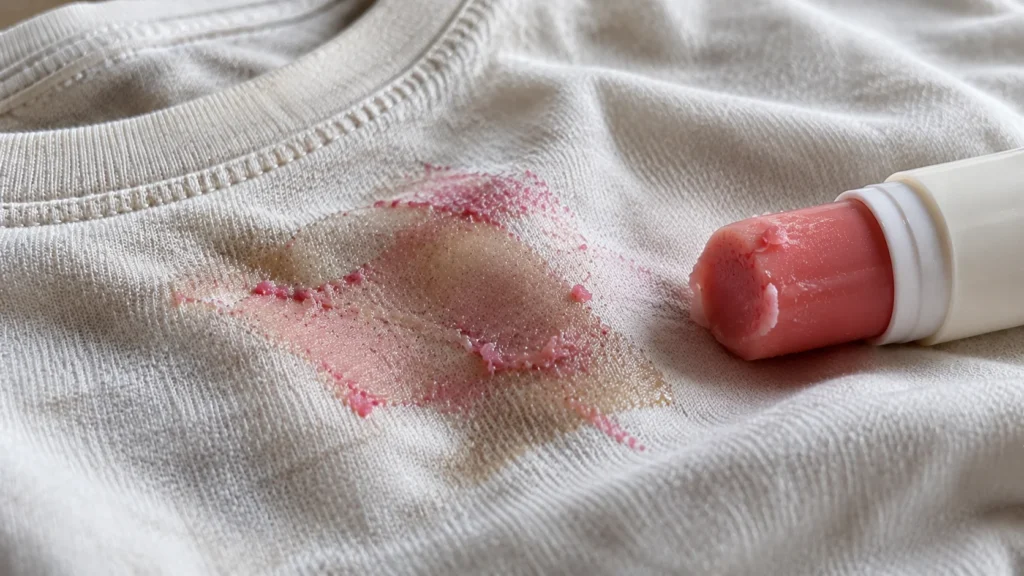
Clorox recommends scraping away surface material, pretreating with a small amount of dishwashing detergent, rinsing that detergent away, and then washing at the hottest temperature permitted by the care label with an appropriate laundry product. It also recommends air-drying and checking the result before repeating treatment.
Martha Stewart’s updated 2026 guidance takes another approach for dried oily residue: apply baking soda, gently brush it into the oil, remove the powder, repeat as needed, and then wash using an enzyme-based detergent.
15-Step Dried Chapstick Treatment
- Do not immediately put the garment through another dryer cycle.
- Check the care label.
- Examine the fabric for hardened residue.
- Scrape off visible Chapstick.
- Use a dull spoon or knife.
- Avoid cutting the fabric.
- Apply baking soda to oily residue.
- Gently brush the powder into the stain.
- Remove the used powder.
- Repeat until oil absorption slows.
- Apply a suitable grease-fighting pretreatment.
- Allow sufficient contact time.
- Wash according to fabric instructions.
- Inspect before applying heat.
- Repeat the treatment if the oily shadow remains.
Clorox notes that dried stains can require repeated pretreatment and that stains exposed to dryer heat are harder to remove.
How to Get Chapstick Out of Clothes From the Dryer
When Chapstick is left in a pocket and goes through the dryer, the problem can extend beyond one garment. The heat melts the balm, causing it to spread to other clothing surfaces inside the drum. Clorox specifically describes this transfer effect and recommends treating the affected garments individually.
First, remove all affected clothes from the dryer and separate them according to color and fabric type. Check every item rather than treating only the garment where the Chapstick tube was found. The dryer itself may also have waxy or oily residue that needs to be removed before another load is run.
ChapStick states that residue inside the washer or dryer can be cleaned with hot water and a little laundry detergent, with vinegar potentially helping with waxy residue.
15 Steps for a Chapstick-in-the-Dryer Accident
- Stop the dryer immediately when possible.
- Remove the Chapstick tube.
- Take out the entire load.
- Separate visibly stained clothing.
- Inspect lightly affected clothing too.
- Remove solid residue from garments.
- Treat oily marks individually.
- Avoid putting affected clothing back into the dryer.
- Use a suitable pretreatment.
- Wash according to each garment’s care label.
- Air-dry the garments.
- Inspect them under good lighting.
- Repeat treatment where necessary.
- Clean visible Chapstick residue from the dryer.
- Check the drum before running another load.
Treating the dryer itself is important because leftover balm can transfer again during the next heated cycle.
How to Remove Chapstick Oil Stains From Clothes
Once Chapstick has melted, the visible wax may disappear while the Chapstick oil stain remains. This is why a garment can look clean immediately after washing but develop a dark or translucent patch once it dries. The stain is no longer primarily a wax problem; it is an oil-residue problem.
ChapStick recommends absorbing the oil with baking soda or baby powder before applying a pretreatment. Martha Stewart’s 2026 guidance similarly recommends baking soda for dried Chapstick oil spots and explains that the powder absorbs oily residue.
A grease-fighting dish detergent can also help break up the oily residue before laundering. Clorox recommends applying a small amount of dishwashing detergent, allowing it to sit for several minutes, rinsing it away, and then laundering with an appropriate detergent and stain-removal product.
15 Ways to Target Chapstick Oil
- Remove remaining wax first.
- Blot rather than smear the stain.
- Use an absorbent powder.
- Let the powder contact the oily residue.
- Brush gently.
- Remove used powder.
- Repeat if the powder continues clumping.
- Apply a grease-fighting dish detergent.
- Allow appropriate dwell time.
- Rinse dish detergent when instructed.
- Apply laundry detergent.
- Wash at the recommended temperature.
- Inspect while damp.
- Air-dry when necessary.
- Repeat until the oily shadow disappears.
How to Get Red, Pink, and Tinted Chapstick Out of Clothes
Red Chapstick, cherry lip balm, pink lip balm, and tinted formulas can leave both an oily mark and colored pigment. This means removing the oil may not completely restore the garment’s original appearance. ChapStick specifically discusses its Classic Cherry product and recommends an oxygen-based bleach treatment for dye-containing stains when compatible with the garment.
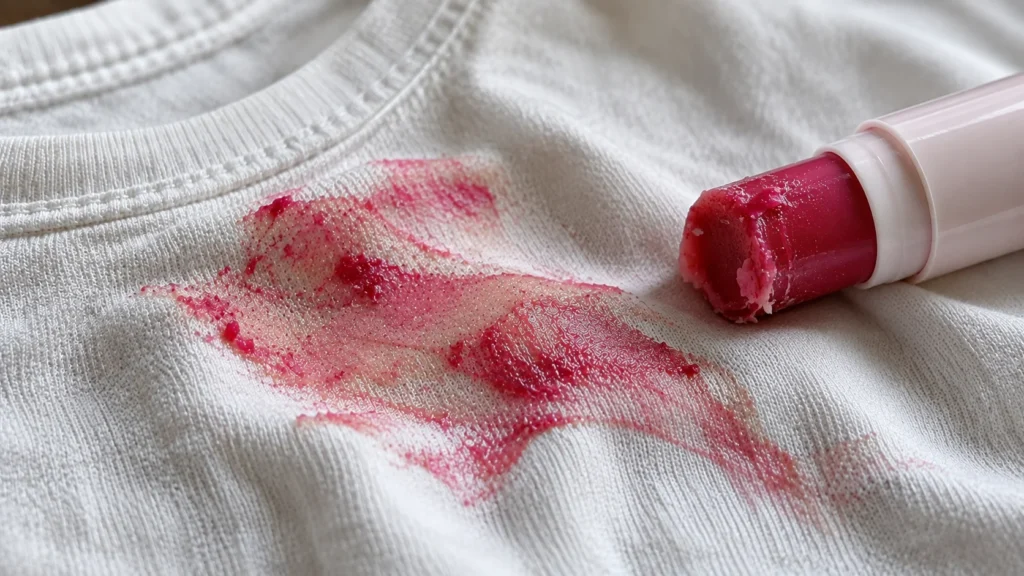
Start by treating the oily portion of the stain. Once the oil has been addressed, a compatible oxygen-based stain treatment can help with remaining color. Always check the garment’s care label and the product directions before using any bleaching product.
For white clothing, the available options may be broader, but white does not automatically mean every bleach product is safe. Clorox distinguishes between bleach-safe whites and colored or spandex-containing garments and recommends different products for those categories.
15 Tinted Chapstick Stain Tips
- Remove solid lip balm.
- Absorb oil before treating pigment.
- Check the garment’s colorfastness.
- Read the care label.
- Use an appropriate pretreatment.
- Treat red and pink residue separately.
- Consider oxygen-based stain treatment when compatible.
- Follow the product’s dilution instructions.
- Do not mix bleaching products.
- Test colored fabrics first.
- Wash according to the garment instructions.
- Inspect before drying.
- Repeat treatment when necessary.
- Avoid aggressive scrubbing.
- Use professional cleaning for delicate dyed fabrics.
How to Get Chapstick Out of White Clothes
White clothing can make Chapstick stains particularly obvious because oily patches and colored lip balm pigments contrast strongly with the fabric. The treatment should still begin with wax and oil removal rather than immediately using chlorine bleach. A strong bleaching product will not necessarily solve the oily portion of the stain.
For bleach-safe white clothing, Clorox recommends its appropriate bleach product after pretreatment and washing according to the garment’s care label. For white garments containing spandex, Clorox advises against its disinfecting bleach and instead recommends its color-safe stain remover.
15 White-Clothing Treatment Rules
- Remove solid Chapstick.
- Absorb remaining oil.
- Apply suitable pretreatment.
- Check the garment fiber.
- Check whether spandex is present.
- Determine whether bleach is permitted.
- Use oxygen bleach when appropriate.
- Follow product directions.
- Avoid mixing bleach with other cleaners.
- Wash at the recommended temperature.
- Inspect the stain before drying.
- Air-dry while troubleshooting.
- Repeat treatment if needed.
- Treat colored residue separately.
- Stop if the fabric begins changing color.
How to Get Dried Chapstick Out of Clothes
Dried Chapstick can be present in two forms: hardened wax sitting on the surface or an oily stain that remains after the wax has disappeared. These require slightly different approaches. Hardened wax can be physically removed, while the oily residue needs an absorbent or grease-cutting treatment.
Freezing is useful for hardened residue because it makes the balm firmer and easier to scrape without smearing. Martha Stewart recommends freezing the garment for several hours and then scraping away the solidified ChapStick with a dull knife or spoon.
For the remaining oil, baking soda can help absorb residue before washing. The key is to avoid adding heat until the stain has been fully assessed.
15 Dried Chapstick Removal Steps
- Identify whether wax remains.
- Do not immediately scrub the dry stain.
- Freeze the garment if appropriate.
- Remove hardened balm.
- Use a dull scraping tool.
- Shake away loose particles.
- Apply baking soda to oily residue.
- Gently brush the powder.
- Remove the used powder.
- Repeat oil absorption.
- Apply a suitable pretreatment.
- Wash according to the care label.
- Inspect the wet garment.
- Air-dry when needed.
- Repeat treatment rather than adding unnecessary heat.
How to Get Burt’s Bees and Beeswax Chapstick Out of Clothes
The keywords Burt’s Bees Chapstick, beeswax Chapstick, and other beeswax lip balms refer to products that may contain waxes and oils. Because formulas vary by product, the exact ingredients can differ, so the safest general approach is to treat the visible residue as a combination of wax and oil. The same basic sequence applies: remove excess solid material, absorb oil, pretreat, wash, and inspect before drying.
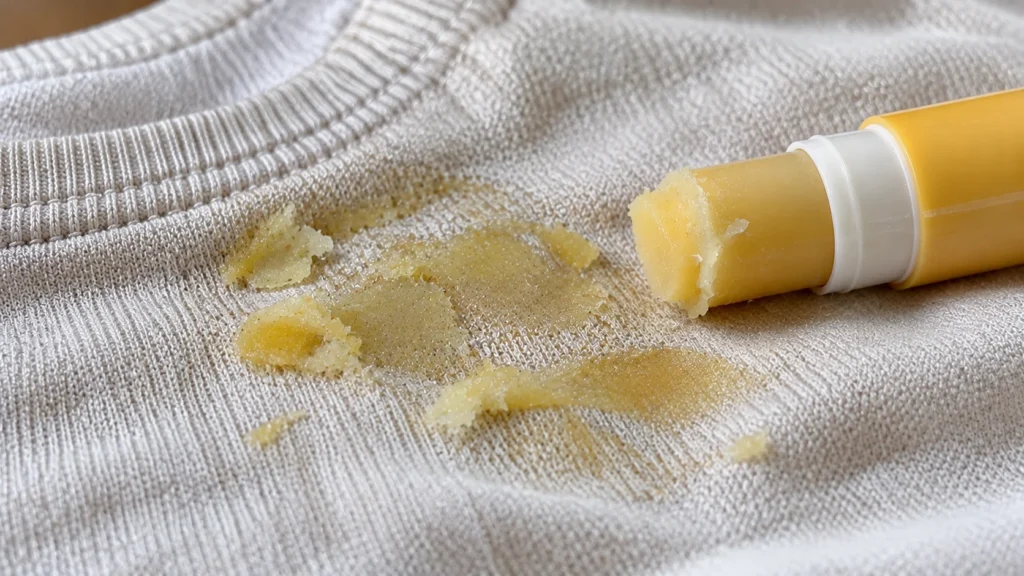
Beeswax itself is a wax, while the surrounding balm may also contain oils or other conditioning ingredients. This means simply rinsing the clothing is unlikely to be enough if a substantial amount of lip balm has melted into the fibers.
For a Burt’s Bees or similar lip balm stain, avoid assuming that a brand-specific household trick is necessary. Instead, use the garment’s care label and a treatment compatible with the stain’s waxy and oily characteristics.
15 Beeswax Lip Balm Removal Practices
- Remove excess beeswax first.
- Let hardened wax cool.
- Freeze when useful.
- Scrape gently.
- Avoid sharp tools.
- Apply an absorbent powder.
- Remove powder after oil absorption.
- Use a grease-fighting pretreatment.
- Allow treatment time.
- Wash according to the care label.
- Inspect before drying.
- Repeat treatment if oil remains.
- Treat colored balm separately.
- Avoid harsh chemicals on delicate fabrics.
- Use professional cleaning for silk, wool, or specialty garments.
How to Get Chapstick Out of Clothes After Washing and Drying
The phrase how to get Chapstick stains out of washed clothes usually describes an oily shadow that remains after the garment has already been laundered. The phrase how to get Chapstick out of clothes after dryer describes the more difficult version in which heat has melted and redistributed the balm. Both situations can still be treated, but repeated heat should be avoided until the stain has been removed.
Clorox recommends dish detergent pretreatment followed by appropriate laundering and air drying, while Martha Stewart’s current method recommends baking soda for oily residue and an enzyme detergent where suitable.
The exact product should depend on the garment. Wool, silk, leather, and other delicate materials should not be treated with a generic laundry recipe. Martha Stewart specifically recommends professional cleaning for silk, wool, delicate garments, and dry-clean-only items when dealing with ChapStick stains.
15-Step Recovery Process
- Stop using the dryer.
- Check the care label.
- Separate delicate garments.
- Remove visible wax.
- Treat oily residue.
- Use baking soda when appropriate.
- Brush the powder gently.
- Remove absorbed powder.
- Apply a suitable grease-cutting pretreatment.
- Allow the product to work.
- Wash according to the label.
- Use suitable stain treatment for colors or whites.
- Inspect the garment while damp.
- Air-dry instead of immediately using a dryer.
- Repeat treatment until the stain is gone.
How to Get Chapstick Stains Out of Multiple Clothes
A forgotten Chapstick can contaminate an entire laundry load. The balm may melt onto the garment containing the tube and transfer to shirts, pants, towels, socks, or other items. Clorox specifically notes that melted lip balm can transfer to other clothing during a dryer cycle.
The first step is to remove every affected garment from the dryer or washing machine and inspect the load. Separate heavily stained pieces from lightly affected ones. Check pockets as well because the original Chapstick container may still be present.
Do not assume that a garment without an obvious wax mark is unaffected. Oily residue can appear as faint translucent or darker patches after the clothing dries.
15 Steps for an Entire Laundry Load
- Stop the appliance.
- Remove all garments.
- Find the Chapstick tube.
- Empty and inspect all pockets.
- Separate stained garments.
- Separate whites from colors.
- Check delicate fabrics.
- Remove visible wax.
- Treat oily stains individually.
- Wash according to each garment’s label.
- Use suitable detergent.
- Avoid the dryer until stains are confirmed gone.
- Air-dry the treated clothing.
- Reinspect every affected garment.
- Repeat treatment where needed.
Treating the entire load methodically is much more effective than washing everything repeatedly without pretreatment.
Jump into Other Related Article
- How to Clean Stainless Steel Sink | Stains, Hard Water, Rust & Scratches
- How to Get Grease Out of Clothes
- How to Remove Dog Hair from Clothes | Easy Methods for Wash, Dryer & Home
How to Clean Chapstick Residue From a Dryer
A Chapstick accident can leave residue inside the dryer drum as well as on clothing. Because the balm melts during the heated cycle, small oily or waxy patches may remain on the drum surface. If these are not removed, they can transfer to the next load.
ChapStick recommends cleaning its residue from the washer or dryer with hot water and a little laundry detergent. The company also notes that vinegar may help with waxy residue.
Before cleaning any appliance, make sure it is switched off and follow its manufacturer’s cleaning instructions. Avoid using a flammable solvent inside a dryer, especially around components that may retain heat.
15 Dryer-Cleaning Steps
- Turn off the dryer.
- Allow it to cool completely.
- Remove loose wax.
- Inspect the drum carefully.
- Wipe visible residue with a suitable cloth.
- Use hot water where the manufacturer’s instructions permit it.
- Add a small amount of laundry detergent.
- Wipe the affected areas.
- Remove detergent residue.
- Use an appropriate vinegar solution only if compatible.
- Wipe again with clean water.
- Dry the drum completely.
- Inspect seams and edges.
- Run the manufacturer’s recommended cleaning procedure if available.
- Check the drum before putting clean clothing inside.
How to Remove Chapstick Wax Without Spreading the Stain
Removing the wax before treating the oil is one of the most important steps in Chapstick stain removal. Scrubbing immediately can push the wax and oil deeper into the fibers and spread the stain outward. ChapStick specifically recommends gently scraping away remaining solid material instead of scrubbing it.
Freezing can make this process easier when the Chapstick has already melted and then hardened. Once the balm becomes firm, a dull spoon or butter knife can lift the material from the surface without the same smearing effect.
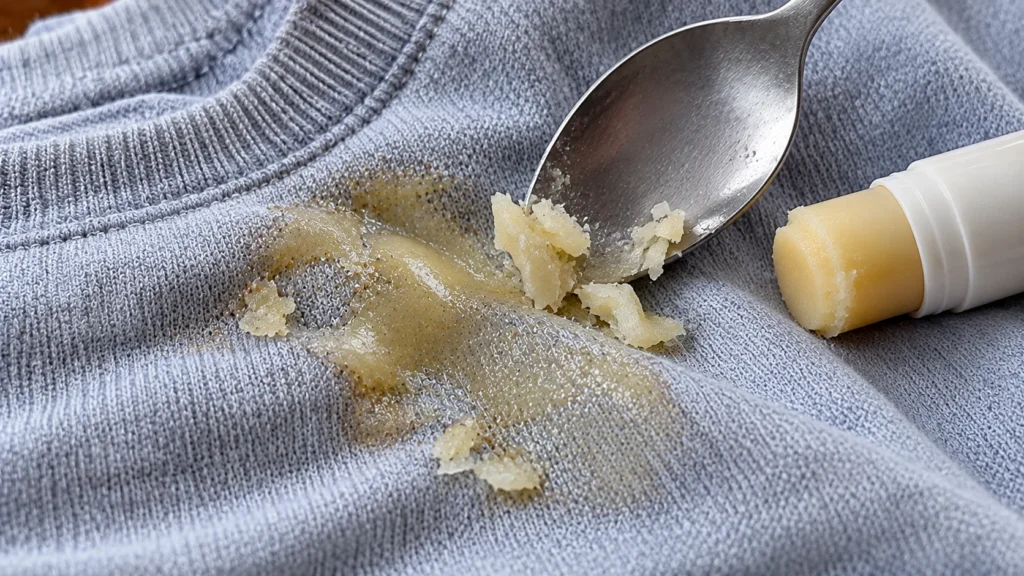
After the wax is removed, the remaining mark should be treated as an oily stain. This two-stage process is more controlled than trying to wash the wax and oil away simultaneously.
15 Wax-Removal Rules
- Let the balm cool.
- Do not rub immediately.
- Freeze when appropriate.
- Protect the garment with a towel.
- Use a dull scraping tool.
- Lift the wax rather than spreading it.
- Remove loose particles.
- Avoid sharp blades.
- Do not iron the stain.
- Do not tumble-dry the garment.
- Absorb remaining oil.
- Apply suitable pretreatment.
- Wash according to the label.
- Inspect before drying.
- Repeat only when necessary.
Common Chapstick Stain Removal Mistakes
Chapstick stains often become much harder because the wrong type of cleaning is used at the wrong time. Adding heat is one of the biggest problems because it can melt and redistribute the balm. Scrubbing a fresh waxy stain can also spread the product rather than removing it.
Another mistake is treating an oily stain as if it were only a colored stain. Even after the red, pink, or tinted appearance disappears, an oily shadow may remain. That residue needs its own pretreatment before the garment is considered clean.
15 Mistakes to Avoid
- Do not put the garment straight into a hot dryer.
- Do not iron over the Chapstick stain.
- Do not aggressively scrub fresh balm.
- Do not spread the wax outward.
- Do not ignore the care label.
- Do not use a sharp knife to scrape fabric.
- Do not assume ordinary water will remove oil.
- Do not skip pretreatment.
- Do not mix stain-removal chemicals.
- Do not use bleach automatically.
- Do not bleach wool or silk.
- Do not oversaturate delicate garments.
- Do not dry the garment before checking it.
- Do not assume one wash will remove a heavy stain.
- Do not treat a dry-clean-only garment with a random home remedy.
Clorox and Martha Stewart both emphasize checking the garment before drying and repeating treatment when the stain remains.
Chapstick Stain Removal by Situation
| Chapstick Problem | Best Starting Approach | Main Caution |
| Fresh Chapstick | Scrape + absorb oil + pretreat | Avoid rubbing |
| Melted Chapstick | Cool/freeze + scrape + pretreat | Heat spreads oil |
| Washed Chapstick | Baking soda + grease pretreatment | Inspect before drying |
| Dryer Chapstick | Remove wax + dish detergent pretreatment | May affect multiple garments |
| Dried Chapstick | Harden, scrape, absorb oil | Avoid sharp tools |
| Red Chapstick | Remove oil, then address pigment | Check colorfastness |
| Pink Chapstick | Oil treatment + compatible stain remover | Avoid excessive bleaching |
| Tinted Chapstick | Treat oil and color separately | Check care label |
| Cherry Chapstick | Oil treatment + oxygen-based treatment if appropriate | Follow product directions |
| Beeswax balm | Remove wax + treat oil | Do not smear |
| White clothes | Pretreat + compatible whitening treatment | Check fiber |
| Colored clothes | Pretreat + color-safe treatment | Avoid unsuitable bleach |
| Delicate clothes | Professional cleaning | Avoid home solvents |
| Dry-clean-only clothing | Professional cleaner | Do not experiment |
| Entire laundry load | Separate, pretreat, rewash | Inspect every item |
Chapstick Stain Removal Safety Guidelines
Most washable cotton and synthetic garments can be treated at home, but not every fabric should receive the same cleaning method. Silk, wool, leather, specialty fabrics, and dry-clean-only garments can be damaged by household stain removers. Martha Stewart specifically recommends professional cleaning for delicate and dry-clean-only clothing affected by ChapStick.
Bleach also needs careful handling. Clorox distinguishes between bleach-safe whites and colored garments or white garments containing spandex, recommending different products for those categories.
Never mix cleaning products unless their labels specifically allow the combination. When using dish detergent as a pretreatment, Clorox also recommends rinsing it away before placing the garment in the washing machine to avoid excessive sudsing.
15 Safety Rules
- Read the garment care label.
- Read every stain-product label.
- Test unfamiliar products first.
- Keep bleach away from incompatible fabrics.
- Never mix bleach with other cleaners.
- Use gloves when required.
- Provide ventilation when using strong products.
- Keep stain removers away from children.
- Avoid sharp scraping tools.
- Do not apply unnecessary heat.
- Keep solvents away from flames.
- Treat delicate fabrics professionally.
- Rinse dish detergent appropriately before machine washing.
- Keep cleaning products in their original containers.
- Stop treatment if the fabric changes color or texture.
Final Method for Getting Chapstick Out of Clothes
The most reliable answer to how to get Chapstick out of clothes is to separate the stain into its physical and chemical components. First remove the wax or solid balm, then deal with the oily residue, and finally address any remaining pigment from tinted or colored Chapstick. ChapStick itself recommends scraping away solid material, absorbing oil with a powder, and applying a stain pretreatment before laundering.
If the Chapstick has already gone through the dryer, expect the process to take longer. Dryer heat can liquefy the balm and spread it through the fibers or transfer it to other garments. Clorox recommends dish-detergent pretreatment followed by laundering at the hottest temperature permitted by the garment’s care label and air-drying for inspection.
For particularly stubborn dried oil spots, Martha Stewart’s 2026 laundry guidance recommends baking soda to absorb oily residue followed by enzyme detergent when appropriate for the garment.
The key principles are remove wax first, absorb oil, pretreat thoroughly, wash according to the fabric instructions, avoid premature dryer heat, and repeat treatment when necessary. This approach covers fresh Chapstick, melted Chapstick, red and tinted balm, Burt’s Bees and beeswax products, washed stains, dried stains, and stains caused by a Chapstick accident in the dryer.
Conclusion
Knowing how to get Chapstick out of clothes can save garments that appear ruined after a lip balm accident. Fresh stains are generally easier because the balm has not yet been distributed deeply through the fabric. Removing the solid wax first, absorbing the remaining oil, applying an appropriate pretreatment, and washing according to the garment’s care instructions provides a practical starting method.
The situation becomes more complicated when Chapstick has been washed or dried. Dryer heat can melt the lip balm and transfer it across multiple garments, leaving oily spots that require repeated treatment. Clorox recommends treating the affected clothing with dish detergent, washing appropriately, and air-drying so the result can be checked before more heat is applied.
Colored and tinted Chapstick may require an additional step because the stain can contain both oil and pigment. White garments may allow more stain-treatment options, while delicate fabrics such as silk and wool are better handled by professional cleaners.
The most important rule is simple: do not keep adding heat to a stain that has not been removed. Whether you are dealing with fresh Chapstick, melted balm, a red Chapstick stain, beeswax lip balm, an oily spot after drying, or an entire contaminated laundry load, controlled pretreatment and careful inspection provide a much better approach than repeated hot drying.
How do you get Chapstick out of clothes quickly?
Remove the excess Chapstick with a spoon, absorb the oily residue with baking soda or another suitable powder, pretreat the stain, and wash according to the garment’s care label. Check the clothing before drying.
How do you get melted Chapstick out of clothes?
Allow the garment to cool and remove hardened wax with a dull spoon or knife. Then treat the remaining oily residue with a grease-fighting pretreatment and wash according to the fabric instructions.
How do you get Chapstick out of clothes after drying?
Remove visible wax, treat the oily stain with a suitable pretreatment, wash at the hottest temperature permitted by the care label, and air-dry while checking the result. Dried stains may require repeated treatment.
How do you get Chapstick stains out of clothes after washing?
Treat the remaining oily patch with baking soda or a suitable grease-fighting pretreatment, wash again according to the care label, and inspect the garment before using the dryer.