
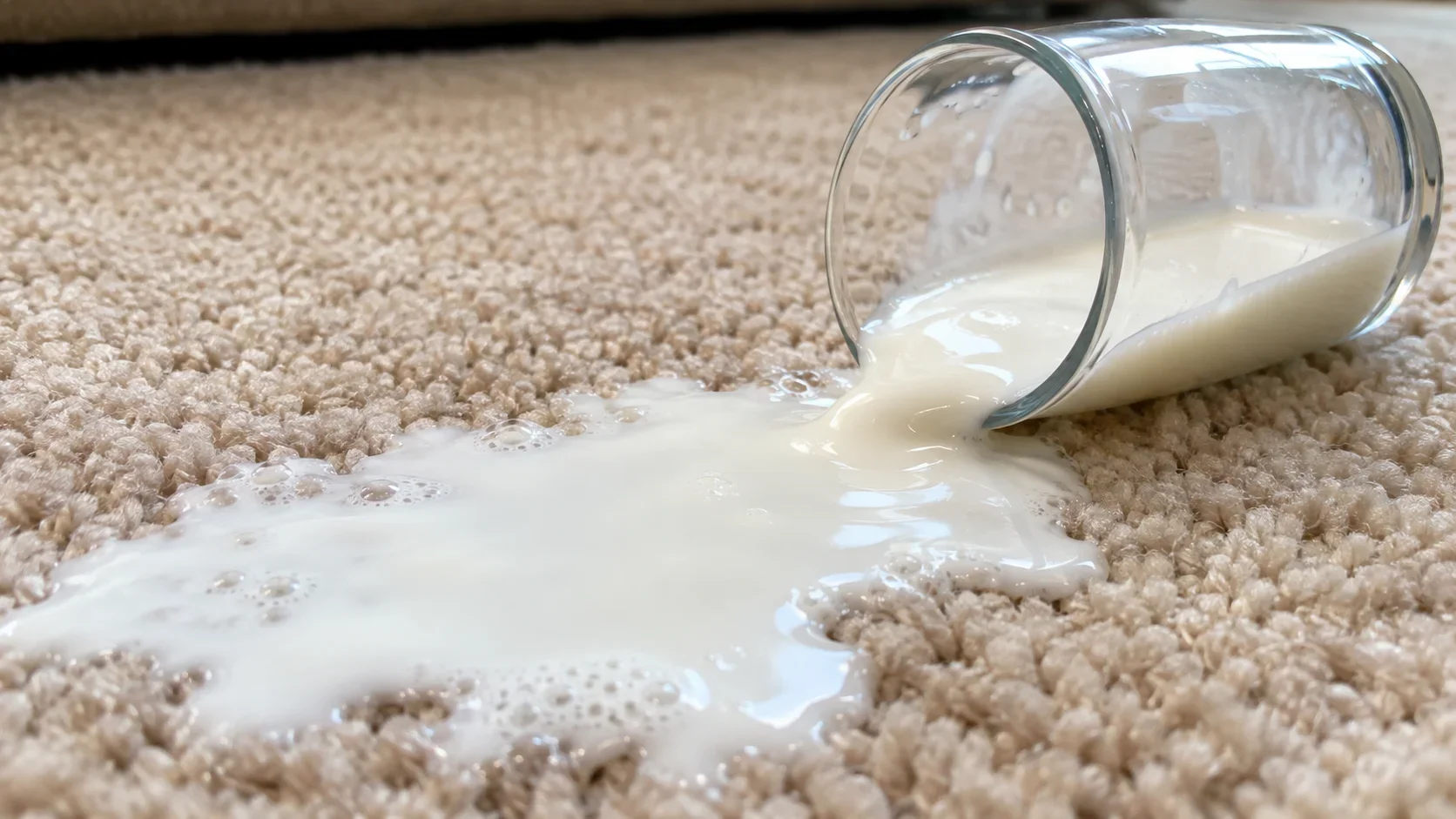
Learning how to remove milk stains is important because milk contains proteins and fats that can leave visible marks and unpleasant odors when they remain in fabric or porous surfaces. Fresh milk is usually easier to remove than dried or set-in milk, so treating the spill as soon as possible can make a significant difference. For washable clothing, the basic process is to remove excess milk, rinse appropriately, pretreat the stain, wash according to the care label, and inspect the item before drying. Tide specifically recommends blotting fresh milk, rinsing with cold water, pretreating, and washing at the hottest temperature permitted by the garment’s care label.
Milk stains are particularly common on baby clothes, burp cloths, blankets, bed sheets, couches, carpets, car seats, and nursing clothes. Breast milk and formula can also produce yellowish stains after storage because protein residues may remain in the fibers even when the original spill seemed to disappear. Dreft explains that breast milk contains proteins that can leave yellowish marks on baby clothes, blankets, and burp cloths.
The correct method depends heavily on the material. A cotton shirt can normally be washed and pretreated, while leather, suede, wood, upholstery, a mattress, or a car seat requires a much more controlled approach. This guide covers fresh, dried, old, breast milk, chocolate milk, milk tea, baby spit-up, carpet, furniture, leather, wood, cookware, bottles, and other milk-related stains.
Why Milk Stains Become Difficult to Remove
Milk is not simply a water-based spill because it contains proteins, fats, minerals, and other components. When milk dries, some of these residues remain attached to fibers or penetrate porous materials. If heat is applied before the stain is completely removed, the remaining residue can become more difficult to eliminate. Tide specifically advises checking the garment after washing and repeating treatment before putting it in the dryer because drying can set the stain.
Breast milk stains can be especially noticeable on white and light-colored baby clothing. Dreft explains that breast milk proteins can leave yellowish stains and recommends cold-water treatment rather than hot water for these protein-based stains.
Old stains also require more patience because the milk residue may have dried deeply into the fibers. A stain that has been stored for months can sometimes be improved through repeated pretreatment, washing, and careful drying. However, delicate materials may need professional cleaning instead of aggressive home treatment.
15 Factors That Affect Milk Stain Removal
- The age of the stain.
- Whether the milk is fresh or dried.
- Whether the milk was breast milk, cow’s milk, or formula.
- Whether chocolate or other ingredients were present.
- The type of fabric.
- The color of the fabric.
- Whether the garment has already been washed.
- Whether the garment has already been dried.
- The amount of milk spilled.
- The temperature of the water.
- The detergent used.
- Whether the material is washable.
- Whether the surface is porous.
- Whether the item has a protective finish.
- Whether odor remains after the visible stain disappears.
Understanding these factors helps prevent one of the most common cleaning mistakes: treating every milk stain with the same product and temperature.
How to Remove Milk Stains From Clothes
For ordinary washable clothing, how to remove milk stains from clothes begins with removing as much of the fresh liquid as possible. Do not aggressively scrub a wet milk stain because rubbing can spread the liquid through a larger section of fabric. Instead, gently blot the area with a clean cloth or paper towel. Tide recommends blotting fresh milk, rinsing the garment with cold water, and then continuing with detergent pretreatment and laundering.
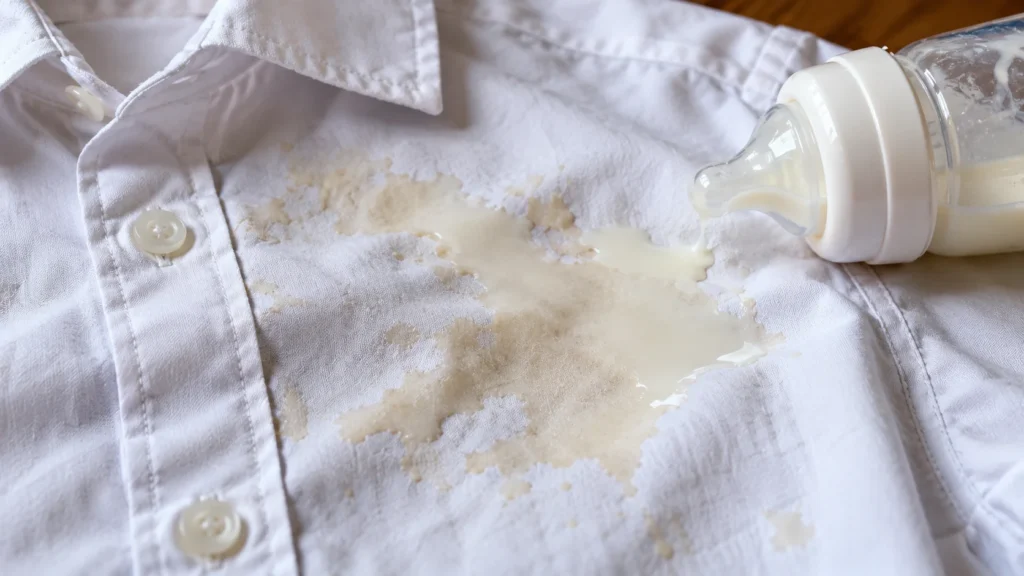
After rinsing, apply a suitable liquid laundry detergent or stain pretreatment to the affected area. Work it gently into the fabric and allow it to sit for the period recommended by the product. Wash the garment at the hottest temperature permitted by the care label. Always inspect the garment before placing it in a dryer because remaining milk residue can become more difficult to remove after drying.
15-Step Milk Stain Removal Method for Clothing
- Check the clothing care label.
- Blot fresh milk with a clean white cloth.
- Remove any dried milk residue carefully.
- Rinse the stained area with appropriate water.
- Avoid aggressive rubbing.
- Apply liquid laundry detergent or stain pretreatment.
- Gently work the product into the fibers.
- Allow the pretreatment to sit as directed.
- Measure the correct amount of laundry detergent.
- Wash using the recommended cycle.
- Use the hottest temperature allowed by the care label.
- Remove the clothing promptly after washing.
- Inspect the stain while the fabric is still wet.
- Repeat treatment if any mark remains.
- Avoid machine drying until the stain has disappeared.
This approach also works as a starting point for milk stains on shirts, pants, cotton tops, uniforms, towels, and washable household fabrics.
How to Remove Breast Milk Stains From Clothes
Breast milk stains are a common problem on nursing clothes, baby onesies, burp cloths, blankets, bibs, and bedding. Fresh breast milk should be treated promptly because dried milk proteins can leave a yellowish residue. Dreft recommends soaking fresh breast milk stains in cold water for at least 15 to 20 minutes and specifically warns against hot water because heat can set protein-based stains.
After soaking, pretreat the stained area with a suitable laundry stain remover and wash using the coldest water appropriate for the particular garment according to Dreft’s breast-milk guidance. Sun-drying may also help reduce a remaining yellowish appearance when the fabric and care instructions permit it.
15 Breast Milk Stain Removal Tips
- Treat breast milk stains as soon as possible.
- Remove excess milk before treatment.
- Soak fresh stains in cold water.
- Avoid hot water at the initial treatment stage.
- Use an appropriate laundry stain remover.
- Work the pretreatment gently into the fabric.
- Follow the product’s recommended contact time.
- Wash according to the garment label.
- Inspect before drying.
- Repeat the process if necessary.
- Air-dry while evaluating stubborn stains.
- Use sunlight only when appropriate for the fabric.
- Treat burp cloths separately when heavily soiled.
- Treat blankets using their specific care instructions.
- Avoid aggressive scrubbing that can damage delicate baby fabrics.
How to Remove Old and Set-In Milk Stains From Clothes
Old milk stains can appear as yellow, beige, gray, or slightly stiff patches, especially on stored baby clothing. These marks are often caused by residues that remained in the fabric after the original milk spill. Dreft notes that old baby formula stains and breast milk stains can be stubborn but may still respond to pretreatment and repeated washing.
For an old milk stain, begin by gently removing any surface residue. Pretreat the affected area using a suitable stain remover and allow it to work according to the product directions. For washable baby clothes, Dreft recommends pretreatment followed by washing and checking the garment before drying.
15 Steps for Old Milk Stains
- Shake or brush away loose residue.
- Check the care label.
- Rinse or soak according to the fabric requirements.
- Apply a suitable stain remover.
- Work the product gently into the stain.
- Allow the product to sit as directed.
- Soak when the fabric permits.
- Wash with an appropriate detergent.
- Use the recommended water temperature.
- Remove the garment immediately after washing.
- Examine the stain while wet.
- Repeat pretreatment if necessary.
- Avoid drying a visible stain.
- Air-dry when evaluating stubborn stains.
- Use professional cleaning for valuable or delicate garments.
Do not assume that one wash will remove a months-old milk stain. Repeated controlled treatment is usually safer than immediately resorting to aggressive chemicals.
How to Remove Milk Stains From Baby Clothes
Baby clothing frequently encounters breast milk, formula, spit-up, and food. Because baby clothes can be made from soft cotton, bamboo blends, fleece, or other delicate materials, the care label should always be considered before choosing a treatment. Dreft recommends acting quickly, removing excess material, pretreating, washing according to the fabric label, and checking the garment before drying.
For fresh milk or formula, cold-water rinsing is a useful first step. Dreft specifically categorizes milk, breast milk, formula, and spit-up as protein-based stains and recommends cold-water soaking followed by pretreatment.
15 Baby Clothing Milk-Stain Practices
- Keep a clean cloth nearby during feeding.
- Blot milk spills immediately.
- Rinse fresh stains promptly.
- Use cold water for initial breast milk treatment.
- Pretreat visible milk marks.
- Follow the detergent instructions.
- Wash baby clothes according to their labels.
- Use a gentle cycle for delicate fabrics.
- Avoid excessive detergent.
- Inspect clothing after washing.
- Repeat treatment when necessary.
- Avoid drying visible stains.
- Air-dry when appropriate.
- Store completely clean and dry baby clothes.
- Treat old stains before packing clothes away.
How to Remove Chocolate Milk Stains From Clothes
Chocolate milk combines a milk-based protein stain with cocoa, sugar, and coloring compounds. This makes it more complicated than plain milk because a brown or tan mark can remain even after much of the milk residue has been removed. Tide includes chocolate dairy products within its broader dairy-stain guidance and recommends removing excess material, pretreating, washing according to the care label, and repeating treatment before drying if necessary.
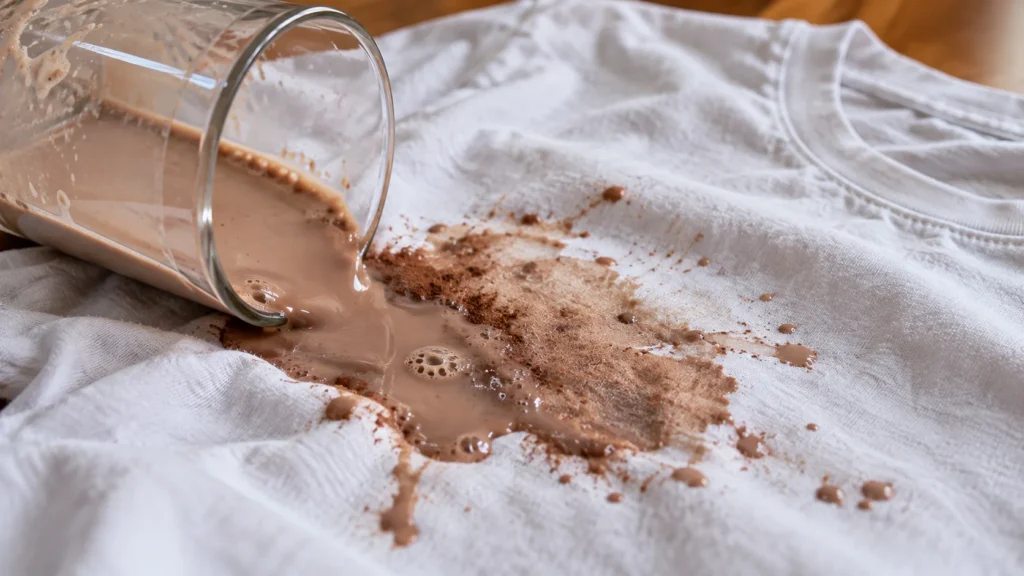
For fresh chocolate milk, gently blot the liquid first. Rinse according to the fabric and stain-removal instructions, then apply liquid detergent or a suitable pretreatment. Avoid putting the clothing into a hot dryer while any brown or yellow residue remains.
15 Chocolate Milk Stain Removal Steps
- Blot the spilled chocolate milk.
- Remove any dried chocolate particles.
- Rinse according to the fabric instructions.
- Apply liquid laundry detergent.
- Cover the entire stained area.
- Gently work in the pretreatment.
- Allow sufficient contact time.
- Wash according to the care label.
- Inspect the brown residue.
- Repeat treatment if necessary.
- Avoid drying too early.
- Use a suitable oxygen-based product when compatible.
- Protect colored fabrics by following product directions.
- Air-dry while evaluating stubborn marks.
- Repeat until the visible stain has disappeared.
How to Remove Dried Chocolate Milk Stains From Clothes
Dried chocolate milk stains require more preparation because the milk and cocoa residue may have hardened into the fabric. Begin by carefully loosening dried material without damaging the fibers. Once loose residue is removed, pretreatment becomes more effective because the cleaning solution can reach the actual stain.
A soak can help loosen an old dairy stain when the garment permits soaking. Tide recommends repeating the treatment process when a dairy stain remains after washing rather than putting the garment in the dryer.
For delicate or specialty fabrics, avoid experimenting with strong household chemicals. A professional cleaner is a better choice when the garment is expensive, heavily embellished, wool, silk, or otherwise unsuitable for ordinary washing.
How to Remove Milk Stains From Carpet
Milk spilled on carpet can create two separate problems: a visible stain and an unpleasant odor if milk penetrates the carpet backing or pad. Immediate blotting is therefore important. Tide recommends checking the carpet’s care instructions, blotting excess milk, preparing a diluted detergent solution, gently blotting the stain from the outside inward, and removing detergent residue afterward.
Avoid soaking the carpet unnecessarily. Excess liquid can migrate deeper into the carpet structure and make complete drying more difficult. For a large spill or a milk odor that persists after cleaning, professional carpet cleaning may be appropriate.
15 Carpet Milk-Stain Removal Steps
- Blot spilled milk immediately.
- Use clean white paper towels.
- Work from the outside toward the center.
- Avoid vigorous scrubbing.
- Check the carpet manufacturer’s instructions.
- Prepare an appropriate cleaning solution.
- Apply it to a clean cloth.
- Blot the affected area.
- Continue with fresh sections of cloth.
- Avoid oversaturating the carpet.
- Remove detergent residue with a damp cloth.
- Blot excess moisture.
- Allow the area to dry completely.
- Check for lingering odor.
- Call a professional if milk reached the carpet pad.
Dreft’s guidance for baby formula stains similarly emphasizes blotting, avoiding saturation, and checking for colorfastness before using a cleaning product on carpet.
How to Remove Milk Stains From Upholstery and Couches
Milk stains on sofas and upholstered furniture require a controlled approach because the liquid can move into the padding. Start by checking the upholstery cleaning code and manufacturer’s care instructions. Tide recommends using detergent and water on upholstery only when the care instructions permit it, then blotting rather than saturating the fabric.
For washable upholstery, a diluted detergent solution can be applied to a clean cloth and gently blotted into the stain. After treatment, remove residue with a damp cloth and blot the area dry. UGA also cautions against oversaturating upholstered furniture because excess moisture can affect backing and stuffing materials.
15 Couch and Upholstery Milk-Stain Rules
- Check the upholstery cleaning code.
- Read the manufacturer’s care instructions.
- Blot fresh milk quickly.
- Do not rub aggressively.
- Use a clean white cloth.
- Test the cleaning solution first.
- Use a diluted solution where appropriate.
- Apply cleaner to the cloth rather than flooding the couch.
- Work toward the center of the stain.
- Blot repeatedly.
- Remove cleaning residue.
- Avoid excessive moisture.
- Allow the cushion to dry fully.
- Check for odor after drying.
- Use professional upholstery cleaning for delicate fabrics.
How to Remove Milk Stains From Bed Sheets and Mattresses
Milk spills on bed sheets can normally be handled through regular laundering when the sheets are washable. Remove as much liquid as possible, rinse appropriately, pretreat the stained section, and wash according to the care label. Do not dry the sheet until you have confirmed that the stain is gone.
A mattress requires more caution because the internal padding cannot simply be placed in a washing machine. Blot the spill immediately and avoid saturating the mattress. A small amount of suitable cleaning solution can be applied carefully to the affected surface, followed by thorough drying.
15 Mattress and Bedding Cleaning Steps
- Remove sheets immediately.
- Blot excess milk.
- Keep the mattress as dry as possible.
- Wash sheets according to their care labels.
- Pretreat visible stains.
- Inspect sheets before drying.
- Repeat treatment if needed.
- Blot the mattress surface.
- Use a suitable upholstery or mattress-safe cleaner.
- Avoid flooding the mattress.
- Remove cleaning residue carefully.
- Use airflow to accelerate drying.
- Allow the mattress to dry completely.
- Check for odor.
- Seek professional mattress cleaning after a large spill.
How to Remove Milk Stains From Car Seats and Cars
Milk spills in vehicles can be difficult because liquid can travel into seat foam, seams, carpet, and other hidden areas. The correct method depends on whether the car seat is cloth, leather, synthetic leather, or another material. Start by removing excess milk and checking the vehicle or seat manufacturer’s cleaning instructions.
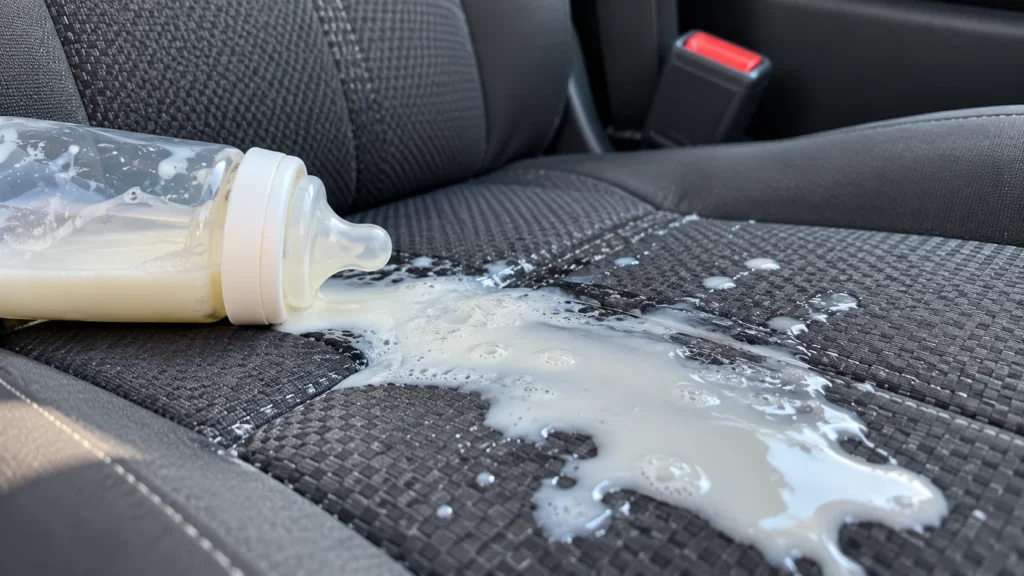
For cloth car upholstery, a carefully applied fabric-safe cleaning solution may be appropriate. For leather car seats, use a leather-specific cleaner rather than ordinary laundry detergent. Avoid saturating vehicle seats because moisture trapped inside foam can contribute to lingering odor.
15 Car Milk-Stain Cleaning Tips
- Blot the spill immediately.
- Remove removable seat covers if possible.
- Check the manufacturer’s cleaning instructions.
- Identify the seat material.
- Use a fabric-safe cleaner on fabric.
- Use leather-safe products on leather.
- Test the cleaner in a hidden location.
- Avoid excessive water.
- Blot rather than scrub.
- Clean seams carefully.
- Treat nearby carpet if milk spread.
- Remove residue with a clean damp cloth.
- Ventilate the vehicle.
- Allow upholstery to dry completely.
- Address persistent odor professionally.
How to Remove Milk Stains From Microfiber
Microfiber can react differently to water and cleaning products depending on the specific material and manufacturer. Before cleaning a microfiber couch, chair, or cloth, check the manufacturer’s instructions and cleaning code. Excess moisture can leave visible water marks or alter the appearance of some microfiber surfaces.
For a washable microfiber cloth, laundering according to its care label is usually the simplest solution. For microfiber upholstery, spot treatment with a compatible product and controlled moisture is safer than soaking the entire area.
How to Remove Milk Stains From Leather Couches
Leather should not be treated like cotton clothing because excessive water can affect the leather surface and finish. Fresh milk should be removed quickly using a soft cloth. If a residue remains, use a leather-safe cleaning method recommended by the manufacturer.
UGA’s textile guidance describes using mild soap foam rather than excessive liquid for certain leather cleaning situations, followed by wiping with a clean dry cloth.
15 Leather Couch Milk-Stain Guidelines
- Blot fresh milk immediately.
- Do not scrub hard.
- Avoid soaking the leather.
- Check the manufacturer’s instructions.
- Use a leather-safe cleaner.
- Test in an inconspicuous location.
- Use minimal moisture.
- Work gently.
- Wipe away residue.
- Dry with a clean cloth.
- Avoid household bleach.
- Avoid strong laundry detergents.
- Do not use excessive heat.
- Condition leather only when appropriate.
- Call a leather professional for persistent stains.
How to Remove Milk Stains From Wood and Furniture
Wood can absorb milk, especially when the surface is unfinished or has damaged finish. On finished furniture, the main concern is removing the milk without damaging the protective coating. Wipe fresh milk promptly rather than allowing it to sit on the surface.
UGA recommends using suds from dishwashing detergent and hot water for certain wood stain situations, applying the foam rather than saturating the wood, then rinsing with a clean cloth and drying the surface.
For antique, unfinished, waxed, or valuable furniture, use a product specifically recommended for that finish. Avoid soaking the wood or using strong solvents without testing.
15 Wood and Furniture Milk-Stain Precautions
- Wipe spills immediately.
- Identify the wood finish.
- Use a soft cloth.
- Avoid soaking the surface.
- Start with mild cleaning.
- Use detergent suds when appropriate.
- Apply foam rather than excess liquid.
- Wipe with the grain when appropriate.
- Remove residue carefully.
- Dry immediately.
- Test unfamiliar cleaners.
- Avoid aggressive sanding.
- Avoid strong solvents on unknown finishes.
- Reapply polish only when appropriate.
- Seek professional restoration for valuable furniture.
How to Remove Milk Tea Stains From Clothes
Milk tea stains combine dairy proteins with tea pigments, making them different from plain milk stains. A brownish mark may remain even after the milk residue is removed. Fresh stains should be treated promptly because tea pigments can become more difficult to remove after drying.
Begin by removing excess liquid and rinsing according to the fabric’s care instructions. Then apply a suitable laundry pretreatment and wash normally. For white or colorfast fabrics, an oxygen-based stain remover may be appropriate if the product and care label permit it.
15 Milk Tea Stain Removal Tips
- Blot fresh milk tea.
- Avoid rubbing the stain outward.
- Rinse promptly.
- Check the garment label.
- Apply liquid detergent.
- Treat the complete visible area.
- Allow pretreatment time.
- Wash according to instructions.
- Inspect the tea-colored residue.
- Repeat if necessary.
- Use oxygen-based treatment when appropriate.
- Protect colored fabrics.
- Avoid premature drying.
- Air-dry while evaluating stubborn stains.
- Use professional cleaning for delicate fabrics.
How to Remove Burnt Milk From Utensils and Vessels
Burnt milk on a pan, pot, vessel, or cooking utensil can form a stubborn layer because milk proteins and sugars can adhere strongly after heating. The safest approach depends on the cookware material. Stainless steel may tolerate more vigorous cleaning than nonstick cookware, while coated surfaces require gentler treatment.
Allow the cookware to cool before cleaning. Soaking can help loosen the burned residue, after which a suitable dish detergent and non-abrasive cleaning tool can be used. Avoid scraping nonstick coatings with metal utensils.
15 Burnt Milk Cleaning Steps
- Allow the cookware to cool.
- Remove loose residue.
- Fill with appropriate soaking water.
- Add suitable dish detergent.
- Let the residue soften.
- Empty the softened liquid.
- Use a compatible scrubber.
- Work gently around the burned area.
- Avoid metal tools on nonstick coatings.
- Repeat soaking if necessary.
- Use a cookware-approved cleaner.
- Rinse thoroughly.
- Inspect the cooking surface.
- Dry completely.
- Follow the manufacturer’s care instructions.
How to Remove Milk Stains From Baby Bottles and Nipples
Milk residue can remain inside baby bottles, nipples, caps, valves, and other feeding equipment. Unlike ordinary household stains, baby-feeding equipment should be cleaned according to the manufacturer’s instructions and appropriate infant-feeding hygiene guidance.
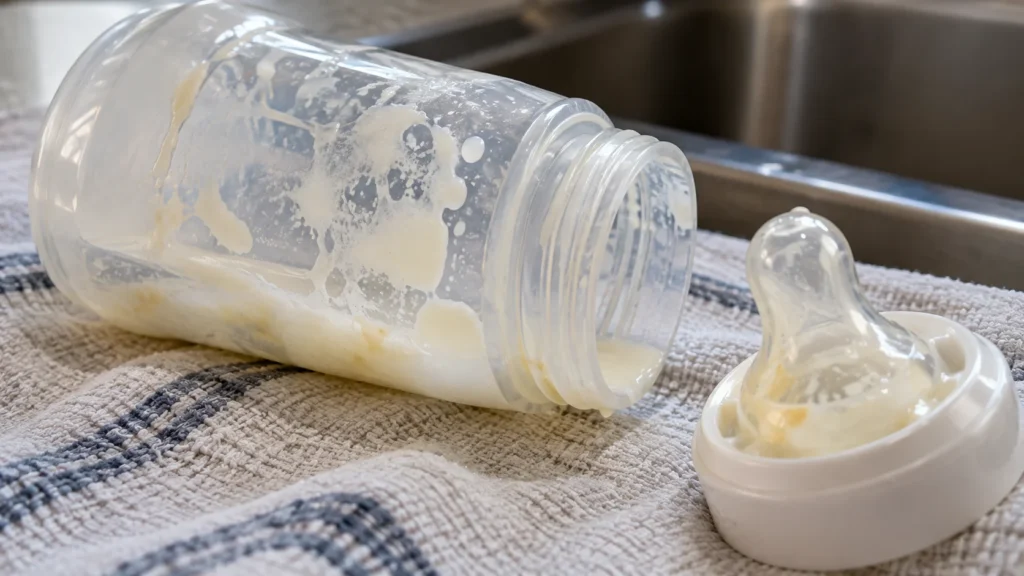
Visible milk residue should be removed promptly rather than allowed to dry inside narrow parts. Bottles and nipples should be disassembled as directed so milk does not remain trapped in seams or valves. Use the cleaning method recommended for the specific bottle material.
15 Baby Bottle Cleaning Practices
- Disassemble the bottle as directed.
- Remove leftover milk promptly.
- Rinse components appropriately.
- Use a suitable bottle brush.
- Clean nipple openings carefully.
- Wash caps and rings.
- Check valves and vents.
- Follow manufacturer instructions.
- Use the recommended dishwashing method.
- Rinse thoroughly.
- Inspect for residue.
- Allow components to dry completely.
- Store clean parts appropriately.
- Replace damaged or worn components according to manufacturer guidance.
- Never rely on visible cleanliness alone when milk can remain trapped inside components.
How to Remove Milk Stains From an Induction Cooktop
Milk spilled onto an induction cooktop should be cleaned after the surface has cooled sufficiently and the manufacturer’s instructions permit cleaning. Dried milk can leave a cloudy or cooked-on residue, particularly around the edges of the spill. Ceramic-glass cooktops can scratch if abrasive tools are used incorrectly.
Use a cooktop-safe cleaner and a soft cloth or manufacturer-approved scraper where appropriate. Avoid abrasive powders and rough scouring pads unless the manufacturer specifically allows them.
How to Remove Milk Residue From Baby Teeth and Tongue
Milk residue in a baby’s mouth is different from a household fabric stain and should be approached as an oral-health issue rather than with stain-removal chemicals. HealthyChildren.org notes that a milk diet can cause a white-coated tongue, while thrush tends to produce white patches that do not wipe away easily.
The American Academy of Pediatric Dentistry recommends establishing oral hygiene early and cleaning erupted baby teeth with an age-appropriate soft toothbrush. If a baby’s mouth has persistent white patches that do not wipe away, appears painful, or is associated with feeding difficulties, a pediatrician or pediatric dentist should evaluate the child rather than attempting to scrape the patches away.
15 Infant Oral-Care Basics
- Treat the mouth differently from fabric stains.
- Do not use household stain removers in the mouth.
- Use appropriate infant oral-hygiene methods.
- Clean erupted baby teeth with a suitable toothbrush.
- Follow pediatric dental guidance.
- Avoid aggressively scraping the tongue.
- Pay attention to persistent white patches.
- Monitor feeding behavior.
- Notice signs of mouth discomfort.
- Avoid putting cleaning chemicals near a baby’s mouth.
- Follow age-appropriate toothpaste guidance.
- Establish a dental home early.
- Seek professional advice for persistent oral changes.
- Do not assume every white patch is milk.
- Never use laundry or household stain-removal products orally.
The AAPD recommends that children establish a dental home no later than 12 months of age and emphasizes early preventive oral-health care.
Jump into Other Related Article
- How to Clean Stainless Steel Sink | Stains, Hard Water, Rust & Scratches
- How to Remove Egg Stains | Easy Methods for Clothes, Pans, Walls & More
- Water Stains | How to Remove Water Stains from Wood, Glass, Clothes & More
How to Use Milk to Remove Ink Stains From Clothes
The keyword how to use milk to remove ink stains refers to an older household remedy rather than a preferred modern stain-removal method. Milk is not a universal or reliably established ink remover, and using it can itself introduce proteins and fats that create another stain. For a genuine ink stain, a product specifically designed for the particular fabric and ink type is generally a more controlled option.
If someone has already tried milk on an ink stain, the milk residue should be treated as a dairy stain afterward. Rinse the fabric according to its care label and launder it using an appropriate detergent and stain-treatment process.
How to Remove Breast Milk Spit-Up Stains
Breast milk spit-up can contain milk proteins as well as other material from the baby’s stomach, so the resulting stain may look different from a simple milk spill. Dreft categorizes breast milk and spit-up among protein-based baby stains and recommends removing excess material, using cold water initially, pretreating, and washing according to the garment’s instructions.
Treating spit-up quickly is particularly useful because dried residue can become harder to remove. Baby clothes should be checked after washing and before drying so a remaining yellow or brown mark can be treated again.
15 Spit-Up Stain Removal Steps
- Remove excess spit-up.
- Blot rather than spread it.
- Rinse the garment appropriately.
- Start with cold water for protein-based residue.
- Apply baby-safe or fabric-appropriate pretreatment.
- Work it gently into the stain.
- Allow the recommended treatment time.
- Wash according to the care label.
- Inspect the wet garment.
- Repeat treatment if needed.
- Avoid premature machine drying.
- Air-dry when appropriate.
- Check for yellow discoloration.
- Treat old marks before storage.
- Seek professional advice for delicate fabrics.
Common Milk Stain Removal Mistakes
Milk stains often become harder to remove because of incorrect temperature, premature drying, excessive scrubbing, or unsuitable cleaning products. Protein-based stains such as milk and formula require particular care because hot water can set some residues during the initial treatment stage. Dreft specifically recommends cold water for breast milk stains, while Tide advises following the garment’s care label for the final washing temperature.
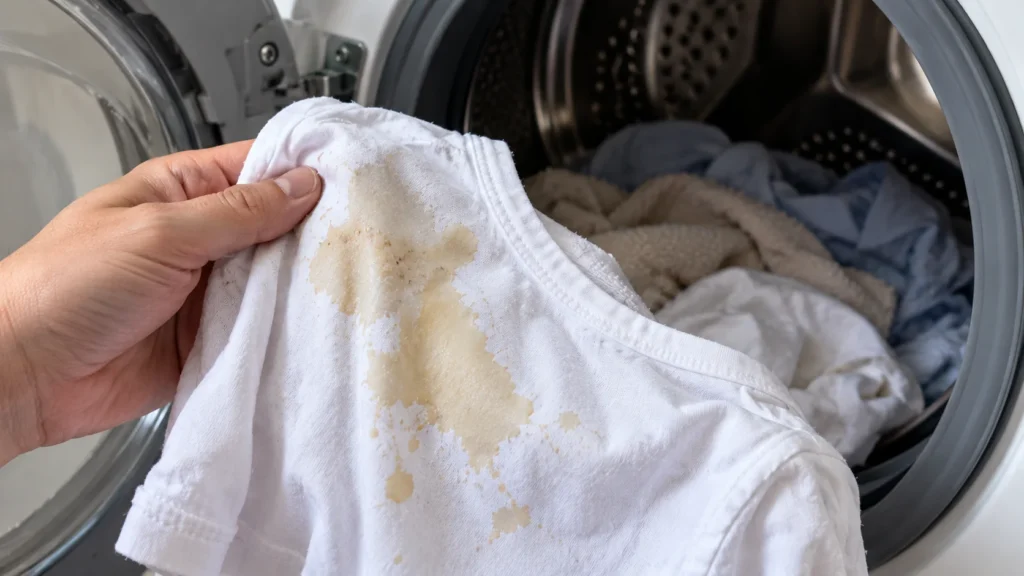
Another common mistake is assuming that a stain is gone simply because it looks lighter after washing. Residual milk proteins can become more visible later, particularly on stored baby clothing. Always inspect the garment before drying.
15 Mistakes to Avoid
- Using hot water immediately on a fresh breast milk stain.
- Scrubbing fresh milk aggressively.
- Putting a stained garment directly into the dryer.
- Ignoring the fabric care label.
- Using too much detergent.
- Mixing different cleaning chemicals.
- Saturating upholstery.
- Soaking a mattress excessively.
- Using laundry detergent on leather.
- Using water heavily on suede.
- Scrubbing ceramic cooktops with abrasive pads.
- Using household cleaners on baby-feeding equipment.
- Treating oral milk residue with household stain removers.
- Forgetting to inspect clothing after washing.
- Giving up after one treatment of an old stain.
Milk Stain Removal Safety Guidelines
Most ordinary clothing milk stains can be handled with routine laundering, but safety becomes more important when cleaning furniture, carpets, leather, mattresses, cookware, and specialty materials. Always read product labels and manufacturer instructions before using a commercial stain remover. Different materials can react very differently to solvents, acids, alkaline cleaners, and abrasives.
Do not combine cleaning products unless the manufacturer specifically states that the combination is safe. Avoid excessive moisture on mattresses, upholstery, and wood because hidden moisture can create additional problems. UGA also advises testing cleaning agents on inconspicuous areas and avoiding oversaturation of upholstery.
15 Milk-Stain Cleaning Safety Rules
- Read the care label.
- Follow the cleaning-product label.
- Test unfamiliar products first.
- Use white cloths for spot cleaning.
- Avoid mixing chemicals.
- Keep cleaning products away from children.
- Ventilate when using strong products.
- Avoid excessive moisture.
- Do not scrub delicate materials aggressively.
- Keep solvents away from flames.
- Wear gloves when product instructions require them.
- Protect nearby surfaces.
- Do not use household cleaners in a baby’s mouth.
- Contact a professional for valuable materials.
- Stop treatment if discoloration or surface damage appears.
Milk Stain Removal Comparison Guide
| Milk-Stained Surface | Recommended Starting Method | Main Precaution |
| Cotton clothes | Cold-water rinse, pretreatment, wash | Inspect before drying |
| Baby clothes | Cold-water treatment and suitable pretreatment | Follow baby-clothing care label |
| Breast milk stains | Cold-water soak + pretreatment | Avoid initial hot water |
| Chocolate milk | Blot, pretreat, wash | Brown residue may remain |
| Milk tea | Pretreat and wash | Tea pigment can remain |
| Carpet | Blot + diluted suitable cleaner | Avoid oversaturation |
| Upholstery | Blot + upholstery-safe solution | Check cleaning code |
| Couch | Controlled spot treatment | Avoid soaking |
| Mattress | Blot + minimal moisture | Dry thoroughly |
| Leather couch | Leather-safe cleaning | Avoid excessive water |
| Car seat | Material-specific cleaner | Protect foam |
| Wood | Mild, controlled cleaning | Protect finish |
| Microfiber | Manufacturer-approved method | Avoid water marks |
| Baby bottles | Disassemble and wash as directed | Clean hidden components |
| Cookware | Soak and clean according to material | Protect coatings |
| Induction cooktop | Cooktop-safe cleaner | Avoid abrasive tools |
| Baby teeth/tongue | Appropriate oral hygiene | Do not use stain removers |
Final Guide for Removing Milk Stains
The most effective way to learn how to remove milk stains is to match the treatment to both the stain and the surface. Fresh milk on washable clothing can usually be managed by blotting, rinsing, pretreating, washing, and inspecting before drying. Tide’s dairy-stain guidance specifically recommends blotting fresh milk, rinsing, pretreating, washing according to the garment’s care label, and repeating the process if the stain remains.
Breast milk and formula deserve additional attention because their protein residues can leave yellow stains on baby clothes after the original spill has dried. Dreft recommends cold-water treatment for breast milk stains and advises checking the garment before drying.
For carpet and upholstery, blotting and controlled moisture are key. For leather, wood, suede, mattresses, car seats, and other specialty materials, use surface-specific products and avoid aggressive home remedies. A small amount of the correct cleaner is generally safer than flooding the material with an unsuitable solution.
The most important principles are act quickly, remove excess milk, use the correct water temperature for the stain and material, pretreat before washing, inspect before drying, and never assume one cleaning method works for every surface.
Conclusion
Knowing how to remove milk stains can save clothing, baby items, carpets, furniture, bedding, and other household surfaces from permanent discoloration and lingering odors. Fresh milk stains are generally easier to manage because the residue has had less time to dry and penetrate the material. Prompt blotting, appropriate rinsing, pretreatment, and careful washing provide a practical starting point for most washable fabrics.
Breast milk and formula stains require particular care because protein residues can leave yellowish marks. Cold-water treatment is especially important during the initial treatment of breast milk stains, and the garment should be inspected before drying.
For old milk stains, chocolate milk stains, milk tea, carpet, upholstery, couches, mattresses, leather, wood, car seats, and baby items, the material itself determines the safest method. Avoid aggressive scrubbing, excessive moisture, unsuitable chemicals, and premature drying. With the correct surface-specific approach, many milk stains can be substantially reduced or removed without damaging the item.
How do you remove fresh milk stains from clothes?
Blot the fresh milk with a clean cloth, rinse appropriately, pretreat the area with a suitable laundry product, and wash according to the care label. Inspect the garment before putting it in the dryer.
How do you remove breast milk stains from baby clothes?
Soak the stained clothing in cold water, pretreat it with an appropriate stain remover, and wash according to the garment’s care instructions. Avoid initial hot-water treatment because heat can set protein-based breast milk stains.
How do you remove old milk stains from baby clothes?
Pretreat the old stain, allow the product to work according to its instructions, wash the garment appropriately, and inspect it before drying. Old stains may require repeated treatment rather than one aggressive application.
How do you remove chocolate milk stains from clothes?
Blot the spill, remove dried chocolate residue if present, pretreat the stain with suitable laundry detergent or stain remover, and wash according to the care label. Repeat treatment before drying if the brown mark remains.
How do you remove milk stains from carpet?
Blot as much milk as possible, check the carpet’s care instructions, and use a suitable diluted cleaning solution. Avoid saturating the carpet because excess moisture can move into the backing or pad.
How do you remove milk stains from a couch?
Check the upholstery cleaning code first. For compatible upholstery, blot the milk and use a suitable diluted cleaning solution on a clean cloth, then remove residue and dry the area thoroughly.
How do you remove milk stains from leather?
Blot the milk quickly and use a leather-safe cleaner rather than ordinary laundry detergent. Avoid soaking the leather and test any unfamiliar product in an inconspicuous area.
How do you remove milk stains from wood?
Wipe the spill promptly and use a mild cleaner appropriate for the wood finish. Avoid soaking the wood, and test any cleaning product before treating a visible area. UGA recommends controlled use of detergent suds for certain wood stain situations.
How do you remove dried breast milk stains?
Gently remove dried residue, pretreat the stain, wash using the appropriate cold-water method for breast milk, and repeat if necessary. Dreft recommends sun-drying when suitable for the fabric because it may help with remaining yellowish discoloration.
How do you remove milk stains from bed sheets?
Blot or rinse the stain, apply an appropriate laundry pretreatment, and wash the sheets according to their care label. Inspect the sheets before drying and repeat the process if a mark remains.
How do you remove milk stains from a mattress?
Blot the spill immediately and avoid soaking the mattress. Use a mattress-safe or upholstery-safe cleaner sparingly, remove residue carefully, and provide sufficient airflow for complete drying.
How do you remove milk stains from car seats?
Identify whether the seat is fabric, leather, or synthetic material and choose a compatible cleaner. Blot rather than scrub and avoid excessive moisture that could penetrate the seat padding.
How do you remove milk stains from microfiber?
Check the manufacturer’s cleaning instructions because microfiber materials and finishes vary. Use a compatible spot-cleaning method with controlled moisture and avoid oversaturating the material.
How do you remove milk stains from baby bottles?
Disassemble the bottle and its components according to the manufacturer’s instructions, then clean all areas where milk can remain trapped. Pay particular attention to nipples, valves, caps, and narrow openings.
How do you remove burnt milk from utensils?
Allow the cookware to cool, soak it with an appropriate dish detergent solution, and gently loosen the residue using a tool compatible with the cookware material. Avoid metal scraping tools on nonstick surfaces.
How do you remove milk stains from baby teeth?
Use age-appropriate oral hygiene rather than household stain-removal products. The AAPD recommends cleaning erupted baby teeth with an appropriate soft toothbrush, while persistent oral changes should be evaluated by a pediatric dentist or healthcare professional.
How do you remove milk from a baby’s tongue?
A white-coated tongue can occur with a milk diet, according to HealthyChildren.org. White patches that do not wipe away easily, especially when accompanied by discomfort or feeding problems, can have another cause and should be discussed with a healthcare professional.
Can hot water remove milk stains?
The answer depends on the stain and material. For fresh breast milk and other protein-based stains, Dreft recommends cold water initially because heat can set the protein stain. For the final wash, always follow the garment’s care label and the stain-product instructions.
Can milk stains be removed after drying?
Yes, dried milk stains can sometimes be removed through repeated pretreatment and washing. Dreft specifically provides treatment methods for old baby formula and set-in breast milk stains, although results depend on the fabric and age of the stain.