
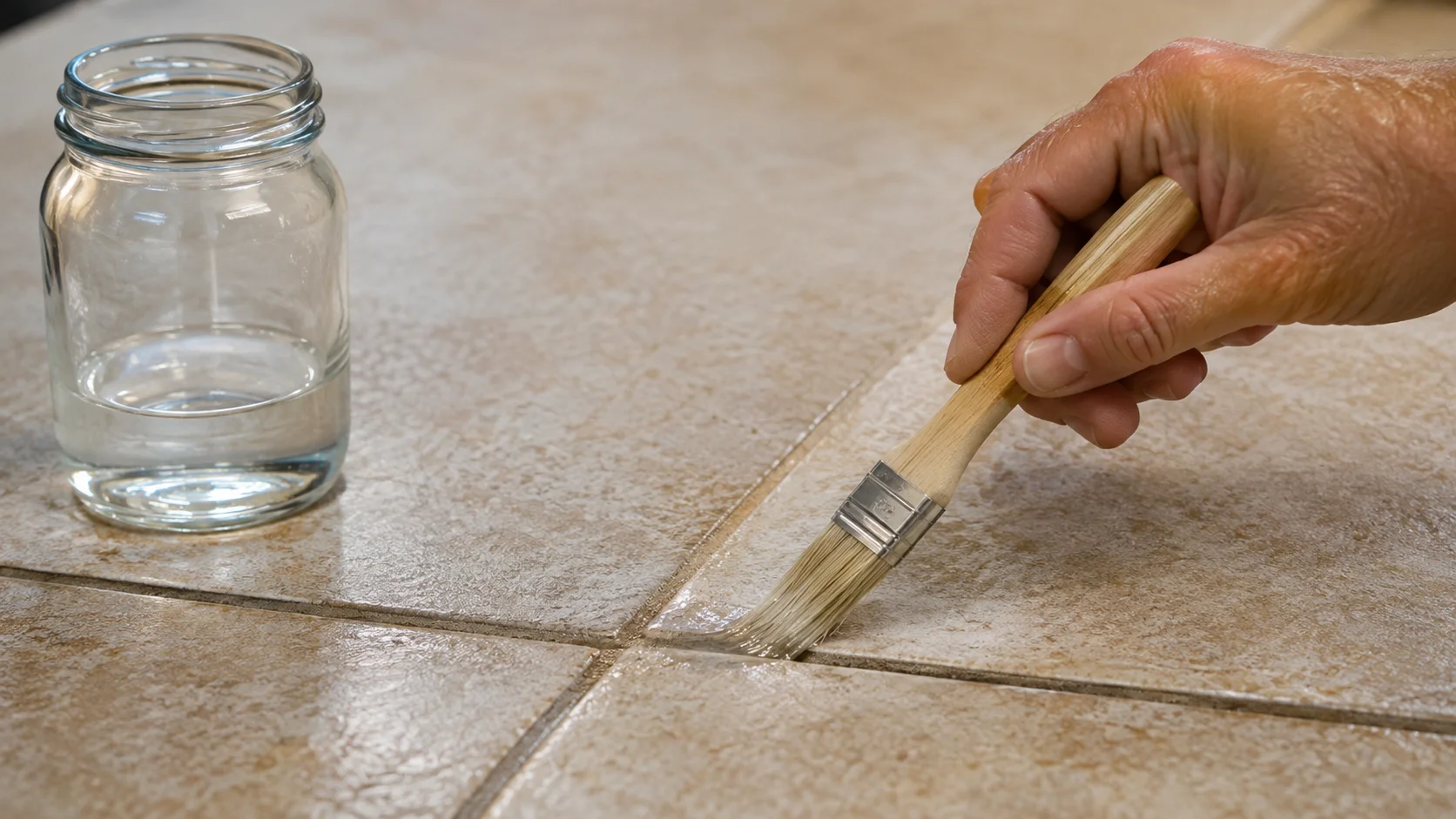
Grout sealant helps protect many types of tile grout from absorbing moisture, everyday spills, and dirt. Choosing the right product depends on the grout material, tile surface, and location because a sealer suitable for a kitchen floor may not be the best choice for a shower or natural-stone installation.
Before buying a grout sealant, it is important to know whether your grout needs one, how to apply it without leaving residue on the tiles, and how long to let it cure before exposing the area to water. This guide explains the differences between grout sealers and silicone sealants, how to choose the right product, and the practical steps for maintaining sealed grout.
What Is Grout Sealant?
Grout sealant is a protective product applied to suitable grout joints to reduce the absorption of water, oils, and staining substances. Most commonly, it is used on cement-based grout between floor tiles, shower tiles, kitchen backsplashes, and other tiled surfaces.
Cement-based grout contains pores that can absorb liquids. A suitable penetrating grout sealant enters these pores and helps reduce absorption while leaving the grout’s natural texture largely unchanged. Depending on the product, some sealants may also provide a surface coating or a color-enhancing finish.
It is important to understand that grout sealant is not the same as waterproofing. It can help protect against certain stains and moisture absorption, but it cannot repair cracks, replace a waterproof membrane, or prevent water from passing through a poorly constructed shower.
Is Grout Sealant Necessary?
Grout sealant is often recommended for cement-based grout, especially in areas exposed to frequent moisture, spills, or heavy foot traffic. However, not every grout product needs an additional sealer.
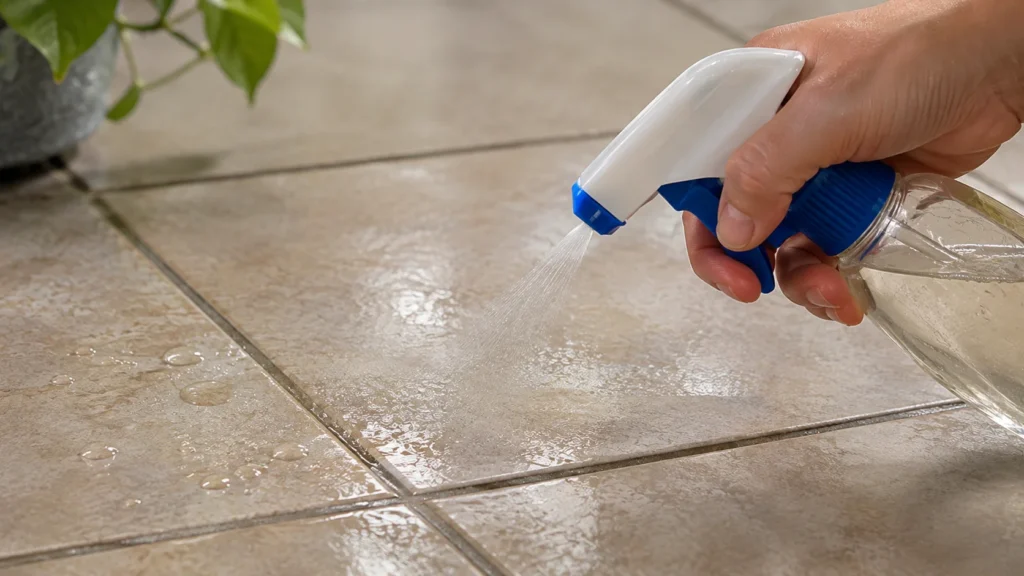
The type of grout matters more than the appearance of the tile.
- Cement-based grout: Usually benefits from a suitable penetrating sealer because it can absorb moisture and stains.
- Epoxy grout: Generally does not need sealing because its low absorption rate provides strong resistance to stains and liquids. Check the manufacturer’s instructions for the specific product.
- Glazed ceramic and porcelain tiles: Usually do not need sealing themselves, although the cement-based grout between them may need protection.
- Natural stone: May require a compatible stone sealer as well as grout protection, depending on the stone’s porosity and finish.
MAPEI explains that sealing needs depend on the tile and grout materials, while LATICRETE states that its epoxy grouts do not require grout sealer.
When You Should Consider Sealing Grout
A grout sealer is worth considering when:
- You have newly installed cement-based grout that has cured according to the product instructions.
- Your kitchen grout is exposed to cooking oils, food spills, and everyday dirt.
- Your bathroom floor grout is difficult to keep clean.
- Your shower uses cement-based grout and you want to reduce staining and moisture absorption.
- Your tiled entryway or other high-traffic floor develops visible discoloration from everyday use.
- You want to make routine cleaning easier without changing the grout’s original appearance.
When Additional Sealing May Not Be Needed
You may not need a separate grout sealant when the installation uses epoxy grout that does not require sealing. Some grout products are also designed with built-in stain resistance, so check their technical documentation before applying another product.
Avoid sealing dirty, damp, cracked, or deteriorating grout. A sealer is a protective treatment, not a substitute for cleaning or repair.
Jump into Other Related Article
- Best Deck Stain and Sealer | Complete Guide for Pressure Treated, Cedar, Old, and Full Sun Decks
- Brick Stain Colors | Exterior, Interior, Fireplace, Paver, and Before and After Ideas
- How to Remove Coffee Stains | Easy Methods for Clothes, Teeth, Carpet & More
Grout Sealant vs. Silicone Sealant: What Is the Difference?
The terms grout sealant, grout sealer, and silicone sealant can sound similar, but they describe products with different purposes.
| Feature | Grout sealant | Silicone sealant |
| Main purpose | Reduces absorption and staining in suitable grout | Creates a flexible seal at joints |
| Typical location | Grout lines between tiles | Corners, edges, tubs, and changes of plane |
| Application | Brush, applicator bottle, sponge, or other specified tool | Caulking gun or product-specific applicator |
| Flexibility | Usually does not replace a flexible joint | Designed to accommodate some movement |
| Common examples | Penetrating tile and grout sealer | Bathroom-grade silicone caulk |
Why You Should Not Replace Grout With Silicone Everywhere
Grout is generally used between tiles across a tiled surface. Flexible sealant is used where movement or changes in plane need to be accommodated, such as where a tiled wall meets a bathtub or where two walls meet in a shower.
LATICRETE recommends appropriate flexible sealant at changes of plane and movement joints rather than treating those locations as ordinary grout joints.
For example, if the joint between your shower wall and bathtub has cracked, applying penetrating grout sealant will not solve the problem. The joint may need to be cleaned out and resealed with a compatible bathroom silicone product.
Types of Tile and Grout Sealant
The best sealant depends on the surface, grout composition, exposure to water, and finish you want. Read the product label carefully because not every product is appropriate for every tile.
1. Penetrating Grout Sealant
A penetrating grout sealant is absorbed into suitable porous grout rather than simply sitting on top of it. It is a common option for cement-based grout in kitchens, bathrooms, and tiled floors.
Best for: Cement-based grout where you want protection without a prominent surface coating.
Look for a product that explicitly lists your grout type and intended location. Some penetrating sealers are also approved for natural stone, unglazed tile, or other porous materials.
2. Water-Based Grout Sealer
Water-based sealers are available for many residential tile applications. They can be convenient for indoor projects, but performance varies by formulation.
MAPEI’s UltraCare Grout Sealer, for example, is a water-based penetrating product designed for sanded and unsanded cementitious grout joints.
Best for: Suitable cement-based grout where the manufacturer’s instructions specify a water-based penetrating sealer.
3. Solvent-Based or Specialty Penetrating Sealer
Some products use solvent-based formulations or are designed for particular stone and tile surfaces. The choice should be based on the product’s approved uses, not on the assumption that every solvent-based sealer is automatically stronger than a water-based one.
Check ventilation requirements, surface compatibility, and safety instructions before application.
4. Color-Enhancing Grout Sealer
A color-enhancing product is intended to deepen or enrich the appearance of suitable grout or stone. Some color sealers also help cover existing discoloration and create a more uniform finish.
Best for: Grout or compatible tile surfaces where a richer or more consistent color is desired.
Test a small, inconspicuous area first. Color-enhancing products can change the finished appearance, and not every formula is suitable for every surface.
5. Grout Colorant or Color Sealant
A grout colorant is different from a clear penetrating sealer. It is designed to alter or refresh the grout’s visible color, and some products combine coloring with protective properties.
It may be useful when grout is permanently discolored but remains structurally sound. However, heavily contaminated grout must be cleaned and prepared according to the colorant manufacturer’s instructions.
6. Spray Grout Sealant
A spray grout sealant can cover larger areas quickly, but ease of application does not guarantee better results. Overspray may land on walls, fixtures, or tile surfaces that should not receive the product.
Use a spray only if the manufacturer approves it for your surface and application. Protect nearby materials and remove excess product as directed.
How to Choose the Best Grout Sealant
The best grout sealant is the one compatible with your installation and suitable for its daily conditions not necessarily the most expensive product or the one with the boldest claims.
Consider these factors before buying.
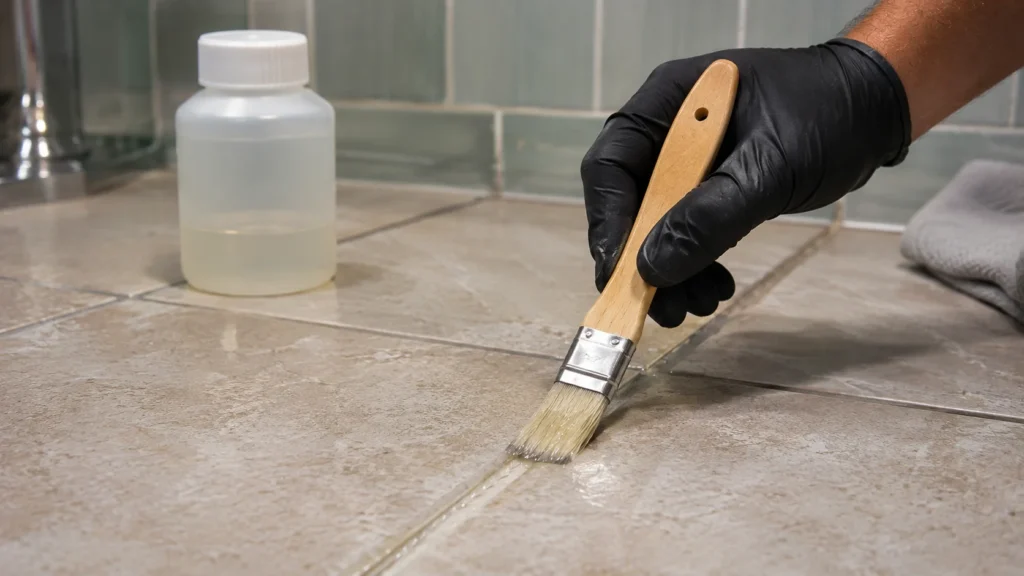
Match the Sealer to Your Grout
Identify whether your grout is cement-based, epoxy, or another formulation. If you are unsure, check the installation records, product packaging, or ask the installer.
Do not assume that a grout sealer is needed simply because the grout looks porous. Follow the grout manufacturer’s guidance.
Consider the Location
Different areas experience different conditions:
- Shower walls: Choose a product specifically approved for the grout and wet-area application.
- Bathroom floors: Look for a compatible sealer that can withstand regular cleaning and foot traffic.
- Kitchen backsplashes: Prioritize resistance to the types of stains likely to occur around cooking areas.
- Entryways: Consider the amount of dirt and traffic the floor receives.
- Natural-stone installations: Confirm that both the tile and grout are compatible with the selected treatment.
Check the Finish
A natural-look penetrating sealer may preserve the existing appearance, while a color-enhancing product may make the surface look darker or richer. Read the product description and test it before treating a large area.
Read the Coverage and Reapplication Instructions
Coverage varies with grout porosity, joint width, surface conditions, and application method. The label should explain the expected coverage and whether one or more coats are required.
Do not rely on a generic claim that every grout sealant lasts a specific number of years. Service life depends on the formulation, wear, cleaning routine, and exposure to water.
How to Apply Grout Sealant Correctly
Applying grout sealant can be a manageable DIY project if the grout is in good condition and you follow the product’s directions. The most important steps are preparing the surface, applying the right amount, and removing excess before it dries.
Step 1: Clean the Tile and Grout
Remove soap scum, grease, dust, and other buildup with a cleaner appropriate for your tile and grout. If you are working with natural stone, avoid cleaners that may etch or damage it.
Rinse as directed and allow the surface to dry completely. Applying sealer over dirt can trap residue and prevent the product from performing as intended.
Step 2: Inspect the Grout Joints
Look for loose grout, cracks, missing sections, or areas where the grout is crumbling. Repair damaged areas before sealing and allow any replacement grout to cure according to its manufacturer’s instructions.
If the joint is between a bathtub and wall, or at another change of plane, determine whether it requires flexible sealant rather than ordinary grout.
Step 3: Protect Nearby Surfaces
Move rugs and furniture away from the work area. Protect fixtures, unfinished surfaces, and materials that are not approved for the product.
Wear the protective equipment specified on the label, such as gloves or eye protection, and provide adequate ventilation when required.
Step 4: Test a Small Area
Apply the grout sealant to an inconspicuous section first. Check the result after the recommended evaluation period.
This is especially important with colored grout, textured tile, polished surfaces, and natural stone, where an unsuitable product may change the appearance.
Step 5: Apply the Sealant
Depending on the product, use a small brush, applicator bottle, roller, sponge, or spray.
For a brush or roller applicator:
- Pour or prepare the product as instructed.
- Apply a controlled amount along the grout lines.
- Work in manageable sections so you can remove excess before it dries.
- Follow the specified waiting time to allow absorption.
- Wipe residue from the tile surface with the recommended cloth or cleaning method.
Some sealers require more than one coat. Others may need only one. Follow the product instructions instead of assuming that additional coats always improve protection.
Step 6: Remove Excess Product
Do not allow excess sealer to dry on tile unless the manufacturer explicitly permits it. Dried residue can leave a haze or unwanted film.
MAPEI’s UltraCare Grout Sealer instructions, for example, direct users to let the product soak in for a specified period and remove non-absorbed sealer from the surface.
Step 7: Allow the Grout to Dry and Cure
Keep the area free from water, cleaning, and foot traffic for the period specified on the label. Some products become touch-dry relatively quickly but require longer before water exposure or full use.
Do not use the shower or mop the floor just because the surface feels dry. Check the manufacturer’s separate instructions for drying time, water exposure, and full cure.
How Long Does Grout Sealant Take to Dry?
Grout sealant drying time varies by formulation, application thickness, temperature, ventilation, humidity, and the porosity of the grout.
It helps to distinguish three stages:
- Dry to the touch: The surface no longer feels wet, but the product may not be ready for use.
- Ready for light use: The product has reached the stage specified for limited use.
- Fully cured: The product has completed the curing process described by its manufacturer.
New grout must also cure before most sealers can be applied. For example, LATICRETE recommends at least 72 hours of curing at 70°F (21°C) for its cited cement-based grouts before applying certain STONETECH sealers. MAPEI’s general guidance gives a range of 24 to 72 hours, depending on the manufacturer’s instructions.
These are not universal waiting periods for every grout or sealant. Always follow the instructions for the exact products you are using.
Grout Sealant for Showers: What Should You Know?
A shower combines frequent water exposure, soap residue, temperature changes, and regular cleaning. Choosing a suitable shower grout sealant can help reduce staining and absorption in cement-based grout, but it should be part of a broader maintenance routine.
Select a Product Approved for Wet Areas
Check that the product is suitable for your grout and intended shower application. If the shower includes marble, limestone, or another natural stone, verify compatibility with the stone as well.
Seal Only After Proper Preparation
Clean off soap residue and other contamination before applying sealer. Make sure the grout is sufficiently cured and dry according to the product instructions.
Do Not Confuse Sealing With Waterproofing
A surface sealer does not replace the waterproofing system behind shower tiles. If water is escaping through the shower assembly, tiles are becoming loose, or moisture damage appears outside the shower, investigate the underlying problem rather than simply adding more sealer.
Maintain Silicone Joints Separately
Inspect flexible joints around the bathtub, shower tray, corners, and fixtures. If silicone is peeling, separating, or showing persistent damage, it may need to be removed and replaced with a compatible product.
Grout Sealant for Floor Tiles
Floor grout experiences abrasion from shoes, dirt, furniture, spills, and repeated cleaning. A suitable grout sealant can help make cement-based joints easier to maintain, but the result depends on the floor material and product selection.
Before sealing a tiled floor:
- Remove embedded dirt and cleaning-product residue.
- Check for loose grout and repair it first.
- Confirm that the sealer is approved for the floor’s tile and grout.
- Use a product suitable for the expected traffic and cleaning routine.
- Follow the instructions for reopening the floor to normal use.
Avoid leaving a slick or glossy residue on walking surfaces. If the product is intended to alter the surface finish, verify its suitability for the location before applying it across the floor.
Choosing a Grout Sealant Applicator
The right grout sealant applicator can help control the amount of product and reduce cleanup.
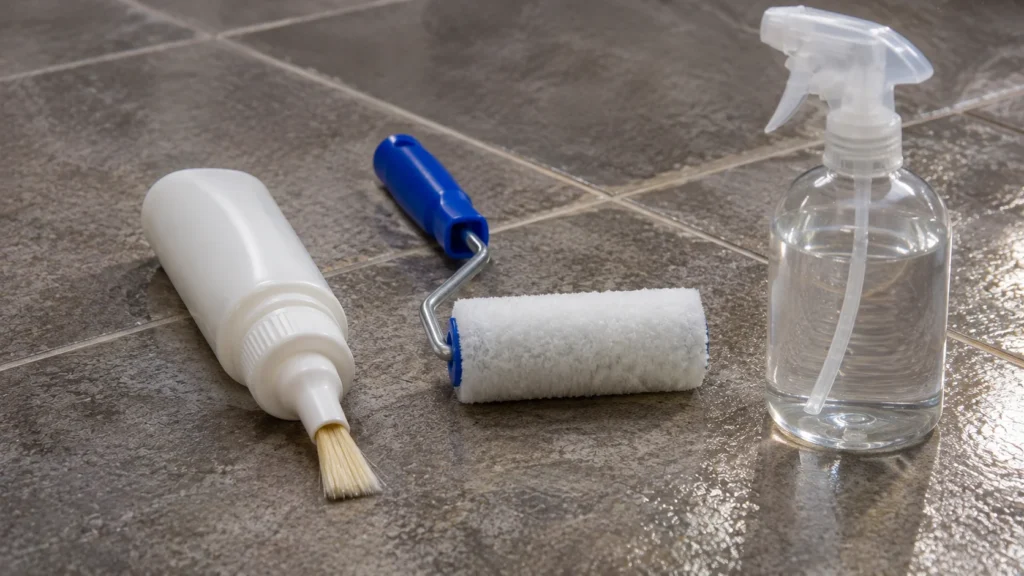
Common applicator options
Brush-tip applicator bottle
Useful for narrow grout lines, wall tiles, and small bathroom projects. The brush helps direct the sealer into the joint.
Roller applicator
Useful for covering longer grout lines on floors. Choose a roller suited to the joint width and avoid applying excess product.
Spray applicator
Can be convenient for suitable larger areas. Protect adjacent surfaces and use only where the product’s instructions allow spraying.
For a small wall project, a brush-tip bottle may offer better control. For a large floor, a roller may save time. Home Depot lists both brush and roller grout-sealer applicators, including products designed for different joint sizes.
Grout Sealant Products to Consider
Rather than naming one universal best grout sealant, compare products according to the material they are designed to protect. The following examples represent different approaches, not a ranking of overall performance.
| Product | What to check before choosing it |
| MAPEI UltraCare Grout Sealer | A water-based penetrating option for compatible sanded and unsanded cementitious grout. |
| STONETECH Heavy Duty Grout Sealer | Check the current product documentation for the grout type, application method, and cure requirements. |
| Miracle Sealants 511 Impregnator | Verify that the specific formula suits your grout or tile and the intended location. |
| Miracle Sealants 511 Spray-On Grout Sealer | A spray format for approved cementitious grout applications; follow the label carefully. |
| Grout color sealant | Consider when the goal includes a more uniform grout color as well as surface protection. |
MAPEI describes its UltraCare Grout Sealer as a penetrating sealer for compatible cementitious grout, while LATICRETE provides specific guidance for its STONETECH sealing products. Miracle Sealants also offers both penetrating and spray-on products.
Where Can You Buy Grout Sealant?
Grout sealant is commonly available through tile suppliers, home-improvement stores, flooring retailers, and online marketplaces. Home Depot and Lowe’s list grout-sealing products and application accessories, although availability varies by location and product.
Before buying, compare the technical instructions rather than relying only on the product name or customer reviews.
Is Professional Tile and Grout Sealing Worth It?
A DIY application may be suitable for a small, accessible area with sound grout. Professional help can be useful when the tile is delicate, the grout is heavily soiled, the installation is extensive, or the correct material is uncertain.
A professional service may include cleaning, extraction, inspection, grout repairs, clear sealing, or color sealing. Ask what preparation is included and which product will be applied.
What About Stanley Steemer Tile and Grout Sealant?
Stanley Steemer advertises tile and grout cleaning services along with clear and color grout-sealing options. Its service information describes clear sealant as a way to protect grout lines against small spills and spots, and color sealant as an option for a more uniform appearance.
If you are considering Stanley Steemer or another provider, confirm that the service is available in your area, whether cleaning is included, and how long the treated surface must remain unused. Do not assume that a company’s service or product is available at every branch.
Finding a Grout Sealant Service in Shakopee
If you are searching for a grout sealant service in Shakopee, Minnesota, ask local tile-cleaning companies whether they offer grout sealing in addition to deep cleaning. Request details about their preparation process, sealer type, estimated coverage, drying requirements, and warranty terms.
A reliable quote should clarify whether repairs and color restoration are included or charged separately.
Common Grout-Sealing Mistakes to Avoid
Even a suitable product can produce poor results when the surface is not prepared correctly.
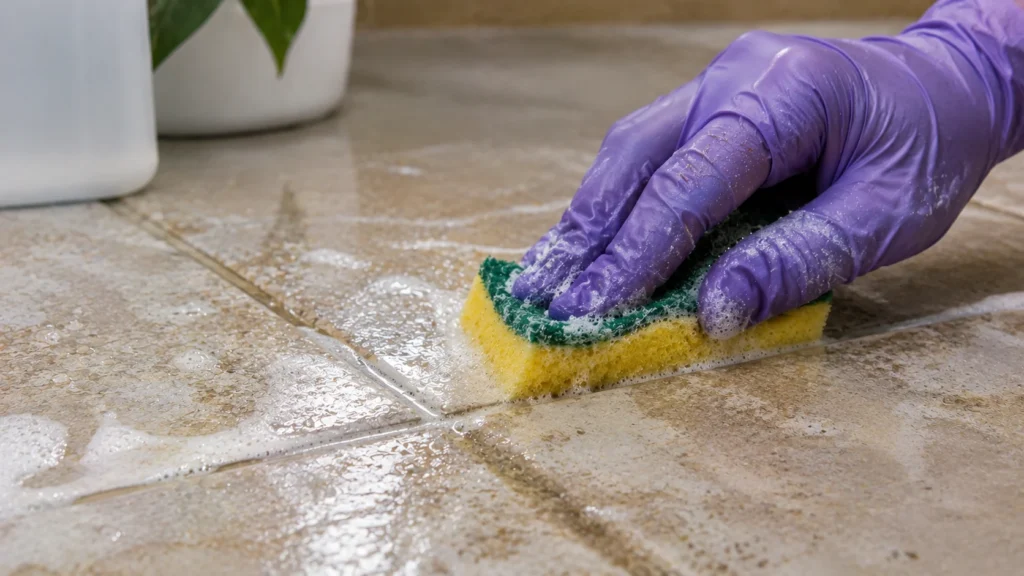
- Sealing dirty grout: Soil and soap residue can interfere with the finish.
- Applying sealer to damp grout when dryness is required: Moisture may affect the application or performance.
- Ignoring the curing period: Fresh grout needs the appropriate time before many sealers can be applied.
- Leaving excess product on tile: Residue may dry into a haze or film.
- Using the wrong product on natural stone: Some formulations may change or damage the finish.
- Assuming more coats are always better: Apply only the number of coats specified.
- Treating sealer as a waterproofing repair: Sealer cannot correct a failed shower membrane or damaged plumbing.
- Using a penetrating sealer on flexible joints as a replacement for silicone: These products serve different purposes.
- Expecting permanent stain protection: Sealers reduce absorption but do not make every surface stain-proof.
How to Maintain Sealed Grout
After sealing, routine care helps keep tile and grout looking better.
- Wipe up spills promptly, especially oils and strongly colored liquids.
- Clean the surface with a product suitable for the tile and grout.
- Avoid abrasive tools or aggressive chemicals unless the manufacturers approve them.
- Use appropriate ventilation in bathrooms to help surfaces dry between showers.
- Inspect grout for cracks, missing sections, or deterioration.
- Reapply sealer only when needed and according to the product’s instructions.
Sealing does not eliminate the need for regular cleaning. Marazzi’s tile-care guidance notes that grout still requires periodic cleaning to remove surface buildup, even when it has been sealed.
Conclusion
Grout sealant can be a useful way to reduce staining and moisture absorption in suitable cement-based grout, particularly in bathrooms, showers, kitchens, and busy tiled floors. The right choice depends on the grout material, tile surface, location, and desired finish.
For the best results, clean and inspect the grout first, choose a compatible product, apply it according to the manufacturer’s directions, and allow enough time for drying and curing. Remember that sealing is a maintenance measure not a replacement for grout repairs, flexible silicone joints, or proper waterproofing.
What is grout sealant used for?
Grout sealant helps reduce the absorption of moisture and staining substances into compatible grout. It can make routine cleaning easier, particularly for cement-based grout in kitchens, bathrooms, and tiled floors.
Is grout sealant necessary for every tile installation?
No. Cement-based grout often benefits from sealing, while many epoxy grout products do not require an additional sealer. The tile material and grout manufacturer’s instructions determine what is appropriate.
What is the best grout sealant for a shower?
The best option is a product approved for your grout type and shower application. A penetrating sealer is commonly used for suitable cement-based grout. Check natural-stone compatibility and follow the instructions for water exposure.
Can I use silicone sealant on grout?
Silicone sealant is intended for flexible joints, such as where tiled walls meet a tub or at changes of plane. It is not a general replacement for grout or a penetrating grout sealer.
How long does grout sealant take to dry?
Drying and curing times vary by product and conditions. Follow the label for touch-dry time, foot traffic, cleaning, and exposure to water. A surface that feels dry may not yet be ready for shower use.
Can I apply grout sealant over old grout?
Yes, if the existing grout is sound, clean, and compatible with the sealer. Remove dirt and residue first, repair damaged sections, and check whether any previous coating must be removed before application.
Is spray grout sealant as effective as brush-applied sealer?
Either format may be suitable when used according to its instructions. The important factors are compatibility, coverage, preparation, and correct removal of excessnot simply whether the product is sprayed or brushed on.
Does grout sealant change grout color?
A natural-look penetrating sealer is generally designed to preserve the existing appearance, but results can vary. Color-enhancing and color-sealant products are specifically intended to change or even out the appearance. Test an inconspicuous area first.
How often should grout sealant be reapplied?
There is no universal schedule. The product’s durability, traffic, cleaning routine, moisture exposure, and grout condition all affect reapplication. Follow the manufacturer’s guidance and inspect the surface periodically.
Can grout sealant prevent mold?
A suitable sealer may reduce absorption and make some stains easier to clean, but it does not eliminate the moisture and residue that can support mold growth. Ventilation, regular cleaning, and fixing leaks remain important.
Can I buy grout sealant at Home Depot?
Home Depot lists several grout sealers, including penetrating products and spray formats, along with brush and roller applicators. Check the current listing and confirm that the product is suitable for your tile and grout.
Is grout sealant the same as tile sealant?
Not always. Some products are designed primarily for grout, while others are formulated for grout plus porous tile or natural stone. Read the approved-surface list before applying the product to the entire installation.