
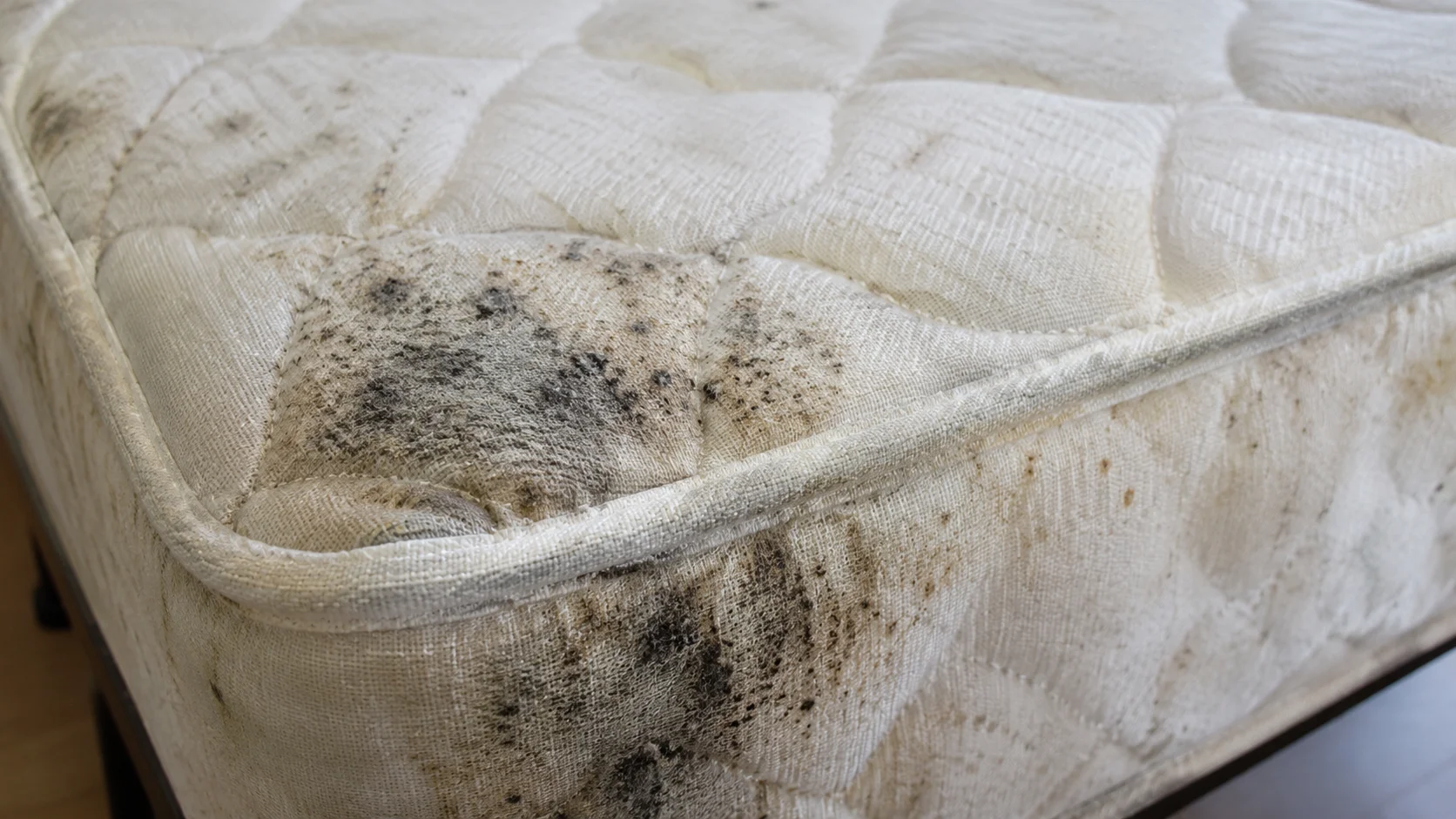
Finding mold on a mattress can be worrying, especially when dark spots, unusual discoloration, or a musty smell appear where you sleep. Mold can grow when moisture becomes trapped in or around bedding, and it may develop on the mattress surface, underside, cover, or nearby bed frame. The right response depends on how extensive the growth is, the mattress material, and whether the source of moisture can be corrected.
Although some surface marks may resemble mold, not every stain is fungal growth, and appearance alone cannot reliably identify a mold species. This guide explains the signs to look for, possible health concerns, what to do when you discover mold, and how to reduce the chance of it returning. Let’s learn what mold on mattress looks like, why it grows
What Does Mold on a Mattress Look Like?
Mold on a mattress can appear as small dots, irregular patches, or spreading discoloration. Its color may be black, green, gray, white, brown, or occasionally pinkish or orange. Some growth looks fuzzy, while other patches appear flat or powdery.
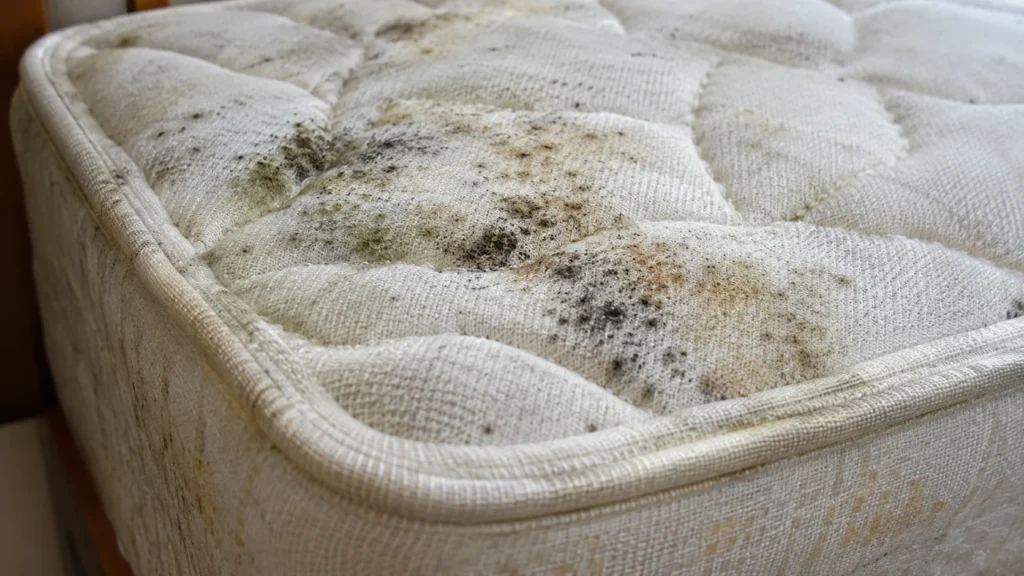
Color alone cannot confirm whether a stain is mold or determine which species is present. Sweat, spilled drinks, fabric dyes, and other substances can also leave marks on mattress fabric.
Common Signs of Mattress Mold
Look for a combination of signs rather than relying on one clue:
- Unusual spots: Clusters of dark or colored marks that gradually spread.
- Musty odor: A persistent earthy smell that remains after changing the sheets.
- Growth underneath: Discoloration on the bottom of the mattress, especially when it rests directly on the floor.
- Damp fabric: A mattress or mattress cover that repeatedly feels moist.
- Nearby moisture problems: Condensation, a leaking window, damp flooring, or a humid bedroom.
- Recurring marks: Discoloration that returns after surface cleaning because moisture remains trapped.
If you notice suspicious growth, remove the bedding and inspect the mattress edges, underside, bed frame, and nearby wall or floor. Avoid shaking the mattress, which can disturb and spread particles.
What Does Early-Stage Black Mold on a Mattress Look Like?
Early growth may appear as a few small black or dark green specks, sometimes near a seam, corner, or damp area. However, black spots are not proof of “black mold.” Several types of mold can look dark, and non-mold stains can appear similar.
Do not try to identify a mold species by its color. Focus instead on whether there is evidence of moisture, whether the marks are spreading, and whether the mattress can be safely assessed or needs replacement.
Mold vs. Mildew on a Mattress
Mildew is commonly used to describe certain surface fungal growths, often appearing as pale or grayish patches. Mold is a broader term for fungi that can grow on many materials. In everyday household situations, their appearance and smell can overlap.
| Feature | Possible mold or mildew | Ordinary stain |
| Appearance | Dots, irregular patches, or fuzzy growth | Often follows a spill or contact mark |
| Smell | May have a persistent musty odor | May have no odor or smell like the spilled substance |
| Pattern | May spread where moisture persists | May remain unchanged |
| Cause | Moisture and suitable growth conditions | Sweat, drinks, dyes, oils, or other substances |
These clues are not definitive. If you cannot tell what a stain is, avoid aggressive treatment until you have considered the mattress material and possible source.
What Causes Mold on a Mattress?
Mold needs moisture and suitable conditions to grow. A mattress can collect moisture from the sleeper, damp bedding, spills, leaks, or humid air, especially when airflow underneath is poor.
1. A Mattress Placed Directly on the Floor
A mattress on the floor has less room for air to circulate underneath it. Moisture can become trapped between the mattress and the floor, particularly in humid rooms or on surfaces that become cool and develop condensation.
This can encourage growth on the mattress underside even when the top appears clean.
2. Sweat and Body Moisture
People release moisture while sleeping. Sweat and normal body moisture can accumulate in sheets and mattress materials over time. If bedding is frequently damp and the room has poor ventilation, the mattress may not dry properly between uses.
3. High Indoor Humidity
Humid air slows drying and can contribute to condensation on cool surfaces. Bedrooms with limited ventilation, damp walls, or persistent humidity may create conditions that support mold growth.
4. Spills and Wet Bedding
Water, drinks, wet towels, and incompletely dried bedding can introduce moisture into the mattress. A spill may appear small on the surface but penetrate deeper into foam or padding.
5. Leaks and Damp Rooms
A roof leak, plumbing problem, window leak, or damp floor can keep the underside or side of a mattress moist. If mold repeatedly appears in the same location, investigate the room and bed base instead of treating only the visible spots.
6. Poor Air Circulation Around the Bed
A mattress pressed against a damp wall, placed on a solid base without adequate ventilation, or surrounded by items that restrict airflow may dry slowly. The bed’s construction and the manufacturer’s ventilation recommendations matter, so do not assume that every solid platform is unsuitable.
Jump into Other Related Article
- Best Deck Stain and Sealer | Complete Guide for Pressure Treated, Cedar, Old, and Full Sun Decks
- Brick Stain Colors | Exterior, Interior, Fireplace, Paver, and Before and After Ideas
- How to Remove Coffee Stains | Easy Methods for Clothes, Teeth, Carpet & More
Is Mold on a Mattress Dangerous?
Mold on a mattress can be a health concern because people spend many hours close to it and may disturb particles when moving bedding or handling the mattress. Exposure can cause symptoms such as sneezing, a stuffy nose, eye irritation, coughing, or skin irritation in some people. Those with mold allergies, asthma, or certain other health conditions may be more sensitive.
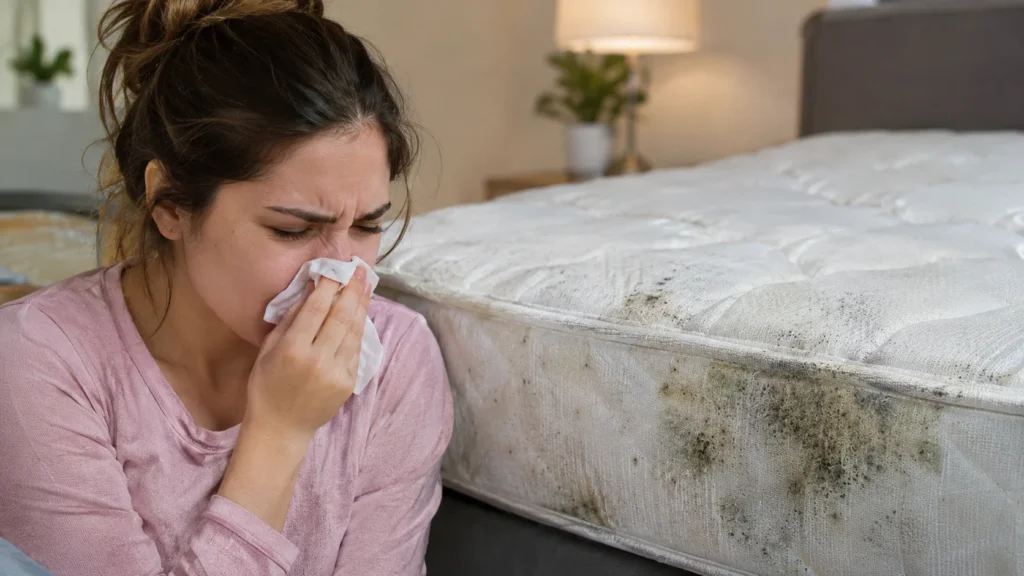
The risk depends on factors such as the amount of growth, the type of exposure, and a person’s health. You cannot determine the exact risk from the color of a spot, and visible mold does not automatically mean someone will become ill.
Who Should Be Especially Careful?
People with asthma, significant mold allergies, weakened immune systems, or chronic lung conditions should avoid cleaning moldy bedding themselves when possible. Children and others who are particularly sensitive should also be kept away from the affected area during assessment and cleanup.
If someone develops breathing difficulties or a significant reaction, seek appropriate medical care. Persistent symptoms should be discussed with a healthcare professional rather than assuming the mattress is the only possible cause.
Should You Sleep on a Moldy Mattress?
If you can see likely mold growth or detect a persistent musty odor that suggests hidden growth, the cautious choice is to stop sleeping on the mattress until you have assessed the problem. Do not cover the affected area with clean sheets and assume that it is safe.
A lightly stained mattress may not necessarily contain mold, but if there is confirmed growth inside a porous mattress, surface cleaning may not remove contamination throughout the material. Replacement is often the more prudent choice when growth is extensive, recurrent, or embedded in foam and padding.
How to Get Rid of Mold on a Mattress
The safest approach depends on whether you are dealing with a removable cover, a washable mattress topper, or the mattress itself. A mattress is a porous item, and visible growth may extend beyond the surface. Cleaning the spots you can see does not guarantee that the interior is free of mold.
Step 1: Stop Using the Affected Mattress
Remove sheets, blankets, pillows, and other bedding. Place washable items separately so they do not spread contamination to clean bedding. Avoid shaking the mattress or brushing the affected area vigorously.
If the mattress is visibly moldy or smells musty throughout, consider replacing it rather than attempting to salvage it.
Step 2: Address the Moisture Source
Before cleaning anything, determine why the mattress became damp. Check for spills, condensation, a leak, a damp floor, or restricted airflow under the bed.
If you do not fix the moisture problem, mold may return even after the visible marks disappear. Repair leaks and allow the room and bed base to dry properly.
Step 3: Check the Manufacturer’s Cleaning Instructions
Review the care label or contact the mattress manufacturer. Different mattresses contain different foams, adhesives, fabrics, and internal layers, so a treatment suitable for one model may damage another.
Avoid soaking the mattress. Excess liquid can penetrate the interior and make it harder to dry completely.
Step 4: Decide Whether Surface Cleaning Is Appropriate
For a very small, superficial area, the manufacturer may permit limited cleaning of the fabric. If so, follow its exact directions and use only an approved product.
- Wear suitable gloves and avoid direct contact with the affected material.
- Keep children, pets, and vulnerable people away from the work area.
- Avoid aggressive brushing that may release particles.
- Do not saturate the fabric or foam.
- Dry the area completely according to the manufacturer’s instructions.
If mold has penetrated the padding, covers a large area, keeps returning, or has left a persistent odor, replacement is generally a safer option than repeatedly treating the surface.
Step 5: Dry the Area and Monitor for Recurrence
Correct the humidity or ventilation issue and make sure the bed base and floor are dry. Do not put clean bedding back on a damp mattress.
If discoloration or a musty odor returns, do not keep repeating the same cleaning process. Reassess whether the mattress can be salvaged safely.
Can You Use Bleach, Vinegar, or Hydrogen Peroxide on a Moldy Mattress?
Household remedies are frequently recommended for mold stains, but a mattress is not the same as a hard, nonporous surface. Liquids can soak into its layers, potentially spreading moisture and making thorough drying difficult.
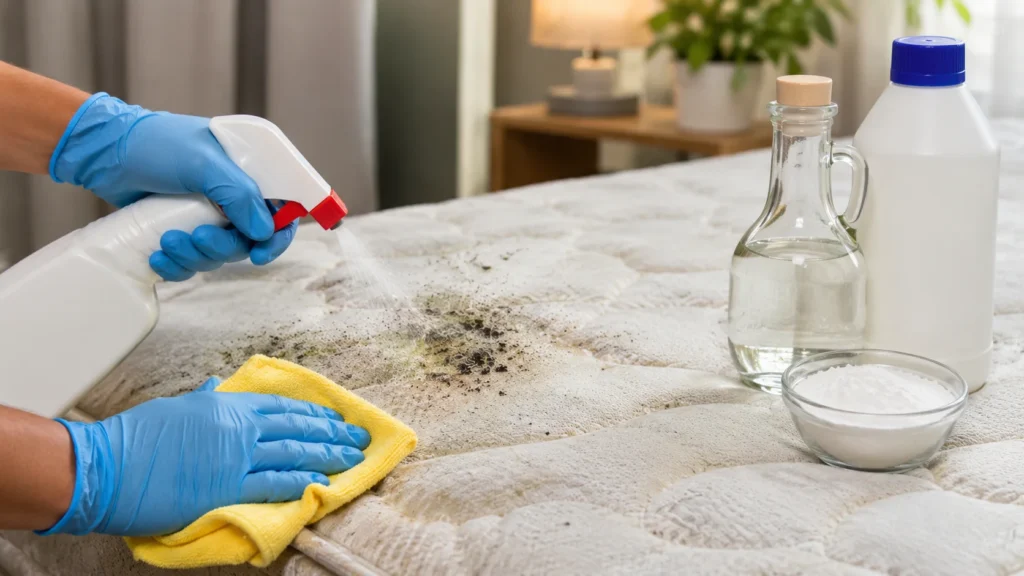
- Bleach: Do not use it as a general mattress treatment. It can damage fabric and may not reach mold within porous padding.
- Vinegar: It is not a guaranteed solution for mold embedded in a mattress and can introduce additional moisture.
- Hydrogen peroxide: It may affect fabric color and materials, and it cannot guarantee that growth inside the mattress has been removed.
- Baking soda: It may help absorb some odors, but it does not reliably eliminate mold growing inside a mattress.
Never mix cleaning products. In particular, bleach must not be mixed with vinegar, ammonia, or other cleaners because dangerous reactions can occur.
Important: A mattress that looks cleaner after treatment is not necessarily free of mold. Do not rely on a homemade spray to make a heavily affected mattress safe again.
Mold on a Memory Foam Mattress
Memory foam can absorb moisture through its cover and may be difficult to dry internally. Applying a large amount of liquid can leave damp areas trapped inside the foam.
If you notice mold on a memory foam mattress, inspect the cover, seams, and underside without shaking or aggressively handling the affected material. Follow the manufacturer’s care instructions and assess whether the growth is confined to a removable cover or has reached the foam itself.
If mold has penetrated the foam, is widespread, or keeps returning, replacing the mattress is generally the more cautious choice. Do not assume that spraying the top layer will address contamination deeper inside.
Mold on the Bottom of a Mattress or Underneath It on the Floor
Mold underneath a mattress often points to a moisture or airflow problem. The underside may remain damp even when the top feels dry.
What to Do When the Bottom Is Moldy
- Stop using the affected mattress while you assess the growth.
- Avoid dragging or shaking it through the home.
- Inspect the floor, bed base, and nearby wall for dampness or discoloration.
- Address any leaks, condensation, or ventilation issues.
- Decide whether the mattress is salvageable based on the extent of growth and the manufacturer’s advice.
If mold is also present on the floor or wall, the room may need separate cleaning or professional assessment. Do not simply place the mattress back in the same spot after wiping away the visible marks.
Does a Mattress on the Floor Cause Mold?
Not every floor mattress develops mold, but placing one directly on the floor can increase the risk when moisture becomes trapped underneath. The risk may be higher in humid rooms, on damp floors, or where there is little air movement.
If you prefer sleeping close to the floor, consider a bed base designed to provide appropriate ventilation and follow the mattress manufacturer’s requirements. Regularly inspect the underside and keep the floor dry.
What About Mold on a Mattress Protector, Cover, or Topper?
A removable cover or topper may be easier to assess than the mattress itself, but whether it can be cleaned depends on its material and care label.
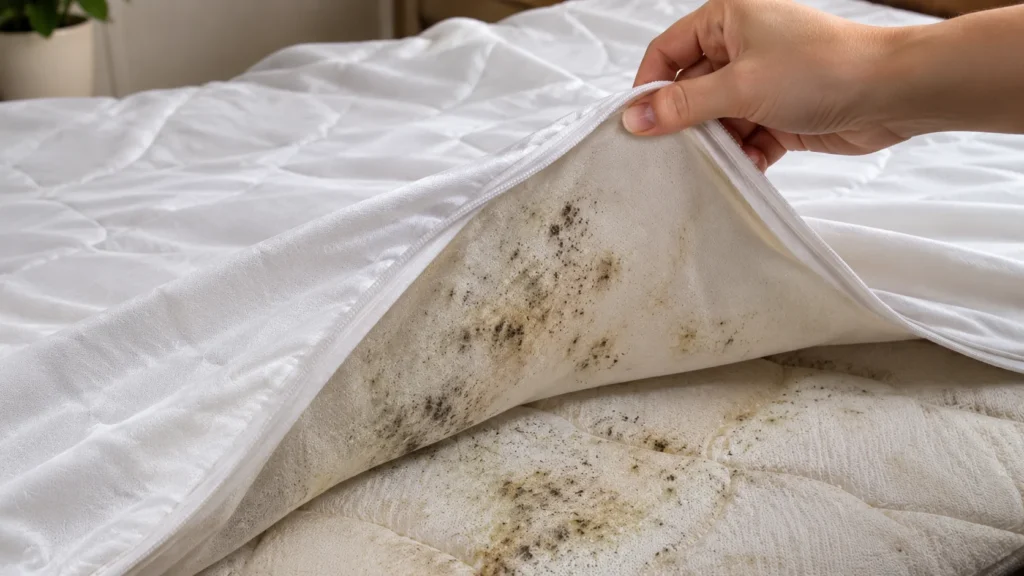
Mold on a Mattress Protector
Remove the protector carefully and check its washing instructions. If the manufacturer permits machine washing, use the recommended cycle and detergent, then dry it completely before reuse.
If visible mold remains, the protector smells musty after washing, or the material is damaged, replacement may be the better choice. Also inspect the mattress underneath; a clean protector does not prove that the mattress is unaffected.
Mold on a Mattress Topper
Foam and padded toppers can hold moisture in their inner layers. If the topper has visible growth, do not assume that washing its cover will clean the foam.
Check whether the topper is washable and what the manufacturer permits. For growth inside porous foam or padding, replacing the topper is often more prudent than attempting surface treatment.
Mold on an Air Mattress
An air mattress has a different construction from a foam mattress, but mold can still develop on its fabric-covered or flocked surface if it stays damp. Deflate it only as directed by the manufacturer and inspect seams and folds.
Clean only with a product approved for the material. Avoid harsh solvents, excessive water, or treatments that could damage the surface. If the material is deteriorating or growth remains embedded in the fabric, consider replacing it.
How to Prevent Mold on a Mattress
Preventing mattress mold mainly involves controlling moisture and improving airflow. These habits are especially useful if your bedroom is humid or your mattress sits on a low platform.
Keep the Mattress Off a Damp Floor
Use a suitable bed frame or base that follows the mattress manufacturer’s ventilation requirements. Avoid placing a mattress directly on a floor that becomes damp or develops condensation.
If you temporarily use a floor mattress, inspect the underside regularly and allow it to air out in a dry environment as directed by the manufacturer.
Control Bedroom Humidity
Use a hygrometer to check indoor humidity if your room often feels damp. Aim for indoor relative humidity below 60%, ideally around 30%–50% when practical. A dehumidifier may help in a persistently humid room.
Also improve ventilation where possible and address condensation on windows or walls. If the room remains damp despite these steps, investigate possible leaks or other moisture sources.
Dry Bedding Before Making the Bed
Avoid putting damp sheets, blankets, or mattress protectors back on the bed. Allow washed bedding to dry completely before use, and promptly deal with spills or wet patches.
Use a Suitable Mattress Protector
A protector can help reduce the amount of sweat and accidental spills that reach the mattress. Choose one compatible with your mattress and follow the care instructions.
A protector is not a substitute for ventilation or moisture control. If moisture becomes trapped underneath it, the mattress can still develop problems.
Inspect the Mattress Regularly
When changing bedding, look for unusual spots, persistent odors, and signs of moisture. Pay attention to the underside, seams, and corners, especially if the bed is positioned against an exterior wall or in a humid room.
Early attention to moisture can help prevent a small issue from becoming a larger one.
When to Replace a Moldy Mattress
Replacement is worth serious consideration when:
- Mold covers a large or spreading area.
- Growth appears to extend into foam, padding, or other internal layers.
- A musty odor persists despite appropriate cleaning and drying.
- Mold returns repeatedly.
- The mattress has been wet for an extended period.
- The mattress manufacturer advises against cleaning the affected material.
A mattress is difficult to inspect internally, so it may not be possible to confirm that all growth has been removed. When contamination is extensive or embedded, replacing the mattress is often the more reliable option.
Before buying a replacement, fix the original moisture problem. Otherwise, the new mattress may develop the same issue.
Conclusion
Mold on a mattress can develop when moisture becomes trapped in bedding, foam, or the area beneath the bed. Dark spots and musty odors can be warning signs, but color alone cannot confirm the type of growth or determine its health risk.
If you discover suspected mold, address the moisture source, check the manufacturer’s care instructions, and avoid soaking the mattress or relying on homemade sprays to remove embedded growth. Surface cleaning may be appropriate in limited circumstances, but a mattress with extensive, recurring, or deeply embedded mold is often better replaced. Controlling humidity, drying bedding fully, and allowing suitable airflow underneath the bed can help prevent the problem from returning.
What does mold on a mattress look like?
It may appear as black, gray, green, white, brown, or other colored spots, sometimes with a fuzzy or powdery appearance. A musty odor and persistent dampness can provide additional clues, but appearance alone cannot confirm mold.
Is black mold on a mattress dangerous?
Mold exposure can cause allergic reactions and respiratory irritation in some people, especially those with asthma, mold allergies, or weakened immune systems. The color black does not identify a specific species or establish the level of risk.
Can you remove mold from a mattress?
A small, superficial area may be treatable if the manufacturer permits cleaning, but mold can penetrate porous mattress materials. If growth is widespread, embedded, or recurring, replacing the mattress is generally the more cautious option.
Can a mattress on the floor cause mold?
It can increase the risk because airflow underneath the mattress may be restricted and moisture can become trapped. Humidity, condensation, damp flooring, and the mattress material all affect the risk.
What causes mold on the bottom of a mattress?
Common causes include trapped moisture, a damp floor, high room humidity, condensation, spills, and inadequate airflow. Check the bed base and surrounding room rather than treating only the mattress.
Can mold grow on a memory foam mattress?
Yes. Mold can grow when moisture and suitable conditions are present on or within a memory foam mattress. Because foam can be difficult to dry internally, embedded or widespread growth may warrant replacement.
Can I sleep on a mattress with mold?
If you suspect active mold growth or notice a persistent musty odor associated with dampness, stop using the mattress while you assess the problem. People with asthma, allergies, or weakened immune systems should be particularly cautious.
Does a mattress protector prevent mold?
A suitable protector can reduce moisture reaching the mattress, but it cannot guarantee mold prevention. Moisture trapped beneath a protector or accumulated through poor ventilation can still create a problem.
Can vinegar kill mold on a mattress?
Vinegar is not a reliable way to ensure that mold has been removed from a porous mattress. Applying liquid can also introduce moisture into the material. Follow the mattress manufacturer’s cleaning guidance instead of relying on a homemade treatment.
How can I tell mold from a stain on my mattress?
Look for spreading spots, musty odor, recurring dampness, and related moisture problems. These clues may help, but they cannot reliably distinguish mold from every other type of stain. Seek professional advice if identification affects your next steps.
Can mold grow on a mattress protector?
Yes. A protector can develop mold if it remains damp or is stored before it has dried completely. Follow its washing instructions, dry it thoroughly, and inspect the mattress underneath.
How do I prevent mold on a mattress placed on the floor?
Keep the floor dry, control room humidity, improve airflow, and inspect the mattress underside regularly. A ventilated base that meets the mattress manufacturer’s requirements is generally preferable to placing a mattress directly on a damp floor.