
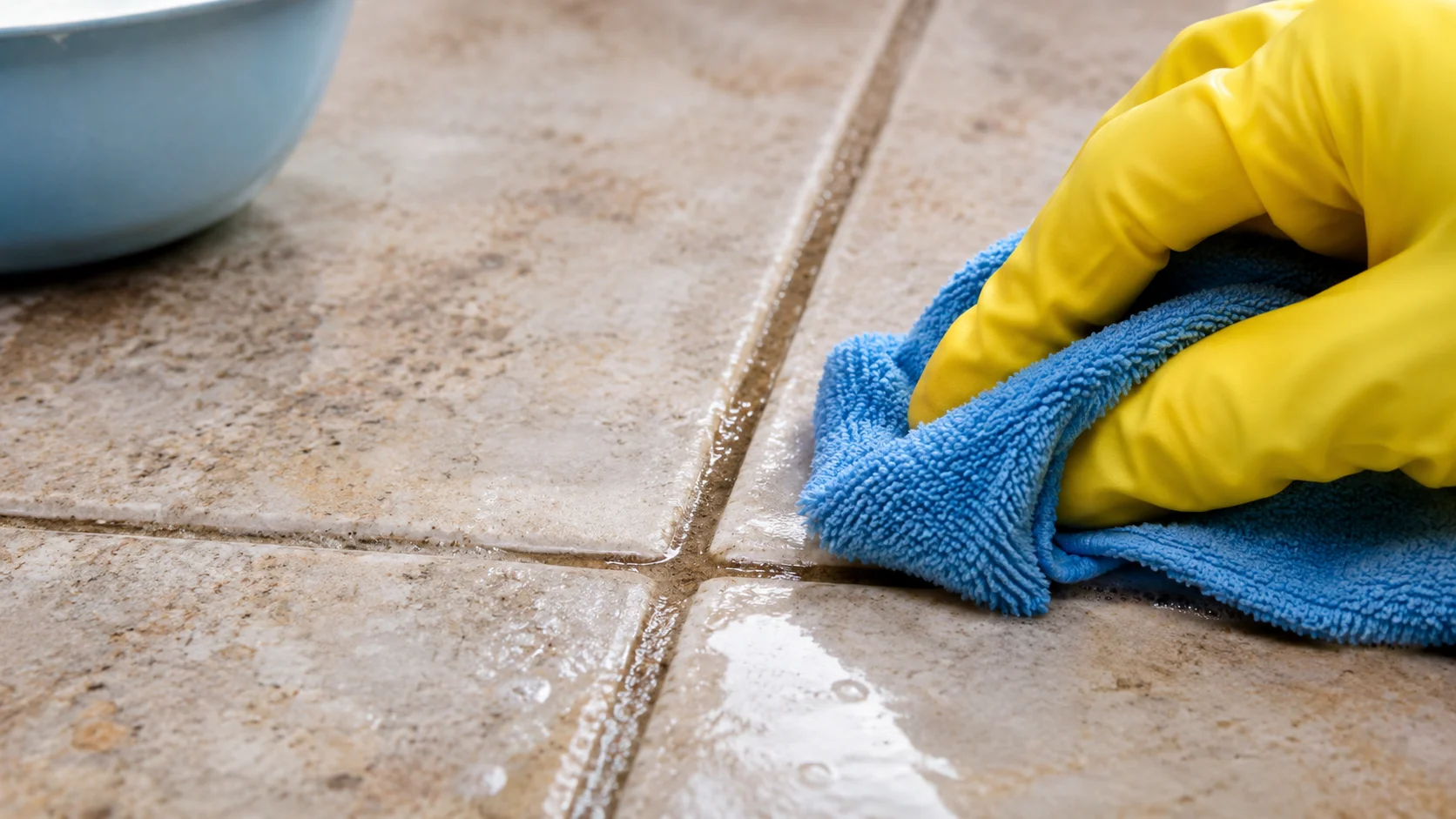
Grimy grout can make an otherwise clean tile floor look dull, especially in kitchens, bathrooms, and entryways where dirt and moisture collect in the joints. The good news is that you can often loosen everyday grime without spending time scrubbing every grout line by hand. The key is choosing a suitable cleaner, allowing enough contact time, and removing the loosened residue properly.
The best method depends on what has made the grout dirty, whether it is cement-based or epoxy, and what type of tile surrounds it. Mild detergent may be enough for routine soil, while a grout-safe cleaner or steam-cleaning method may help with more stubborn buildup. No method can guarantee stain removal without agitation, but the right approach can greatly reduce the effort required. Let’s understand, how to clean floor tile grout without scrubbing using suitable cleaners
Why Floor Tile Grout Gets Dirty
Grout is the material that fills the joints between tiles. Cement-based grout is porous, so it can absorb some moisture and hold onto fine particles more readily than many glazed tile surfaces.
The type of buildup affects how easily it can be removed:
- Loose dirt and dust: Often lift away with vacuuming and damp mopping.
- Grease and cooking residue: May need a cleaner that can break down oily soil.
- Soap residue: Common in bathrooms and may combine with minerals to form a stubborn film.
- Hard-water deposits: Can leave pale, chalky marks, especially around frequently wet areas.
- Mold or mildew staining: May indicate persistent moisture and requires attention to ventilation and the source of dampness.
- Old or damaged grout: May stay discolored even after proper cleaning because the surface has deteriorated or absorbed stains.
Before choosing a method, identify the likely cause of the discoloration. Using a stronger chemical when the problem is ordinary dirt can add risk without improving the result.
How to Clean Floor Tile Grout Without Scrubbing
The general principle is simple: let an appropriate cleaning solution loosen the soil, then remove the residue with a mop, cloth, or suitable floor-cleaning machine. Follow the cleaner’s label and the tile manufacturer’s care instructions.
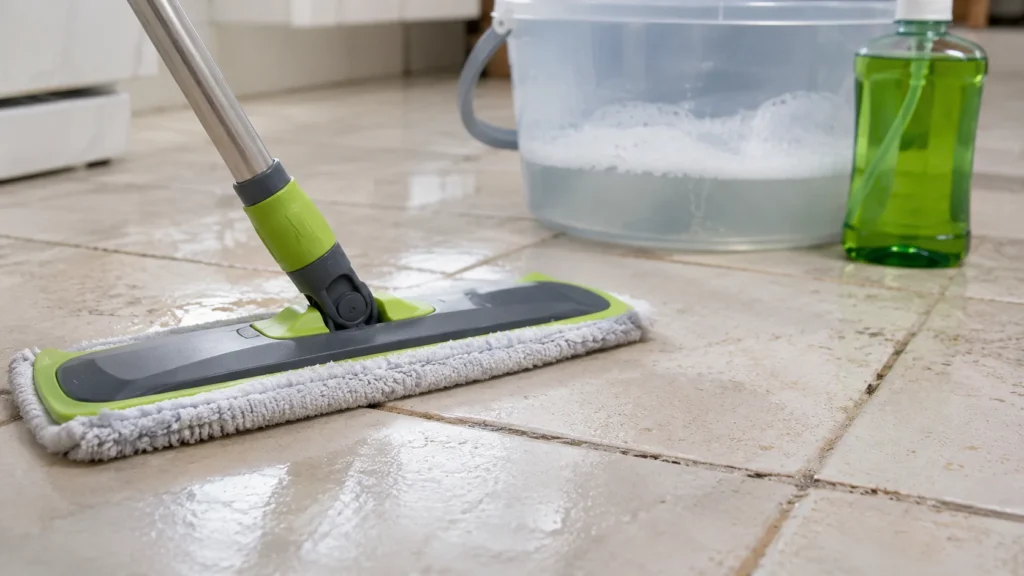
Method 1: Use Warm Water and a Mild Floor Cleaner
For lightly dirty grout, begin with the gentlest option. A pH-neutral tile cleaner or a mild detergent approved for your flooring may loosen everyday dirt without requiring hard scrubbing.
What you need:
- A vacuum or soft broom
- Warm water
- A compatible floor cleaner
- A microfiber mop
- Clean water for rinsing, if required
Steps:
- Remove loose dust and debris from the floor.
- Dilute the cleaner according to its label.
- Apply it with a microfiber mop, making sure the floor is damp rather than flooded.
- Allow the recommended contact time without letting the solution dry on the surface.
- Mop again to pick up loosened soil.
- Rinse if the product instructions require it, then let the floor dry.
This method is best for routine maintenance rather than deep, old stains. It also helps prevent abrasive dirt particles from being dragged across the tile surface.
Method 2: Choose a Grout-Safe Alkaline Cleaner for Greasy Grime
Kitchen floors often collect grease, food residue, and tracked-in dirt. A suitable alkaline cleaner may work better than plain water because its formulation is designed to loosen certain oily soils.
Check the label to confirm that the product is suitable for your tile and grout. Stronger is not automatically better, and highly alkaline cleaners may be unsuitable for some finishes or natural stone.
How to use it with minimal effort:
- Sweep or vacuum the floor.
- Prepare the cleaner at the recommended dilution.
- Apply it to a small section at a time.
- Let it work for the specified period.
- Pick up the solution and loosened dirt with a clean mop.
- Rinse if required to prevent residue from building up.
If the grout remains dirty, repeat the process only as permitted by the label. Avoid increasing the concentration beyond the instructions.
Method 3: Try an Oxygen-Based Cleaner When the Label Allows It
Some oxygen-based cleaners are marketed for removing organic stains and discoloration. Depending on the formulation, they may help with certain stains in compatible grout.
However, not every oxygen-based product is appropriate for every floor. Check whether the product is approved for the grout, tile, and surrounding materials before using it.
For a suitable product, follow the stated dilution and contact time. Remove the solution completely as directed and allow the floor to dry before assessing the result.
Important: Oxygen-based cleaners are not the same as chlorine bleach. Never combine them with other cleaners unless the product manufacturer explicitly instructs you to do so.
Method 4: Use a Steam Cleaner Approved for Your Floor
Steam can help loosen grime with heat and moisture, potentially reducing the need for manual scrubbing. But it is not suitable for every tile installation.
High heat can damage some sealants, coatings, adhesives, or sensitive stone surfaces. It may also affect grout that is cracked, deteriorated, or poorly installed. Before using steam, check both the flooring manufacturer’s guidance and the steam cleaner’s instructions.
If steam cleaning is approved:
- Vacuum the floor thoroughly.
- Prepare the machine according to its manual.
- Test an inconspicuous area first.
- Move the machine at the recommended speed rather than holding it over one joint.
- Pick up loosened soil as directed.
- Allow the floor to dry and inspect the grout.
Steam should not be treated as a universal solution for dirty grout. It may help with compatible installations, but it cannot repair damaged grout or resolve the cause of persistent moisture.
Method 5: Use a Grout-Specific Cleaner
When ordinary floor cleaner is not enough, a product formulated for grout may be the next step. Select one that clearly lists your grout and tile types as approved surfaces.
Grout cleaners differ in their ingredients and intended use. Some target greasy soil, others are designed for mineral buildup, and some are intended for particular stains. Read the label to determine whether the product needs dilution, how long it should remain on the grout, and whether rinsing is required.
To minimize scrubbing:
- Work in manageable sections.
- Use the recommended amount of product.
- Allow the specified dwell time.
- Prevent the solution from drying if the instructions prohibit it.
- Remove loosened residue with a microfiber mop or extraction method approved for the product.
If the cleaner does not remove the discoloration, do not automatically apply a second chemical. Reassess the stain and the grout material before trying another approach.
Jump into Other Related Article
- Best Deck Stain and Sealer | Complete Guide for Pressure Treated, Cedar, Old, and Full Sun Decks
- Red Wine Stain Removal | Complete Guide for Clothes, Carpet, Upholstery, and Dried Stains
- How to Remove Coffee Stains | Easy Methods for Clothes, Teeth, Carpet & More
How to Clean Different Types of Tile Grout Without Scrubbing
A method that works on ceramic tile may not be appropriate for natural stone or a specialty floor finish. Identify the surface before choosing a cleaning product.
Ceramic and Porcelain Tile Floors
Glazed ceramic and porcelain tiles are generally easy to maintain with a compatible floor cleaner. The grout joints still need attention, especially if they are cement-based.
Vacuum first, then use a suitable cleaner and microfiber mop. If the grout is heavily soiled, use a grout-specific product approved for the installation. Avoid leaving dirty water behind, as it can settle back into the joints as the floor dries.
Porcelain tile can have different finishes, including polished and textured varieties, so follow the manufacturer’s recommendations rather than assuming all porcelain floors can be cleaned identically.
Natural Stone Floors
Marble, limestone, travertine, and other natural stones can be sensitive to acidic cleaners. Vinegar, lemon juice, and some bathroom descalers may etch calcium-based stone, leaving a dull mark that cleaning cannot reverse.
Use a stone-safe, pH-neutral cleaner approved for both the tile and grout. Apply it with a soft mop, and avoid steam or strong chemicals unless the stone manufacturer permits them.
If the grout is stained and you are unsure which treatment is safe, test a hidden area or seek advice from a stone-care professional.
Sealed Grout
Sealed grout may be easier to maintain, but a sealer does not make the surface stain-proof. Dirt, oils, and cleaning-product residue can still accumulate.
Use a cleaner approved for the sealer and tile. Avoid aggressive chemicals that may shorten the sealer’s service life or leave a film. If the grout stays dirty despite correct cleaning, check whether the sealer is worn, uneven, or trapping residue.
Unsealed Cement-Based Grout
Unsealed cement-based grout may absorb liquids and soil more readily. Use a compatible cleaner and avoid flooding the floor with water, particularly if the grout is old or damaged.
After the floor is clean and completely dry, you can check whether sealing is recommended for that grout. Sealing should not be used to conceal loose, cracked, or deteriorating joints.
Can Baking Soda and Vinegar Clean Grout Without Scrubbing?
Baking soda and vinegar are often suggested as a homemade grout-cleaning combination, but mixing them is not necessarily more effective than using a suitable cleaner on its own.
Baking soda is mildly abrasive, which can be a concern for delicate finishes, and vinegar is acidic. When combined, they react and neutralize some of each other’s cleaning properties. Vinegar can also damage natural stone and certain other materials.
If you prefer a simple homemade approach, start with warm water and a small amount of mild detergent that is approved for your floor. Use baking soda or vinegar only when the surface manufacturer permits the ingredient and you understand its limitations. Avoid experimenting with homemade mixtures on polished stone, specialty coatings, or unknown tile materials.
How to Remove Specific Grout Stains With Less Effort
Different stains need different treatments. Identifying the source can prevent unnecessary chemical use.
| Grout problem | Approach to try first | Important caution |
| Everyday gray dirt | Mild, compatible floor cleaner | Remove loose grit before mopping |
| Kitchen grease | Grout-safe cleaner suitable for oily soil | Follow dilution and rinsing instructions |
| White mineral deposits | Product specifically approved for the tile and deposit | Avoid acids on natural stone |
| Organic discoloration | Compatible stain-targeting cleaner | Test the surface and follow label directions |
| Mold-like spots | Appropriate cleaner and moisture control | Investigate persistent dampness |
| Deep, permanent discoloration | Professional assessment or grout restoration | More chemicals may not improve damaged grout |
When Grout Looks Dark After Cleaning
Grout that looks dark while wet may lighten as it dries. Wait until the floor is completely dry before deciding that the cleaning method has failed.
If the grout remains dark, the cause could be embedded soil, moisture, uneven sealing, or deterioration. Avoid repeatedly applying strong products without identifying the cause.
When White Haze Appears on the Floor
A pale film may be leftover cleaner, mineral residue, or a problem with the tile or grout itself. Start by reviewing the cleaner’s instructions and determining whether a clean-water rinse is appropriate.
Do not immediately use vinegar or another acidic product to remove the haze, particularly on natural stone. If the film persists, seek a treatment designed for that particular residue and surface.
What Not to Use When Cleaning Floor Tile Grout
Some common cleaning habits can damage grout or the surrounding floor.
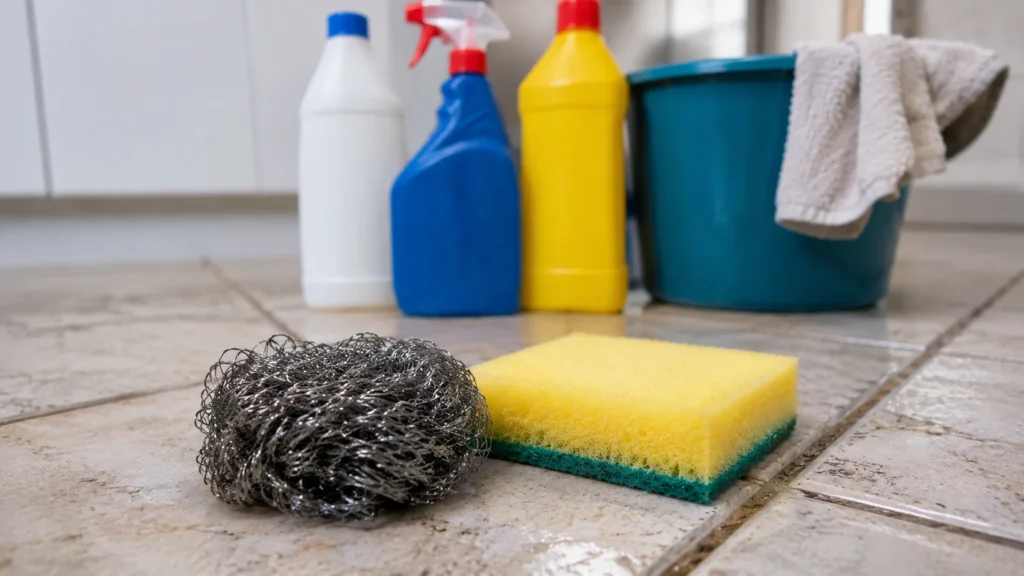
- Avoid steel wool and rough abrasive pads. They can scratch tile finishes and wear down grout.
- Do not use vinegar on natural stone. Acid can etch marble, limestone, travertine, and other sensitive materials.
- Never mix cleaning products. Combining bleach with vinegar, ammonia, or other cleaners can release dangerous gases or cause harmful reactions.
- Do not flood damaged grout. Excess water can enter vulnerable joints and create additional problems.
- Avoid excessive heat unless approved. Steam may damage certain sealers, coatings, or installations.
- Do not exceed the recommended cleaner concentration. Stronger solutions can damage finishes or leave residue.
- Do not leave chemicals to dry on the floor. Follow the label’s contact time and removal instructions.
If you use a chemical cleaner, keep children and pets away from the area as directed by the label, and ensure appropriate ventilation.
How to Keep Floor Tile Grout Clean Longer
Preventing buildup is easier than repeatedly treating stained grout. A few small changes to your cleaning routine can reduce how often you need a deep clean.
Remove Dry Dirt Before Mopping
Sand and grit can collect in grout joints and may scratch some tile finishes when dragged across the floor. Vacuum with a suitable floor attachment or sweep with a soft broom before using a wet cleaner.
Use Less Cleaning Product
More detergent does not necessarily mean a cleaner floor. Excess product can leave a sticky film that attracts dirt and makes grout appear dull again.
Measure the cleaner according to its label, and rinse when the instructions require it. If your floor repeatedly feels tacky after cleaning, review the amount of product you use and whether residue is being removed properly.
Dry Moisture-Prone Areas
In bathrooms, wipe up standing water when practical and use the exhaust fan to help reduce humidity. In kitchens, clean spills before they dry and collect residue in the grout.
Persistent dampness deserves attention. Check for leaking fixtures, damaged caulk, or other moisture sources rather than relying only on surface cleaning.
Check Whether Sealing Is Appropriate
Some cement-based grout benefits from a compatible sealer, while many epoxy grouts do not need additional sealing. Check the grout manufacturer’s recommendations before applying one.
A sealer may reduce absorption and make maintenance easier, but it does not replace routine cleaning or waterproofing behind tiled surfaces.
When to Call a Professional Grout Cleaner
A professional service may be worth considering if the grout is heavily stained across a large floor, the tile is delicate, or repeated cleaning has produced little improvement.
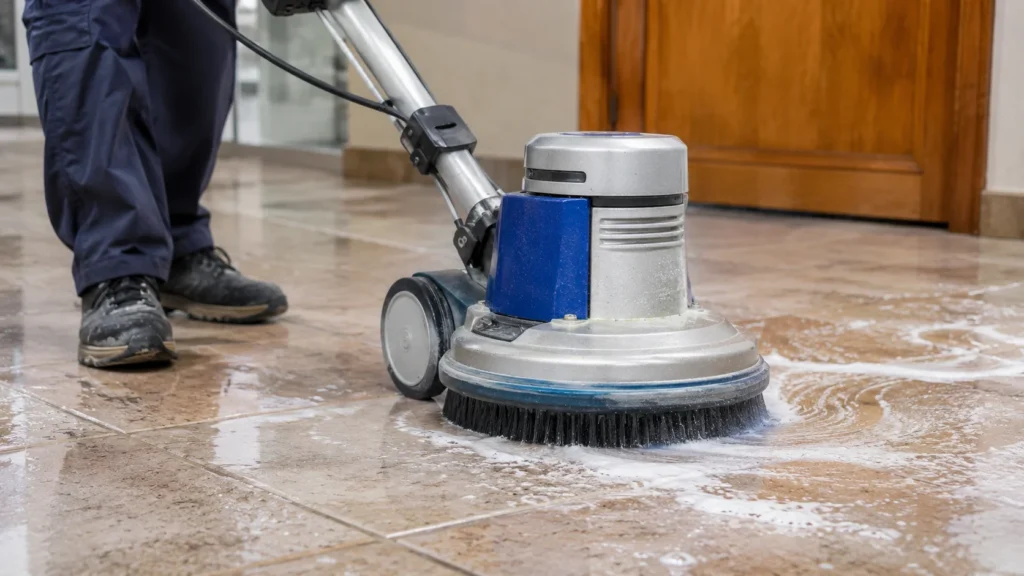
Consider professional advice when:
- The grout remains discolored despite correct cleaning.
- The joints are cracked, loose, or crumbling.
- You suspect moisture is entering beneath the tiles.
- Natural stone has developed a dull or etched appearance.
- You cannot identify the tile finish or safely select a cleaner.
- You want to explore grout recoloring or restoration.
Ask the provider how the floor will be cleaned, which products and equipment will be used, whether rinsing or extraction is included, and whether any grout repairs are necessary. A good cleaning service should distinguish between removable dirt and permanent surface damage.
Conclusion
You can often clean floor tile grout without intensive scrubbing by choosing a compatible cleaner, giving it the recommended time to loosen dirt, and removing the residue thoroughly. Mild floor cleaners are suitable for everyday soil, while greasy buildup and specific stains may need a targeted grout-cleaning product.
Always consider the tile material, grout type, and condition of any sealer before using chemicals or steam. Avoid abrasive tools, unsafe cleaner combinations, and excessive moisture. With the right cleaning method and a consistent maintenance routine, grout can stay cleaner while requiring less effort.
How do you clean floor tile grout without scrubbing?
Vacuum the floor, apply a compatible grout or floor cleaner, allow it to work for the time stated on the label, and remove the loosened dirt with a microfiber mop or approved extraction method. Results depend on the type of soil and grout condition.
What is the easiest way to clean grout on a tile floor without scrubbing?
For lightly soiled grout, start with warm water and a mild floor cleaner approved for the tile. Heavier buildup may need a grout-specific product with an appropriate dwell time. Some residue may still require gentle agitation.
Does steam clean floor tile grout without scrubbing?
Steam may loosen dirt on some compatible tile installations, but it is not safe for every floor. Check the tile, grout, and sealer manufacturers’ instructions before using steam, and avoid it on surfaces that may be damaged by heat or moisture.
Can I use vinegar to clean floor grout?
Vinegar is not suitable for every grout and tile combination. Its acidity can damage natural stone such as marble and limestone. Use it only when the flooring manufacturer confirms that it is appropriate for the specific surface.
Is baking soda safe for tile grout?
Baking soda is mildly abrasive, so its suitability depends on the tile finish and grout condition. Avoid assuming it is safe for polished stone, delicate coatings, or surfaces that scratch easily. A compatible non-abrasive cleaner is a more cautious starting point.
Why does my grout still look dirty after mopping?
Ordinary mopping may not remove embedded grease, soap residue, or mineral deposits. Dirty mop water and leftover detergent can also leave a film behind. Try a compatible targeted cleaner and remove the loosened residue thoroughly.
Can I use bleach to whiten floor grout?
Bleach is not the right choice for every grout or tile surface, and it may not remove the cause of discoloration. Follow the surface and product instructions, provide appropriate ventilation, and never mix bleach with other cleaners. Persistent staining may require a different treatment.
How often should I clean floor tile grout?
Lightly clean the floor regularly, with frequency based on foot traffic, moisture, and how quickly dirt accumulates. Kitchens, entryways, and bathrooms may need more frequent attention than less-used rooms.
Should I seal grout after cleaning?
Sealing may be appropriate for compatible cement-based grout once it is clean and completely dry. Check the grout manufacturer’s instructions and allow any cleaning moisture to dry before applying a sealer. Epoxy grout often does not require an additional sealer.
Can a dirty grout line mean there is a leak?
Not necessarily. Dirt, spills, and routine moisture can discolor grout. However, persistent dampness, loose tiles, crumbling grout, or recurring discoloration may indicate a moisture problem that needs investigation.