
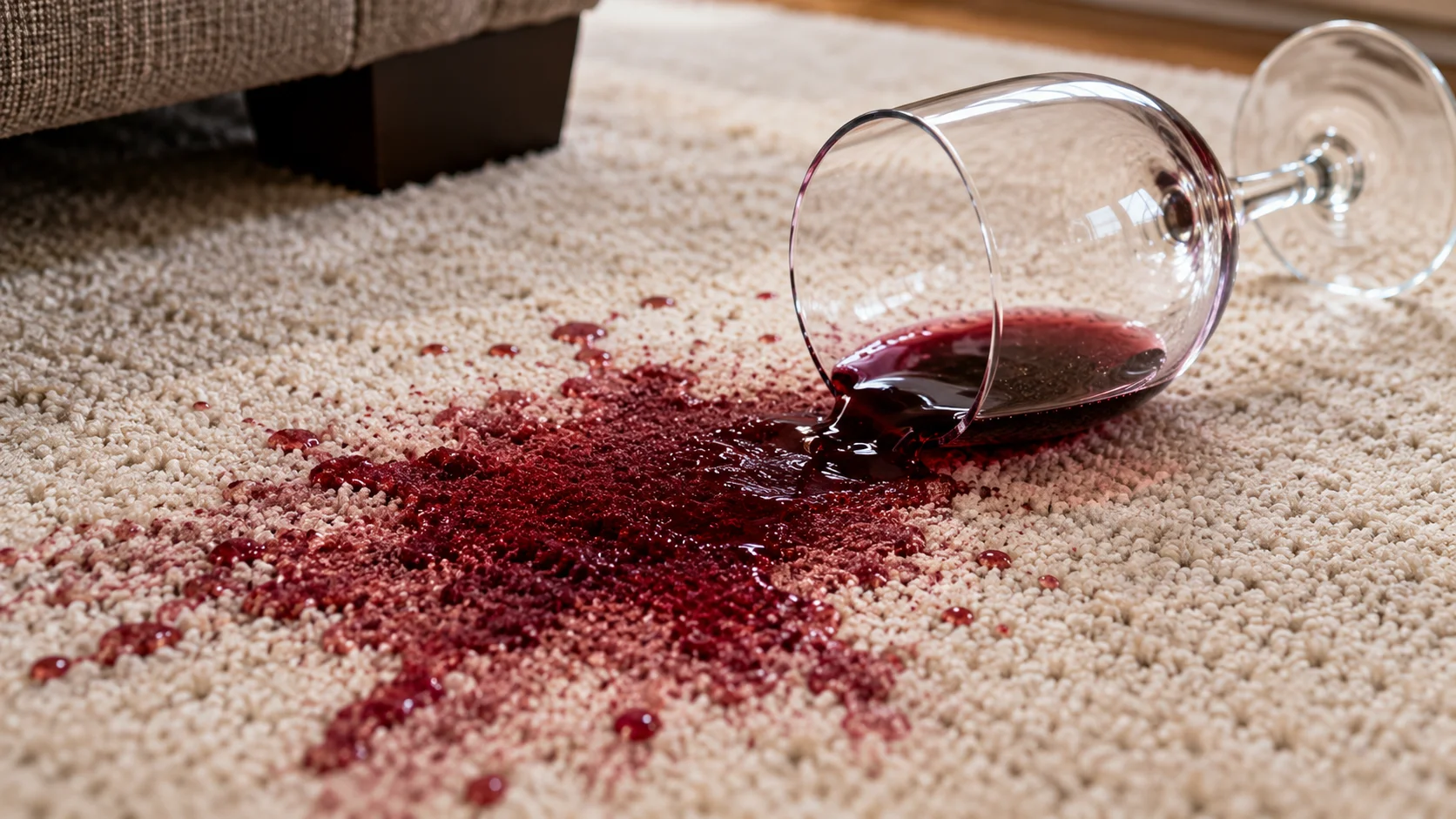
Red wine stains are among the most noticeable beverage stains because the deep red-purple color can quickly spread through fabric, carpet fibers, upholstery, and table linens. The good news is that red wine stain removal is usually easier when you act before the stain dries. The American Cleaning Institute recommends treating wine stains promptly with cool water, pretreatment, and appropriate laundering, while avoiding the dryer until the stain has disappeared.
The basic approach is simple: blot rather than scrub, dilute the stain with cool water, use an appropriate stain treatment, and check the result before applying heat. Different materials require different methods, however. Cotton clothing can tolerate treatments that would be inappropriate for wool, delicate fabrics, carpets, or upholstery.
This guide covers red wine stain removal from clothes, dried red wine stains, carpet, rugs, couches, furniture, wool, tablecloths, white shirts, and other washable fabrics. It also explains commonly recommended remedies such as salt, club soda, vinegar, baking soda, hydrogen peroxide, and commercial stain removers, including situations where extra caution is necessary.
Why Red Wine Creates Such Difficult Stains
Red wine contains strongly colored compounds that can remain behind after the liquid itself evaporates. The longer the wine remains in a textile, the more difficult it can become to remove completely. Fresh spills are therefore much easier to handle than stains that have already dried or passed through a dryer.
Another important factor is the material. Cotton, polyester, wool, silk, carpet, and upholstery do not respond identically to cleaning products. A method that works on a washable white cotton tablecloth may discolor a dyed couch or damage a delicate wool garment.
The American Cleaning Institute advises treating stains as early as possible and testing stain treatments for colorfastness when appropriate. It also recommends checking the stain before drying because heat can make remaining discoloration much harder to remove.
For this reason, successful stain removal is less about finding one magical ingredient and more about matching the treatment to the stain age, fabric, color, and surface.
Fresh Red Wine Stain Removal for Immediate Spills
The first few minutes after a red wine spill are important. Avoid rubbing the area because friction can push the liquid farther into the fibers and spread the stained area. Instead, use a clean white absorbent cloth or paper towel and gently blot the excess wine.
For washable clothing, cool water is a useful first step. ACI specifically recommends sponging wine stains with cool water or soaking them in cool water for approximately 30 minutes before pretreating and laundering.
15 Practical Steps for Handling a Fresh Red Wine Spill
- Blot immediately with a clean white cloth or paper towel.
- Do not scrub because friction can spread the wine through the fibers.
- Remove excess liquid before adding another cleaning product.
- Flush washable fabric with cool water when the care instructions allow it.
- Work from the back of clothing when possible so the stain moves outward rather than deeper into the material.
- Apply a suitable prewash stain remover to washable garments.
- Use liquid laundry detergent as a pretreatment when appropriate.
- Allow the pretreatment to work according to its product instructions.
- Rinse thoroughly before laundering.
- Check the fabric care label before using bleach or oxygen-based products.
- Test stronger treatments on an inconspicuous area first.
- Blot carpet rather than brushing it to avoid damaging carpet fibers.
- Use a white cloth on carpet and upholstery to reduce the risk of transferring dye.
- Repeat treatment when necessary instead of immediately applying stronger chemicals.
- Never tumble-dry the item while the stain remains visible.
The Carpet and Rug Institute similarly recommends absorbing spills with a dry white cloth or plain white paper towels and specifically warns against scrubbing or brushing carpet.
Red Wine Stain Removal From Clothes
For washable clothing, start with cool water and then pretreat the affected area. The American Cleaning Institute recommends cool-water treatment followed by a prewash stain remover and laundering, with bleach used only when it is safe for the particular fabric.
Place the stained section under cool running water when practical, preferably from the reverse side. This can help move the wine back out of the fabric instead of forcing it farther inward.
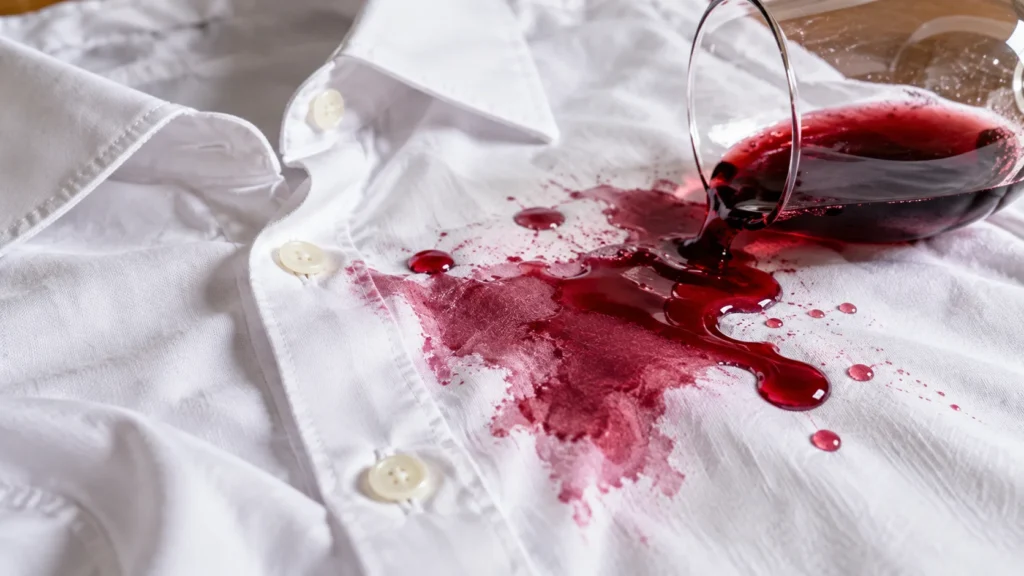
After rinsing, apply liquid laundry detergent or a suitable commercial stain remover. Let it work according to the product instructions and then wash according to the garment’s care label.
Do not automatically use hot water simply because the garment is heavily stained. Water temperature should be selected according to the material and care instructions. If the stain remains after washing, treat it again rather than placing the garment in the dryer.
Red Wine Stain Removal From White Shirts
White cotton shirts provide more treatment options than many colored garments because color-fading is less of a concern. However, “white” does not automatically mean that every bleaching product is safe.
After blotting and rinsing, pretreat the wine mark and wash according to the care label. For persistent discoloration, a fabric-safe oxygen bleach may be appropriate. ACI notes that wine stains can be treated with prewash stain remover and laundering, with chlorine bleach only when the fabric permits it.
Hydrogen peroxide is sometimes recommended for white fabric, but it can affect dyes and delicate fibers. Kansas State University Extension specifically includes 3% hydrogen peroxide as an option for persistent red wine stains when the fabric and color can safely tolerate it.
Red Wine Stain Removal From Dried Clothes
Dried red wine stains require more patience because the pigment has had additional time to remain in the fabric. Testing published methods has also shown that overnight stains can be more difficult to remove than fresh stains.
Start by gently rehydrating the stained area with cool water. Avoid aggressive scrubbing, particularly on delicate fabrics.
Next, apply a prewash stain remover or liquid laundry detergent. Allow the product to work according to its instructions before washing. For older stains, ACI notes that pretreatment or soaking with an appropriate enzyme-containing product can sometimes help stubborn stains, although the exact treatment depends on the fabric and stain.
If the first wash does not remove the mark, do not dry the garment yet. Repeat the pretreatment and washing process. Heat from a dryer or iron can make the remaining stain more difficult to address.
Jump into Other Related Article
- How to Clean Stainless Steel Sink | Stains, Hard Water, Rust & Scratches
- How to Remove Coffee Stains | Easy Methods for Clothes, Teeth, Carpet & More
- How to Remove Stains from Carpet | Complete Guide for Coffee, Pet, Wine, Urine & More
Dried Red Wine Stain Removal With Vinegar
Vinegar appears in several established red-wine stain-removal methods, but it should be used carefully rather than poured indiscriminately over every fabric.
University of Georgia Extension gives a specific method involving warm water, detergent, and white vinegar for wine stains, followed by rinsing. It also warns that alcohol can remove fabric dye.
A practical approach is to dilute vinegar according to a trusted recipe, test the solution on an inconspicuous area, and rinse the fabric thoroughly afterward. Do not assume vinegar is suitable for every fiber, finish, dye, carpet, or upholstery material.
Red Wine Stain Removal From Carpet
Carpet requires a different technique from washable clothing because excessive moisture can travel into the carpet backing. The objective is to absorb the wine and gradually transfer the remaining stain into a clean absorbent material.
Start by blotting as much wine as possible with a dry white cloth or plain white paper towel. Continue until little additional liquid transfers to the towel.
The Carpet and Rug Institute recommends using a suitable carpet-cleaning product, pretesting it in an inconspicuous location, applying a small amount to a white cloth, and working gently from the outside toward the center. It also recommends blotting instead of scrubbing.
Red Wine Carpet Stain Removal With Club Soda
Club soda is a traditional home remedy for red wine stains. Iowa State University Extension recommends blotting the spill and describes club soda or cold water as possible treatments for wine on carpet and upholstery.
If using club soda, apply a modest amount rather than soaking the carpet. Blot the area with a clean white towel and repeat as needed.
The goal is not to flood the carpet. Excess liquid can make drying slower and can potentially carry the stain deeper into the carpet structure.
Red Wine Carpet Stain Removal With Salt
Salt is another popular emergency treatment. It can absorb some of the liquid from a fresh spill, but it should not be considered a guaranteed stain remover.
For a fresh carpet spill, first blot away as much wine as possible. A small amount of salt may then be used as an absorbent, followed by careful removal and appropriate spot cleaning.
Once the salt has dried, vacuum the residue and inspect the area. For valuable rugs or carpets with uncertain fiber content, follow the manufacturer’s cleaning instructions or consult a professional cleaner.
Old Red Wine Stain Removal From Carpet and Rugs
Old wine stains can be significantly more challenging than fresh spills. Begin by determining the carpet or rug fiber and checking the manufacturer’s recommendations.
Do not immediately apply multiple household chemicals one after another. Layering products can create unpredictable results and may damage dyes or fibers.
Use a carpet-specific stain remover that is appropriate for the material and pretest it in an inconspicuous area. The Carpet and Rug Institute recommends following product directions carefully and emphasizes that using more cleaner does not necessarily produce better results.
For valuable wool rugs, antique rugs, or expensive upholstery, professional cleaning may be safer than experimenting with aggressive home remedies.
Red Wine Stain Removal From Couches and Upholstery
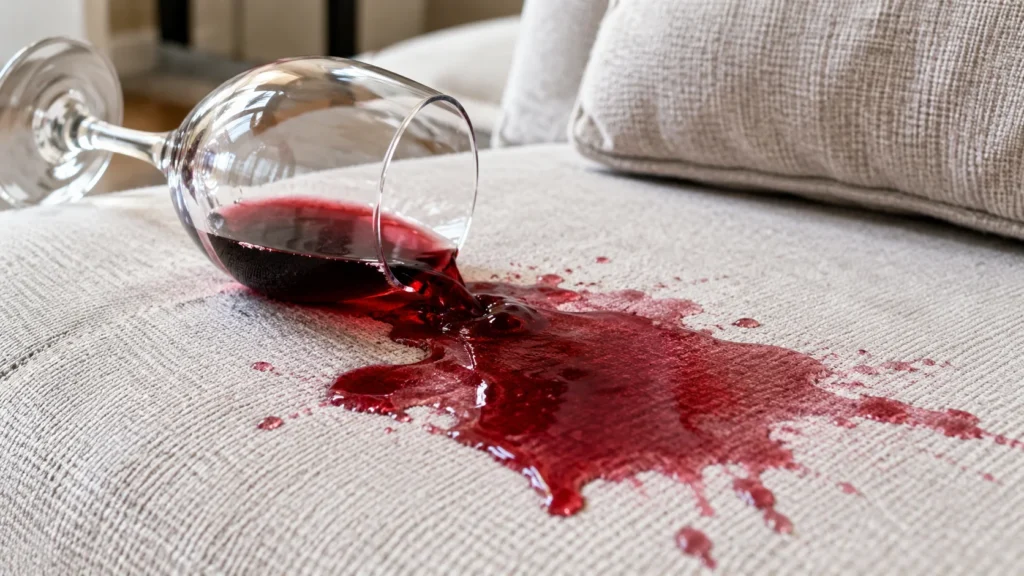
A red wine stain on a couch needs controlled moisture because upholstery can contain padding beneath the visible fabric. Excess water can therefore create problems beyond the original stain.
First blot the wine without rubbing. Then identify the upholstery care code or manufacturer’s cleaning instructions before choosing a treatment.
Apartment Therapy’s cleaning guidance similarly emphasizes blotting wine from upholstery and carpet rather than aggressively rubbing it.
Use only a small quantity of an appropriate cleaning solution and work gradually. Always test an inconspicuous area first, particularly when using vinegar, peroxide, alcohol, or commercial stain removers.
After treatment, blot with clean water if the product instructions call for rinsing and remove as much moisture as possible with dry towels.
Red Wine Stain Removal From Wool
Wool requires additional care because aggressive cleaning can affect the fiber, dye, texture, or finish. The Woolmark Company provides specific instructions for red wine and fruit stains on wool.
For wool, Woolmark recommends rinsing as much of the drink as possible with clean water and then using a dilute Woolmark-approved detergent solution in tepid water. If the stain persists, its guidance describes a mixture of three parts surgical spirit or rubbing alcohol to one part cold water, followed by gentle dabbing and blotting.
This is very different from simply pouring household peroxide or undiluted vinegar onto a wool sweater.
For expensive wool clothing, carefully follow the garment label and Woolmark or manufacturer-specific instructions. If the item is dry-clean-only, valuable, structured, or particularly delicate, professional cleaning may be the safer route.
Red Wine Stain Removal With Vinegar, Baking Soda, and Hydrogen Peroxide
Several household ingredients are frequently associated with red wine stain removal, but they do not all have the same purpose or risk level.
White Vinegar
Diluted white vinegar is included in some established stain-removal procedures. University of Georgia Extension provides a detergent-and-vinegar soak method for wine stains, while Kansas State University also lists vinegar as a possible step after detergent treatment.
Always test for colorfastness first.
Baking Soda
Baking soda is primarily useful as an absorbent or mild cleaning ingredient. It can be particularly convenient for fresh spills on some surfaces, but it should not be treated as a universal chemical solution for every red wine stain.
For carpet, Iowa State University Extension describes baking soda as one possible dry ingredient for absorbing a wine spill.
Hydrogen Peroxide
Hydrogen peroxide can lighten stubborn wine discoloration, particularly on suitable white or colorfast fabrics. However, it may alter dyes, so it should be tested before use.
Apartment Therapy’s recent test of a Martha Stewart-inspired process used hydrogen peroxide after earlier treatment steps and cautioned that stronger agents are better suited to white or very light fabrics.
Red Wine Stain Removal With White Wine and Club Soda
White wine and club soda are frequently mentioned as emergency treatments for red wine spills. They should not be treated as guaranteed stain erasers.
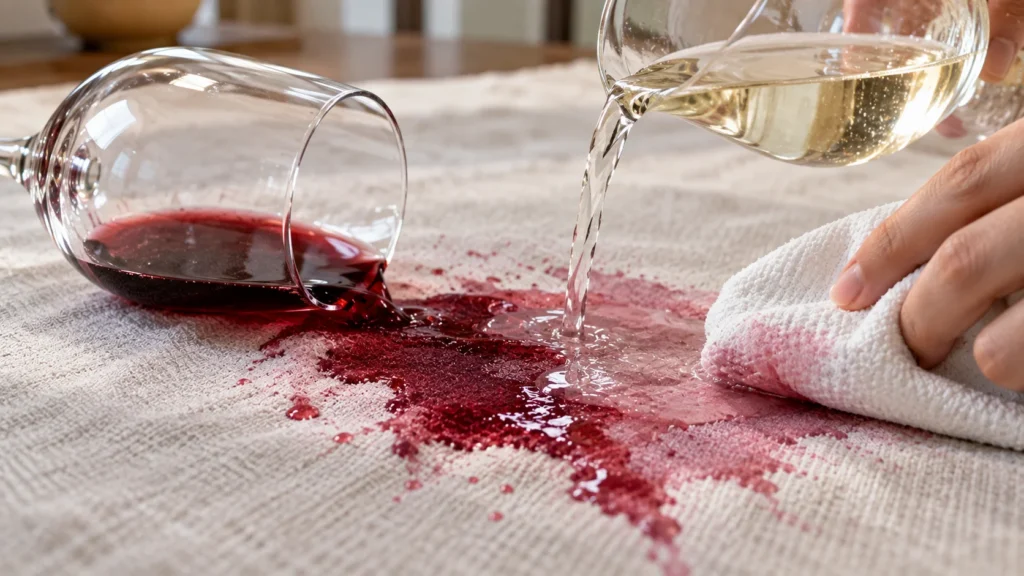
Apartment Therapy’s emergency-cleanup guidance lists club soda, cold water, or white wine as possible first responses for clothing, followed by blotting and further treatment.
Cold water is generally the simpler first response because it is widely compatible with washable fabrics. If white wine or club soda is already available, use a controlled amount and continue blotting rather than flooding the surface.
For carpet and upholstery, avoid excessive moisture regardless of which liquid you use.
Red Wine Stain Removal From Tablecloths and Cotton Fabric
Tablecloths often receive large wine spills because they are present during meals and celebrations. Cotton tablecloths are generally easier to treat than delicate fabrics, but the care label still matters.
Blot the spill first and rinse with cool water. Apply a suitable detergent or prewash treatment, then launder according to the manufacturer’s instructions.
Kansas State University specifically recommends cold-water blotting followed by dishwashing liquid and cool-water flushing for red wine on tablecloths, with additional vinegar or 3% hydrogen peroxide treatment when appropriate for the fabric and color.
For white cotton tablecloths, oxygen bleach can be useful when the product label says it is compatible with the material. Do not use chlorine bleach simply because the fabric is white; verify the care instructions first.
Red Wine Stain Removal From Dry-Clean-Only Clothing
Dry-clean-only garments should not automatically be treated like ordinary washable shirts. Home treatments can affect dyes, finishes, coatings, interfacing, and fabric structure.
Blot the spill immediately with a clean absorbent cloth and avoid rubbing. Do not apply a large amount of water unless the garment’s care instructions permit it.
For expensive suits, silk garments, structured dresses, formalwear, or sentimental pieces, take the garment to a professional cleaner as soon as practical. Tell the cleaner that the stain is red wine and explain any treatment you already attempted.
This information helps the cleaner choose an appropriate process and prevents accidental mixing of incompatible treatments.
Red Wine Stain Removal Mistakes to Avoid
The wrong technique can turn a manageable spill into a more difficult stain. One of the most common mistakes is aggressive rubbing, which can spread the liquid and damage fibers.
Another common problem is using too many remedies at once. Vinegar, peroxide, bleach, alcohol, detergents, and other chemicals have different properties, and combining cleaning chemicals without knowing their compatibility can be unsafe.
Never mix chlorine bleach with ammonia or other incompatible chemicals. ACI specifically warns that mixing chlorine bleach and ammonia can produce hazardous fumes.
Important Mistakes to Avoid
- Do not scrub a fresh red wine stain aggressively.
- Do not use a colored towel that could transfer dye.
- Do not automatically use hot water.
- Do not dry the garment while the stain remains.
- Do not iron over an untreated wine stain.
- Do not soak upholstery excessively.
- Do not apply peroxide to colored fabric without testing.
- Do not use chlorine bleach unless the care label permits it.
- Do not assume salt completely removes red wine.
- Do not assume club soda works on every surface.
- Do not use household remedies on expensive wool without checking care guidance.
- Do not combine multiple chemical cleaners.
- Do not skip a colorfastness test.
- Do not scrub carpet with a brush.
- Do not keep adding cleaner when the carpet is already saturated.
Red Wine Stain Removal Methods Compared
| Method | Best suited for | Main benefit | Important caution |
| Cool water | Fresh washable stains | Dilutes and flushes wine | Follow fabric-care instructions |
| Liquid laundry detergent | Washable clothing | Useful pretreatment | Test delicate or dyed materials |
| Commercial stain remover | Clothing and washable fabrics | Formulated for stain treatment | Follow label directions |
| Salt | Fresh spills | Can absorb liquid | Not a guaranteed remover |
| Club soda | Fresh clothing/carpet spills | Convenient emergency treatment | Avoid excessive saturation |
| White vinegar | Selected washable fabrics | Included in some established methods | Test colorfastness |
| Baking soda | Some fresh spills/carpet | Absorbent and mild | May not remove set stains alone |
| Hydrogen peroxide | Suitable white/light fabrics | Can lighten persistent discoloration | May affect dyes |
| Oxygen bleach | Compatible washable fabrics | Useful for stubborn discoloration | Check fabric compatibility |
| Professional cleaning | Delicate, valuable, or difficult items | Specialized treatment | More costly |
A Simple Red Wine Stain Removal Routine
For most washable clothing, the process can be simplified into a reliable sequence.
Step 1: Blot the spill immediately.
Step 2: Rinse or sponge with cool water.
Step 3: Apply an appropriate prewash stain remover or liquid detergent.
Step 4: Allow the treatment to work according to the product instructions.
Step 5: Wash according to the fabric care label.
Step 6: Inspect the garment while it is still wet.
Step 7: If the stain remains, repeat the treatment rather than drying the item.
Step 8: Use an oxygen-based or other stronger treatment only when it is safe for the fabric.
This approach follows the general stain-removal principles recommended by the American Cleaning Institute: treat early, pretreat, launder according to the fabric instructions, and keep the item out of the dryer until the stain has been removed.
When Professional Red Wine Stain Removal Makes Sense
Some stains are better handled professionally, especially when the material is expensive or unusually delicate.
Professional cleaning is worth considering for silk, tailored clothing, valuable wool, antique rugs, expensive upholstery, heirloom table linens, and fabrics with uncertain cleaning requirements.
It is also appropriate when several home treatments have already been attempted and the stain remains. Continuing to add stronger chemicals can increase the risk of discoloration or fiber damage.
For carpets, the Carpet and Rug Institute recommends appropriate carpet-cleaning products and careful pretesting, which is particularly relevant when the fiber or dye is unknown.
The key is to provide the professional cleaner with accurate information about what caused the stain and which products have already been used.
Final Tips for Successful Red Wine Stain Removal
Red wine stain removal works best when the response is quick and controlled. Fresh stains are generally easier to treat than dried or heat-set stains, so immediate blotting should always be the first priority.
Cool water is a useful starting point for many washable fabrics, while specialized surfaces require more careful treatment. Commercial stain removers, detergent, vinegar, salt, club soda, baking soda, peroxide, and oxygen bleach all have specific uses, but none should be considered universally safe for every material.
The most important habit is to check the stain before drying. If a shadow remains, repeat the appropriate treatment instead of applying heat. ACI specifically recommends avoiding the dryer until the stain has been removed.
For carpet and upholstery, blot instead of scrub. For wool and delicate fabrics, follow manufacturer or Woolmark guidance. For expensive or dry-clean-only items, professional treatment can reduce the risk of permanent damage.
Conclusion
Effective red wine stain removal starts with quick action and the right technique for the surface involved. Fresh spills on washable clothing can often be treated with blotting, cool water, pretreatment, and careful laundering. Dried red wine stains may require repeated treatment and greater patience, especially when they have already gone through a dryer.
For carpets and rugs, absorb as much liquid as possible and blot rather than scrub. Upholstery should be treated with limited moisture, while wool requires material-specific care. Popular remedies such as salt, club soda, vinegar, baking soda, and hydrogen peroxide can have useful applications, but their suitability depends on the fabric, color, stain age, and product instructions.
Above all, avoid aggressive rubbing, excessive moisture, incompatible chemicals, and unnecessary heat. Treat the stain early, test unfamiliar products, follow the care label, and repeat a safe treatment when necessary. These simple practices give you a much better chance of removing red wine discoloration without damaging the material underneath.
How quickly should red wine stains be treated?
Treat a red wine spill as soon as possible. Fresh stains generally respond more easily because the wine has had less time to dry and become established in the fibers.
Does salt remove red wine stains?
Salt can absorb some liquid from a fresh spill and is commonly recommended as an emergency treatment. It is not guaranteed to completely remove the stain, so the area should still receive appropriate cleaning afterward.
Does club soda remove red wine from carpet?
Club soda can help with some fresh spills when combined with careful blotting. Iowa State University Extension lists club soda as one possible treatment for red wine on carpet and upholstered furniture.
Does vinegar remove dried red wine stains?
Diluted white vinegar is included in some established wine-stain treatments, particularly for washable fabrics. It should be tested for colorfastness and used according to a reliable fabric-specific method.
Can hydrogen peroxide remove red wine stains?
Hydrogen peroxide can help lighten persistent red wine discoloration on some white or color-safe fabrics. It can also affect dyes, so testing an inconspicuous area first is important.
Does red wine come out of clothes after drying?
It can sometimes be removed, but dried or heat-treated stains are usually more difficult than fresh stains. Pretreatment, soaking, and repeated washing may be necessary, and the garment should not be dried again until the stain is gone.
Can red wine stains be removed from wool?
Yes, but wool requires gentler, fiber-specific treatment. Woolmark recommends a specific process involving clean water, dilute approved detergent, and, for persistent stains, a carefully diluted alcohol solution.
Can red wine stains be removed from carpet?
Fresh carpet stains can often be treated successfully by blotting the liquid, applying an appropriate carpet-cleaning product, and repeatedly blotting rather than scrubbing. The Carpet and Rug Institute recommends pretesting cleaning products and avoiding brushes or aggressive scrubbing.
Can baking soda remove red wine stains?
Baking soda can act as an absorbent for some fresh spills, particularly on carpet, but it should not be considered a complete solution for every red wine stain. More targeted treatment may be needed afterward.
Can red wine stains be removed from a white shirt?
White washable shirts generally provide more treatment options than colored garments. Cool-water rinsing, pretreatment, laundering, and a fabric-safe oxygen or bleaching product can be considered according to the care label.