
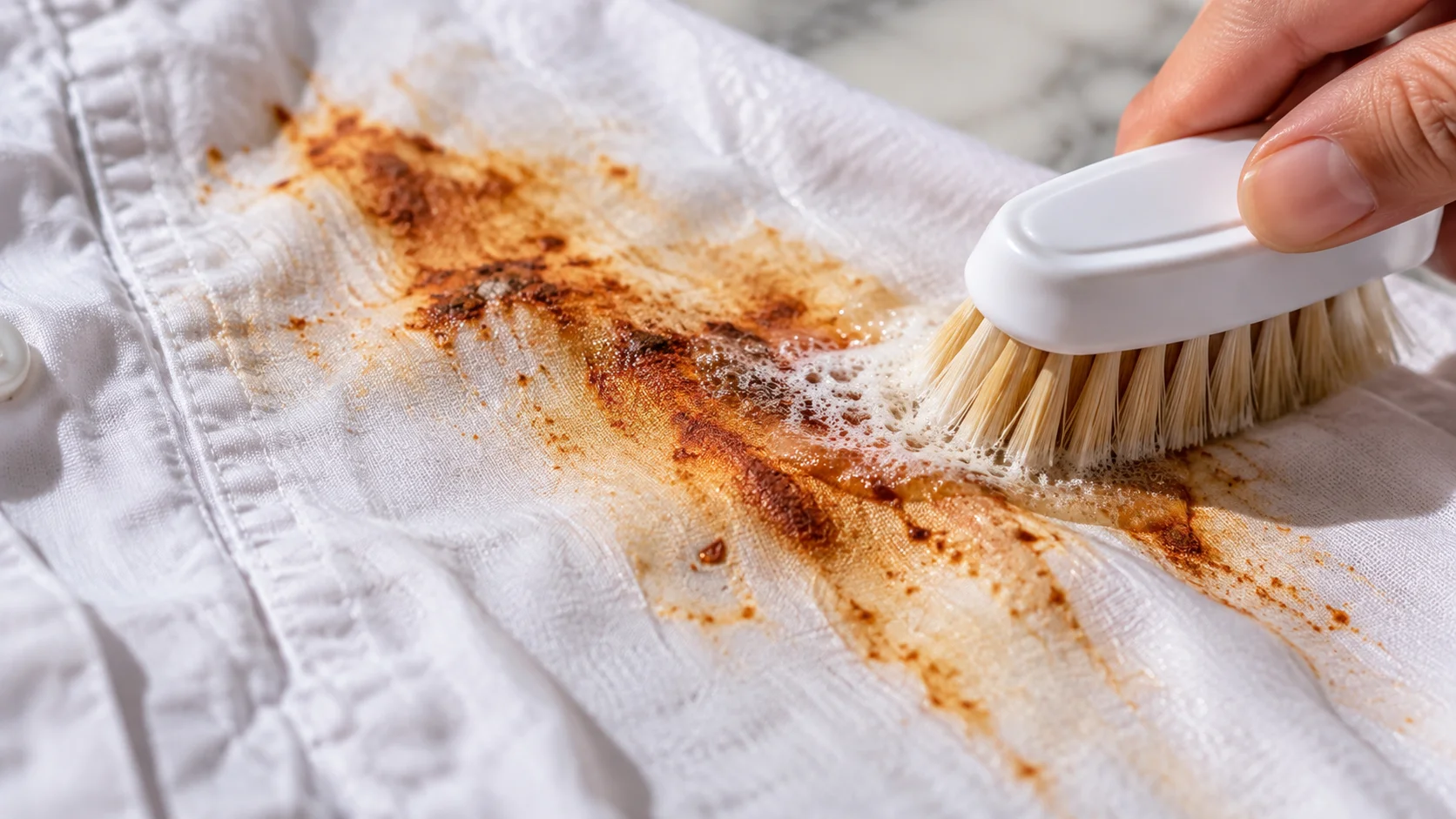
A rust stain remover is designed to break down or dissolve the reddish-brown discoloration caused by iron and rust deposits. Rust stains can appear on clothing, bathroom fixtures, concrete, tile, fiberglass, vinyl siding, cars, pools, outdoor furniture, and many other surfaces. The right treatment depends heavily on where the rust appears because a product suitable for white laundry may be inappropriate for marble, stainless steel, painted surfaces, or delicate fabric.
Rust is particularly troublesome because ordinary laundry detergent or general-purpose household cleaner may not remove the underlying iron discoloration effectively. Some specialized rust removers use acidic or other rust-reactive ingredients, while certain products are formulated specifically for laundry, toilets, concrete, or outdoor surfaces. For example, Rust-Oleum’s Whink Rust Stain Remover is specifically marketed for rust and iron stains on approved surfaces including white toilets, sinks, colorfast fabrics, and carpets.
This guide explains how to choose and use a rust stain remover, including popular options such as Whink rust stain remover, Iron Out rust stain remover, Iron Out spray, Star brite rust stain remover, Zep Calcium Lime & Rust Stain Remover, and specialty outdoor rust removers. It also covers rust stain removal from clothes, concrete, toilets, bathtubs, marble, cars, pools, and other surfaces.
Understanding Rust Stains and Rust Removers
Rust is associated with iron oxidation, and rust-colored deposits can form when iron-containing materials or water leave deposits on a surface. Well water and plumbing systems can be important sources of iron staining, especially around sinks, toilets, showers, exterior walls, concrete, and other areas exposed to water.
A rust stain remover works differently from an ordinary soap or detergent. Instead of simply lifting surface dirt, a dedicated rust product is formulated to react with the iron-based discoloration so it can be loosened and rinsed away. This is why a specialized rust treatment can work where normal household cleaning has little effect.
The correct product still matters. A manufacturer may approve one formulation for porcelain and fabric while warning against using it on other materials. Whink, for example, states that its traditional liquid rust stain remover is intended for approved surfaces and specifically warns against using it on surfaces such as bathtubs, countertops, stainless steel, and glass that are not listed in its directions.
Before choosing any rust stain remover, identify the surface, the stain source, and the product’s approved uses.
Choosing a Rust Stain Remover for Different Surfaces
There is no single rust stain remover that should automatically be used everywhere. Products are formulated for different jobs, and the same chemical treatment can produce very different results depending on the material.
For clothing, colorfastness and fabric care are major concerns. For toilets and porcelain, a product intended for bathroom fixtures is more appropriate. Concrete and outdoor surfaces often need a product designed for masonry or exterior applications.
Commercial options also differ in their application method. Some are liquids, some powders, some sprays, and some gels. Gel formulas can be useful on vertical surfaces because they remain in contact with the stain rather than immediately running downward.
15 Factors to Check Before Buying a Rust Stain Remover
- Surface compatibility should be the first consideration.
- Fabric compatibility matters when treating clothing.
- Colorfastness should be checked before treating dyed fabrics.
- Porcelain compatibility is important for toilet and sink stains.
- Concrete compatibility matters for driveways and patios.
- Marble compatibility requires extra caution because some rust removers can damage stone.
- Stainless-steel compatibility should be verified before application.
- Fiberglass compatibility is important for tubs, boats, and shower surfaces.
- Outdoor-use labeling is useful for siding, concrete, decks, and driveways.
- Gel formulas can be convenient on vertical surfaces.
- Spray formulas can provide targeted application.
- Powder formulas may be useful for certain laundry and water-system applications.
- Rinsing requirements should be checked before use.
- Ventilation requirements matter for stronger chemical products.
- Manufacturer directions should always take priority over generalized cleaning advice.
Whink Rust Stain Remover
Whink rust stain remover is one of the most recognizable products in this category. Rust-Oleum describes its liquid formula as a rust and iron stain remover for approved applications including white sinks, white toilets, colorfast fabrics, and carpets. The manufacturer says the product can be applied and then rinsed with cold water without scrubbing.
Whink also offers a Rust Stain Remover Foaming Spray. Rust-Oleum describes that formulation as suitable for a broader group of surfaces, including showers, sinks, bathtubs, porcelain, ceramic, plastic, vinyl, tile, concrete, colorfast fabric, carpet, glass, chrome, and stainless steel, when used according to its directions.
These two products should not automatically be treated as interchangeable. The approved surfaces and directions for the specific formulation should always be checked before application.
Whink Rust Stain Remover Safety and Use
The technical documentation for the traditional Whink liquid specifically says it is not a general-purpose rust remover and provides restrictions on surfaces. It also instructs users to wear heavy-duty household rubber gloves and not use the product with other household cleaners.
For clothing, the manufacturer’s documentation calls for testing colorfastness before use. This is especially important for dark, bright, or delicate fabrics.
For toilets and white sinks, the product is designed around the type of rust staining commonly caused by iron deposits. Follow the product label rather than improvising application times or mixing it with another cleaner.
Iron Out Rust Stain Remover
Iron Out rust stain remover is another widely recognized category of rust treatment. Current retail information for Super Iron Out describes applications involving rust stains on toilet bowls, toilet tanks, white clothing, sinks, tubs, tile, showers, appliances, concrete, and exterior walls.
Iron Out products are available in different forms, including powder and spray formulations. The product selected should match the intended task rather than simply being chosen because it has the same brand name.
The powder formulation is often associated with broader household and water-system applications, while spray versions are convenient for spot treatment.
Iron Out Rust Stain Remover Spray
The Iron Out rust stain remover spray is designed for easier targeted application than a large powder container. A current Home Depot listing describes Super Iron Out spray as helping remove rust stains from most surfaces and identifies it as a non-abrasive, non-hydrofluoric formulation.
Sprays can be particularly convenient for vertical bathroom areas, isolated stains, and smaller jobs. However, most surfaces should not be interpreted as every surface. Always check the product label for the specific material you intend to clean.
Star Brite Rust Stain Remover
Star brite rust stain remover is particularly relevant to outdoor, marine, RV, and exterior cleaning. The manufacturer’s current product page says its ready-to-use formula is designed for hard-water, well-water, and rust stains on surfaces such as concrete, painted surfaces, fiberglass, vinyl, wood, fences, driveways, siding, stucco, and brick.
The ready-to-use formulation is intended to be applied directly without dilution. Star brite recommends removing visible dirt first, applying the product, allowing it to work, and rinsing with fresh water. Surrounding plants should be rinsed before and after treatment.
Star brite also sells a gel formula designed to cling to vertical and horizontal surfaces. The gel is marketed for fiberglass, metal, painted surfaces, vinyl, fabric, and related applications, with testing recommended before use on fabric, vinyl, or bare paint.
Zep Calcium Lime and Rust Stain Remover
Zep Calcium Lime & Rust Stain Remover combines rust-stain treatment with calcium and lime deposit removal. Zep describes its concentrated formula as a professional-grade acidic cleaner intended for stubborn calcium, lime, and rust deposits. Its listed bathroom and kitchen applications include porcelain tubs, sinks, toilets, glass, and fiberglass.
This makes a calcium-lime-rust formulation particularly relevant when a bathroom surface has both mineral buildup and rust discoloration.
However, acidic cleaners require careful handling. Always follow the manufacturer’s dilution, surface restrictions, contact-time instructions, ventilation guidance, and protective-equipment recommendations.
Rust Stain Remover for Clothes
Rust stains on clothes require more care than stains on hard outdoor surfaces. Fabric dyes can be altered by strong chemicals, and chlorine bleach can make rust stains worse.
The University of Georgia Cooperative Extension specifically warns not to use chlorine bleach on rust stains because chlorine bleach can set them. It recommends checking the garment care label, pretesting treatment on a hidden area, and using an appropriate commercial rust remover according to the manufacturer’s directions.
For white laundry with widespread rusty discoloration, UGA also describes an oxygen-bleach soaking method for appropriate washable items.
Rust Stain Remover for Clothes Step by Step
- Check the garment’s care label.
- Identify whether the fabric is washable.
- Brush away loose surface material when appropriate.
- Test the rust-removal product on an inconspicuous area.
- Protect the surrounding work surface.
- Apply the fabric-approved rust remover.
- Follow the manufacturer’s specified contact time.
- Avoid mixing the product with other cleaners.
- Rinse the fabric thoroughly.
- Repeat only when the label permits it.
- Wash according to the garment-care instructions.
- Inspect the stain before drying.
- Repeat treatment if discoloration remains.
- Avoid chlorine bleach on rust stains.
- Seek professional cleaning for delicate or specialty garments.
Tide also emphasizes checking the care label and repeating stain treatment before drying if the rust remains.
Removing Rust Stains From White Clothes
White clothing can provide more treatment flexibility, but rust stains still require a rust-specific approach. The most important rule is to avoid chlorine bleach unless a qualified product and fabric-care instruction specifically permits it.
For washable white clothing, a suitable commercial rust remover can be used according to its directions. Oxygen bleach may also be appropriate for some washable white fabrics.
UGA recommends pretesting rust-removal products and notes that specialty fabrics such as washable silk and wool require separate treatment considerations.
After treatment, rinse thoroughly and inspect the garment before placing it in the dryer.
Concrete Rust Stain Remover
Rust stains on concrete commonly appear beneath metal furniture, near irrigation systems, around swimming pools, below rusty hardware, or where iron-rich water repeatedly contacts the surface.
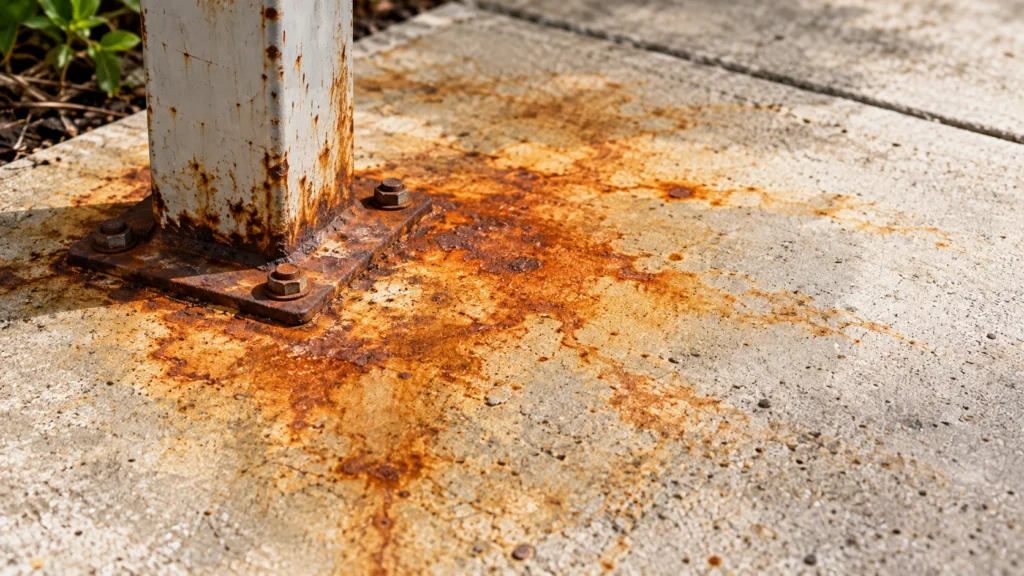
A concrete-safe rust stain remover can be more effective than ordinary soap because the discoloration is associated with iron rather than simple surface dirt.
Star brite’s ready-to-use rust stain remover is specifically marketed for concrete, driveways, sidewalks, brick, stucco, and other exterior surfaces.
Concrete Rust Stain Removal Process
- Remove leaves, dirt, and loose debris.
- Wet or prepare the surface according to the product label.
- Select a rust remover explicitly approved for concrete.
- Test a small hidden area first.
- Apply the product to the affected rust.
- Allow the recommended contact time.
- Do not allow the product to dry unless the label specifically says to.
- Lightly agitate only if the manufacturer recommends it.
- Rinse thoroughly.
- Inspect the treated area.
- Repeat the treatment if permitted.
- Protect nearby plants when using outdoor chemicals.
- Prevent runoff from entering sensitive areas.
- Wear the recommended gloves and eye protection.
- Investigate the source of recurring rust stains.
If rust keeps returning, cleaning the stain alone may not solve the underlying problem. Irrigation water, corroding metal, or iron-rich water can continue depositing new iron onto the concrete.
Toilet Bowl Rust Stain Remover
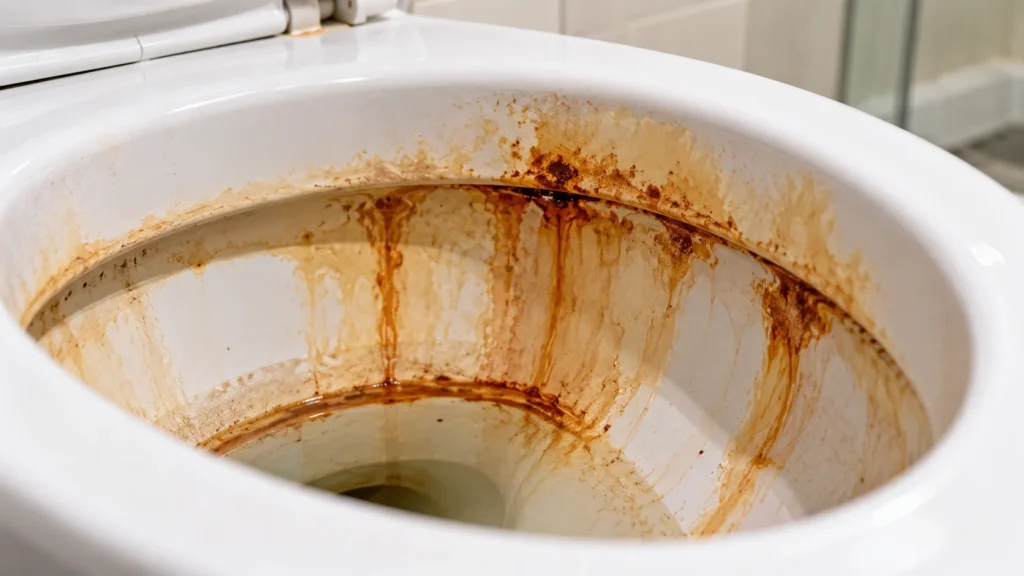
Toilet rust stains often appear as orange, reddish-brown, or brown rings and streaks. Iron in the water supply is a common source of this discoloration.
A toilet-specific rust stain remover can chemically target the deposits without requiring aggressive abrasive scrubbing. Whink specifically markets its rust stain remover for white toilets and sinks.
Iron Out is another product commonly marketed for toilet rust and iron staining. Current product information lists toilet bowls and tanks among its applications.
Toilet Rust Stain Removal Tips
- Choose a product specifically approved for toilets.
- Read the label before application.
- Do not mix rust remover with bleach.
- Do not mix different toilet cleaners.
- Wear protective gloves.
- Provide ventilation where required.
- Apply only the recommended amount.
- Observe the stated contact time.
- Use a compatible toilet brush only when recommended.
- Rinse or flush according to the instructions.
- Keep the product away from children.
- Store the container securely.
- Avoid splashing the cleaner.
- Do not use a product on an unapproved toilet finish.
- Investigate recurring iron deposits in the water.
Bathtub Rust Stain Remover
Bathtubs can be made from porcelain, fiberglass, acrylic, enamel, or other materials. Consequently, choosing a rust stain remover by the word bathtub alone is not enough.
The traditional Whink liquid rust stain remover, for example, has specific restrictions and should not be used on bathtubs according to its technical documentation.
Whink’s foaming spray, by contrast, specifically lists bathtubs among its intended applications.
This difference demonstrates why the exact product formulation matters. Always match the product label to the bathtub material before treating the stain.
Marble Rust Stain Remover
Marble requires considerably more caution than porcelain or concrete. Rust removal can affect the stone’s appearance or finish if the treatment is too aggressive or incompatible.
UGA’s stain-removal guidance notes that removing rust from marble may dull the surface and provides specialized treatment information involving mild cleaning, rust remover mixtures, and polishing afterward.
For valuable marble countertops, floors, vanities, or decorative stone, professional stone restoration can be preferable to experimenting with strong acids or rust-removal products.
Avoid assuming that a bathroom rust remover is automatically safe for marble simply because it works on porcelain.
Pool Rust Stain Remover
Rust-colored pool stains may originate from iron in the water rather than from a rusting pool surface. Iron can enter swimming pools through source water and later deposit on surfaces.
The correct treatment depends on the pool finish, stain source, water chemistry, and manufacturer’s recommendations.
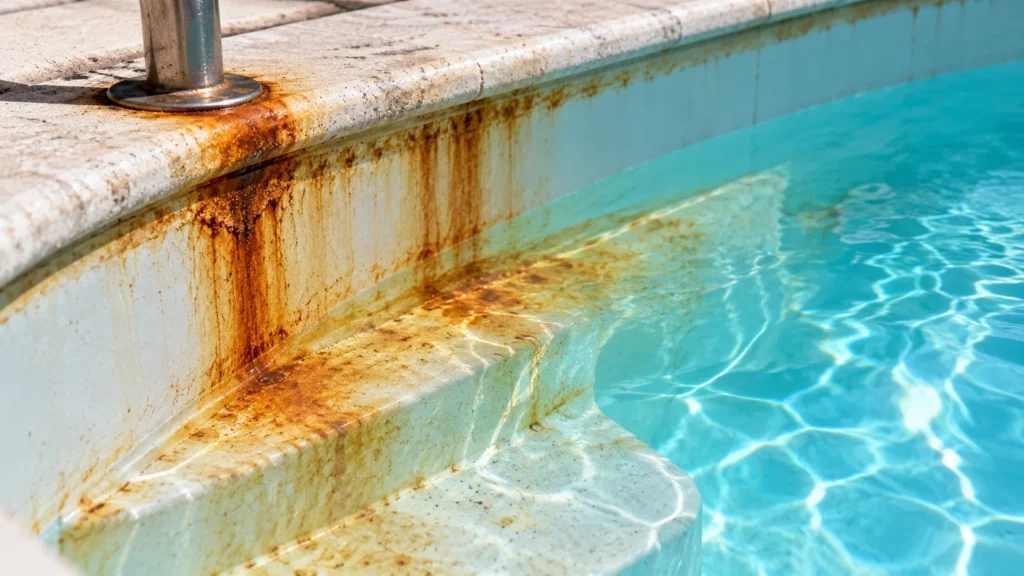
A product designed for concrete or exterior surfaces should not automatically be poured into pool water. Pool-specific treatment should follow pool-equipment and chemical manufacturer’s instructions.
When rust staining repeatedly returns, testing the water and identifying the iron source can be more useful than repeatedly treating the visible stain.
Rust Stain Remover for Cars
Rust-colored stains on vehicles can come from brake dust, environmental iron particles, corroded hardware, or actual corrosion. Not every orange or brown mark on automotive paint is identical.
Automotive and marine rust-removal products can be formulated for painted surfaces, fiberglass, metal, or vinyl. Star brite’s gel rust remover, for example, is marketed for boats, RVs, trailers, tools, outdoor furniture, and household surfaces, with specific material restrictions and pretesting guidance.
For automotive paint, always confirm that the product is approved for the specific finish. Aggressive rubbing can create scratches even when the chemical itself is compatible.
Rust Stain Remover for Outdoor Surfaces
Outdoor rust marks commonly appear on driveways, siding, brick, fences, patios, decks, walls, and concrete. Sprinklers and well water are frequent sources of recurring rust-colored deposits.
Star brite’s ready-to-use product specifically targets rust, well-water deposits, and hard-water staining on several exterior surfaces.
Booyah Clean also markets a rust stain remover for surfaces including metal, fiberglass, vinyl, and painted surfaces. Its manufacturer describes the product as non-acid, non-fuming, and non-corrosive, with a 2–5 minute wet contact period before rinsing.
Product claims vary by formulation, so always rely on the current label for the surface being treated.
Rust Stain Remover for Stainless Steel
Stainless steel needs special attention because an unsuitable cleaner can affect the finish or create additional surface problems.
Do not assume that every rust remover is suitable for stainless steel. The traditional Whink liquid formulation specifically excludes stainless steel from its approved uses.
Use a product specifically labeled for stainless steel when treating rust or iron staining. Apply it gently and avoid abrasive scrubbing that can leave visible marks.
For appliances and kitchen fixtures, the manufacturer’s cleaning instructions should take priority.
Rust Stain Remover for Glass and Tile
Rust stains on glass and tile can originate from iron-containing water, metal fixtures, plumbing, or runoff. The appropriate product depends on the material and finish.
Zep’s Calcium, Lime & Rust Stain Remover is marketed for applications including glass, tile, porcelain, and fiberglass.
Whink’s foaming rust remover also lists glass and tile among its approved applications.
Always distinguish between glass, ceramic tile, natural stone, and specialty glass surfaces, because their resistance to chemical cleaners can differ substantially.
Natural Rust Removal Methods
Home remedies are often suggested for rust stains, particularly on fabric. Lemon juice and salt are among the traditional approaches, but they are not appropriate for every surface.
UGA lists salt and lemon juice as one possible method for rust on certain apparel and fabrics, followed by thorough rinsing and repetition if needed.
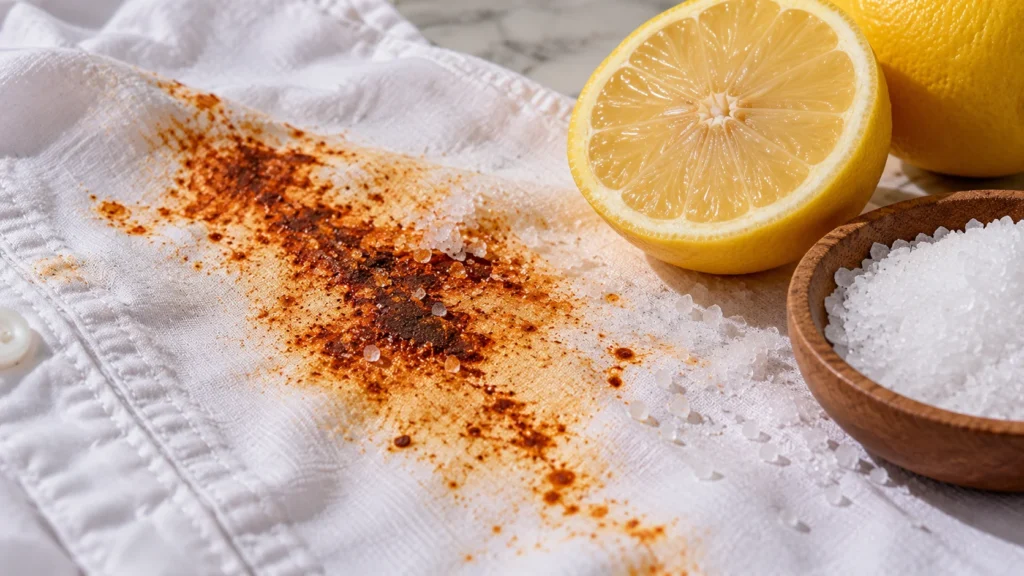
The important point is that a natural ingredient is not automatically safer for every material. Lemon juice is acidic, and prolonged exposure can affect some dyes or surfaces.
For an expensive garment or delicate material, a tested commercial product or professional cleaner may provide more predictable results.
Rust Stain Remover Safety Guidelines
Rust removers can contain reactive chemicals, so safe handling is an essential part of stain removal. UGA advises users to read care labels, pretest cleaning agents, use caution with commercial products, and provide adequate ventilation when using caustic or strong cleaning solutions.
Product-specific warnings are equally important. Whink’s technical documentation, for example, warns users not to use the product with other household cleaners and identifies surfaces on which the traditional liquid formulation should not be used.
Jump into Other Related Article
- How to Clean Stainless Steel Sink | Stains, Hard Water, Rust & Scratches
- How to Remove Coffee Stains | Easy Methods for Clothes, Teeth, Carpet & More
- How to Remove Stains from Carpet | Complete Guide for Coffee, Pet, Wine, Urine & More
Essential Rust Remover Safety Rules
- Read the complete product label before use.
- Follow the manufacturer’s contact time.
- Wear protective gloves when required.
- Wear eye protection when the label recommends it.
- Provide adequate ventilation.
- Never mix cleaners unless the manufacturer explicitly permits it.
- Keep rust removers away from children.
- Keep products away from food and cooking surfaces.
- Test on an inconspicuous area first.
- Protect nearby surfaces from accidental splashes.
- Follow fabric-care labels for clothing.
- Rinse treated surfaces thoroughly when directed.
- Store products in their original containers.
- Dispose of leftover chemicals according to label instructions.
- Seek professional help for high-value or highly sensitive surfaces.
Rust Stain Remover Methods Compared
| Rust Remover Type | Common Uses | Main Advantage | Important Consideration |
| Whink liquid | White toilets, sinks, colorfast fabrics, carpets | Targeted rust treatment | Strict surface restrictions |
| Whink foaming spray | Tubs, showers, tile, concrete, vinyl, fabric, carpet | Clings to surfaces | Follow approved-surface list |
| Iron Out powder | Laundry, toilets, sinks, concrete, water systems | Broad rust-treatment applications | Follow product-specific directions |
| Iron Out spray | Spot treatment | Convenient application | Verify surface compatibility |
| Star brite liquid | Concrete, siding, brick, fiberglass, outdoor areas | Ready-to-use exterior treatment | Protect nearby plants |
| Star brite gel | Vertical and marine surfaces | Clinging formula | Test fabric/vinyl/paint |
| Zep Calcium Lime & Rust | Bathrooms and mineral deposits | Addresses rust plus lime/calcium | Acidic formulation requires care |
| Booyah Clean | Metal, fiberglass, vinyl, painted surfaces | Non-acid formulation | Test before broad application |
| Fabric-specific remover | Clothes | Designed around textile use | Check colorfastness |
| Professional treatment | Marble, valuable fabrics, specialty surfaces | Material-specific expertise | Higher cost |
Preventing Rust Stains From Returning
Removing a rust stain solves the visible problem, but preventing the source from returning is even more useful.
Recurring bathroom rust can be connected to iron-containing water or corroding plumbing. Outdoor rust stains may come from sprinkler systems, well water, rusty metal furniture, irrigation runoff, or deteriorating hardware.
If rust repeatedly appears on laundry, investigate metal components that contact clothing or water containing iron. If rust continually appears on a driveway beneath sprinklers, inspect the irrigation water and metal fixtures.
Practical Prevention Measures
- Inspect rusty plumbing components.
- Check well water for iron when appropriate.
- Keep metal furniture away from constantly wet surfaces.
- Repair leaking outdoor fixtures.
- Prevent sprinkler water from repeatedly hitting concrete.
- Keep exterior metal hardware maintained.
- Dry metal surfaces when practical.
- Use compatible protective coatings on exposed metal.
- Clean iron deposits before they become heavy.
- Follow appliance maintenance instructions.
- Check washing-machine components for rust.
- Avoid leaving wet metal objects on fabric.
- Use appropriate water-treatment equipment when needed.
- Maintain pool water according to manufacturer guidance.
- Address the source instead of repeatedly treating the stain.
Common Rust Stain Remover Mistakes
A strong rust remover is not automatically a better rust remover. Using an overly aggressive product on the wrong surface can create discoloration, dulling, finish damage, or other problems.
One of the most important mistakes to avoid is using chlorine bleach on rust-stained clothing. UGA specifically states that chlorine bleach can set rust stains.
Another mistake is ignoring the distinction between product formulations. The fact that a brand makes one rust remover for toilets does not mean another product from the same brand is safe for every bathroom surface.
Mistakes That Can Make Rust Stains Worse
- Using chlorine bleach on rust-stained clothing.
- Applying a bathroom cleaner to marble.
- Using a product without checking surface compatibility.
- Skipping the colorfastness test.
- Leaving chemicals on longer than directed.
- Mixing rust remover with another cleaner.
- Using abrasive tools on delicate finishes.
- Scrubbing painted surfaces aggressively.
- Ignoring ventilation requirements.
- Applying too much product.
- Allowing a product to dry when the label says to rinse.
- Using fabric products on unapproved textiles.
- Assuming natural remedies are universally safe.
- Ignoring recurring sources of iron staining.
- Failing to rinse treated areas properly.
How to Select the Right Rust Stain Remover
The most useful way to choose a rust stain remover is to begin with the surface, not the brand.
For washable clothing, select a product explicitly approved for fabric and test for colorfastness. For white toilets, a toilet-approved rust product such as the appropriate Whink or Iron Out formulation may be suitable. For outdoor concrete and siding, look for an exterior rust remover designed for masonry or exterior surfaces.
For marine and RV applications, Star brite offers formulations specifically aimed at fiberglass, painted surfaces, vinyl, metal, and outdoor equipment.
For bathrooms with rust combined with mineral deposits, a calcium-lime-rust formulation such as Zep may address multiple types of buildup.
The product label remains the final authority because formulations and approved uses can change.
Conclusion
A rust stain remover can be an effective way to eliminate stubborn reddish-brown iron stains, but the best method depends on the surface being treated. Clothes, toilets, concrete, marble, stainless steel, bathtubs, cars, pools, carpet, and outdoor surfaces all require different levels of care.
For clothing, avoid chlorine bleach and use a fabric-approved rust treatment after checking the care label and testing colorfastness. For toilets and bathroom fixtures, choose a formulation specifically approved for the surface. For concrete and outdoor areas, products such as Star brite are designed for exterior rust and well-water stains, while specialized products such as Zep target rust alongside calcium and lime deposits.
Popular products such as Whink rust stain remover, Iron Out rust stain remover, Iron Out spray, Star brite rust stain remover, Zep Calcium Lime & Rust Stain Remover, and Booyah Clean serve different purposes. The safest choice is therefore the one whose current label specifically identifies your surface and stain type.
Always test unfamiliar products, use appropriate protective equipment, provide ventilation when required, and never mix cleaning chemicals unless the manufacturer explicitly says it is safe. For valuable marble, delicate fabrics, specialty finishes, or severe recurring staining, professional treatment can help prevent permanent damage.
What is a rust stain remover?
A rust stain remover is a cleaning product formulated to treat iron and rust discoloration. Depending on the formulation, it may be designed for fabrics, toilets, concrete, tile, fiberglass, outdoor surfaces, or other specific materials.
What is the best rust stain remover for clothes?
A fabric-approved rust remover is generally more appropriate than a general-purpose bathroom or concrete product. Always check the garment’s care label and test colorfastness before treatment.
Can Whink rust stain remover be used on clothes?
The traditional Whink Rust Stain Remover is marketed for approved colorfast fabrics, and the manufacturer recommends testing colorfastness before use. Its technical documentation also specifies surfaces where it should not be used.
Can Iron Out rust stain remover be used on white clothes?
Current product information lists white clothing among the applications for Super Iron Out. The garment-care instructions and specific product label should still be followed before treating clothing.
Does rust stain remover work on concrete?
Yes, some rust removers are specifically formulated for concrete and exterior masonry. Star brite, for example, lists concrete, driveways, sidewalks, brick, and other exterior surfaces among the intended applications of its ready-to-use rust stain remover.
What removes rust stains from toilets?
A toilet-approved rust stain remover can dissolve iron and rust deposits. Whink and Iron Out both have formulations marketed for toilet rust staining, but the exact product instructions should be followed.
Can chlorine bleach remove rust stains?
Chlorine bleach should not be used on rust-stained clothing because UGA warns that it can set rust stains.
Can rust stain remover damage marble?
Yes. Some rust-removal treatments can dull or otherwise affect marble. UGA specifically notes that rust-stain removal on marble may dull the surface, so stone-specific treatment and professional care may be appropriate.
Can rust stain remover be used on stainless steel?
Only when the specific product is approved for stainless steel. Some rust removers specifically exclude stainless steel from their approved uses, so the product label must be checked first.
Does Star brite rust stain remover work on outdoor surfaces?
Star brite’s ready-to-use rust stain remover is designed for outdoor applications including concrete, siding, brick, stucco, fences, driveways, fiberglass, vinyl, wood, and painted surfaces.
Can Zep Calcium Lime and Rust Stain Remover remove rust?
Zep states that its Calcium, Lime & Rust Stain Remover is formulated to break down stubborn rust, calcium, and lime deposits and lists applications including porcelain, glass, tile, fiberglass, sinks, tubs, and toilets.
Should rust stain remover be tested before full application?
Yes. Testing an inconspicuous area is particularly important for colored fabric, vinyl, painted surfaces, and other materials where discoloration could occur. Both UGA and several product manufacturers emphasize testing or checking compatibility before broader treatment.