
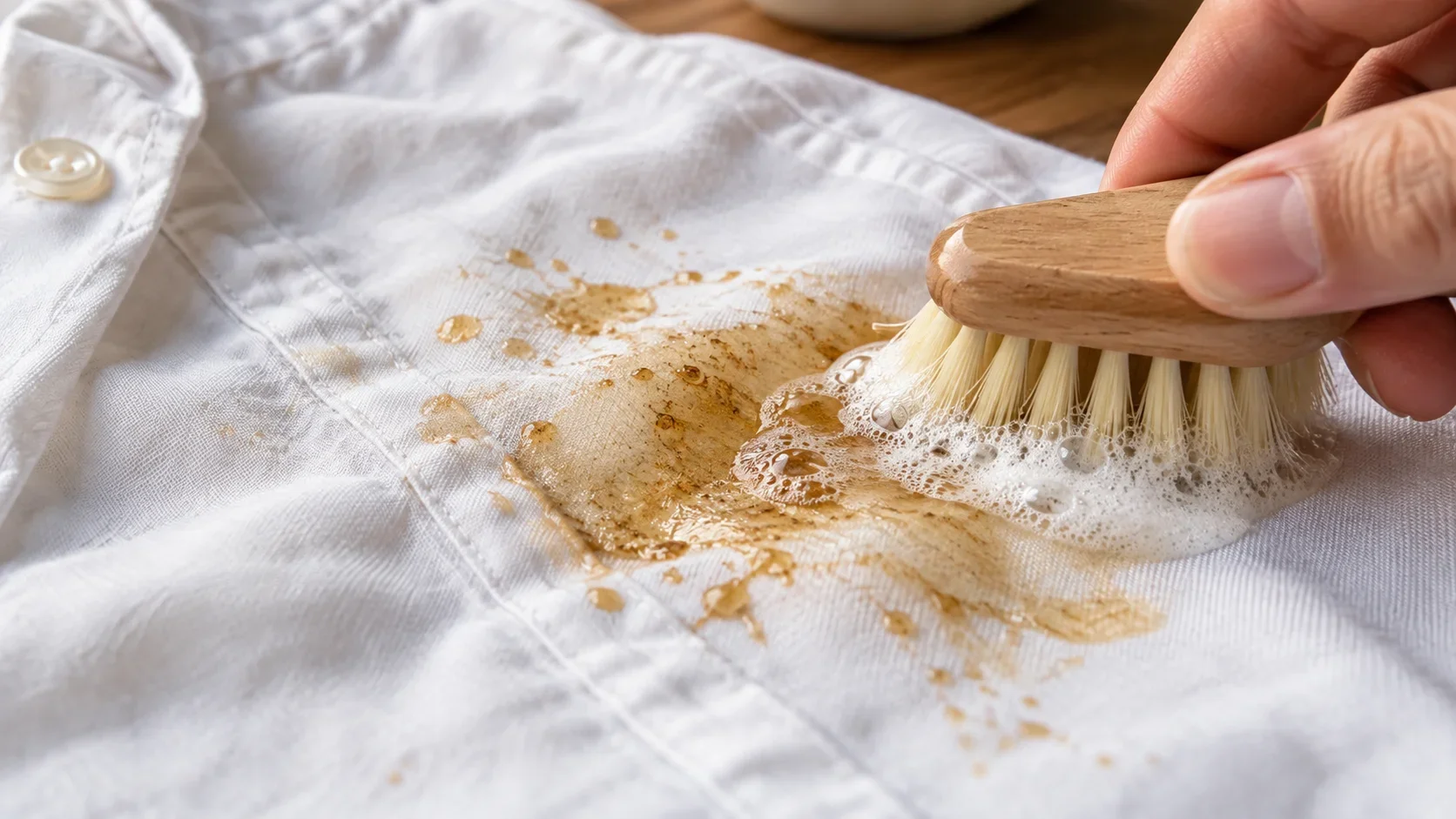
Knowing how to remove grease stains starts with understanding that grease behaves differently from water-based spills. Grease and oil are hydrophobic, meaning they do not mix easily with water and can cling to fabric fibers and other porous surfaces. This is why an ordinary wash may leave behind a dark or translucent ring even when the clothing appears clean. The sooner a fresh grease stain is treated, the better the chance of removing it before it becomes deeply embedded.
For clothing, the most useful approach is generally to remove excess grease, apply a suitable pretreatment, allow it to work, wash using the warmest temperature permitted by the care label, and inspect the stain before drying. Heat from a dryer can set a remaining grease mark, while Maytag also warns that clothing that has had grease or oil on it should not be machine-dried because residual grease can present a fire risk.
Grease stains can also appear on concrete, pavers, walls, carpets, upholstery, wood, leather, suede, granite, stainless steel, car seats, and kitchen surfaces. Each material requires a different strategy because an aggressive cleaner that works on concrete may damage leather, wood finish, upholstery, or a coated countertop. This guide covers the major grease-removal situations represented by the keyword set, while keeping the treatment method appropriate to each surface.
Why Grease Stains Are Difficult to Remove
Grease is difficult to remove because it is oil-based and does not dissolve readily in water. Instead of simply rinsing away, grease can cling to textile fibers or penetrate porous materials. Washing alone may therefore reduce the visible stain without completely removing the oily residue. OxiClean explains that detergents and stain-treatment products work through surfactants that help capture and remove oily soils during washing.
The age of the stain also matters. A fresh grease spot has not had as much time to penetrate the material, while an old or dried stain may require repeated pretreatment. Fabric composition matters as well because cotton, polyester, wool, leather, suede, and synthetic materials respond differently to water, detergents, solvents, and heat.
15 Factors That Affect Grease Stain Removal
- Age of the grease stain.
- Amount of grease present.
- Type of grease or oil.
- Fabric or surface material.
- Color of the material.
- Whether the stain has already been washed.
- Whether the garment has been machine dried.
- Porosity of the surface.
- Type of detergent used.
- Water temperature.
- Cleaning-product concentration.
- Amount of mechanical agitation.
- Whether the stain has spread.
- Existing coatings or finishes.
- Whether the material is washable or dry-clean-only.
Because these variables differ so much, a method that works for a cotton shirt should not automatically be transferred to a leather shoe, suede item, granite countertop, or finished wooden cabinet.
How to Remove Grease Stains From Clothes
The most common search behind how to remove grease stains from clothes involves cooking oil, butter, bacon grease, pizza grease, food grease, automotive grease, or other oily substances. The first step is to remove excess grease without spreading it further. Maytag recommends scraping excess material with a dull utensil and gently blotting with a clean white paper towel or cloth.
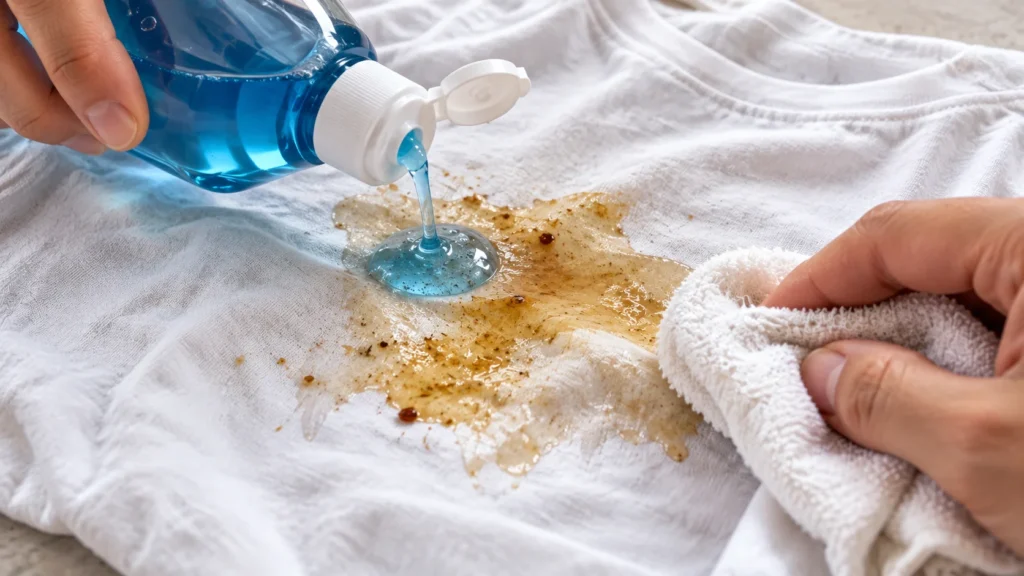
After excess grease has been removed, pretreatment becomes the key step. Liquid laundry detergent, an appropriate stain pretreatment, or mild dishwashing liquid can help break up the oily residue. Maytag recommends allowing a pretreatment to sit for around 10 minutes before washing cotton and synthetic garments, while Tide recommends applying liquid detergent directly to the grease stain before laundering.
15-Step Clothing Grease Removal Method
- Check the garment’s care label.
- Remove solid food or grease with a dull knife or spoon.
- Blot excess oil with a clean white paper towel.
- Avoid aggressively rubbing the stain.
- Place an old towel or cardboard behind the stained area if needed.
- Apply liquid laundry detergent or an appropriate pretreatment.
- Gently work the product into the stain.
- Allow the pretreatment to sit according to its instructions.
- Rinse or wash according to the garment’s care label.
- Select the warmest safe water temperature.
- Use the recommended amount of laundry detergent.
- Inspect the garment immediately after washing.
- Repeat treatment if the grease remains.
- Air-dry or line-dry the garment while checking the stain.
- Do not put a remaining grease stain into a hot dryer.
The American Cleaning Institute similarly recommends pretreating light grease and oil stains with a prewash stain remover or liquid laundry detergent and laundering in the hottest water safe for the fabric.
How to Remove Grease Stains From Clothing After Drying
How to remove grease stains from clothes after drying is more difficult because heat can make a remaining stain harder to remove. However, a dried grease stain is not necessarily permanent. OxiClean states that grease and oil stains can sometimes still be treated after a complete wash-and-dry cycle, although set-in stains generally require more pretreatment.
Start by identifying the fabric and checking its care label. Apply a suitable grease pretreatment directly to the affected area and allow it to remain for the time specified by the product. For particularly stubborn stains, a longer treatment or soaking period may be appropriate when the product and fabric allow it.
15 Steps for Old or Set-In Grease Stains
- Read the care label first.
- Brush away loose surface debris.
- Do not immediately apply high heat again.
- Apply a suitable liquid detergent or stain treatment.
- Cover the entire stained area.
- Gently work the treatment into the fibers.
- Allow sufficient dwell time.
- Soak the garment if the fabric permits.
- Use warm or hot water only when the care label allows it.
- Wash with an appropriate detergent.
- Inspect the garment while it is still wet.
- Repeat pretreatment if necessary.
- Avoid chlorine bleach unless the garment and product instructions permit it.
- Air-dry while the stain is being evaluated.
- Consider professional cleaning for delicate or valuable garments.
Maytag recommends pretreating old grease stains, soaking in warm or hot water for at least 30 minutes when permitted, washing at the warmest safe temperature, and line-drying rather than machine-drying.
How to Remove Grease Stains From Jeans
Jeans are commonly exposed to cooking grease, automotive grease, food oils, and other oily substances. Denim is generally more durable than delicate fabrics, but its dye and finish can still react to aggressive cleaning products. The safest approach is to begin with a mild pretreatment and increase treatment only if necessary.
Blot fresh grease rather than rubbing it outward. Apply liquid laundry detergent or a suitable grease pretreatment and allow it to work before washing. The garment’s care label should determine the maximum water temperature.
Jump into Other Related Article
- How to Clean Stainless Steel Sink | Stains, Hard Water, Rust & Scratches
- How to Remove Coffee Stains | Easy Methods for Clothes, Teeth, Carpet & More
- How to Remove Coffee Stain from Carpet | Fresh, Dried, Old & Wool Carpet
15 Grease Removal Tips for Jeans
- Scrape away excess grease.
- Blot fresh spots.
- Use liquid detergent as a pretreatment.
- Work from the outside toward the center.
- Avoid unnecessary spreading.
- Allow pretreatment time.
- Wash according to the care label.
- Use the warmest safe water.
- Inspect before drying.
- Repeat if a shadow remains.
- Avoid unnecessary bleach.
- Test specialty products first.
- Keep dark denim away from harsh treatments.
- Air-dry while the stain is still present.
- Use professional cleaning for valuable specialty denim.
How to Remove Pizza, Bacon, Food, and Cooking Grease Stains
Food-related grease stains are among the most common clothing stains. Pizza, fried foods, bacon, butter, salad dressing, gravy, and cooking oil can all leave oil-rich marks. Maytag treats cooking grease and food-related oily stains similarly to other grease and oil stains: remove excess material, pretreat, wash appropriately, and avoid drying until the stain is gone.
For a fresh pizza grease stain, gently scrape away any food particles before treating the oily section. Liquid detergent or a suitable grease stain pretreatment can then be applied. Avoid scrubbing aggressively because spreading a small greasy spot into a larger area makes subsequent removal more difficult.
How to Remove Grease Stains From White Clothes
Grease stains can be particularly noticeable on white clothing because the oily area may appear gray, yellow, or translucent. Begin with the same grease-removal process rather than immediately reaching for strong bleach. Pretreatment and appropriate washing are usually more important than trying to whiten the stain before the grease itself has been removed.
OxiClean recommends its white-fabric treatment according to product directions and the garment’s care label, including soaking certain washable whites before laundering.
15 Tips for White Clothing
- Treat the stain promptly.
- Blot excess grease.
- Scrape solid residue first.
- Apply liquid detergent.
- Let the treatment work.
- Wash at the hottest safe temperature.
- Inspect before drying.
- Repeat if needed.
- Use a compatible oxygen-based product if appropriate.
- Follow the product’s dilution instructions.
- Avoid mixing stain removers.
- Check for remaining yellow or gray residue.
- Air-dry while troubleshooting.
- Do not assume chlorine bleach will remove grease.
- Follow the garment’s care label throughout.
How to Remove Grease Stains From Polyester and Synthetic Fabric
Polyester and other synthetic fabrics can retain oily substances because of the interaction between the fiber and oil-based soils. Pretreatment is therefore particularly important when dealing with greasy marks. Maytag recommends pretreating cotton and synthetics with liquid dish soap when handwashing, an appropriate stain pretreatment, or liquid enzyme detergent, followed by washing at the warmest temperature allowed by the care label.
Do not assume that synthetic fabric can tolerate every solvent or high-temperature treatment. Test unfamiliar products on an inconspicuous area when the manufacturer allows it, and avoid drying the garment until you know the grease has been removed.
How to Remove Grease Stains From Fabric, Upholstery, and Couches
Grease stains on upholstery require more caution because the material underneath the visible fabric may include foam, padding, backing, or adhesives. Excess moisture can create additional problems such as water rings or damage to the upholstery backing. OxiClean recommends using its upholstery solutions only on water-washable upholstery, testing first, applying the solution to a clean white towel rather than directly flooding the fabric, and blotting rather than oversaturating.
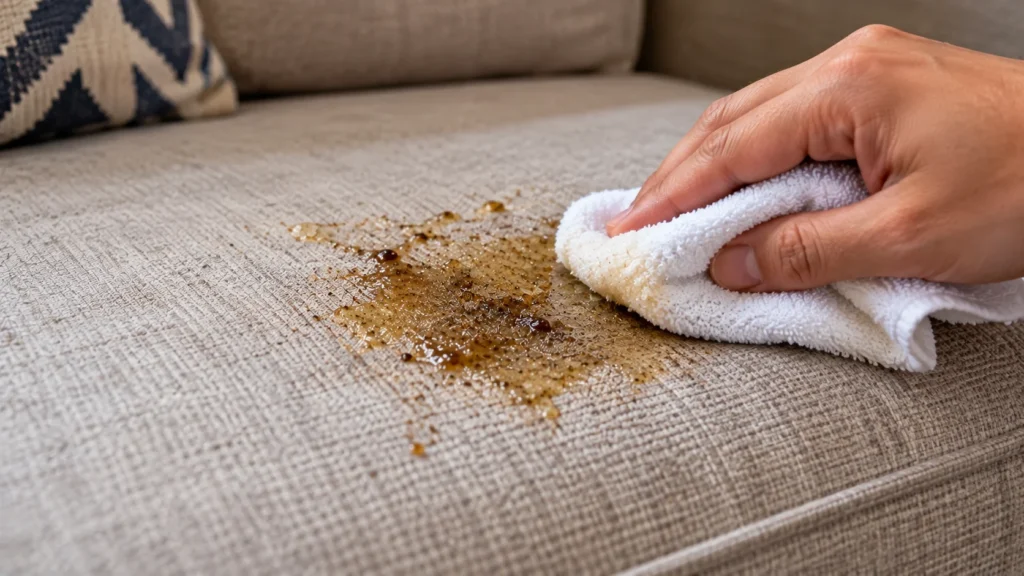
For a grease stain on a couch, first check the manufacturer’s cleaning code. Water-washable upholstery can sometimes be spot-treated, while solvent-cleaning or dry-clean-only materials may require a professional. Never assume that a clothing stain-removal recipe is safe for furniture.
15 Upholstery Grease-Stain Rules
- Check the upholstery cleaning code.
- Remove excess grease first.
- Blot instead of rubbing.
- Use a clean white cloth.
- Test the product in a hidden location.
- Avoid flooding the fabric.
- Apply solution to the cloth when instructed.
- Work from the outside inward.
- Blot repeatedly.
- Rinse according to the product directions.
- Avoid excessive moisture.
- Allow the upholstery to dry completely.
- Check for remaining oil rings.
- Repeat only when appropriate.
- Seek professional service for delicate upholstery.
UGA’s textile guidance also warns that solvents can damage carpet backing and upholstery foam if the material becomes excessively wet.
How to Remove Grease Stains From Carpet
Carpet grease stains require quick action because oil can move below the surface into the backing. Begin by blotting or absorbing as much grease as possible without rubbing. For certain carpets, professional or manufacturer-approved cleaning solutions may be necessary.
UGA recommends blotting rather than rubbing and, for some carpet types, applying a commercial dry-cleaning solvent to a cloth rather than directly onto the carpet. It also warns against overwetting because solvents and excess moisture can damage carpet backing.
15 Carpet Grease Removal Steps
- Remove solid grease carefully.
- Blot the affected area.
- Do not rub aggressively.
- Use absorbent material where appropriate.
- Identify the carpet fiber.
- Check the manufacturer’s care instructions.
- Test a cleaning product first.
- Apply approved solvent to a cloth when directed.
- Blot the stained area.
- Avoid pouring cleaner directly onto carpet.
- Use minimal moisture.
- Blot instead of scrubbing.
- Rinse according to product instructions.
- Allow the carpet to dry fully.
- Call a professional if the stain remains.
How to Remove Grease Stains From Concrete Floors and Pavers
Concrete and pavers are porous, so grease can penetrate below the surface rather than remaining only on top. This is why an old automotive or cooking-oil stain may remain visible after ordinary washing. The first objective is to absorb free-standing grease before applying a cleaning solution.
UGA’s stain-removal guidance recommends absorbent materials such as cornmeal, sand, sawdust, or Fuller’s Earth for fresh oily stains on brick, concrete, stone, and masonry. For remaining stains, it describes detergent-and-hot-water cleaning and other stronger treatments, while emphasizing appropriate precautions with commercial products and solvents.
15 Concrete and Paver Grease Removal Steps
- Remove standing grease.
- Do not spread the oil with a wet rag.
- Cover fresh grease with an absorbent material.
- Allow the absorbent material time to work.
- Sweep or vacuum it away.
- Apply an appropriate detergent solution.
- Scrub with a stiff brush.
- Rinse thoroughly.
- Allow the surface to dry.
- Inspect the remaining stain.
- Repeat when appropriate.
- Use a dedicated concrete degreaser for stubborn marks.
- Follow product instructions carefully.
- Provide ventilation for solvent-based products.
- Avoid flames and ignition sources around flammable solvents.
For heavily penetrated concrete stains, stronger treatments may be necessary, but chemical products should be selected for the specific surface and used according to their labels.
How to Remove Grease Stains From Walls and Ceilings
Kitchen walls and ceilings can accumulate grease gradually, particularly around cooking areas. Painted surfaces require a gentle approach because excessive scrubbing can remove paint or leave a shiny patch. The first step is to determine whether the wall covering is washable, painted, wallpapered, vinyl-coated, or another material.
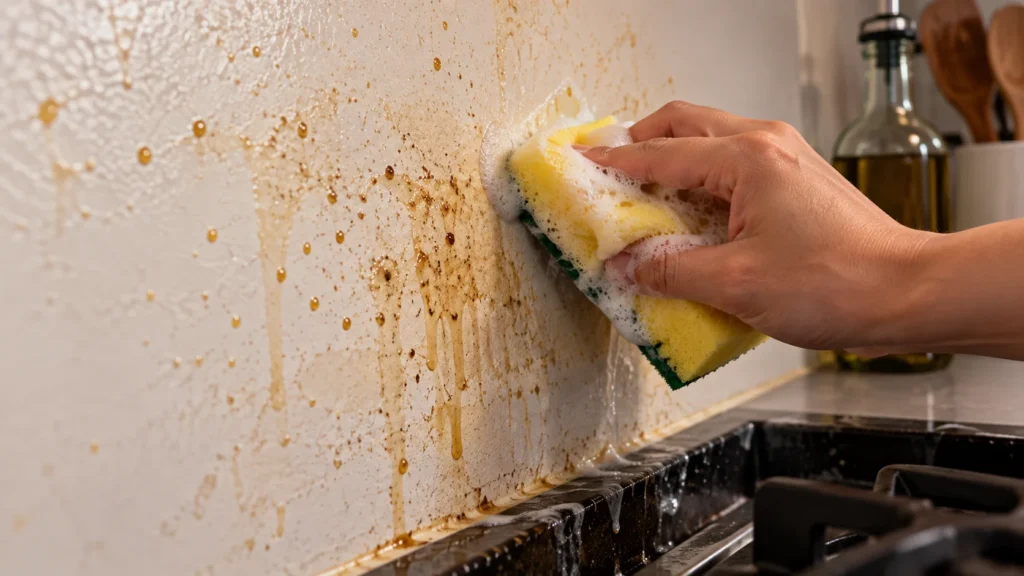
UGA recommends different methods depending on the wall material and notes that washable surfaces may tolerate gentle detergent cleaning, while some wallpaper and wood surfaces require specialized approaches.
15 Wall and Ceiling Cleaning Guidelines
- Identify the wall material.
- Remove loose dust first.
- Test the cleaner.
- Start with a mild detergent.
- Use a soft cloth or sponge.
- Avoid excessive water.
- Work in small sections.
- Rinse when appropriate.
- Dry the surface afterward.
- Avoid aggressive scouring.
- Protect nearby painted surfaces.
- Do not saturate drywall.
- Be careful around electrical outlets.
- Use ventilation in kitchens.
- Consider repainting if grease has penetrated the coating.
For persistent grease accumulation on painted surfaces, repeated mild cleaning is generally safer than immediately using a harsh solvent.
How to Remove Grease Stains From Wood
Wood can absorb grease, but the appropriate treatment depends on whether it is unfinished, stained, painted, varnished, waxed, or polyurethane-coated. A strong solvent can damage a wood finish even if it removes the grease. For that reason, always identify the finish before treating an old grease mark.
UGA recommends wood-specific cleaners or cleaning waxes for some wood surfaces and describes mineral spirits for heavy oil buildup in certain finished wood applications, with a strong warning to test first because solvents can dull finishes.
15 Wood Grease-Stain Guidelines
- Wipe up fresh grease immediately.
- Identify the wood finish.
- Start with the mildest suitable cleaner.
- Use a small amount of moisture.
- Avoid soaking wood.
- Wipe with the grain when appropriate.
- Dry the surface quickly.
- Test any solvent in a hidden location.
- Use a wood-specific cleaner when possible.
- Avoid aggressive sanding for minor grease.
- Protect surrounding finish.
- Do not combine cleaning chemicals.
- Use ventilation with solvent products.
- Refinish only if the finish is damaged.
- Seek professional help for valuable furniture.
How to Remove Grease Stains From Leather and Leather Shoes
Leather should not be treated like washable fabric because excessive water, detergents, and solvents can damage its finish. For fresh grease on leather, carefully remove excess material without spreading it. A mild leather-appropriate cleaning method is preferable to household laundry treatments.
UGA’s guidance for leather recommends gently removing excess material, using mild soap in lukewarm water to create foam, applying the foam rather than soaking the leather, and wiping with a clean dry cloth. It also discusses absorbent powder treatments for persistent marks.
15 Leather Grease-Stain Precautions
- Remove excess grease gently.
- Do not scrub hard.
- Avoid soaking leather.
- Check the manufacturer’s care instructions.
- Use a leather-safe cleaner.
- Test in an inconspicuous area.
- Apply foam rather than excessive water.
- Use a soft cloth.
- Avoid household bleach.
- Avoid aggressive laundry detergents.
- Do not use heat to dry the leather.
- Let the material dry naturally.
- Condition the leather only when appropriate.
- Treat suede separately.
- Use professional leather cleaning for expensive items.
How to Remove Grease From Suede Shoes
Suede requires even more caution than smooth leather because its textured surface can permanently change when wet or aggressively rubbed. Fresh grease should be absorbed rather than spread. A suede-specific cleaning product or professional cleaner is generally preferable for valuable shoes.
Do not automatically apply dish soap, vinegar, laundry detergent, or household degreasers to suede. These can change color, texture, or surface appearance.
15 Suede Grease-Cleaning Rules
- Blot fresh grease.
- Avoid rubbing.
- Use an absorbent powder appropriate for suede.
- Allow it to absorb the oil.
- Brush gently with a suede brush.
- Repeat if necessary.
- Keep water to a minimum.
- Avoid household degreasers.
- Avoid bleach.
- Avoid machine washing.
- Test specialty products.
- Follow the shoe manufacturer’s instructions.
- Restore the nap gently.
- Allow natural drying.
- Use professional cleaning for severe stains.
How to Remove Grease From Granite Countertops
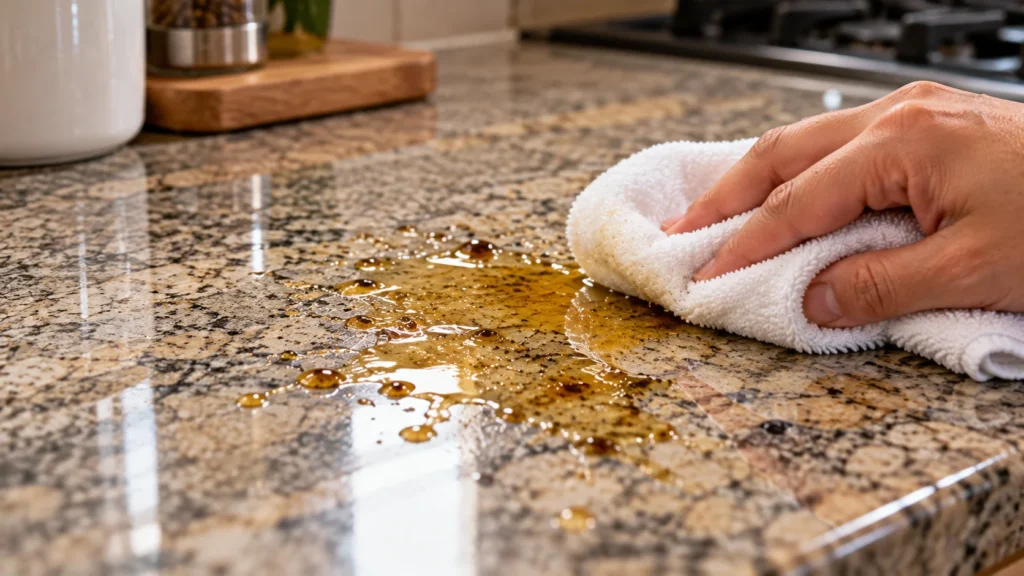
Granite is durable but still requires surface-specific care because finishes and sealers vary. Fresh grease should be removed quickly rather than allowed to sit and penetrate porous stone. Mild cleaning is preferable to aggressive acids, abrasive powders, or unverified solvent combinations.
For an established grease mark, a stone-safe poultice may sometimes be more appropriate than repeated surface scrubbing. The exact treatment should be selected according to the stone manufacturer’s guidance and the countertop’s finish.
15 Granite Grease-Stain Precautions
- Wipe fresh grease promptly.
- Use a soft cloth.
- Avoid abrasive scouring pads.
- Use a stone-safe cleaner.
- Check whether the granite is sealed.
- Test unfamiliar products.
- Avoid strong acids.
- Avoid unapproved solvents.
- Do not mix cleaners.
- Avoid excessive water.
- Use a poultice when appropriate.
- Allow treatments to work.
- Remove residue carefully.
- Dry the countertop.
- Consult a stone professional for deep oil stains.
How to Remove Grease From Stainless Steel
Stainless steel can collect cooking grease around handles, backsplashes, sinks, appliances, and stovetops. Begin with a suitable stainless steel cleaner or mild detergent rather than an abrasive degreaser. For brushed stainless steel, wiping with the grain helps maintain the original appearance.
The main goal is to remove the oily film without creating scratches or dull spots. Avoid abrasive pads and harsh products unless the appliance manufacturer specifically recommends them.
15 Stainless Steel Grease-Removal Tips
- Remove loose food first.
- Use a soft microfiber cloth.
- Apply a suitable stainless cleaner.
- Work with the grain.
- Avoid steel wool.
- Avoid abrasive scouring pads.
- Do not leave cleaner residue.
- Rinse where required.
- Dry after cleaning.
- Treat heavy grease in small sections.
- Avoid harsh chemicals on coated finishes.
- Test unfamiliar products.
- Use manufacturer-approved products for appliances.
- Polish only after grease is removed.
- Inspect the surface under good lighting.
How to Remove Grease Stains From Car Seats
Car seats may contain fabric, vinyl, leather, synthetic leather, or mixed materials, so the correct cleaning method depends on the upholstery type. Automotive grease can be more stubborn than cooking grease because it may contain lubricants and additives.
Start by identifying the seat material and removing excess grease without spreading it. Fabric seats may tolerate an upholstery-safe cleaner, while leather or synthetic leather needs a material-specific product. Avoid saturating the seat because moisture can penetrate foam and padding.
How to Remove Grease From Pans
Grease on cookware is different from a grease stain on clothing because the goal is to dissolve and remove the oily layer without damaging the pan’s cooking surface. Allowing heavy grease to cool and solidify can make it easier to scrape away excess material before washing.
For cookware, use the cleaning instructions appropriate for the material. Nonstick coatings, seasoned cast iron, stainless steel, aluminum, and ceramic cookware should not all be treated identically.
15 Grease Removal Habits for Pans
- Allow extremely hot grease to cool safely.
- Never pour grease down the drain.
- Remove excess grease with paper towels.
- Scrape solidified residue carefully.
- Use an appropriate dish detergent.
- Use warm water when the cookware allows it.
- Soak suitable cookware.
- Use a soft sponge on coated surfaces.
- Avoid metal tools on nonstick coatings.
- Use a suitable scrubber on stainless steel.
- Follow cast-iron care instructions.
- Avoid unnecessary abrasive cleaners.
- Rinse thoroughly.
- Dry completely.
- Dispose of collected grease properly.
How to Remove Grease Stains From Other Common Surfaces
Grease can appear almost anywhere in a home, garage, kitchen, or vehicle. The key is to treat the surface according to its material instead of relying on one universal grease remover. Porous materials generally need absorption and deeper treatment, while sealed surfaces may respond to mild detergent cleaning.
The following quick-reference table helps match common grease problems with an appropriate starting approach.
| Surface | Recommended Starting Approach | Important Caution |
| Cotton clothing | Liquid detergent or suitable pretreatment | Check care label |
| Polyester | Liquid detergent/pretreatment | Test specialty products |
| Jeans | Pretreatment + appropriate wash | Protect dye |
| White clothes | Pretreatment + suitable wash | Inspect before drying |
| Carpet | Blot + approved carpet treatment | Avoid overwetting |
| Upholstery | Fabric-code-approved treatment | Test first |
| Concrete | Absorbent material + degreaser | Porous surface |
| Pavers | Absorb + detergent/degreaser | Test surface |
| Painted walls | Mild detergent | Avoid paint damage |
| Wood | Wood-safe cleaner | Protect finish |
| Leather | Leather-safe cleaner | Avoid soaking |
| Suede | Absorbent suede method | Avoid water |
| Granite | Stone-safe cleaner/poultice | Protect sealer |
| Stainless steel | Stainless-safe cleaner | Follow grain |
| Car seats | Material-specific cleaner | Avoid saturation |
| Pans | Dish detergent + suitable scrubbing | Follow cookware instructions |
Common Grease Stain Removal Mistakes
Many failed stain-removal attempts happen because the stain is treated too aggressively or because heat is applied before the stain has disappeared. Another common mistake is using the same cleaning recipe on every material. A detergent method suitable for cotton clothing can be inappropriate for suede, leather, finished wood, or upholstery.
The safest overall strategy is to start with the least aggressive method that is appropriate for the material. If it does not work, move to a stronger product only after checking compatibility and testing an inconspicuous area.
15 Mistakes to Avoid
- Rubbing a fresh grease stain aggressively.
- Spreading grease across a larger area.
- Drying clothing before checking the stain.
- Using excessive heat.
- Ignoring the care label.
- Using bleach without checking compatibility.
- Mixing cleaning chemicals.
- Applying a solvent without ventilation.
- Skipping a hidden-area test.
- Saturating upholstery.
- Using laundry products on leather.
- Using water-heavy treatments on suede.
- Scrubbing finished wood too aggressively.
- Using abrasive products on delicate finishes.
- Assuming one grease-removal method works everywhere.
Maytag, OxiClean, Tide, and the American Cleaning Institute all emphasize fabric compatibility, pretreatment, appropriate wash temperatures, and inspecting the item before drying.
Grease Stain Removal Safety Guidelines
Safety becomes especially important when stronger solvents, degreasers, or commercial stain removers are involved. Some solvent-based cleaners are flammable and can produce irritating vapors. UGA specifically advises ventilation and keeping solvents away from flames and ignition sources.
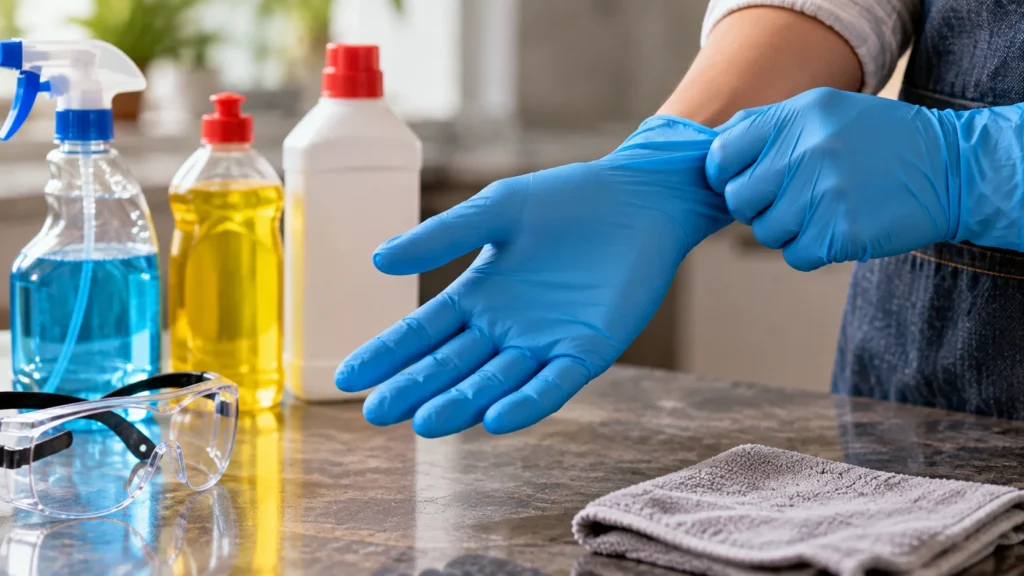
Never mix cleaning products unless the manufacturer’s instructions explicitly say the combination is safe. Chlorine bleach, acids, ammonia-containing products, solvents, and other cleaners can create dangerous reactions when combined. Gloves and eye protection may also be appropriate when handling stronger cleaning chemicals.
15 Safety Rules for Grease Removal
- Read every product label.
- Follow the surface manufacturer’s instructions.
- Test products before widespread use.
- Wear appropriate gloves.
- Use eye protection when required.
- Work in a well-ventilated area.
- Keep solvents away from flames.
- Keep chemicals away from children.
- Do not mix cleaning products.
- Never use an unknown chemical mixture.
- Store products in original containers.
- Dispose of contaminated materials correctly.
- Avoid excessive solvent use.
- Do not machine-dry grease-contaminated clothing.
- Contact a professional when the material is valuable or highly sensitive.
Final Grease Stain Removal Guide
The most effective answer to how to remove grease stains depends on the material and how old the stain is. For clothing, remove excess grease, pretreat with a suitable detergent or stain remover, wash at the warmest safe temperature, and inspect before drying. Fresh stains are generally easier to manage, but old and dried grease stains can sometimes still be treated with repeated pretreatment and soaking when the fabric allows it.
For concrete and pavers, absorb as much free grease as possible before using an appropriate detergent or degreasing method. For carpets and upholstery, blot rather than rub and avoid excessive moisture. For wood, leather, suede, granite, and specialty surfaces, material compatibility is more important than using the strongest cleaner available.
The most important principles are act quickly, remove excess grease, pretreat, use a material-appropriate cleaner, follow care instructions, avoid unnecessary heat, and inspect before declaring the stain gone. These steps cover everything from food grease and pizza stains to automotive grease, old stains, dried clothing stains, carpet spots, concrete marks, and household surface buildup.
Conclusion
Learning how to remove grease stains does not require one universal cleaning trick. Grease is oil-based, so it often needs a pretreatment capable of helping separate oily residue from the material before normal washing or surface cleaning can finish the job. For clothing, liquid detergent, suitable stain pretreatment, controlled soaking, and the warmest safe wash temperature are among the most consistently recommended approaches.
Fresh stains should be treated as soon as practical because grease becomes more difficult to remove after it penetrates the material or is exposed to drying heat. For set-in stains, repeated pretreatment may still work, but delicate materials require extra caution. OxiClean specifically notes that even stains that have already been washed and dried can sometimes be treated successfully.
For concrete, pavers, carpet, upholstery, wood, leather, suede, granite, stainless steel, and car seats, the cleaning method should always match the surface. Stronger is not automatically better. A mild, compatible treatment that is repeated carefully is often safer than one aggressive application that damages the underlying material.
What is the fastest way to remove a fresh grease stain?
Remove excess grease by scraping or blotting, then apply an appropriate liquid detergent or stain pretreatment. Wash at the warmest temperature permitted by the care label and inspect the item before drying.
How do you remove old grease stains from clothes?
Pretreat the stain with liquid detergent, dishwashing liquid where appropriate, or a dedicated stain remover. Allow it to work, soak the garment if the care label permits, wash using the warmest safe temperature, and repeat if necessary.
How do you remove set-in grease stains from clothes after drying?
Apply a suitable grease pretreatment and allow sufficient dwell time before washing. OxiClean notes that set-in grease can sometimes be treated even after washing and drying, although older stains may require longer or repeated treatment.
How do you remove grease stains from jeans?
Blot or scrape away excess grease, apply liquid detergent or an appropriate pretreatment, allow it to work, and wash according to the jeans’ care instructions. Inspect the denim before putting it in a dryer.
How do you remove pizza grease stains from clothes?
Remove food residue first, blot excess oil, and apply liquid detergent or a grease-compatible stain pretreatment. Wash according to the fabric care label and avoid drying until the grease mark has disappeared.
How do you remove grease stains from concrete?
Absorb fresh grease first instead of spreading it with a wet cloth. UGA recommends absorbent materials followed by suitable detergent-based cleaning for many concrete and masonry surfaces; stubborn stains may require stronger treatments.
How do you remove grease from pavers?
Start by absorbing as much fresh grease as possible. Then use a paver-compatible detergent or degreasing product, scrub appropriately, rinse, and allow the surface to dry before evaluating the remaining stain.
How do you get grease out of carpet?
Blot rather than rub the grease, identify the carpet fiber, and use an approved carpet-cleaning treatment. Avoid excessive moisture because it can damage carpet backing or padding.
How do you remove grease stains from a couch?
Check the upholstery cleaning code first. For water-washable upholstery, use an appropriate upholstery-safe solution and blot rather than saturating the fabric. Test the product in an inconspicuous area before treating the visible stain.
How do you remove grease from wood?
Wipe fresh grease quickly and use a cleaner appropriate for the wood finish. For heavy buildup, some finished wood surfaces may tolerate carefully controlled treatments, but solvents should always be tested first because they can dull or damage the finish.
How do you remove grease from leather?
Gently remove excess grease and use a leather-appropriate cleaning method. UGA recommends mild soap foam rather than saturating the leather with water and advises caution with stronger treatments.
How do you clean grease off suede shoes?
Absorb fresh grease rather than rubbing it into the suede. Use an appropriate suede cleaning method and avoid soaking the material with water or household detergents.
How do you remove grease stains from granite countertops?
Remove fresh grease promptly and use a cleaner approved for natural stone. For persistent oil penetration, a suitable stone poultice may be more appropriate than aggressive scrubbing.
How do you remove grease from stainless steel?
Use a stainless-steel-safe cleaner or mild detergent and a soft cloth. On brushed stainless steel, work with the grain and avoid abrasive materials that can scratch or dull the surface.
Can baking soda remove grease stains from clothes?
Baking soda can sometimes help absorb grease from fabric. Maytag recommends allowing baking soda to sit on certain grease stains before brushing it away, applying dishwashing liquid, rinsing, and laundering according to the care label.
Does vinegar remove grease stains from clothes?
Vinegar may help with some grease stains, but it is not appropriate for every fabric. Maytag advises caution with vinegar on clothing and recommends thoroughly rinsing it before laundering if it is used.
Should grease-stained clothes go in the dryer?
It is safer not to machine-dry clothing that has had grease or oil on it until the stain has been completely removed. Heat can set remaining stains, and Maytag warns that residual grease may also create a fire risk in a dryer.