
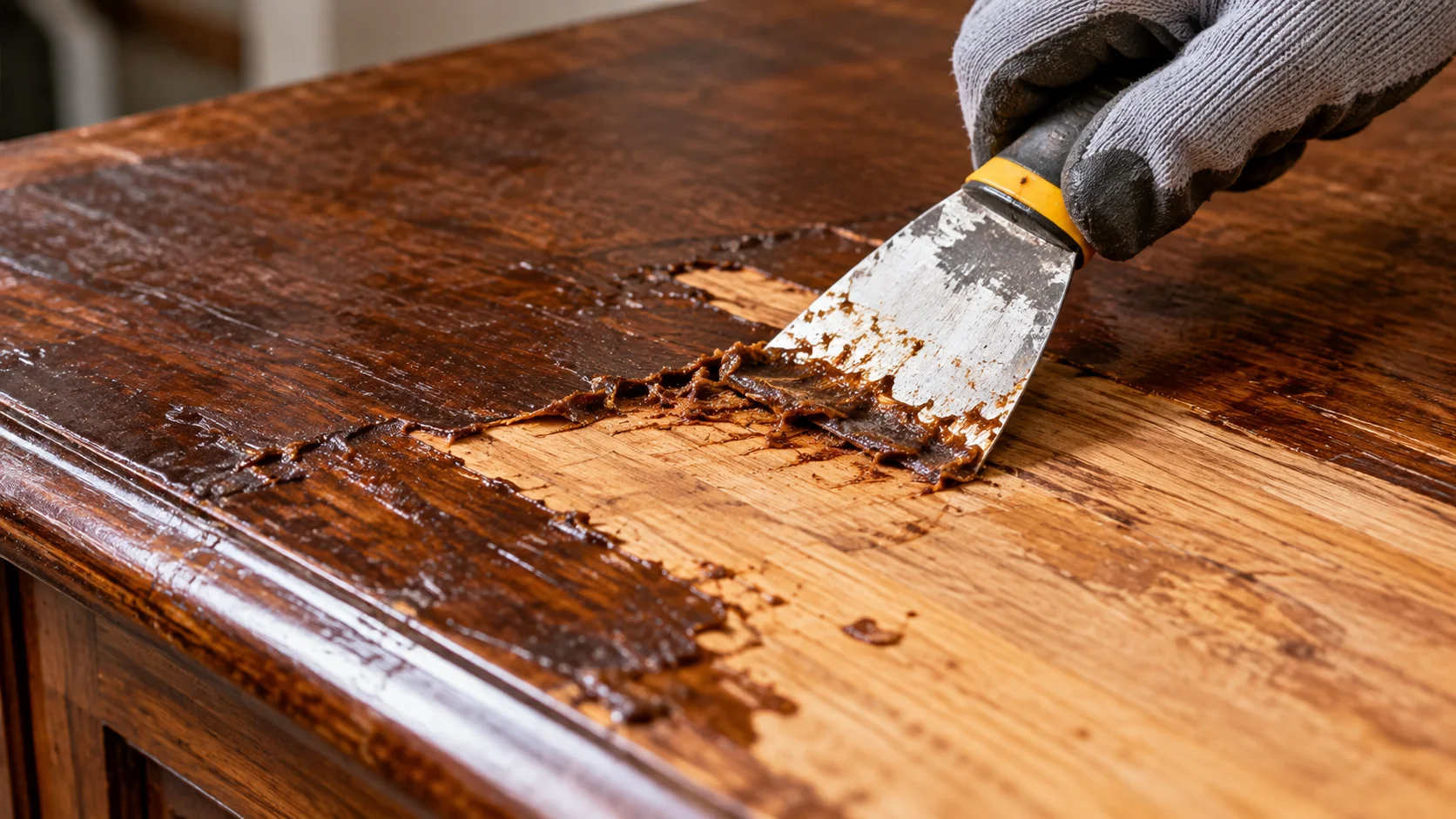
Learning how to remove stain from wood starts with identifying what kind of stain or finish you are dealing with. A dark water mark on a wooden table is treated differently from an old oil-based wood stain, while dog urine, heat marks, ink, alcohol, and excess wood stain can require completely different techniques. The condition of the existing finish also matters because a mark may be sitting on top of the finish rather than inside the wood itself.
If you are trying to remove an existing wood stain color so the wood can be refinished, the process is usually more involved than ordinary cleaning. Chemical stripping, scraping, and sanding may all be necessary. Home Depot explains that chemical strippers loosen existing wood stain and finish, while Sherwin-Williams notes that stripping can be particularly useful when preparing wood for a new stain.
For ordinary water stains, heat stains, oil marks, alcohol rings, or pet stains, completely stripping the wood may not be necessary. In many situations, you can address the damaged or discolored area while preserving the existing finish. The safest approach is always to start with the least aggressive method and move to stronger techniques only when necessary.
This guide covers how to remove dark stain from wood, water stains, heat stains, oil stains, old wood stain, excess stain, white stains, gel stain, solid stain, dog urine stains, ink, alcohol marks, and more. It also explains how wood stain can be removed from concrete, clothes, carpet, glass, vinyl siding, and skin.
Identifying the Type of Wood Stain Before Treatment
Before applying anything to wood, determine whether you are dealing with an existing wood finish or a surface stain. An existing wood stain changes the color of the wood and penetrates its surface, whereas water rings, grease, alcohol, and other marks may primarily affect the finish.
This distinction matters because removing an existing color generally requires stripping or sanding. Home Depot describes chemical strippers as products that loosen wood stain so it can be scraped away, while Sherwin-Williams describes stripping and sanding as preparation methods for previously stained wood.
The type of wood also matters. Soft woods can be scratched more easily, and intricate furniture may have veneers or delicate details that can be damaged by aggressive sanding. Always test your method on a hidden section before treating a visible area.
15 Things to Check Before Removing Wood Stain
- Identify the actual stain or finish before selecting a remover.
- Determine whether the wood is solid or veneered.
- Check whether the surface has polyurethane or another topcoat.
- Identify whether the stain is oil-based or water-based when possible.
- Check whether the wood is hardwood or softwood.
- Inspect the grain direction before sanding.
- Look for existing scratches and damage.
- Check whether the surface has wax or polish.
- Test your cleaning method in an inconspicuous area.
- Read the manufacturer’s instructions for any stripper or solvent.
- Ventilate the work area when using chemical products.
- Wear appropriate protective equipment for chemical stripping and sanding.
- Protect nearby surfaces with a drop cloth.
- Remove hardware whenever practical before stripping furniture.
- Decide whether you need complete color removal or only spot correction.
How to Remove Existing Wood Stain
When the goal is to remove an existing stain color from furniture, cabinets, woodwork, or another wooden surface, chemical stripping is often the starting point. Home Depot recommends selecting a stripper appropriate for the wood and finish, preparing a ventilated work area, applying the product according to its directions, and gently scraping away the softened finish.
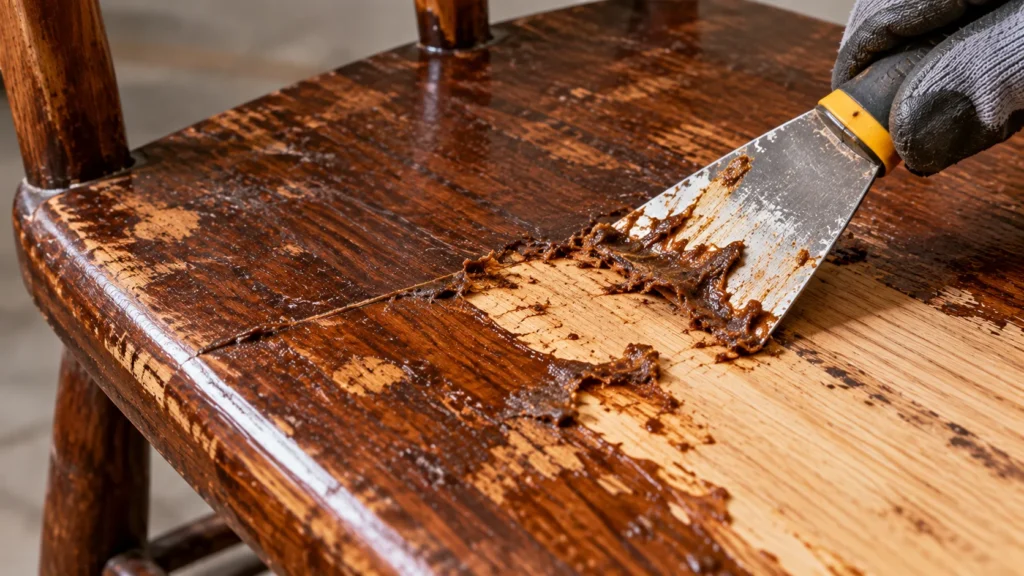
Sherwin-Williams similarly recommends working in small areas when using a remover and keeping the product wet for the time specified by the manufacturer. After the old finish has loosened, it can be scraped away with light pressure.
After stripping, some residue may remain in pores, corners, carvings, or uneven sections. A suitable sanding process can help smooth those areas and prepare the surface for a new finish.
Step-by-Step Wood Stain Removal Process
- Move the project to a well-ventilated workspace.
- Place a drop cloth underneath the wood.
- Remove handles, hinges, and other hardware where possible.
- Clean dirt and grease from the surface.
- Allow the wood to dry completely.
- Select a stripper compatible with the existing finish and wood.
- Apply the stripper according to its label directions.
- Work in manageable sections rather than covering the entire piece at once.
- Allow the product to work for the specified time.
- Gently scrape away softened stain and finish.
- Use an appropriate brush or pad for detailed areas.
- Remove remaining stripper residue according to the product instructions.
- Allow the wood to dry thoroughly.
- Sand remaining discoloration and rough areas in the direction of the grain.
- Remove all sanding dust before applying a new finish.
How to Remove Dark Stain From Wood
Dark stains on wood can have several causes. The discoloration may be an intentional wood stain, water damage, iron-related staining, mildew, or a darkened finish. The correct treatment depends on the cause.
If the dark appearance is an existing wood-stain color that you want to remove, stripping and sanding may be necessary. If the mark is a water-related dark stain, removing the entire finish may not be the first step.
Home Depot notes that dark water marks can sometimes be lightened with a wood bleach designed for the appropriate type of wood, following the manufacturer’s instructions.
Do not immediately apply strong bleach to unidentified wood. Different wood species and finishes react differently, and aggressive bleaching can create an uneven appearance.
How to Remove Water Stains From Wood
Water marks are among the most common stains found on wooden tables, furniture, cabinets, and floors. A white or cloudy ring often indicates moisture affecting the finish, while a deeper dark mark can indicate that moisture has penetrated farther into the wood.
For white water stains, begin with the least aggressive approach. Make sure the surface is clean and dry, then test a mild treatment on an inconspicuous section. If the discoloration is inside the wood rather than the finish, additional restoration may be necessary.
For dark water stains, the situation can be more serious. Home Depot recommends wood bleach designed for the type of wood when dark water marks remain after stain removal.
Water Stain Treatment for Wood Tables and Furniture
- Wipe away surface moisture immediately.
- Allow the affected area to dry completely.
- Clean the surface gently.
- Identify whether the mark is white or dark.
- Check whether the wood has a clear protective finish.
- Test any treatment on a hidden section.
- Start with a mild approach.
- Avoid soaking the wood.
- Work with the grain.
- Avoid abrasive household powders.
- Do not use excessive heat.
- Consider a wood-specific cleaner where appropriate.
- Use a compatible wood-bleaching product only when necessary.
- Allow the wood to dry completely between treatments.
- Refinish the affected area if the finish has been damaged.
Sherwin-Williams emphasizes that excessive water can damage wood surfaces and recommends prompt spill cleanup and avoiding wet-mopping or oversaturation on wood floors.
How to Remove Heat Stains From a Wood Table
Heat stains often appear as white, cloudy, or pale rings after a hot mug, plate, pan, or serving dish has been placed on a finished wooden surface. The mark may be in the finish rather than in the wood itself.
Because heat marks can have different causes, avoid immediately sanding through the finish. A mild restoration approach may preserve more of the original surface.
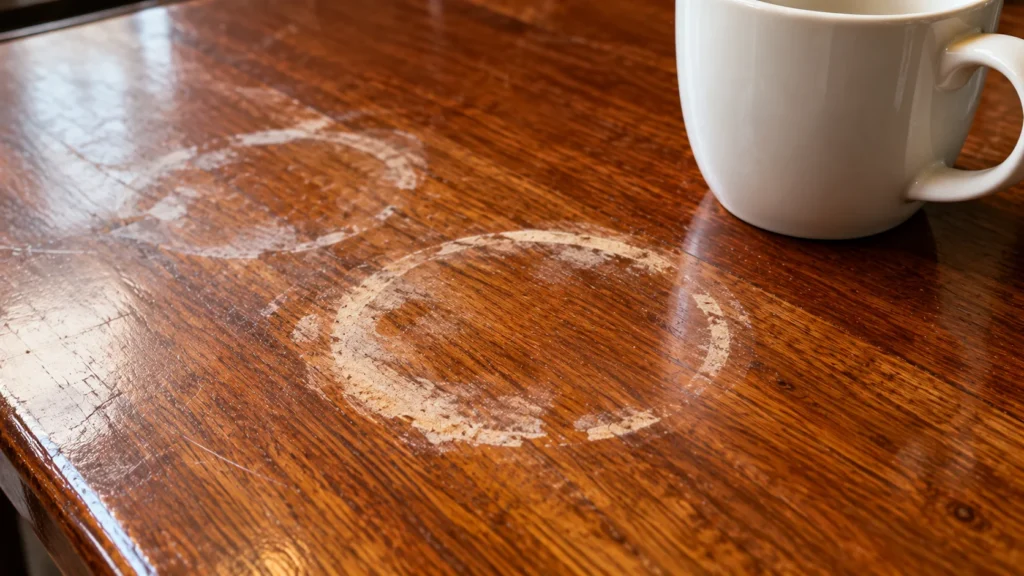
Start by cleaning the area gently and determining whether the mark is actually a heat-related finish defect. If the finish has been permanently altered, the affected area may need controlled refinishing.
For a valuable antique or heavily finished table, professional furniture restoration can be preferable to experimenting with aggressive chemicals.
How to Remove Oil Stains From Wood
Oil can darken unfinished or finished wood and may leave a greasy area that attracts additional dirt. Oil stain removal from wood should begin by removing surface oil without spreading it deeper into the material.
On finished floors, Sherwin-Williams recommends gentle cleaning for common oil and grease marks and warns against excessive water and unsuitable cleaners.
For an oil mark on unfinished wood, the treatment can be more complicated because the oil may have penetrated the fibers. Absorbent materials and gentle cleaning may help with a fresh spill, while older contamination can require sanding or refinishing.
Oil Stain Removal Steps
- Blot fresh oil without rubbing it outward.
- Remove excess residue from the surface.
- Use a wood-compatible cleaner.
- Work in a small area.
- Follow the grain of the wood.
- Avoid saturating the surface.
- Wipe away cleaner residue.
- Allow the area to dry.
- Inspect the wood under good lighting.
- Repeat a mild treatment if appropriate.
- Sand only when surface treatment is insufficient.
- Blend the sanded area carefully.
- Remove sanding dust.
- Match the replacement finish.
- Apply a compatible protective topcoat when required.
How to Remove Oil-Based Stain From Wood
An oil-based wood stain is different from an accidental oil spill. If you are trying to remove an existing oil-based wood stain, a compatible chemical stripper may be more effective than household cleaning products.
Home Depot explains that solvent strippers can be effective against thick stain layers and that product selection should account for the type of stain being removed. It also warns that solvent strippers can produce strong fumes and may damage delicate wood.
Always follow the stripper manufacturer’s directions. Do not combine different stripping chemicals in an attempt to increase their strength.
How to Remove Water-Based Stain From Wood
Water-based stain can sometimes be removed with a combination of chemical stripping and sanding. The exact approach depends on how long the stain has cured and whether a protective topcoat was applied.
Sherwin-Williams recommends using a suitable interior stripping product for previously stained interior wood and working in small sections.
If only a small area needs correction, full stripping may be unnecessary. Light sanding and careful blending can sometimes provide a better result, particularly when the surrounding finish needs to remain intact.
How to Remove Old Stain From Wood
Old wood stain can be more difficult to remove because the finish may have cured deeply into the surface and additional protective layers may have been applied. Older furniture can also contain previous repairs, wax, polish, or multiple coats of finish.
A practical restoration sequence is clean → strip → scrape → dry → sand → clean dust → refinish. Home Depot recommends allowing stripped wood to dry before sanding and then progressing through suitable sandpaper grits to create a smooth surface.
Sherwin-Williams also recommends sanding in the direction of the grain and gradually moving toward finer sandpaper for surface preparation.
How to Remove Excess Stain From Wood
Excess stain commonly occurs when too much product was applied or the surface was not wiped at the appropriate time. If the stain is still wet, removing excess material is considerably easier.
Sherwin-Williams recommends wiping stain in the direction of the wood grain, while Home Depot explains that dried excess stain can be much harder to remove and may require a compatible solvent or additional sanding.
For dried excess stain, avoid aggressive scraping that can gouge the wood. A controlled stripping or sanding process may be needed.
Jump into Other Related Article
- How to Remove Peanut Butter Stains | Easy Ways to Clean Clothes, Fabric & More
- How to Remove Coffee Stains | Easy Methods for Clothes, Teeth, Carpet & More
How to Remove Gel Stain and Solid Stain From Wood
Gel stain has a thicker consistency than many penetrating stains, so removing it may require a compatible stripper followed by careful scraping and sanding.
Solid stain behaves more like a coating because it provides substantial color coverage. On a deck or exterior structure, complete removal may require a purpose-made deck stain and sealer remover.
Sherwin-Williams recommends cleaning exterior wood first, applying a suitable stain and sealer remover in manageable sections, scrubbing the loosened finish, rinsing, and then using the specified neutralizer.
Exterior products should be used exactly as labeled because runoff and chemical exposure can affect plants, soil, adjacent surfaces, and people.
How to Remove Stain From Wood Furniture
Furniture requires extra care because it may contain veneer, carved details, glue joints, delicate finishes, or hardware that can be damaged by aggressive treatment.
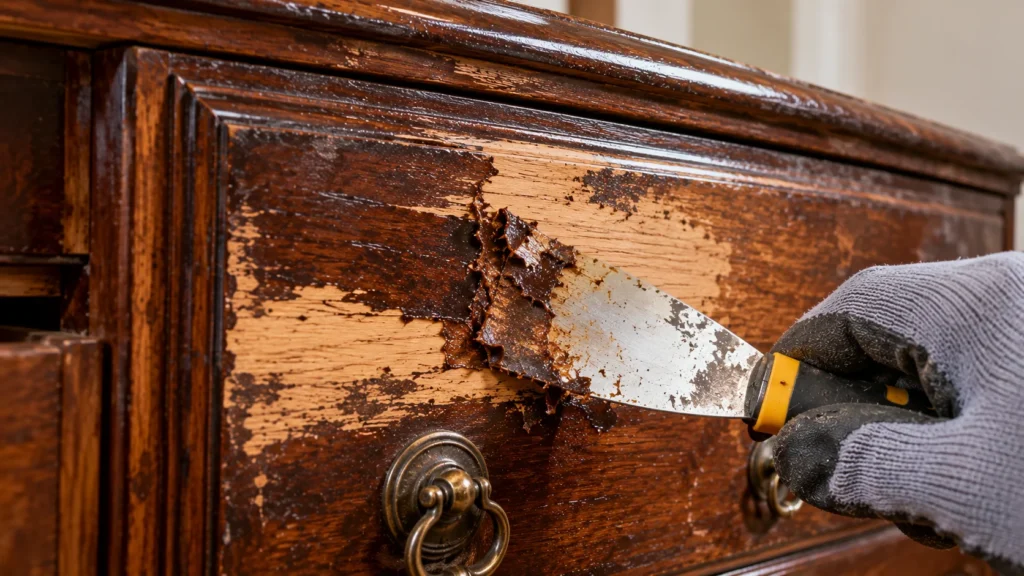
Remove hardware where possible and protect anything that cannot be removed. Sherwin-Williams recommends stripping existing finish before applying a new stain and emphasizes proper surface preparation for furniture restoration.
For valuable or antique furniture, avoid assuming that a standard DIY stripping method is appropriate. Veneer can be sanded through surprisingly quickly, and historical finishes may be worth preserving.
Furniture Stain Removal Checklist
- Identify the wood type.
- Check for veneer.
- Photograph the existing finish.
- Remove hardware where possible.
- Clean surface dirt first.
- Test the treatment in an inconspicuous area.
- Protect the work surface.
- Provide ventilation.
- Wear appropriate protective equipment.
- Apply stripper according to its label.
- Scrape with controlled pressure.
- Avoid gouging soft wood.
- Allow adequate drying time.
- Sand with the grain.
- Refinish only after the surface is clean and dry.
How to Remove Stain From a Wood Floor
Wood floors require a more controlled approach because sanding too deeply can permanently change the floor’s appearance. For small surface marks, aggressive stripping may not be necessary.
Sherwin-Williams advises avoiding excessive water on wood floors and recommends prompt cleanup of spills. For a complete refinishing project, floors may require mechanical sanding and appropriate finishing products.
If a floor has an isolated stain, first determine whether the discoloration is in the finish or in the wood. A professional floor refinisher can often identify this before significant material is removed.
How to Remove Dog Urine and Pee Stains From Wood Floors
Dog urine stains on wood floors can be especially difficult because liquid can enter joints, cracks, and porous areas. A fresh spill should be cleaned promptly so it has less opportunity to penetrate the material.
Sherwin-Williams lists pet urine among common wood-floor staining problems and recommends immediate cleaning followed by thorough drying.
Older or blackened urine stains may indicate deeper discoloration rather than a removable surface deposit. In such cases, cleaning alone may not restore the original wood color, and sanding, bleaching, board replacement, or refinishing may be necessary.
Avoid soaking a wood floor in an attempt to remove urine. Excess moisture can cause additional wood damage.
How to Remove Wood Stain From a Cutting Board
Cutting boards need a different standard of care because they come into contact with food. Do not treat a food-contact surface like a decorative piece of furniture.
If a cutting board has a penetrating commercial wood stain that was not intended for food-contact use, replacing the board may be safer than trying to chemically strip it. For ordinary food discoloration, use food-safe cleaning and maintenance practices appropriate for the board’s material.
Avoid applying solvents such as acetone, paint thinner, or conventional wood-stripping chemicals to a cutting surface unless a manufacturer specifically states that the product is appropriate for that application.
How to Remove Wood Stain Without Sanding
It is possible to remove some wood stain without sanding, particularly when a chemical stripper can loosen the finish sufficiently for scraping.
Sherwin-Williams describes chemical stripping as an alternative to relying solely on sanding and notes that stripping can remove finish from the pores before the surface is prepared for a new coating.
However, without sanding does not necessarily mean without physical work. You may still need a scraper, brush, cleaning step, or gentle abrasive pad depending on the product and surface.
For detailed furniture, chemical stripping can sometimes preserve carved areas better than aggressive sanding, but the product must be compatible with the wood.
How to Remove Polyurethane From Wood Without Removing the Stain
Removing polyurethane without removing the underlying stain is a precision refinishing task. The challenge is that polyurethane sits over the stained wood, while aggressive stripping or sanding can reach the color layer underneath.
A chemical stripper designed for the specific finish may remove the topcoat, but the manufacturer’s instructions and a test area are essential. Sherwin-Williams notes that removing an existing finish is part of proper preparation when refinishing wood.
If preserving the exact stain color is important, avoid deep sanding. A furniture-restoration professional can assess the finish and determine whether the topcoat can be removed without significantly disturbing the underlying color.
How to Use Acetone to Remove Stain From Wood
Acetone is a strong solvent and should not be treated as a universal wood-stain remover. It can affect finishes, coatings, adhesives, dyes, and some plastics, and it is highly flammable.
For that reason, using acetone on finished furniture, floors, painted surfaces, or valuable wood without testing is risky. Chemical products should be used only when the product instructions and material compatibility support the application.
If the goal is to remove an existing wood stain, a purpose-made wood stain stripper is generally easier to control because it is specifically designed for finish removal. Home Depot advises selecting a stripper based on the wood and finish and following the manufacturer’s safety directions.
How to Remove Alcohol and Ink Stains From Wood
Alcohol stains can appear as white or cloudy areas when alcohol damages or alters a finish. The treatment depends on the finish and severity of the damage.
Ink stains can penetrate unfinished wood more deeply. Sherwin-Williams includes ink among common floor-surface stains and recommends gentle cleaning approaches for certain wood, laminate, and vinyl surfaces.
Do not immediately apply acetone, alcohol, or another strong solvent to finished furniture. Solvents can dissolve or dull the protective coating along with the stain.
How to Remove Sticky and Super Glue Stains From Wood
Sticky residues should generally be softened and lifted rather than aggressively scraped. A damp cloth may be sufficient for some ordinary sticky spots on finished wood. Sherwin-Williams recommends a damp towel or sponge for certain sticky spots on wood, laminate, and vinyl flooring.
Super glue is more difficult because cyanoacrylate adhesive bonds strongly and can damage the finish when removed aggressively. Avoid scraping with a sharp metal tool across a finished surface.
For valuable furniture, test any solvent in a hidden location first. If the glue has bonded strongly to the finish, professional restoration may prevent a larger damaged area.
How to Remove Wood Stain From Concrete
Wood stain spilled onto concrete can leave a colored mark because concrete is porous. The appropriate treatment depends on whether the stain is water-based, oil-based, fresh, or cured.
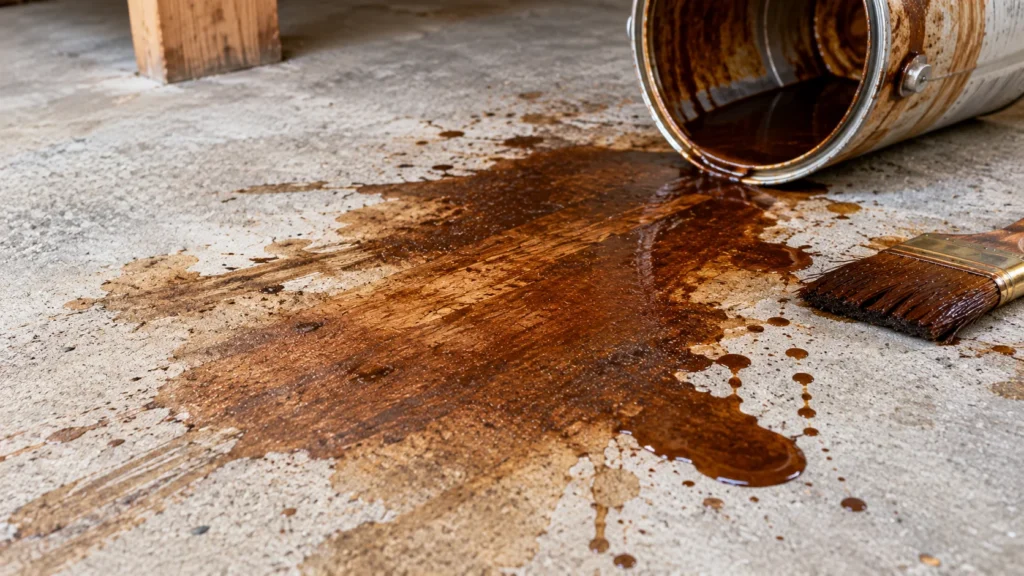
Start by removing excess material without spreading it. Use a concrete-compatible cleaner or stain-removal product according to its instructions. Oil-based products may require a degreasing treatment before further cleaning.
Do not assume a wood stripper designed for furniture is suitable for concrete. Product labels should specifically identify the surface as compatible.
How to Remove Wood Stain From Clothes and Carpet
If wood stain gets onto clothing, immediately check the stain manufacturer’s instructions because oil-based and water-based stains require different treatments. Do not put the clothing in the dryer until the mark has been addressed.
For wood stain on carpet, avoid aggressive rubbing because it can spread the stain and damage fibers. Sherwin-Williams recommends prompt treatment for carpet spills and uses blotting as part of its general carpet-care guidance.
A wood-stain product can contain pigments, solvents, oils, or resins that are difficult to remove from carpet. Professional carpet cleaning may be appropriate when a large amount has spilled.
How to Remove Wood Stain From Glass and Vinyl Siding
Glass is nonporous, so wood stain generally remains closer to the surface than it does on unfinished wood. However, scraping or abrasive treatment can scratch glass, especially when dirt is trapped underneath the tool.
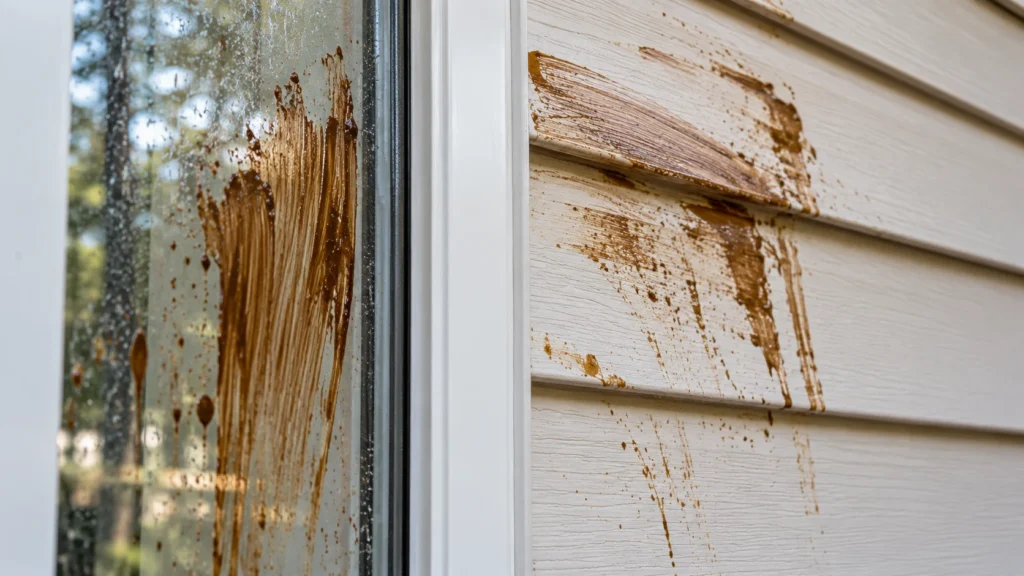
For vinyl siding, use a cleaner specifically labeled for vinyl and compatible with the stain. Avoid strong solvents unless the siding manufacturer specifically permits them because solvents can discolor or damage vinyl.
The safest approach is to remove fresh material promptly and test the chosen product in an inconspicuous area.
How to Remove Wood Stain From Skin and Hands
If wood stain gets on your skin or hands, do not use acetone, paint thinner, or other industrial solvents simply because they can dissolve the product. Skin is not the same surface as wood, and harsh solvents can cause irritation or damage.
Wash the affected area with soap and water as soon as possible and follow the stain manufacturer’s safety instructions. If the product label provides specific first-aid instructions, follow those directions.
If irritation develops or the product is known to be hazardous, seek appropriate medical or poison-control guidance.
Wood Stain Removal Safety
Chemical stripping can involve strong fumes, flammable products, corrosive ingredients, or hazardous residues. Home Depot recommends eye protection, gloves, appropriate clothing, and respiratory protection as specified for the product, along with adequate ventilation.
Never mix wood strippers, bleach, acids, solvents, or household cleaners. Use one product according to its label and completely follow its disposal and cleanup instructions before introducing another product.
15 Wood Stain Removal Safety Rules
- Read the entire product label before use.
- Work in a well-ventilated area.
- Wear chemical-resistant gloves when required.
- Use eye protection for chemical stripping.
- Use respiratory protection when the product label requires it.
- Keep flames and ignition sources away from flammable solvents.
- Keep children and pets away from the work area.
- Protect floors and surrounding furniture.
- Never mix different chemical products.
- Test the product on an inconspicuous area.
- Follow the manufacturer’s dwell time.
- Do not allow a stripper to dry unless the label says to.
- Dispose of chemical-soaked materials properly.
- Allow the wood to dry completely before refinishing.
- Stop immediately if the wood or finish reacts unexpectedly.
Wood Stain Removal Methods Compared
| Method | Best use | Main advantage | Main limitation |
| Mild cleaning | Surface marks and spills | Low risk | Cannot remove deep stain |
| Chemical stripper | Existing wood stain and finish | Removes substantial finish | Requires chemical safety |
| Sanding | Remaining finish and surface color | No chemical stripper required | Can remove wood |
| Scraping | Softened finish | Quickly removes loosened material | Can scratch wood |
| Wood bleach | Certain dark discoloration | Can lighten dark marks | Material-specific |
| Spot treatment | Small localized stains | Preserves surrounding finish | May create color mismatch |
| Professional restoration | Valuable or delicate furniture | Specialized assessment | Higher cost |
| Deck stripping product | Exterior stain | Designed for outdoor wood | Requires proper rinsing and neutralization |
Conclusion
Knowing how to remove stain from wood is less about finding one universal cleaner and more about matching the method to the type of stain, wood, finish, and surface condition. An existing wood stain usually requires controlled stripping and sometimes sanding, while water rings, heat marks, oil stains, pet urine, ink, and alcohol marks may need localized treatment instead.
For furniture and interior wood, chemical stripping can loosen old stain so it can be scraped away, followed by careful drying and sanding when needed. Home Depot and Sherwin-Williams both emphasize working in manageable sections, protecting the work area, following product directions, and preparing the surface carefully before applying a new finish.
For wood tables and furniture, avoid excessive water and aggressive abrasives. For wood floors and decks, use products specifically designed for those surfaces and avoid unnecessary saturation. For dog urine stains, deep discoloration may require more than surface cleaning. And for cutting boards, skin, clothes, carpet, concrete, glass, and vinyl siding, do not automatically use a wood-stain stripper because those materials require their own compatible treatments.
The safest overall strategy is simple: identify the stain, test the least aggressive appropriate method, protect yourself and the surrounding surface, and escalate only when necessary.
How do you remove stain from wood?
For an existing wood stain, prepare a ventilated workspace, clean and dry the wood, apply a compatible wood-stain stripper according to its label, scrape away the loosened finish, remove residue, allow the wood to dry, and sand remaining rough or stained areas when necessary.
How do you remove dark stain from wood?
First determine whether the dark mark is an existing wood stain, water damage, or another type of discoloration. Existing stain may require stripping and sanding, while dark water marks may sometimes be lightened with a suitable wood-bleaching product.
How do you remove water stains from wood?
For white water rings, begin with a gentle treatment and avoid excessive moisture. Dark water stains may require a wood-specific bleaching product or refinishing if the discoloration has penetrated the wood.
How do you remove a heat stain from a wood table?
Clean the area gently first and determine whether the heat affected the finish or the wood itself. If the finish has been permanently altered, controlled refinishing may be necessary.
How do you remove oil stains from wood?
Blot fresh oil, remove excess material, use a compatible wood cleaner, and avoid excessive moisture. Deep oil contamination may require sanding or refinishing.
How do you remove old stain from wood?
Old stain generally requires a compatible chemical stripper followed by scraping and, when necessary, sanding. Allow the wood to dry thoroughly before sanding or applying a new finish.
How do you remove wood stain from furniture?
Remove hardware where possible, clean the furniture, protect the work area, apply an appropriate stripper, scrape carefully, allow the wood to dry, and sand remaining residue in the direction of the grain.
How do you remove wood stain without sanding?
A compatible chemical stripper can loosen an existing stain so that it can be scraped away without relying entirely on sanding. Some light sanding may still be useful for residue and surface preparation.
How do you remove wood stain from a wood floor?
Small surface marks may respond to gentle cleaning, while an entire existing stain color may require professional or mechanical refinishing. Avoid excessive water because it can damage wood flooring.
How do you remove dog urine stains from a wood floor?
Clean fresh urine promptly and dry the area thoroughly. Older dark urine discoloration may have penetrated the wood and can require sanding, bleaching, refinishing, or board replacement.
How do you remove oil-based stain from wood?
Use a stripper specifically compatible with the existing finish and wood. Solvent-based strippers can be powerful and produce strong fumes, so follow the product’s safety requirements carefully.
How do you remove excess stain from wood?
If the stain is still wet, wipe away excess product with a clean rag in the direction of the grain. Dried excess stain can require a compatible solvent, stripping, or sanding.
How do you remove white stains from a wood table?
White or cloudy marks may indicate moisture or heat affecting the finish. Begin with a gentle treatment rather than immediately sanding through the finish.