
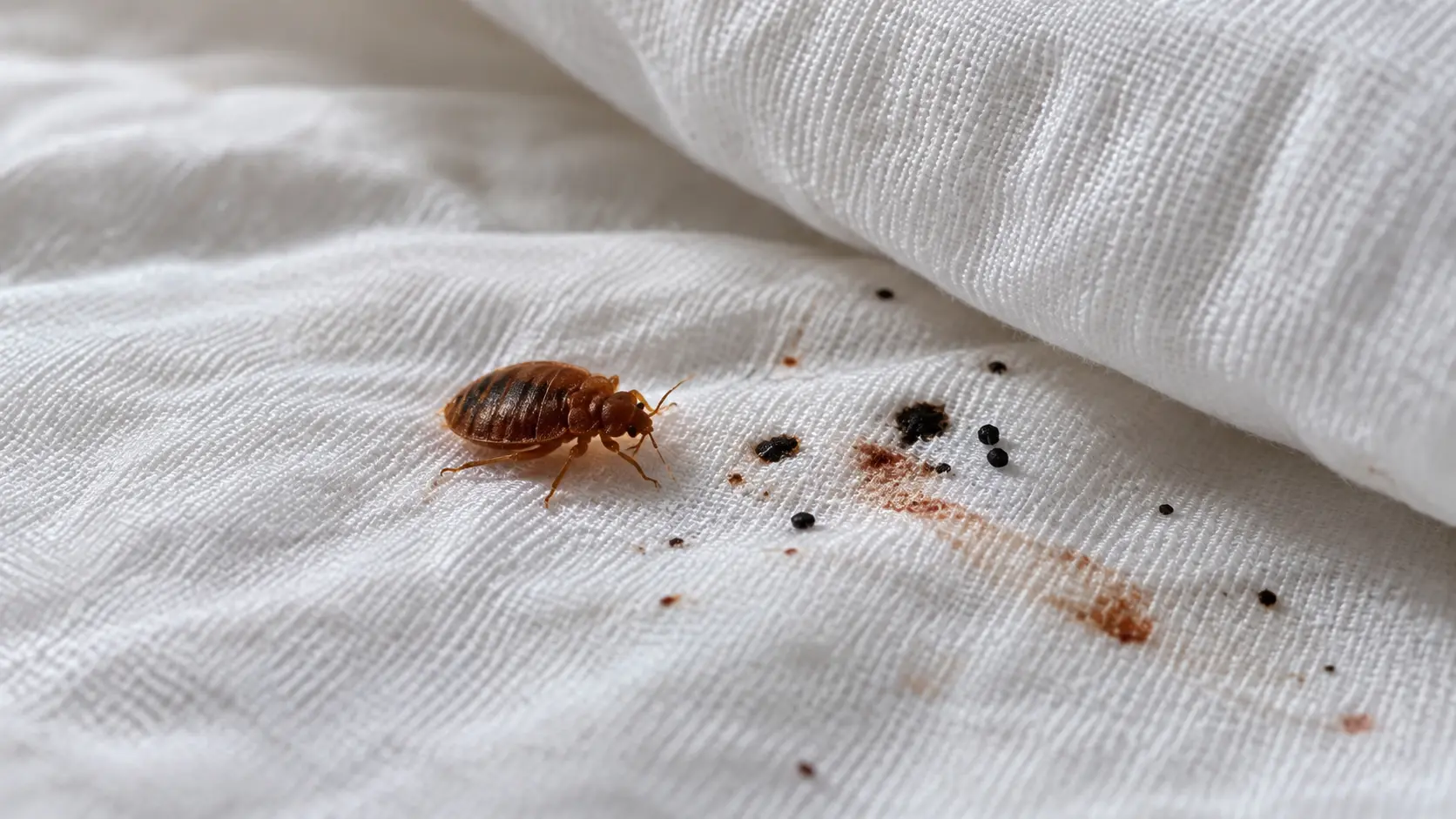
If you notice tiny bugs, dark spots, reddish marks, or unusual stains on your bedding, it is reasonable to wonder what bed bugs look like on sheets. Adult bed bugs are small, flat, oval insects that are usually reddish-brown and about the size of an apple seed. They do not fly or jump, but they can move quickly across bedding and nearby surfaces.
Bed bugs do not always remain visibly on top of the sheets. During the day, they commonly hide in mattress seams, box springs, bed frames, headboards, cracks, and other protected spaces close to where people sleep. The EPA recommends looking for physical evidence such as live insects, dark fecal spots, rusty or reddish stains, eggs, eggshells, and shed skins rather than relying only on bites.
On white sheets, even very small signs can be easier to notice. A live adult may look like a tiny reddish-brown oval, while a recently fed bug can appear more elongated and swollen. Nymphs are much smaller and pale, and eggs are tiny, pearl-white objects attached to surfaces.
It is also important not to identify an infestation from one unexplained mark alone. Bed bugs have several look-alikes, and bite reactions vary from person to person. The EPA and CDC both emphasize physical identification because bites by themselves are not a reliable way to confirm bed bugs. So, let’s undersand , what do bed bugs look like on sheets
What Bed Bugs Look Like on Sheets
A bed bug found on sheets usually appears as a small, oval, flattened insect with six legs. An unfed adult is generally brown to reddish-brown, while a recently fed adult can look darker, more reddish, and somewhat elongated because its abdomen becomes distended with blood. The EPA describes adult common bed bugs as approximately 5–7 mm long, roughly comparable to an apple seed.
What do bed bugs on sheets look like? The answer depends on the insect’s life stage. An adult is comparatively easy to see, while a first-stage nymph can be extremely small and pale. This means a tiny pale spot moving across a sheet should not automatically be dismissed as lint or dust.
The sheet itself can also provide important evidence. Crushed bugs may leave rusty or reddish stains, while fecal spots can appear as tiny dark marks. Shed skins and eggs may be found around seams, folds, or nearby mattress areas rather than directly in the center of the sheet.
15 Visual Signs to Look for on Sheets
When inspecting bedding, look for several signs together rather than relying on one mark.
- Live reddish-brown insects moving across the sheet.
- Small oval insects with a flattened appearance.
- Tiny pale nymphs that can be difficult to see.
- Dark blackish spots resembling tiny ink dots.
- Rust-colored or reddish stains from crushed or feeding bugs.
- Tiny pale eggs attached to surfaces near the sleeping area.
- Empty eggshells after nymphs hatch.
- Whitish shed skins left after molting.
- Multiple dark spots clustered near mattress seams.
- Small bugs around sheet folds or creases.
- Evidence around the bottom sheet near the mattress.
- Signs along mattress piping and seams.
- Evidence around the box spring.
- A sweet or musty odor in a heavier infestation.
- Repeated signs appearing after freshly changing the bedding.
One sign alone does not necessarily prove an infestation. A combination of physical evidence is much more useful for identification.
Bed Bugs on White Sheets and Light-Colored Bedding
What do bed bugs look like on white sheets? White bedding can make bed bug evidence easier to notice because there is greater contrast between the insects and the fabric. An adult bed bug may appear as a small reddish-brown oval, while a dark fecal spot can look like a tiny black or brown dot.
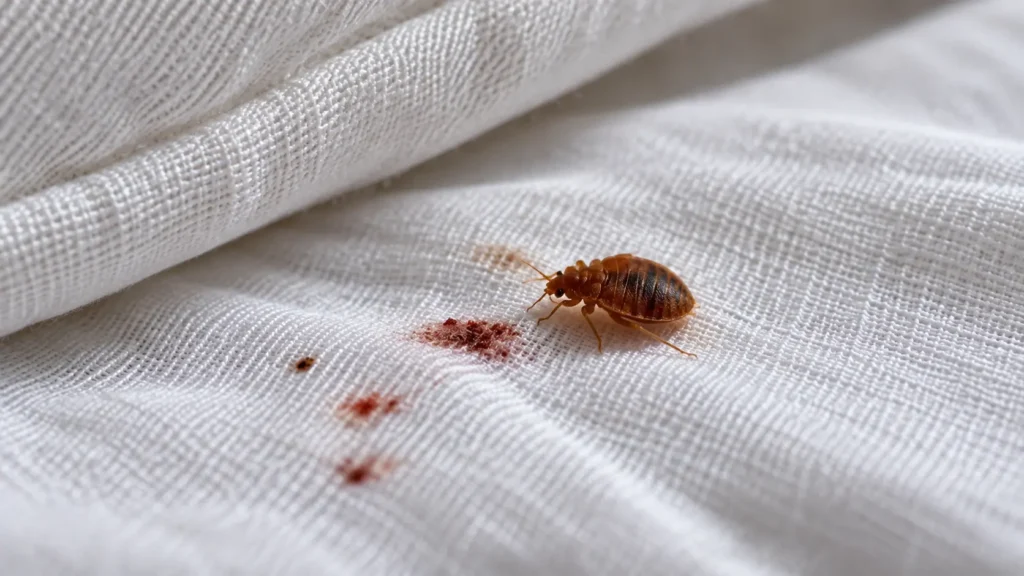
Fresh blood stains may appear red or rusty, particularly if a bug is crushed while feeding or after feeding. The EPA specifically identifies rusty or reddish stains on sheets and mattresses as one possible physical sign.
White sheets can also make nymphs and eggs easier to spot under strong lighting. However, the smallest life stages can still be difficult to distinguish from lint, fabric fibers, or other tiny particles.
When checking light bedding, use a bright flashlight and inspect both the surface and folds. Pay particular attention to areas close to the mattress because bed bugs generally hide near sleeping locations.
Bed Bug Eggs, Nymphs, and Shed Skins on Sheets
Bed bugs pass through several life stages, so the appearance of evidence can change as an infestation develops. According to the EPA, bed bug eggs are approximately 1 mm and pearl-white, while nymphs are smaller and translucent or whitish-yellow.
The CDC describes bed bugs as going through five nymphal stages before becoming adults. Each nymphal stage requires a blood meal before the insect can molt to the next stage.
Eggs are generally found attached to protected surfaces rather than randomly scattered across the center of a sheet. Look around mattress seams, crevices, folds, box springs, and nearby furniture.
Shed skins can look like extremely small, pale insect shells. Finding several skins together with dark spots or live insects provides stronger evidence than finding a single pale speck.
Bed Bug Life-Stage Identification
- Eggs: About 1 mm, pearl-white, and attached to surfaces.
- First-stage nymphs: Approximately 1.5 mm and very pale.
- Second-stage nymphs: Approximately 2 mm.
- Third-stage nymphs: Approximately 2.5 mm.
- Fourth-stage nymphs: Approximately 3 mm.
- Fifth-stage nymphs: Approximately 4.5 mm.
- Unfed adults: Approximately 5–7 mm and flattened.
- Fed adults: More elongated and reddish after taking a blood meal.
- Shed skins: Pale, empty-looking exoskeletons left after molting.
- Eggshells: Empty remnants remaining after hatching.
The youngest nymphs can be especially difficult to see without close inspection. This is one reason a suspected insect should be collected and identified rather than relying entirely on a photograph or bite pattern.
Bed Bug Fecal Spots and Blood Marks on Sheets
One of the most recognizable signs of bed bugs is the presence of small dark spots on bedding. The EPA describes bed bug fecal spots as dark marks that can bleed into fabric somewhat like ink.
These marks may appear black, dark brown, or rusty depending on the material and how old the spot is. They are often found around sleeping areas, mattress seams, or other places where bed bugs hide.
Blood stains are another possible sign. A person may crush a recently fed bug while moving in bed, creating a small reddish or rusty mark. The EPA specifically lists rusty or reddish stains on sheets and mattresses among the physical signs of bed bugs.
However, not every dark spot is bed bug feces and not every blood stain indicates bed bugs. Dirt, food, cosmetics, rust, ink, and other substances can create similar marks.
Mattress Signs Connected With Bed Bugs
The mattress is usually more important to inspect than the center of the sheet. Bed bugs commonly hide along mattress seams, piping, tags, folds, and other protected areas during the day. The CDC and EPA both identify mattress seams and nearby sleeping structures as important inspection points.
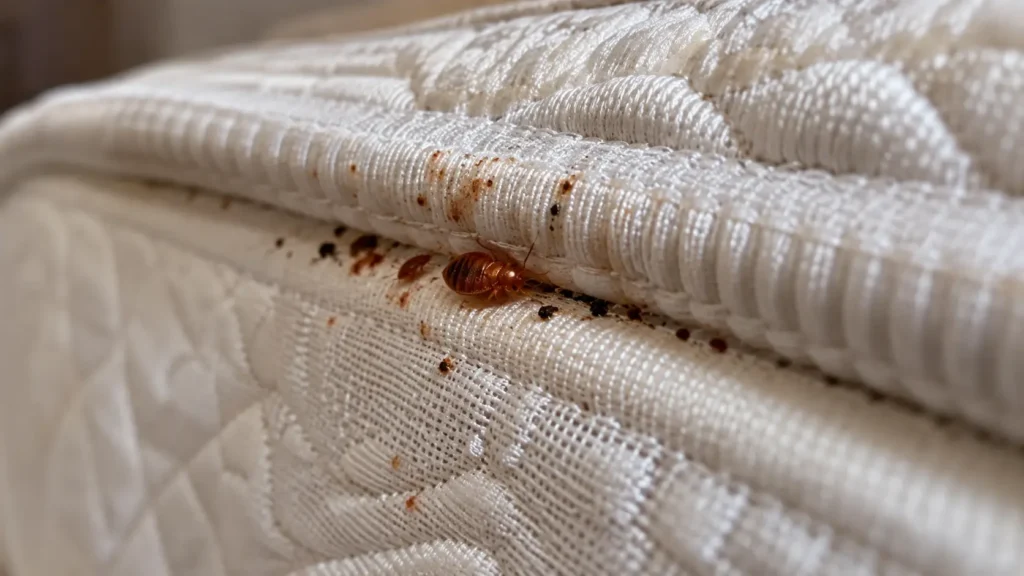
Lift the sheets carefully and examine the entire mattress surface. Pay particular attention to the corners and edges where the top, side, and bottom sections meet.
Inspect the box spring and bed frame as well. If physical signs are present around the mattress but no live insects are immediately visible, continue the inspection rather than assuming there are no bed bugs.
Mattress and Bed Areas to Inspect
- Mattress piping
- Mattress seams
- Mattress labels and tags
- Mattress corners
- Folds in the mattress fabric
- Underside of the mattress
- Box-spring seams
- Box-spring edges
- Bed-frame joints
- Headboard cracks
- Screw holes
- Bed-frame crevices
- Nightstand joints
- Baseboards near the bed
- Nearby upholstered furniture
Bed Bug Bites and Signs on Sheets
A bed bug bite can add context, but bites alone should not be used to identify an infestation. The CDC explains that bed bug bites can resemble mosquito or flea bites, and some people may show no visible reaction at all.
The EPA similarly states that bites are a poor indicator because they can resemble other insect bites, rashes, eczema, fungal conditions, or hives. Some people do not react to bed bug bites.
This means a person can have bed bugs without obvious bite marks, while another person can develop itchy marks without having bed bugs.
Physical evidence on bedding and around the bed is therefore more useful for confirming the presence of the pest.
Jump into Other Related Article
- How to Remove Peanut Butter Stains | Easy Ways to Clean Clothes, Fabric & More
- How to Clean a Kitchen Sink | Complete Guide for Stainless Steel, Drains, Faucets & More
- How to Remove Coffee Stains | Easy Methods for Clothes, Teeth, Carpet & More
Tiny Bed Bugs on Sheets
Searches for tiny what do bed bugs look like on sheets often refer to nymphs. Young bed bugs are much smaller than adults and can be pale or nearly translucent before feeding. The EPA notes that unfed young bed bugs can be nearly invisible to the naked eye because of their small size and coloring.
A tiny moving insect should therefore not automatically be classified as a bed bug. Carpet beetle larvae, fleas, booklice, and other small insects can sometimes cause confusion.
If possible, capture the suspected insect rather than crushing it. The EPA recommends collecting examples for identification before taking further action.
Bed Bug Look-Alikes on Bedding
Correct identification matters because several insects can resemble bed bugs. The EPA specifically warns that insects such as carpet beetles can be mistaken for bed bugs and recommends accurate identification before treatment.
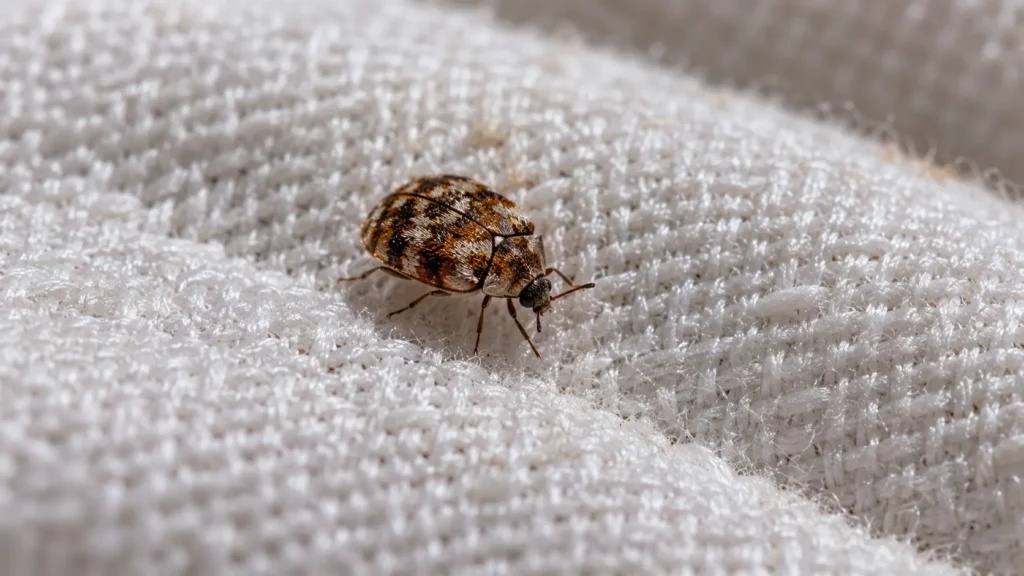
Fleas are generally smaller and laterally compressed, while carpet beetles have a different body shape and often show distinctive coloring. Bat bugs and related species can be particularly difficult to distinguish from bed bugs without close examination.
A photograph can help with preliminary identification, but a physical specimen examined by an experienced pest professional or qualified identification service can provide greater confidence.
Common Things Mistaken for Bed Bugs
- Carpet beetles
- Fleas
- Bat bugs
- Booklice
- Cockroach nymphs
- Spider beetles
- Small beetles
- Lint
- Fabric fibers
- Seeds
- Dirt particles
- Dried food particles
- Ink spots
- Rust stains
- Other small household insects
The important distinction is that a suspected bed bug should be identified before starting an infestation treatment. Incorrect identification can result in unnecessary chemical use while allowing a genuine infestation to continue.
Bed Bugs on Sheets in Hotels
Travelers searching what do bed bugs look like on sheets book a hotel are usually trying to inspect a sleeping area before unpacking. Bed bugs can occur in hotels, resorts, apartments, homes, dormitories, transportation, and other places where people sleep. The CDC specifically notes that cleanliness does not determine whether a place has bed bugs.
Before placing luggage on a bed, inspect the mattress seams, box spring, headboard area, and nearby furniture. Look for live bugs, dark spots, shed skins, eggs, and rusty stains.
If you find suspected evidence, avoid spreading belongings around the room. Keep luggage away from the bed and seek assistance from hotel management while the suspected pest is being identified.
How to Inspect Sheets for Bed Bugs
A careful inspection is more useful than quickly looking across the top of the bed. Remove bedding gradually and inspect seams, folds, mattress edges, and nearby furniture. Use a bright flashlight because some bed bug evidence is extremely small.
The EPA recommends looking around the mattress, box spring, bed frame, headboard, and other nearby cracks and crevices.
Do not immediately discard furniture or mattresses based on an unidentified insect. EPA guidance specifically advises against panicking and throwing away furniture before understanding the problem.
15-Step Bed Bug Sheet Inspection
- Remove pillows and pillowcases carefully.
- Inspect pillow seams and folds.
- Remove the top sheet slowly.
- Check the bottom sheet for dark spots.
- Look for rusty or reddish stains.
- Inspect fitted-sheet elastic and corners.
- Examine mattress piping.
- Check mattress seams with a flashlight.
- Inspect mattress labels and handles.
- Look beneath the mattress.
- Examine the box spring.
- Check the bed frame joints.
- Inspect the headboard and its mounting points.
- Look at nearby furniture and baseboards.
- Collect a suspected insect in a clear container or with clear tape for identification.
What to Do After Finding Suspected Bed Bugs
Finding a suspected bed bug on a sheet does not mean every item in the room should immediately be thrown away. The EPA recommends early detection and an integrated approach to control rather than panic disposal.
If you find a live insect, preserve it for identification if possible. Carefully inspect the surrounding sleeping area for additional evidence. Bed bugs can hide in locations that are only a short distance from where people sleep.
The CDC recommends contacting a pest-control professional experienced with bed bug treatment when an infestation is suspected.
Do not randomly apply multiple pesticides or household chemicals. EPA guidance recommends using only pesticides registered for bed bugs and following the label directions.
Bed Bug Prevention for Sheets and Bedrooms
Regular inspection can help detect an infestation early. This is particularly useful after travel, purchasing used furniture, or staying in places where bed bugs may have been present.
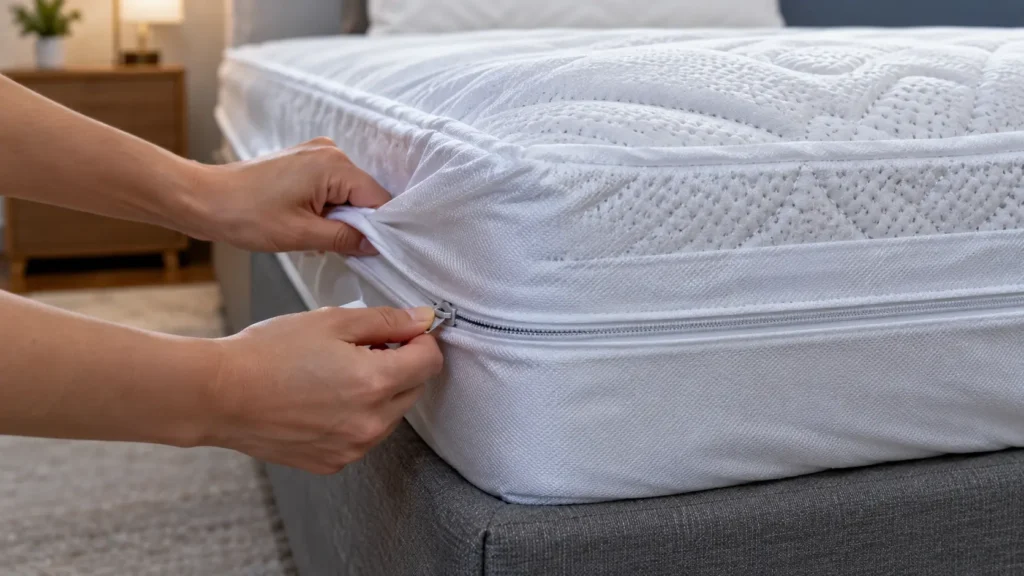
Mattress and box-spring encasements, bed bug interceptors, reducing clutter, and careful inspection can form part of an integrated pest-management approach. The EPA lists encasements and interceptors among useful control measures.
Bed bugs are not attracted to dirt in the way many people assume. The EPA states that they are attracted to warmth, blood, and carbon dioxide, while clutter can provide additional hiding places.
Bed Bug Signs on Sheets vs Other Marks
| Sign on sheets | Possible bed bug connection | Other possible explanation |
| Small dark dots | Fecal spots | Ink, dirt, food |
| Rusty red marks | Crushed bug or blood | Ordinary bleeding or stains |
| Tiny reddish-brown bug | Adult bed bug | Other small beetle |
| Pale tiny insect | Bed bug nymph | Other small insect |
| White tiny objects | Eggs or eggshells | Lint or debris |
| Pale insect shells | Shed skins | Other insect remains |
| Itchy red marks | Possible bites | Fleas, mosquitoes, dermatitis |
| Musty odor | Possible heavy infestation | Other room odors |
| Bugs near mattress seam | Possible bed bugs | Other insects |
| Marks around box spring | Possible infestation | Dirt or unrelated stains |
Physical identification is particularly important because several signs have non-bed-bug explanations. The EPA recommends confirming the pest rather than assuming every mark or bite is caused by bed bugs.
Health Information Associated With Bed Bugs
Bed bugs are a public-health pest, but the CDC states that they are not known to spread disease to people. Their bites can cause itching, irritation, sleep disturbance, and, rarely, allergic reactions.
People react differently to bites. Some develop noticeable itchy marks, while others have little or no visible reaction. Bite appearance alone therefore cannot establish that bed bugs are present.
If someone develops a severe allergic reaction or significant skin problems after suspected bites, medical advice should be sought. The physical pest evidence should still be evaluated separately from the medical symptoms.
Conclusion
Understanding what do bed bugs look like on sheets requires looking beyond a single insect or stain. Adult bed bugs are small, oval, flattened, reddish-brown insects that are commonly compared with an apple seed in size. Young nymphs are much smaller and lighter, while eggs are tiny and pale.
On sheets, the most useful signs include live bugs, dark fecal spots, rusty or reddish stains, shed skins, eggs, and eggshells. The mattress seams, box spring, bed frame, and headboard should also be inspected because bed bugs commonly hide in protected areas close to sleeping locations.
Bites can provide another clue, but they should not be treated as proof. The CDC and EPA both emphasize physical identification because bites can resemble reactions caused by other insects or skin conditions.
If you discover a suspected bed bug, preserve the specimen when possible, inspect the surrounding sleeping area, avoid spreading potentially infested belongings, and consider professional identification or pest-control assistance. Early and accurate identification can help prevent a small problem from becoming more widespread.
What do bed bugs look like on sheets?
Adult bed bugs typically look like small reddish-brown, oval, flattened insects about the size of an apple seed. Recently fed adults may appear darker and more elongated.
What do bed bugs on white sheets look like?
On white sheets, adult bed bugs can appear as small reddish-brown insects. Dark fecal spots, rusty blood stains, pale eggs, and shed skins may also be easier to notice against white fabric.
What do bed bug eggs look like on sheets?
Bed bug eggs are tiny, approximately 1 mm, and pearl-white. They are generally attached to surfaces rather than scattered randomly across bedding.
What do bed bug poop stains look like on sheets?
Bed bug fecal spots can appear as tiny dark or blackish marks. The EPA notes that they can bleed into fabric somewhat like an ink mark.
What do bed bugs look like on bed sheets after feeding?
A recently fed bed bug can appear more elongated and reddish because its abdomen becomes distended with blood.
Can tiny bed bugs be seen on sheets?
Yes. Adult bed bugs are visible to the naked eye, but young nymphs can be extremely small and pale. The youngest nymphs may be difficult to distinguish without close inspection.
Do bed bugs leave blood stains on sheets?
They can. The EPA identifies rusty or reddish stains on bed sheets and mattresses as one possible physical sign of bed bugs, particularly when bugs are crushed or leave blood-related residue.
Are black spots on sheets always bed bug feces?
No. Dark spots can come from many sources, including ink, dirt, food, or other substances. Bed bug fecal spots become more meaningful when found alongside live bugs, shed skins, eggs, or other physical evidence.
Can bed bug bites confirm an infestation?
No. Bite marks are not enough to confirm bed bugs. The EPA states that bites can resemble other insect bites and skin conditions, while some people do not react to bed bug bites at all.
Where should bed bugs be found if they are not on the sheets?
Common hiding areas include mattress seams, box springs, bed frames, headboards, cracks, crevices, and nearby furniture.
Do bed bugs live inside sheets?
Bed bugs generally hide in protected areas around the sleeping space rather than living permanently inside the sheet fabric. They can, however, be found in folds of mattresses and sheets, particularly when an infestation is established.
Can bed bugs be found in hotel sheets?
Yes. Bed bugs can occur in hotels and other sleeping environments. The CDC notes that cleanliness does not determine whether a location has bed bugs.
What should be done after finding a bed bug on a sheet?
Preserve the insect for identification if possible, inspect the mattress and surrounding areas, avoid spreading potentially infested belongings, and contact a pest-control professional if an infestation is suspected.
Are bed bugs visible without a microscope?
Adult bed bugs, nymphs, and eggs can be seen with the naked eye, although the smallest nymphs and eggs are difficult to spot because of their size and pale coloring.
Do bed bugs jump or fly from sheets?
No. Bed bugs do not jump or fly. They are wingless insects that move by crawling and are capable of running relatively quickly.