
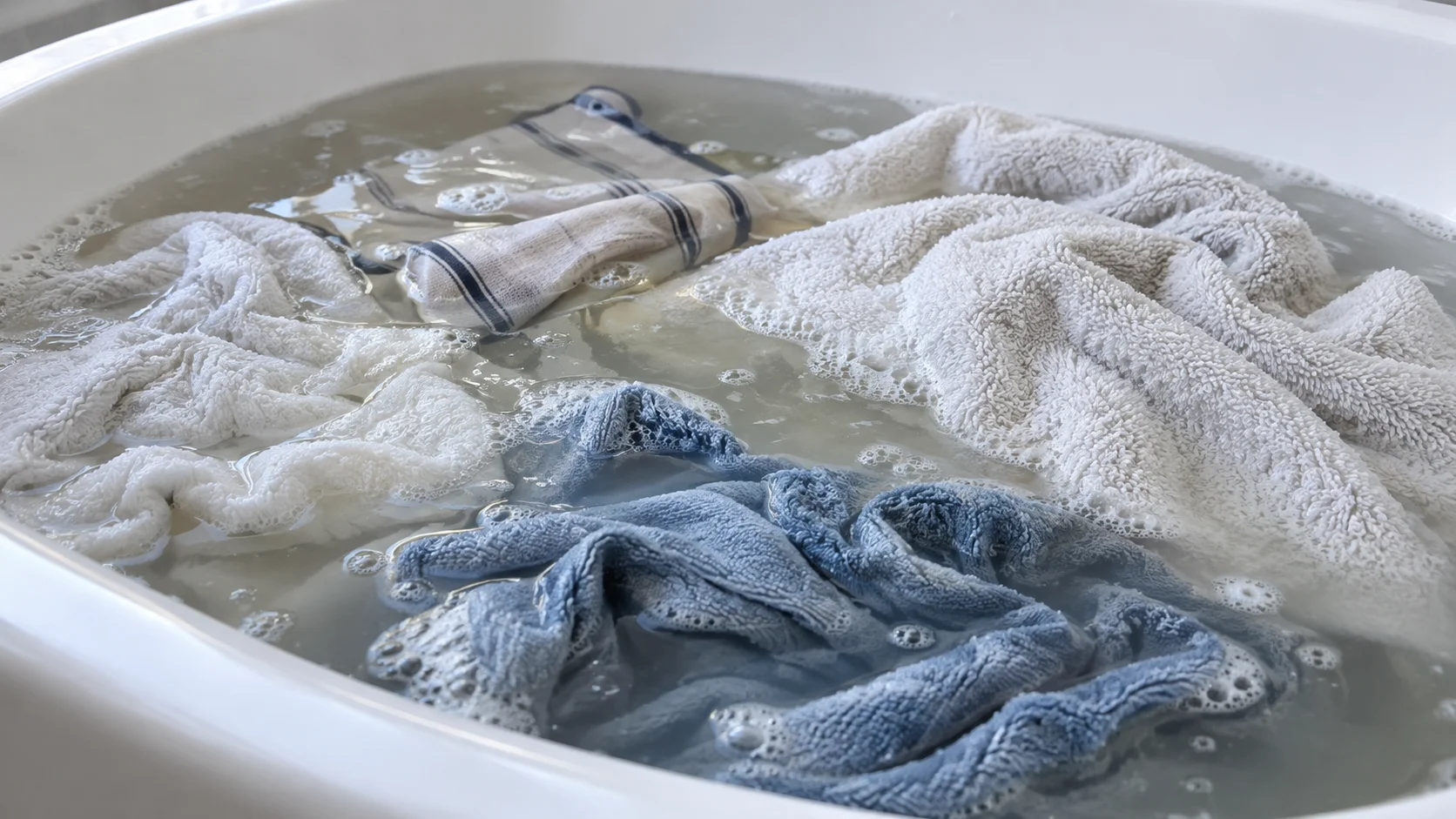
Laundry stripping is a deep-soaking method intended to remove accumulated detergent residue, fabric-softener residue, body oils, minerals, and other buildup from washable textiles. The method became especially popular through social media and is commonly performed by soaking laundry in very hot water with a mixture that traditionally contains Borax, washing soda, and powdered laundry detergent. The American Cleaning Institute (ACI) describes laundry stripping in these terms and notes that it can be an option when done carefully, while also pointing out that people who wash regularly and use the correct detergent amount generally should not need to strip their laundry.
Although the dark or cloudy soaking water often makes laundry stripping look dramatic, the water does not necessarily represent only “dirt.” Maytag explains that stripping can break down buildup but can also pull dyes and naturally occurring oils from fabrics, while some of the material released may be leftover detergent or fabric softener. For that reason, laundry stripping is better treated as an occasional intensive cleaning method for suitable sturdy items, not a replacement for ordinary washing or a routine treatment for every load.
What Is Laundry Stripping?
Laundry stripping is a long, hot-water soak designed to loosen accumulated residue and soil from fabrics. Unlike a normal wash cycle, which combines mechanical action, detergent, water, rinsing, and spinning, stripping gives the fabric a prolonged soak in a concentrated cleaning solution.
The traditional method usually uses three main components:
- Borax
- Washing soda
- Powdered laundry detergent
ACI identifies these ingredients as the usual combination used for laundry stripping in hot water, typically in a bathtub.
The method is often used for towels, sheets, and other sturdy textiles because these items can tolerate the hot-water treatment better than many delicate garments. Maytag specifically identifies light-colored towels and sheets as items that may benefit from stripping while warning that the technique is not appropriate for all fabrics.
Does Laundry Stripping Work?
Laundry stripping can remove some accumulated residue and soil, but it is not a magical method that extracts every type of dirt from every fabric.
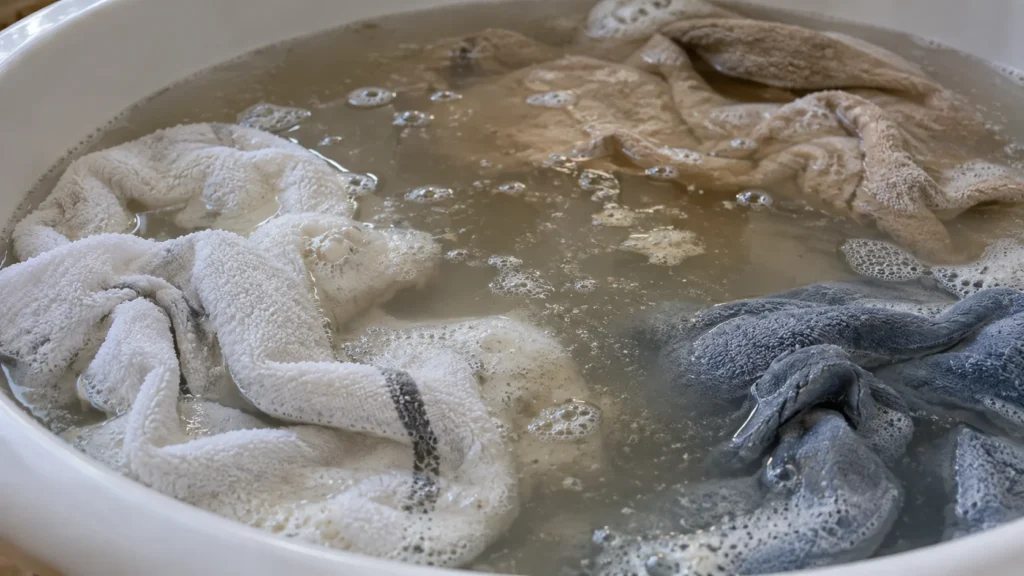
Maytag explains that the combination of Borax, powdered detergent, washing soda, and very hot water can break down buildup. It also notes that stripping can remove hard-water minerals, oils, detergent buildup, and other residues.
However, the visible water should be interpreted carefully. Dark, gray, yellow, or cloudy water can contain a mixture of:
- Soil
- Body oils
- Detergent residue
- Fabric-softener residue
- Minerals
- Dye released from fabric
- Other dissolved or suspended material
Therefore, dirty-looking water does not prove that a garment was previously “dirty despite being washed.” Some of what you see may have been product buildup or material removed from the textile itself.
Regular laundry practices can reduce the need for stripping. ACI recommends using the correct detergent amount and following garment-care instructions rather than assuming that more detergent produces cleaner laundry.
Laundry Stripping Ingredients You Need
A traditional laundry stripping recipe uses a combination of alkaline builders and powdered detergent.
Traditional ingredients
- Borax: A mildly alkaline sodium borate salt used in some laundry formulations to help loosen soils and provide alkalinity buffering.
- Washing soda: Sodium carbonate, an alkaline builder that can help soften water and support cleaning.
- Powdered laundry detergent: Provides detergent ingredients designed to loosen and suspend soils.
- Very hot water: Provides the soaking medium and heat used by the traditional method.
ACI identifies Borax as sodium borate and explains that sodium carbonate is also known as washing soda in retail laundry products. It describes sodium carbonate as an alkaline builder used in detergents and as a water-softening agent.
Borax and washing soda are not the same
This distinction matters when following a stripping laundry recipe.
Borax is sodium borate.
Washing soda is sodium carbonate.
Baking soda is sodium bicarbonate.
They are chemically different substances. ACI identifies baking soda as sodium bicarbonate and washing soda as sodium carbonate, so substituting one for another changes the recipe.
Jump into Other Related Article
- How to Remove Peanut Butter Stains
- Does Rayon Shrink?
- How to Remove Coffee Stains
- How to Clean Suede Shoes
- Best Stain Remover for Clothes
- How to Clean Stainless Steel
- How to Clean Suede Shoes
Traditional Laundry Stripping Recipe
A commonly cited laundry stripping formula uses a ratio of:
1 part Borax + 1 part washing soda + 2 parts powdered laundry detergent
HeySunday publishes this traditional ratio for its laundry-stripping method. Maytag gives a concrete example using ¼ cup Borax, ¼ cup washing soda, and ½ cup powdered laundry detergent for a bathtub soak.
Because products and washing machines differ, the product labels and appliance instructions should take priority over a generic internet recipe.
Important recipe note
Do not automatically interpret the recipe as a recommendation to use these ingredients in every washing machine. Maytag specifically says that putting a stripping solution into a washing machine is not recommended because it could damage the appliance.
For that reason, the traditional bathtub method and a washing-machine cycle should not be treated as interchangeable.
How to Do Laundry Stripping Step by Step
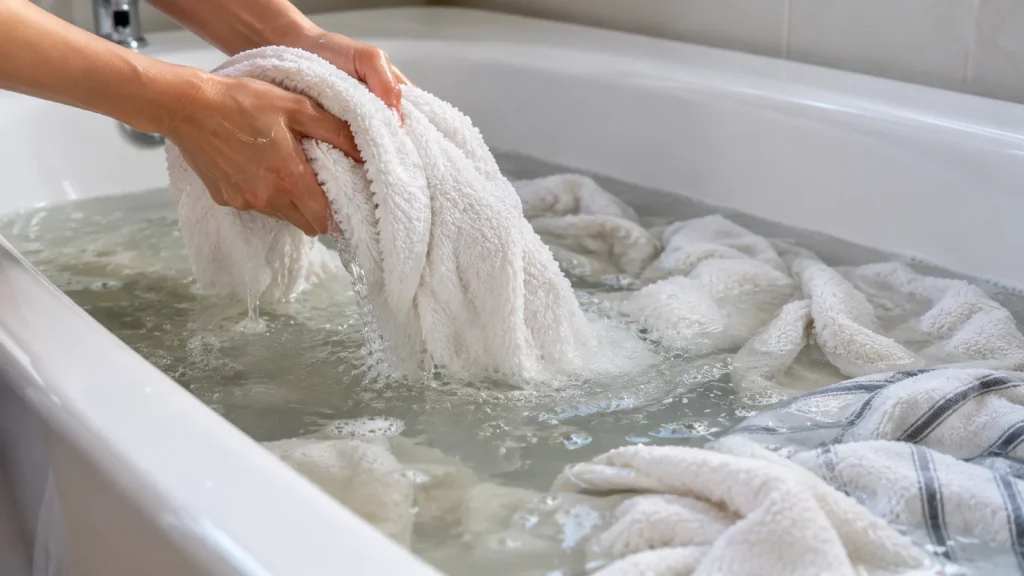
If you are stripping a suitable, washable item, the traditional process is generally performed as a tub soak rather than a normal washer cycle.
Step 1: Choose suitable laundry
Start with sturdy, washable textiles whose care labels allow hot water.
Good candidates can include:
- Light-colored towels
- White towels
- Colorfast towels
- Washable sheets
- White bedding
- Durable cotton linens
- Other sturdy washable household textiles
Maytag specifically notes that light-colored towels and sheets are among the items that may be suitable for stripping.
Step 2: Check the care label
Before preparing the solution, check whether the fabric can tolerate the required water temperature and soaking method.
Do not strip an item simply because it looks dull.
Avoid the process when the care label indicates:
- Cold-water washing only
- Delicate treatment
- Dry-clean-only care
- Material restrictions
- Other instructions incompatible with a prolonged hot soak
ACI recommends following garment-care labels and not guessing about whether a garment can safely be bleached or treated.
Step 3: Fill the tub
Fill a clean bathtub or other suitable large container with very hot water, following the limitations of the textiles being treated.
HeySunday describes filling the bathtub approximately halfway before adding the stripping ingredients.
The goal is to have enough water to fully immerse the laundry without overflowing once the textiles are added.
Step 4: Dissolve the ingredients
Add the Borax, washing soda, and powdered detergent according to the chosen product directions or established recipe.
Stir the water until the ingredients are adequately dispersed before placing the laundry into the solution.
Step 5: Submerge the laundry
Place the selected towels, sheets, or other suitable items into the solution.
Make sure the textiles become thoroughly saturated and submerged.
Step 6: Allow the laundry to soak
The traditional method involves an extended soak. Maytag describes an overnight soak and recommends stirring the items occasionally during the process.
However, longer is not automatically better. Follow the method you are using and consider the fabric’s care requirements.
Step 7: Drain and rinse
After soaking, drain the dirty solution and rinse the laundry thoroughly.
The goal is to remove the loosened material and cleaning solution rather than leaving the stripping mixture in the fibers.
Step 8: Wash normally
Run the items through an appropriate laundry cycle using the correct detergent amount.
The washing stage removes remaining loosened soil and product residue.
Step 9: Inspect before drying
Check the textiles while they are still wet.
If a stain remains, address it according to the appropriate stain-removal method rather than assuming another stripping treatment is necessary. ACI recommends treating stains according to their type and avoiding unnecessary drying before the stain is removed.
Laundry Stripping Instructions for Better Results
A successful stripping session depends more on choosing appropriate items and controlling the process than on simply increasing the amount of chemicals.
Keep these principles in mind:
- Choose sturdy washable textiles.
- Separate whites and colors.
- Avoid mixing items that can transfer dye.
- Check care labels first.
- Use the intended recipe rather than randomly increasing ingredients.
- Allow adequate soaking time.
- Stir bulky textiles occasionally.
- Rinse thoroughly.
- Wash after soaking.
- Inspect the laundry before drying.
Maytag specifically recommends avoiding mixing colors with whites because dyes can bleed in hot water.
Laundry Stripping With Borax
Borax laundry stripping is the traditional version most commonly discussed online.
Borax is sodium borate, a mildly alkaline salt. ACI explains that as a laundry additive, Borax can provide moderate alkalinity buffering and help loosen soils and stains.
In a traditional stripping recipe, Borax is combined with washing soda and powdered detergent.
The important point is that Borax is only one part of the method. Increasing the amount of Borax does not automatically make stripping better.
Use the amount specified by the recipe or product directions and avoid experimenting with concentrated mixtures.
Laundry Stripping Without Washing Soda
Some people search for laundry stripping without washing soda because they do not have sodium carbonate available or prefer a simpler process.
However, removing washing soda changes the traditional recipe. Washing soda contributes alkalinity and water-softening properties, so replacing it with another ingredient is not necessarily chemically equivalent.
ACI identifies sodium carbonate as a fairly strong alkaline salt used as a laundry detergent builder and notes that it is sold as washing soda.
If you do not have washing soda, a safer approach is to use a commercial laundry product according to its own directions rather than improvising a stronger chemical mixture.
Laundry Stripping Without Borax
A laundry stripping without Borax method is not the traditional formula.
Because Borax is one of the three ingredients commonly associated with the classic stripping recipe, removing it changes the chemistry of the treatment.
If you want to avoid Borax, consider whether you actually need a stripping treatment. For ordinary buildup, correct detergent dosing, proper washing, adequate rinsing, and an appropriate laundry booster may be sufficient.
ACI specifically says that people who clean laundry regularly and use the correct detergent amount generally should not need to strip it.
Laundry Stripping With OxiClean
Laundry stripping with OxiClean is another popular variation, but OxiClean should not automatically be added to the traditional Borax-and-washing-soda formula.
OxiClean products contain their own formulations, and the exact ingredients vary by product. Church & Dwight identifies sodium carbonate peroxide as the oxygen-bleach ingredient in several OxiClean products.
For that reason, if you want to use an oxygen bleach product, follow that product’s directions rather than creating a stronger mixture by combining several laundry additives.
ACI also explains that oxygen bleach is a separate category of laundry bleach and is generally gentler than sodium hypochlorite bleach.
Laundry Stripping With Vinegar: Should You Do It?
Vinegar should not be treated as a standard ingredient in the traditional laundry stripping recipe.
The classic method uses Borax, washing soda, and powdered detergent—not vinegar. ACI specifically warns against the social-media trend of mixing cleaning products indiscriminately because some combinations can have dangerous consequences.
Maytag also cautions that vinegar can corrode washer parts and recommends checking the washer manual before using substances other than standard laundry products.
What about vinegar and baking soda together?
Combining vinegar and baking soda produces an acid-base reaction that largely neutralizes the two substances.
That does not turn the mixture into a superior laundry-stripping solution.
For laundry stripping, stick to the ingredients appropriate for the specific method rather than adding household chemicals simply because they are popular cleaning ingredients.
Laundry Stripping in a Washing Machine
Laundry stripping in a washing machine requires particular caution.
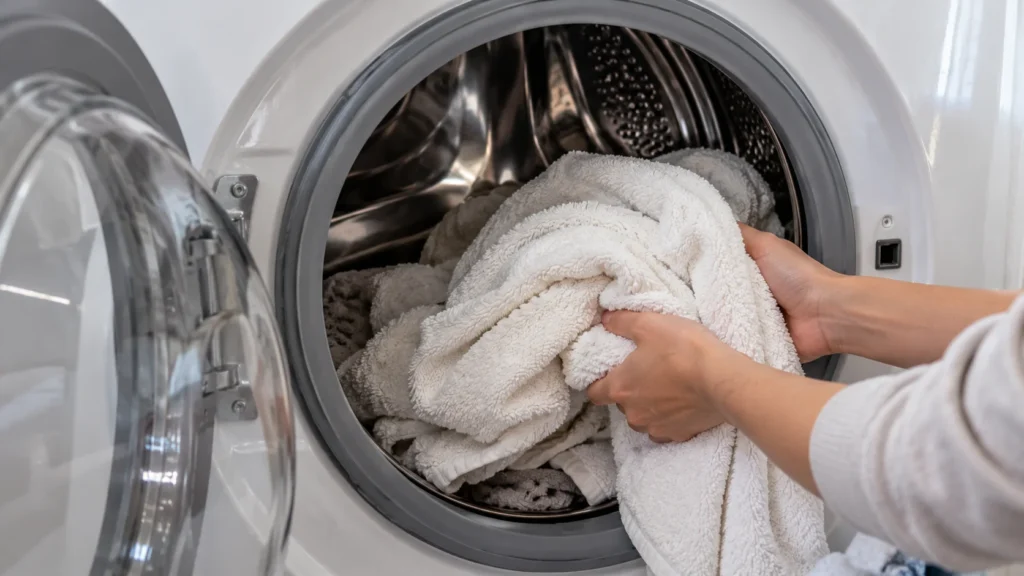
Maytag explicitly says that using a stripping solution in a washing machine is not recommended because it could damage the appliance. Instead, it suggests using an extended soak cycle where available and using traditional detergent and appropriate additives according to the machine’s instructions.
Whirlpool likewise emphasizes following the owner’s manual when using laundry chemicals and provides machine-specific procedures for cleaning and additives.
Therefore, do not simply pour a bathtub stripping mixture into a front-load or top-load washer.
A safer machine-based alternative
If your washer has an appropriate soak or extended-soak cycle, check the owner’s manual to determine which laundry products are permitted.
A machine-based approach may include:
- Selecting an appropriate soak cycle.
- Using normal detergent as directed.
- Choosing only compatible laundry boosters.
- Following the washer’s dosage instructions.
- Running a complete rinse afterward.
The specific washer manual should take priority over online stripping recipes.
Laundry Stripping Towels
Laundry stripping towels is one of the most common applications because towels are frequently washed, absorb body oils and moisture, and can accumulate detergent or softener residue.
Maytag specifically identifies towels and sheets as potential candidates for stripping, particularly light-colored and colorfast items.
Before stripping towels:
- Check the care label.
- Separate white and colored towels.
- Confirm the towels can tolerate hot water.
- Avoid delicate decorative towels.
- Do not mix towels that may bleed dye.
- Use an appropriate soaking container.
- Rinse thoroughly afterward.
If towels have become stiff, an ordinary laundry issue such as detergent overdosing, hard water, or excessive fabric softener may also be involved. Correcting the underlying laundry routine can be more useful than repeatedly stripping them.
Laundry Stripping Sheets and Bedding
Sheets and bedding can also be candidates for stripping when they are sturdy, washable, and able to tolerate the required temperature.
Maytag identifies sheets among the items that can sometimes benefit from the process.
For bedding:
- Read the care label.
- Separate colors.
- Avoid delicate decorative fabrics.
- Check whether the item can tolerate hot water.
- Make sure the tub is large enough for complete immersion.
- Rinse thoroughly after soaking.
- Wash before returning the bedding to use.
Large bedding can hold substantial amounts of water, so make sure the soaking container can safely handle the weight.
Laundry Stripping Pillows
Laundry stripping pillows is much more complicated than stripping towels.
Many pillows contain materials that should not be exposed to prolonged hot-water soaking. Memory foam, latex, delicate fills, decorative covers, and structured pillow inserts may have completely different care requirements.
Before treating a pillow:
- Read the care label.
- Determine the fill material.
- Check whether the pillow is machine washable.
- Avoid hot soaking if the manufacturer prohibits it.
- Do not assume a removable cover means the entire pillow can be stripped.
- Follow the manufacturer’s cleaning instructions.
For many pillows, a standard cleaning method designed specifically for that fill type is safer than a generic stripping recipe.
Laundry Stripping Workout Clothes
Workout clothes can accumulate sweat, body oils, detergent residue, and odor-causing soils, but that does not make them automatically suitable for stripping.
Many athletic garments contain synthetic fibers and performance finishes that require specific washing instructions.
Before using a stripping treatment:
- Check the garment label.
- Avoid excessive heat if prohibited.
- Do not assume prolonged soaking is harmless.
- Use the recommended detergent.
- Follow the manufacturer’s washing temperature.
- Consider an appropriate sports-laundry detergent when odor is the main issue.
A targeted wash routine can often address workout-clothing problems without subjecting performance fabrics to an aggressive soaking process.
Laundry Stripping Whites
Stripping white laundry is one of the more practical applications because dye-transfer concerns are reduced when the load consists entirely of suitable white fabrics.
Even so, white does not automatically mean heat-safe.
For white towels and sheets that can tolerate hot water, stripping may help remove:
- Detergent residue
- Fabric-softener buildup
- Oils
- Hard-water minerals
- Accumulated soil
Maytag notes that stripping can remove hard-water minerals, oils, and detergent buildup.
If the goal is simply to brighten whites, an appropriate oxygen bleach or other laundry product may be a more targeted option than repeatedly stripping the entire load.
Laundry Stripping Before and After: What Does the Water Mean?
The dramatic laundry stripping before and after effect is one reason the method became popular online.
The water may change from clear to gray, brown, yellow, or otherwise cloudy.
But the appearance of the water does not provide a laboratory analysis of what has been removed.
It may contain a mixture of:
- Soil
- Oils
- Detergent
- Fabric softener
- Minerals
- Dyes
- Other residues
Maytag specifically explains that much of what appears in the soaking water can be leftover detergent and fabric softener, while stripping may also leach dye and naturally occurring oils from fabric.
Therefore, dark water is not proof that ordinary washing failed.
Laundry Stripping Results: What Should You Expect?
The result of laundry stripping varies according to the fabric, amount of buildup, water temperature, product concentrations, and previous washing routine.
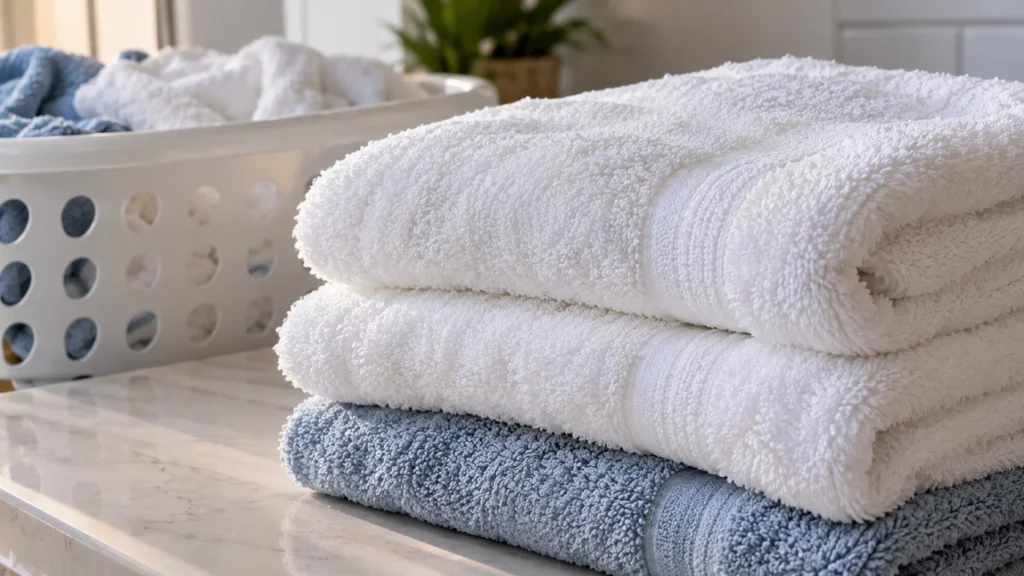
Possible results include:
- Softer-feeling towels
- Reduced residue
- Improved appearance
- Less buildup
- A different fabric feel
- Water discoloration during soaking
But stripping may not solve:
- Permanent dye changes
- Set-in stains
- Fiber damage
- Fabric wear
- Incorrect washing practices
- Problems caused by unsuitable detergent
- Odors caused by issues unrelated to surface buildup
If a problem returns after stripping, investigate the normal laundry routine instead of repeatedly performing an aggressive treatment.
Does Laundry Stripping Remove Odors?
Laundry stripping may reduce some odors when the odor is associated with accumulated residue, oils, or soil. It is not a universal odor-removal treatment.
If odor repeatedly returns after washing, consider the cause.
Potential factors can include:
- Excess detergent
- Fabric-softener residue
- Incomplete rinsing
- Excessive washer loading
- Persistent body oils
- Improper drying
- Damp storage
- Washer-cleanliness problems
Whirlpool recommends following the washer manufacturer’s cleaning procedure rather than adding random chemicals when dealing with odors inside the machine.
For clothing, correct detergent dosing and proper washing remain important. ACI recommends using the proper amount of detergent because both overuse and underuse can affect cleaning performance.
Is Laundry Stripping Real?
Yes, laundry stripping is a real cleaning method, but some social-media claims about it are exaggerated.
The process can remove accumulated residue and soil under suitable conditions. Maytag describes it as an aggressive cleaning method that can break down buildup.
What should be avoided is the idea that every load of laundry contains a hidden layer of dirt that can only be revealed by stripping.
ACI’s position is more measured: laundry stripping can be an option when performed carefully, but regular washing with the correct amount of detergent generally should make it unnecessary.
Laundry Stripping Reddit Discussions vs Practical Laundry Care
Laundry stripping Reddit discussions can be useful for seeing people’s experiences, but personal experiences are not the same as controlled testing.
One person may report dramatic results because their towels had significant detergent buildup or because they had been using too much fabric softener. Another person may see little change because their laundry routine already uses appropriate detergent amounts and adequate rinsing.
For reliable laundry guidance, prioritize:
- Garment care labels
- Product instructions
- Washer manuals
- Manufacturer guidance
- Established cleaning-industry information
ACI specifically warns that social-media cleaning trends should not automatically be followed simply because they are popular.
Natural or Non-Toxic Laundry Stripping
Searches for non-toxic laundry stripping and natural laundry stripping recipes are common, but “natural” does not automatically mean harmless.
Borax, washing soda, detergent, oxygen bleach, and other household cleaning ingredients all have specific chemical properties and safe-use requirements.
A responsible approach is to avoid broad claims such as:
- “Completely non-toxic”
- “Chemical-free”
- “Safe for every fabric”
- “Safe for every washing machine”
Everything used in a cleaning formula has chemical properties. The relevant question is whether the product is appropriate for the intended use and whether it is being handled according to its directions.
ACI emphasizes using cleaning products according to their labels and warns against copying potentially unsafe social-media cleaning trends.
Common Laundry Stripping Mistakes
The most common problems come from treating a viral recipe as universal.
Avoid these mistakes:
- Stripping every load routinely
- Ignoring the garment care label
- Using very hot water on heat-sensitive fabrics
- Mixing whites and unstable dyes
- Assuming dark water is entirely dirt
- Adding extra Borax to “make it stronger”
- Adding extra washing soda
- Combining vinegar with the stripping formula
- Combining unrelated cleaners
- Putting a bathtub stripping solution directly into a washer
- Stripping wool or silk without manufacturer approval
- Stripping delicate clothing
- Treating pillows like towels
- Leaving products in the fabric without thorough rinsing
- Assuming stripping replaces normal laundry
- Using excessive detergent afterward
Whirlpool warns against mixing stain-removal products because some combinations can produce noxious fumes.
How to Prevent the Need for Laundry Stripping
The best way to reduce the need for stripping laundry is to improve the normal laundry routine.
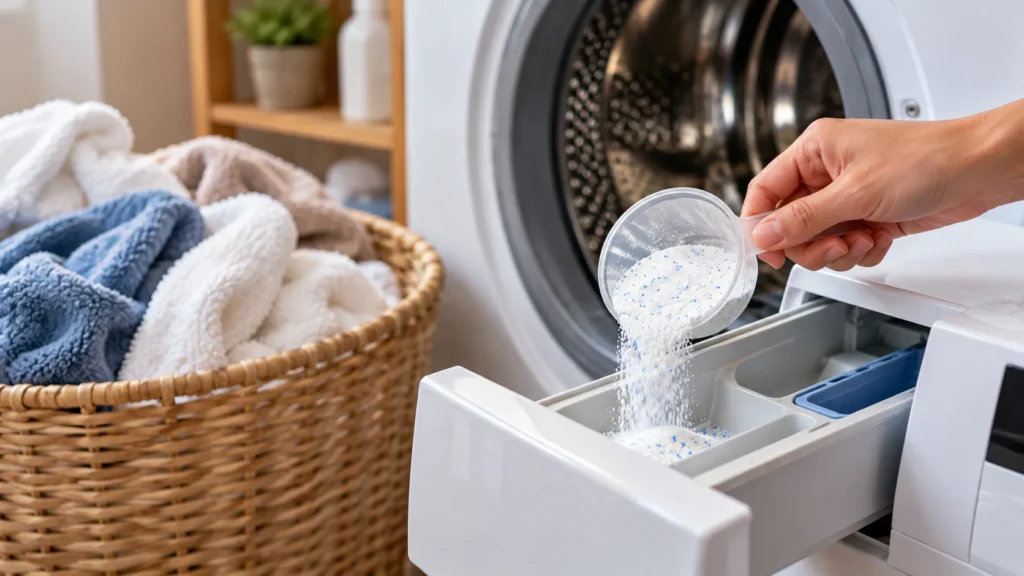
Use the correct detergent amount
More detergent is not automatically better. ACI specifically recommends following the product label and notes that both too much and too little detergent can result in less-than-optimal cleaning.
Avoid overloading the washer
Clothes need enough room to move through the wash and rinse process.
Choose the appropriate water temperature
Follow the care label and detergent instructions rather than automatically choosing the hottest available setting.
Use fabric softener carefully
Excessive product use can contribute to residue buildup.
Clean the washer according to its manual
Do not use a homemade chemical mixture simply because it is popular online.
Whirlpool’s washer guidance specifically provides manufacturer-approved cleaning procedures and warns against adding other chemicals during certain cleaning cycles.
When You Should Skip Laundry Stripping
There are many situations where laundry stripping is not appropriate.
Skip the method when:
- The care label prohibits hot water.
- The fabric is delicate.
- The item is dry-clean only.
- The material is especially sensitive to prolonged soaking.
- The manufacturer gives different cleaning instructions.
- The item contains a finish that may be affected.
- The colors are likely to bleed.
- The item cannot safely tolerate the cleaning solution.
- You are unsure whether the textile is compatible.
Maytag states that laundry stripping is not safe for all fabrics or even most fabrics.
This is particularly important for expensive clothing and textiles where replacing the item would cost much more than addressing the original residue problem.
Laundry Stripping vs Regular Washing
The two methods serve different purposes.
| Feature | Regular washing | Laundry stripping |
| Main purpose | Routine cleaning | Intensive removal of buildup |
| Typical setting | Washing machine | Long soak, commonly bathtub |
| Frequency | Routine | Occasional |
| Detergent | Normal recommended amount | Traditional stripping recipe may include powdered detergent |
| Water | Fabric-appropriate temperature | Traditionally very hot |
| Suitable for most clothing | Yes, when care instructions are followed | No |
| Main concern | Correct cycle and dosage | Heat, chemical exposure, dyes and fabric compatibility |
| Appliance use | Designed for washer | Traditional stripping solution should not simply be put in washer |
ACI says regular cleaning with the correct detergent amount should generally eliminate the need for laundry stripping. Maytag similarly recommends improving detergent dosing and normal laundry practices rather than relying on repeated stripping.
A Practical Laundry Stripping Checklist
Before starting a laundry stripping method, ask:
- Is the fabric washable?
- Does its care label allow hot water?
- Is the item sturdy enough for prolonged soaking?
- Is it colorfast?
- Have whites and colors been separated?
- Am I using a recognized recipe rather than inventing a chemical mixture?
- Have I checked the detergent label?
- Have I checked the washer manual if a machine cycle is involved?
- Am I avoiding vinegar and unrelated cleaners?
- Do I have enough space to completely submerge the items?
- Can I rinse the laundry thoroughly afterward?
- Is stripping actually necessary?
- Could correct detergent dosing solve the problem instead?
- Is the issue residue, stains, odor, or something else?
- Am I treating an item that is better cleaned according to its manufacturer’s instructions?
If the answer to the fabric-safety questions is uncertain, do not guess.
Conclusion
Laundry stripping is an intensive soaking method traditionally based on hot water, Borax, washing soda, and powdered laundry detergent. It can help loosen accumulated detergent residue, fabric-softener buildup, oils, soil, and some mineral deposits from appropriate sturdy textiles. Maytag recognizes that the method can work on buildup while also warning that it can leach dyes and natural fabric oils, which is why it should not be considered suitable for every garment.
For most households, the more sustainable long-term approach is to use the correct detergent amount, avoid overloading the washer, follow garment-care labels, and maintain the washing machine according to its manual. ACI specifically notes that regular cleaning with the proper detergent amount generally means laundry stripping should not be necessary. When stripping is appropriate, reserve it for compatible, sturdy items such as suitable towels or sheets, and avoid turning a viral recipe into a routine treatment for every load.
1. What is laundry stripping?
Laundry stripping is a long soaking method intended to remove accumulated residue, soil, oils, detergent buildup, and other material from suitable washable textiles. The traditional method uses hot water with Borax, washing soda, and powdered laundry detergent.
2. What is the best laundry stripping recipe?
A commonly cited traditional recipe uses 1 part Borax, 1 part washing soda, and 2 parts powdered laundry detergent. Maytag provides an example of ¼ cup Borax, ¼ cup washing soda, and ½ cup powdered detergent. The recipe should only be used on fabrics that can safely tolerate the treatment.
3. Can you do laundry stripping in a washing machine?
You should not automatically put a traditional stripping solution into a washing machine. Maytag specifically says this is not recommended because it could damage the appliance. If your washer has an extended soak cycle, follow the owner’s manual and use only compatible products.
4. Does laundry stripping remove odors?
It can reduce some odors when they are associated with accumulated soil, oils, or residue, but it is not a universal odor treatment. If odors keep returning, examine detergent dosing, washing practices, drying, storage, and washer maintenance instead of repeatedly stripping the laundry.
5. Is laundry stripping safe for all fabrics?
No. Laundry stripping is not safe for all fabrics. The hot water, prolonged soaking, and cleaning mixture can affect dyes and fabric oils, and some materials have care instructions that make them unsuitable for the process. Always check the garment-care label before attempting to strip an item.