
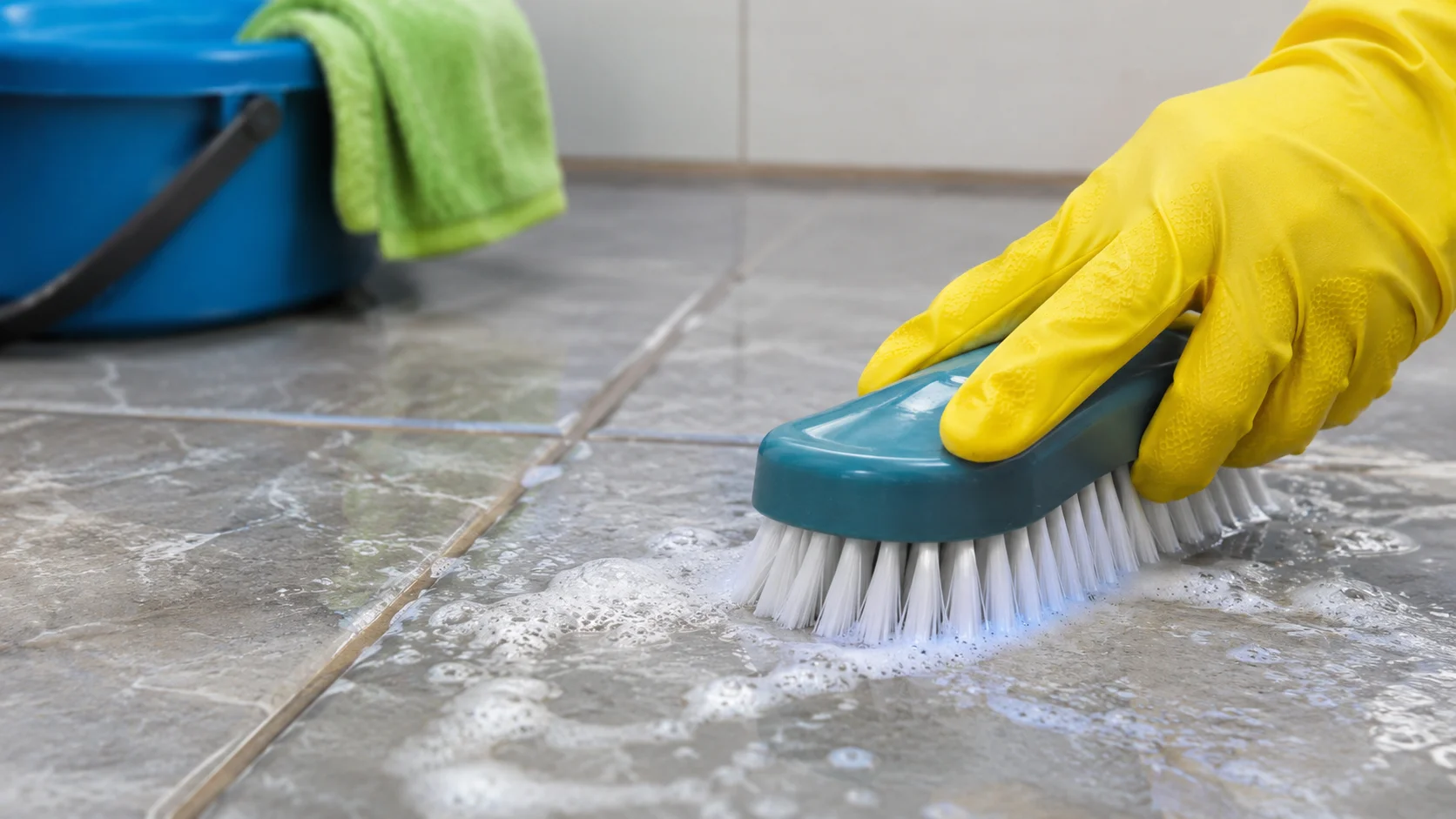
Choosing the best tiles cleaner depends on the surface you want to clean and the type of dirt you need to remove. Bathroom tiles may collect soap scum and hard-water deposits, kitchen tiles can develop greasy stains, and floor tiles often accumulate dust and muddy marks. Using a suitable cleaning product can help restore a fresh appearance without damaging the tile finish or grout.
In India, tile-cleaning products are available in liquid, concentrated, and ready-to-use formulas. Some are designed for routine mopping, while others target stubborn deposits on compatible surfaces. This guide explains how to choose a suitable tiles cleaner, compares options available in the Indian market, and shares practical cleaning methods for different tile materials.
What Is the Best Tiles Cleaner?
The best tiles cleaner is one that removes the specific dirt or stain you are dealing with while remaining safe for your tile material. A powerful product is not always the best option for everyday cleaning. The wrong formula may damage a polished finish, discolour grout, or leave residue behind.
Before purchasing a cleaner, consider these factors:
- Tile compatibility: Check whether the product is suitable for ceramic, porcelain, vitrified tiles, or natural stone.
- Cleaning performance: Consider whether you need to remove everyday dirt, grease, soap scum, mineral deposits, or stubborn stains.
- Ease of application: A liquid cleaner may be convenient for large floors, while a ready-to-use spray can suit smaller areas.
- Rinsing requirements: Some products require rinsing, while others have different instructions. Follow the label carefully.
- Safety: Look for directions concerning ventilation, gloves, eye protection, and surfaces to avoid.
- Cost per use: Compare the recommended quantity needed for each cleaning session rather than judging a product by bottle size alone.
- Residue control: The correct quantity and proper rinsing, where required, help prevent streaks and sticky buildup.
For regular household maintenance, a mild cleaner compatible with your tiles is usually a sensible starting point. Stronger or specialist products are better reserved for particular cleaning problems.
Best Tiles Cleaner Products to Consider in India
Different products serve different purposes. The following options are worth comparing based on their intended uses. They are not presented as a laboratory-tested ranking, and the most suitable choice will depend on your tile material and cleaning requirements.
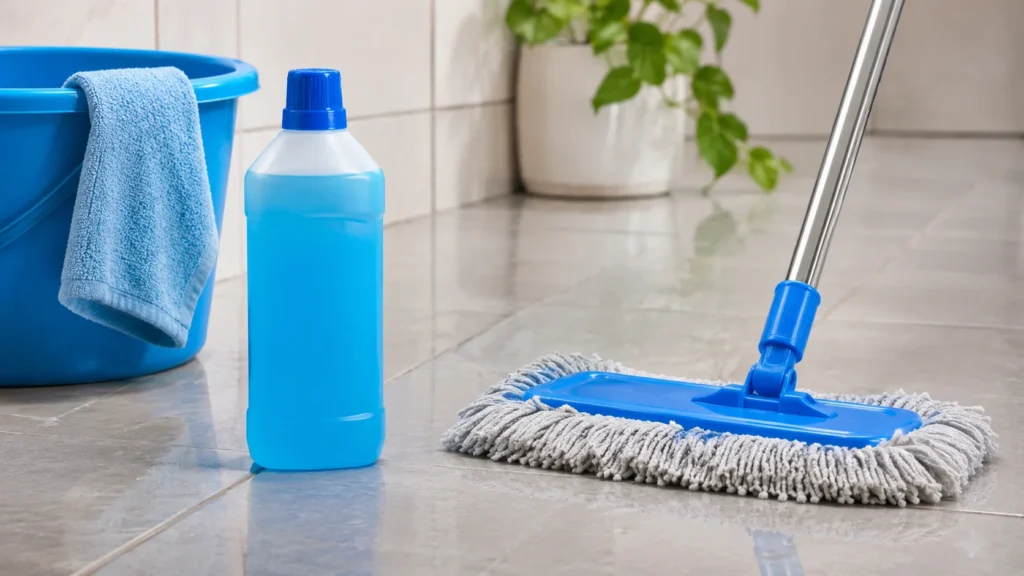
1. Roff Cera Clean for Tile and Floor Cleaning
Roff Cera Clean is a tile-cleaning liquid marketed for compatible tiled surfaces. It is worth considering when you want a product specifically intended for tile maintenance rather than an ordinary household floor cleaner.
Why consider it:
- Designed for tile-cleaning applications.
- May suit routine cleaning and certain types of surface grime when used as directed.
- Available in different package sizes, depending on the seller.
- Useful to compare when shopping for a dedicated tile-cleaning product.
How to use it: Read the manufacturer’s current instructions to determine the appropriate dilution, application method, and rinsing requirements. Test a small, inconspicuous section before treating a large area.
Important limitation: Do not assume that a tile cleaner is automatically suitable for marble, terrazzo, or every polished surface. Confirm compatibility before use.
2. CERA Tile Cleaner for Suitable Ceramic and Vitrified Tiles
CERA Tile Cleaner is an option to consider for certain tiled floors and walls where mineral deposits or other stubborn surface buildup require targeted treatment. The product has been marketed as an acid-based cleaner, so surface compatibility is especially important.
Why consider it:
- Intended for specified ceramic and vitrified tile surfaces.
- May be useful for certain mineral deposits when the surface is compatible.
- Offers an alternative to ordinary detergent-based cleaning for specific problems.
How to use it: Follow the product label for dilution, application time, protective equipment, and rinsing. Never use an acid-based cleaner on a surface unless the manufacturer confirms that it is suitable.
Important limitation: Acidic cleaners can etch or dull natural stone such as marble and may damage sensitive finishes or nearby fittings. If you are uncertain about the tile material, choose a gentler cleaner until you can confirm its composition.
3. A pH-Neutral Cleaner for Natural Stone
Marble, limestone, and other natural stones need more careful maintenance than many ordinary ceramic tiles. A suitable pH-neutral stone cleaner can help remove everyday dirt while reducing the risk associated with acidic products.
Why consider it:
- Suitable options are available specifically for natural stone.
- Useful for regular cleaning when approved for the stone and finish.
- Helps avoid using harsh, incompatible chemicals unnecessarily.
How to use it: Follow the manufacturer’s instructions, use a soft mop or cloth, and remove residue as directed. Test the product in a hidden area before cleaning the entire floor.
Important limitation: Not every product labelled “neutral” is approved for every stone treatment or sealer. Check the label and the stone supplier’s care recommendations.
4. Mild Floor Cleaner for Everyday Tile Maintenance
A mild floor cleaner can be a practical option for routine cleaning in living rooms, bedrooms, hallways, and other tiled spaces. Everyday dust and light soil usually do not require a specialist stain remover.
Why consider it:
- Convenient for frequent floor cleaning.
- Suitable options are available in concentrated and ready-to-use formulas.
- Can be economical when used at the recommended dilution.
How to use it: Sweep or vacuum the floor first, prepare the solution according to the label, and mop with clean equipment. Rinse if the instructions require it and avoid leaving excess water on the surface.
Important limitation: A general floor cleaner may not remove heavy mineral deposits, deeply embedded grime, or stubborn grout staining. Select a targeted product when the problem calls for one.
5. Bathroom Tile Cleaner for Soap Scum and Daily Buildup
Bathroom tiles commonly collect soap residue, body oils, and deposits left behind by water. A bathroom cleaner labelled for your tile material may help loosen this buildup.
Why consider it:
- Intended for common bathroom cleaning tasks.
- Can be convenient for shower walls, tiled floors, and other approved surfaces.
- May help with routine residue that a simple wipe does not remove.
How to use it: Apply the product as directed, allow the specified contact time, and rinse if instructed. Keep the room ventilated and avoid letting the cleaner dry on the surface unless the label permits it.
Important limitation: A bathroom cleaner may not be suitable for marble, delicate grout, or metal fittings. Check the restrictions before use.
6. Harpic Bathroom Cleaner for Compatible Bathroom Surfaces
Harpic offers bathroom-cleaning products designed for particular bathroom surfaces and tasks. Some formulas contain bleach-based ingredients, so the exact product and its instructions matter.
Why consider it:
- Designed for selected bathroom cleaning applications.
- May be convenient for compatible surfaces when used according to its label.
- Offers an alternative for households that prefer a bathroom-specific product.
How to use it: Confirm that the exact formula is suitable for your tiles. Follow the directions for dilution, ventilation, protective equipment, and rinsing.
Important limitation: Do not treat every Harpic product as interchangeable. Some formulations may be unsuitable for certain tile finishes, metals, or other materials. Never mix a bleach-containing cleaner with toilet cleaner, vinegar, ammonia, or any other cleaning product.
7. Ready-to-Use Multi-Surface Cleaner for Small Tiled Areas
A multi-surface cleaner may be convenient for small tiled areas such as kitchen backsplashes, selected bathroom surfaces, and occasional spot cleaning.
Why consider it:
- Ready-to-use sprays can reduce preparation time.
- Useful for small areas that do not need a full bucket of cleaning solution.
- Can be practical for quick maintenance between deeper cleans.
How to use it: Check that the label specifically permits use on the tile surface. Apply as directed and rinse if required, particularly on food-preparation surfaces.
Important limitation: A spray may be less economical for large floors. It also may not be suitable for natural stone or every grout type.
Which Tiles Cleaner Should You Choose?
Use this comparison to narrow down the options for your home.
| Cleaning requirement | Suitable option to consider | Key precaution |
| Everyday dirt on tiled floors | Mild floor or tile cleaner | Follow the recommended dilution |
| General tile grime | Dedicated tile cleaner such as Roff Cera Clean | Confirm surface compatibility |
| Mineral deposits on suitable tiles | A compatible specialist descaler | Avoid acid-sensitive surfaces |
| Marble or other natural stone | A pH-neutral stone cleaner | Check the stone and sealer requirements |
| Soap scum in the shower | Compatible bathroom tile cleaner | Protect grout and nearby fittings |
| Small tiled backsplash | Suitable multi-surface spray | Follow food-contact and rinsing instructions |
| Frequent cleaning of a large floor | Compatible concentrated cleaner | Compare cost per use |
For most households, it is unnecessary to buy a different product for every room. One suitable everyday cleaner and a specialist product for a particular problem may be enough.
Jump into Other Related Article
- Best Deck Stain and Sealer | Complete Guide for Pressure Treated, Cedar, Old, and Full Sun Decks
- Brick Stain Colors | Exterior, Interior, Fireplace, Paver, and Before and After Ideas
- Best Tub Cleaner | 7 Effective Options for Soap Scum, Hard Water, and Tough Stains
How to Clean Tiles for a Clean, Streak-Free Finish
The right product works best when it is applied correctly. Excess cleaner, dirty mop water, and incomplete drying can leave a floor looking dull even after cleaning.
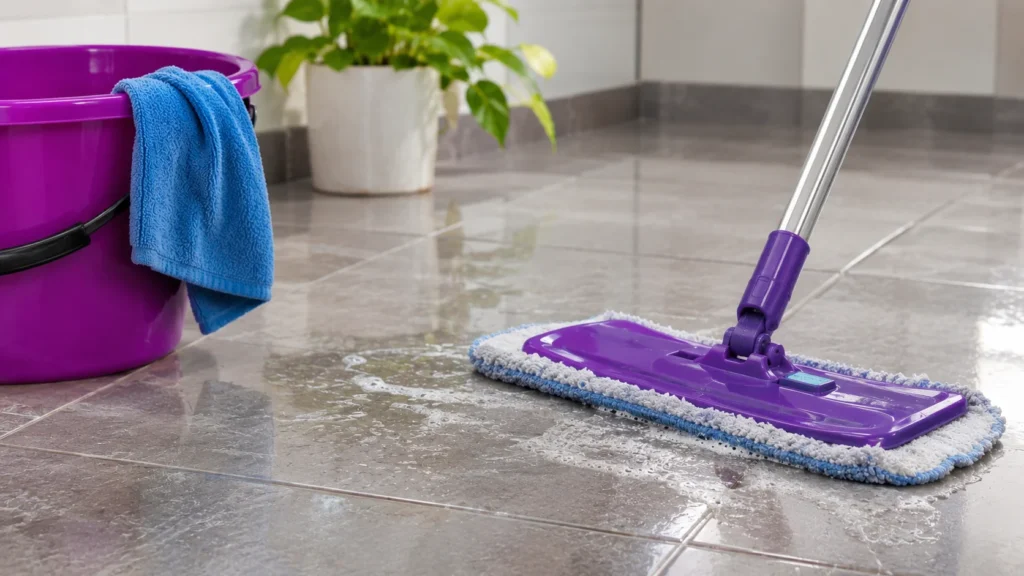
Step 1: Remove loose dust and debris
Sweep or vacuum before using liquid cleaner. Sand, grit, and other particles can be dragged across the floor during mopping and may scratch some finishes.
Step 2: Check the cleaning instructions
Read the label before preparing a solution. Check the recommended quantity, contact time, ventilation requirements, and whether the surface must be rinsed.
Never assume that doubling the concentration will improve the result. Too much product can leave residue or damage a sensitive finish.
Step 3: Test a hidden area
Apply a small amount to an inconspicuous spot and check for changes in colour, gloss, or texture. This is particularly important for polished tiles, coloured grout, natural stone, and older surfaces.
Step 4: Clean in manageable sections
Use a suitable mop, sponge, or cloth. On floors, work from the farthest corner toward the exit so you do not need to walk over freshly cleaned sections.
Step 5: Give the product the correct contact time
If the label specifies a waiting period, follow it. Do not allow the cleaner to dry on the tiles unless the instructions specifically permit this.
Step 6: Scrub gently when necessary
Use a non-abrasive brush for stubborn dirt, especially around tile joints. Avoid steel wool, harsh scouring pads, and sharp tools on delicate or polished finishes.
If a stain remains, identify the type of deposit before trying a stronger formula.
Step 7: Rinse and dry as directed
Replace dirty water when necessary so you are not spreading loosened dirt across the floor. Rinse the surface if required, then remove excess moisture with a clean mop or cloth.
Proper rinsing and drying help reduce streaks and residue while leaving the floor ready for use.
How to Choose a Cleaner for Different Tile Materials
Tile material and finish should guide your choice of cleaner. Two surfaces may look similar but respond differently to acidic chemicals, abrasive tools, and excess moisture.
Ceramic tiles
Glazed ceramic tiles are often straightforward to maintain. For routine dirt, use a compatible tile cleaner or mild detergent solution. Pay attention to grout lines, where dirt can collect.
Do not assume that a cleaner suitable for the tile itself is also appropriate for every decorative detail, sealant, or metal fitting nearby.
Porcelain and vitrified tiles
Porcelain and vitrified tiles are commonly used in Indian homes because they are available in a range of finishes. However, polished surfaces can show streaks when too much product is used.
Choose a cleaner approved for the specific tile and use a soft mop. For textured surfaces, a suitable brush may help remove dirt trapped in the finish.
Marble and natural stone
Marble and some other stones are sensitive to acids. Vinegar, lemon-based products, and acidic descalers can etch or dull susceptible surfaces.
Use a cleaner specifically approved for your stone type. If you are uncertain about the material, ask the tile supplier or a stone-care professional before using a specialist chemical.
Textured and outdoor tiles
Outdoor tiles can collect mud, soil, and other debris. Sweep first, then use a compatible cleaner and brush. Check the label before using a pressure washer or strong chemical treatment because grout, sealants, and nearby plants may be affected.
Grout and tile joints
Grout can absorb dirt and may need a separate cleaning approach. Begin with a grout-compatible product and a soft or medium brush. Avoid aggressive scrubbing that could erode the joints.
Cracked, missing, or powdery grout may need repair rather than repeated cleaning.
Common Tile-Cleaning Mistakes to Avoid
Avoid these mistakes to protect your tiles and achieve a better finish.
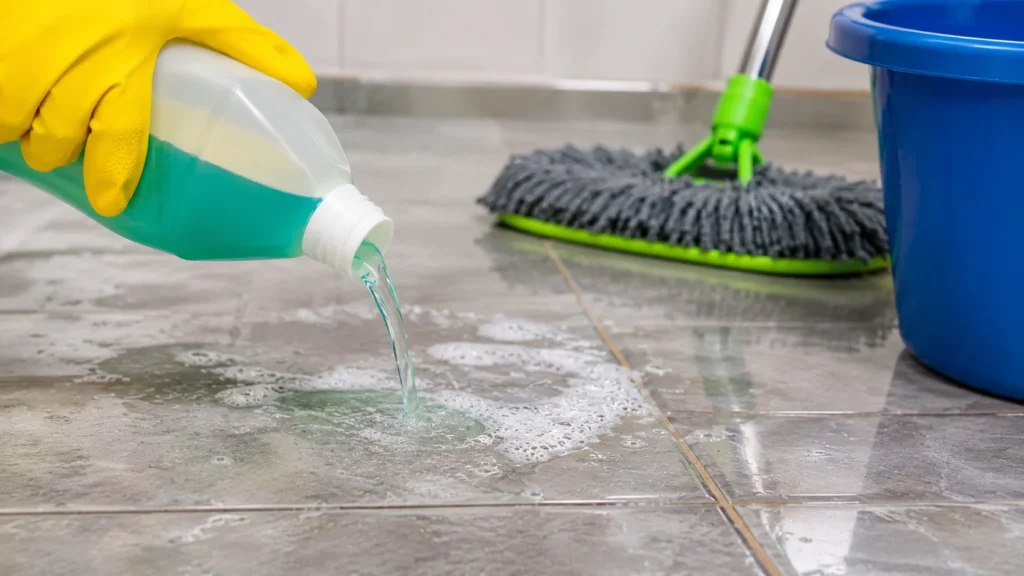
- Using one cleaner on every surface: Natural stone, ceramic tiles, grout, and metal fittings can have different requirements.
- Mixing cleaning chemicals: Combining bleach with acids, ammonia, or other cleaners can release dangerous fumes. Use only one product at a time.
- Using too much concentrate: Excess cleaner can leave a film and may damage sensitive surfaces.
- Scrubbing with abrasive tools: Steel wool and harsh scouring powders can scratch some tile finishes.
- Ignoring the label: Dilution, contact time, rinsing, and protective equipment vary between products.
- Leaving cleaner to dry: Residue may form streaks, particularly in warm conditions.
- Using acidic products on marble: Acid can etch susceptible natural stone.
- Reusing dirty mop water: Dirty water can redistribute soil across a clean floor.
- Overlooking recurring buildup: Cooking grease, hard-water splashes, and poor bathroom ventilation may need to be addressed to reduce repeated cleaning.
A suitable cleaner and careful technique are generally more useful than repeatedly switching to stronger chemicals.
Is Buying a Specialised Tiles Cleaner Worth It?
A dedicated tile cleaner can be worthwhile if you regularly deal with bathroom buildup, greasy kitchen tiles, stubborn surface deposits, or large tiled floors.
However, not every household needs several specialist products. A mild cleaner may be enough for routine dust and light dirt, while a targeted product can be kept for occasional stains.
Before buying, ask yourself:
- Does the product name my tile material on its label?
- Is it intended for routine cleaning or a specific stain?
- How much product is needed for one cleaning session?
- Does it require rinsing?
- Are there restrictions involving grout, stone, or metal fittings?
- Will I use it often enough to justify the cost?
Comparing the cost per recommended use can help you avoid paying extra for a large bottle or a specialist formula you rarely need.
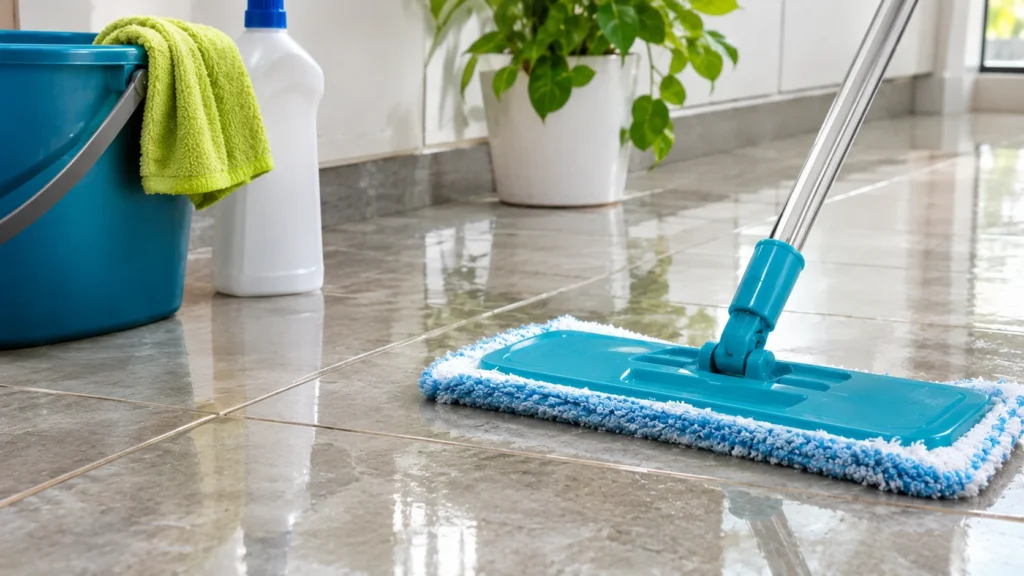
How to Keep Tiles Cleaner for Longer
Regular maintenance can reduce the amount of effort required during deeper cleaning.
- Sweep or vacuum floors regularly to remove grit.
- Wipe food spills and kitchen splashes before they dry.
- Ventilate bathrooms during and after showers where possible.
- Remove excess water from shower walls and ledges.
- Wash mop heads and cleaning cloths regularly.
- Use clean water when mopping.
- Inspect grout and sealant for cracks or deterioration.
- Follow the tile or stone manufacturer’s care recommendations.
Frequently used kitchen and bathroom floors may need more attention than less-used rooms. Light, regular cleaning is often easier than waiting until dirt becomes difficult to remove.
Conclusion
The best tiles cleaner is one that removes the dirt you are dealing with while protecting your tile material, grout, and finish. For everyday maintenance, a mild compatible cleaner is often sufficient. For bathroom residue, mineral deposits, or stubborn grime, a specialist product may be more effective when used on an approved surface.
When comparing tile cleaners in India, consider options such as Roff Cera Clean, CERA Tile Cleaner, a suitable neutral stone cleaner, or a bathroom-specific product according to its intended use. Always read the label, test an inconspicuous area, and never mix cleaning chemicals.
With the right product and consistent maintenance, you can keep your tiled floors and walls clean without unnecessary harsh scrubbing or excessive chemicals.
1. Which is the best tiles cleaner for home use?
The best choice depends on your tile material and the type of dirt. For everyday cleaning, use a mild cleaner approved for your tiles. For mineral deposits, grease, or soap scum, choose a product designed for that specific problem.
2. Which tile cleaner is best in India?
Options include Roff Cera Clean for compatible tiled surfaces, CERA Tile Cleaner for specified ceramic and vitrified surfaces, and suitable neutral cleaners for natural stone. The best choice depends on the material, stain, product instructions, and your cleaning needs.
3. What is the best tiles cleaner liquid for bathroom floors?
A bathroom floor cleaner labelled for your tile material is a good starting point. For routine dirt, a mild formula may be enough. For stubborn deposits, choose a suitable specialist product and follow the instructions carefully.
4. Can I use bathroom cleaner on kitchen tiles?
Only if the product label permits it. Kitchen tiles may be close to food-preparation surfaces, so follow instructions concerning rinsing and contact with food. Choose a product suitable for the tile and the type of residue you need to remove.
5. Is vinegar safe for cleaning all tiles?
No. Vinegar is acidic and can damage marble, limestone, and other acid-sensitive materials. Avoid using it on unidentified surfaces until you know that the tile and grout can tolerate it.
6. How can I clean tiles without leaving streaks?
Remove loose dirt first, use the recommended quantity of cleaner, and change dirty mop water when necessary. Rinse if directed and dry the surface with a clean mop or cloth. Excess product is a common cause of residue.
7. How often should I use a tiles cleaner?
Cleaning frequency depends on foot traffic and how quickly dirt builds up. Frequently used kitchen and bathroom floors may need regular cleaning, while less-used rooms may need it less often.
8. Can tile cleaner damage grout?
Yes, some products can damage grout or affect its colour if they are too strong or unsuitable. Choose a grout-compatible cleaner, test a small area, and avoid excessive scrubbing.
9. What is the best way to remove hard-water stains from tiles?
Identify the tile material before choosing a descaler. A suitable product may help remove mineral deposits from compatible ceramic or vitrified tiles, but acidic cleaners should not be used on marble or other acid-sensitive stone.
10. Can I use a floor cleaner on wall tiles?
Only if the product label allows it. Check the surface restrictions and instructions for rinsing. Apply carefully to prevent drips onto sensitive fittings or surrounding materials.
11. Is a stronger tile cleaner always better?
No. A strong formula may be unnecessary for everyday dirt and can damage delicate finishes. Choose the product according to the stain and surface, then follow the recommended concentration and contact time.
12. How do I identify whether my tiles are natural stone or ceramic?
Check the tile packaging, installation records, or supplier information. Appearance alone may not reliably identify the material. If you are unsure, avoid acidic and abrasive cleaners until the surface is confirmed.