
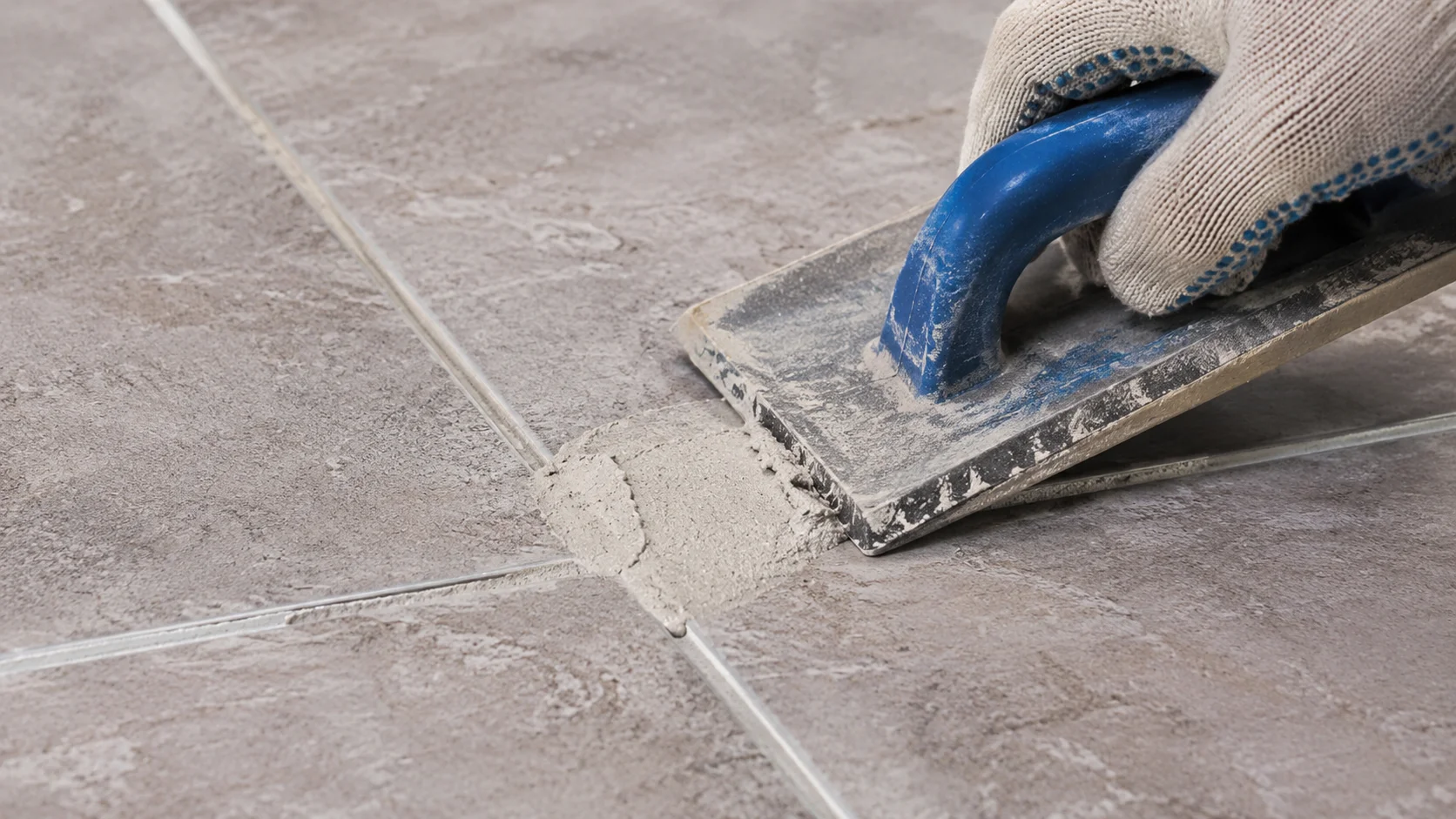
Choosing sanded or unsanded grout can affect how well your tiled surface holds up, how easy the grout is to apply, and how the finished installation looks. Although the two types serve a similar purpose, their textures and recommended applications differ. Sanded grout contains fine aggregate that helps support wider joints, while traditional unsanded grout has a smoother texture that can be useful for narrow joints and delicate tile finishes.
The right choice depends on the tile material, grout-line width, location, and the specific grout product. Some modern grouts use different formulations and have their own application limits, so the manufacturer’s instructions should always take priority over a general rule. This guide explains how to choose between sanded and unsanded grout for floors, showers, backsplashes, mosaics, and other tiled surfaces.
Sanded vs. Unsanded Grout: What Is the Difference?
The main difference is the aggregate included in the grout mixture. Sanded grout contains fine sand or a similar aggregate, while traditional unsanded grout does not contain that coarse filler. This affects the grout’s texture, handling, and suitability for different joints.
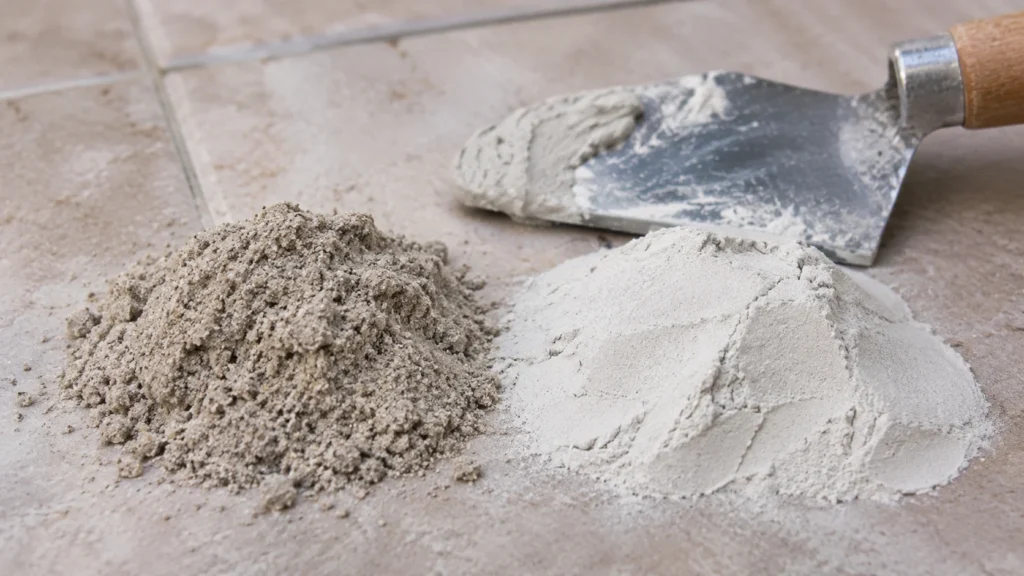
Sanded grout
Sanded grout contains fine aggregate mixed with cement-based grout ingredients. The aggregate helps reduce shrinkage and supports grout joints that are wider than those typically suited to traditional unsanded grout.
Common characteristics of sanded grout:
- Gritty texture during application.
- Often used for medium or wider grout joints, subject to the product label.
- Commonly selected for many floor-tile installations.
- Can be harder to force into very narrow joints.
- May scratch some delicate tile finishes if the aggregate and application method are unsuitable.
- Requires careful mixing, application, and cleanup according to the manufacturer’s instructions.
Sanded grout is not automatically the strongest or best option for every floor. The tile material, joint width, expected movement, moisture exposure, and grout formulation all matter.
Unsanded grout
Traditional unsanded grout has a smoother texture because it lacks the sand aggregate found in conventional sanded grout. It is commonly used for narrow grout joints and for certain delicate tile finishes.
Common characteristics of unsanded grout:
- Smooth consistency.
- Easier application in some narrow joints.
- Often preferred for polished or scratch-sensitive surfaces when the product is compatible.
- May be more susceptible to shrinkage in joints wider than its recommended limit.
- May require more careful product selection for demanding floor or wet-area installations.
Unsanded grout is not simply a weaker version of sanded grout. It is designed for particular applications, and the best choice depends on the product specification and installation conditions.
Should You Use Sanded or Unsanded Grout?
The easiest way to decide is to check the joint width, tile finish, and grout manufacturer’s specifications. Traditional grout-selection guidance often uses 1/8 inch as a dividing point, but this is not a universal rule for every modern grout.
| Installation detail | Typical choice | What to check |
| Joints narrower than 1/8 inch | Unsanded grout is often suitable | Confirm the product permits the exact joint width |
| Joints around 1/8 inch | Either type may be suitable | Follow the grout and tile manufacturer’s recommendations |
| Joints wider than 1/8 inch | Sanded grout is often used | Check the product’s maximum joint width |
| Polished marble or delicate glass | Compatible unsanded grout or a specified specialty grout | Test for scratching and confirm compatibility |
| Busy household floor | Often sanded or a suitable high-performance grout | Consider joint width, tile type, and expected wear |
| Shower or other wet area | A grout specifically approved for that installation | Grout type alone does not make an assembly waterproof |
LATICRETE’s guidance, for example, recommends unsanded grout for certain soft or polished stone and soft glazed tile when joints are 1/8 inch or less, and sanded grout for many other tile types and wider joints. Its product-specific instructions also show why it is important not to rely on a single rule for every formula.
Is 1/16-inch grout line sanded or unsanded?
A 1/16-inch grout line is typically a good candidate for traditional unsanded grout because the joint is narrow. However, some modern grouts are formulated for narrow joints and may have different aggregate or application properties.
Check the product label for its minimum and maximum joint widths. Do not force a sanded grout into a narrow joint if the manufacturer does not approve that application.
Is 1/8-inch grout line sanded or unsanded?
At 1/8 inch, either traditional sanded or unsanded grout may be appropriate, depending on the tile material and product instructions. Sanded grout is often chosen for added support, while unsanded grout may be preferable for scratch-sensitive surfaces.
If the tile is polished marble, soft glass, or another delicate material, prioritize compatibility over the general joint-width rule.
Can sanded grout be used in narrow joints?
Some fine-aggregate and specialty grouts are designed for narrower joints than traditional sanded grout. Do not assume that all sanded products share the same limits. Read the technical data sheet and confirm that the grout can fill the joint properly.
Jump into Other Related Article
- Best Deck Stain and Sealer | Complete Guide for Pressure Treated, Cedar, Old, and Full Sun Decks
- Brick Stain Colors | Exterior, Interior, Fireplace, Paver, and Before and After Ideas
- How to Clean Floor Tile Grout Without Scrubbing | Easy, Low-Effort Methods
Sanded or Unsanded Grout for Different Tile Projects
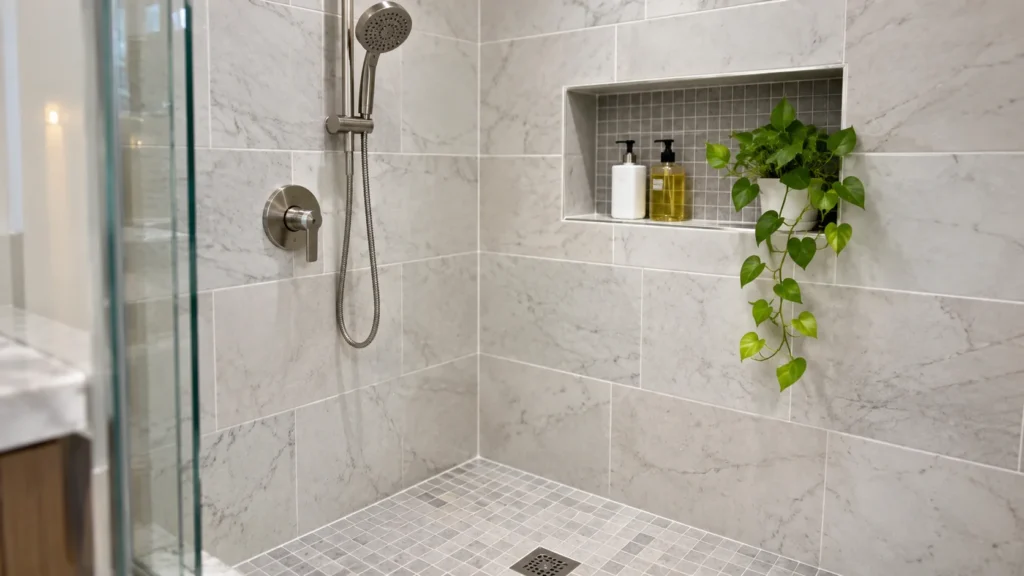
Shower walls and shower floors
For sanded or unsanded grout in a shower, consider the tile finish and joint width first. Traditional unsanded grout may suit narrow joints or delicate tile surfaces, while sanded grout is commonly used for wider joints on compatible tile.
Shower floors also need consideration of the tile size, slope, drainage, and the grout manufacturer’s wet-area approval. Grout is not a substitute for a properly installed waterproofing system. Use a grout and installation system designed for the shower conditions, and use the appropriate flexible sealant at movement joints and changes of plane rather than filling every corner with rigid grout.
Bathroom floors
For sanded or unsanded grout on a bathroom floor, traditional sanded grout is commonly chosen when the joints are wide enough and the tile finish can tolerate the aggregate. Unsanded grout may be appropriate for narrow joints or delicate finishes when the product allows it.
Because bathroom floors experience water, cleaning products, and foot traffic, check the grout’s suitability for the installation. Also consider how easily the grout colour will show soap residue or dirt.
Kitchen backsplash
For a sanded or unsanded grout kitchen backsplash, the tile material and joint width are particularly important. Narrow joints between many backsplash tiles may suit unsanded grout, while wider joints on compatible ceramic tile may suit sanded grout.
If the backsplash uses polished marble, glass, or a delicate decorative tile, check the grout manufacturer’s recommendations before applying a gritty product. Grease and food splashes can often be removed through routine cleaning, so choosing a grout that is compatible with the tile is more important than choosing one solely for its perceived strength.
Ceramic and porcelain tile
For sanded or unsanded grout with ceramic tile, either type may work, depending on joint width and finish. Many conventional ceramic floor installations use sanded grout, while narrow joints and scratch-sensitive glazed finishes may call for unsanded grout.
For porcelain tile, use the same approach: verify the manufacturer’s joint-width guidance and check whether the tile surface can be scratched by aggregate. Porcelain is not a single finish category; polished and textured products can have different needs.
Subway tile
Subway tile is available in different sizes, materials, and finishes, so there is no universal grout choice. For subway tile with sanded or unsanded grout, measure the joint and check the tile’s surface.
A narrow joint with polished or delicate tile may favour unsanded grout, while a wider joint on compatible ceramic subway tile may suit sanded grout. The classic subway pattern does not determine the grout type; the material and joint width do.
Penny tile and mosaics
Small mosaic and penny tiles have many grout joints, which makes the grout choice especially noticeable. For sanded or unsanded grout on penny tile, check the individual tile material and the spacing between pieces.
Some mosaics use glass, polished stone, or soft finishes that may be scratched by sanded grout. Other mosaics may be compatible with a sanded or specialty grout. Test a small sample area if the manufacturer’s guidance allows it, and follow the grout instructions for application and cleanup.
Slate and travertine
Slate and travertine are natural stones, and their finishes can vary. For sanded or unsanded grout on slate, follow the tile supplier’s guidance and the grout product’s instructions. Slate’s texture and surface characteristics can affect how easily grout residue is removed.
For travertine, consider whether the stone is polished, honed, tumbled, or filled. Some finishes are more susceptible to scratching or staining than others. A compatible grout and proper cleanup method help prevent residue from becoming difficult to remove from textured or porous surfaces.
Glass tile
Glass tiles can scratch, and their appearance may reveal grout colour or residue more readily than some ceramic tiles. For sanded or unsanded grout on glass tile, check the glass tile manufacturer’s recommendations. A compatible unsanded or specialty grout may be required for delicate glass.
Some modern grout products include fine aggregate yet are approved for particular glass tile installations. Do not decide based only on whether a product is described as sanded; confirm the exact product is approved for your glass tile.
Outdoor and pool tiles
Outdoor tile installations face weather, temperature changes, and moisture. Pool installations have additional requirements because the surface may be continuously submerged and exposed to pool chemicals.
For outdoor or pool tile, do not choose grout based only on the sanded-versus-unsanded distinction. Check that the grout is specifically approved for the location, expected movement, and exposure. Not every grout intended for showers is suitable for submerged pool installations.
Are Popular Grout Brands Sanded or Unsanded?
The name of a grout product does not always tell you whether it behaves like traditional sanded or unsanded grout. Some modern products use different aggregates or formulations and are approved for a broader range of joint widths.
Is MAPEI Flexcolor CQ grout sanded or unsanded?
MAPEI Flexcolor CQ is a ready-to-use grout containing a fine quartz aggregate. It is not simply the same as traditional cement-based sanded or unsanded grout. MAPEI specifies its use for joints from 1/16 inch to 1/2 inch and lists applications that include ceramic, porcelain, glass, and certain natural-stone tiles. The manufacturer also specifies limitations, including that it is not intended for submerged installations.
What this means: You should follow the Flexcolor CQ instructions rather than applying the usual sanded-versus-unsanded rule automatically. Confirm that the product is compatible with your particular tile and installation.
Is LATICRETE PERMACOLOR grout sanded or unsanded?
The LATICRETE PERMACOLOR Select range includes different grout bases, including sanded and non-sanded options. The separate PERMACOLOR Select NS base is designed for delicate surfaces such as high-polish marble and soft glass.
What this means: Check the exact product name on the packaging. Do not assume every grout in the PERMACOLOR family has the same aggregate or surface restrictions.
Is Prism grout sanded or unsanded?
Custom Building Products Prism Ultimate Performance Grout is a high-performance cement grout formulated with fine aggregate. Its application limits and tile compatibility should be checked in the current product instructions.
What this means: If you are considering Prism for narrow joints, polished tile, or delicate glass, verify that the specific product is approved for your installation. A fine aggregate does not automatically mean every surface is safe from scratching.
How to Tell Whether Existing Grout Is Sanded or Unsanded
If you are repairing or matching existing grout, identifying the original type can help you choose a compatible replacement.
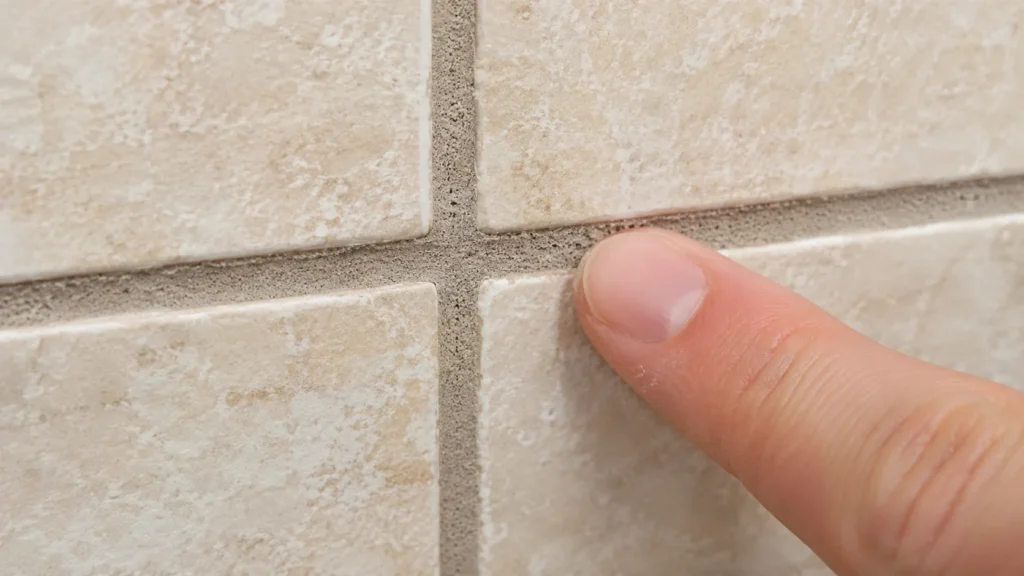
Look for these clues:
- Texture: Sanded grout often feels slightly gritty, while traditional unsanded grout has a smoother finish.
- Visible grains: Sanded grout may show tiny aggregate particles when inspected closely.
- Joint width: Wider joints are more commonly filled with sanded grout, but width alone does not prove which type was used.
- Original packaging: If available, the grout label or installation paperwork is the most reliable way to identify the product.
- Installer information: The contractor or tile supplier may be able to confirm the grout type.
Do not scrape or damage a grout joint just to identify its texture. Modern grouts may not fit neatly into the traditional categories, so use the manufacturer’s product information whenever possible.
Conclusion
Choosing sanded or unsanded grout starts with three things: the width of the grout joint, the type of tile, and the manufacturer’s instructions. Traditional sanded grout is often appropriate for wider joints and many floor installations, while unsanded grout is commonly used for narrow joints and delicate surfaces such as certain polished stone or glass tiles.
For showers, backsplashes, ceramic floors, porcelain, mosaics, and natural stone, avoid relying on joint width alone. Modern products such as MAPEI Flexcolor CQ and the different LATICRETE PERMACOLOR grout options have their own formulations and application requirements.
Before grouting, confirm the exact product specification, test compatibility where appropriate, and follow the installation directions. Choosing the right grout from the start helps protect the tile finish and supports a clean, durable result.
1. Should I use sanded or unsanded grout?
Choose based on the joint width, tile material, finish, and grout manufacturer’s instructions. Sanded grout is often used for wider joints, while unsanded grout is commonly used for narrow joints and certain delicate surfaces.
2. Is sanded or unsanded grout better?
Neither is universally better. Sanded grout is commonly selected for wider joints, while unsanded grout can be suitable for narrow joints and scratch-sensitive tile. The right choice is the one approved for your specific installation.
3. Can I use sanded grout on a shower floor?
Yes, if the grout is approved for the tile, joint width, and shower-floor application. Follow the installation instructions and ensure the shower has a correctly installed waterproofing system.
4. Should I use sanded or unsanded grout for a backsplash?
Either may work. Narrow joints or delicate tile finishes may call for unsanded or specialty grout, while wider joints on compatible ceramic tiles may suit sanded grout.
5. Can sanded grout scratch porcelain tile?
It can scratch certain finishes, particularly polished or delicate surfaces. Check the tile and grout manufacturer’s instructions, and test a discreet area when appropriate.
6. Is unsanded grout suitable for floor tiles?
It can be suitable for some floor installations, especially those with narrow joints or delicate tile, but the product must be approved for the application. Do not select it for a floor simply because the joints are small.
7. Can I use unsanded grout in a 1/8-inch joint?
Many traditional unsanded grouts can be used in joints up to 1/8 inch, but product limits vary. Check the specific grout’s technical data sheet before installation.
8. Is sanded grout more durable than unsanded grout?
Sanded grout’s aggregate helps support wider joints and can reduce shrinkage. However, durability also depends on the grout formulation, installation quality, curing, maintenance, and exposure conditions.
9. Do sanded and unsanded grout need sealing?
Some cement-based grouts benefit from sealing, while others have different requirements. Certain ready-to-use and epoxy grouts may not require conventional sealing. Follow the instructions for your exact product.
10. Is grout waterproof?
Ordinary cement-based grout is not a substitute for waterproofing. Even when a grout resists moisture, the overall tile installation needs the appropriate waterproofing system where required, particularly in showers and other wet areas.
11. Can I replace unsanded grout with sanded grout?
Sometimes, but you must confirm that the replacement is suitable for the joint width, tile finish, and installation. Remove damaged grout carefully and avoid scratching the tile or damaging the waterproofing beneath it.
12. Can I mix sanded and unsanded grout together?
Do not combine different grout products unless their manufacturers explicitly approve the mixture. Mixing formulations can affect application, curing, colour, and performance. Choose one product suitable for the installation and follow its instructions.