
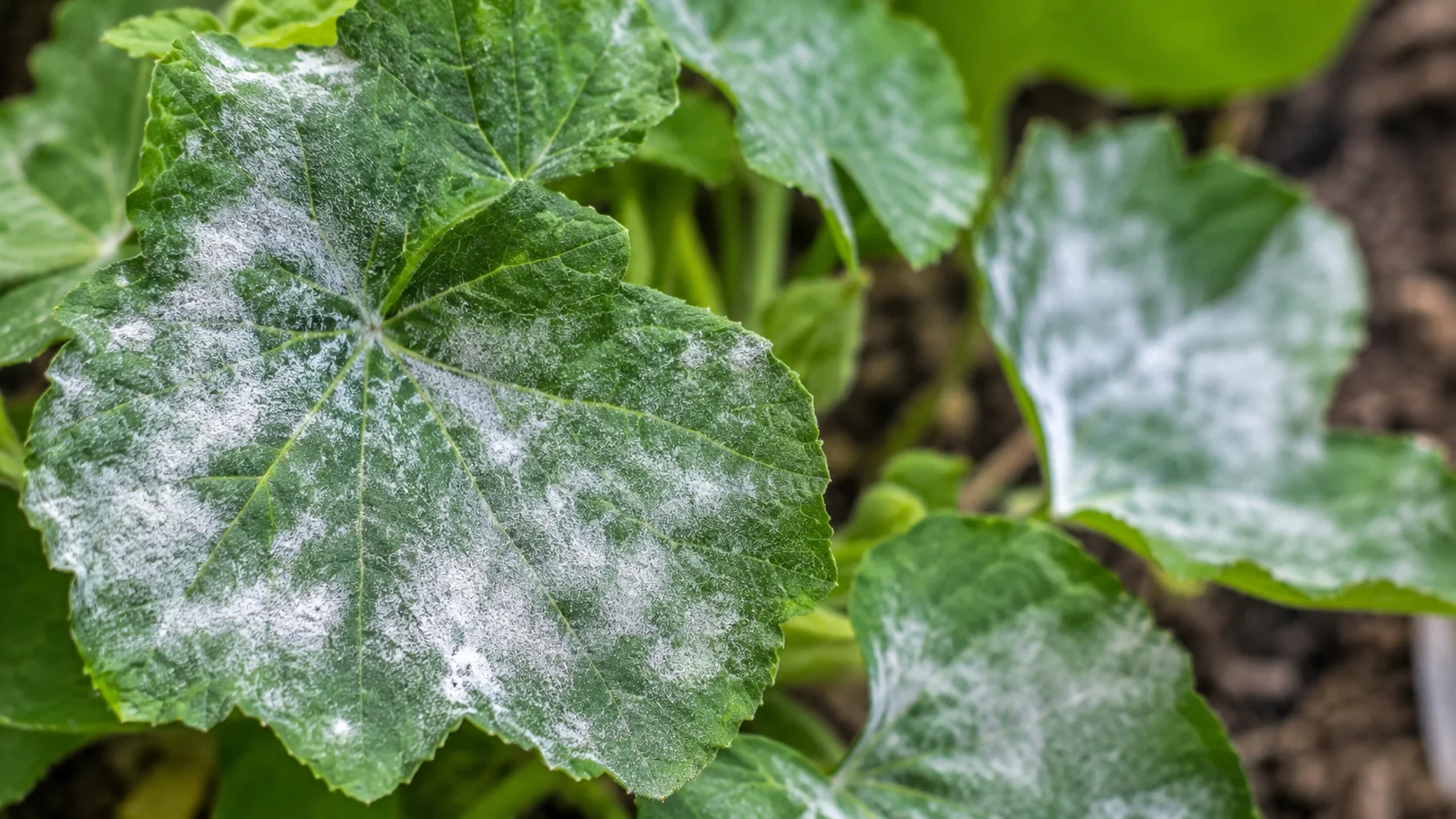
Powdery mildew can make healthy-looking plants develop white, dusty patches across their leaves, stems, buds, and sometimes flowers. It commonly affects garden favorites such as roses, peonies, zucchini, cucumbers, bee balm, and crepe myrtles. Although an early infection may look like a light coating of flour, the fungus can spread, weaken plant growth, and affect flowering or harvests if conditions favor its development.
The best powdery mildew treatment depends on the plant, the severity of the infection, and the growing conditions. Improving airflow, removing badly affected leaves, and choosing a suitable fungicide can help control the disease. Home remedies such as baking soda or milk are also discussed by gardeners, but results vary and poorly prepared sprays can damage foliage. Here is how to identify powdery mildew and choose a practical treatment for your garden.
What Does Powdery Mildew Look Like?
Powdery mildew usually appears as white or grayish, flour-like patches on the upper surfaces of leaves. It can also spread to stems, buds, and flowers. As the infection progresses, affected foliage may curl, yellow, become distorted, or drop prematurely.
Common signs include:
- White, powdery patches that gradually expand.
- Leaves that look dusty even when there is no ordinary dirt on them.
- Distorted new growth or flower buds that fail to open normally.
- Yellowing or premature leaf drop during a more severe infection.
- Repeated white patches on susceptible plants during favorable weather.
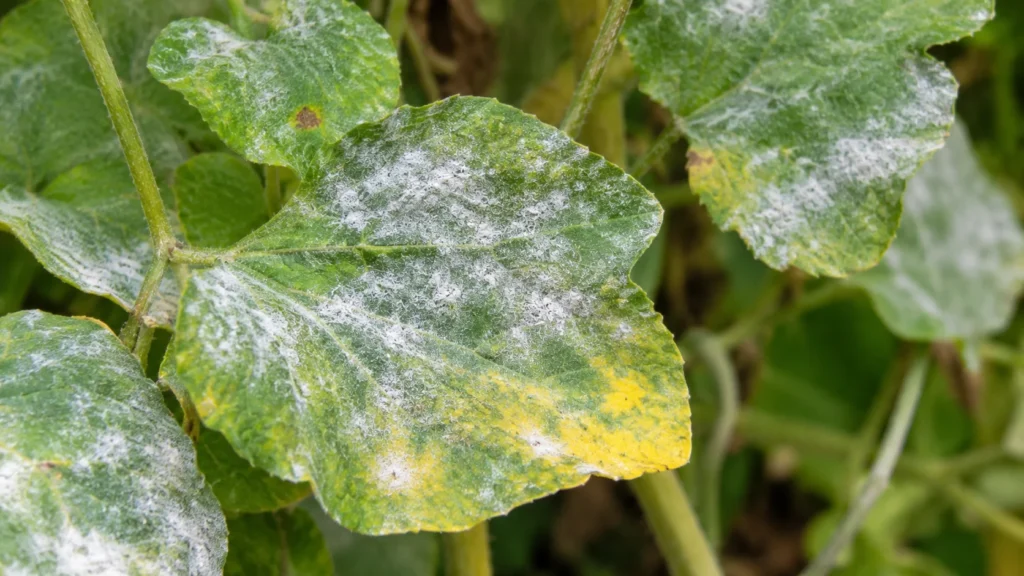
Powdery mildew is caused by a group of related fungi, and different species tend to infect different host plants. It can develop even when there is no standing water on leaves; humid air, crowded growth, shade, and susceptible varieties can all contribute.
Powdery mildew vs. downy mildew
These are different plant diseases and may need different control methods. Powdery mildew commonly produces a white, powder-like coating on leaf surfaces. Downy mildew may cause yellow or pale areas on the upper leaf surface, with grayish or purplish growth underneath in suitable conditions. Symptoms vary by plant, so check a reliable plant-disease guide if the diagnosis is uncertain. Penn State Extension explains the differences in its home garden mildew guide.
9 Effective Powdery Mildew Treatment Methods
1. Remove Heavily Infected Leaves
For a small, early infection, carefully remove leaves or shoots that are heavily coated or badly damaged. Use clean pruning tools, and avoid shaking infected foliage over nearby plants because spores can spread.
Place diseased material in household waste where local rules allow. Do not automatically add it to a cool home compost pile, where plant pathogens may survive. Clean your tools after pruning and avoid removing so much foliage that you seriously weaken the plant.
Pruning alone may not eliminate an established infection, but it can reduce affected tissue and improve airflow.
2. Improve Air Circulation Around Plants
Crowded plants tend to have less airflow, allowing humid conditions to persist around foliage. Thin congested growth when appropriate, space new plants according to their mature size, and train climbing or sprawling plants so their leaves are not tightly packed together.
For roses, peonies, bee balm, and ornamental shrubs, selective pruning may help open the canopy. For zucchini, squash, and cucumbers, allow vines and leaves enough space to grow without creating a dense, poorly ventilated mass.
Do not remove healthy leaves indiscriminately. The goal is to improve airflow while preserving the foliage the plant needs for photosynthesis.
3. Choose a Fungicide Labeled for Powdery Mildew
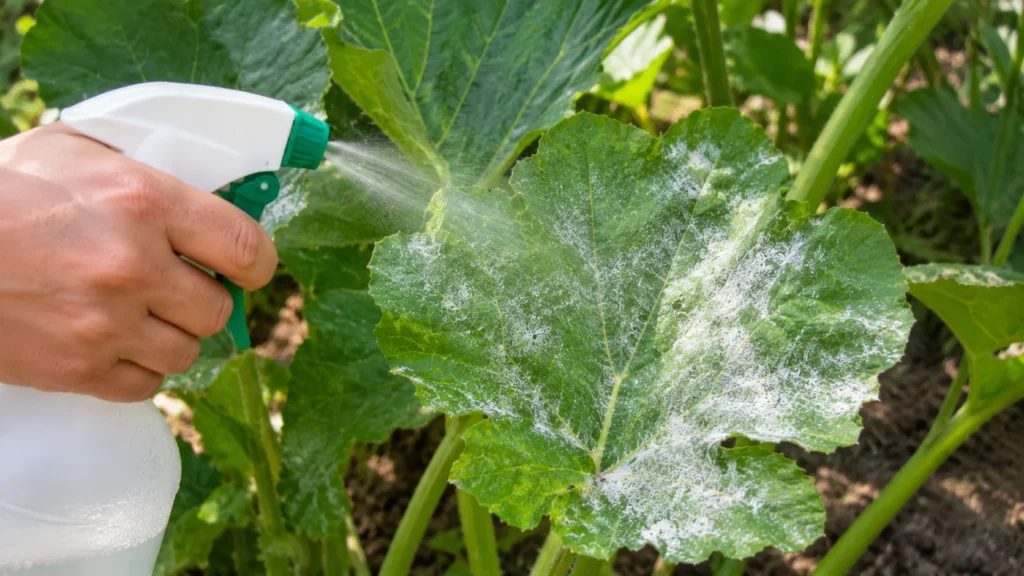
When infection is spreading or the plant is particularly valuable, a suitable fungicide may help protect healthy foliage and limit further disease development. Products can contain ingredients such as potassium bicarbonate, sulfur, or horticultural oils, but the right option depends on the plant species, the product formulation, and local regulations.
Before using any fungicide:
- Confirm that the label lists powdery mildew as a target disease.
- Check that the plant you want to treat is listed.
- Follow the label’s dilution, application, and repeat-treatment instructions.
- Observe any harvest intervals and other restrictions for edible crops.
- Avoid spraying during conditions that can injure foliage, as specified on the label.
Many fungicides work best when applied early, before the disease becomes severe. They generally do not restore damaged leaves to their original condition. Continue monitoring new growth and follow the product directions for repeat applications.
For home gardeners, university extension guidance emphasizes prevention and early management. See the University of Wisconsin’s information on powdery mildew in vegetables.
4. Consider a Labeled Potassium Bicarbonate Product
Potassium bicarbonate is used in some garden fungicide products to help control powdery mildew. It is different from ordinary baking soda, which is sodium bicarbonate, and a commercial product may be formulated and tested for specific uses.
Choose a product labeled for your plant and the disease, then follow its directions. Do not assume that a recipe intended for one plant is safe for every rose, vegetable, shrub, or ornamental flower.
Even a product designed for mildew control can injure sensitive foliage if applied incorrectly. Test a small area only when the label recommends or permits doing so, and follow all safety precautions.
5. Use Baking Soda With Caution
Baking soda is a popular homemade powdery mildew treatment, but results are inconsistent. Some extension resources discuss sodium bicarbonate combined with horticultural oil, while others caution that home remedies may not reliably control the disease and can injure plants.
The University of Wisconsin Extension reviews the evidence and limitations of powdery mildew home remedies.
If you are considering a baking soda spray, do not assume that a strong homemade mixture is better. Concentrated solutions, added detergents, and oils can burn leaves or damage flowers. A product specifically labeled for plant disease control offers clearer directions than an improvised recipe.
6. Treat Milk Sprays as an Uncertain Home Remedy
Milk sprays are sometimes recommended for powdery mildew, particularly on cucumbers and zucchini. Some studies have reported benefits in certain conditions, but results can vary by plant, concentration, weather, and application schedule.
Milk should not be treated as a guaranteed cure. Spraying an unsuitable mixture may leave residue or cause an unpleasant odor, and it will not correct crowded growth or other conditions that favor disease.
If you prefer a low-risk approach, start with removal of badly affected foliage, improved airflow, and monitoring. If you use a home remedy, test cautiously on a small portion of the plant and stop if foliage shows damage.
7. Avoid Unverified Hydrogen Peroxide Recipes
Hydrogen peroxide is frequently promoted online as a homemade treatment for white powdery growth. However, household solutions vary in concentration, and an incorrectly diluted spray can injure leaves and flowers. It is not a dependable universal treatment for powdery mildew.
Do not spray concentrated peroxide or mix it with other garden chemicals. If you are considering a product for plant disease, select one labeled for that purpose and follow the instructions rather than relying on an untested internet recipe.
8. Water Plants With Their Needs in Mind
Powdery mildew management is not simply a matter of watering less. Plants under drought stress may become less vigorous, while crowded foliage and humid conditions can favor disease. Give each plant the water it needs and avoid keeping the root zone excessively wet.
For many garden plants, watering the soil around the base can help keep foliage dry and reduce other leaf diseases. Morning watering may also allow incidental moisture to dry during the day. However, powdery mildew can develop without wet leaves, so watering changes alone may not stop it.
9. Grow Resistant Varieties and Remove Garden Debris
When buying roses, squash, cucumbers, peonies, or ornamental plants, look for varieties described by a reputable nursery or extension service as resistant or less susceptible to powdery mildew.
At the end of the growing season, remove infected plant debris where recommended and clean up fallen leaves. Check susceptible plants regularly during periods when the disease commonly appears in your area. Early detection makes it easier to remove affected tissue and protect new growth before the infection becomes widespread.
Jump into Other Related Article
- How to Clean Stainless Steel Sink | Stains, Hard Water, Rust & Scratches
- Red Wine Stain Removal | Complete Guide for Clothes, Carpet, Upholstery, and Dried Stains
- Stainless Steel Scratch Remover | How to Remove Scratches From Sinks, Appliances, Refrigerators, and More
Powdery Mildew Treatment for Specific Plants
Different plants respond differently to powdery mildew, so a treatment suitable for one species should not automatically be used on another.
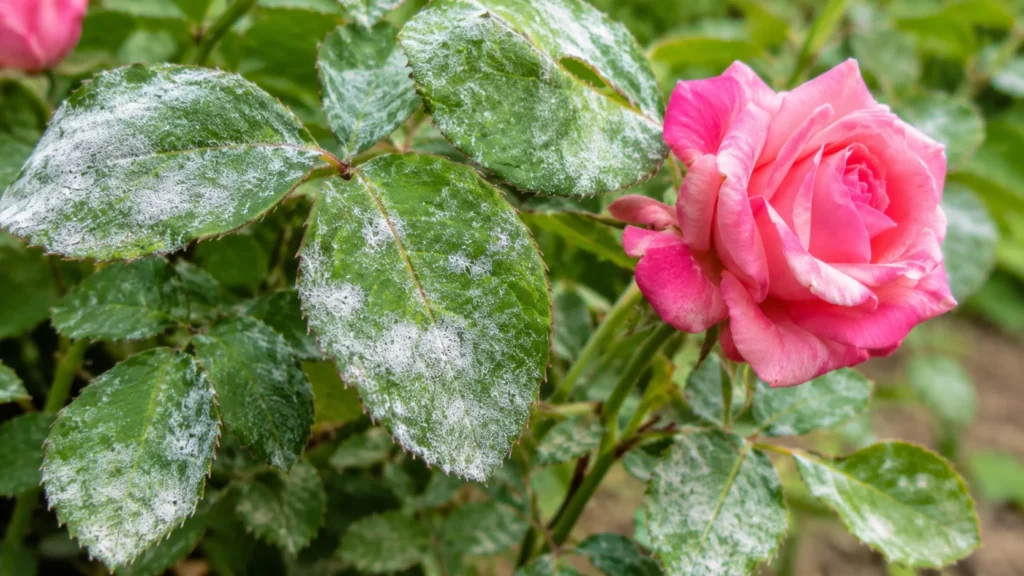
Powdery mildew on roses
Rose leaves may develop white patches, distorted growth, and premature leaf drop. Remove heavily affected leaves, prune selectively to improve airflow, and avoid crowding rose bushes against walls or other plants.
If the infection continues spreading, choose a fungicide labeled for powdery mildew on roses. Follow the label carefully, especially when treating plants in bloom or near beneficial insects.
Powdery mildew on zucchini, squash, and cucumbers
These vegetables are frequent targets of powdery mildew. White patches can spread across the leaves, and severe infections may lead to leaf loss that reduces the plant’s ability to support developing fruit.
Give vines sufficient room, monitor older and newer leaves, and remove severely affected foliage without stripping the plant bare. If using a fungicide, confirm that it is labeled for the specific edible crop and follow any preharvest interval.
Powdery mildew on peonies
Peonies may develop a white coating late in the growing season. Improve airflow, avoid excessive crowding, and remove infected foliage when appropriate. Clean up dead and diseased material at the end of the season.
If the infection is minor and appears late in the year, extensive chemical treatment may not be necessary. Focus on plant health and prevention for the next growing season.
Powdery mildew on bee balm
Bee balm can be particularly susceptible to powdery mildew, especially when planted densely. Choose less susceptible varieties when available, thin crowded growth, and avoid excessive nitrogen fertilizer that encourages dense, tender foliage.
Remove badly affected leaves and monitor nearby plants. A suitable fungicide may be considered if the disease repeatedly damages the plant.
Powdery mildew on crepe myrtle
Crepe myrtles can develop powdery mildew on leaves, shoots, and flower buds. Select resistant cultivars where possible, plant them where they receive suitable sunlight, and avoid excessive shade or overcrowding.
Prune only as needed to improve structure and airflow. If disease is persistent, consult a local extension service about suitable products for your particular crepe myrtle variety.
Powdery mildew on tomatoes
White patches on tomato leaves should be identified correctly before treatment because several diseases and environmental problems can cause leaf discoloration. If powdery mildew is confirmed, remove severely affected foliage when practical, improve airflow, and select a product labeled for tomatoes if further control is needed.
Avoid applying a fungicide to edible plants unless the label explicitly permits that use.
Powdery mildew on zinnias, dahlias, and other ornamentals
Flowering ornamentals can develop white patches that spread across leaves and stems. Remove heavily infected material, give plants sufficient space, and avoid wetting foliage unnecessarily when watering. If disease is recurring, consider resistant varieties and a labeled ornamental fungicide.
Powdery mildew on indoor plants
Houseplants can also develop powdery mildew, particularly where air circulation is limited. Isolate the affected plant from nearby plants, remove badly affected leaves, and provide appropriate light and airflow for the species. Use only treatments labeled for the plant and indoor setting, and follow the product’s precautions.
How to Prevent Powdery Mildew From Returning
A successful powdery mildew treatment should be paired with changes that make the garden less favorable to recurring disease.
- Inspect plants regularly: Look for early white patches, especially on susceptible varieties.
- Provide suitable spacing: Leave enough room for mature plants and airflow between leaves.
- Avoid excessive nitrogen: Overfertilizing can encourage lush growth that is more susceptible to disease.
- Choose resistant varieties: Check local extension recommendations before buying new plants.
- Remove infected debris: Dispose of affected material appropriately instead of leaving it around susceptible plants.
- Water appropriately: Meet each plant’s water needs without creating persistently poor growing conditions.
- Use preventive products when justified: If a plant has a recurring history of severe infection, ask a local extension service about a suitable prevention plan.
Powdery mildew species often have particular host plants, so an outbreak on one plant does not mean every nearby species will necessarily become infected. Nevertheless, checking the garden regularly can help you spot problems early.
Conclusion
Effective powdery mildew treatment starts with identifying the disease and acting before it spreads widely. Removing heavily infected foliage, improving airflow, choosing resistant varieties, and keeping plants healthy can reduce the risk of recurring outbreaks. When those steps are not enough, a fungicide specifically labeled for the affected plant and disease may provide additional control.
Baking soda, milk, and hydrogen peroxide are often promoted as homemade solutions, but their effectiveness and safety vary. Avoid assuming that a recipe works for every plant, and never apply garden chemicals without checking the label. With early monitoring and plant-specific care, you can limit powdery mildew and help your garden grow more vigorously.
What is the best treatment for powdery mildew?
The best treatment depends on the plant and how severe the infection is. Start with early detection, removal of heavily affected leaves, and improved airflow. For persistent disease, use a fungicide labeled for powdery mildew on that specific plant.
Does baking soda get rid of powdery mildew?
Baking soda may help in some formulations, particularly when combined with horticultural oil, but results vary. Homemade sprays can injure foliage if they are too concentrated or unsuitable for the plant. A labeled product provides clearer application guidance.
Does milk treat powdery mildew on plants?
Milk sprays have shown some benefits in certain studies, but they are not a guaranteed cure. Results depend on the plant and growing conditions. For a recurring or severe infection, rely on proven garden management practices and a suitable labeled product.
Can powdery mildew kill plants?
Powdery mildew is often mainly cosmetic on some ornamentals, but severe or repeated infections can weaken plants, distort new growth, cause leaf loss, and reduce yields in vegetables. The impact depends on the host plant, infection severity, and growing conditions.
Should I cut off leaves with powdery mildew?
Remove severely affected leaves when doing so will not strip the plant of too much healthy foliage. Use clean tools and dispose of infected material appropriately. Removing leaves may reduce disease pressure, but it does not guarantee that the infection will disappear.
Can hydrogen peroxide cure powdery mildew?
Hydrogen peroxide is not a dependable universal cure. Incorrect concentrations can damage plant tissue, and online recipes may not be suitable for every species. Choose a treatment labeled for the plant and disease instead of spraying an unverified mixture.
Is powdery mildew contagious to other plants?
Powdery mildew can spread through airborne spores, but different powdery mildew fungi often specialize in particular plant hosts. Monitor nearby susceptible plants and improve airflow to help limit spread.
How long does powdery mildew treatment take to work?
It depends on the treatment, plant, and severity of the infection. Existing damaged leaves may not recover even when control is successful. Look for reduced spread and healthier new growth, and follow the treatment label for any repeat applications.
Is powdery mildew the same as white mold?
No. Powdery mildew is a plant disease caused by specific fungi and typically produces a powder-like coating on leaves and other plant parts. Other white growths can have different causes, so inspect the plant and compare symptoms with a reliable plant-disease resource before choosing a treatment.