
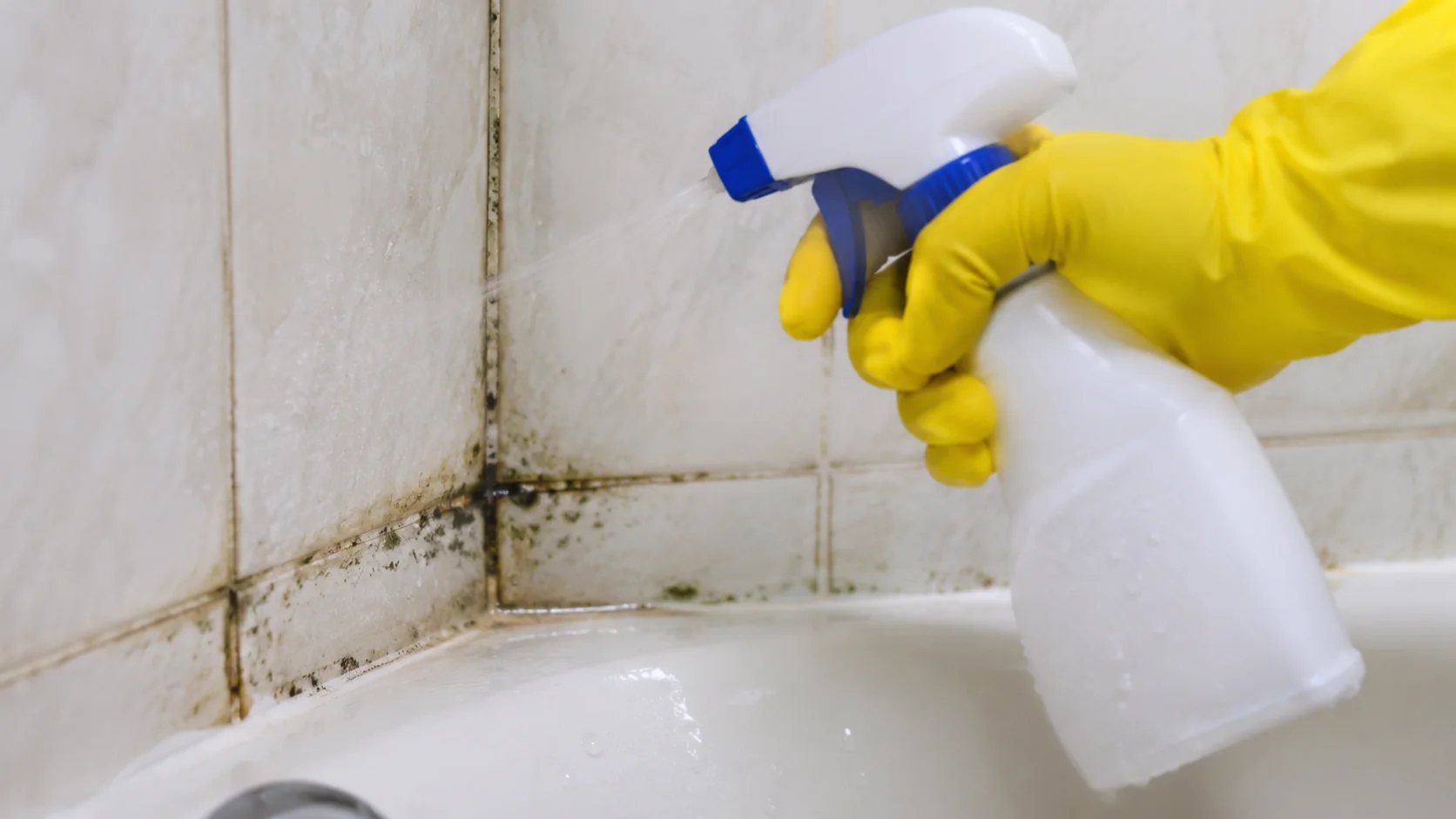
Mildew stains can make a clean bathroom look neglected, leave dark marks along grout lines, and create stubborn discoloration on outdoor furniture or shower curtains. Choosing a suitable mildew remover can make cleaning easier, but the best option depends on where the stains appear, what the surface is made of, and whether you need to remove discoloration, clean visible growth, or address both.
Some products are designed for bathroom tile and other hard surfaces, while others are formulated for a wider range of materials or outdoor use. In this guide, we compare popular mold and mildew remover products, explain what each option is best suited for, and share practical tips to help you avoid surface damage and unnecessary chemical exposure. Let’s find the best mildew remover for showers, grout, fabrics, and outdoor surfaces.
What Is a Mildew Remover?
A mildew remover is a cleaning product intended to remove mildew-related buildup, discoloration, or stains from specified surfaces. Depending on its formula, it may help loosen or remove visible staining, clean the affected area, or provide additional antimicrobial action when the label specifically supports that use.
However, removing a mildew stain is not the same as fixing a moisture problem. A product may improve the appearance of a surface without addressing the conditions that allowed mold or mildew to develop. The U.S. Environmental Protection Agency (EPA) explains that mold cleanup involves removing the growth and correcting the underlying moisture source. Dead mold can also continue to cause allergic reactions, so simply killing it is not enough.
Before buying a mold and mildew remover, check the label for approved surfaces, application instructions, ventilation requirements, and any warnings about fabrics, painted finishes, metals, or natural stone.
7 Mold and Mildew Remover Products Worth Considering
The following products serve different cleaning needs. This is a practical comparison based on manufacturer information and intended uses, not a laboratory ranking or a claim that one formula works best in every situation. Product formulations and availability can change, so always check the current label before purchasing.
1. RMR-86 Instant Mold and Mildew Stain Remover
Best for: Stubborn visible stains on suitable indoor and outdoor surfaces
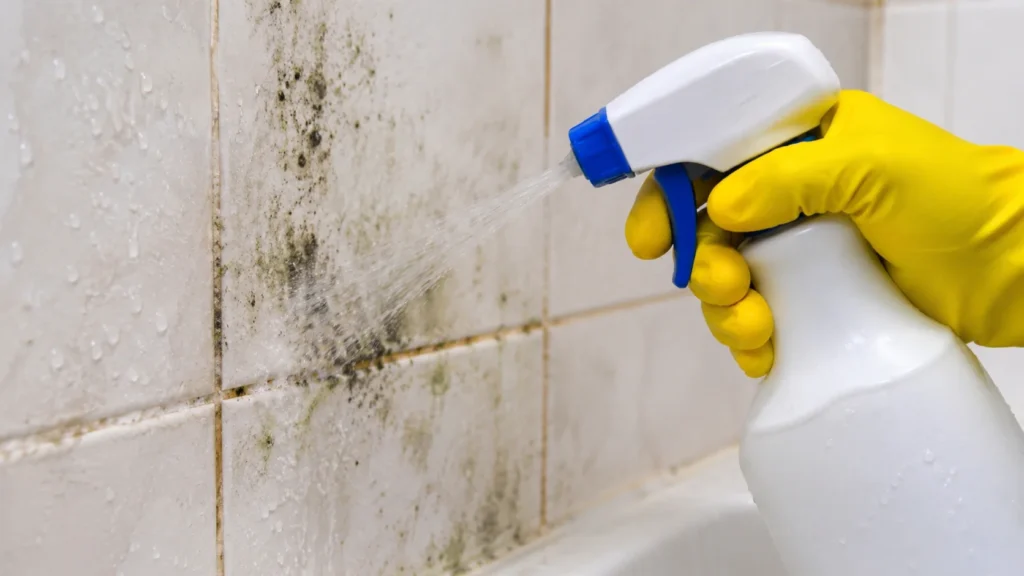
RMR-86 is a ready-to-use spray designed to tackle discoloration left by mold and mildew. The manufacturer lists uses on surfaces such as decks, wood, vinyl siding, concrete, tile, grout, fiberglass, and certain bathroom fixtures. It is marketed as a fast-acting stain remover that often requires little or no scrubbing.
Why consider it: It may be useful when ordinary cleaning has not removed dark staining from a compatible surface and you want a spray rather than a concentrated product that requires mixing.
What to check first: A formula that works on one material may discolor another. Read the current product label, test an inconspicuous area, and protect nearby fabrics, plants, and finishes as directed. Do not assume stain removal means the underlying moisture issue has been resolved.
Choose it if: Your main priority is treating persistent stains on a surface specifically listed on the product label.
2. Zep Mold and Mildew Stain Remover
Best for: General household mildew staining on compatible surfaces
Zep offers a ready-to-use mildew stain remover intended for areas such as bathroom tile, grout, shower curtains, walls, ceilings, concrete, and outdoor furniture. Its product directions describe applying the cleaner to the affected spot, allowing it to work, and rinsing afterward.
Why consider it: Its listed applications make it a potential option for households dealing with several kinds of mildew stains rather than one isolated bathroom spot.
What to check first: The manufacturer advises checking for color damage before applying it to painted surfaces or fabrics. Confirm that your exact surface is suitable and follow the label’s precautions.
Choose it if: You need a dedicated mold and mildew stain remover for multiple compatible surfaces around the home.
3. CLR Mold & Mildew Clear
Best for: People seeking a bleach-free stain-removal option
CLR Mold & Mildew Clear is marketed as a bleach-free cleaner for surface mold and mildew stains. The manufacturer lists applications that include ceramic tile, grout, concrete, brick, glass, fiberglass, some fabrics, and certain other materials. Its instructions include letting the product sit for the specified time and wiping the area clean.
Why consider it: A bleach-free formula may be worth considering if you prefer to avoid traditional bleach-based stain removers. However, bleach-free does not automatically mean harmless, suitable for every material, or safe to mix with other products.
What to check first: CLR specifically warns against mixing its cleaner with other household cleaners or chemicals. It also advises against using the product on stainless-steel appliance exteriors. Check the label for additional restrictions and spot-test sensitive surfaces.
Choose it if: You want to compare a bleach-free formula for compatible surfaces and are willing to follow its application and safety directions carefully.
4. Tilex Mold and Mildew Remover
Best for: Bathroom tile and other approved hard, nonporous surfaces
Tilex Mold & Mildew Remover is designed for cleaning bathroom-related mildew stains. Clorox’s product directions specify using it on approved hard, nonporous surfaces, keeping the surface wet for the label’s stated contact time, and rinsing afterward. The manufacturer’s guidance also warns against use on wood and painted surfaces and identifies materials that may discolor.
Why consider it: It is a purpose-made option for visible bathroom staining on compatible surfaces, especially when you want a spray intended for tile and similar materials.
What to check first: Tilex is not a universal mildew remover. Follow the instructions for the exact product you buy, including ventilation and surface restrictions. Keep it away from clothing, carpet, and other materials the label identifies as unsuitable.
Choose it if: Your target is mildew staining on approved bathroom surfaces and the product label matches your cleaning task.
5. STONETECH Mold & Mildew Stain Remover
Best for: Natural stone, tile, masonry, and grout
Natural stone deserves special attention because some household cleaners can damage sensitive finishes. STONETECH Mold & Mildew Stain Remover is a ready-to-use specialty cleaner formulated for natural stone, tile, masonry, and grout. LATICRETE lists applications including showers, vanities, countertops, backsplashes, and patios. Its foaming sprayer is designed to help the product cling to vertical surfaces.
Why consider it: It is specifically formulated for stone-related cleaning rather than being presented as a one-size-fits-all household spray.
What to check first: Confirm that the product is appropriate for your particular stone, sealant, finish, and installation. If the surface has a special treatment or warranty, consult the stone supplier or installer before using a chemical cleaner.
Choose it if: You need a product designed for compatible natural stone, tile, masonry, or grout and want to avoid choosing a general-purpose formula blindly.
6. STAR BRITE Mildew Stain Remover
Best for: Comparing options for marine and outdoor mildew stains
STAR BRITE sells mildew stain-removal products associated with marine and outdoor cleaning. These may be worth investigating when staining appears on boat-related materials or other surfaces covered by the product’s directions.
Why consider it: Marine environments expose materials to moisture, weather, and recurring organic staining. A product intended for a particular outdoor or marine application may be more appropriate than a bathroom-only cleaner.
What to check first: Product names and formulas can vary. Verify the exact STAR BRITE product, its approved surfaces, and any restrictions involving vinyl, canvas, upholstery, coatings, or nearby water. Do not let runoff enter waterways unless the label and local rules allow it.
Choose it if: You are cleaning a marine or outdoor surface and the specific product label confirms that the material is suitable.
7. A Dedicated Mildew Remover for Fabric
Best for: Washable textiles or other fabric surfaces when specifically approved
Mildew on a shower curtain, outdoor cushion, or washable fabric requires a different approach from mildew on ceramic tile. A hard-surface cleaner may bleach, weaken, or otherwise damage textile fibers. Instead of selecting a product solely because it says mold and mildew remover, look for one whose label explicitly includes the fabric you need to clean.
For washable clothing and linens, first check the care label and consider whether normal laundering is appropriate. For upholstered cushions, canvas, or delicate materials, use only a cleaner approved for that material and test a hidden area first.
Why consider it: A fabric-specific approach helps reduce the risk of replacing a stained item because the wrong chemical caused additional damage.
What to check first: Confirm whether the item is washable, colorfast, and suitable for the chosen treatment. Never use a bathroom bleach spray on fabric unless its label specifically authorizes that application.
Choose it if: The affected item is textile-based and a compatible fabric-cleaning product or laundering method is available.
Quick Comparison | Which Mildew Remover Should You Pick?
| Product | Most suitable use to investigate | Important consideration |
| RMR-86 | Persistent stains on listed surfaces | Check material compatibility and safety directions |
| Zep | Multiple household stain locations | Spot-test painted surfaces and fabrics |
| CLR Mold & Mildew Clear | Bleach-free cleaning preference | Not suitable for every finish or material |
| Tilex | Approved bathroom hard surfaces | Avoid materials excluded by the label |
| STONETECH | Compatible stone, tile, masonry, and grout | Confirm the specific stone and finish |
| STAR BRITE | Suitable marine and outdoor surfaces | Verify the exact formula and environmental precautions |
| Fabric-specific cleaner | Approved washable or textile surfaces | Check care labels and colorfastness |
There is no single best mold and mildew remover for every job. For bathroom tile, start by checking Tilex or Zep. For natural stone, investigate STONETECH. For a bleach-free option, review CLR’s instructions. For stubborn staining on other listed surfaces, compare RMR-86 with the material-specific alternatives.
These are use-case suggestions, not claims that every product has been independently tested against the others.
How to Choose the Best Mildew Remover for Your Needs
The product name is only one part of the decision. These five checks can help you avoid buying a cleaner that is ineffective for the task or unsuitable for the surface.
1. Match the Formula to the Material
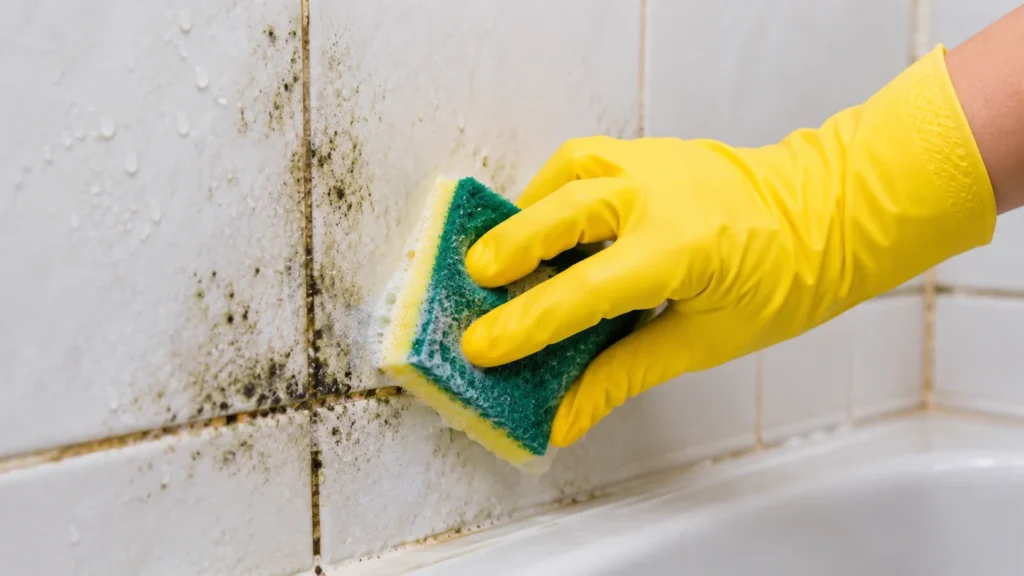
Start by identifying the surface: ceramic tile, grout, natural stone, painted drywall, vinyl siding, fabric, or outdoor furniture. Then confirm that the product label specifically allows that use.
For example, a bathroom spray suitable for glazed ceramic tile may not be appropriate for wood, delicate fabric, or a specialty stone finish. If you’re unsure, ask the manufacturer or material supplier before applying it.
2. Decide Whether You Need Stain Removal or Surface Cleaning
Some products focus on visible discoloration, while others also have labeled antimicrobial or disinfecting claims. These functions are not interchangeable.
- Mildew stain remover: Intended to improve the appearance of stained surfaces.
- General cleaner: Removes dirt, residue, and grime.
- Antimicrobial cleaner: May make specific claims about microorganisms when used according to its label.
A surface can remain discolored after the growth has been removed, and a surface can look clean without the underlying moisture problem being fixed.
3. Consider Bleach-Based and Bleach-Free Options
Bleach-based sprays can be effective at removing certain stains, but they can also discolor fabrics, damage some finishes, and produce hazardous vapors if used incorrectly. Bleach-free products provide another option, but their suitability and performance still depend on the formula and surface.
Do not choose a product based on the words natural, professional, or bleach-free alone. Read the ingredient and safety information available from the manufacturer, and check the exact claims on the packaging.
4. Check the Application Method
A spray can be convenient for vertical surfaces, while a specialty cleaner may be designed for a particular material or application. Also consider whether the product needs dilution, how long it must remain on the surface, and whether it requires rinsing.
Do not shorten the stated contact time or assume that leaving a product on longer will improve the result. Follow the current label.
5. Compare Overall Value, Not Just Bottle Price
A cheaper bottle is not necessarily the better buy. Consider the quantity, whether the product is ready to use, the surfaces it covers, and how much product the job requires.
Prices and availability vary by retailer and location. Check the manufacturer’s current product information and compare the cost of the exact size before ordering.
How to Use a Mildew Remover Without Damaging Surfaces
Even a suitable cleaner can cause problems when applied incorrectly. Follow this general process, adapting each step to the instructions on your chosen product.
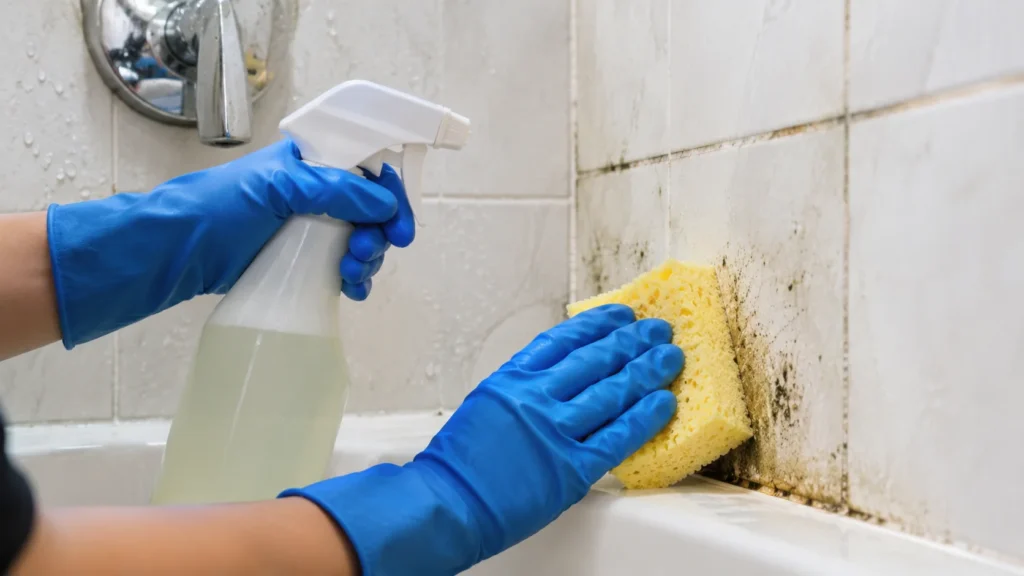
- Read the label first. Check approved surfaces, required protective equipment, ventilation, application method, contact time, and rinsing instructions.
- Prepare the area. Remove nearby towels, clothing, toiletries, and other items that could be splashed or discolored.
- Ventilate the space. Open windows or doors where possible and use appropriate exhaust ventilation. Avoid breathing cleaning vapors.
- Wear the recommended protection. Use gloves and eye protection when directed by the manufacturer.
- Test a hidden spot. Apply the cleaner to a small, inconspicuous area if the label recommends testing for discoloration or damage.
- Apply only as instructed. Use the specified amount and dilution. Avoid creating unnecessary spray mist or letting the product spread to nearby materials.
- Wait for the stated contact time. Do not allow the product to dry if its directions require the surface to remain wet.
- Rinse or wipe as directed. Remove loosened residue and any remaining product according to the label.
- Dry the surface. Use suitable ventilation or drying methods to reduce lingering moisture.
The EPA advises following product directions, increasing ventilation, and never mixing cleaning products. In particular, never mix bleach with ammonia, acids, vinegar, or other cleaners; dangerous gases or vapors may result.
Common Mildew Remover Mistakes to Avoid
A few seemingly minor mistakes can reduce cleaning effectiveness or create avoidable hazards.
- Using one product everywhere: Different materials have different chemical sensitivities.
- Mixing cleaning solutions: Combining products can create toxic vapors, even when each product is sold for household use.
- Skipping ventilation: Strong vapors can irritate the eyes and respiratory system.
- Ignoring contact time: A cleaner may need a specific amount of time to work as intended.
- Assuming every dark stain is mildew: Mineral deposits, soap residue, and other discoloration may require a different treatment.
- Cleaning without fixing moisture: Leaks, condensation, and persistent dampness can allow growth to return.
- Scrubbing damaged materials aggressively: Fragile grout, painted surfaces, and certain finishes can deteriorate with harsh tools or repeated chemical treatment.
If mold has penetrated damaged materials, keeps returning, or appears to be spreading behind walls or other building components, a household mildew remover may not be sufficient.
Jump into Other Related Article
- How to Clean Stainless Steel Sink | Stains, Hard Water, Rust & Scratches
- Brick Stain Colors | Exterior, Interior, Fireplace, Paver, and Before and After Ideas
- How to Remove Coffee Stains | Easy Methods for Clothes, Teeth, Carpet & More
What to Do When Mildew Keeps Coming Back
Recurring mildew usually means the conditions supporting its growth remain. A new spray may remove another layer of discoloration, but repeated cleaning will not solve a leaking pipe, persistent condensation, or a poorly ventilated bathroom.
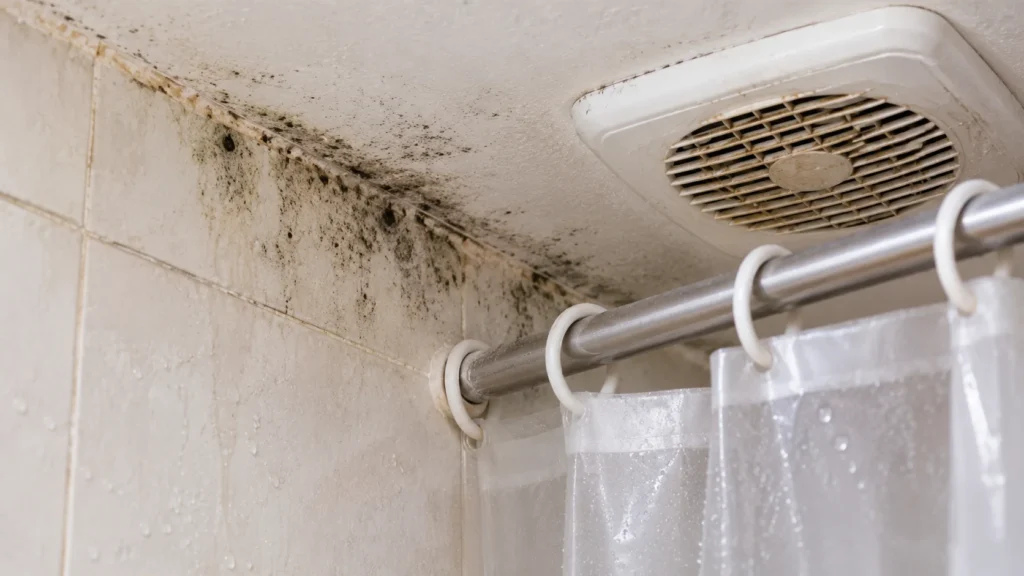
Try to identify the moisture source. Repair leaks, improve ventilation, dry damp surfaces, and address drainage problems outdoors. In bathrooms, use an exhaust fan when showering and afterward, and allow wet curtains and bath mats to dry fully.
For indoor mold, the EPA recommends addressing moisture and removing mold rather than relying only on biocides. Small areas on suitable, washable surfaces may be manageable with careful cleaning, but extensive growth, hidden contamination, recurring water damage, or mold involving porous building materials may require professional assessment.
Conclusion
The best mildew remover is the one that suits your surface, addresses the type of staining you have, and can be used safely according to its instructions. RMR-86 and Zep are options for certain stubborn stains, Tilex is designed for approved bathroom surfaces, CLR offers a bleach-free alternative, and STONETECH is formulated for compatible natural stone, tile, masonry, and grout.
Before buying, confirm the product’s approved uses, contact time, ventilation requirements, and surface restrictions. Most importantly, remove the moisture source that allows mildew to return. The right cleaner can improve the appearance of a surface, but lasting results depend on proper cleaning, drying, and moisture control.
What is the best mildew remover?
The best mildew remover depends on the surface and type of stain. Tilex and Zep are options to investigate for compatible household surfaces, STONETECH is formulated for natural stone, tile, masonry, and grout, and CLR Mold & Mildew Clear is a bleach-free alternative. Always check the exact product label before use.
What is the best mold and mildew remover for a shower?
For compatible bathroom tile and other approved hard, nonporous surfaces, Tilex or Zep may be worth comparing. If your shower contains natural stone, investigate a specialty product such as STONETECH and confirm that it is suitable for your stone and finish.
Is RMR-86 better than Zep mildew remover?
Neither product can be declared universally better without a controlled comparison on the same surface and stain. RMR-86 is marketed as a fast-acting stain remover for several listed surfaces, while Zep offers a ready-to-use mildew stain remover for various household applications. Compare the label, material compatibility, safety requirements, and cost for your particular job.
Is a bleach-free mildew remover effective?
A bleach-free cleaner can remove certain mildew stains, depending on its formulation and the surface. CLR Mold & Mildew Clear is one example. Check the manufacturer’s claims and directions rather than assuming all bleach-free products have the same cleaning or antimicrobial performance.
Can I use mildew remover on clothes?
Only use a product on clothing if its label explicitly permits that fabric application. Many bathroom mildew sprays can discolor or damage textiles. For washable garments, check the care label and use an appropriate laundering method; for delicate or nonwashable items, seek fabric-specific guidance.
How do I remove mildew stains from grout?
Choose a cleaner labeled for your type of grout and tile. Apply it according to the manufacturer’s instructions, observe the stated contact time, and rinse or wipe as directed. Be particularly careful with natural stone and specialty grout finishes, and avoid mixing cleaners.
Why do mildew stains return after cleaning?
Stains can return when the area remains damp, ventilation is poor, or a leak has not been repaired. Sometimes discoloration also remains within a porous material after surface cleaning. Address the moisture source and consider professional help if the problem repeatedly returns.
Is mildew remover the same as mold remover?
The terms are often used together on cleaning products, but their exact uses depend on the formula and label. Some products target visible stains associated with both mold and mildew. Neither the product name nor a clean-looking surface proves that a moisture problem has been eliminated.
Can I mix two mildew removers for stronger results?
No. Never mix mildew removers or combine them with other household cleaners. Mixing products can release hazardous gases or cause other dangerous reactions. Use one product at a time and follow its label completely.
Does mildew remover get rid of mildew smell?
A suitable cleaner may help if the odor comes from removable surface buildup, but the smell can persist when damp materials or hidden growth remain. Clean only materials that can safely be treated, dry the area thoroughly, and investigate persistent musty odors instead of masking them with fragrance.