
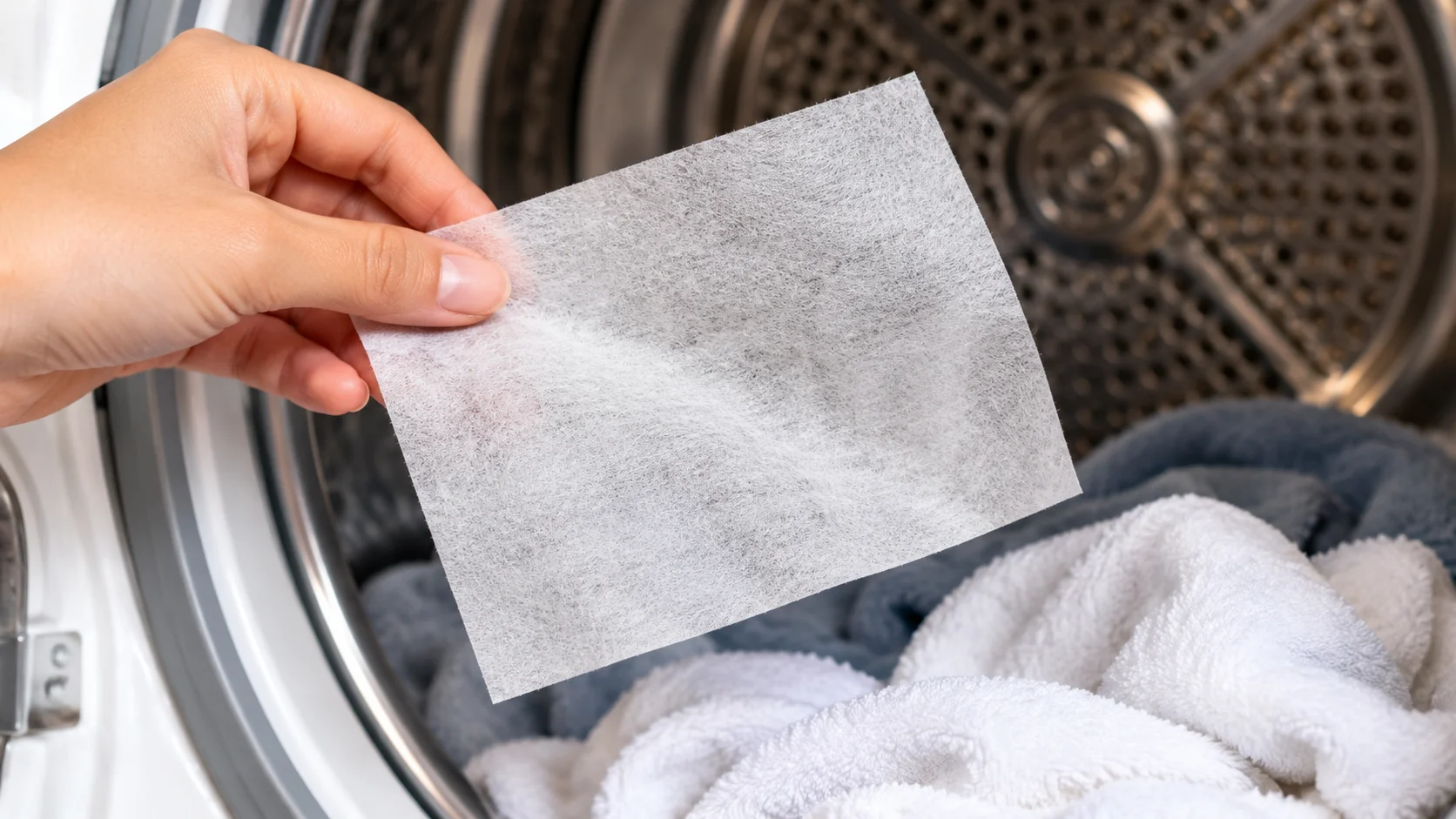
Dryer sheets are thin sheets of material coated with fabric-softening ingredients, lubricants, fragrances, and other formulation components. They are designed to be placed directly into a clothes dryer, where heat and tumbling help release the ingredients onto fabrics. These substances can reduce static cling, make fabrics feel softer, reduce some wrinkles, and add fragrance.
Unlike laundry detergent, dryer sheets are not primarily intended to clean clothes. They are a finishing product used during the drying stage. The coating left on fibers is responsible for much of the soft, smooth feel people associate with fabric softeners, but that same coating can be undesirable for towels, microfiber, athletic clothing, flame-resistant garments, and some water-repellent materials.
What Are Dryer Sheets?
The main purpose of dryer sheets is to condition fabrics while they tumble in the dryer. Their ingredients transfer onto clothing as the sheet moves through the warm, tumbling load, helping reduce static and friction between fibers.
The American explains that dryer sheets are heat-activated fabric softeners. As the dryer warms, softening agents are released and transferred to fabrics, helping reduce static and wrinkles while improving softness.
- Reduce static cling.
- Help fabrics feel softer.
- Add fragrance to laundry.
- Reduce friction between some fibers.
- Help minimize some wrinkles.
- Make clothes feel smoother.
- Reduce the tendency of garments to stick together.
- Provide a convenient alternative to liquid fabric softener.
- Work during the drying stage rather than the washing stage.
- Can be used in gas dryers.
- Can be used in electric dryers.
- May help freshen the scent of finished laundry.
- Can occasionally help with light surface dusting when used separately from laundry.
- May help remove some static from clothing after drying.
- Give users a simple, pre-measured softening option.
What Are Dryer Sheets For?
The purpose of dryer sheets is mainly to provide fabric-softening and static-reducing benefits during drying. They are not a replacement for laundry detergent, stain remover, or a proper washing cycle.
If your clothes already come out soft and free from excessive static, you may not need dryer sheets at all. They are a convenience product rather than an essential part of doing laundry.
| Purpose | Do dryer sheets help? |
| Reduce static | Yes |
| Add fragrance | Yes |
| Make fabrics feel softer | Yes |
| Clean dirty clothes | No |
| Remove major stains | No |
| Replace detergent | No |
| Improve towel absorbency | No; they can reduce it |
| Protect moisture-wicking performance | Not necessarily |
| Replace proper drying settings | No |
| Eliminate every wrinkle | No |
specifically notes that dryer sheets work well for many everyday natural-fiber items but should be avoided on certain materials, including athleticwear, microfiber, towels, flame-resistant clothing, and water-repellent fabrics.
How Do Dryer Sheets Work?
Dryer sheets work through a combination of heat, tumbling, and transfer of softening ingredients. As the dryer heats up, the substances coated onto the sheet become available to transfer onto fabric surfaces.
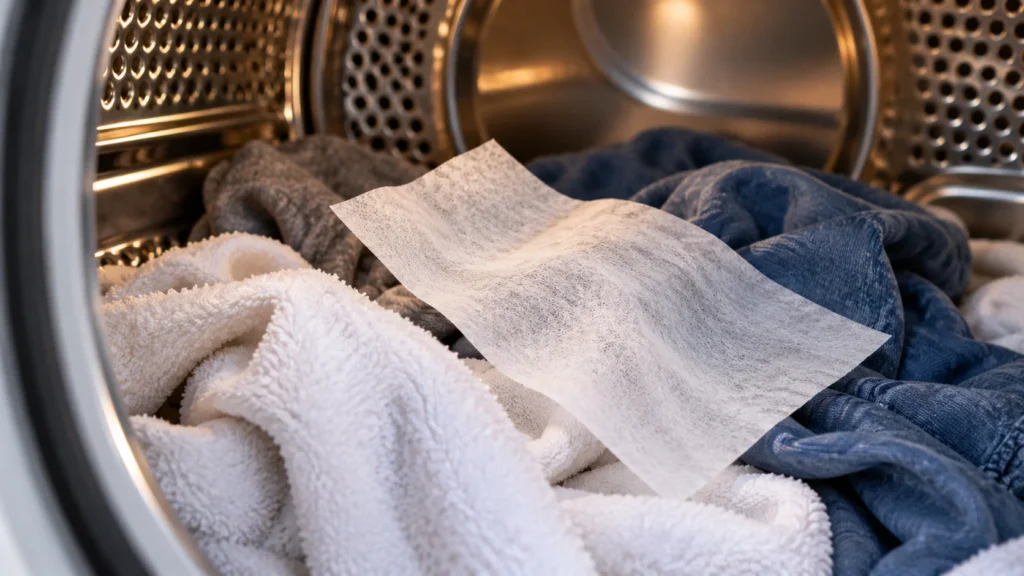
These ingredients reduce friction between fibers and help neutralize the conditions responsible for static cling. The result is clothing that can feel smoother and less staticky when the cycle ends.
Static occurs more readily under dry conditions because friction between fabrics can cause an imbalance of electrical charges. The dryer creates an environment where fabrics repeatedly rub against one another, which can contribute to static buildup.
Dryer sheets address part of this problem by depositing conditioning ingredients onto the fibers.
- Heat activates the softening coating.
- Tumbling distributes the sheet throughout the load.
- Softening agents transfer to fabric surfaces.
- Lubricating ingredients reduce friction.
- Reduced friction can lessen static cling.
- Fabric surfaces can feel smoother.
- Fragrance ingredients can remain on the laundry.
- The process occurs during drying rather than washing.
- Different formulas provide different levels of fragrance and conditioning.
- Product instructions determine how many sheets should be used.
- Large loads may require different dosing.
- Overloading can prevent even distribution.
- A sheet can become stuck in a crowded load.
- Excess product can contribute to residue.
- Dryer maintenance becomes more important when using softening products.
What Are Dryer Sheets Made Of?
A typical dryer sheet consists of a fabric-like substrate coated with a formulation containing softening agents, lubricants, fragrance, and other ingredients needed to keep the product stable and usable.
describes dryer sheets as containing liquid softeners, lubricants, and fragrances coated onto a sheet that may use polyester or cellulose fibers. The American explains that fabric softeners commonly use cationic surfactants or other softening agents, along with possible fragrance, preservative, or emulsifying ingredients.
Because formulations vary by brand and product, there is no single ingredient list that applies to every dryer sheet.
When comparing products, check the manufacturer’s ingredient information rather than assuming that Bounce dryer sheets, Gain dryer sheets, Downy dryer sheets, Snuggle dryer sheets, or another brand all contain identical ingredients.
How to Use Dryer Sheets
Using dryer sheets is generally simple, but the timing and quantity matter. For a standard load, place the recommended number of sheets on top of the wet laundry before starting the dryer cycle.
recommends placing a fresh sheet on top of the load before starting the cycle and following the package instructions for larger loads. It also warns against overloading because the sheet may become trapped against one area of the load and potentially contribute to concentrated softener residue.
- Transfer freshly washed clothes into the dryer.
- Check the garment care labels.
- Choose the appropriate drying cycle.
- Take one fresh dryer sheet.
- Place it on top of the laundry.
- Start the dryer.
- Follow the package directions for the correct number of sheets.
- Use additional sheets only when the product instructions recommend them.
- Do not overload the dryer.
- Make sure laundry can tumble freely.
- Remove the sheet when unloading.
- Do not leave used sheets inside the dryer.
- Check clothing for residue if you notice staining.
- Clean the lint filter after every load.
- Maintain the dryer according to the manufacturer’s instructions.
How Many Dryer Sheets Per Load?
The correct number of dryer sheets depends on the product and load size. There is no universal number that applies to every brand.
Many products recommend one sheet for a standard load and more for larger loads, but you should use the package instructions rather than assuming that more sheets provide better results.
Using excessive dryer sheets can increase the amount of softener residue deposited onto fabrics and inside the dryer. recommends following the product packaging and avoiding overuse.
For most households, the practical approach is:
- Start with the package-recommended amount.
- Use one sheet for a standard load when the label recommends one.
- Follow specific instructions for large loads.
- Do not add several sheets simply for stronger fragrance.
- Avoid excessive softener buildup.
- Consider no sheet when static is not a problem.
- Use dryer balls when they better fit the load.
- Avoid sheets on materials that should not receive fabric softener.
- Remove the used sheet after drying.
- Store unused sheets in their original package.
Are Dryer Sheets Necessary?
No, dryer sheets are not necessary for every load. They are optional laundry products designed primarily to reduce static, soften fabrics, and add fragrance.
If you do not have a static problem or do not want fragrance or fabric-softening residue, you can dry clothes without them. Some fabrics are actually better off without dryer sheets because the deposited softeners can interfere with their intended properties.
notes that dryer sheets should be avoided on athleticwear, microfiber, towels, flame-resistant clothing, and water-repellent fabrics.
You may not need dryer sheets when:
- Your laundry does not develop noticeable static.
- You prefer unscented clothing.
- You regularly wash towels.
- You dry microfiber cleaning cloths.
- You wash athleticwear.
- You use moisture-wicking garments.
- You have flame-resistant children’s clothing.
- You own water-repellent fabrics.
- You are trying to reduce product use.
- You prefer dryer balls or another alternative.
Are Dryer Sheets Bad for Clothes?
Dryer sheets are not automatically bad for clothes, but they are not appropriate for every fabric. Their softening ingredients work partly by coating fibers, and that coating can interfere with certain performance characteristics.
For example, warns that dryer-sheet ingredients may affect moisture-wicking properties in athleticwear and microfiber. It also warns that softening products can reduce towel absorbency and affect the self-extinguishing properties of flame-resistant clothing.
- Towels can become less absorbent.
- Microfiber may lose some of its intended cleaning performance.
- Athleticwear may lose moisture-wicking effectiveness.
- Water-repellent fabrics may become less water repellent.
- Flame-resistant garments can have their protective properties affected.
- Some fabrics may accumulate residue.
- Excessive use can leave an unwanted coating.
- Fragrance may remain on clothing.
- Sensitive individuals may prefer fragrance-free laundry.
- Some garments may require specific care products.
- Performance fabrics often benefit from specialized washing.
- Care labels should determine whether softeners are appropriate.
- Product labels should be followed.
- Avoid using dryer sheets simply out of habit.
- Use them selectively according to fabric type.
Are Dryer Sheets Bad for Your Dryer?
Dryer sheets can be used safely when the product is used according to its instructions, but they can contribute to residue buildup. says dryer sheets can leave an oily residue that may accumulate on the lint filter screen and affect airflow. It recommends emptying the lint filter after every load and giving it a more thorough cleaning periodically.
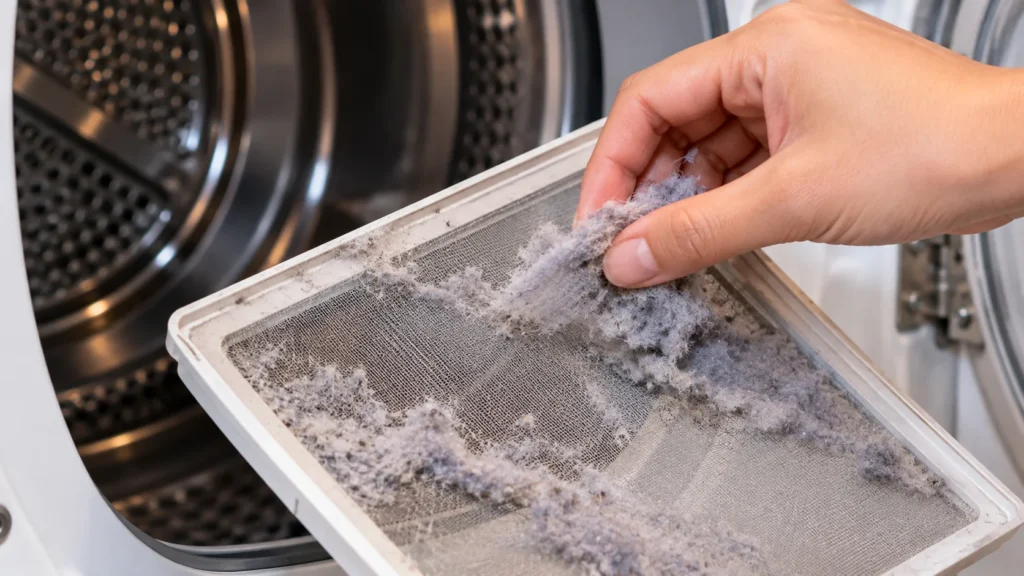
Consumer Reports also notes that dryer-sheet residue can build up on dryer moisture sensors and potentially reduce their effectiveness. Consumer Reports
Good dryer maintenance includes:
- Clean the lint filter after every load.
- Periodically wash the lint filter to remove residue.
- Follow the dryer’s maintenance instructions.
- Keep the dryer vent system clean.
- Do not overload the drum.
- Remove used sheets after every cycle.
- Inspect the dryer if drying performance changes.
- Pay attention to unusual odors.
- Check moisture-sensor performance when applicable.
- Follow the appliance manufacturer’s instructions.
Are Dryer Sheets Bad for You?
The answer depends on the individual product and the person using it. Dryer sheets contain formulated chemicals that transfer to fabrics, and fragranced products can be a concern for people who are sensitive to fragrances.
The EPA says some people can experience adverse reactions to fragrances and notes that fragrance exposure may trigger asthma episodes or other effects in some sensitive individuals, although the scientific picture is not uniform for every reported reaction.
This does not mean that every dryer sheet is inherently toxic or dangerous. Product formulations differ, exposure varies, and products are intended to be used according to their labels.
If you are sensitive to fragrance, choosing a fragrance-free option or skipping dryer sheets may be a reasonable choice.
Are Dryer Sheets Toxic?
The broad statement dryer sheets are toxic is too simplistic. Dryer sheets contain chemical ingredients, but chemical does not automatically mean toxic, and the safety of a product depends on its ingredients, concentration, exposure, and intended use.
The EPA’s Safer Choice program evaluates ingredients and products against health and environmental criteria, including concerns such as sensitization and respiratory effects. EPA also provides a fragrance-free Safer Choice label for qualifying products.
If you are looking for non toxic dryer sheets, consider more precise criteria:
- Look for transparent ingredient information.
- Consider fragrance-free products if fragrance bothers you.
- Look for credible third-party certifications.
- Check whether the product carries the EPA Safer Choice label where available.
- Do not rely solely on natural marketing language.
- Follow the manufacturer’s dosing instructions.
- Avoid excessive use.
- Do not use products on fabrics for which they are unsuitable.
- Keep products away from children and pets.
- Stop using a product if it causes irritation.
- Choose an alternative if fragrance causes symptoms.
- Maintain ventilation when using fragranced household products.
- Check the manufacturer’s safety information.
- Do not assume a product is safer solely because it smells mild.
- Evaluate the actual formulation and intended use.
Non Toxic Dryer Sheets: What Should You Look For?
There is no universally accepted meaning of non toxic dryer sheets unless a specific certification or standard defines what the claim means. A more useful approach is to look for measurable characteristics.
EPA’s Safer Choice program evaluates ingredients and finished products against defined criteria and offers a fragrance-free designation for qualifying products.
For shoppers who want a lower-exposure option, look for:
- Fragrance-free labeling if fragrance is a concern.
- Transparent product information.
- Clear ingredient disclosure where available.
- Credible certification.
- EPA Safer Choice certification where applicable.
- Simple usage instructions.
- Appropriate packaging and storage.
- A manufacturer with accessible product information.
- A product designed for the specific fabrics being dried.
- No unnecessary overuse.
- A formula compatible with your household needs.
Remember that natural, plant-based, green, and non-toxic are not automatically interchangeable terms.
Hypoallergenic Dryer Sheets
People searching for hypoallergenic dryer sheets are usually trying to minimize fragrance, dyes, or other ingredients that may cause irritation. However, hypoallergenic is not a guarantee that a product will work for every sensitive individual.
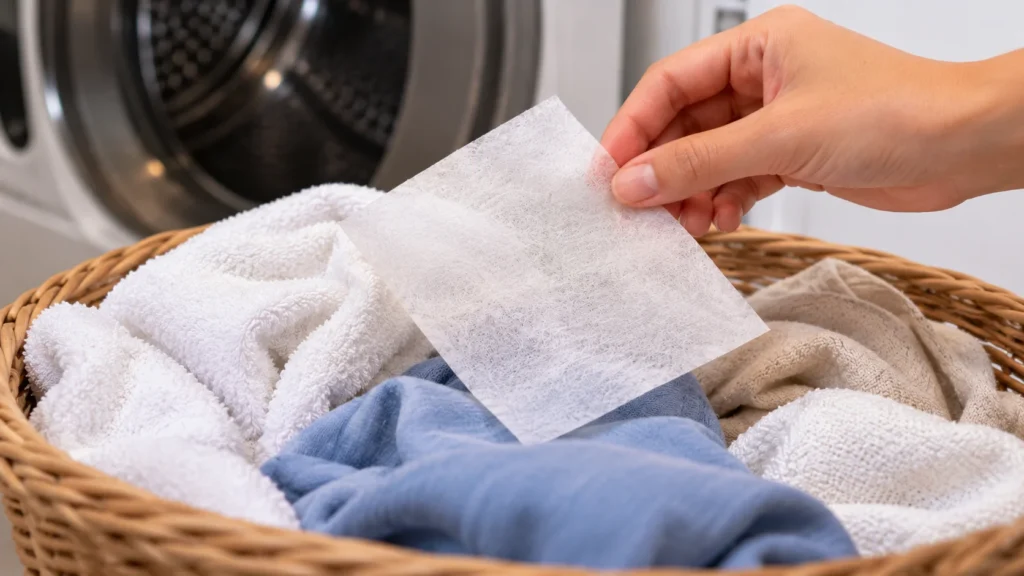
A fragrance-free dryer sheet may be preferable for someone who reacts to fragrances, but individual sensitivity varies. The EPA recognizes fragrance sensitivity as a concern for some people and provides a fragrance-free Safer Choice label for qualifying products.
If a fragranced dryer sheet causes discomfort, consider:
- Fragrance-free dryer sheets.
- Fragrance-free laundry detergent.
- Skipping fabric softeners.
- Using wool dryer balls.
- Choosing products with clear labeling.
- Washing new clothing before wearing it.
- Following care labels.
- Avoiding excessive softener.
- Keeping the laundry room ventilated.
- Trying a different product if symptoms continue.
Unscented Dryer Sheets vs Fragranced Dryer Sheets
The primary difference is the fragrance component, but the softening function can remain in both types. Unscented dryer sheets can be useful for people who want static reduction and some conditioning without adding a strong perfume to laundry.
However, unscented and fragrance-free should not automatically be treated as identical terms on every product. Read the manufacturer’s labeling carefully.
EPA’s Fragrance-Free Safer Choice label specifically indicates that qualifying products contain no fragrance materials.
Best Dryer Sheets | How to Choose
The best dryer sheets depend on what you want from them. A person seeking strong fragrance may choose differently from someone who wants static control without fragrance.
Instead of choosing solely by brand popularity, compare the product’s intended purpose and formulation.
| Priority | What to consider |
| Static control | Look for fabric-softening/static-reducing claims |
| Fragrance | Choose desired scent or fragrance-free |
| Sensitive skin | Consider fragrance-free options |
| Baby clothing | Follow garment care and product guidance |
| Everyday cotton | Most standard sheets may work |
| Towels | Dryer sheets are generally better avoided |
| Athleticwear | Avoid when manufacturer recommends against softener |
| Microfiber | Avoid when softener could affect performance |
| Flame-resistant clothing | Avoid unless explicitly permitted |
| Water-repellent fabric | Avoid when softener affects repellency |
| Lower-exposure preference | Consider fragrance-free/certified options |
| No disposable sheets | Consider dryer balls |
Bounce Dryer Sheets
Bounce dryer sheets are among the best-known fabric-softening sheets and are available in multiple varieties, including scented and unscented options. When comparing a Bounce product with another brand, look at the individual package directions and intended use rather than assuming all varieties behave identically.
A product such as Bounce Free & Gentle may be more appealing to someone seeking a less fragranced option, while scented Bounce products target users who prioritize fragrance.
The same general rules apply:
- Follow the package directions.
- Use the recommended number of sheets.
- Do not use them on unsuitable fabrics.
- Remove the used sheet after drying.
- Clean the lint filter regularly.
- Avoid excessive use.
Snuggle Dryer Sheets
Snuggle dryer sheets are designed to provide fabric-softening and fragrance benefits during drying. Like other dryer sheets, their suitability depends on the clothing being dried.
A scented Snuggle product may not be the best choice if you are trying to minimize fragrance exposure. Likewise, it should not be used automatically on towels, athleticwear, microfiber, or flame-resistant clothing when the garment manufacturer advises against fabric softener.
Gain Dryer Sheets
Gain dryer sheets are primarily used by consumers who want softness, static reduction, and the brand’s characteristic fragrance profile. As with other scented products, fragrance preference is personal.
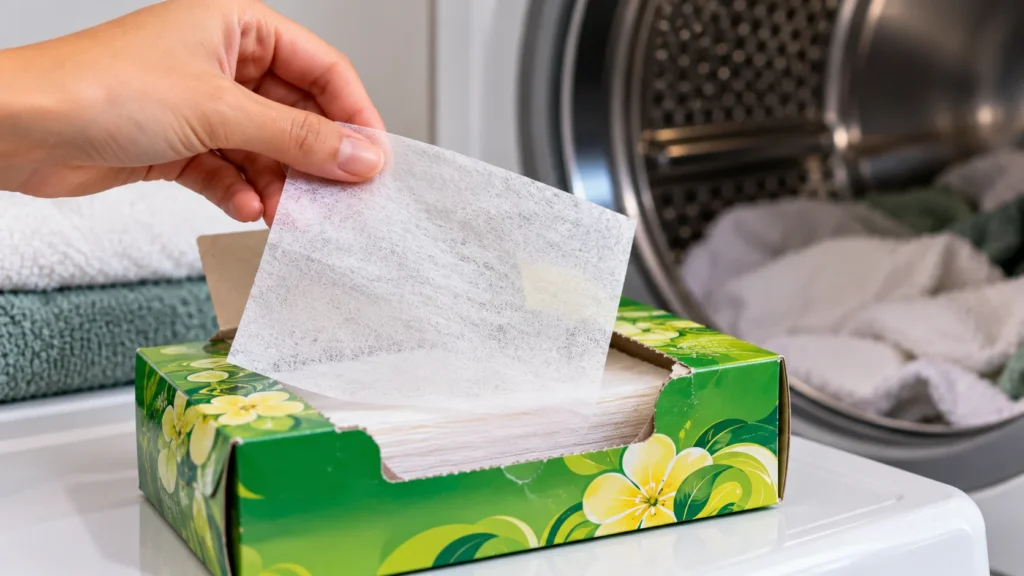
If you have sensitive household members, compare scented and fragrance-free alternatives rather than assuming a strong scent means better cleaning.
Remember that dryer sheets do not replace detergent: the clothes still need to be washed properly before they enter the dryer.
Downy Dryer Sheets
Downy dryer sheets are another option for adding fabric-softening and fragrance benefits during drying. The appropriate amount depends on the specific product and load size.
Use the same basic principle as with other dryer sheets: follow the package instructions and avoid applying fabric softeners to materials that need to maintain moisture-wicking, absorbency, flame resistance, or water repellency.
Dryer Sheets for Pet Hair
One common search is dryer sheets for pet hair. Dryer sheets can sometimes help loosen or collect loose hair from fabrics because of their conditioning and static-reducing effects, but they are not a substitute for washing, brushing, or specialized pet-hair removal.
notes that used dryer sheets can be used for dusting and collecting pet hair from surfaces.
For laundry containing substantial pet hair:
- Remove excess hair before washing when possible.
- Use a lint roller on heavily affected clothing.
- Shake washable items before laundering where appropriate.
- Clean the washer and dryer regularly.
- Use a dryer sheet only when the fabric allows it.
- Remove the sheet after the cycle.
- Clean the lint filter after every load.
- Consider dryer balls if appropriate.
- Brush pets regularly to reduce loose hair.
- Wash pet bedding according to its care instructions.
Do Dryer Sheets Repel Mice?
You may see claims that dryer sheets keep mice away, but dryer sheets should not be considered a reliable mouse-control method.
A strong fragrance may temporarily make an area smell different, but that is not the same as an established pest-repellent effect. If mice are entering a building, effective control generally involves identifying entry points, sealing openings, removing food sources, and using appropriate pest-management methods.
Do not rely on dryer sheets as a substitute for proper rodent exclusion.
Jump into Other Related Article
- How to Remove Peanut Butter Stains
- Does Rayon Shrink?
- How to Remove Coffee Stains
- How to Clean Suede Shoes
- Best Stain Remover for Clothes
- How to Clean Stainless Steel
- How to Remove Turmeric Stains
Do Dryer Sheets Repel Mosquitoes?
Similarly, claims that dryer sheets repel mosquitoes are not a reliable basis for mosquito protection. A scented laundry product should not be treated as an insect repellent unless it is specifically registered and labeled for that purpose.
EPA regulates pesticide products and requires appropriate labeling for products making pesticidal claims.
If you need mosquito protection, use an appropriately registered repellent according to its label rather than relying on a dryer sheet.
Dryer Sheets vs Dryer Balls
One of the most common alternatives to dryer sheets is the dryer ball. Wool dryer balls are reusable and do not leave the same fabric-softener coating as conventional dryer sheets.
The American notes that dryer balls may help with drying time and some wrinkles, but they do not provide all of the same softening benefits as fabric softeners.
| Feature | Dryer sheets | Dryer balls |
| Reusable | Usually no | Yes |
| Static reduction | Yes | Limited/varies |
| Adds fragrance | Often | Usually no |
| Adds softening agents | Yes | No |
| Leaves residue | Can | Generally no softener residue |
| Towels | May reduce absorbency | Often preferred |
| Athleticwear | Often unsuitable | No softener coating |
| Microfiber | Often unsuitable | Better alternative |
| Waste | Disposable | Reusable |
| Cost over time | Ongoing | Reusable |
| Fragrance-free option | Available | Naturally fragrance-free if unscented |
Wool Dryer Balls vs Dryer Sheets
Wool dryer balls vs dryer sheets is ultimately a choice between two different approaches. Dryer sheets chemically condition fabric and reduce static through transferred softening ingredients. Wool dryer balls work mechanically as they tumble among clothing.
If you want fragrance and traditional fabric-softening effects, dryer sheets may be preferable. If you want a reusable product without softener residue, wool dryer balls may make more sense.
Neither option is ideal for every load, and some garments are better dried without either.
What to Use Instead of Dryer Sheets
If you prefer not to use disposable dryer sheets, there are several alternatives. The right one depends on whether your main concern is static, softness, fragrance, waste, or fabric performance.
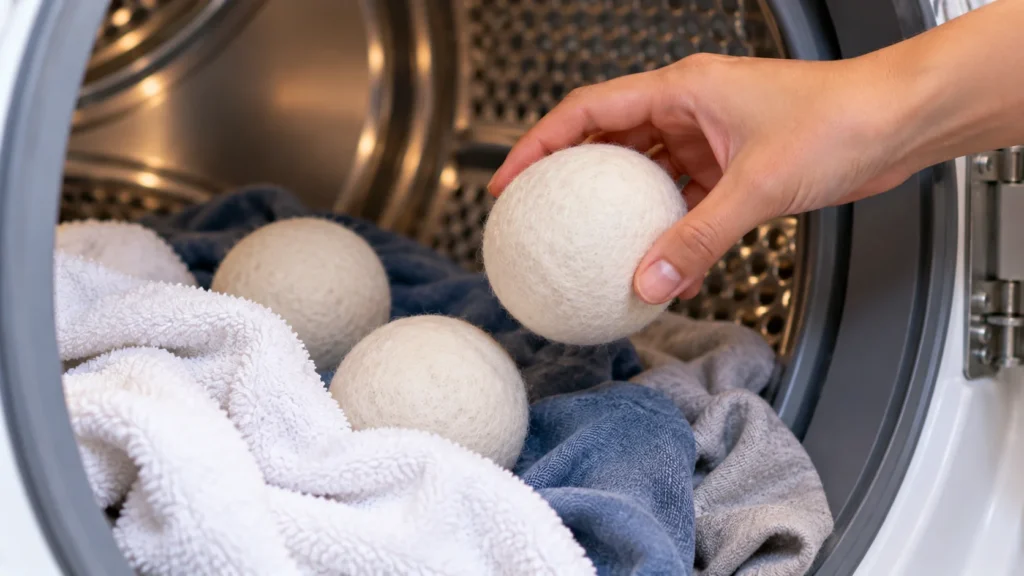
- Wool dryer balls.
- Other reusable dryer balls.
- Lower dryer temperatures where appropriate.
- Removing clothes promptly after drying.
- Avoiding over-drying.
- Separating synthetic fabrics from highly static-prone loads when appropriate.
- Using an appropriate liquid fabric softener if compatible.
- Choosing fragrance-free laundry products.
- Air drying garments when suitable.
- Following fabric-specific care instructions.
- Cleaning the dryer regularly.
- Avoiding excessive detergent.
- Using the correct drying cycle.
- Reducing unnecessary heat.
- Skipping softener altogether when the load does not need it.
Can You Reuse Dryer Sheets?
Most conventional dryer sheets are designed as single-use products. After one drying cycle, much of their softening formulation has been transferred to the laundry.
A used dryer sheet may still have household uses, such as light dusting, because notes that used sheets can collect dust and pet hair from certain surfaces.
However, reusing the same sheet in multiple laundry loads will not necessarily provide the same conditioning performance as a fresh sheet.
DIY Dryer Sheets
DIY dryer sheets are popular among people looking for inexpensive or lower-waste laundry options, but homemade fabric-softening mixtures require caution.
Do not saturate flammable materials with an improvised liquid and place them into a hot dryer. Also, never mix household cleaning chemicals simply to recreate a commercial product.
If your goal is to avoid disposable dryer sheets, reusable wool dryer balls or simply skipping fabric softener are more straightforward alternatives.
Are Dryer Sheets Bad for Towels?
Dryer sheets can reduce towel absorbency. Their softening ingredients coat fibers, which can interfere with the ability of towels to absorb water effectively.
specifically recommends avoiding dryer sheets on towels because fabric softeners can make them less absorbent.
If soft towels are your priority, consider:
- Washing towels without fabric softener.
- Avoiding dryer sheets.
- Using the correct amount of detergent.
- Rinsing thoroughly.
- Avoiding excessive detergent buildup.
- Drying towels according to their care labels.
- Using wool dryer balls if desired.
- Keeping towels separate from performance fabrics.
- Cleaning the dryer lint filter.
- Avoiding excessive fragrance products.
Are Dryer Sheets Bad for Athletic Clothing?
Dryer sheets can interfere with the performance of moisture-wicking athletic fabrics because their conditioning ingredients can coat the fibers.
advises avoiding dryer sheets on athletic wear and microfiber because the coating can affect moisture-wicking and absorbency characteristics.
For gym clothes, leggings, sports uniforms, and technical base layers, follow the manufacturer’s washing and drying instructions instead of automatically adding a dryer sheet.
Are Dryer Sheets Safe for Baby Clothes?
Baby clothing requires attention to the garment’s care label, particularly when the clothing has flame-resistant properties. warns that fabric softeners can affect the self-extinguishing ability of flame-resistant garments.
For baby laundry:
- Check the clothing label.
- Check whether the garment is flame resistant.
- Do not use dryer sheets when the manufacturer prohibits fabric softener.
- Consider fragrance-free products if fragrance sensitivity is a concern.
- Use the correct detergent.
- Avoid overloading the dryer.
- Follow the manufacturer’s drying instructions.
- Remove laundry promptly.
- Keep laundry products securely stored.
Dryer Sheets and Water-Repellent Clothing
Water-repellent jackets, outdoor clothing, and technical fabrics can lose some of their intended water-repellent behavior when coated with fabric-softening ingredients.
specifically advises avoiding dryer sheets on water-repellent fabrics because the coating can interfere with their ability to repel water.
For these garments, follow the manufacturer’s specialized washing and drying instructions and use only products specifically recommended for the fabric.
How to Avoid Dryer Sheet Residue
Residue can appear when too much product is used, when the sheet becomes trapped against fabric, or when the dryer is crowded. warns that a dryer sheet added to a partially dried load can temporarily stain garments and recommends adding the sheet at the beginning of the cycle.
To reduce residue:
- Use the recommended number of sheets.
- Add the sheet at the beginning of the cycle.
- Do not overload the dryer.
- Allow laundry to tumble freely.
- Remove the sheet when the cycle ends.
- Clean the lint filter after every load.
- Periodically wash the lint filter.
- Clean the dryer drum when necessary.
- Avoid using sheets on incompatible fabrics.
- Rewash garments if softener residue appears.
Common Dryer Sheet Mistakes
Dryer sheets are simple to use, but several habits can reduce their usefulness or damage fabric performance.
- Using several sheets for every load.
- Using dryer sheets on towels.
- Using them on microfiber cloths.
- Using them on athleticwear.
- Using them on flame-resistant garments.
- Using them on water-repellent fabrics.
- Leaving used sheets inside the dryer.
- Overloading the dryer.
- Adding a sheet to an almost-dry load.
- Ignoring care labels.
- Assuming all brands have identical formulations.
- Treating fragrance as proof of cleanliness.
- Using dryer sheets instead of detergent.
- Ignoring lint-filter residue.
- Assuming dryer sheets are necessary for every load.
Are Dryer Sheets Worth It?
Whether dryer sheets are worth using depends on what you want from your laundry routine. If you dislike static, enjoy fragrance, and frequently dry compatible cotton clothing, they can be a convenient finishing product.
If you primarily wash towels, athleticwear, microfiber, flame-resistant clothing, or water-repellent garments, the disadvantages may outweigh the benefits. In those cases, skipping dryer sheets or using a suitable alternative can make more sense.
The important point is that dryer sheets are optional. They provide specific benefits, but they are not required for clean laundry.
Dryer Sheets: Quick Pros and Cons
Benefits
- Reduce static cling.
- Add fragrance.
- Make many fabrics feel softer.
- Help reduce friction.
- Can reduce some wrinkles.
- Easy to use.
- Pre-measured.
- Available in scented varieties.
- Available in some fragrance-free options.
- Work in gas and electric dryers.
- Convenient for everyday laundry.
- Can be useful for compatible cotton fabrics.
- May help reduce static on synthetic-heavy loads.
- Widely available.
- Easy to store.
Drawbacks
- Can reduce towel absorbency.
- May affect athleticwear.
- May affect microfiber performance.
- Can affect water-repellent fabrics.
- Can affect flame-resistant clothing.
- Can leave residue.
- May contribute to dryer buildup.
- Disposable sheets create ongoing waste.
- Fragrance can bother sensitive individuals.
- Not necessary for every load.
- Can be overused.
- Can cause temporary staining if used incorrectly.
- Not suitable for every fabric.
- Do not clean clothing.
- Do not replace laundry detergent.
Final Dryer Sheet Checklist
Before adding a dryer sheet to your next load, ask a few simple questions:
- Does this fabric permit fabric softener?
- Is the load mostly cotton or another compatible material?
- Does the laundry actually need static reduction?
- Do I want added fragrance?
- Is anyone in the household sensitive to fragrance?
- Does the product offer a fragrance-free option?
- Am I using the recommended number of sheets?
- Is the dryer overloaded?
- Is the sheet being added at the beginning?
- Am I drying towels?
- Am I drying microfiber?
- Am I drying athleticwear?
- Am I drying flame-resistant clothing?
- Am I drying water-repellent fabric?
- Is the lint filter clean?
Conclusion
Dryer sheets are optional laundry products that mainly reduce static, soften many fabrics, and add fragrance during the drying cycle. They work by transferring conditioning ingredients onto fabric as heat and tumbling activate the sheet. They can be useful for many everyday cotton garments, but they are not suitable for every load and should not be considered a necessary part of laundry.
The best approach is to use dryer sheets selectively. Avoid them on towels, microfiber, athleticwear, flame-resistant garments, and water-repellent fabrics when the manufacturer recommends against softeners. If fragrance is a concern, consider fragrance-free products or skip sheets altogether. For a reusable alternative, wool dryer balls can reduce the need for disposable sheets, although they do not provide exactly the same softening and fragrance benefits.
1. What do dryer sheets do?
2. Are dryer sheets bad for you?
3. Are dryer sheets bad for clothes?
4. Are dryer sheets necessary?
No. Dryer sheets are optional. If your clothes do not have a static problem and you do not need additional fragrance or softness, you can dry laundry without them. Dryer balls or simply skipping fabric softener are alternatives.
5. Are dryer balls better than dryer sheets?
Neither is universally better. Dryer sheets provide softening, fragrance, and static-reduction benefits through transferred ingredients, while dryer balls are reusable and do not leave the same fabric-softener coating. Dryer balls can be a useful alternative when you want to avoid disposable sheets or softener residue.