

Learning how to remove turmeric stains can save clothes, carpets, countertops, containers, and other household surfaces from stubborn yellow marks. Turmeric is difficult to clean because its bright yellow pigment, curcumin, can bind to fibers and surfaces; turmeric is also traditionally used as a natural dye. When turmeric is mixed with cooking oils or sauces, the combination can make a stain even more persistent.
The key is to act quickly, use the method suited to the material, and avoid setting the stain with inappropriate heat or aggressive scrubbing. The following guide covers how to remove turmeric stains from clothes, carpet, skin, nails, countertops, plastic, wood, floors, and other common surfaces.
How to Remove Turmeric Stains from Clothes
If you need to know how to remove turmeric stains from clothes, start as soon as possible. Fresh turmeric is generally easier to treat than a stain that has dried and bonded more strongly to the fabric. Martha Stewart recommends rinsing fresh fabric stains with cold water, then treating them with mild dish soap and white vinegar before washing according to the garment’s care instructions.
Avoid immediately reaching for hot water. Heat can make some stains more difficult to remove, and the American Cleaning Institute recommends treating stains promptly and avoiding the dryer until the stain has disappeared.
15 Steps to Get Turmeric Out of Clothes
Follow these steps for a fresh or moderately stubborn turmeric stain:
- Act immediately instead of allowing the turmeric to dry.
- Scrape away excess turmeric with a spoon or dull edge if necessary.
- Rinse from the back of the fabric with cold running water.
- Avoid rubbing aggressively, which can spread pigment through the fibers.
- Apply a small amount of mild dish soap to the affected area.
- Work the soap gently into the stain.
- Add diluted white vinegar when it is appropriate for the fabric.
- Let the treatment sit briefly rather than scrubbing continuously.
- Use a soft toothbrush for durable, washable fabrics if needed.
- For stubborn stains, add baking soda carefully as part of a suitable treatment.
- Rinse the treated area thoroughly with cool water.
- Wash the garment according to its care label.
- Inspect the stain before putting the garment in a dryer.
- Repeat the treatment if a yellow shadow remains.
- Air-dry the garment until you are confident the stain has been removed.
Martha Stewart’s current turmeric guide recommends a dish-soap-and-vinegar treatment followed by washing and line drying; it also recommends continuing treatment rather than applying dryer heat while the stain remains.
How to Remove Old Turmeric Stains from Clothes
Old turmeric stains require more patience because the pigment has had more time to interact with the fabric. Start by checking the care label and testing your chosen treatment on an inconspicuous area. Never assume that a method suitable for cotton is equally suitable for silk, wool, rayon, or a garment with special finishes.
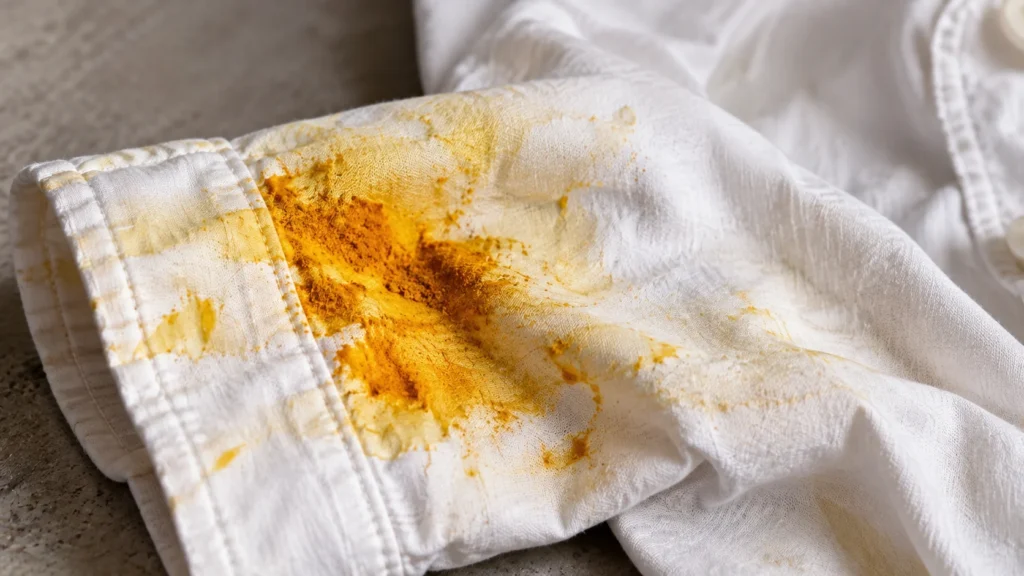
For washable fabrics, dampen the stain and repeat a mild dish-soap treatment before laundering. A small amount of baking soda can be incorporated for a stubborn mark, but excessive scrubbing may damage fibers. Martha Stewart recommends repeating the fabric treatment for set-in turmeric and allowing sunlight to help lighten the remaining discoloration while line drying.
Most importantly, do not put an old turmeric stain in the dryer until you have checked the result. The American Cleaning Institute specifically advises against machine drying while a stain remains.
How to Remove Turmeric Stains from White Clothes
White clothing gives you more treatment options than colored clothing, but that does not mean every bleach product is automatically appropriate. Begin with cold-water rinsing and a mild detergent or dish-soap treatment, then wash according to the care label.
For persistent discoloration, a suitable oxygen-based, color-safe laundry product may be considered if its label permits use on the garment. Always test products when the fabric or finish is uncertain. Chlorine bleach should not be used casually, particularly when the fabric care instructions do not permit it.
Sunlight can sometimes help lighten residual turmeric pigment during line drying, but it should be considered an additional aid rather than a guaranteed stain-removal method.
How to Remove Turmeric Stains from Carpet
When turmeric lands on carpet, do not scrub immediately. Scrubbing can spread the pigment and potentially damage carpet fibers. The Carpet and Rug Institute recommends absorbing spills with a clean white cloth or white paper towel, then treating the spot with an appropriate carpet-cleaning product after pretesting it in an inconspicuous area.

For a fresh spill, scoop up solid material first and blot the remaining moisture. Apply a suitable carpet cleaner to a white cloth rather than flooding the carpet, then gently blot from the outside toward the center. Rinse or blot with clean water as appropriate and allow the area to dry thoroughly.
If you are searching how to get turmeric out of carpet, remember that carpet fibers, backing, dye, and construction differ. A professional cleaner may be appropriate for a large, old, or persistent turmeric stain.
How to Remove Turmeric Stains from Countertops
Turmeric can stain kitchen counters, especially textured surfaces or areas with tiny grooves. For a fresh turmeric stain on quartz, granite, laminate, or another countertop, wipe up the excess quickly with a damp cloth rather than spreading it around.
For compatible hard surfaces, Martha Stewart recommends a paste made with baking soda, cold water, and dish soap, followed by gentle cleaning with a non-abrasive sponge.
However, countertop materials are not interchangeable. Natural stone such as marble and some finishes can react poorly to acidic cleaners. Check the manufacturer’s care instructions before using vinegar, lemon juice, abrasive powders, or strong chemicals.
How to Remove Turmeric Stains from Plastic and Silicone
Turmeric is particularly notorious for leaving yellow discoloration on plastic food containers, blender parts, and silicone utensils. The pigment can become trapped in tiny surface imperfections, making ordinary dishwashing less effective.
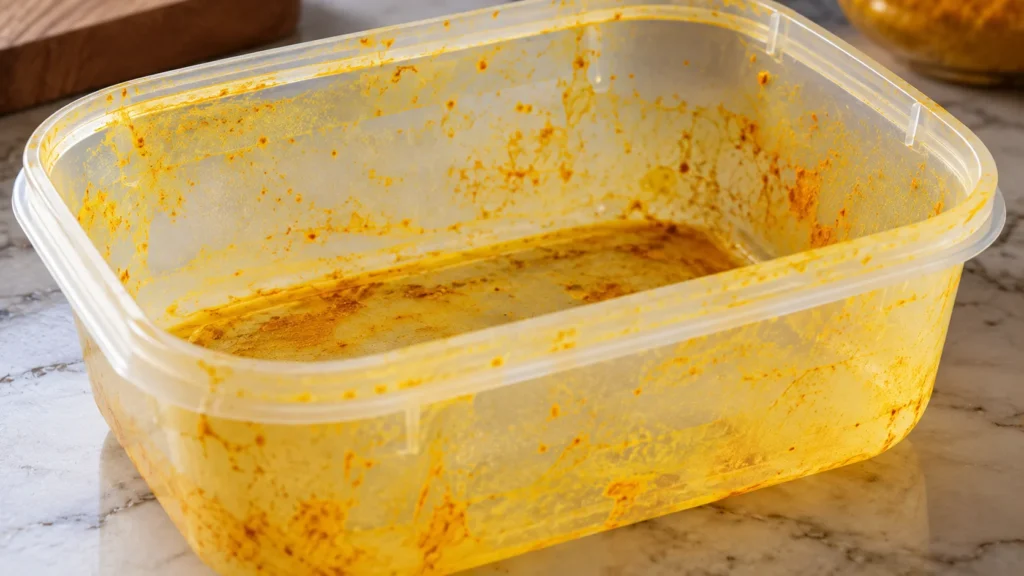
For plastic, wash the item first to remove food residue, then use a compatible soaking or cleaning method. The Kitchn describes a method using either a bleach solution or vinegar solution for suitable plastic, glass, and ceramic items but stresses never to combine bleach and vinegar.
For silicone, start with mild dish soap and warm water, then move to a manufacturer-approved method if discoloration remains. Because silicone varies by product and quality, test stronger treatments first.
How to Remove Turmeric Stains from Skin and Hands
If turmeric has turned your hands yellow, don’t panic. The discoloration is usually superficial and can fade as the outer layer of skin naturally sheds.
For how to remove turmeric stains from hands, Martha Stewart recommends a sugar-and-lemon scrub after patch testing, followed by rinsing and moisturizing. For stained fingernails, its guide describes using rubbing alcohol on a cotton pad and then moisturizing the hands.
Do not aggressively scrub irritated or broken skin. Lemon juice and rubbing alcohol can be irritating, particularly for sensitive skin, so discontinue the treatment if burning or irritation occurs.
How to Remove Turmeric Stains from Nails and Gel Nails
Turmeric can collect around and beneath fingernails while cooking, making turmeric stains from nails particularly noticeable. Start with ordinary soap and water before using anything stronger.

For natural nails, a gentle cleaning approach followed by moisturizing is preferable to repeated aggressive buffing. If you have gel nails, acrylics, or nail polish, be more cautious because solvents can affect the finish or adhesive.
Martha Stewart suggests rubbing alcohol on stained fingernails, but testing is still sensible when a manicure is involved.
How to Remove Turmeric Stains from Wood Floors and Cutting Boards
Wood is porous, so turmeric can penetrate more readily than it does into some sealed surfaces. Wipe fresh turmeric immediately, then clean the area with a mild solution appropriate for the finish.
For wooden cutting boards, avoid soaking the board for long periods because excess moisture can affect the wood. Clean, rinse appropriately, and dry it thoroughly.
For finished wood floors, follow the flooring manufacturer’s instructions before using vinegar, baking soda, or abrasive cleaners. A method that works on an unfinished cutting board should not automatically be used on a coated hardwood floor.
How to Remove Turmeric Stains from Pots and Dishes
Turmeric can leave yellow marks on cookware and utensils even after washing. Begin by removing food residue with normal dish soap, then use a suitable soaking treatment for the material.
For plastic, glass, and ceramic dishes, The Kitchn describes soaking with either a bleach-based or vinegar-based solution, followed by normal washing; these solutions should never be combined.
For stainless steel cookware, avoid unnecessary abrasive scrubbing. Use a cleaner suitable for the manufacturer’s finish, particularly when the pot has a nonstick coating or decorative exterior.
Does Turmeric Stain Your Teeth?
Yes, turmeric can contribute to yellow staining on teeth, particularly because curcumin is a strong yellow pigment. The American Dental Association has reported dentists’ concerns that turmeric’s pigment can stain teeth when it remains on the tooth surface.

Research also identifies curcumin as a pigment capable of contributing to dental-surface staining under certain conditions.
If turmeric has temporarily colored your teeth, use normal oral-hygiene practices rather than aggressive DIY whitening methods. Do not scrub teeth with harsh abrasives or acidic household ingredients. If discoloration persists or you are concerned about your teeth or dental restorations, ask a dentist for advice.
How to Remove Turmeric Stains from Marble, Granite and Quartz
Different countertop stones require different care. Quartz countertops are manufactured surfaces with specific care requirements, while marble and granite are natural stones with different levels of resistance to staining and chemical exposure.
For fresh turmeric, remove the excess quickly and clean with a mild, manufacturer-approved product. A soft cloth or non-abrasive sponge is preferable to aggressive scouring.
Avoid experimenting with strong acids, bleach, abrasive powders, or solvents unless the countertop manufacturer specifically permits them. If a turmeric mark has penetrated or affected a porous stone, professional stone restoration may be safer than repeated DIY treatments.
How to Remove Turmeric Stains from Floors, Tiles and Sinks
For glazed ceramic or porcelain tiles, wipe away fresh turmeric and clean the area with a mild detergent solution. A non-abrasive sponge can help remove residue without unnecessarily scratching the surface.
For vinyl floors, use a cleaner approved for vinyl rather than assuming that vinegar, bleach, or abrasive powders are safe. For sinks, identify whether the surface is stainless steel, porcelain, composite, or another material before choosing a treatment.
The same principle applies throughout the kitchen: identify the material first, then choose the least aggressive effective method.
Jump into Other Related Article
- How to Clean Stainless Steel Sink | Stains, Hard Water, Rust & Scratches
- How to Remove Egg Stains | Easy Methods for Clothes, Pans, Walls & More
- How to Remove Dog Hair from Clothes | Easy Methods for Wash, Dryer & Home
Common Mistakes When Removing Turmeric Stains
Turmeric stains can become harder to remove when the wrong treatment is used. The most common mistake is waiting too long, because fresh stains are generally easier to address.
Other mistakes include using hot water on fabric, drying a garment before checking the stain, scrubbing carpet aggressively, using abrasive pads on countertops, and applying strong chemicals without testing them first.
Never mix cleaning chemicals simply to create a stronger solution. In particular, never mix bleach with vinegar or other acids. The resulting chemical reaction can produce dangerous fumes.
Conclusion
Knowing how to remove turmeric stains is mainly about acting quickly and matching the treatment to the surface. For washable clothes, begin with cold water and a mild treatment; for carpet, blot instead of scrubbing; for countertops and plastic, use a non-abrasive method appropriate for the material; and for skin or nails, choose gentle treatments that do not cause irritation.
Turmeric stains are stubborn, but they are not necessarily permanent. Avoid unnecessary heat, aggressive scrubbing, and incompatible chemicals, and always follow the care instructions for clothing, flooring, countertops, cookware, and other specialized surfaces.
Can turmeric stains be removed completely?
Fresh turmeric stains generally have a better chance of being removed than old, set-in stains. Results depend on the material, stain age, concentration, and treatment used.
Does vinegar remove turmeric stains?
Vinegar can be part of a turmeric-stain treatment for some fabrics and compatible hard surfaces. However, it should not be used indiscriminately, and vinegar must never be mixed with bleach.
Does baking soda remove turmeric stains?
Baking soda can help with some turmeric stains, particularly when incorporated into a suitable paste or treatment. Martha Stewart recommends baking soda as an option for stubborn fabric and hard-surface turmeric stains.
How do you get turmeric stains out of white clothes?
Rinse with cold water, pretreat with a suitable mild cleaner, wash according to the care label, and inspect before drying. For persistent stains, an appropriate color-safe oxygen product may be considered if the garment label allows it.
How do you remove turmeric from plastic?
Wash the container first, then use a compatible soaking treatment. For suitable plastic items, either a bleach-based or vinegar-based solution may be used according to the material and methodbut never use both together.
How do you remove turmeric stains from skin?
Wash with soap and water first. If yellow discoloration remains, a gentle sugar-and-lemon treatment can be considered after patch testing, followed by rinsing and moisturizing.
How do you remove turmeric stains from carpet?
Blot the spill with a clean white cloth, avoid scrubbing, and use a carpet-safe stain treatment after testing it in an inconspicuous area. The Carpet and Rug Institute recommends blotting rather than brushing or scrubbing carpet stains.