
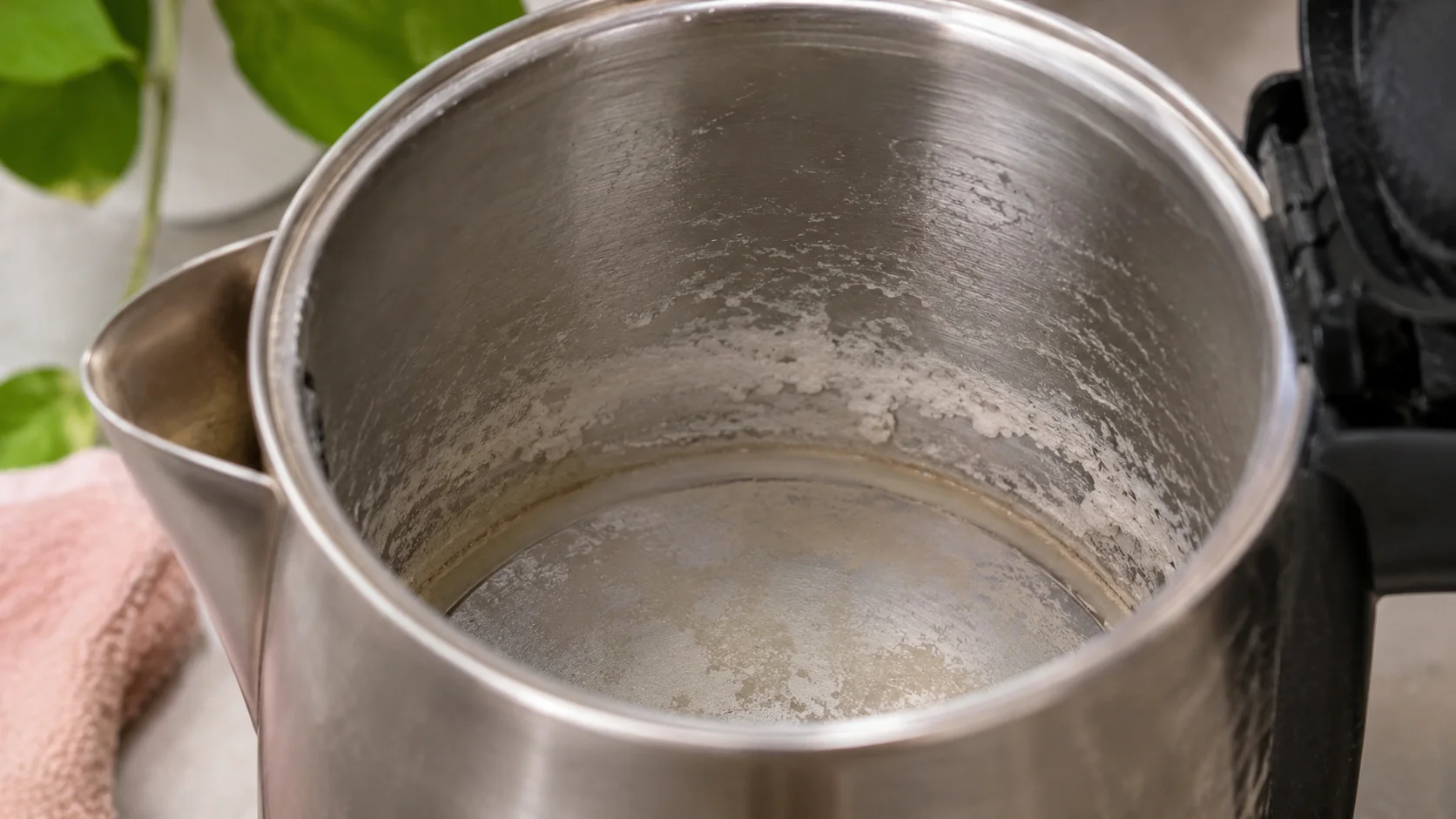
A tea kettle can look clean on the outside while hiding white mineral deposits, cloudy patches, or stubborn buildup inside. These marks are common when water contains dissolved minerals that remain behind after boiling. Over time, the residue can become more noticeable, affect the kettle’s appearance, and make routine cleaning more difficult. Fortunately, you usually do not need expensive cleaning products to restore a kettle that has accumulated ordinary mineral scale.
Learning how to clean a tea kettle starts with identifying the kettle’s material and whether it uses electricity. A traditional stovetop kettle, an electric stainless steel kettle, and a glass kettle may need slightly different care. White vinegar is a popular option for loosening limescale, while gentle dish soap and a soft cloth are often sufficient for everyday dirt on the exterior. However, the manufacturer’s instructions should always take priority, particularly for electric bases, copper finishes, enamel coatings, and specialty kettles.
In this guide, you will learn how to clean a tea kettle with vinegar, remove mineral deposits from the bottom, clean different kettle materials, tackle burnt exterior stains, and maintain your kettle between deep cleans. The aim is to remove buildup effectively without scratching surfaces, damaging electrical components, or leaving cleaning residue behind.
Why Does a Tea Kettle Develop Mineral Buildup?
Mineral deposits develop when water containing dissolved minerals, especially calcium and magnesium, is heated and evaporates. The remaining minerals can form a chalky layer on the kettle’s bottom, walls, spout, or heating element. This is commonly called limescale, and it tends to accumulate faster when you regularly use hard water.
A kettle may also develop tea stains, fingerprints, grease, or discoloration on its exterior. These are different from mineral scale and may need a different cleaning method. Identifying the type of residue helps you choose a suitable solution rather than scrubbing unnecessarily.
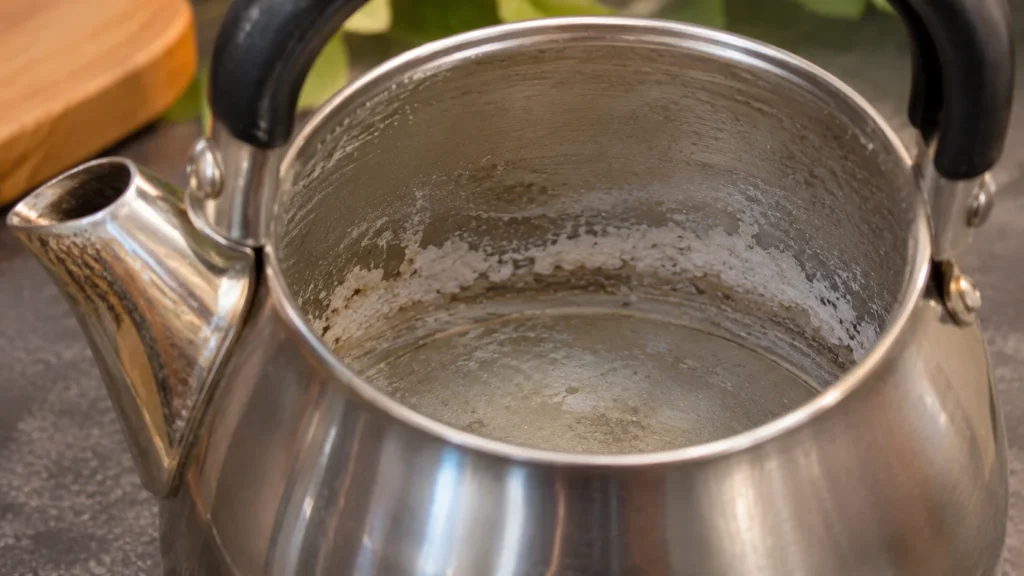
Signs your tea kettle needs cleaning
- White or gray crust inside the kettle.
- Chalky particles floating in freshly boiled water.
- A rough layer around the bottom or heating element.
- Cloudy marks on a glass kettle.
- Brown tea stains or discoloration around the spout.
- Grease or fingerprints on the exterior.
- Visible rust-like spots that require material-specific assessment.
If the kettle has loose rust, peeling interior coatings, damaged wiring, or a cracked body, cleaning may not be enough. Stop using it until you have checked the manufacturer’s advice about whether it is safe to continue.
How to Clean a Tea Kettle With Vinegar
White vinegar is commonly used to remove mineral scale because its acidity helps dissolve many calcium-based deposits. It can be effective for compatible stainless steel, glass, and other kettle interiors, provided the manufacturer permits its use. The exact amount of vinegar, dilution, and contact time depend on the kettle’s instructions and the severity of the buildup.
Before starting, unplug an electric kettle and remove it from its powered base. Make sure the kettle is cool enough to handle, and never immerse an electric kettle or its electrical base in water. For a stovetop kettle, remove it from the stove and allow it to cool completely.
Step-by-step vinegar cleaning method
- Empty the kettle. Pour away any remaining water and loose residue.
- Check the manual. Confirm that vinegar is suitable for your model and interior material.
- Prepare the cleaning solution. Use the vinegar-to-water ratio specified by the manufacturer.
- Add the solution. Cover the scaled area without exceeding the maximum fill line.
- Allow the scale to loosen. Follow the recommended contact time; do not leave the solution overnight unless expressly permitted.
- Treat stubborn deposits carefully. If approved, gently wipe accessible areas with a soft sponge or nonabrasive brush.
- Empty the kettle. Dispose of the used solution and inspect the interior.
- Rinse thoroughly. Rinse several times with clean water.
- Boil and discard fresh water if recommended. Follow the manufacturer’s instructions to remove any remaining vinegar odor or taste.
- Dry and inspect. Check that no residue remains and that the kettle is ready for normal use.
Never mix vinegar with bleach or other household cleaning products. If the manufacturer prohibits vinegar, choose an approved descaler instead.
Jump into Other Related Article
- Best Deck Stain and Sealer | Complete Guide for Pressure Treated, Cedar, Old, and Full Sun Decks
- Best Tub Cleaner | 7 Effective Options for Soap Scum, Hard Water, and Tough Stains
- How to Clean a Shower Head With Vinegar | A Step-by-Step Guide
How to Clean an Electric Tea Kettle
Electric kettles have a powered heating system and often include a concealed heating plate, removable scale filter, or automatic shutoff mechanism. Their interiors can usually be descaled without scrubbing every surface, but the electrical base must remain dry. Never submerge the kettle in a sink or dishwasher unless the manufacturer explicitly states that the specific component is dishwasher-safe.
For routine cleaning, unplug the kettle, let it cool, and wipe the outside with a damp cloth. For interior mineral buildup, use the approved descaling method and rinse thoroughly before preparing drinks again. KitchenAid recommends regular descaling based on water hardness and provides a vinegar-and-water procedure for compatible electric kettles.
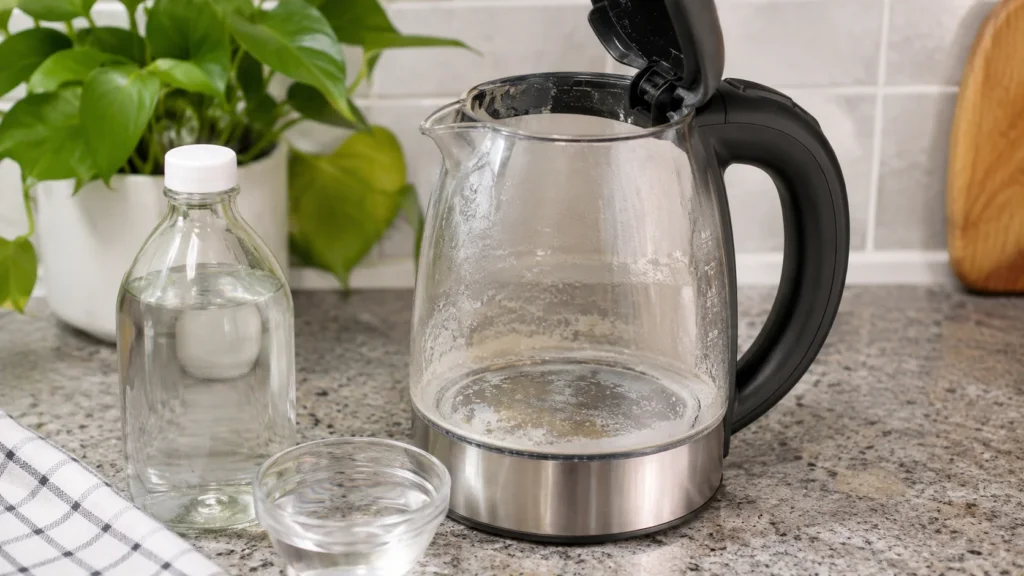
How to clean an electric tea kettle with vinegar
- Unplug the kettle and remove it from its power base.
- Empty the water and check the manual for approved cleaning solutions.
- Add the recommended vinegar-and-water mixture.
- Heat or soak the solution only as directed by the manufacturer.
- Empty the kettle after the recommended contact time.
- Rinse thoroughly, then boil and discard fresh water if instructed.
- Wipe the exterior and dry it before returning the kettle to its base.
Do not switch on an empty kettle, exceed the maximum fill line, or allow liquid to reach the electrical connector.
How to Clean a Stainless Steel Tea Kettle
Stainless steel kettles can develop white mineral scale inside and fingerprints or water spots outside. Most everyday exterior dirt can be removed with warm water, a little dish soap, and a soft cloth. Mineral deposits inside the kettle may require a compatible descaling solution rather than vigorous scrubbing.
Avoid steel wool, rough scouring pads, and abrasive cleaners because they can scratch the finish. After cleaning, rinse the surface and dry it with a soft towel to minimize water marks. For persistent discoloration, consult the manufacturer’s care instructions before using a stainless steel polish.
How to remove white buildup from stainless steel
- Use an approved vinegar solution or commercial kettle descaler for interior limescale.
- Allow the solution to work for the recommended time.
- Wipe accessible areas gently with a nonabrasive sponge.
- Rinse thoroughly to remove all cleaning residue.
- Dry the outside with a clean microfiber cloth.
If the stainless steel has blue or brown heat discoloration, do not assume it is mineral scale. Use only a polish approved for the kettle’s finish.
How to Clean a Glass Tea Kettle
Glass kettles make mineral deposits easy to see, but cloudy marks may also come from water spots or cleaning residue. Start by allowing the kettle to cool completely, then check the manual for an approved descaling solution. A compatible vinegar solution can help loosen ordinary limescale without the need for abrasive scrubbing.
Glass can crack if subjected to sudden temperature changes, so avoid pouring cold water into a hot kettle or placing a hot kettle in cold water. Use a soft sponge for accessible areas, and never strike the glass to dislodge a stubborn deposit.
How to remove cloudy marks from glass
- Empty the kettle and allow it to cool.
- Apply an approved descaling solution to the affected area.
- Wait for the recommended contact time.
- Wipe gently with a soft, nonabrasive cloth.
- Rinse thoroughly and inspect the glass under good lighting.
If the glass is chipped, cracked, or damaged around a handle or joint, stop using the kettle until you can determine whether it needs replacement.
How to Clean a Copper Tea Kettle
Copper kettles need special care because their finish may be polished, lacquered, lined, or decorative. A cleaning method suitable for uncoated copper may damage a lacquered exterior or an interior lining. Identify the finish before choosing a product, and consult the manufacturer’s instructions if the kettle is antique or valuable.
For everyday dirt, use a soft cloth and a mild cleaning method approved for the finish. Avoid assuming that vinegar, lemon juice, salt, or abrasive metal polish is suitable for every copper kettle. If the inside is lined with stainless steel or another material, clean that surface according to its own care requirements.
How to protect a copper kettle’s finish
- Wipe away fingerprints and water splashes promptly.
- Use a soft cloth rather than a rough scouring pad.
- Avoid soaking decorative handles or joints.
- Do not use acidic cleaners on lacquered surfaces unless approved.
- Have valuable antique kettles assessed before attempting aggressive stain removal.
If the interior lining is peeling or the kettle shows significant corrosion, stop using it for boiling drinking water until its safety has been assessed.
How to Clean the Outside of a Tea Kettle
The outside of a kettle collects fingerprints, cooking grease, water splashes, and dust. Unlike mineral deposits inside the kettle, these marks often respond to a simple wash with mild dish soap and warm water. The main challenge is cleaning the exterior without damaging the finish or allowing water into electrical components.
For an electric kettle, unplug it first and wipe the exterior with a damp cloth. Do not pour water over the appliance or immerse it. For a stovetop kettle, check the care instructions before using a cleaning product, especially if the body is enamel-coated, painted, or copper-plated.
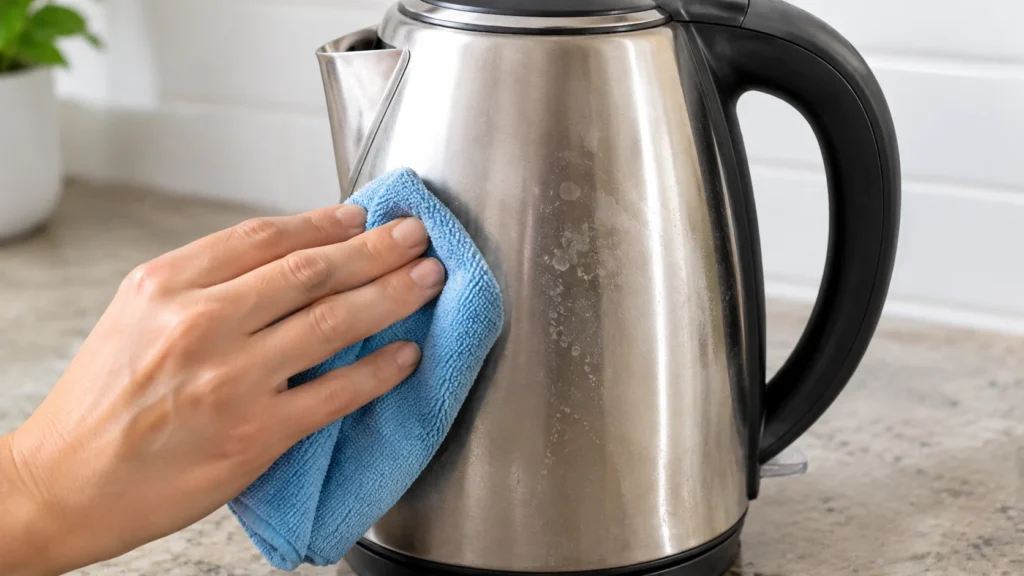
Exterior cleaning steps
- Let the kettle cool completely.
- Remove loose dust with a soft cloth.
- Wipe fingerprints and grease with a lightly soapy cloth.
- Remove soap residue using a separate damp cloth.
- Dry with a soft towel to prevent water spots.
KitchenAid advises using nonabrasive cleaning methods on its kettle finishes and avoiding scouring agents that could scratch the exterior.
How to Clean a Burnt Tea Kettle
Burn marks on a kettle’s exterior can develop when it overheats, sits over a flame that extends beyond its base, or collects grease that becomes baked onto the surface. Before trying to remove a stain, determine whether it is burnt food residue, heat discoloration, or damage to the kettle’s finish. These problems do not all respond to the same cleaning method.
Let the kettle cool completely and use a mild cleaning solution approved for its material. Avoid pouring cold water into a hot kettle or scrubbing a delicate finish with steel wool. If the metal is warped, the coating is peeling, or the kettle has been damaged by overheating, cleaning alone may not make it safe to use.
How to remove burnt marks safely
- Wash ordinary surface grime with warm, soapy water.
- Use a soft sponge on finishes that permit gentle scrubbing.
- Try an approved stainless steel cleaner for compatible stainless steel surfaces.
- Avoid abrasive powders on enamel, glass, and polished finishes.
- Stop if the surface begins to peel, scratch, or change color.
Do not use a chemical cleaner inside the kettle unless it is approved for food-contact surfaces and the manufacturer permits it.
How to Clean Rust Out of a Tea Kettle
Rust-colored marks can come from corrosion, mineral deposits, or residue from another source. Before treating the marks, inspect the interior to determine whether the surface is simply stained or the metal itself is deteriorating. A removable mineral deposit may respond to descaling, but corrosion and damaged coatings require a different response.
Empty the kettle, let it cool, and consult the manufacturer’s care instructions. Avoid aggressive sanding or scraping inside a kettle used for drinking water. If the interior is deeply pitted, the coating is peeling, or corrosion continues to return, stop using the kettle until you have established whether it is safe.
What to do about rust-like stains
- Check the kettle’s material and interior coating.
- Use a manufacturer-approved cleaner for removable mineral residue.
- Wipe gently with a soft cloth and rinse thoroughly.
- Empty the kettle after use and allow it to dry.
- Replace the kettle if corrosion has compromised its body or food-contact surface.
A stain alone does not establish whether a kettle is unsafe, but significant corrosion should not be ignored.
How to Clean a New Tea Kettle Before First Use
A new kettle may contain packaging dust, manufacturing residue, or odors from materials used during storage. Before making tea, read the supplied instructions for initial cleaning. Some manufacturers recommend washing removable parts, filling the kettle with clean water, boiling it, and discarding that first batch.
Do not assume a new kettle needs vinegar descaling. Mineral deposits generally develop during use, and an unnecessary acidic treatment may not be appropriate for every finish or component.
First-use cleaning checklist
- Remove packaging and labels.
- Wash removable parts as directed.
- Wipe the exterior with a clean, damp cloth.
- Fill the kettle to the recommended level.
- Boil and discard water if the manual instructs you to do so.
- Check for leaks or unusual odors before regular use.
How Often Should You Clean a Tea Kettle?
A kettle benefits from light cleaning more frequently than deep descaling. Emptying leftover water, wiping the exterior, and rinsing the interior can help prevent residue from accumulating. Descaling frequency depends on how often you boil water and how much mineral content your water contains.
KitchenAid suggests descaling an electric kettle approximately monthly when used daily, with more frequent treatment potentially needed in hard-water areas. Other models may have different requirements, so use your manufacturer’s recommended interval as the final guide.
A practical cleaning schedule
| Task | Suggested frequency |
| Empty leftover water | After use |
| Wipe the exterior | As needed |
| Rinse the interior | Regularly |
| Inspect for limescale | Weekly |
| Descale the interior | About monthly as a starting point, or sooner if needed |
| Clean a removable scale filter | When deposits appear or as directed |
If you notice white flakes in your water, visible scale, or an unusual taste, inspect the kettle rather than waiting for the next scheduled deep clean.
15 Tips to Keep Your Tea Kettle Clean Longer
Regular care helps prevent thick mineral deposits and makes each cleaning session easier. These habits also reduce the temptation to use aggressive cleaners or abrasive tools.
- Empty leftover water after use.
- Avoid leaving the kettle full for long periods.
- Use water with lower mineral content if recommended for your model.
- Inspect the interior for white scale every week.
- Descale when deposits first appear.
- Follow the manufacturer’s approved vinegar dilution or descaler instructions.
- Rinse thoroughly after every descaling treatment.
- Never immerse an electric kettle in water.
- Keep the electrical connector dry.
- Use a soft cloth on polished stainless steel.
- Avoid steel wool on delicate finishes.
- Clean removable scale filters according to the manual.
- Dry the exterior after wiping to reduce water spots.
- Keep stovetop kettles away from excessive flames.
- Stop using a kettle with cracks, peeling coatings, or serious corrosion.
Conclusion
Learning how to clean a tea kettle is mostly about choosing the right method for the material and the type of residue. Mild soap and a soft cloth usually handle everyday dirt, while an approved vinegar solution or commercial descaler can help remove mineral buildup. Glass, stainless steel, copper, enamel, and electric kettles all have different care requirements, so avoid assuming that one method suits every design.
For the best results, inspect your kettle regularly, empty leftover water, remove limescale before it becomes heavy, and rinse thoroughly after cleaning. Avoid abrasive tools, protect electrical components, and stop using a kettle if it has serious corrosion, cracks, or a damaged interior coating.
1. What is the easiest way to clean a tea kettle?
For ordinary dirt, use warm water, mild dish soap, and a soft cloth where the manufacturer permits it. For mineral scale, use an approved descaling solution, rinse thoroughly, and follow the instructions for your particular kettle.
2. Can I clean a tea kettle with vinegar?
Yes, many kettles can be descaled with white vinegar diluted with water. However, some finishes and components may not be compatible with acidic cleaners. Check the manual before using vinegar.
3. How do I clean an electric tea kettle with vinegar?
Unplug the kettle, empty it, and add the approved vinegar-and-water solution. Heat or soak it only as directed by the manufacturer, then empty and rinse thoroughly. Never immerse the kettle or its electrical base in water.
4. How do I remove white buildup from the bottom of a kettle?
White buildup is often limescale. Apply an approved descaler or compatible vinegar solution, allow it to work for the recommended time, and rinse thoroughly. Avoid scraping the bottom with metal tools.
5. Can I use baking soda to clean a tea kettle?
Baking soda may help with some residue, but it is not always the best option for hard mineral scale. Use it only if the manufacturer permits it, and avoid abrasive scrubbing that could damage the surface.
6. How do I clean a stainless steel tea kettle without scratching it?
Use mild dish soap, warm water, and a soft sponge for exterior dirt. For interior scale, choose an approved descaler. Avoid steel wool and abrasive cleaning products.
7. How do I clean a glass tea kettle?
Use an approved descaling solution and a soft cloth to remove mineral deposits. Avoid sudden temperature changes, abrasive tools, and impact that could crack the glass.
8. How do I clean a copper tea kettle?
First identify whether the copper is lacquered, polished, plated, or lined. Use a cleaning method approved for that finish, and avoid acidic products on lacquered surfaces unless the manufacturer permits them.
9. How do I remove rust from inside a tea kettle?
Determine whether the mark is removable mineral residue or actual corrosion. Use only an approved cleaner for the kettle’s material. If the metal is deeply corroded or the interior coating is peeling, stop using the kettle until its safety is assessed.
10. How often should I descale an electric kettle?
Monthly descaling can be a reasonable starting point for daily use, but hard water may require more frequent treatment. Follow the manufacturer’s recommendations and inspect the kettle regularly.
11. Can I put my electric kettle in the dishwasher?
Do not put an electric kettle or its electrical base in the dishwasher unless the manufacturer explicitly approves that specific component. Most electric kettles should be cleaned by hand according to their manuals.
12. Why does my kettle still smell like vinegar after cleaning?
The odor may remain if the solution has not been rinsed away completely. Rinse the kettle thoroughly and boil and discard fresh water as directed by the manufacturer before making drinks.