
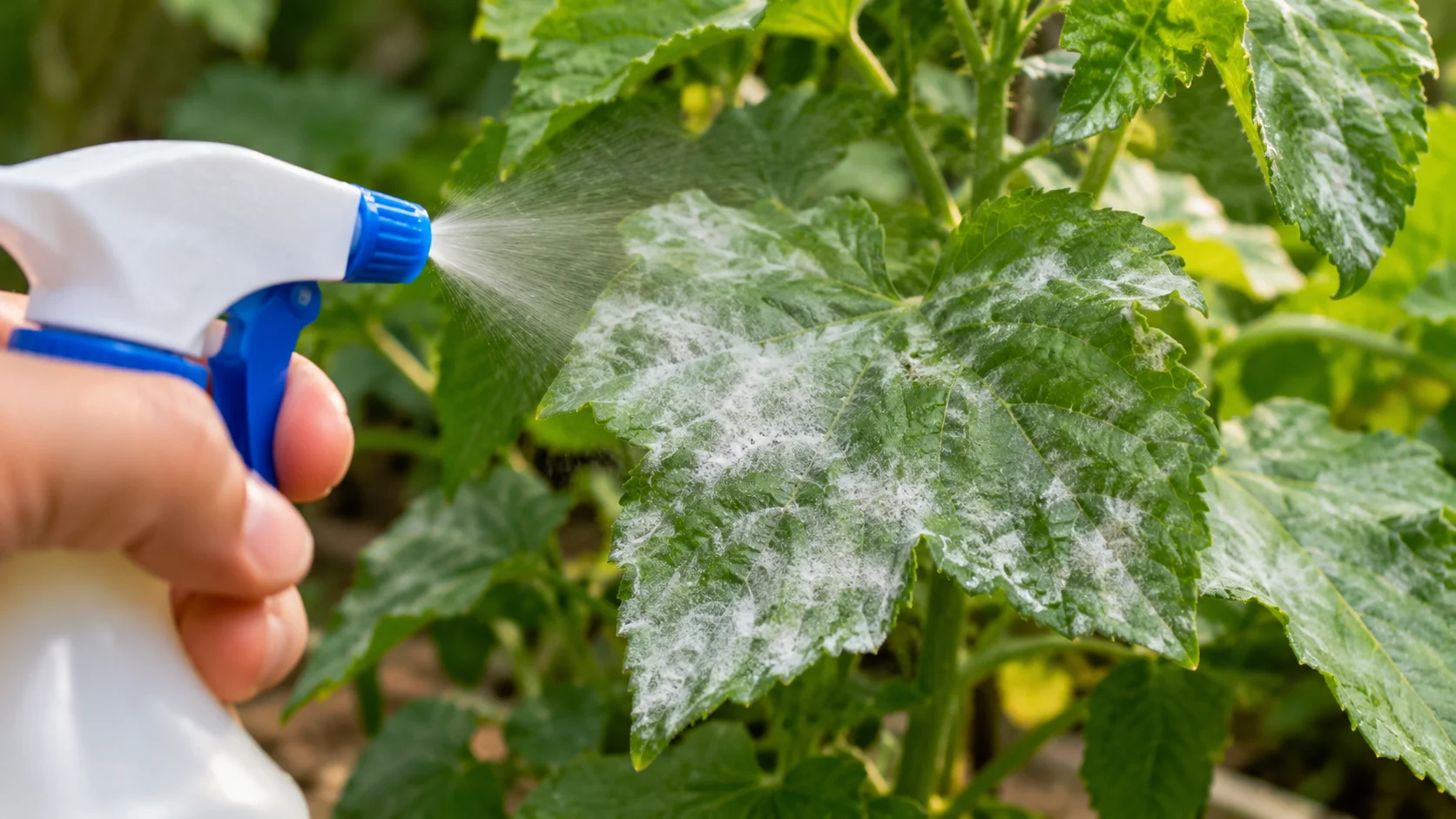
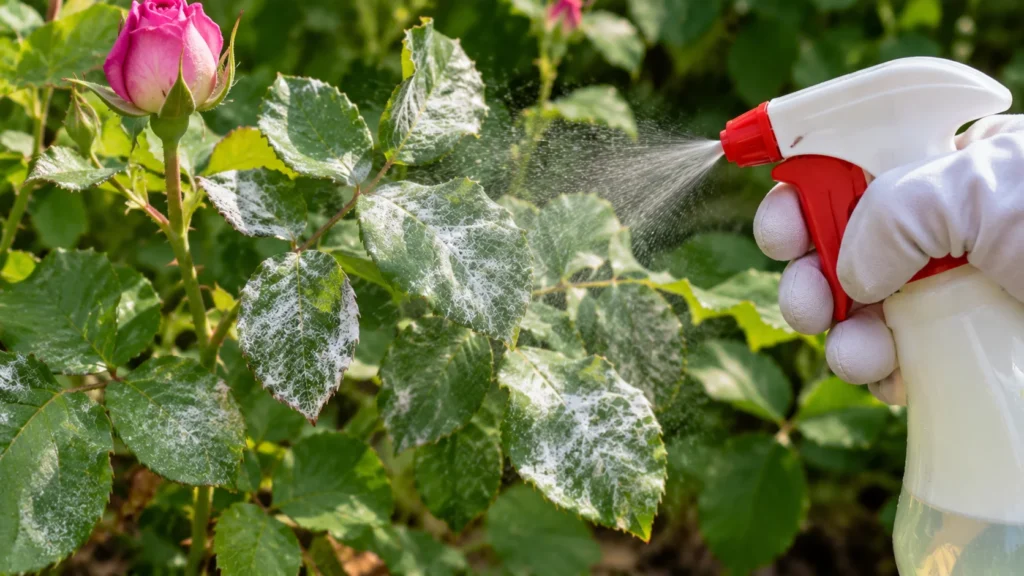
Powdery mildew can turn healthy-looking leaves into a patchwork of white, dusty growth, affecting vegetables, roses, hydrangeas, squash, and many ornamental plants. The right powdery mildew spray can help slow the disease, protect unaffected foliage, and reduce further spread. However, the most effective option depends on the plant species, the severity of the infection, and whether you prefer a homemade mixture or a labeled fungicide.
Some gardeners use diluted milk or baking soda mixtures, while others choose potassium bicarbonate, sulfur, neem oil products, or commercial fungicides. These options do not work equally well in every situation, and homemade sprays can damage leaves when mixed too strongly or applied in direct sunlight. This guide explains how the main treatments compare, how to use them more safely, and when spraying alone may not be enough.
What Is the Best Powdery Mildew Spray?
The best spray for powdery mildew is one that is suitable for the affected plant, labeled for the disease, and applied before the infection becomes widespread. Potassium bicarbonate products and certain registered fungicides can be useful for managing powdery mildew, while diluted milk and baking soda mixtures are commonly tried by home gardeners. Their performance can vary, so no single recipe is the best choice for every garden.
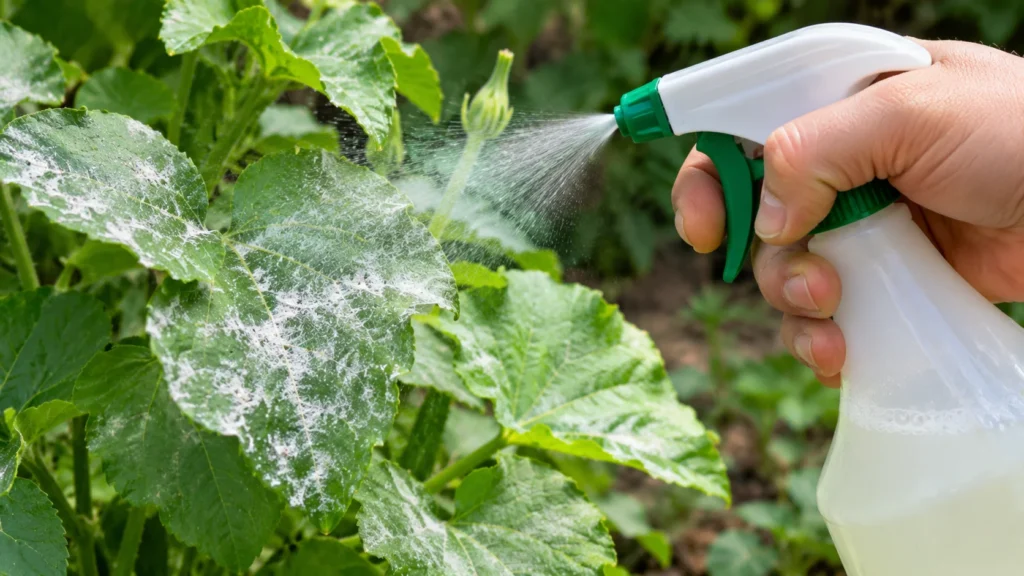
Consider these options before treating your plants:
- Potassium bicarbonate spray: A targeted option for powdery mildew when the product label lists the plant and disease.
- Commercial fungicide: Useful when the infection is persistent or widespread, provided the label permits the intended use.
- Diluted milk spray: A popular home-gardening remedy, particularly for some vegetable and ornamental plants, although results vary.
- Baking soda spray: A homemade approach that may help under some conditions, but excessive concentration can injure foliage.
- Sulfur-based spray: A traditional fungicide for certain plants, but it is not appropriate for every crop or weather condition.
- Neem oil spray: May help manage some plant pests and diseases, depending on the formulation, but it must be used according to its label.
Before choosing a treatment, confirm that the white growth is actually powdery mildew. Mineral residue, dust, insect activity, and other plant problems can look similar but may require different solutions.
Homemade Powdery Mildew Spray Recipes
Homemade treatments can be appealing because the ingredients are easy to find. However, a mixture that works on one plant may burn the leaves of another. Test any homemade spray on a small section of foliage and wait 24–48 hours before treating the entire plant.
1. Milk Spray for Powdery Mildew
A milk spray is one of the most widely discussed home remedies for powdery mildew. Some gardeners report improvements after spraying diluted milk on susceptible plants, but results depend on the plant, concentration, weather, and disease pressure. Milk should not be treated as a guaranteed cure.
A cautious milk-and-water mixture:
- Mix 1 part milk with 9 parts water to make a 10% milk solution.
- Use fresh, plain milk rather than sweetened or flavored milk.
- Put the mixture in a clean spray bottle.
- Lightly coat a small area of affected foliage first.
- Check the test area for leaf spotting, residue, or other damage before wider use.
Apply only when the weather allows the foliage to dry, and avoid repeatedly soaking the plant. If the mixture leaves an unpleasant smell or sticky residue, discontinue it and rinse the foliage gently with clean water if appropriate for the plant.
Does milk spray kill powdery mildew?
Milk spray may help suppress powdery mildew in some circumstances, but research and practical results are variable. It is best considered an experimental home-gardening treatment rather than a dependable replacement for a fungicide labeled for the affected plant.
2. Baking Soda Spray for Powdery Mildew
Baking soda, or sodium bicarbonate, is often used in homemade mildew sprays because bicarbonates can change the pH on leaf surfaces. However, baking soda is not the same as potassium bicarbonate, which is used in formulated plant-disease products. Sodium buildup and overly concentrated mixtures can injure foliage. The University of Florida’s gardening guidance notes that potassium bicarbonate generally performs better and is less likely to cause plant injury than baking soda.
If you want to try a baking soda powdery mildew spray:
- Start with a very dilute mixture rather than a strong solution.
- Use a clean container and mix only what you need.
- Do not add several household ingredients at once; that makes it harder to identify what caused damage.
- Test the mixture on a few leaves before spraying more widely.
- Stop immediately if leaves develop brown patches, curling, or unusual discoloration.
Some extension resources discuss baking soda combined with horticultural oil, but particular recipes may be experimental and are not automatically safe for every plant.
A better alternative: For persistent powdery mildew, consider a labeled potassium bicarbonate fungicide. Follow the product instructions for dilution, plants, coverage, and repeat applications rather than substituting an improvised baking soda recipe.
3. Hydrogen Peroxide Spray for Powdery Mildew
Hydrogen peroxide is sometimes promoted online as a fast-acting treatment for fungal growth. However, household hydrogen peroxide can also damage plant tissue, especially when it is concentrated or used repeatedly. A homemade hydrogen peroxide foliar spray should not be assumed safe simply because the ingredient is commonly sold for household use.
Before considering a peroxide spray:
- Do not apply concentrated hydrogen peroxide directly to leaves.
- Avoid copying unverified recipes that specify high concentrations.
- Do not mix hydrogen peroxide with other cleaners or chemicals.
- Prefer a product specifically labeled for the intended plant disease.
- If you have already sprayed peroxide and the foliage is deteriorating, stop using it.
Hydrogen peroxide is not my first recommendation for routine powdery mildew management. A plant-labeled fungicide or a carefully tested, low-risk treatment is a more practical choice.
4. Neem Oil Spray for Powdery Mildew
Some neem oil products are labeled for powdery mildew, while others are intended mainly for insect control. Check the label to confirm that the specific product can be used against the disease on your plant. Do not assume every neem oil sold for gardening has the same formulation or uses.
For safer application:
- Check whether the label lists your plant and powdery mildew.
- Mix the product exactly as directed; concentrated oils can burn leaves.
- Test a small section of foliage if the label permits and wait to check for damage.
- Apply during a suitable, cooler part of the day according to the label.
- Avoid spraying drought-stressed plants or foliage exposed to excessive heat.
Neem oil is not suitable for every plant or weather condition. Some plants are sensitive to horticultural oils, and hot conditions increase the risk of injury.
5. Potassium Bicarbonate Spray
Potassium bicarbonate is often a more targeted choice than a homemade baking soda mixture because commercial formulations are designed for plant-disease management. It can act on contact with powdery mildew, so adequate coverage matters. It may provide useful control, particularly when the disease is caught early, but it will not restore severely damaged leaves.
Choose a product labeled for the plant you are treating and follow its specified rate. Do not increase the concentration to try to make it work faster. Potassium bicarbonate can still injure foliage, especially when plants are already heavily affected or the product is misused.
6. Sulfur Spray for Powdery Mildew
Sulfur-based fungicides are established treatments for powdery mildew on certain plants. They are most useful when selected for the correct crop and applied according to the label. Sulfur can injure sensitive plants, particularly during hot weather, and it must not be used too close to horticultural oil treatments.
The University of California’s Integrated Pest Management guidance warns that sulfur can damage plants, especially when temperatures approach 95°F (35°C), while other extension guidance recommends avoiding applications around or above 90°F (32°C). The exact limit depends on the product and crop, so use the stricter label precautions.
Do not use sulfur on an unidentified plant simply because the leaves have white patches. Confirm the plant is suitable for sulfur treatment first.
7. Copper Spray for Powdery Mildew
Copper fungicides are used against several plant diseases, but they are not the automatic best option for powdery mildew. Their effectiveness depends on the specific product, plant, disease, and application timing. Copper can also cause plant injury under certain conditions.
If considering a copper spray:
- Choose a product whose label lists the disease and plant.
- Follow all application and harvest instructions.
- Avoid combining it with other sprays unless the label specifically allows the combination.
- Do not assume that a product safe for ornamental plants is suitable for edible crops.
For powdery mildew specifically, potassium bicarbonate, sulfur, horticultural oils, or other labeled fungicides may be more directly appropriate depending on the plant and local product availability.
Jump into Other Related Article
- Best Deck Stain and Sealer | Complete Guide for Pressure Treated, Cedar, Old, and Full Sun Decks
- Brick Stain Colors | Exterior, Interior, Fireplace, Paver, and Before and After Ideas
- How to Clean a Shower Head With Vinegar | A Step-by-Step Guide
What to Spray for Powdery Mildew on Different Plants
The best treatment can change with the plant species. Vegetables, roses, and ornamental shrubs may differ in sensitivity to oils, sulfur, and homemade mixtures. Always check that a treatment is suitable for the particular plant.
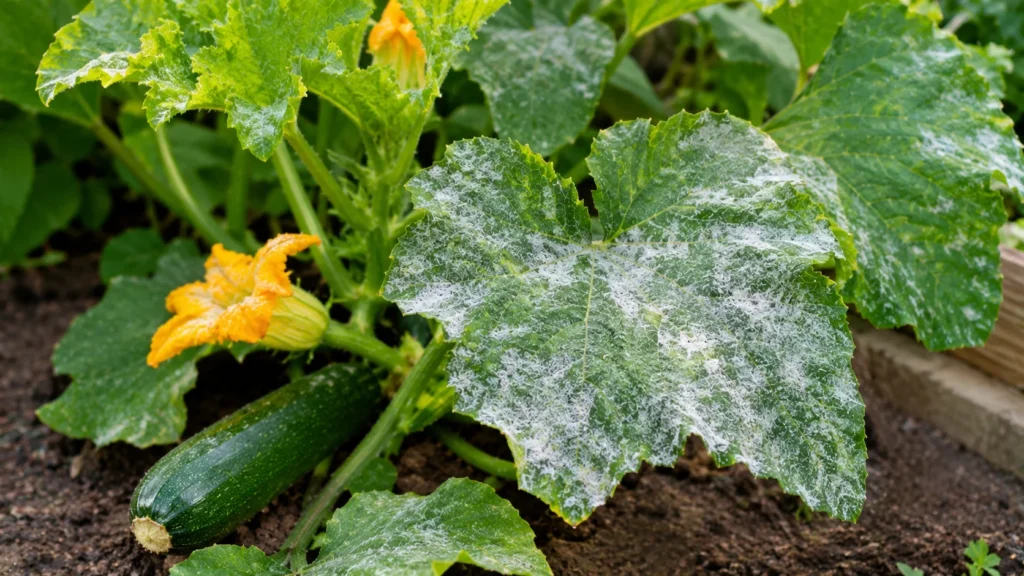
Powdery Mildew Spray for Squash and Other Cucurbits
Squash, cucumbers, pumpkins, and melons can develop powdery mildew on their leaves. Start by removing severely affected foliage when doing so will not excessively weaken the plant. Improve airflow by avoiding overcrowding, and check both upper and lower leaf surfaces when applying a labeled treatment.
For edible cucurbits, a fungicide labeled for the specific crop may be appropriate. Potassium bicarbonate and sulfur are among the options used in crop disease management, but the product label determines whether and how they can be applied. UC Integrated Pest Management guidance emphasizes choosing appropriate fungicides and achieving thorough coverage for cucurbit powdery mildew.
Do not spray fruit intended for harvest unless the label permits it, and observe the required interval between the final application and harvesting.
Powdery Mildew Spray for Roses
Powdery mildew on roses can affect young leaves, stems, and flower buds. Remove badly infected material where practical, then consider a rose-labeled potassium bicarbonate, horticultural oil, sulfur, or other suitable fungicide.
A baking soda mixture is sometimes suggested for roses, but homemade recipes can cause leaf injury and should not be treated as proven universal solutions. Colorado State University Extension describes one baking soda-and-horticultural-oil recipe as experimental and advises using it at one’s own risk.
Choose a treatment that is compatible with roses, especially during hot weather or when the plant is stressed.
Hydrangea Powdery Mildew Spray
Hydrangeas may develop white powdery patches on their leaves, particularly when conditions favor disease and airflow is poor. Begin by checking that the symptoms are consistent with powdery mildew rather than residue or another leaf problem.
If the infection is limited, remove the most affected leaves when practical and improve spacing or airflow. For valuable plants with recurring or severe infections, use a fungicide labeled for hydrangeas and powdery mildew. Do not assume sulfur is safe for all ornamental shrubs; some species and varieties are sensitive to sulfur products.
Powdery Mildew Spray for Indoor Plants
Indoor plants can develop powdery mildew when air circulation is poor and susceptible plants are crowded. Move affected plants away from healthy ones while assessing the problem, and remove severely affected leaves if appropriate.
Use only products labeled for indoor ornamental plants and follow the ventilation and re-entry directions. Avoid applying garden fungicides indoors unless their labels explicitly permit indoor use. A strong homemade spray may damage delicate foliage, particularly on plants with thin or fuzzy leaves.
Powdery Mildew on Other Vegetables and Ornamentals
For tomatoes, peppers, beans, flowering annuals, and shrubs, identify the plant before selecting a treatment. The disease may look similar across plants, but the products approved for one crop may not be permitted on another.
When treating edible plants, check the label for the crop, the disease, application rate, and preharvest interval. For ornamentals, check plant sensitivity and whether the product can be used on flowering plants or the particular shrub species.
When to Spray for Powdery Mildew
The best time to apply a powdery mildew treatment depends on the product label, the weather, and the plant’s condition. For most spray treatments, avoid the hottest part of the day and never apply a product in conditions that the label warns against.
Follow this practical routine:
- Inspect plants regularly. Check young leaves, stems, and both sides of the foliage, particularly on plants that had mildew previously.
- Act at the first signs. Early treatment is generally more useful than waiting until much of the plant is covered.
- Check the forecast. Avoid applying a product when rain or extreme heat could interfere with its use or increase the risk of leaf injury.
- Cover the intended surfaces. Follow the label’s instructions for coverage, including leaf undersides where required.
- Repeat only as directed. Some products need repeated applications, but the interval and maximum number of treatments depend on the formulation.
A fungicide may protect healthy foliage or suppress the fungus, but it usually cannot make damaged leaves look healthy again. If most leaves are already severely affected, concentrate on limiting spread and protecting new growth rather than expecting a spray to reverse existing damage.
How Often Should You Spray for Powdery Mildew?
There is no universal schedule for every powdery mildew spray. Some labeled fungicides are applied at intervals of approximately 7–14 days under particular conditions, while other products have different directions. The correct interval is the one specified on the product label for your plant and disease.
For homemade mixtures, avoid assuming that daily or frequent spraying will improve results. Repeated applications of baking soda, oil, milk, or other mixtures can leave residue or damage sensitive leaves.
Use these guidelines:
- Inspect susceptible plants at least weekly during periods when mildew commonly appears.
- Check plants again after treatment to see whether new growth is staying healthy.
- Reapply commercial products only at the labeled interval.
- After rainfall, check whether the product needs reapplication; do not automatically spray again.
- If the disease keeps spreading despite correct use, reassess the diagnosis and treatment choice.
How to Apply Powdery Mildew Spray Safely
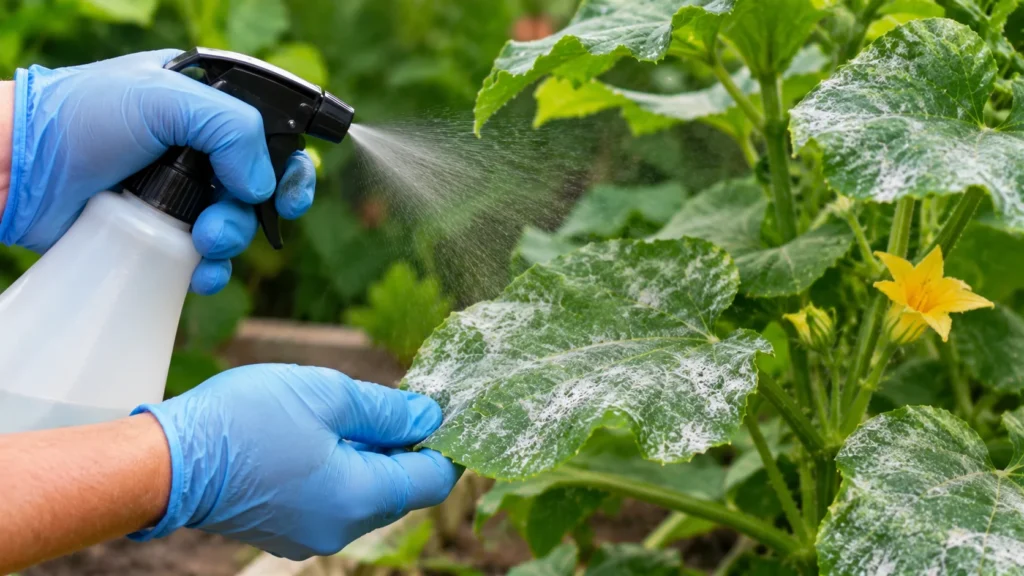
Correct application is just as important as choosing the right treatment. Even a suitable fungicide can harm plants if used at the wrong concentration or in unsuitable conditions.
Prepare the Plant
Remove badly infected leaves when practical, using clean pruning tools. Avoid removing so much foliage that the plant loses a large proportion of its healthy leaf area. Dispose of diseased material appropriately rather than leaving it beside susceptible plants.
Prepare the Spray
Use a clean sprayer and measure ingredients accurately. For a commercial product, follow the label exactly. Do not combine different fungicides, oils, detergents, or household chemicals unless the label explicitly permits the combination.
Test Before Widespread Use
Apply a small amount to a limited section of foliage when testing is appropriate. Observe it for 24–48 hours for spotting, browning, curling, or other signs of injury. A successful test does not guarantee that a treatment will remain safe under hotter weather or after repeated applications.
Spray Under Suitable Conditions
Apply according to the product’s directions, paying attention to temperature, sunlight, wind, and the time needed for the spray to dry. Wear the protective equipment specified on the label, and keep children and pets away as directed.
Monitor the Results
Look for fewer new powdery patches and healthier new growth. Existing white growth may remain visible even when the disease is being managed. If symptoms continue to worsen, do not simply increase the concentration; review the plant identification, diagnosis, and product instructions.
How to Prevent Powdery Mildew From Returning
A spray works best as part of a wider plant-care plan. Powdery mildew fungi differ in the plants they attack, but improving growing conditions can reduce recurring problems across many gardens.
- Choose resistant varieties: When available, select varieties with resistance to the relevant powdery mildew disease.
- Improve air circulation: Space plants appropriately and selectively prune overcrowded growth.
- Provide suitable light: Many powdery mildew problems become more severe in shaded conditions, so grow plants in the light conditions recommended for their species.
- Avoid excessive nitrogen fertilizer: Too much nitrogen can encourage lush, susceptible new growth.
- Remove infected material: Clear badly affected leaves and plant debris, and clean tools between plants when necessary.
- Water thoughtfully: Avoid overwatering the soil. Depending on the plant and disease, carefully timed overhead water may help wash spores from foliage, but prolonged wetness can encourage other plant diseases. Follow crop-specific guidance rather than assuming all leaves must always stay dry.
- Monitor new growth: Plants that previously suffered from mildew deserve regular inspection so treatment can begin early.
These cultural measures are important because powdery mildew spores can spread through the air, and spraying alone may not solve a problem caused by susceptible plants, poor airflow, or recurring favorable conditions.
Common Mistakes to Avoid When Using a Powdery Mildew Spray
Avoid these mistakes when choosing or applying a treatment:
- Using the same mixture on every plant: Sensitive ornamentals and edible crops may respond differently to a spray.
- Making homemade solutions too concentrated: Strong baking soda, peroxide, vinegar, or oil mixtures can burn foliage.
- Applying sulfur and oil too close together: This combination can cause serious plant injury. Follow the product-specific separation period; some guidance advises avoiding oil within two weeks of sulfur treatment.
- Spraying during excessive heat: Heat increases the risk of injury from several products, particularly sulfur and oils.
- Expecting damaged leaves to recover: Treatment may limit further infection without reversing existing discoloration or tissue damage.
- Ignoring the product label: A fungicide labeled for roses may not be approved for squash or another edible crop.
- Treating every white patch as mildew: Misidentifying the problem can lead to ineffective treatment and unnecessary spraying.
Conclusion
The best powdery mildew spray depends on the plant you are treating and how early you catch the disease. Diluted milk and baking soda mixtures are popular home remedies, while potassium bicarbonate, sulfur, neem oil products, and other labeled fungicides offer additional options for suitable plants.
For a sensible starting point, identify the disease, remove badly affected foliage where practical, and choose a treatment labeled for the plant. Apply it under suitable conditions, follow the instructions for repeat applications, and improve airflow and growing conditions to reduce recurring infections. Early action and consistent plant care are more dependable than relying on a strong homemade spray alone.
1. What is the best spray for powdery mildew?
Potassium bicarbonate or a fungicide labeled for the affected plant can be a good choice, particularly when treatment begins early. The best option depends on the plant, disease severity, local product availability, and label directions.
2. Does milk spray work for powdery mildew?
Diluted milk is a popular home remedy, and some gardeners report benefits. However, results are variable, and milk spray is not a guaranteed cure. Test it on a small area before wider application.
3. What is the best homemade powdery mildew spray?
Diluted milk and baking soda mixtures are common DIY options, but neither is universally reliable or safe for every plant. For a more targeted approach, consider a plant-labeled potassium bicarbonate product and follow its instructions.
4. Can I use baking soda spray on all plants?
No. Baking soda can damage leaves, especially when the solution is too concentrated or repeatedly applied. Test any permitted homemade treatment on a small area, and avoid using an improvised recipe on sensitive plants.
5. Is hydrogen peroxide spray safe for powdery mildew?
Not necessarily. Household hydrogen peroxide can injure plant tissue, and safety depends on concentration, plant species, and application. Avoid concentrated or unverified recipes and choose a treatment specifically labeled for the intended use.
6. How often should I spray plants for powdery mildew?
Follow the specific product label. Some fungicides are used at intervals around 7–14 days, but the schedule varies by product and plant. Do not assume that homemade mixtures should be applied as frequently as commercial fungicides.
7. What should I spray on squash for powdery mildew?
Choose a treatment labeled for squash or the relevant cucurbit crop. Potassium bicarbonate and sulfur products are among the options used for powdery mildew management, but check crop suitability, weather restrictions, and harvest intervals before applying.
8. Can neem oil get rid of powdery mildew?
Some neem oil products are labeled for powdery mildew and may help suppress it. Effectiveness depends on the formulation and timing. Use only a product labeled for the plant and disease, and avoid applying oils in conditions that increase the risk of leaf burn.
9. Can I use sulfur spray and neem oil together?
Do not apply them together or close together unless the product labels explicitly allow it. Sulfur and horticultural oils can cause plant injury when used too close to one another. Follow the required separation period on the labels.
10. Should I remove leaves with powdery mildew before spraying?
Remove severely affected leaves when practical, but retain healthy foliage the plant needs for growth. Dispose of infected material appropriately and clean pruning tools to help reduce the spread of disease.
11. Does powdery mildew spray cure infected leaves?
Usually, a spray will not restore leaves that have already become yellow, brown, distorted, or damaged. The goal is to suppress the disease, protect healthy tissue, and limit further spread. Severely damaged foliage may need to be removed.
12. Can powdery mildew spread to nearby plants?
Yes. Spores can spread through the air to susceptible plants. Inspect nearby vegetation, avoid overcrowding, remove badly infected material, and begin appropriate treatment when symptoms first appear.
13. Is organic powdery mildew spray always safe?
No. Organic or naturally derived products can still injure plants when misused. Sulfur, oils, bicarbonates, and other treatments have specific restrictions. Always read the label and confirm that the product is suitable for your plant.
14. Can water alone help control powdery mildew?
In some circumstances, washing spores from foliage with appropriately timed water sprays may reduce disease pressure. However, the result depends on the plant and mildew species, and overhead watering can contribute to other diseases if leaves remain wet for too long. Follow guidance for the particular crop.
15. What should I do if powdery mildew keeps returning?
Check whether the diagnosis is correct, remove severely affected material, improve light and airflow, and avoid excessive nitrogen fertilizer. If the disease continues, choose a labeled fungicide suited to the plant and consider whether the variety is especially susceptible.