
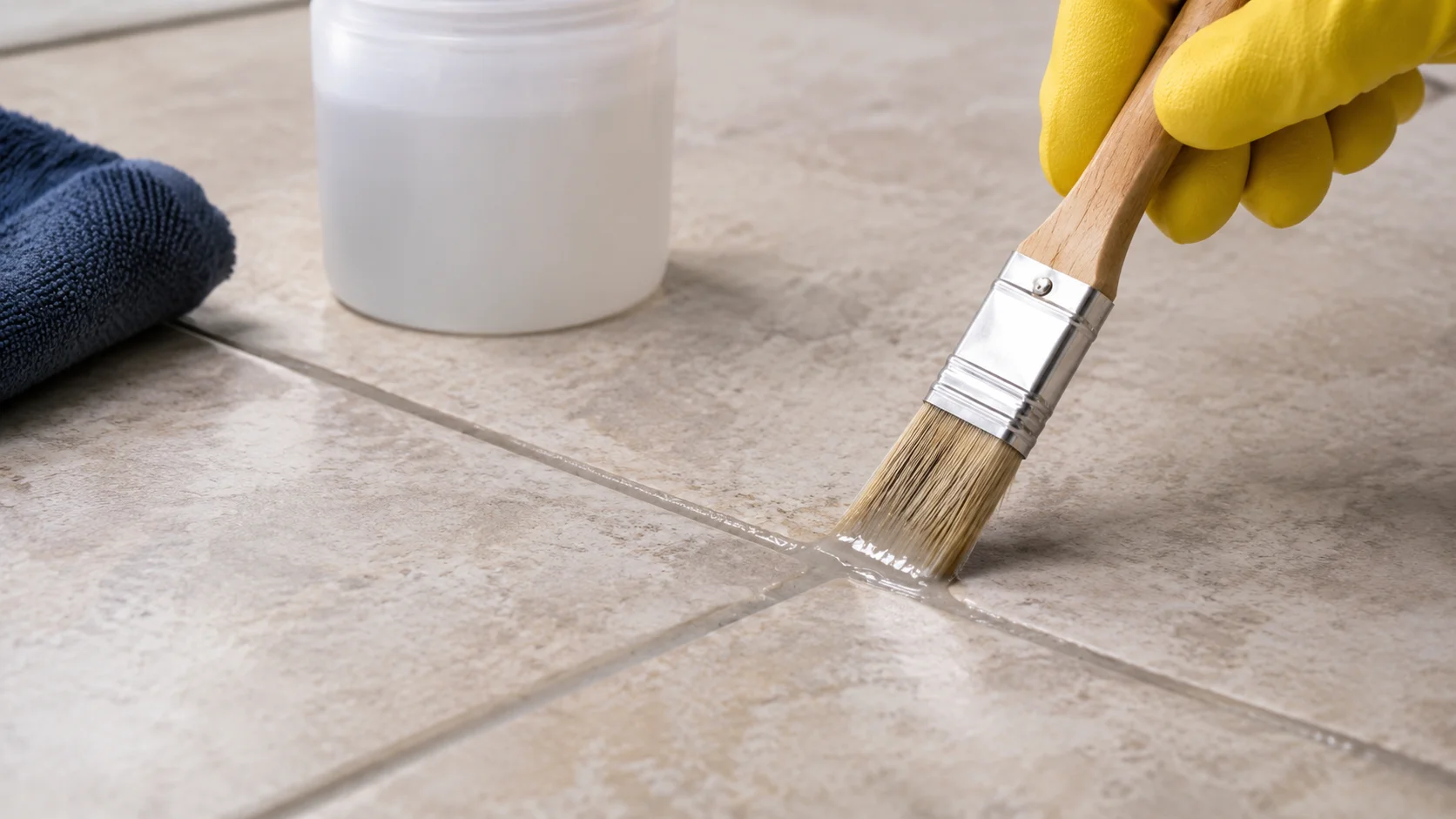
Grout fills the narrow joints between tiles, but cement-based grout can absorb moisture and stains if it is left unprotected. A suitable grout sealer can help reduce the absorption of water, dirt, and everyday spills, making routine maintenance easier. The right choice depends on the grout type, the location, and the manufacturer’s instructions—not simply on which product claims to offer the strongest protection.
Whether you need a grout sealer for a shower, kitchen backsplash, or tiled floor, this guide explains the main types, compares popular products, and walks you through preparation, application, and drying. You will also learn when sealing is useful, why some grout should not be sealed, and how to avoid common application mistakes.
What Is Grout Sealer, and What Does It Do?
Grout sealer is a protective treatment designed for compatible grout and, in some cases, tile or natural stone. Many products penetrate porous material to help resist the absorption of water and staining substances. Others form a surface coating or are designed to refresh grout color while providing protection.
A grout sealer does not make every tiled surface completely waterproof. In showers and other wet areas, waterproofing should come from the properly installed waterproofing system behind or beneath the tile, not from grout sealer alone. Sealer can help reduce absorption and make maintenance easier, but it cannot repair cracked grout, failed caulk, loose tiles, or an underlying leak.
Before purchasing, identify your grout type and check whether the manufacturer recommends sealing it. Cement-based grout commonly benefits from a suitable sealer, while many epoxy grouts are designed to resist staining without a separate sealer. Always confirm compatibility with the grout, tile, and installation system.
Best Grout Sealer Products to Consider
There is no single best grout sealer for every installation. A product intended for cement grout may not be suitable for every stone, tile, or grout formulation. The following options are worth comparing by their intended use and manufacturer guidance.
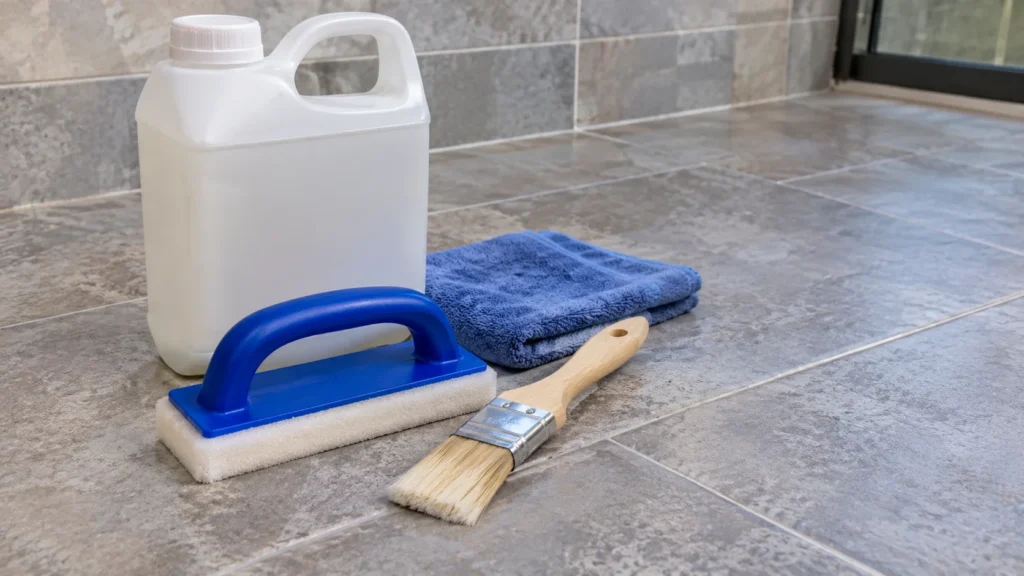
1. MAPEI UltraCare Grout Sealer
Best for: Cement-based grout in typical tile installations.
MAPEI UltraCare Grout Sealer is a water-based penetrating sealer designed to help protect sanded and unsanded cementitious grout joints against common stains. MAPEI also lists it for interior and exterior applications. Its intended purpose is to protect the grout without changing its color when applied correctly.
Why consider it: It is a straightforward option if you want a grout-focused product rather than a coating intended to change the appearance of the entire tile surface.
Before buying: Check the grout’s age and curing requirements. MAPEI says cement grout should cure for the period specified in its instructions before sealing. Regular use of harsh cleaners can also affect the sealer’s performance.
2. CUSTOM TileLab Grout Sealer
Best for: Protecting compatible grout joints against everyday staining.
TileLab Grout Sealer is a penetrating product designed to help protect grout against stains and dirt. The manufacturer describes it as low-odor and says it is designed to avoid leaving a difficult-to-remove residue on tile when used according to the directions.
Why consider it: It may suit a routine tile maintenance project where the main objective is reducing staining rather than adding a new color or glossy finish.
Before buying: CUSTOM also sells a TileLab Grout & Tile Sealer and an aerosol version. These are distinct products, so check the precise name, application method, and coverage on the packaging. Follow the current technical data sheet rather than assuming every TileLab formula has identical instructions.
3. STONETECH Heavy Duty Sealer
Best for: Cement grout and compatible natural stone or tile installations.
STONETECH Heavy Duty Sealer is a water-based penetrating sealer designed to help protect suitable surfaces against oil- and water-based stains while maintaining their natural appearance. The manufacturer lists natural stone, tile, masonry, and grout among its applications.
Why consider it: It is worth investigating for projects where grout sits alongside porous natural stone and you need a product compatible with the surrounding materials.
Before buying: The older STONETECH Heavy Duty Grout Sealer was discontinued in September 2025, and LATICRETE identifies Heavy Duty Sealer as the recommended replacement for similar performance. Make sure you are checking current product information rather than relying on an older listing.
4. MAPEI UltraCare Grout Refresh
Best for: Refreshing grout color as well as sealing it.
UltraCare Grout Refresh differs from a clear penetrating sealer. MAPEI describes it as a ready-to-use, water-based grout colorant and sealer that can bond to cement, epoxy, urethane, and acrylic grout joints. It is designed for projects where changing or restoring grout color is part of the goal.
Why consider it: If your grout has become uneven in color, a colorant-and-sealer may be more suitable than a clear product that primarily helps resist stains.
Before buying: This product changes the appearance of grout. Choose a compatible shade, follow the preparation requirements, and test an inconspicuous area first. It is not the same as applying a transparent sealer to clean, evenly colored grout.
5. Miracle Sealants 511 Products
Best for: Projects where a suitable Miracle Sealants penetrating sealer matches the tile, stone, and grout.
Miracle Sealants offers products in its 511 range for particular stone, tile, and grout applications. The exact product matters: a stone-and-grout sealer and a spray-on formula should not be assumed to have identical coverage, application directions, or surface compatibility.
Why consider it: The 511 range is another option to compare when you are choosing a penetrating treatment for a tile or stone installation.
Before buying: Verify the current manufacturer’s product data for the exact name—such as 511 Impregnator or 511 Spray-On—and confirm whether it is suitable for your surface. Do not choose based on the brand name alone.
Grout Sealer Comparison: Which One Fits Your Project?
| Product | Main purpose | Consider it when |
| MAPEI UltraCare Grout Sealer | Clear penetrating protection | You have compatible cement-based grout |
| CUSTOM TileLab Grout Sealer | Everyday stain resistance | You need a grout-focused maintenance product |
| STONETECH Heavy Duty Sealer | Stain protection for compatible stone, tile, masonry, and grout | Your installation includes porous materials |
| MAPEI UltraCare Grout Refresh | Colorant and sealer | You want to refresh the grout’s appearance |
| Miracle Sealants 511 range | Penetrating protection, depending on the product | The specific formula matches your materials |
These are options to evaluate, not a ranking based on independent head-to-head testing. For a shower or tiled floor, the grout type and surrounding materials should guide your choice more than the product’s marketing claims.
How to Choose the Best Grout Sealer for Your Surface
Grout Sealer for Showers
A shower grout sealer should be compatible with the grout, tile, and any natural stone in the enclosure. Since showers experience frequent wetting, select a product specifically approved for that environment and follow its curing and water-exposure instructions.
Before applying a shower grout sealer:
- Remove soap residue, dirt, and any existing surface buildup.
- Repair cracked or missing grout before sealing.
- Check whether the grout has fully cured.
- Confirm the sealer is appropriate for the shower’s tile and stone.
- Allow the product to cure for the specified time before using the shower.
Important: Grout sealer is not a replacement for a shower’s waterproofing membrane. If water is leaking into walls or floors, investigate the underlying problem instead of relying on additional sealer.
Grout Sealer for Tile Floors
Floor grout is exposed to foot traffic, dust, spilled drinks, and cleaning products. A penetrating sealer designed for the particular grout can help reduce staining and simplify maintenance.
For a large tiled floor, compare the product’s stated coverage and application method. A brush or grout sealer applicator can help direct the liquid into joints, while a suitable roller or other applicator may be practical for larger areas if the manufacturer permits it.
Make sure excess sealer is removed from the tile surface as directed. Dried residue can leave a haze that is difficult to remove.
Grout Sealer for Bathrooms
Bathroom grout can be exposed to water, shampoo, soap, cosmetics, and cleaning chemicals. A compatible penetrating sealer may help resist some of these stains, but it cannot stop all discoloration or prevent every moisture-related problem.
In bathrooms with natural stone, choose products carefully. Marble, limestone, and other porous stones can be sensitive to certain cleaners and treatments. Check both the grout sealer’s instructions and the stone supplier’s recommendations.
Tile and Grout Sealer for Natural Stone
If your installation contains natural stone, you may need a product approved for both the stone and grout. A grout-only sealer may not be designed to protect the surrounding stone.
MAPEI’s UltraCare Penetrating Stone, Tile & Grout Sealer, for example, is listed for compatible natural stone, unglazed ceramic tile, masonry, and cement grout.
Check whether the stone is polished, honed, textured, or previously sealed. Test a small hidden area to ensure the treatment produces the desired appearance.
Jump into Other Related Article
- How to Clean Stainless Steel Sink | Stains, Hard Water, Rust & Scratches
- Rust Stain Remover | Complete Guide for Clothes, Concrete, Toilets, Bathtubs, Cars, and More
- Best Deck Stain and Sealer | Complete Guide for Pressure Treated, Cedar, Old, and Full Sun Decks
How to Apply Grout Sealer Correctly
The precise method depends on the product, but the following steps provide a general framework. Always use the manufacturer’s current directions as the final authority.
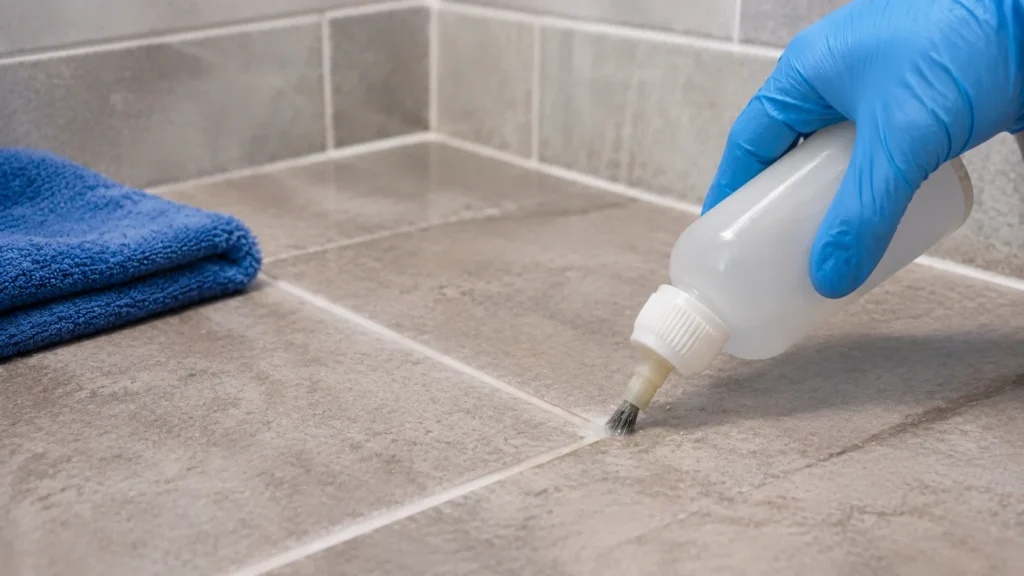
Step 1: Clean the Grout Thoroughly
Remove dirt, soap scum, grease, and other residue using a cleaner suitable for the grout and tile. If an old sealer or coating is present, determine whether it needs to be removed before applying a new product.
Do not seal over mold, heavy grime, or a dirty surface and expect the sealer to solve the problem.
Step 2: Let the Surface Dry
The grout generally needs to be clean and dry before a penetrating sealer is applied. Moisture trapped in the grout can interfere with the application or performance of some products.
New grout also needs sufficient curing time. The required period varies by grout type and product instructions, so do not rely on one universal waiting period.
Step 3: Test an Inconspicuous Area
Apply the product to a small, hidden section according to the label. Check for changes in color, appearance, or residue after the recommended evaluation period.
This is particularly important when working with natural stone, colored grout, polished tile, or a surface that has previously been treated.
Step 4: Apply the Sealer to the Grout Lines
Use the applicator recommended by the manufacturer. A grout sealer applicator, small brush, sponge, or suitable spray may be appropriate depending on the formula.
Apply enough product to wet the intended grout without flooding nearby surfaces. Protect adjacent materials that are not approved for the sealer.
Step 5: Remove Excess Product
Many penetrating sealers require excess liquid to be wiped off the tile before it dries. Use the cloth or cleaning method specified on the label.
Do not allow a film to dry on the tile unless the product instructions explicitly permit it. Hardened residue may require a separate removal procedure.
Step 6: Apply Additional Coats if Required
Some surfaces absorb more sealer than others. A product may require one coat or additional applications depending on the material and its instructions.
Do not assume that more coats always provide better protection. Follow the stated coverage, application interval, and testing method.
Step 7: Allow the Sealer to Cure
Keep the area dry and protected for the required period. Dry-to-touch time and full cure time are not necessarily the same.
Avoid showering, mopping, or exposing the grout to water until the manufacturer says the surface can be used again.
How Long Does Grout Sealer Take to Dry?
Grout sealer drying and curing times vary by formulation, surface, temperature, humidity, and ventilation. Some products may be ready for limited surface use after a few hours but require longer to reach full cure.
For example, the available STONETECH Heavy Duty Grout Sealer data sheet lists a surface-use time of four hours and a full-cure period of 24–48 hours for that product. Other products have different instructions.
To avoid damaging a fresh application:
- Read the label for both drying and curing times.
- Keep showers and wet floors out of use until permitted.
- Avoid using fans or heaters in a way that conflicts with the product instructions.
- Do not apply a second coat earlier than the stated interval.
- If conditions are unusually cold or humid, consult the manufacturer’s guidance.
How Often Should You Reseal Grout?
There is no universal resealing schedule. Some sealers last longer than others, and wear varies depending on foot traffic, water exposure, cleaning products, and the condition of the grout.
Instead of automatically resealing every year, check the manufacturer’s recommended maintenance interval and test the surface if the product provides a suitable method.
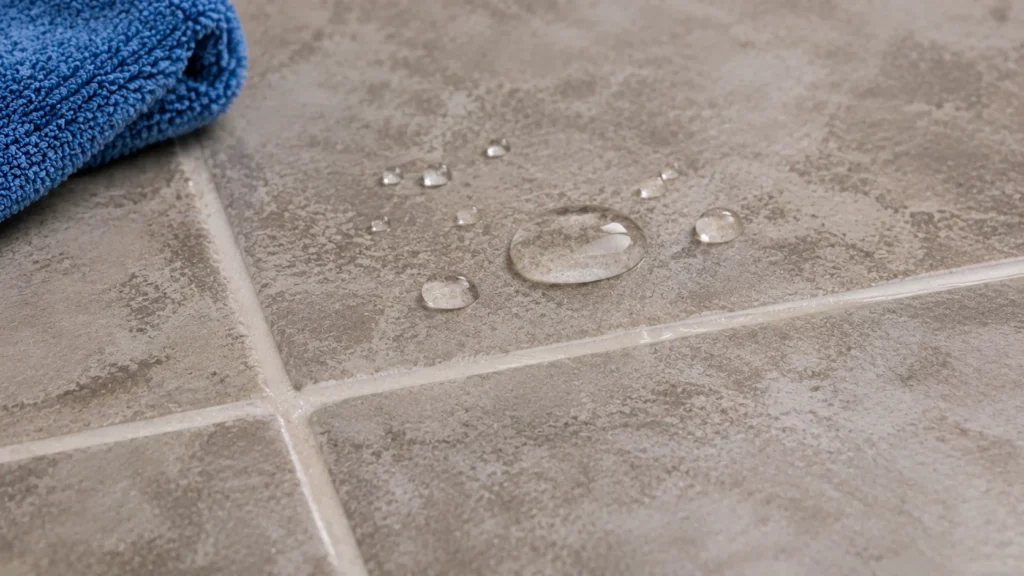
If water begins absorbing readily into compatible grout that previously resisted it, that may indicate that protection has weakened. However, a water-drop test is not appropriate for every material or product, so use it only if the manufacturer recommends it.
If the grout is cracked, crumbling, or repeatedly becoming wet behind the surface, repair the underlying issue before applying more sealer.
Common Grout Sealing Mistakes to Avoid
- Sealing dirty grout: Residue can become trapped beneath the treatment.
- Applying sealer to wet grout: The surface may not be ready for the product.
- Ignoring compatibility: Not every sealer works with epoxy grout, every natural stone, or every tile finish.
- Leaving excess product on the tile: This may create a visible haze or film.
- Using the shower too soon: Water exposure before the required cure can compromise the result.
- Expecting complete waterproofing: Sealer reduces certain types of absorption; it does not replace a properly installed waterproofing system.
- Ignoring damaged grout: Cracks and missing sections usually need repair rather than another coat of sealer.
Conclusion
A suitable grout sealer can help protect compatible grout from everyday stains and make tiled surfaces easier to maintain. The most important decision is choosing a formula that matches your grout, tile, and installation—not simply picking the most heavily marketed product.
For ordinary cement-based grout, compare MAPEI UltraCare Grout Sealer and CUSTOM TileLab Grout Sealer. For compatible stone and grout installations, investigate STONETECH Heavy Duty Sealer or an appropriate stone-and-grout product. If the grout needs a color refresh, consider a compatible colorant-and-sealer instead.
Prepare the surface carefully, follow the application and curing instructions, and remember that sealing is a maintenance step rather than a substitute for repairing damaged grout or waterproofing problems.
What is the best grout sealer?
The best grout sealer depends on the grout type and installation. MAPEI UltraCare Grout Sealer and CUSTOM TileLab Grout Sealer are options for compatible cement-based grout. STONETECH Heavy Duty Sealer is another product to consider for compatible stone, tile, masonry, and grout surfaces.
Is grout sealer necessary?
Sealing is often recommended for porous cement-based grout because it can help resist stains and make cleaning easier. However, not every tile or grout type requires a separate sealer. MAPEI notes that glazed ceramic and porcelain tiles generally do not require sealing because they have low porosity, while porous materials and cement-based grout may benefit from it.
Can I use grout sealer in a shower?
Yes, if the specific product is approved for the grout and surrounding materials in your shower. Follow the instructions for drying, curing, and returning the shower to service. Remember that grout sealer does not replace the waterproofing behind the tile.
How do I apply grout sealer?
Clean the grout, allow it to dry, test the product on a hidden area, and apply it with the recommended applicator. Remove excess product as directed and allow the sealer to cure before exposing the surface to water or heavy use.
How long does grout sealer take to dry?
The time varies by product. Some sealers permit limited use after a few hours, while full curing may take a day or longer. Check the exact product label rather than relying on a general estimate.
Can I seal grout without sealing the tile?
Often, yes. Many grout sealers are designed to be applied along the grout joints, with excess product wiped off the tile. Use an applicator that helps you target the joints and follow the manufacturer’s instructions for your specific tile surface.
Is grout sealer waterproof?
No grout sealer should automatically be treated as a complete waterproofing system. Many products help reduce the absorption of water and stains, but they do not replace waterproof membranes, properly installed shower systems, or repairs to leaking joints and plumbing.
Can epoxy grout be sealed?
Many epoxy grouts are designed to resist staining without a separate sealer. Do not apply a conventional cement-grout sealer to epoxy grout unless the product manufacturer specifically approves it. A grout colorant-and-sealer may be compatible with some epoxy grout products, but compatibility must be confirmed.
Can I apply grout sealer over old sealer?
It depends on the existing treatment and the new product. Old coatings, residue, waxes, or incompatible sealers may prevent proper penetration or bonding. Check the manufacturer’s preparation instructions and determine whether the old sealer needs to be removed.
What is the difference between grout sealer and grout colorant?
A clear grout sealer primarily helps reduce staining and absorption. A grout colorant changes or refreshes the grout’s appearance and may also provide sealing properties. MAPEI UltraCare Grout Refresh is an example of a product designed to combine colorant and sealer functions.