
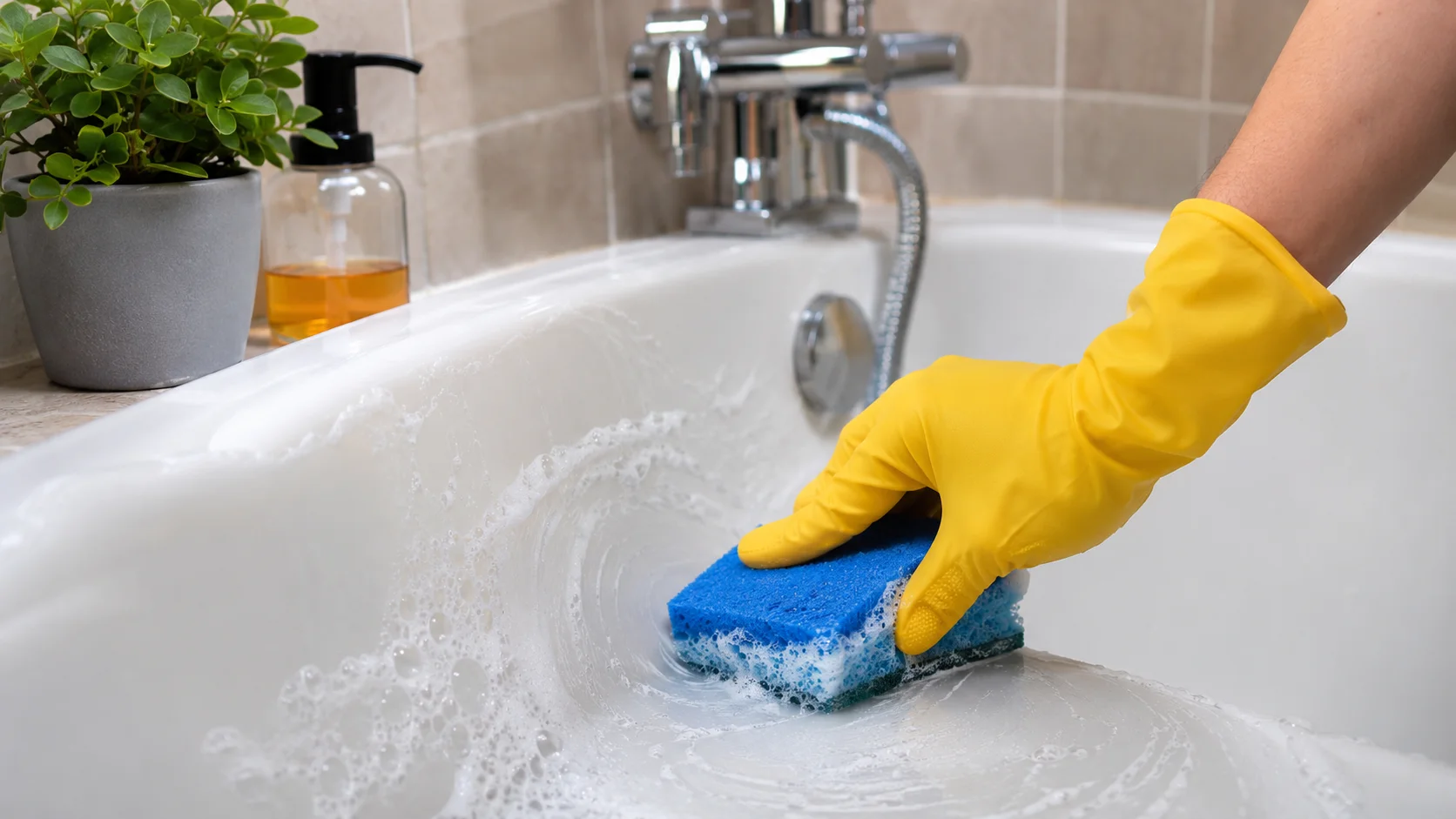
The best tub cleaner depends on what you need to remove and the surface you want to clean. Soap scum, body oils, hard water deposits, rust stains, and everyday grime can make a bathtub look dull even when you clean it regularly. A suitable bathtub cleaner can loosen this buildup, reduce scrubbing, and help keep the surface looking fresh without damaging its finish.
However, one product does not work for every cleaning job. An acidic shower and tub cleaner may be effective on mineral deposits but unsuitable for certain stone surfaces or delicate finishes. A hot tub cleaner and a washing machine tub cleaner also serve different purposes from an ordinary bathroom spray. This guide compares useful options, explains which surfaces they suit, and shows how to choose the right product for your specific cleaning problem.
What Is a Tub Cleaner?
A tub cleaner is a cleaning product designed to remove dirt, soap residue, body oils, mineral deposits, and other buildup from a bathtub or related surface. Depending on its formula, it may come as a spray, foam, liquid, powder, or specialized cleaning treatment.
Common types include:
- Bathtub and shower cleaners: For routine grime, soap scum, and water marks.
- Hard water cleaners: Designed to tackle calcium, lime, and mineral deposits.
- Acrylic and fiberglass tub cleaners: Suitable for specific synthetic surfaces when approved by the manufacturer.
- Jetted tub cleaners: Made to remove residue from internal whirlpool plumbing.
- Hot tub cleaners: Specialized products for spa shells, filters, or plumbing systems.
- Washing machine tub cleaners: Designed to clean washer drums and help remove detergent residue and odors.
Before choosing a product, identify both the material of the tub and the type of buildup. This matters because an effective cleaner used on the wrong surface can cause discoloration, dullness, or other damage.
7 Best Tub Cleaners for Different Cleaning Needs
The following products suit different jobs rather than representing a laboratory-tested ranking. Always check the current label, surface compatibility, and instructions before use.
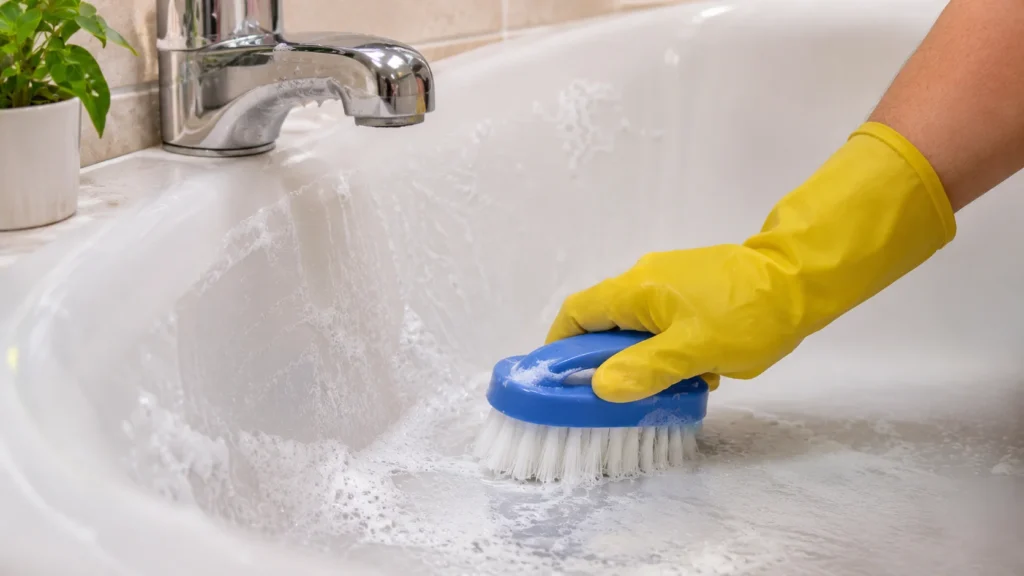
1. Zep Shower, Tub & Tile Cleaner | Best for Tough Bathroom Buildup
Best for: Soap scum, hard water marks, and mineral buildup on approved bathroom surfaces
Zep Shower, Tub & Tile Cleaner is a useful option when ordinary bathroom spray struggles with stubborn residue. Its acidic formula is designed to dissolve soap scum, rust stains, limescale, and hard water deposits on approved surfaces.
Zep also offers a foaming version, which can cling to vertical shower walls and other surfaces while the product works.
Why consider it:
- Targets several common types of bathroom buildup.
- Helps reduce heavy scrubbing on suitable surfaces.
- Can be used on listed materials such as fiberglass, acrylic, ceramic, and porcelain, subject to the exact product label.
- Suitable for regular bathroom maintenance when used as directed.
How to use it: Zep’s product directions say to spray the cleaner onto the surface, allow it to work for approximately two to three minutes, wipe with a damp sponge, and rinse thoroughly. Test a hidden spot first, particularly around colored grout, fixtures, and shower doors. Do not leave the cleaner on longer than directed.
Important limitation: The formula is acidic, so do not assume it is safe for every stone, metal finish, coating, or specialty bathtub. Check the label before applying it.
2. CLR Brilliant Bath | Best for Hard Water and Soap Scum
Best for: Calcium deposits, lime, water marks, and soap scum
CLR Brilliant Bath is a foaming bathroom cleaner intended for common mineral deposits and everyday grime. It can be useful when a tub develops a cloudy film from hard water or a slippery layer from soap and personal-care products.
The manufacturer lists porcelain, ceramic tile, fiberglass, bathtubs, and several other bathroom surfaces among its approved uses. Its directions call for short contact time followed by thorough rinsing.
Why consider it:
- Targets calcium, lime, hard water deposits, and soap scum.
- Foam makes it convenient for applying to bathroom surfaces.
- A fragrance-free version is available for people who prefer a product without added fragrance.
- The manufacturer identifies Brilliant Bath as part of the EPA Safer Choice program.
How to use it: Wear household cleaning gloves, ventilate the area, test a hidden spot, and follow the product’s directions. The manufacturer says to rinse promptly after approximately two to three minutes.
Important limitation: CLR Brilliant Bath is not suitable for every material. The manufacturer warns against using it on marble and many other natural stones, colored grout, mirrors, wood, fabrics, and painted or coated surfaces. It is also not designed to remove rust; choose a product specifically labeled for that task if rust is the problem.
3. Scrubbing Bubbles Bathroom Cleaner | Best for Routine Bathtub Cleaning
Best for: Regular bathroom maintenance and everyday grime
Scrubbing Bubbles Bathroom Grime Fighter is worth considering for routine cleaning when your bathtub mainly has ordinary dirt, soap residue, and general bathroom grime rather than heavy mineral buildup.
The exact formula and approved uses can vary between products sold under the Scrubbing Bubbles name, so check the label for your particular bottle. Do not assume that every version is a disinfectant or suitable for every tub material.
Why consider it:
- Convenient for regular bathroom cleaning.
- Spray application is easy to use on approved surfaces.
- Can fit into a weekly cleaning routine before residue becomes difficult to remove.
Best approach: Use the specific product according to its label, wipe with a suitable nonabrasive cloth or sponge, and rinse when instructed. If hard water deposits remain, a cleaner specifically formulated for mineral buildup may be more appropriate.
This is a general-maintenance choice, not automatically the best tub cleaner for severe rust, old mineral scale, or delicate surfaces.
4. Mrs. Meyer’s Clean Day Tub and Tile Cleaner | Best for Fragrance-Focused Cleaning
Best for: People who prefer a scented bathroom-cleaning product
Mrs. Meyer’s Clean Day Tub and Tile Cleaner is another option to investigate for routine bathtub and tile cleaning. The brand is known for scented household products, making it appealing to shoppers who prefer a fragranced cleaning experience.
Before buying, confirm that the specific product is currently available and that its label lists your bathtub material. Product availability, formulas, scents, and instructions can change.
Why consider it:
- May suit routine cleaning of approved bathroom surfaces.
- Offers a scented alternative to some traditional bathroom cleaners.
- Can be useful for maintaining a tub that has light everyday residue.
What to keep in mind: Fragrance does not indicate cleaning strength, disinfecting ability, or suitability for acrylic, fiberglass, porcelain, or natural stone. If your main issue is heavy soap scum or hard water deposits, compare the label’s stated cleaning claims with those of a specialized product.
Use only as directed and rinse the tub before bathing.
5. Oh Yuk Jetted Tub Cleaner | Best for Whirlpool and Jetted Bathtubs
Best for: Residue inside jetted bathtub plumbing
Oh Yuk Jetted Tub Cleaner is a specialized type of cleaner intended for jetted bathtubs. Unlike a standard bathtub spray, a jetted tub treatment is designed to work with the tub’s water circulation system to help remove residue from internal passages.
This distinction matters because a whirlpool tub may look clean on the outside while buildup remains inside its plumbing.
Why consider it:
- Designed for jetted bathtub cleaning rather than ordinary surface wiping.
- Addresses a different maintenance need from soap-scum removal.
- May be useful when the system has residue or an unpleasant odor.
How to use it: Follow the product instructions and your bathtub manufacturer’s maintenance guidance. The correct process may depend on the tub’s plumbing design, water level, and circulation system. Rinse or flush the system as directed before using the tub for bathing.
Important limitation: Do not substitute an ordinary bathroom cleaner for a jetted tub treatment. A surface spray may not be designed to circulate through internal plumbing, and an unsuitable product could create excessive foam or leave unwanted residue.
6. Ahh-Some Hot Tub Cleaner | Best for Hot Tub Plumbing Maintenance
Best for: Specialized hot tub and spa cleaning tasks
Ahh-Some Hot Tub Cleaner is associated with specialized hot tub and spa maintenance. It belongs in a different category from cleaners intended for a household bathtub’s exposed surface.
If your goal is to clean a hot tub, first determine whether you need to clean the shell, filter, or internal plumbing. These jobs may require different products and procedures.
Why consider a specialized hot tub product:
- Hot tubs have circulation systems and water-care requirements that ordinary bathtubs do not.
- A product designed for spa maintenance can address the particular cleaning task specified on its label.
- It helps avoid relying on an ordinary bathroom spray for a job it was not designed to perform.
Before using it: Read the current label and your spa manufacturer’s guidance. Some plumbing treatments require draining and flushing the system, cleaning or replacing the filter, and refilling the tub before normal use. Do not assume a product used for a purge or deep-cleaning procedure is meant to remain in the water during bathing.
A hot tub cleaner is not interchangeable with a hot tub sanitizer. Follow the spa’s water-treatment instructions after cleaning.
7. LG-Approved Washing Machine Tub Cleaner — Best for Washer Drum Odors
Best for: Detergent residue, musty odors, and washing machine maintenance
A washing machine tub cleaner is not a bathtub cleaner, but it is relevant if your search for a tub cleaner concerns the drum of an LG washer.
LG recommends using a washing machine cleaner according to its package directions and running the machine’s Tub Clean cycle when the model has that feature. LG’s guidance also advises removing laundry before starting the cycle and leaving the door and detergent dispenser open afterward so remaining moisture can dry.
Why consider a dedicated washer cleaner:
- It is formulated for washing machine maintenance rather than bathwater contact.
- It can help address residue and odors inside the drum.
- It can be used as part of the washer manufacturer’s recommended maintenance routine.
How to use it: Empty the washer, add the recommended quantity of a compatible washing machine cleaner in the location specified by the product instructions, and run the appropriate cleaning cycle. Check your model’s manual because product placement and cycle details can vary.
Do not pour a household bathtub spray into your washer. Bathroom cleaners may foam excessively or contain ingredients unsuitable for washing machine components.
Jump into Other Related Article
- Best Deck Stain and Sealer | Complete Guide for Pressure Treated, Cedar, Old, and Full Sun Decks
- Brick Stain Colors | Exterior, Interior, Fireplace, Paver, and Before and After Ideas
- How to Remove Coffee Stains | Easy Methods for Clothes, Teeth, Carpet & More
How to Choose the Best Tub Cleaner for Your Bathtub
The right product depends on the tub’s material and the type of stain. Use this guide to narrow down your options before buying.
| Tub type or problem | Cleaner to consider | What to check |
| Soap scum on an ordinary bathtub | Zep or CLR Brilliant Bath | Approved surface and contact time |
| Hard water film | CLR Brilliant Bath or another labeled mineral-deposit cleaner | Whether it is suitable for your finish |
| Acrylic bathtub | A cleaner explicitly approved for acrylic | Avoid abrasive pads and unapproved chemicals |
| Fiberglass bathtub | A labeled fiberglass-safe cleaner | Use a soft sponge rather than abrasive scouring tools |
| Porcelain bathtub | A compatible bathroom cleaner | Check whether the finish is glazed, painted, or coated |
| Jetted bathtub | Oh Yuk or another jetted-tub treatment | Manufacturer’s plumbing and flushing instructions |
| Hot tub or spa | A purpose-made spa cleaner | Whether it is for the shell, filter, or plumbing |
| Washing machine drum | Compatible washer tub cleaner | Washer manual and cleaning-cycle instructions |
Best Tub Cleaner for Acrylic Bathtubs
Acrylic tubs can scratch or lose their finish if cleaned with an overly abrasive product. Choose a cleaner that explicitly lists acrylic as an approved surface, and use a soft cloth or nonabrasive sponge.
Avoid abrasive scouring powders, steel wool, and harsh scrubbing pads unless the tub manufacturer specifically permits them. Even when a cleaner is chemically compatible, vigorous scrubbing can leave visible scratches.
For routine maintenance, remove loose dirt with water, apply the approved cleaner, wipe gently, and rinse thoroughly. If the tub has a persistent stain, check the manufacturer’s care guide before trying a stronger treatment.
Best Cleaner for Fiberglass Tubs
Fiberglass tubs also need careful treatment because abrasive cleaning can dull or damage the surface. Choose a product labeled for fiberglass and test it in a small, inconspicuous location first.
For ordinary residue, a soft sponge and a compatible bathroom cleaner are usually a sensible starting point. Allow the product to work for the time specified on the label rather than scrubbing harder or leaving it on for longer.
If the tub has stubborn discoloration, establish whether it is surface grime, mineral buildup, or damage to the finish. A cleaner may remove residue, but it cannot necessarily restore a worn or permanently discolored surface.
Best Cleaner for Porcelain Bathtubs
Porcelain can tolerate different cleaning approaches depending on its finish and condition. A compatible bathroom cleaner can help remove soap residue, while a product formulated for mineral deposits may be more effective against hard water marks.
However, do not assume that every product safe for ceramic tile is safe for every bathtub finish. Older, chipped, repaired, or specially coated surfaces may need different care.
Use a soft cleaning tool first, rinse away all product residue, and avoid mixing cleaning chemicals to make a stronger solution.
Best Tub Cleaner for Soap Scum
Soap scum forms when soap ingredients combine with minerals in water and leave a film on the surface. Body oils and other bathroom residue can make this layer more difficult to remove.
A bathroom cleaner labeled for soap scum is a good starting point. Zep Shower, Tub & Tile Cleaner and CLR Brilliant Bath both list soap scum among the types of buildup they target, although their surface restrictions differ. Follow the specific product’s directions rather than treating their formulas as interchangeable.
To make cleaning easier, rinse the tub after bathing and remove water from the surface when practical. Regular maintenance prevents residue from accumulating into a thick layer.
Best Tub Cleaner for Hard Water Stains
Hard water can leave mineral deposits that look white, cloudy, or chalky. A cleaner designed to remove calcium, lime, or other mineral buildup may work better than a general-purpose spray.
Check the tub material before using an acidic product. Acid-based formulas can damage some natural stones, specialty finishes, and other materials. Do not use a hard water remover simply because it works well on a different surface in your bathroom.
If a stain does not improve after the label-directed application, stop and reassess the surface and stain rather than repeatedly increasing the contact time.
Best Tub Cleaner for Rust Stains
Rust-colored marks may come from iron in water, metal objects left on a wet surface, or corrosion around a fixture. First, identify the likely source so that the stain does not return.
Choose a product whose label specifically mentions rust removal and confirms compatibility with the tub material. Not every bathroom cleaner removes rust: for example, CLR Brilliant Bath is designed for mineral deposits and soap scum, and its manufacturer says it will not remove rust.
Avoid combining a rust remover with another bathroom cleaner. Rinse the surface thoroughly and follow the manufacturer’s safety directions.
How to Clean a Bathtub With a Tub Cleaner
A careful cleaning process helps remove buildup while protecting the finish.
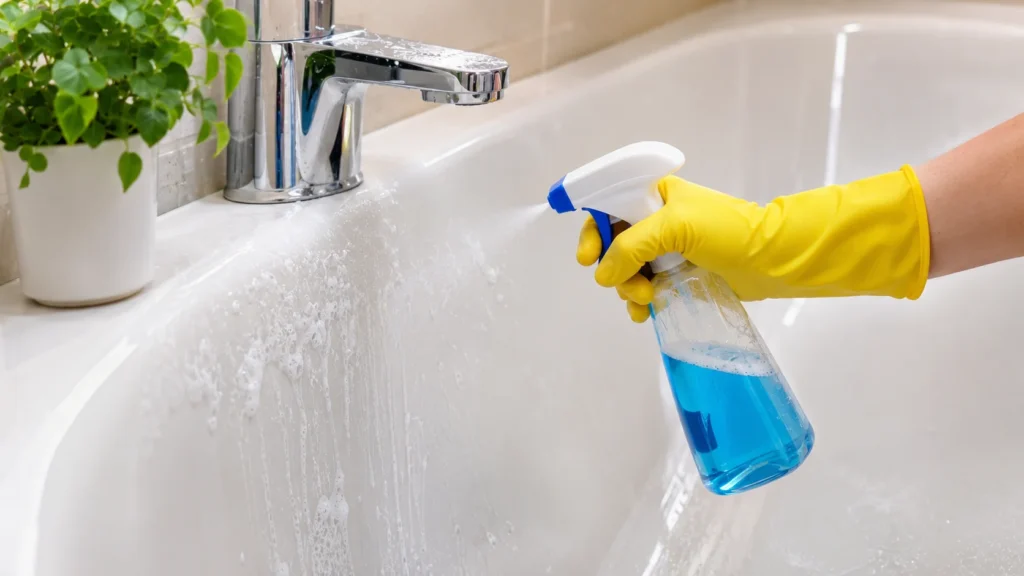
Step 1: Identify the Surface
Determine whether the bathtub is acrylic, fiberglass, porcelain, or another material. If you are unsure, check the installation paperwork or contact the tub manufacturer. Choose a cleaner that explicitly permits use on that material.
Step 2: Remove Loose Dirt
Pick up hair, remove bath products from the rim, and rinse away loose dirt. This prevents debris from being dragged across the surface during wiping.
Step 3: Prepare the Bathroom
Open a window or use an exhaust fan when available. Wear the protective equipment specified on the product label, such as cleaning gloves. Keep children and pets away from the cleaning area.
Step 4: Test a Hidden Spot
Apply the cleaner to a small, inconspicuous area according to the label. Check for unexpected discoloration, dullness, or other changes before cleaning the entire tub.
Step 5: Apply the Product Correctly
Spray or apply the cleaner as directed. Do not assume that more product or a longer waiting time will improve the result. For example, Zep’s listed directions call for approximately two to three minutes of contact time before wiping and rinsing.
Step 6: Wipe Without Scratching
Use a soft sponge, microfiber cloth, or other tool approved for the surface. Work gently over stained areas. Avoid steel wool and abrasive pads on finishes that can scratch.
Step 7: Rinse Thoroughly
Remove the cleaner and loosened residue with plenty of clean water, following the label. Residual product can leave a film or cause irritation if it remains where people will bathe.
Step 8: Dry and Inspect
Wipe away excess water with a clean cloth if suitable for the material. Inspect the tub in good lighting. If the stain remains, check whether the product is designed for that specific stain before trying another method.
DIY Tub Cleaner: What Can You Safely Use?
For light everyday dirt, warm water and a small amount of mild dish soap may be sufficient on a surface whose manufacturer permits it. Apply the solution with a soft cloth, wipe gently, and rinse well.
A DIY cleaner is not automatically safer for every tub. Baking soda, vinegar, and other household ingredients can be inappropriate for some finishes or cleaning problems. For example, acidic ingredients should not be used on acid-sensitive stone, and abrasive powders can scratch delicate surfaces.
Before using a homemade solution:
- Check the bathtub manufacturer’s care instructions.
- Test the solution in a hidden area.
- Use a soft cloth or sponge.
- Rinse away all residue.
- Never combine homemade ingredients with commercial cleaners.
For stubborn mineral buildup, persistent rust, or stains of unknown origin, a product specifically labeled for that problem is generally a more predictable choice than experimenting with multiple ingredients.
What Not to Do When Cleaning a Tub
A few common mistakes can damage the tub or create unnecessary chemical exposure.
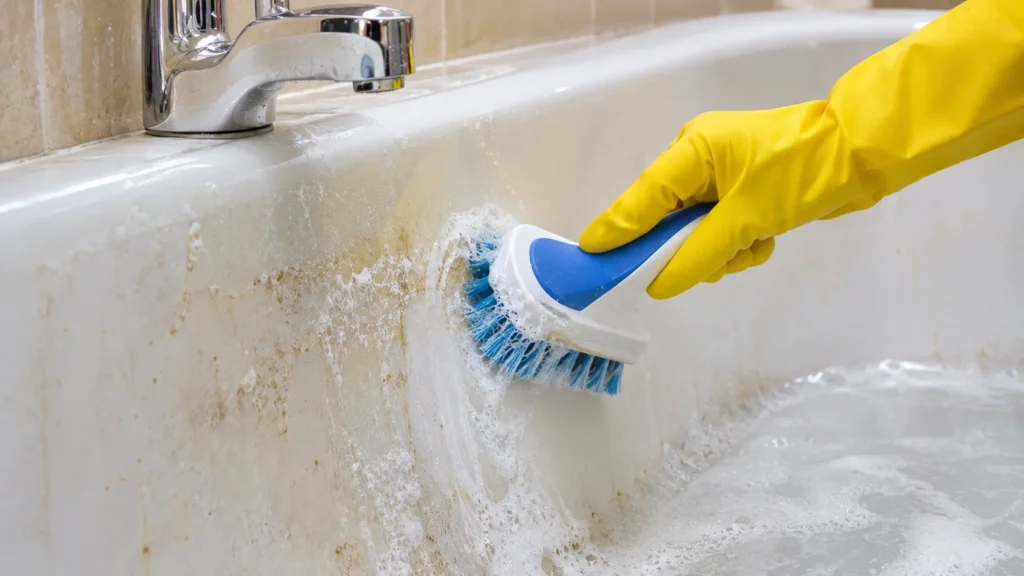
- Do not mix cleaning products. Never combine bleach with ammonia, acids, or other cleaners. Mixing products can release dangerous fumes.
- Do not leave products on longer than directed. Extended contact can damage some surfaces.
- Do not use abrasive tools indiscriminately. Steel wool and rough scouring pads can scratch acrylic, fiberglass, and certain coatings.
- Do not ignore the product label. Similar-looking bathroom cleaners can have different ingredients and surface restrictions.
- Do not use a bathtub spray in a washing machine. The formula may foam excessively or be unsuitable for the machine.
- Do not treat a hot tub like an ordinary bathtub. Spa plumbing, filters, and water-care systems require compatible products and procedures.
- Do not assume cleaning means disinfecting. A product that removes grime does not necessarily disinfect the surface. Look for an explicit disinfecting claim and follow its directions if disinfection is needed.
The CDC advises people not to mix household cleaning products, to follow label directions, and to ensure adequate ventilation when using cleaners. If products are accidentally mixed and strong fumes develop, leave the area and seek appropriate emergency or poison-control guidance.
How Often Should You Clean a Bathtub?
Cleaning frequency depends on how often the tub is used, how quickly residue develops, and whether hard water leaves visible deposits.
- After bathing: Rinse away visible soap residue and hair.
- Weekly: Clean the tub with a compatible product if it is used regularly.
- When deposits appear: Address hard water marks or soap scum before they become difficult to remove.
- Periodically for jetted tubs: Follow the bathtub manufacturer’s recommended plumbing-cleaning schedule.
- For washing machines: Follow the appliance manual for the Tub Clean cycle and recommended maintenance frequency.
If several people use the same bathtub daily, more frequent cleaning may be necessary. A tub used only occasionally may need less frequent cleaning, provided it stays dry and free of buildup.
Conclusion
Choosing the right tub cleaner starts with identifying the surface and the kind of buildup you need to remove. Zep Shower, Tub & Tile Cleaner and CLR Brilliant Bath are options for soap scum and mineral deposits on approved bathroom surfaces, while acrylic and fiberglass tubs require careful attention to surface compatibility. Jetted bathtubs, hot tubs, and washing machines need specialized products for their different cleaning systems.
For the best results, follow the product label, use nonabrasive cleaning tools when appropriate, and rinse thoroughly. A suitable cleaner combined with regular maintenance can keep your bathtub cleaner without unnecessary scrubbing or avoidable surface damage.
What is the best tub cleaner?
The best tub cleaner depends on the surface and the problem. Zep Shower, Tub & Tile Cleaner is an option for soap scum and mineral deposits on approved surfaces. CLR Brilliant Bath is another option for calcium, lime, hard water deposits, and soap scum. For acrylic and fiberglass, confirm that the product label permits use on the specific material.
What is the best tub and shower cleaner for soap scum?
Choose a bathroom cleaner specifically labeled for soap scum. Zep Shower, Tub & Tile Cleaner and CLR Brilliant Bath both list soap scum removal among their uses. Follow the contact time and rinsing instructions on the exact product you purchase.
Can I use Zep Shower, Tub & Tile Cleaner on an acrylic tub?
Zep lists acrylic among the surfaces suitable for its Shower, Tub & Tile Cleaner. However, you should check the label on your exact product, test an inconspicuous area first, and avoid using it on any surface the manufacturer excludes.
What is the best cleaner for a fiberglass tub?
Use a nonabrasive cleaner that explicitly lists fiberglass as an approved surface. A compatible product such as Zep Shower, Tub & Tile Cleaner or CLR Brilliant Bath may be suitable, depending on the exact label and the condition of the tub. Clean gently with a soft sponge and rinse thoroughly.
Is CLR Brilliant Bath safe for bathtubs?
CLR Brilliant Bath lists bathtubs among its intended uses, including certain porcelain and fiberglass surfaces. However, it is not suitable for all materials. The manufacturer warns against using it on marble and many other natural stones, colored grout, and several painted or coated surfaces. Always check the label.
What is the best cleaner for a jetted bathtub?
Use a cleaner specifically formulated for jetted bathtub plumbing, such as Oh Yuk Jetted Tub Cleaner, if it is compatible with your tub. Follow both the product instructions and the bathtub manufacturer’s maintenance guidance. A standard surface cleaner is not necessarily suitable for internal jets and plumbing.
Can I use regular tub cleaner in a hot tub?
Do not assume that an ordinary bathroom cleaner is suitable for a hot tub. Spa shells, filters, and plumbing systems have different cleaning requirements. Choose a product approved for the specific component and follow the spa manufacturer’s directions.
What is a washing machine tub cleaner?
A washing machine tub cleaner is a product designed to remove residue and help maintain the washer drum. It is used according to the appliance’s instructions, usually with an appropriate cleaning cycle and no laundry inside. It is not the same as a bathroom tub cleaner.
How do I remove stubborn hard water stains from a bathtub?
Choose a product labeled for hard water or mineral deposits and approved for your bathtub material. Apply it for the recommended time, wipe gently, and rinse thoroughly. If the stain persists, check whether it is mineral buildup or damage to the finish before trying a stronger treatment.
Can I make a DIY tub cleaner with vinegar and baking soda?
A homemade cleaner may help with some light cleaning tasks, but vinegar and baking soda are not suitable for every bathtub material or stain. Acidic ingredients can damage acid-sensitive stone, while abrasive powders may scratch delicate finishes. Check the manufacturer’s care instructions before trying a homemade formula.
How can I keep my bathtub clean for longer?
Rinse away soap residue after bathing, remove hair, wipe off excess water when practical, and clean regularly with a compatible product. These simple habits can reduce the buildup that makes deep cleaning more difficult.