
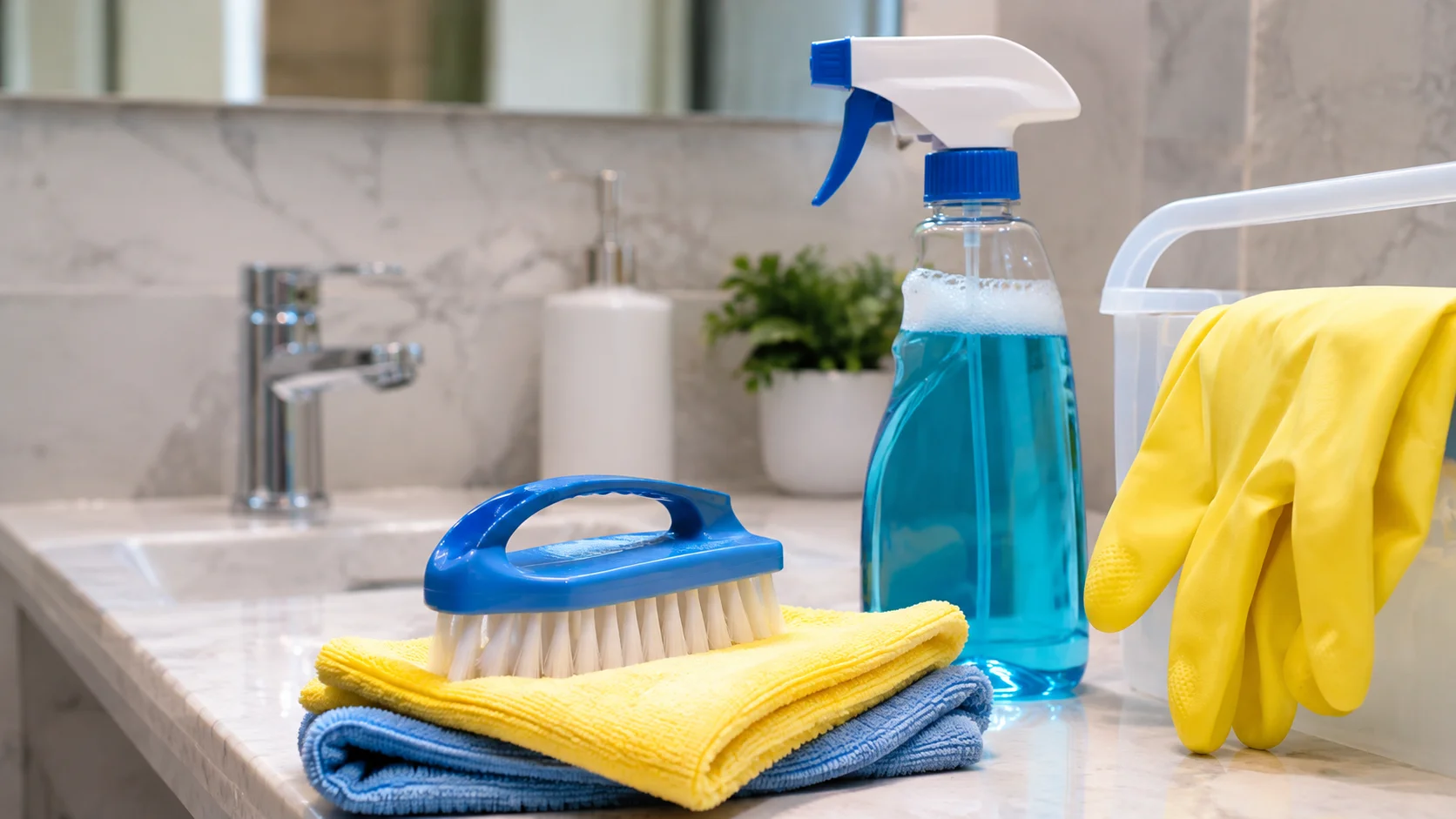
Keeping a bathroom clean is easier when the right supplies are within reach. Instead of buying every spray, brush, and cleaning gadget on the shelf, focus on a few dependable essentials that handle the surfaces and messes in your home. A useful bathroom cleaning kit should help you remove soap scum, clean the toilet, wipe mirrors, tackle floor grime, and manage everyday moisture without cluttering your cabinets.
The best bathroom cleaning supplies list will look slightly different for every household. A small apartment bathroom may need only a compact caddy and a handful of tools, while a busy family bathroom or commercial restroom may require larger quantities, specialized products, and a more structured restocking routine. This guide covers the essentials, optional extras, storage ideas, and safety practices to help you assemble a kit that fits your space.
1. The Core Bathroom Cleaning Supplies List
Start with the items you are most likely to use during a regular weekly clean. You can add specialty products later if you find that a particular surface or recurring stain needs extra attention.
All-Purpose Bathroom Cleaner
A suitable all-purpose cleaner helps remove everyday dirt, residue, and light grime from compatible hard surfaces. Check the label before using it on painted cabinets, natural stone, specialty finishes, or other sensitive materials.
You may not need a separate general-purpose spray for every bathroom surface. Choose a product that matches the materials in your bathroom and the cleaning tasks you perform most often.
Toilet Bowl Cleaner
Toilet bowl cleaner is formulated for the inside of the toilet, where mineral deposits, stains, and everyday buildup can collect. Select a product intended for your toilet and follow the label’s application and contact-time instructions.
A toilet bowl cleaner should not be treated as a universal bathroom spray. Keep it separate from other products, and never mix it with bleach, ammonia, acids, or other cleaning chemicals.
Toilet Brush
A sturdy toilet brush lets you scrub beneath the rim and around the bowl without relying on disposable wipes. Choose one with bristles that can reach the areas you need to clean and a holder that allows the brush to drain and dry.
Replace the brush when its bristles become worn, damaged, or difficult to clean.
Microfiber Cloths
Microfiber cloths are useful for wiping counters, polishing mirrors when the cloth is suitable for glass, removing dust, and drying surfaces after cleaning. Keep several on hand so you can use separate cloths for different tasks.
For better hygiene, designate separate cloths for the toilet, sink, and other surfaces. Launder reusable cloths according to their care instructions, and do not return a dirty cloth to the clean-supply pile.
Scrub Brushes and Sponges
A small brush helps clean grout lines, faucet bases, corners, and other places that cloths may not reach effectively. A nonabrasive sponge can help remove residue from compatible surfaces.
Avoid aggressive scouring pads on acrylic, polished metal, delicate finishes, and natural stone unless the surface manufacturer approves them. Test an unfamiliar tool in a hidden spot first.
Glass and Mirror Cleaner
A dedicated glass cleaner can help remove fingerprints, water spots, and streaks from mirrors and suitable glass surfaces. A clean microfiber cloth may be sufficient for light marks, so a separate spray is optional rather than essential for every home.
Cleaning Gloves
Reusable or disposable household cleaning gloves can reduce direct contact with cleaning products and dirty surfaces. Select gloves that are compatible with the chemicals you use, and follow the product label’s protective-equipment advice.
Gloves do not replace ventilation, careful handling, or handwashing after cleaning.
2. Bathroom Cleaning Supplies for Specific Jobs
Once you have the basics, add a few targeted tools for areas that collect stubborn residue or need more detailed attention.
Grout and Tile Brush
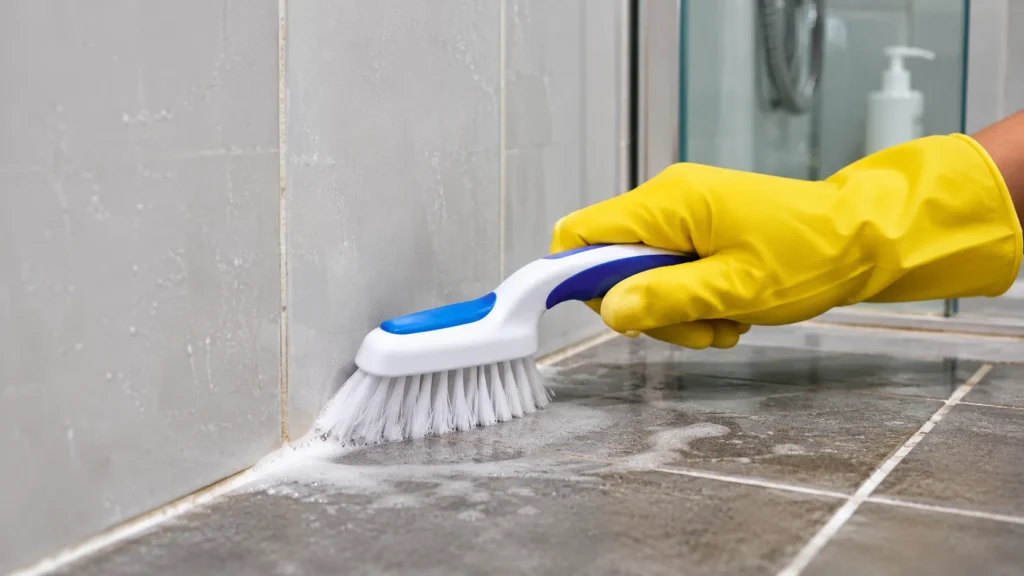
A narrow brush helps reach grout joints, tile corners, and the edges around fixtures. Use a compatible tile cleaner and avoid harsh scrubbing that could damage grout or the tile finish.
Shower Squeegee
A squeegee removes excess water from suitable glass and smooth shower surfaces after bathing. It is a practical optional tool for reducing water spots and helping surfaces dry faster.
Floor Mop
A flat microfiber mop or another suitable floor-cleaning tool helps remove dust, hair, and tracked-in grime. Match the mop and cleaning solution to your flooring, especially if you have natural stone or water-sensitive materials.
Broom, Dustpan, or Vacuum
Pick up loose hair and dry debris before wet-cleaning the floor. A compact broom works well in small bathrooms, while a vacuum with a suitable attachment may be useful for dry debris around baseboards.
Wipes can be convenient for quick touch-ups on surfaces their labels permit. Disinfecting wipes need the stated contact time to work as directed, and they should not be flushed unless the product is specifically designed and approved for that disposal method.
You do not need every specialty tool. If a cloth and suitable cleaner handle your sink and counter effectively, there is little reason to buy a separate gadget for the same job.
3. Essential Bathroom Cleaning Supplies Checklist
Use this checklist when assembling a bathroom cleaning supplies kit or checking what you already own.
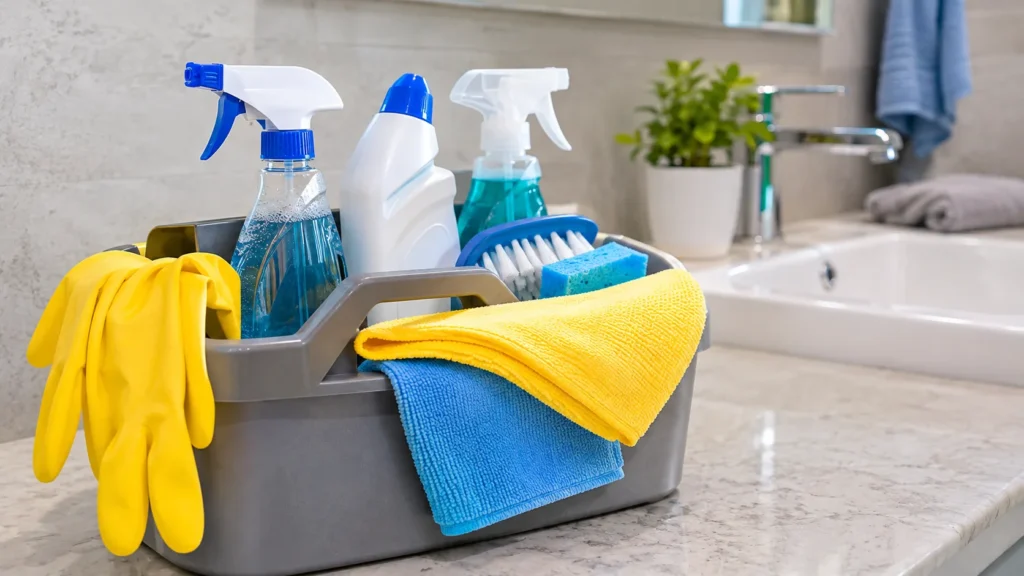
Your bathroom supply checklist
Select the items you already have. You can use this list as a shopping guide.
Cleaning products
All-purpose cleaner suitable for bathroom surfaces
Toilet bowl cleaner
Glass or mirror cleaner, if needed
Shower or soap-scum cleaner, if needed
Floor cleaner suitable for the flooring
Cleaning tools
Toilet brush and holder
Microfiber cloths
Nonabrasive sponges
Small scrub brush
Mop or floor-cleaning tool
Personal protection
Cleaning gloves
Eye protection when required by product directions
Access to ventilation
Optional extras
Shower squeegee
Grout brush
Cleaning caddy
Waste bags
Disposable wipes for compatible surfaces
Reset checklist Copy checklist
Shopping tip: Buy the products you will actually use rather than a large multipurpose kit full of duplicates. Start with the essentials, then add a specialty cleaner only when you identify a specific need.
4. How to Choose the Best Cleaning Supplies for Your Bathroom
The best cleaning supplies for a bathroom are not necessarily the most expensive or heavily advertised. Look for a combination of surface compatibility, convenience, and manageable storage.
Check Your Bathroom Surfaces
Different materials require different care. Ceramic tile, glass, acrylic, chrome, natural stone, and painted cabinetry can respond differently to cleaning chemicals and abrasive tools.
Read the product label and follow the material manufacturer’s guidance. For example, a cleaner approved for ordinary ceramic tile may not be appropriate for marble or another acid-sensitive stone. When in doubt, choose a product specifically approved for the surface and test it in an inconspicuous area.
Choose Concentrated or Ready-to-Use Products Carefully
Ready-to-use sprays are convenient because they require no mixing. Concentrates may be economical for larger cleaning jobs, but they must be diluted exactly as directed.
Do not estimate dilution ratios or combine leftover products to save space. The EPA’s guidance on household cleaning products recommends following labels, increasing ventilation, and never mixing cleaning products.
Consider Scent and Sensitivity
Strong fragrance is not a measure of cleaning performance. If you or someone in your household is sensitive to fragrances or cleaning vapors, consider an appropriately labeled fragrance-free product and maintain good ventilation.
Also remember that “natural” does not automatically mean nonirritating or safe for every material. Vinegar, essential oils, and homemade solutions can still be unsuitable for certain finishes or cleaning tasks.
Keep Routine Cleaning Simple
You usually do not need to disinfect every bathroom surface every day. According to the CDC’s household cleaning guidance, routine cleaning is generally sufficient in most situations, while disinfection may be appropriate when someone is sick or when specific circumstances call for it.
Choose cleaning products based on the task instead of purchasing multiple disinfectants that all serve the same purpose.
Jump into Other Related Article
- How to Clean Stainless Steel Sink | Stains, Hard Water, Rust & Scratches
- Brick Stain Colors | Exterior, Interior, Fireplace, Paver, and Before and After Ideas
- How to Remove Grease Stains | Complete Guide for Clothes, Fabric, Carpet, Concrete, Wood, and More
5. Bathroom Cleaning Supplies for Different Households
The right kit depends on how much space you have, who uses the bathroom, and how frequently it needs attention.
Small Apartments and Dorm Bathrooms
For a small bathroom, prioritize compact items that fit inside one caddy or cabinet:
- One compatible all-purpose cleaner
- A toilet bowl cleaner and toilet brush
- Two or three microfiber cloths
- A small scrub brush and sponge
- Gloves
- A compact mop or floor cloth
If you share a dorm bathroom, follow your residence’s cleaning and product-storage rules. Shared facilities may require supplies to be stored outside the bathroom, and strong chemicals should never be left where other residents or children can access them.
Family Bathrooms
A busy family bathroom may benefit from extra cloths, a second scrub brush, a larger supply of gloves, and a clearly labeled storage container. Keep toilet-cleaning tools separate from items used on the sink, bath, or countertop.
Store all cleaning products securely away from children and pets. Keep products in their original labeled containers rather than transferring them to unmarked bottles.
Commercial and Industrial Bathrooms
Commercial bathroom cleaning supplies may include bulk surface cleaners, commercial toilet cleaners, floor-cleaning systems, disposable cloths, refillable dispensers, and protective equipment appropriate to the chemicals being used.
A commercial facility should choose products based on the surfaces, foot traffic, applicable sanitation requirements, and staff training. Follow each product’s safety data sheet and label, including dilution, ventilation, protective equipment, and contact time.
For businesses, the cheapest product per bottle may not be the most economical option if it requires extra labor or is unsuitable for the surfaces being maintained. Consider cleaning performance, staff safety, product compatibility, and the cost of replenishment.
6. How to Organize and Store Bathroom Cleaning Supplies
Good storage makes your cleaning routine quicker and helps prevent spills, clutter, and accidental exposure.
Use a Caddy for Frequently Used Items
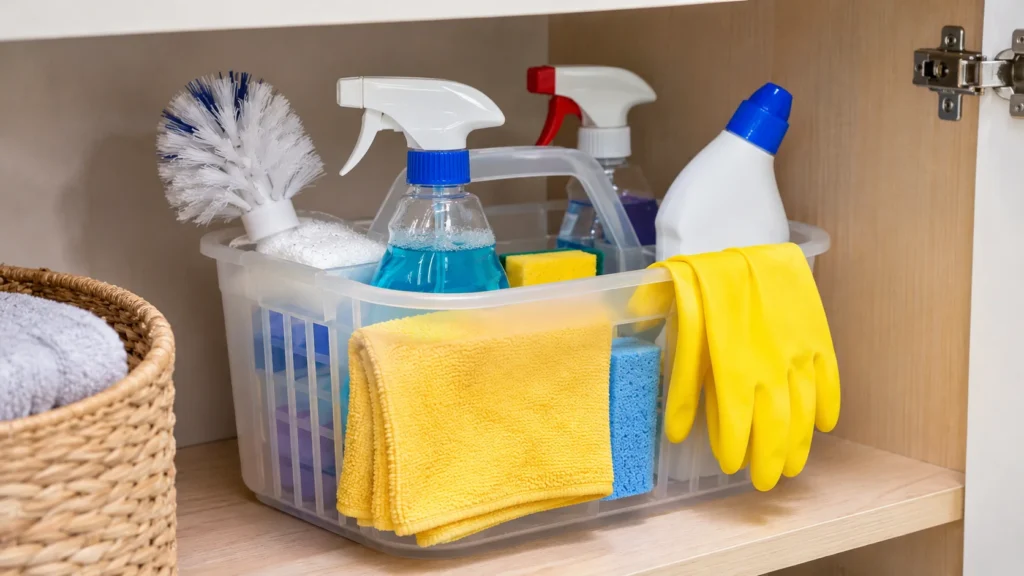
A bathroom cleaning caddy is useful when you carry supplies from a cupboard to the shower, toilet, and sink. Choose a sturdy design with a handle and enough room for the products you use regularly.
Avoid overfilling it with large bottles that could tip or leak. Heavy products may be safer stored on a low, stable shelf rather than in a portable caddy.
Store Products in a Suitable Location
A cool, dry, well-ventilated storage area is generally preferable to a damp spot beside the shower. Follow any temperature or storage restrictions on each label.
Keep chemicals in their original containers with labels intact, and store them securely out of reach of children and pets. Do not store incompatible products together in a way that could allow leaks to mix.
Separate Clean Tools from Used Tools
Place fresh cloths and unused sponges in a clean container. Allow toilet brushes and other damp tools to drain and dry before putting them away, using a holder designed for that purpose.
If you use reusable cloths for multiple jobs, keep toilet-cleaning cloths separate from those used on the sink and counter. Wash reusable items regularly and dry them fully before storage.
Keep an Inventory Instead of Overbuying
Check your supplies before shopping. Replace empty or expired products as needed, and dispose of unwanted chemicals according to their label and local waste guidance. Do not pour cleaning chemicals down a drain or into the environment unless the label and local requirements permit it.
An inventory can be as simple as a note on your phone listing your core cleaner, toilet product, gloves, cloths, and any specialty items.
7. A Simple Bathroom Cleaning Routine
The right supplies work best when each item has a clear purpose. Use this general order to avoid cleaning the same area repeatedly.
- Clear the space: Remove bath mats, toiletries, laundry, and other objects from surfaces.
- Remove dry debris: Pick up hair and dust before wet-cleaning the floor.
- Clean the mirror and higher surfaces: Work from higher areas downward so loosened dust does not land on cleaned surfaces.
- Clean the sink and counter: Use a compatible cleaner and a fresh cloth.
- Clean the shower or tub: Use a product suitable for the material and follow its contact-time instructions.
- Clean the toilet separately: Use dedicated tools and avoid transferring them to other surfaces.
- Finish the floor: Mop or wipe the floor with a suitable product.
- Allow everything to dry: Ventilate the room and return items once the surfaces and tools are dry.
For a typical household, regular cleaning with appropriate products is more useful than repeatedly applying disinfectants to already-clean surfaces. The CDC recommends cleaning first and disinfecting when needed, following the product’s directions.
Conclusion
A well-planned bathroom cleaning supplies kit does not need to be complicated. Begin with a suitable surface cleaner, toilet bowl cleaner, brush, microfiber cloths, scrub brush, gloves, and a floor-cleaning tool. Add a squeegee, glass cleaner, grout brush, or specialty product only when it serves a clear purpose.
Choose products that match your bathroom materials, follow their labels, and store them safely. With a practical checklist and a consistent routine, you can keep the bathroom cleaner without wasting money on unnecessary products or crowding every available shelf.
What cleaning supplies do I need for a bathroom?
Start with an all-purpose bathroom cleaner, toilet bowl cleaner, toilet brush, microfiber cloths, a nonabrasive sponge, a scrub brush, gloves, and a suitable floor-cleaning tool. Add glass cleaner, a grout brush, or a shower squeegee if your bathroom needs them.
What are the essential bathroom cleaning supplies?
The essentials are the items that address your most frequent tasks: a compatible surface cleaner, toilet cleaner, toilet brush, cloths, scrub brush, gloves, and floor-cleaning equipment. You can add specialty products as needed.
How do I make a bathroom cleaning supplies kit?
Choose a small collection of products and tools that match your bathroom surfaces. Store them in a caddy or container, keep toilet tools separate from other cleaning tools, and check labels before combining products or using them on unfamiliar materials.
Where should I store bathroom cleaning supplies?
Use a secure, dry, suitable storage area such as a cabinet or designated utility cupboard. Keep products in their original containers, away from children and pets, and follow any special storage instructions on their labels.
What is the best way to organize bathroom cleaning supplies?
Group products by task, keep frequently used items together, and separate clean cloths from used tools. A caddy is useful for routine cleaning, while a stable cabinet or shelf is better for heavier bottles and backup supplies.
Are natural bathroom cleaning supplies better?
Not automatically. Some people prefer fragrance-free or simpler formulas, but suitability depends on the ingredient, the task, and the surface. Natural ingredients can still irritate skin or damage sensitive finishes, so follow product and material guidance.
What bathroom cleaning supplies are best for deep cleaning?
Deep cleaning may require a compatible shower or soap-scum cleaner, grout brush, microfiber cloths, toilet cleaner, mop, and gloves. Select specialty products only for the surfaces and stains you need to address.
Can I use the same cleaner for my kitchen and bathroom?
Some multipurpose products are approved for both areas, but check the label. A product suitable for a bathroom surface may not be appropriate for food-contact surfaces or sensitive materials. Follow any required rinsing instructions before using a surface for food preparation.
What supplies do professional bathroom cleaners use?
Professional cleaners commonly use surface-appropriate cleaners, toilet products, microfiber cloths, brushes, mops, gloves, and other protective equipment based on the job. Commercial facilities may also need approved disinfectants, dilution systems, and written safety procedures.
How often should I replace bathroom cleaning tools?
Replace tools when they become worn, damaged, persistently dirty, or difficult to clean. Reusable cloths and mop heads should be washed regularly according to their care instructions. Follow the manufacturer’s guidance for products with specific replacement intervals.