
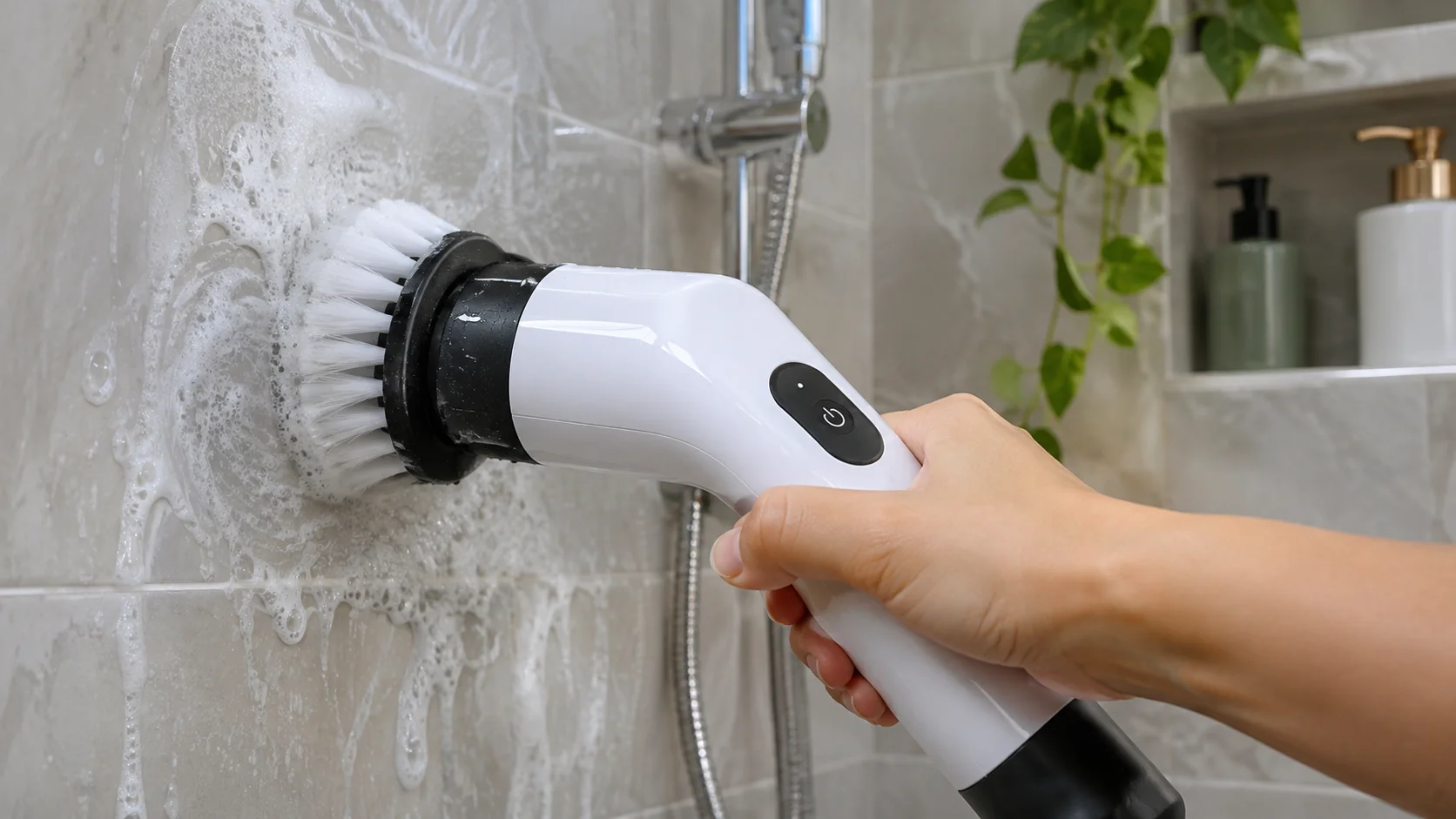
An electric shower scrubber can make bathroom cleaning easier by using a powered rotating or oscillating brush to loosen soap scum, everyday grime, and some surface buildup. Models range from compact handheld brushes to cordless spin scrubbers with extendable handles and interchangeable heads, so the right choice depends on the surfaces you clean and how much reach you need.
However, an electric scrubber is not a substitute for the correct cleaning solution or careful surface maintenance. Brush stiffness, speed, water resistance, battery life, and handle design all affect how useful a model will be. This guide explains what to look for, how to use an electric shower scrubber, and which features are worth prioritizing before you buy.
What Is an Electric Shower Scrubber?
An electric shower scrubber is a powered cleaning brush designed to reduce the manual effort involved in scrubbing bathroom surfaces. Its motor moves the brush head, helping loosen residue while you guide the tool over the area being cleaned.
Some models are made mainly for bathroom cleaning, while others are multipurpose power brushes suitable for bathtubs, kitchen surfaces, floors, and other compatible areas. A model marketed as an electric body scrubber or electric back scrubber is different: it is intended for personal care rather than cleaning tiles or grout. Always check the intended use before purchasing.
Common Types of Electric Shower Scrubbers
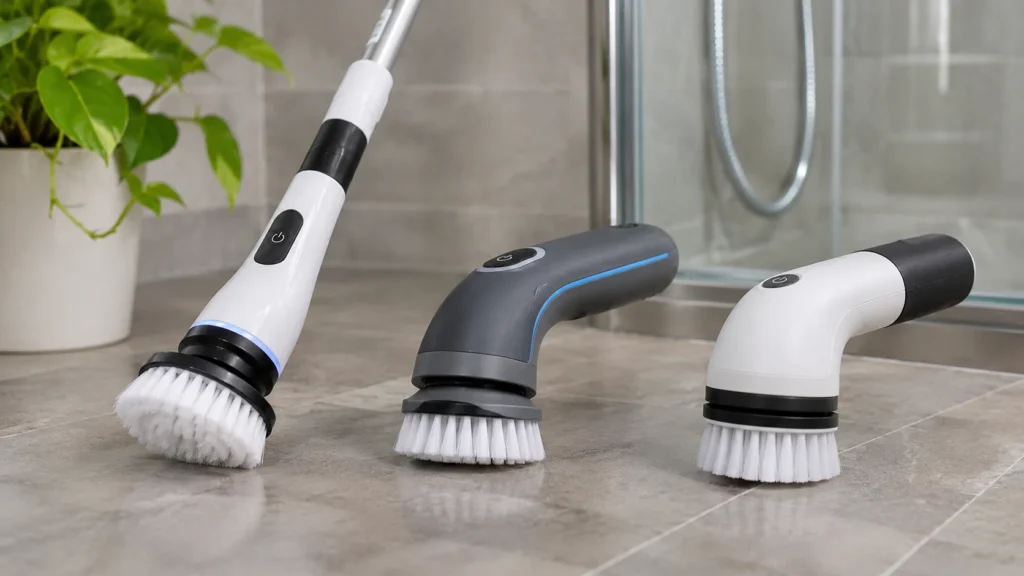
Cordless spin scrubbers: These use a rechargeable battery and rotating brush heads. Many include an extension handle for reaching shower walls and floor areas without bending as much.
Handheld electric scrubbers: Compact models are easier to control around taps, corners, shelves, and smaller shower enclosures. They usually provide less reach than long-handle designs.
Electric tile scrubbers: These are designed for hard bathroom surfaces and may include brush heads suited to tile, grout, or corners. Confirm that the supplied heads are appropriate for your particular finish.
Multi-head cleaning brushes: Some sets include several attachments, such as flat brushes for broad areas, smaller brushes for corners, and soft heads for more delicate cleaning. More attachments are useful only when they suit your actual cleaning needs.
Wall-mounted personal back scrubbers: These are intended for washing the body and should not be confused with powered bathroom cleaning brushes. Check the product description carefully if search results mix both categories.
Jump into Other Related Article
- Best Deck Stain and Sealer | Complete Guide for Pressure Treated, Cedar, Old, and Full Sun Decks
- Grout Sealer | How to Choose the Best Sealer for Showers, Floors, and Tile
- How to Clean Grout | Easy Methods for Floors, Showers, and Bathroom Tiles
Best Electric Shower Scrubber: Features Worth Comparing
The best electric shower scrubber is not necessarily the model with the most brush heads or the highest advertised speed. Prioritize practical features that match your bathroom, cleaning routine, and storage space.
1. Adjustable or Extendable Handle
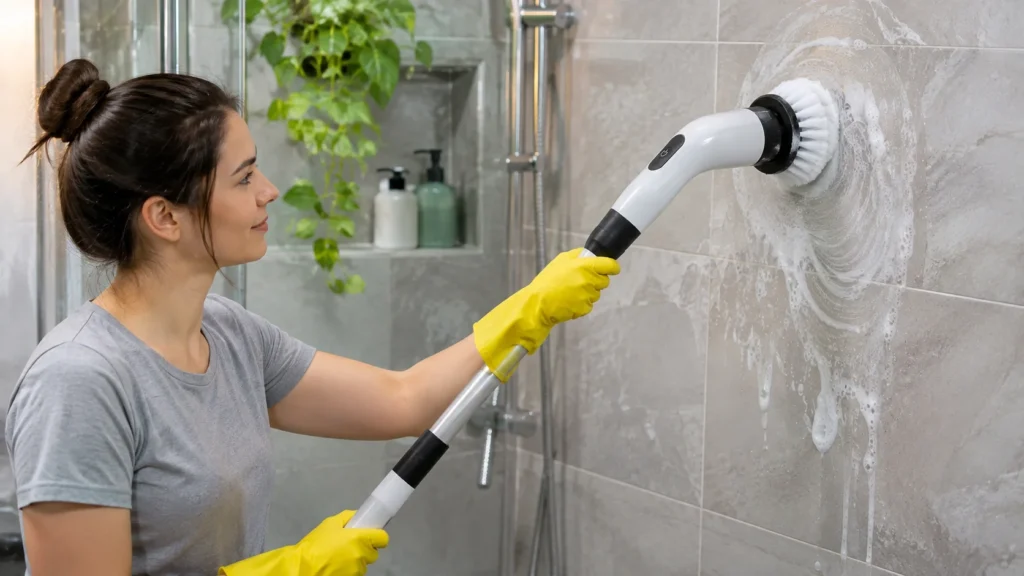
An extendable handle helps you reach higher shower walls, lower corners, and the bathtub floor while reducing the need to crouch or stretch. Look for a handle that locks securely at different lengths and remains comfortable to guide.
A long handle is particularly helpful for larger showers. A short handheld tool may be more convenient for compact enclosures or detail work around fixtures.
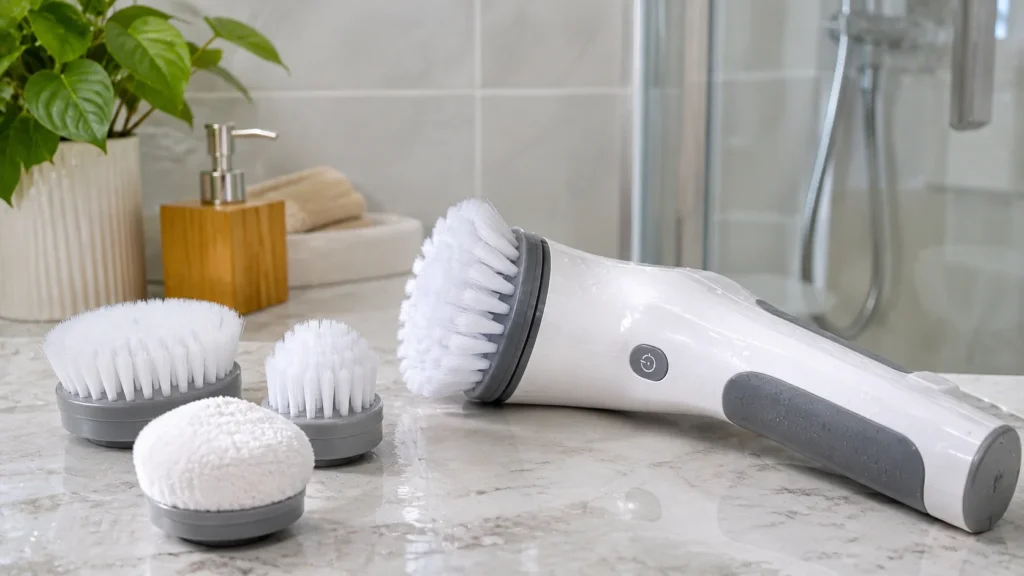
2. Replaceable Brush Heads
Replaceable heads allow one tool to handle several tasks. A broad brush can cover larger tile areas, while a smaller head can reach around fixtures and corners.
Before buying, check whether replacement heads are available and whether the manufacturer specifies which surfaces each attachment is suitable for. A large accessory kit is not useful if the heads are difficult to replace or too abrasive for your bathroom finishes.
3. Battery Life and Charging
For a cordless electric shower scrubber, compare the manufacturer’s stated runtime, charging time, battery type, and charging method. Remember that actual runtime may vary with pressure, speed settings, battery age, and the type of surface being cleaned.
A charging indicator can help you avoid starting a cleaning session with a nearly depleted battery. If you clean several bathrooms at once, longer runtime may matter more than compact size.
4. Water-Resistance Rating
Bathroom cleaning involves splashes, but not every electric scrubber is designed to be submerged or used directly under running water. Read the manufacturer’s instructions and check the stated water-resistance rating before using the device near a shower stream.
Do not assume a product is waterproof simply because it is advertised for bathroom cleaning. Keep charging ports and electrical connections protected as directed, and never charge a wet device unless the manufacturer specifically permits it.
5. Brush Speed and Control
Some scrubbers offer more than one speed, allowing you to adjust the cleaning action to the task. Lower settings may be easier to control around fixtures and delicate finishes, while a suitable higher setting can help with ordinary grime on compatible hard surfaces.
Higher speed does not automatically mean better cleaning. The correct brush, cleaning solution, dwell time, and technique often matter just as much.
6. Grip, Weight, and Balance
A heavy brush can become tiring when held above shoulder height. Look for a comfortable grip and balanced construction, especially if you plan to clean walls or overhead areas.
If possible, compare the tool’s weight with the extension handle attached. A lightweight handheld unit may be easier to maneuver, while a long model may offer better reach but require more control.
How to Choose a Scrubber for Different Shower Surfaces
The brush head should match the material you are cleaning. Using an overly stiff brush can scratch a finish, damage a coating, or wear down grout, even when the scrubber itself is well made.
Electric Tile Scrubber for Shower Walls
For ceramic or porcelain shower tiles, a compatible medium-soft brush may help remove everyday soap residue and grime. A wide, flat attachment is useful for larger sections, while a smaller brush can reach around fixtures.
Check the tile manufacturer’s cleaning recommendations, particularly for polished, decorative, or coated tiles. Test the brush in an inconspicuous spot before using it across the whole wall.
Electric Grout Cleaning Brush
Grout lines can collect soap residue and dirt, making them harder to clean than the tile faces. A narrow or pointed attachment may provide better access to the grooves, but avoid pressing hard or repeatedly grinding the brush into the same spot.
Electric scrubbers can help with surface dirt, but they will not repair cracked grout or replace missing material. If grout is crumbling or the sealant has failed, address the underlying problem rather than relying on more aggressive scrubbing.
Scrubber for Glass Shower Doors
Glass shower doors often develop soap scum and mineral spots. Use a soft sponge or cloth attachment only if the tool manufacturer approves it for glass. Avoid abrasive pads and stiff brushes that could scratch the surface or affect a protective coating.
Apply a glass-compatible cleaner, allow it to work for the time stated on its label, and move the tool gently across the surface. A squeegee after each shower can help reduce the amount of residue that accumulates.
Scrubber for Acrylic and Fiberglass Tubs
Acrylic and fiberglass surfaces can be scratched by harsh abrasives. Choose a soft brush or nonabrasive attachment and use a cleaner approved for the tub material. Do not assume that a brush suitable for ceramic tile is safe for a plastic tub.
If the surface is glossy or has a special coating, consult the manufacturer’s care instructions before using a powered tool.
How to Clean a Shower With an Electric Scrubber
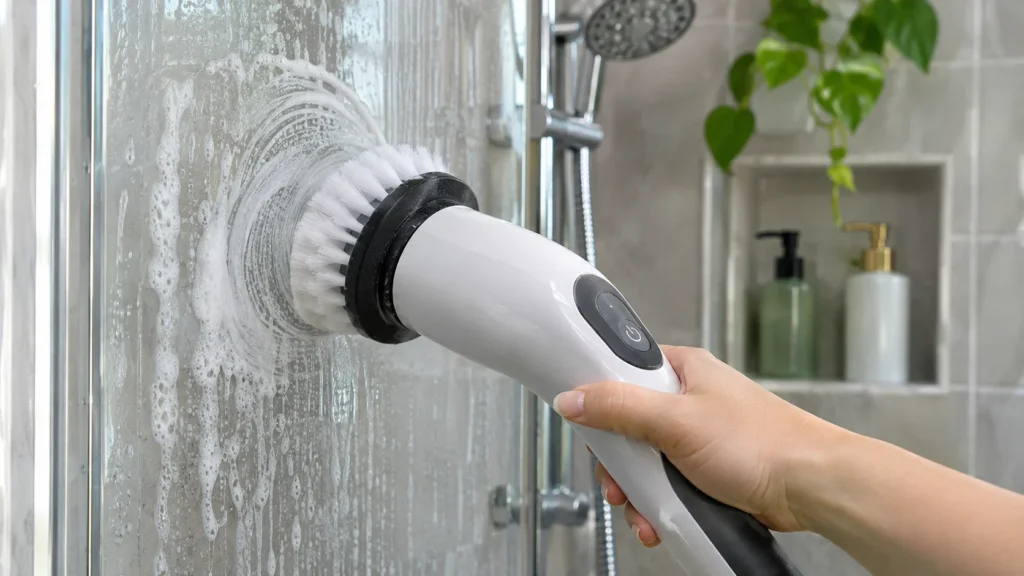
Using an electric shower scrubber correctly helps remove grime without putting unnecessary pressure on the surface. Follow the instructions supplied with your specific model, as operating and water-resistance limits vary.
Step 1: Remove Loose Dirt and Personal Items
Take bottles, bath mats, and other items out of the cleaning area. Rinse away loose dirt and hair so the brush does not drag debris across the surface.
Step 2: Apply a Suitable Bathroom Cleaner
Choose a cleaner that is compatible with the surface and follow the label directions. Give it the recommended contact time before scrubbing; this can reduce the amount of force needed.
Never mix cleaning products. In particular, do not mix bleach with vinegar, acids, ammonia, or other cleaners.
Step 3: Fit the Correct Brush Head
Attach the brush securely and check that it locks into place. Use a broad head for open tile areas and a smaller attachment for corners or grout lines, provided the manufacturer approves it for those surfaces.
Step 4: Start at a Low Setting
Turn the scrubber on at a low speed if the model offers speed settings. Hold it firmly and guide it across a small test area using light pressure. Let the motor do the work instead of pushing hard against the tile.
Step 5: Work in Manageable Sections
Move the brush slowly over one section at a time. Avoid prolonged scrubbing in one spot, especially on grout, coated glass, plastic, or polished finishes. Stop if you notice scratching, discoloration, unusual noise, or damage to the surface.
Step 6: Rinse Away Cleaner and Residue
Rinse the cleaned area according to the product label and wipe away remaining residue with a suitable cloth or squeegee. Make sure no cleaning solution remains in corners or on surfaces where it could dry into a film.
Step 7: Clean and Dry the Scrubber
Switch the device off before changing attachments or cleaning its parts. Rinse the brush heads if permitted, wipe the body as instructed, and let the attachments dry completely before storage. Keep the charging connection dry and follow the manufacturer’s charging guidance.
Electric Shower Scrubber Models to Compare
When comparing electric shower scrubber reviews, look beyond star ratings and advertised power. Consider the tool’s shape, the availability of replacement heads, warranty terms, and whether its instructions cover the surfaces you intend to clean.
HOTO Electric Shower Scrubber QWQJS001
The HOTO Electric Spin Scrubber QWQJS001 is worth comparing if you want a cordless tool with an extension handle and several attachment types. The manufacturer’s instructions describe low- and high-speed settings, interchangeable heads, and specific precautions for the main unit, extension rod, and charging port. Check the manual for the exact model before using it in wet conditions.
Best suited for: Shoppers who want one tool for a range of compatible household cleaning tasks.
What to check: Included brush heads, runtime, water-resistance instructions for each component, replacement-part availability, and local warranty support.
Homitt Electric Spin Scrubber
The Homitt Electric Spin Scrubber is another name shoppers may encounter when looking for a cordless electric cleaning brush. Compare the exact model’s current specifications rather than assuming every Homitt scrubber has the same handle length, battery capacity, or attachments.
Best suited for: People comparing multipurpose spin scrubbers with different head configurations.
What to check: Whether the package includes an extension handle, how replacement heads are obtained, charging requirements, and which surfaces the manufacturer approves for cleaning.
Generic Cordless Electric Shower Scrubber
A generic cordless shower scrubber may be suitable if you want a basic powered brush without paying for attachments you will rarely use. However, specifications and build quality can vary considerably between listings.
Best suited for: Occasional bathroom cleaning when a straightforward tool meets your needs.
What to check: Clear manufacturer details, return policy, genuine customer feedback, charging safety, and instructions for use around water.
These are comparison options, not a claim that one model is best for every bathroom. Verify current product details and compatibility before purchasing.
Common Mistakes to Avoid With an Electric Shower Scrubber
An electric brush can save effort, but incorrect use can create extra work or damage bathroom surfaces.
- Using the wrong attachment: A stiff brush or abrasive pad may scratch glass, acrylic, fiberglass, or polished finishes.
- Pressing too hard: Excessive pressure can strain the motor and damage grout or delicate surfaces. Guide the brush gently.
- Skipping cleaner contact time: Scrubbing immediately may be less effective than allowing a compatible product to work as directed.
- Treating every stain as soap scum: Mineral scale, rust, mold, and other stains may need different treatments. Identify the deposit before selecting a cleaner.
- Assuming every model is waterproof: Check the instructions for the main unit, extension rod, attachments, and charging port.
- Using the scrubber on the body: A household electric cleaning brush is not automatically safe for skin. Use only products specifically designed and labeled for personal care.
- Storing wet attachments: Damp brush heads can develop unpleasant odors or deteriorate. Clean and dry them as directed.
- Ignoring worn bristles: Frayed, damaged, or loose brush heads may clean poorly and should be replaced when required.
Is an Electric Shower Scrubber Worth Buying?
An electric shower scrubber can be a useful purchase if you regularly clean a large shower, struggle to reach lower areas, or want to reduce repetitive hand scrubbing. A cordless model with an extension handle is particularly convenient for shower floors and walls, while a compact brush may be better for corners, taps, and smaller bathrooms.
It may be less worthwhile if you clean a small shower occasionally and a regular soft brush already does the job. Consider how often you will use the device, whether replacement heads are available, and how much storage space it requires.
The key is choosing a model that fits your surfaces and routine rather than buying one based only on its advertised speed or number of attachments.
Conclusion
An electric shower scrubber can simplify bathroom maintenance by helping loosen soap scum and everyday grime with less repetitive manual effort. To choose the right model, compare its handle design, brush attachments, battery performance, water-resistance instructions, and replacement-part availability.
Use the correct brush for each surface, pair it with a compatible cleaner, and let the tool work with gentle pressure. Whether you choose a long-handle cordless scrubber, a compact electric brush, or a multipurpose model, careful use and regular maintenance will help you get more value from your purchase.
What is the best electric shower scrubber?
The best electric shower scrubber is one with a comfortable handle, suitable brush heads, adequate battery life, clear water-resistance instructions, and replacement parts you can obtain. The right choice depends on your shower size and the materials you need to clean.
Do electric shower scrubbers really work?
Yes, they can help loosen ordinary dirt, soap residue, and grime on compatible hard surfaces. Results depend on the brush, cleaner, type of buildup, and cleaning technique. They may not remove every stain or hardened mineral deposit.
Can I use an electric scrubber to clean shower grout?
Yes, if the tool and brush head are suitable for the grout and tile. Use light pressure and avoid repeatedly scrubbing one spot. Stop if the grout is loose, cracked, or crumbling, because powered brushing will not repair damaged grout.
Are cordless electric shower scrubbers waterproof?
Some models have water-resistance ratings, but the level of protection varies. A rating for the main unit does not necessarily apply to every attachment or extension component. Read the instructions for the exact model and never charge the device while it is wet.
What cleaner should I use with an electric shower scrubber?
Choose a bathroom cleaner compatible with the surface and follow its label. A mild, nonabrasive product is a sensible starting point for many routine cleaning tasks. Avoid mixing products, and never combine bleach with vinegar or other incompatible cleaners.
Can an electric shower scrubber scratch glass?
It can if you use an abrasive pad, stiff brush, or unsuitable attachment. Use only a head approved for glass, test a small area first, and avoid aggressive pressure. Be particularly cautious with glass that has a protective coating.
Is an electric spin scrubber good for soap scum?
It can help loosen soap scum when paired with a suitable cleaner. Let the product sit for the label’s recommended time, then guide the brush gently over the surface and rinse thoroughly.
Can I use a shower scrubber on an acrylic bathtub?
Only use an attachment and cleaner approved for acrylic. Soft brushes and nonabrasive products are generally a safer starting point than scouring pads or stiff bristles. Check the bathtub manufacturer’s care guidance before using a powered brush.
How long does an electric shower scrubber battery last?
Battery life varies by model, speed setting, load, battery condition, and cleaning conditions. Check the manufacturer’s stated runtime and remember that actual use may be shorter than the advertised maximum.
Is a long-handle electric shower scrubber better?
A long handle can help you reach high walls and low shower floors without bending as much. A compact model is often easier to maneuver around taps, corners, and small spaces. Choose based on the areas you clean most frequently.
How do I maintain an electric shower scrubber?
After use, turn it off, clean the brush heads according to the instructions, wipe down the device, and allow removable attachments to dry fully. Inspect the bristles and handle connections periodically, and keep charging components dry as directed.
Can an electric shower scrubber remove hard water stains?
It may help remove loose residue around water spots, but hardened mineral scale can require a compatible descaling cleaner. Confirm that the product is safe for your tile, glass, or other finish. Avoid increasing brush pressure to compensate for a cleaner that is unsuitable for the deposit.