
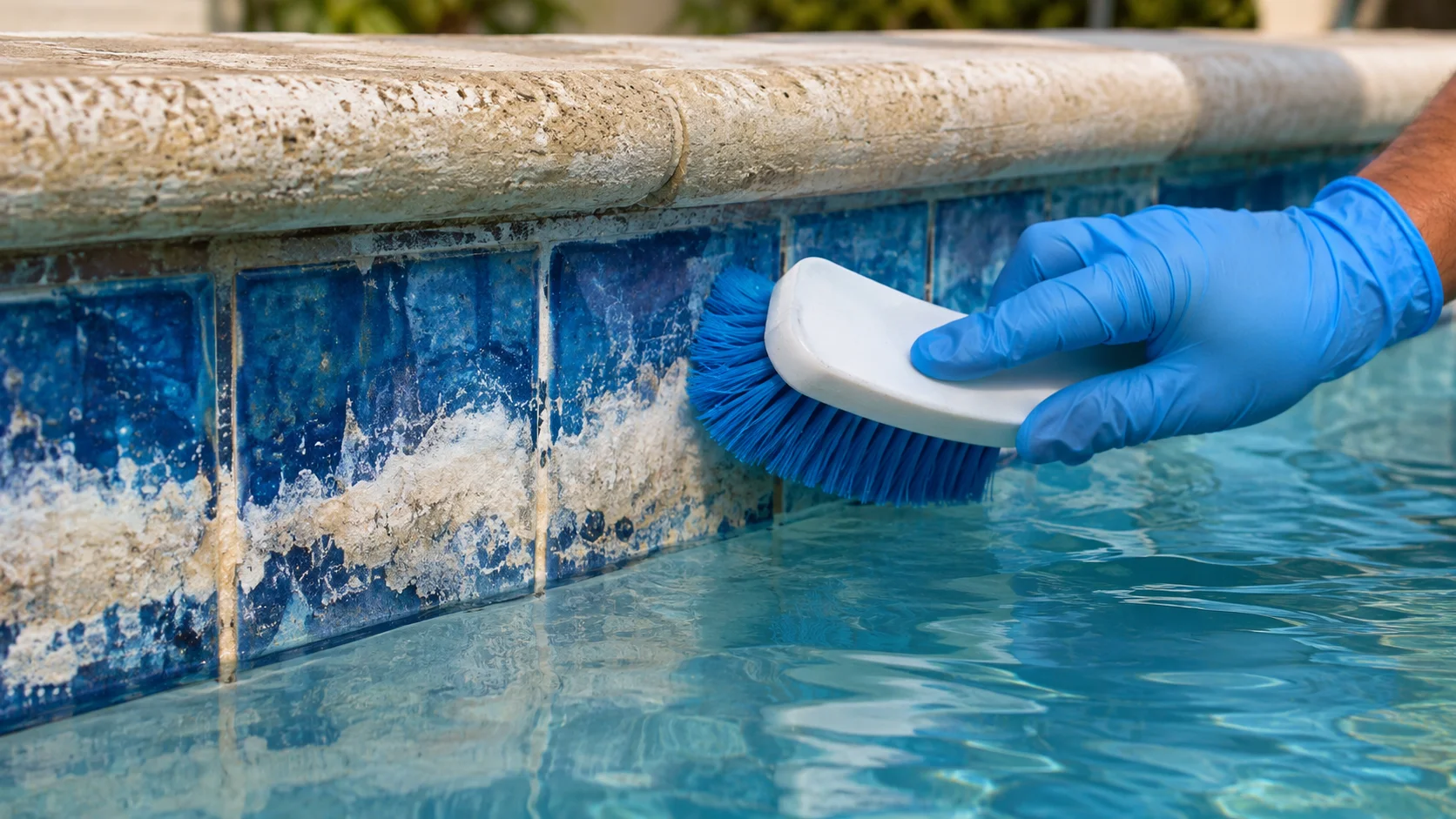
Pool tile cleaning helps remove the calcium deposits, mineral scale, dirt, and oily residue that can collect along a swimming pool’s waterline. These deposits can make decorative tiles look dull or rough, especially when water chemistry, evaporation, and regular maintenance allow minerals to accumulate. The best cleaning method depends on the type of tile, the kind of buildup, and the condition of the surface.
Some waterline residue can be removed with a soft brush and a pool-compatible cleaner, while heavy calcium scale may require specialized equipment or professional treatment. Choosing an unsuitable abrasive or chemical can scratch tile, damage grout, or affect nearby pool finishes. This guide explains how to clean pool tiles safely, compare common techniques, understand service costs, and decide when professional help is worthwhile.
Why Pool Tiles Develop Scale and Stains
Pool tiles are continuously exposed to water, but the area around the waterline often experiences the most visible buildup. As water evaporates, minerals can remain on the surface and gradually form a hard deposit. Sunscreen, body oils, dust, and other contaminants may also collect around the edge of the pool.
Calcium Deposits at the Waterline
Calcium scale is one of the most common reasons homeowners seek pool tile cleaning. It may appear as a white, grayish, or crusty band near the waterline. Deposits can become difficult to remove when they build up over time.
The amount and type of scale depend partly on water chemistry, including calcium hardness, pH, alkalinity, and overall saturation conditions. A pool professional can help determine whether the water balance is contributing to recurring deposits.
Dirt, Oils, and Organic Residue
Not every mark on pool tile is calcium scale. Sunscreen, body oils, dust, and organic material can leave a film or discoloration. These residues may respond to routine cleaning more readily than hardened mineral deposits.
Identifying the type of buildup before selecting a cleaner helps prevent unnecessary use of harsh chemicals or abrasive methods.
Rust and Other Discoloration
Brown, orange, green, or dark marks may have different causes, including metals, organic material, algae, or deterioration of nearby components. Color alone cannot reliably identify a stain. If a mark returns quickly or spreads despite ordinary cleaning, investigate the cause instead of repeatedly applying stronger products.
How to Clean Pool Tiles at Home
For light deposits and routine maintenance, start with the gentlest method appropriate for your pool tile. Follow the pool equipment and cleaner manufacturers’ instructions, and test an inconspicuous area before treating a large surface.
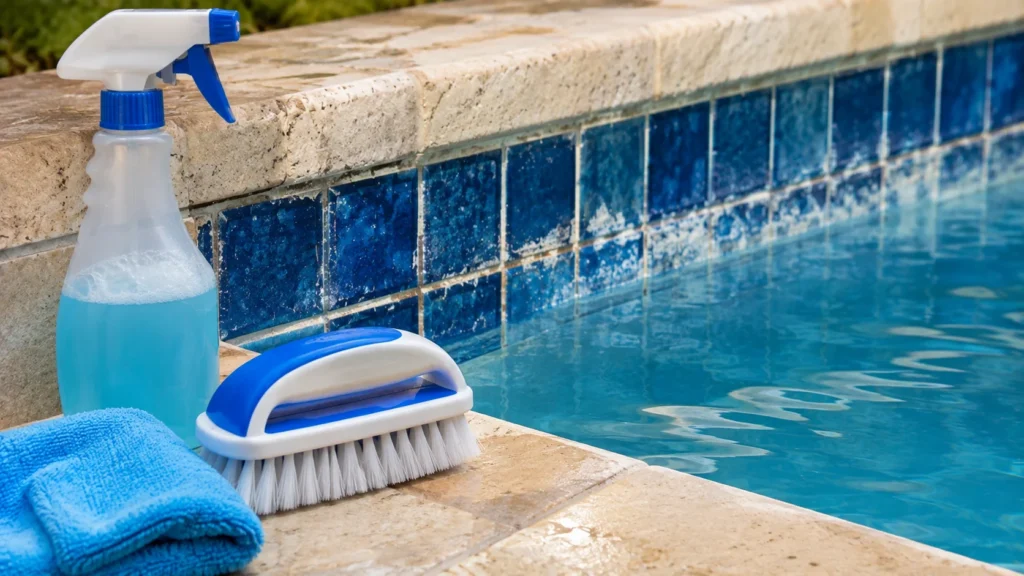
Step 1: Identify the Tile and the Deposit
Determine whether the surface is ceramic, porcelain, glass, natural stone, or another pool finish. A method suitable for one material may damage another. Natural stone, decorative glass, and specialty finishes can have specific cleaning restrictions.
Next, inspect the deposit. Loose dirt or oily film may need only a compatible cleaner and a soft brush. Hard, crusty buildup may be mineral scale that requires a different approach.
Step 2: Start With a Soft Brush
Use a soft nylon brush or another tool approved for the tile. Gently work along the waterline to loosen dirt and fresh residue. Avoid steel wool, metal scrapers, and aggressive scouring pads unless the tile manufacturer specifically approves a tool for that surface.
Do not assume that a brush safe for a concrete pool is also suitable for glass tile or polished stone.
Step 3: Apply a Pool-Compatible Cleaner
Choose a cleaner labeled for the tile material and the type of deposit. Apply it according to the directions, including the recommended contact time and rinsing procedure.
Avoid allowing a cleaning product to enter the pool water unless its instructions specifically permit that use. Protect nearby metal fittings, sealants, and other finishes from unintended exposure.
Step 4: Rinse and Inspect
Remove the cleaner and loosened residue as directed. Check whether the deposit has lifted before repeating the process. If the surface remains rough or heavily encrusted, stop rather than escalating to an aggressive chemical or abrasive without confirming compatibility.
For stubborn scale, a pool tile cleaning specialist may be able to identify a more appropriate treatment.
Best Methods for Pool Tile Cleaning
The best pool tile cleaning method depends on the severity of the deposits and the material being treated. A gentle cleaning method is often sufficient for routine upkeep, whereas thick scale may need specialist tools.
1. Manual Brushing and Pool Tile Cleaner
Manual cleaning is usually the first option for light buildup. Use a soft brush and a cleaner approved for the tile and pool environment.
Best for: Loose dirt, light waterline residue, and routine maintenance.
Advantages: It is relatively inexpensive, gives you control over the cleaning process, and avoids the need for specialized machinery.
Limitations: It may not remove thick, hardened calcium deposits. Repeated forceful scrubbing can also damage some finishes.
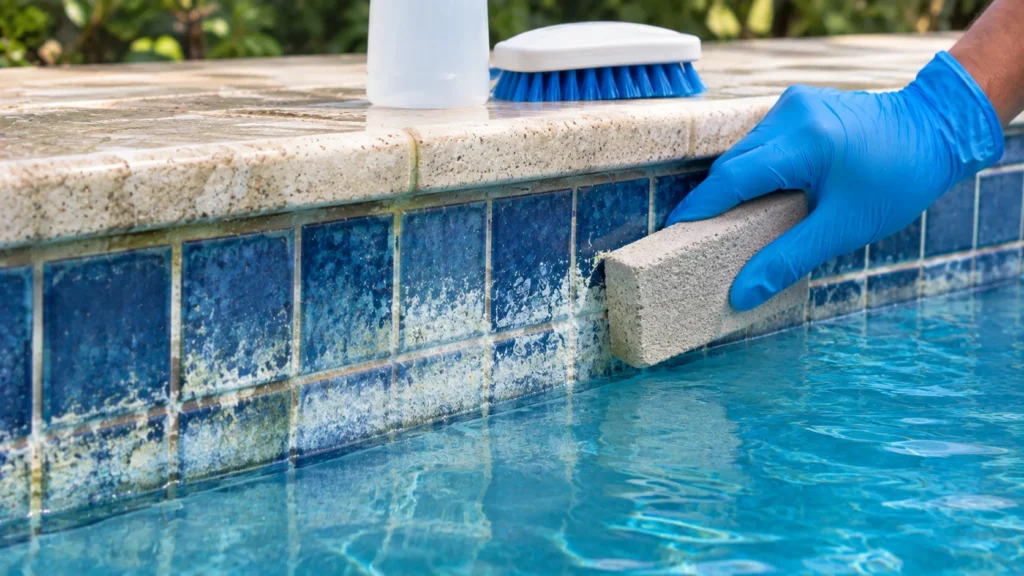
2. Pool Tile Cleaning Pumice
A pool cleaning pumice stone is sometimes used to remove mineral deposits from certain hard surfaces. However, it is not suitable for every tile, finish, or pool system. It can scratch delicate materials, so check the tile manufacturer’s instructions and test a small, inconspicuous area first.
Use only a product specifically intended for the surface being cleaned. Do not use an ordinary household pumice stone on glass tile, polished stone, or any finish for which the manufacturer prohibits abrasives.
Best for: Certain stubborn deposits on compatible, hard pool surfaces.
Limitations: It requires care, may be unsuitable for delicate tiles, and is not a universal solution for calcium scale.
3. Glass Bead Blasting
Glass bead blasting is a specialized cleaning technique that uses a controlled stream of abrasive media to remove deposits. A trained pool tile cleaning professional selects the media and equipment according to the tile and buildup.
Although the name refers to glass beads, the media used by pool cleaning contractors can vary. Ask the service provider exactly what material and method they intend to use.
Best for: Some heavy mineral deposits that cannot be removed effectively with gentle manual cleaning.
Advantages: Professional equipment can treat larger areas more efficiently than hand cleaning.
Limitations: The method is not appropriate for every tile, and incorrect pressure or media can damage the surface. Confirm that the contractor has experience with your particular pool finish.
4. Specialized Abrasive Cleaning
Some contractors use controlled abrasive methods, including equipment designed specifically for pool tile scale. The abrasive material, pressure, and technique must be chosen for the surface.
Products and methods marketed for pool tile cleaning may use different media, so the term abrasive cleaning alone does not tell you whether a service is suitable.
Before booking, ask the contractor whether the method is safe for your tile, grout, coping, and surrounding finishes. A reputable provider should explain any limitations.
5. Professional Chemical Treatment
Certain mineral deposits may respond to a specialized chemical treatment. The appropriate product depends on the tile, the type of scale, and the surrounding materials.
Acid-based products can be hazardous and may damage grout, natural stone, metals, or other pool components. Do not improvise with strong acids or add concentrated chemicals to pool water. Follow the product label and seek professional assistance when the correct treatment is uncertain.
Best for: Specific deposits that require a compatible chemical solution and controlled application.
Limitations: Chemical treatment can be inappropriate for some finishes, and removing the visible scale does not correct the water conditions that caused it.
Swimming Pool Tile Cleaning Chemicals: What to Know
Pool tile cleaning chemicals are designed for different types of residue. Choosing a product by its intended use is safer than selecting one simply because it is described as powerful.
Cleaners for Everyday Waterline Residue
For sunscreen, body oils, and light dirt, look for a pool-compatible cleaner that is approved for your tile material. Use the recommended dilution and rinse the surface as instructed.
Avoid mixing products to make a stronger cleaner. In particular, never mix chlorine bleach with acids, vinegar, ammonia, or other cleaning chemicals. Such combinations can release dangerous gases or cause other hazardous reactions.
Products for Calcium Scale
Hardened calcium deposits may need a product specifically labeled for mineral scale. Check whether it is suitable for the tile, grout, and other exposed materials. Some products are intended for use above the waterline only and should not be allowed to enter the pool.
Do not assume that a household descaler or bathroom cleaner is appropriate for pool tile. Its ingredients may be incompatible with the surface or pool system.
Is Muriatic Acid Suitable for Pool Tile Cleaning?
Muriatic acid is a strong acid that is used in some pool maintenance applications, but it is not a universal tile cleaner. Direct application to tile or grout can cause damage, and handling the product can cause serious burns or harmful fumes.
Do not use it as a casual DIY solution for waterline scale. If an acid-based treatment is being considered, follow the product label and pool manufacturer’s guidance, and use a qualified professional when the application involves uncertain compatibility or significant exposure risks.
Can Vinegar Remove Pool Tile Scale?
Vinegar is acidic and may affect some mineral deposits, but it is not suitable for every tile or pool finish. It may also affect cement-based materials and nearby components. Do not pour vinegar into pool water as a tile-cleaning shortcut.
Before using any acidic household product, check the tile manufacturer’s recommendations. For thick scale, a compatible professional treatment may be more appropriate than repeated DIY applications.
What Is MaxxStrip Abrasive Pool Tile Cleaning?
MaxxStrip appears in searches related to pool tile cleaning methods and equipment, but homeowners should verify the exact product or service being offered rather than assuming every product with that name uses the same process.
When evaluating a MaxxStrip pool tile cleaning option, ask the provider:
- What cleaning media or chemical is used?
- Is the process approved for your tile type?
- How is the pool water protected from debris or cleaning chemicals?
- Does the service require the water level to be lowered?
- How are nearby grout, coping, and metal fittings protected?
- What preparation and cleanup are included in the quoted price?
A brand name alone does not establish that a technique is safe for every pool. The contractor’s experience, equipment settings, and compatibility with the installed finish matter.
Jump into Other Related Article
- Best Deck Stain and Sealer | Complete Guide for Pressure Treated, Cedar, Old, and Full Sun Decks
- Brick Stain Colors | Exterior, Interior, Fireplace, Paver, and Before and After Ideas
- Bathroom Cleaning Supplies | The Essential Checklist for a Cleaner, Fresher Bathroom
How to Remove Calcium Deposits From Pool Tiles
Calcium removal begins with identifying the deposit and choosing a method that will not harm the surface. Thick deposits should not automatically be treated with stronger chemicals or more aggressive abrasion.
- Inspect the waterline: Look for a white or gray crust, a rough band, or isolated patches of scale.
- Identify the tile: Check the manufacturer’s care instructions, particularly for glass, natural stone, and specialty finishes.
- Try a gentle method: Use a compatible cleaner and soft brush on a small area.
- Assess the result: If the scale remains hard and firmly attached, stop before damaging the tile with excessive force.
- Choose a suitable specialist method: Ask a pool tile cleaning professional about an appropriate scale-removal technique.
- Review water chemistry: Have the pool water checked so recurring deposits can be addressed at their source.
Avoid scraping with metal tools or applying concentrated acid without confirming the material’s compatibility. A small test area can reveal some risks, but it does not replace the manufacturer’s care instructions.
Pool Tile Cleaning Equipment for Sale: What Should You Buy?
The right equipment depends on whether you need to maintain a pool regularly or remove years of accumulated scale.
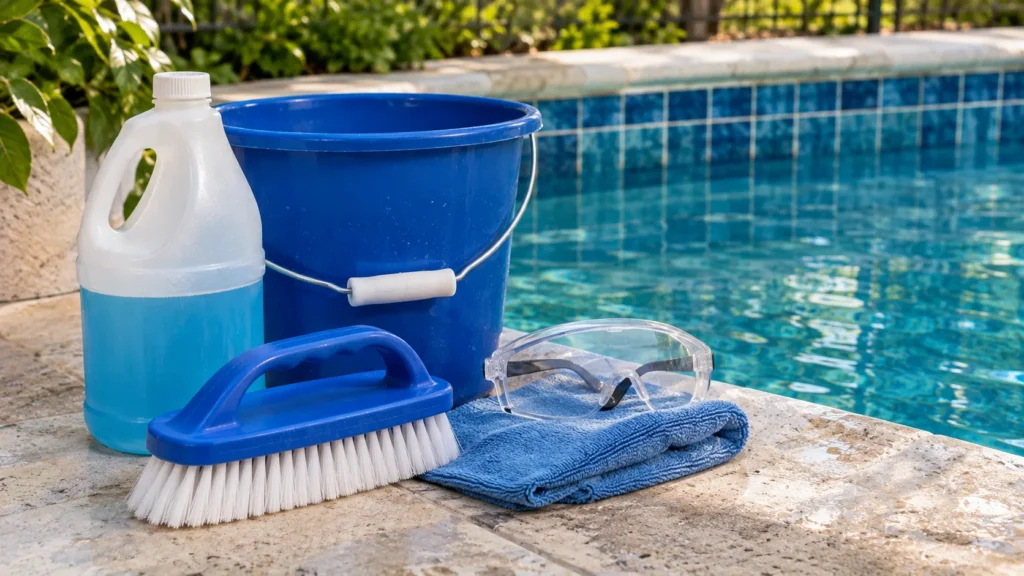
Equipment for Routine Home Maintenance
Most homeowners dealing with light buildup can begin with:
- A soft pool tile brush
- A cleaner approved for the tile and pool environment
- A nonabrasive sponge or cloth suitable for the surface
- A bucket and rinsing equipment, as permitted by the product instructions
- Appropriate gloves and eye protection where required by the cleaner label
A simple maintenance kit is usually more practical than buying specialist machinery for a one-time cleaning job.
Equipment for Heavy Scale Removal
Professional blasting systems and other specialized equipment can involve significant expense, training, and safety requirements. Buying such equipment may not be economical for an occasional residential project.
If you are considering a machine, compare the full operating requirements, including compatible media, maintenance, protective equipment, setup, and operator training. Confirm that the system is designed for the type of pool tile you own.
For many homeowners, hiring an experienced contractor is a more practical option for heavy buildup than purchasing commercial equipment.
Pool Tile Cleaning Cost: What Determines the Price?
The cost of pool tile cleaning varies by region, pool size, deposit severity, access, and the technique required. A pool with a thin layer of waterline residue may need only a short maintenance visit, while years of hardened calcium scale can require specialized equipment and more labor.
Factors That Affect the Quote
Length of the waterline: Some contractors price by the linear foot or meter of tile that needs treatment. A pool with a longer perimeter generally requires more work.
Severity of buildup: Light residue is usually easier to address than thick, hardened scale. Heavy deposits may need multiple passes or a specialist method.
Tile material: Glass, natural stone, ceramic, porcelain, and specialty finishes have different cleaning requirements. Delicate surfaces may require more cautious methods.
Cleaning technique: Manual cleaning, specialized chemical treatment, and abrasive equipment have different labor and operating costs.
Access and preparation: Difficult access, nearby landscaping, water-level adjustments, and protection of surrounding surfaces can affect the price.
Additional services: A quote may or may not include waterline cleaning, coping, grout inspection, debris removal, water balancing, or other maintenance tasks.
How to Compare Pool Tile Cleaning Quotes
Ask at least two qualified providers for an estimate based on the same area and type of work. A useful quote should identify the cleaning method, explain any restrictions, and state what is included in the final price.
Ask whether the contractor has experience with your specific tile finish and whether any damage risks are associated with the proposed method. Clarify if the pool must be drained or the water level lowered, who is responsible for handling the water, and whether the quote includes cleanup.
Be cautious of a price that seems unusually low but does not explain the technique or protect against damage to the finish. The cheapest service may not be the best value if the method is unsuitable for your tile.
Choosing a Pool Tile Cleaning Service
A professional pool tile cleaning service can be useful when deposits are thick, the surface is delicate, or repeated home cleaning has not worked. The most important factor is whether the provider understands the specific pool finish and can select an appropriate method.
Questions to Ask Before Hiring
- Do you regularly clean my type of pool tile?
- What causes the buildup you see, and how will you confirm it?
- Which cleaning method and media do you use?
- Could the process affect grout, coping, glass tile, or nearby metal fittings?
- Is water removal or a reduced pool level necessary?
- What is included in the estimate?
- Do you offer any written service terms or workmanship guarantees?
Ask the provider to explain why their method is appropriate rather than accepting a general claim that a process works on all pool tiles. If you have a specialty finish or natural stone, check the finish manufacturer’s care recommendations as well.
Residential and Commercial Pool Tile Cleaning
Residential pool cleaning often focuses on waterline deposits and maintaining the appearance of a backyard pool. Commercial pools, apartment complexes, hotels, and community facilities may have larger areas, stricter operating schedules, and additional safety requirements.
Commercial work may need to be planned around pool usage and facility procedures. Ask the service provider how the work will be scheduled, how the pool will be protected, and when it can safely return to use.
Pool Tile Cleaning in Arizona, Las Vegas, and Other Dry Regions
Searches for pool tile cleaning in Arizona, Las Vegas, Henderson, Mesa, Tempe, Phoenix, Palm Desert, and nearby communities often reflect a need to manage recurring waterline scale. In hot, dry climates, evaporation can leave dissolved minerals behind on pool surfaces, making regular inspection particularly useful.
The amount of buildup still depends on local water characteristics, pool operation, and maintenance. Location alone does not determine the correct cleaning method.
Pool Tile Cleaning in Phoenix and Mesa
Homeowners searching for Phoenix-area or Mesa pool tile cleaning should compare providers based on their experience with the installed tile, the type of deposits present, and the method proposed. Ask for a clear explanation of the treatment and any precautions needed for decorative or specialty surfaces.
Pool Tile Cleaning in Las Vegas and Henderson
For pools in Las Vegas and Henderson, a contractor may be able to assess whether the visible waterline deposits are mineral scale or another type of residue. Request a quote that explains the cleaning method and any preparation required.
Pool Tile Cleaning in Palm Springs and Palm Desert
When comparing services in Palm Springs, Palm Desert, or surrounding desert communities, ask whether the provider works with your specific tile and coping materials. A service designed for a hard ceramic tile may not be appropriate for every glass or natural-stone finish.
Finding a Local Pool Tile Cleaning Service
To find a suitable provider in your area, search using your city and the phrase pool tile cleaning service. Compare recent customer feedback, experience with similar pools, written estimates, and the clarity of the contractor’s explanation.
Do not select a service based on location or price alone. Compatibility with the tile and the ability to control the cleaning process are more important than a particular technique’s marketing name.
How to Prevent Pool Tile Scale From Returning
Removing existing deposits is only part of the solution. Regular pool care can help reduce recurring scale and make future cleaning easier.
Monitor Pool Water Chemistry
Have the pool water tested according to the pool system’s maintenance schedule. Keep pH, alkalinity, calcium hardness, and other relevant parameters within the ranges recommended for your pool and sanitizer system.
Scale formation depends on the interaction of these factors, not calcium hardness alone. If deposits repeatedly form, ask a qualified pool professional to assess the overall water balance rather than making large chemical adjustments based on appearance alone.
Wipe the Waterline Regularly
Inspect the waterline during routine maintenance. Removing fresh residue before it hardens can be easier than dealing with an established crust. Use a brush or cleaner approved for your tile.
Maintain Consistent Circulation and Filtration
Keep the circulation and filtration system operating according to the pool manufacturer’s guidance. Proper maintenance helps manage water quality, although circulation alone will not remove established calcium scale from tile.
Address Recurring Deposits
If scale quickly returns after cleaning, investigate the water chemistry and maintenance routine. Repeatedly using stronger cleaners without addressing the underlying conditions can increase the risk of damage without solving the problem.
Conclusion
Pool tile cleaning helps preserve the appearance of a swimming pool and remove the mineral deposits, oily residue, and dirt that accumulate around the waterline. Light buildup may respond to a soft brush and a compatible cleaner, while thick calcium scale can require specialized equipment or professional treatment.
Before choosing a cleaning chemical, pumice stone, abrasive method, or blasting service, confirm that it is suitable for your tile and grout. Maintain balanced pool water, inspect the waterline regularly, and deal with fresh deposits before they become difficult to remove. When scale is extensive or the finish is delicate, a qualified pool tile cleaning professional can help you choose a safer, more effective approach.
How often should pool tiles be cleaned?
Inspect the waterline regularly and clean light residue as it appears. The frequency of deeper cleaning depends on water chemistry, pool usage, weather, and how quickly deposits develop. Consistent maintenance can reduce the need for intensive scale removal.
What is the best way to clean pool tiles?
For light dirt and residue, start with a soft brush and a cleaner approved for your tile. Hardened calcium deposits may need a specialized treatment. The best method is the least aggressive option that effectively removes the buildup without damaging the finish.
How do you remove calcium deposits from swimming pool tiles?
Identify the tile material and deposit first. Try a compatible cleaner on a small area, following its instructions. If the deposit remains hard and thick, consult a pool tile cleaning professional about a suitable removal method.
Can I use muriatic acid for pool tile cleaning?
Muriatic acid is hazardous and can damage tile, grout, metals, and surrounding finishes if used incorrectly. Do not use it as an improvised household cleaner. Follow the product label and pool manufacturer’s instructions, and seek qualified help if an acid treatment is being considered.
Is glass bead blasting safe for pool tiles?
It can be suitable for some pool tiles when performed by a trained professional using compatible media and controlled equipment. It is not appropriate for every surface. Ask the contractor to confirm that the method suits your tile and grout before work begins.
Can I use a pumice stone on pool tile?
Only if the tile manufacturer permits it and the product is designed for that surface. Abrasive stones can scratch some finishes, including certain glass and polished surfaces. Test cautiously and stop if the surface shows damage.
What chemicals are used for swimming pool tile cleaning?
The product depends on the deposit and tile material. Pool-compatible cleaners may help with ordinary dirt and oily residue, while mineral scale may require a specialized treatment. Never mix cleaning chemicals, and do not allow a product to enter the pool water unless its instructions permit it.
How much does professional pool tile cleaning cost?
Pricing depends on the length of the waterline, severity of scale, tile material, cleaning method, accessibility, and local labor rates. Request a written quote that identifies the treatment and explains what is included.
Can pool tile be cleaned without draining the pool?
Some routine cleaning can be performed with the pool filled, depending on the method and product. Other treatments may require lowering the water level or special precautions. Follow the pool and cleaner manufacturers’ instructions and confirm the requirements with your contractor.
Why do white deposits keep appearing on my pool tiles?
White deposits may be calcium scale left behind as water evaporates. Water chemistry and the pool’s operating conditions influence how quickly scale forms. If it keeps returning, have the water balance assessed instead of repeatedly applying stronger cleaners.
Is a pool tile cleaning service worth hiring?
Professional cleaning can be worthwhile when scale is heavy, the tile is delicate, or ordinary maintenance has not worked. A qualified provider can assess the surface and select a suitable technique. Compare the proposed method, experience, and scope of work before hiring.
Can regular brushing prevent calcium scale?
Regular brushing can help remove loose dirt and fresh residue, but it cannot guarantee that calcium scale will not form. Maintaining appropriate water chemistry and responding to deposits early are also important.