
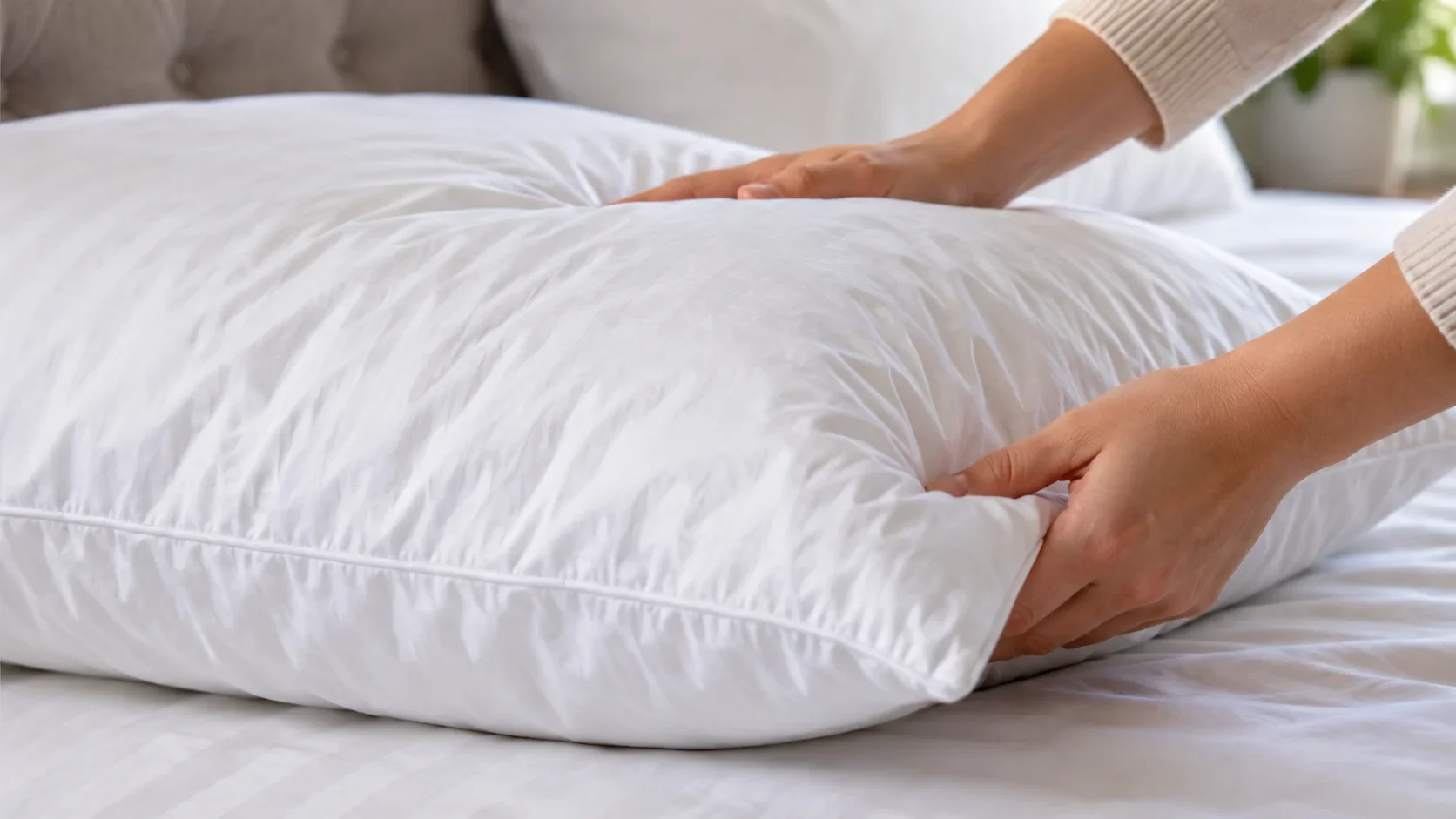
Pillows collect much more than visible dust. Over time, they can absorb sweat, body oils, skin cells, spills, odors, and other everyday debris, leaving them stained, yellowed, flat, or simply less fresh. The right way to clean a pillow depends heavily on its filling, cover, construction, and care label. A washable polyester pillow can usually be treated very differently from a solid memory foam pillow or a delicate decorative cushion.
Learning how to clean pillows starts with identifying what kind of pillow you have and whether the entire pillow can safely be washed. Many synthetic, down, and feather pillows can be machine washed when their care labels permit it, while solid memory foam generally should not go into a washing machine. This guide explains how to clean different pillow types, how to deal with yellowing and stains, how to clean pillows without washing, and how to dry them properly without damaging the filling.
How to Clean Pillows: Start With the Care Label
Before putting any pillow into water, check its sewn-in care label. This is the most important step because two pillows that look almost identical may have completely different cleaning requirements.
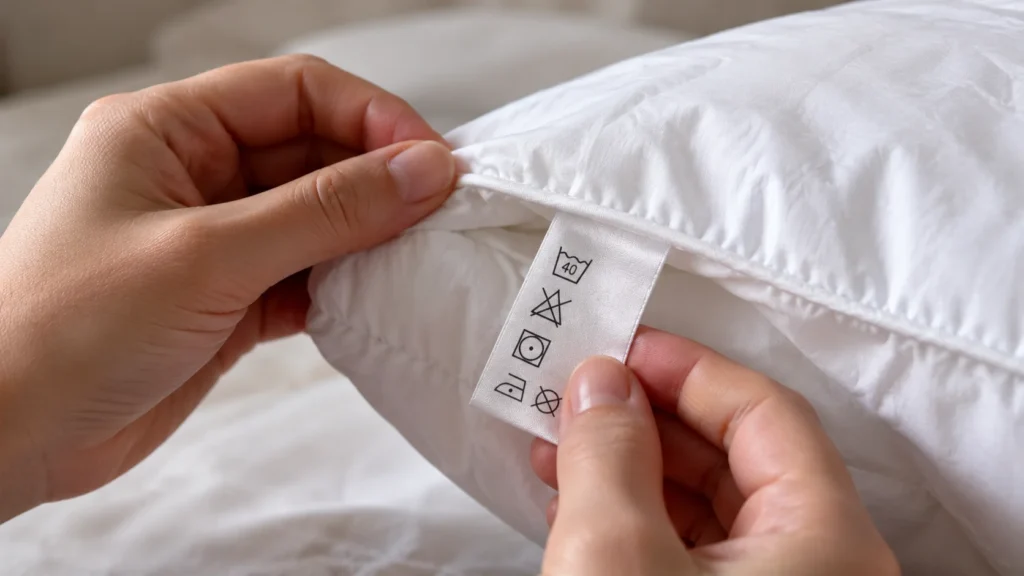
The label may specify machine washing, hand washing, spot cleaning, or dry cleaning only. Sleep Foundation also recommends checking the tag first because some pillows can be damaged by water, agitation, bleach, or unsuitable detergents.
- Remove the pillowcase and any removable protective cover.
- Look for washing temperature instructions.
- Check whether machine washing is permitted.
- Look for a “hand wash” instruction.
- Check whether the pillow says “spot clean only.”
- Follow any “dry clean only” instruction.
- Identify whether the filling is down, feather, polyester, foam, or another material.
- Check the drying instructions before beginning.
- Never assume a decorative pillow is washable simply because its cover looks like ordinary fabric.
- Test questionable fabrics in a small hidden area first.
- Avoid bleach unless the manufacturer specifically permits it.
- Do not use harsh chemicals simply because a pillow has heavy staining.
- Keep the original care instructions available during the cleaning process.
- If the label is missing, identify the filling before choosing a cleaning method.
- When manufacturer instructions conflict with general cleaning advice, follow the manufacturer’s instructions.
How to Clean Bed Pillows in the Washing Machine
Machine washing is convenient for pillows that are specifically labeled machine washable. Synthetic-filled, down, and some feather pillows may be suitable for this method, but the exact instructions vary by product. recommends washing compatible pillows in pairs when possible to help balance the washer.
For a washable bed pillow, remove the case and inspect the pillow for tears before washing. A small opening can become much larger during agitation and allow filling to escape into the washer.
- Wash two similar pillows together when possible.
- Use a gentle or delicate cycle.
- Choose the warmest temperature allowed by the care label.
- Use a small amount of suitable liquid laundry detergent.
- Avoid excessive detergent because it can create excess suds and leave residue.
- Use an extra rinse if your machine provides that option.
- Do not automatically choose the bulky cycle.
- Check the pillow after washing for remaining stains.
- Make sure the pillow has been thoroughly rinsed.
- Remove the pillow from the washer promptly.
- Dry according to the care label.
- Fluff the pillow periodically while it dries.
- Never store the pillow while its interior is still damp.
- Check seams again after washing.
- Put the clean pillow back into a clean, dry protective cover.
specifically recommends a gentle cycle, a small amount of detergent, and complete drying for compatible synthetic, down, and feather pillows.
How to Clean Pillows Without a Washing Machine
If you do not have a washing machine, or your pillow is labeled for hand washing, you can clean it using a bathtub, sink, basin, or another suitably clean container. Hand washing gives you more control over agitation, but rinsing a large pillow thoroughly can require considerable effort.
recommends filling a suitable basin with warm water, dissolving a small amount of detergent, gently working the pillow through the water, and rinsing until the water is no longer soapy.
- Fill a clean bathtub or basin with enough warm water to submerge the pillow.
- Add a small amount of mild laundry detergent.
- Mix the detergent into the water before adding the pillow.
- Lower the pillow into the water gradually.
- Press it gently so the cleaning solution reaches the filling.
- Avoid aggressive twisting.
- Let the pillow soak only as long as its care instructions allow.
- Drain the dirty water.
- Refill the basin with clean water.
- Press the pillow gently to release detergent.
- Repeat rinsing until no visible soap remains.
- Do not wring a delicate pillow aggressively.
- Press excess water out carefully.
- Wrap the pillow in a clean towel to absorb additional moisture.
- Dry it completely before using it again.
This method is especially useful when learning how to clean pillows without washing machine access, but it is not appropriate for every pillow. Solid foam pillows, for example, require a different approach.
How to Clean Feather Pillows Safely
Feather pillows need careful handling because their filling can clump when exposed to excessive moisture, heat, or unsuitable cleaning products. Some feather pillows are washable, while others have specific professional-cleaning requirements.
If the care label permits washing, Sleep Foundation recommends a delicate setting, mild detergent, limited soap, an additional rinse, and careful drying. It also advises against wringing feather or down pillows.
- Check the manufacturer’s instructions first.
- Inspect the pillow for damaged seams.
- Use a mild detergent approved for the material.
- Avoid using excessive detergent.
- Select a delicate cycle when machine washing is permitted.
- Use cool or warm water according to the care label.
- Avoid unnecessarily hot water.
- Add an extra rinse if recommended.
- Remove excess water without twisting the pillow.
- Use low heat only when the label permits machine drying.
- Fluff the pillow between drying cycles.
- Break up developing clumps gently.
- Continue drying until the center is completely dry.
- Never put a damp feather pillow back on the bed.
- Follow professional-cleaning instructions if the label requires them.
How to Clean Down Pillows at Home
Down pillows can often be washed, but the manufacturer’s instructions should take priority. Down requires careful drying because moisture trapped inside the filling can create problems even when the exterior feels dry.
When a down pillow is washable, gentle handling and thorough drying are more important than using aggressive cleaning chemicals. Sleep Foundation recommends mild detergent, delicate washing, additional rinsing, and low-temperature drying when appropriate.
- Remove the pillowcase and protector.
- Examine the shell for holes.
- Repair or professionally address damaged seams before washing.
- Use only the amount of detergent recommended for the load.
- Choose a delicate cycle.
- Avoid harsh agitation.
- Rinse thoroughly.
- Do not wring the pillow.
- Remove as much excess water as reasonably possible.
- Use low heat if the label permits it.
- Fluff the pillow periodically.
- Separate clumps gently.
- Continue drying until no damp areas remain.
- Allow additional air circulation after machine drying if needed.
- Store the pillow only when completely dry.
How to Clean Throw Pillows and Decorative Pillows
Throw pillows and decorative pillows can have removable covers, delicate fabrics, decorative stitching, embroidery, faux fur, piping, beads, or fillings that should not be submerged. Cleaning the cover and the insert separately is often safer than washing the entire pillow.
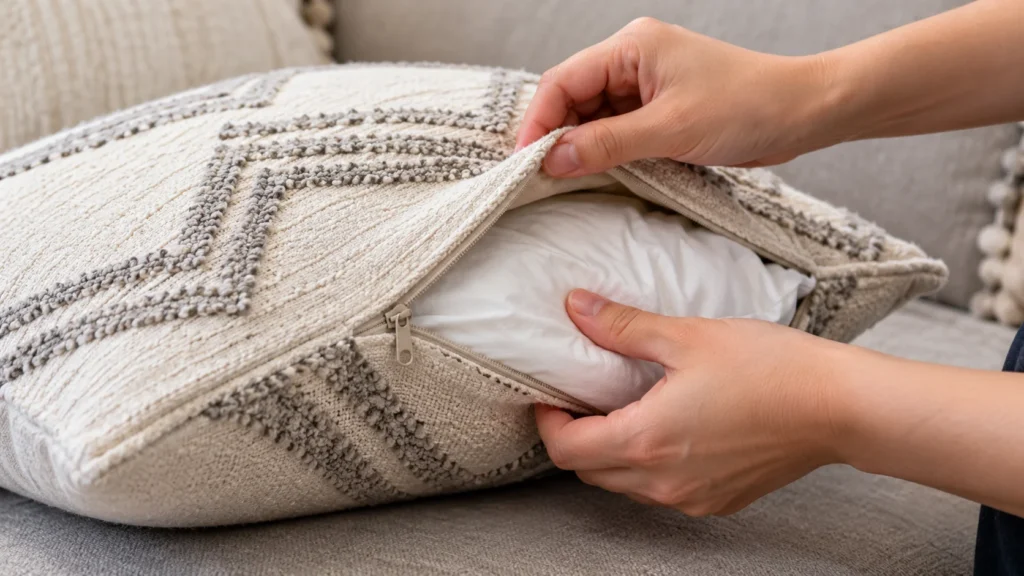
Sleep Foundation recommends following the specific care instructions for specialty pillows and using gentle methods for fragile materials.
- Remove the cover if it has a zipper.
- Check the cover’s care label separately.
- Check the insert’s label as well.
- Vacuum loose dust before wet cleaning.
- Shake outdoor or washable inserts outdoors when appropriate.
- Spot clean small marks instead of washing the whole pillow unnecessarily.
- Protect decorative stitching from aggressive brushing.
- Avoid soaking embellished covers.
- Test cleaning solutions on hidden areas.
- Use a soft cloth for delicate fabrics.
- Blot stains instead of rubbing them aggressively.
- Rinse only when the fabric allows it.
- Keep moisture away from materials that are not water-safe.
- Dry covers and inserts completely.
- Reassemble the pillow only after everything is fully dry.
How to Clean Throw Pillows Without Removable Covers
A throw pillow with no zipper requires extra caution because the cover and stuffing cannot be separated. The safest approach is usually to determine whether the entire pillow is washable before attempting a deep clean.
- Read the complete care label.
- Vacuum surface dust first.
- Identify the fabric type.
- Check whether the filling is washable.
- Spot test an inconspicuous area.
- Use a small amount of suitable cleaning solution.
- Apply moisture gradually.
- Blot rather than saturating the pillow.
- Work from the outside of a stain toward its center.
- Avoid soaking dense stuffing unnecessarily.
- Use a clean damp cloth to remove residue when appropriate.
- Press with a dry towel to extract moisture.
- Improve airflow around the pillow while drying.
- Turn the pillow periodically.
- Make sure the center is dry before use.
How to Clean Foam and Memory Foam Pillows
Solid memory foam pillows should not be treated like polyester or feather pillows. states that memory foam should not be machine washed because washing can damage the foam. Sleep Foundation likewise advises against machine washing solid memory foam because the foam can crack or degrade.
For this reason, how to clean memory foam pillows usually means surface cleaning rather than putting the entire pillow into a washer.
- Remove the pillowcase and washable protector.
- Vacuum loose debris from the foam surface gently.
- Treat small stains with a suitable mild cleaning solution.
- Dampen a cloth rather than flooding the foam.
- Blot the affected area.
- Avoid aggressive scrubbing.
- Do not twist the foam.
- Do not put solid memory foam in a washing machine.
- Do not put solid memory foam in a dryer unless specifically approved.
- Avoid soaking the entire foam core.
- Press with a clean towel to absorb moisture.
- Allow plenty of ventilation.
- Keep the foam away from excessive heat.
- Wait until the foam is completely dry before covering it.
- Follow the manufacturer’s care instructions for specialized foam.
How to Clean Pillows Without Washing
Sometimes the pillow does not need a full wash. If the problem is surface dust, a mild odor, or a small localized mark, dry or spot cleaning may be more appropriate.
This approach is particularly useful for pillows that are labeled spot clean only or contain materials that should not be submerged.
- Remove the pillowcase.
- Vacuum surface dust using an appropriate attachment.
- Air the pillow in a clean, well-ventilated location.
- Spot clean visible marks.
- Use a clean, slightly damp cloth where the fabric permits.
- Blot instead of rubbing.
- Use baking soda only when compatible with the pillow manufacturer’s care instructions.
- Allow any applied moisture to evaporate completely.
- Keep delicate decorative details dry when required.
- Avoid saturating foam.
- Do not use household chemicals indiscriminately.
- Do not combine multiple cleaning products.
- Inspect the pillow after treatment.
- Repeat gentle spot treatment rather than immediately soaking the pillow.
- Wash the removable cover separately when possible.
How to Clean Yellow Pillows and Yellowed Pillows
Yellowing is one of the most common reasons people search for how to clean yellow pillows. Pillow discoloration can develop as a result of repeated exposure to sweat, body oils, and everyday use. ‘s recent pillow-washing test found that a washable pillow treated with warm water, a delicate cycle, a small amount of detergent, and a second rinse produced better results than its cold-water and hand-washing tests.
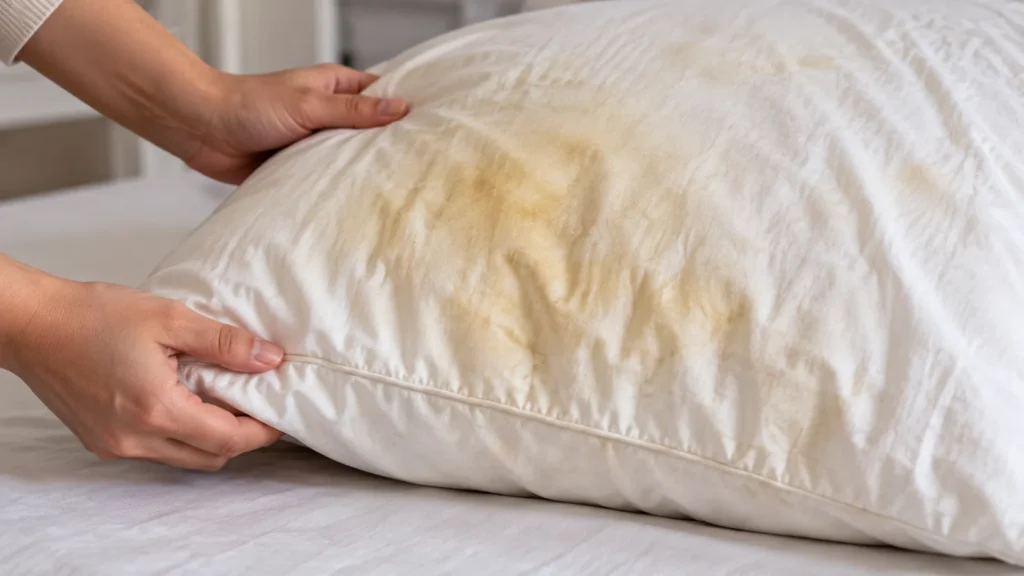
However, yellowing should not automatically be treated with aggressive bleaching. First determine whether the pillow can be washed and what products its care label permits.
- Check the care label before treating yellow stains.
- Remove the pillowcase and protector.
- Pretreat only if the fabric allows it.
- Use an appropriate laundry detergent.
- Choose the permitted water temperature.
- Use a gentle cycle for washable pillows.
- Consider an extra rinse.
- Avoid chlorine bleach unless the manufacturer permits it.
- Do not combine different cleaning chemicals.
- Do not assume every yellow stain can be completely removed.
- Check the pillow after washing.
- Repeat a compatible cleaning method only if necessary.
- Dry the pillow completely.
- Avoid excessive heat.
- Replace the pillow if persistent discoloration accompanies deterioration or damage.
How to Clean Pillows With Baking Soda
Baking soda is commonly used in household cleaning because it can help with odors, but it should not be treated as a universal pillow-cleaning solution. Whether you should use it depends on the pillow’s material and manufacturer instructions.
Leesa recommends adding baking soda alongside laundry detergent for some washable pillows, particularly as part of its general washing guidance.
- Check the care label first.
- Use baking soda only when appropriate for the pillow.
- Do not assume more is better.
- Avoid applying loose powder to foam if the manufacturer advises against it.
- Keep baking soda away from decorative details that could trap powder.
- Use a suitable detergent when the pillow needs actual washing.
- Treat odors separately from visible stains.
- Vacuum or shake out loose powder thoroughly when appropriate.
- Do not mix baking soda with random household chemicals.
- Avoid creating a paste unless the fabric permits wet spot treatment.
- Test a small area first.
- Rinse thoroughly when the treatment requires rinsing.
- Dry the pillow completely.
- Check for remaining odor after drying.
- Follow the manufacturer’s instructions over generic cleaning hacks.
How to Clean Couch and Sofa Pillows With Stuffing
Couch pillows are exposed to food crumbs, dust, skin oils, pets, drinks, and frequent handling. Some have removable covers while others are constructed as a single piece. The safest cleaning method depends on the fabric and filling.
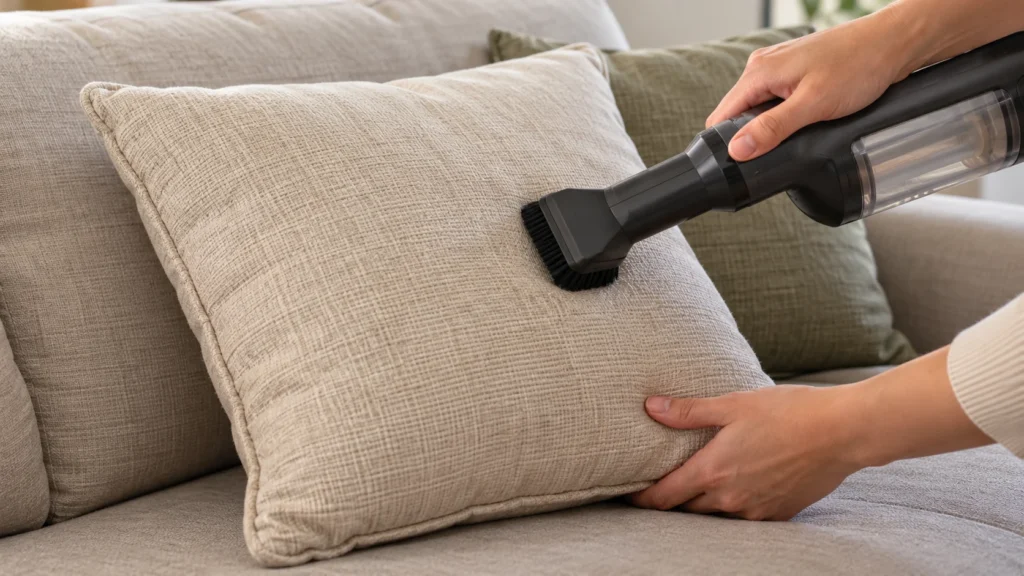
For how to clean couch pillows without removable covers, start with dry debris removal and spot treatment rather than automatically soaking the entire cushion.
- Vacuum the entire pillow.
- Pay attention to seams and piping.
- Remove loose crumbs before applying moisture.
- Check the upholstery care code or manufacturer’s instructions.
- Test any cleaner in an inconspicuous area.
- Blot spills quickly.
- Avoid saturating dense stuffing.
- Work gently around seams.
- Use a soft cloth where appropriate.
- Keep zippers and decorative elements protected.
- Avoid excessive rubbing.
- Extract moisture with clean towels.
- Increase airflow during drying.
- Rotate the pillow while it dries if appropriate.
- Never cover or reuse a damp cushion.
How to Spot Clean Pillows and Stained Pillows
Spot cleaning is often the best choice when a pillow has one small stain but does not require complete washing. It reduces unnecessary exposure to water and agitation.
The cleaning solution should always be compatible with the specific fabric. For an unfamiliar or delicate textile, test an inconspicuous area before treating the visible stain.
- Remove loose debris first.
- Identify the stain if possible.
- Read the fabric care instructions.
- Test the cleaning method in a hidden area.
- Apply a small amount of solution to a cloth.
- Blot the stain gently.
- Avoid aggressively rubbing the fabric.
- Work from the outside toward the center.
- Use a separate clean area of the cloth as the stain transfers.
- Avoid oversaturating the stuffing.
- Remove residue according to the product instructions.
- Press with a dry towel.
- Let the area dry completely.
- Check the fabric under good lighting.
- Repeat only if the material permits additional treatment.
Jump into Other Related Article
- How to Remove Peanut Butter Stains
- Does Rayon Shrink?
- How to Remove Coffee Stains
- How to Clean Suede Shoes
- Best Stain Remover for Clothes
- How to Clean Stainless Steel
How to Clean Outdoor Pillows
Outdoor pillows require a different approach because their covers may be made from performance fabrics designed to resist water, stains, UV exposure, mold, and mildew. Sunbrella, for example, describes its outdoor pillow fabrics as water- and stain-resistant and designed for easy cleaning with gentle soap and water.
If your outdoor pillows are made with Sunbrella fabric, the manufacturer’s cleaning guidance should take priority over generic upholstery advice.
- Remove loose dirt and leaves.
- Brush away surface debris gently.
- Check the fabric’s care instructions.
- Identify whether the cover can be removed.
- Use a compatible mild cleaning method.
- Gently agitate soiled areas when permitted.
- Rinse thoroughly where the fabric instructions allow it.
- Avoid unnecessary harsh chemicals.
- Test unfamiliar cleaners first.
- Blot excess water.
- Allow the pillow to air dry fully.
- Keep the pillow ventilated while drying.
- Do not store it while damp.
- Check for mildew or persistent stains.
- Follow the outdoor-fabric manufacturer’s instructions for difficult stains.
Sunbrella’s own cleaning instructions recommend removing excess debris or liquid, gently agitating soiled areas, rinsing or wiping as appropriate, blotting excess water, and air drying.
How to Clean Faux Fur Pillows
Faux fur can lose its texture when exposed to excessive heat, aggressive agitation, or unsuitable cleaning products. Because construction varies significantly, the care label should determine whether the entire pillow or only the cover can be washed.
- Check the care label.
- Remove the cover if possible.
- Shake out loose debris gently.
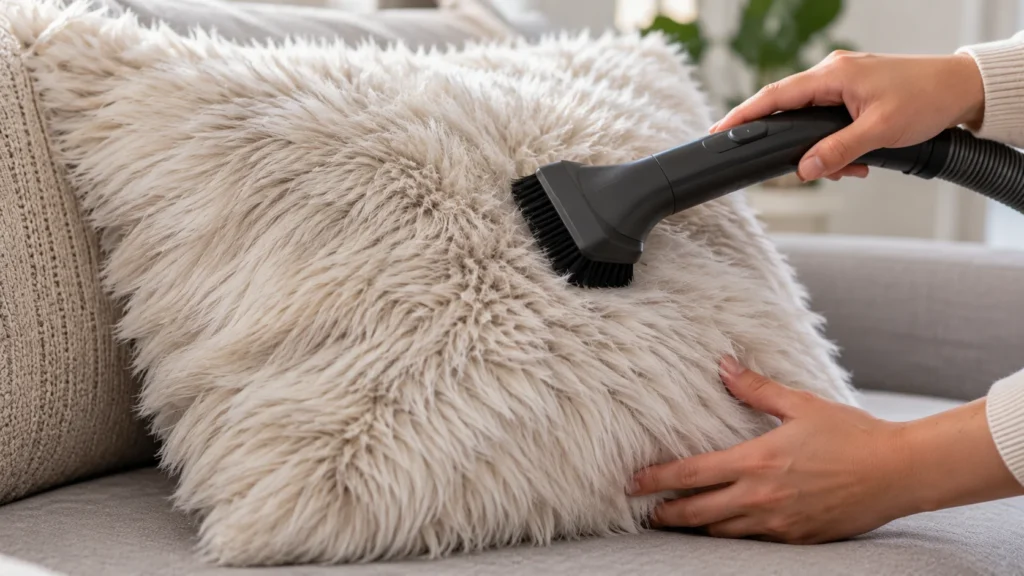
- Vacuum with an appropriate low-power attachment if suitable.
- Spot test any cleaning solution.
- Avoid aggressive brushing before cleaning.
- Use only compatible detergent.
- Avoid high heat.
- Avoid chlorine bleach unless specifically approved.
- Do not wring the faux fur.
- Press water out gently.
- Reshape the pillow while damp when appropriate.
- Allow adequate airflow.
- Follow the label for machine drying.
- Brush or restore the pile only after it is fully dry and the manufacturer’s instructions permit it.
How to Clean Pillows After Lice
If a pillow has been exposed to head lice, cleaning should be based on the applicable health guidance and the material’s care instructions rather than simply soaking it in household chemicals. Washable bedding and pillowcases should be handled according to their laundering instructions, while items that cannot be washed may require a different approach.
- Remove the pillowcase carefully.
- Avoid unnecessary shaking that could spread debris.
- Wash the removable cover according to its care label.
- Determine whether the pillow itself is washable.
- Follow appropriate lice-control guidance.
- Do not apply insecticides to pillows unless specifically labeled and directed for that use.
- Do not mix cleaning chemicals.
- Avoid soaking non-washable materials.
- Machine wash washable pillows only when their care label permits.
- Dry washable items according to their instructions.
- Keep clean items separated from items awaiting treatment.
- Clean other bedding according to appropriate guidance.
- Vacuum surrounding areas as appropriate.
- Do not use extreme heat on materials that cannot tolerate it.
- Replace heavily damaged or unsuitable pillows when cleaning is not practical.
How to Deep Clean Pillows
A deep clean should mean a thorough, material-appropriate cleaning process—not simply using more detergent or harsher chemicals. For machine-washable pillows, it may involve washing, an additional rinse, careful drying, and inspection.
- Read the care label.
- Remove all washable covers.
- Vacuum surface debris.
- Inspect seams and filling.
- Pretreat compatible stains.
- Wash only if the pillow is washable.
- Use the recommended detergent amount.
- Select the appropriate cycle.
- Use the correct water temperature.
- Add an extra rinse when appropriate.
- Remove excess water carefully.
- Dry according to manufacturer instructions.
- Fluff the pillow periodically if appropriate.
- Check the interior for remaining moisture.
- Reassemble only when every component is clean and dry.
How Often Should You Clean Your Pillows?
There is no single schedule that fits every pillow. Usage, material, climate, protective covers, and manufacturer instructions all matter. recommends washing compatible pillows at least twice a year, while the American Cleaning Institute’s allergy guidance recommends washing pillows at least four times a year when dust-mite-proof covers are not being used.
A practical schedule is therefore to check your pillow’s care instructions and increase cleaning frequency when the pillow experiences heavy sweating, visible staining, frequent use, or other conditions that make more frequent cleaning appropriate.
| Pillow situation | Practical cleaning approach |
| Regular bed pillow | Wash according to label at regular intervals |
| Frequently used pillow | Consider more frequent cleaning |
| Throw pillow | Clean according to use and fabric |
| Decorative pillow | Prefer cover washing or spot cleaning when appropriate |
| Memory foam | Usually spot clean; follow manufacturer instructions |
| Feather/down | Wash only if label permits |
| Outdoor pillow | Follow performance-fabric instructions |
| Pillow with visible stain | Spot treat or wash if compatible |
| Pillow with removable cover | Clean cover separately when appropriate |
| Dry-clean-only pillow | Use professional cleaning |
Common Mistakes When Cleaning Pillows
Many pillow-cleaning problems happen because people treat every pillow like ordinary laundry. The same process that works for a washable polyester pillow can damage foam, delicate decorative fabric, or specialty filling.
- Washing a pillow without checking its care label.
- Putting solid memory foam in the washing machine.
- Using too much detergent.
- Choosing an unnecessarily aggressive wash cycle.
- Using excessive heat.
- Failing to rinse detergent completely.
- Wringing feather or down pillows.
- Drying only the outer surface while the center remains damp.
- Using bleach without checking compatibility.
- Mixing cleaning chemicals.
- Scrubbing delicate fabrics too hard.
- Soaking decorative pillows unnecessarily.
- Ignoring damaged seams before washing.
- Storing pillows before they are completely dry.
- Assuming yellowing always requires a harsh chemical treatment.
How to Keep Pillows Cleaner for Longer
Regular maintenance can reduce the amount of deep cleaning a pillow needs. Pillowcases and protective covers create a barrier between the pillow and everyday oils, sweat, dust, and spills.
- Use a washable pillow protector.
- Wash pillowcases regularly.
- Clean removable covers according to their labels.
- Air pillows when appropriate.
- Keep pillows away from unnecessary moisture.
- Address spills quickly.
- Vacuum suitable pillows periodically.
- Rotate pillows when appropriate.
- Fluff compatible pillows regularly.
- Keep outdoor pillows protected from prolonged unnecessary exposure.
- Avoid sleeping directly on decorative pillows.
- Keep pets from heavily soiling pillows.
- Inspect seams periodically.
- Replace severely deteriorated pillows.
- Follow the manufacturer’s long-term care instructions.
How to Properly Clean Pillows: Quick Checklist
Use this checklist whenever you need to clean a pillow but are unsure where to begin.
- Identify the pillow type.
- Read the care label.
- Remove the pillowcase.
- Remove a washable protective cover.
- Inspect the seams.
- Remove loose dust and debris.
- Decide between washing and spot cleaning.
- Check whether the pillow is machine washable.
- Use a suitable detergent.
- Select the correct cycle.
- Use the recommended water temperature.
- Rinse thoroughly.
- Dry according to the care instructions.
- Check the entire pillow for hidden moisture.
- Put it back into use only when completely clean and dry.
Conclusion
Knowing how to clean pillows properly is less about finding one universal cleaning recipe and more about matching the method to the pillow. Machine-washable synthetic, down, and some feather pillows can generally be cleaned using a gentle cycle, suitable detergent, thorough rinsing, and careful drying when their labels permit it. Decorative, outdoor, foam, and specialty pillows often need more targeted treatment, while solid memory foam should not be placed in a washing machine.
The safest routine is simple: check the label, identify the filling, remove loose debris, choose the least aggressive method that can accomplish the job, and make sure the pillow dries completely. Whether you need to clean throw pillows, feather pillows, down pillows, yellow pillows, couch pillows, decorative pillows, outdoor pillows, or pillows without a washing machine, careful material-specific cleaning will help protect both the appearance and structure of the pillow.
1. Can you wash pillows in the washing machine?
2. How do you clean pillows without washing them?
Vacuum or remove loose surface debris, air the pillow when appropriate, and spot clean small stains using a compatible method. This is particularly useful for pillows labeled spot clean only or materials that should not be submerged.
3. How do you clean yellow pillows?
For washable pillows, follow the care label and use an appropriate detergent and washing cycle. Yellowing can result from accumulated sweat and body oils, but aggressive bleaching is not automatically the best solution. A recent test found that warm-water machine washing on a delicate cycle with limited detergent and an additional rinse produced strong results on the washable pillows tested.
4. Can you wash memory foam pillows?
5. How often should pillows be cleaned?
The ideal frequency depends on the pillow and how it is used. recommends washing compatible pillows at least twice a year, while the American Cleaning Institute recommends washing pillows at least four times a year in its dust-mite-control guidance when protective covers are not used. Always prioritize the manufacturer’s care instructions.