
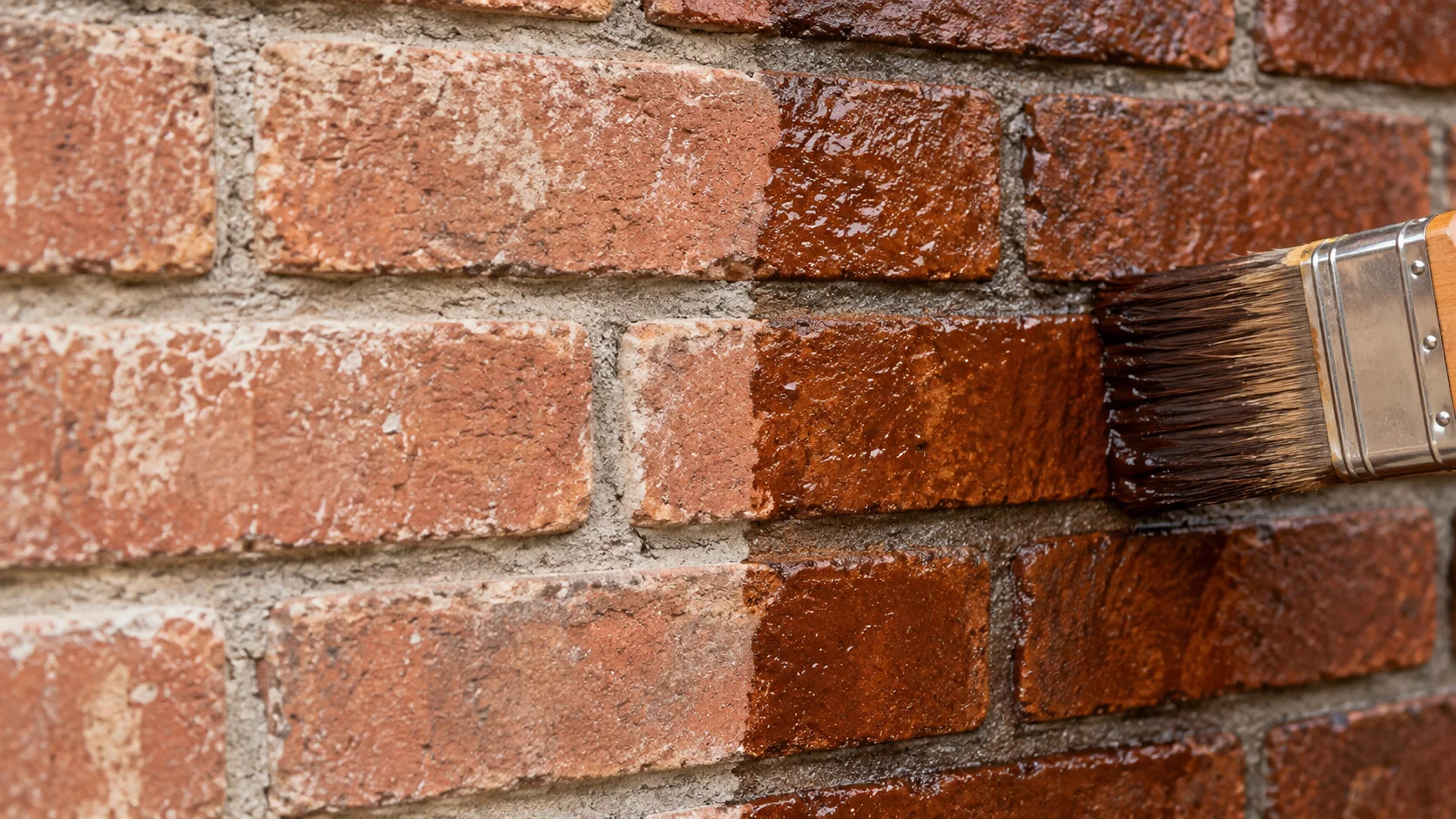
Choosing the right brick stain colors can change the appearance of a brick wall, fireplace, patio, walkway, or entire home while preserving much of the masonry’s natural texture. Unlike conventional paint, masonry stain is designed to work with porous surfaces, and the final appearance depends on the original brick, stain transparency, application method, lighting, and surface texture. Sherwin-Williams notes that brick is considerably more porous than concrete and that its original color influences the final stained appearance.
Brick stain is available in a broad range of looks, from white and off-white to beige, taupe, brown, gray, charcoal, red, and darker architectural shades. Some systems offer semi-transparent results that allow the original brick to remain visible, while more opaque products can produce a stronger color transformation. The right choice therefore depends not only on the color name but also on how much of the existing brick you want to see.
For homeowners searching for exterior brick stain colors, brick stain colors before and after, fireplace brick stain colors, brick paver stain colors, or stain colors for red brick, the most important step is to evaluate the actual masonry before selecting a shade. A color shown on a screen or printed chart may look different on your particular brick. BrickImaging specifically warns that monitor settings can affect color representation and recommends physical samples or charts for more accurate evaluation.
This guide covers popular brick stain color families, exterior and interior applications, fireplace and paver options, red brick combinations, Sherwin-Williams and Stayntech examples, before-and-after expectations, and practical selection tips.
Understanding Brick Stain Colors
Brick stain colors are not simply surface colors placed over masonry like ordinary paint. A masonry stain interacts with the pores and texture of the brick, which means the existing surface influences the finished appearance. Two homes using the same stain color can therefore produce noticeably different results.
Sherwin-Williams explains that different brick types have different levels of porosity and that the original brick color contributes to the final result. Burnt clay brick, for example, can range from red and orange to brown, white, yellow, blue, or silver, while other masonry types have their own natural color ranges.
The transparency of the stain also matters. A semi-transparent stain can refresh or modify the existing color while retaining more of the brick’s natural character. An opaque stain creates a much stronger transformation and can be useful when the goal is to substantially change an outdated masonry color.
Texture affects the appearance as well. Brick with deep grooves, irregular faces, rough surfaces, or pronounced mortar joints can absorb and reflect stain differently from smooth brick. BrickImaging notes that masonry texture can influence stain absorption and light reflection, meaning the same stain can look somewhat different on different brick surfaces.
15 Factors That Influence the Final Brick Stain Color
- Original brick color
- Brick porosity
- Brick texture
- Mortar color
- Stain transparency
- Number of stain coats
- Application method
- Natural sunlight
- Artificial lighting
- Surrounding trim colors
- Roof color
- Door and window colors
- Landscaping
- Surface preparation
- Physical sample testing
Because these factors interact, a color name alone should never be treated as a guarantee of the final appearance.
Exterior Brick Stain Colors for Homes
Exterior brick stain colors should coordinate with the complete exterior rather than being selected in isolation. The roof, trim, garage door, front door, landscaping, shutters, stonework, and other masonry can all influence whether a particular brick color feels balanced.
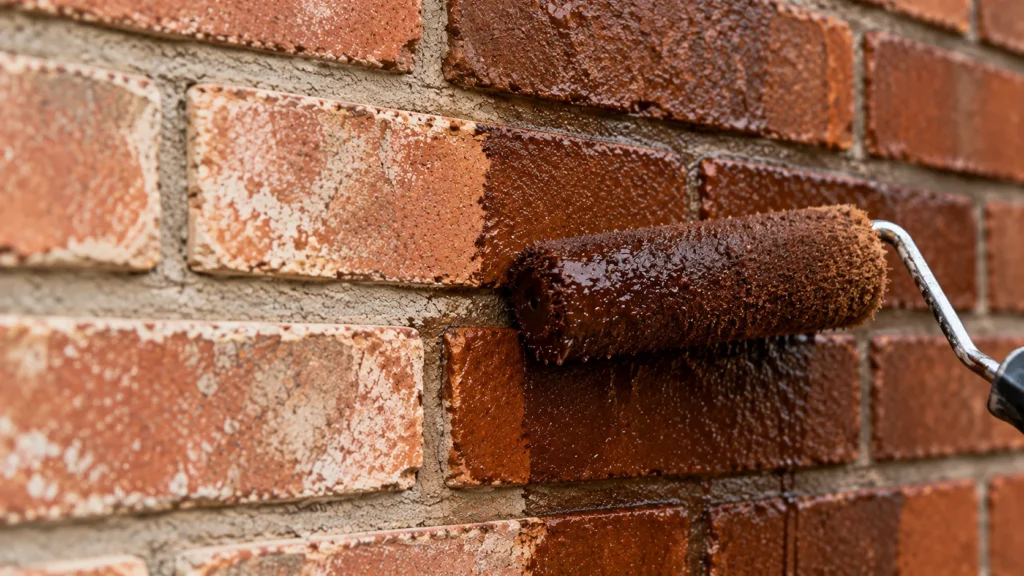
For a traditional exterior, homeowners often consider warm neutrals, earthy browns, muted reds, creams, and soft off-whites. Contemporary homes may use light gray, medium gray, charcoal, slate, or carefully selected white shades.
Sherwin-Williams recommends considering the surrounding environment when choosing brick stain, including roof, door, and window-frame colors. It also suggests deciding how much color transformation is actually desired before selecting between more transparent and more opaque options.
A large exterior wall can visually dominate the property, so a dramatic color deserves particularly careful testing. Lighter shades can make masonry appear brighter, while darker shades can create a more substantial architectural appearance.
15 Exterior Brick Stain Color Ideas
- Soft white
- Warm off-white
- Cream
- Light beige
- Sand
- Taupe
- Warm gray
- Cool gray
- Medium gray
- Slate gray
- Charcoal
- Deep brown
- Muted red
- Terracotta
- Gray-brown
These are color families rather than universal product color names. Actual product palettes differ by manufacturer, and the same family can look substantially different depending on the original brick.
White Brick Stain Colors
White brick stain colors are frequently considered when homeowners want a brighter, cleaner exterior without completely hiding the texture of the masonry. White can create a modern farmhouse appearance, a traditional light-colored exterior, or a simple neutral backdrop.
There is an important distinction between pure white and warmer off-white shades. A bright white can produce a crisp appearance, while a warmer white may soften a strongly red or orange brick exterior.
Stayntech, for example, offers both White and Hidden White in its masonry stain collection. The company describes White as a clean, bright shade, while Hidden White is a warmer off-white with a slight gray character.
White staining can also be particularly sensitive to the underlying brick. Red, brown, or dark masonry may influence the perceived warmth or depth of the finished color. A sample area is therefore especially important when working toward a light result.
15 White and Off-White Brick Color Directions
- Pure white
- Soft white
- Warm white
- Cool white
- Off-white
- Cream white
- Gray-white
- Antique white
- Ivory
- Linen
- Soft cream
- White with gray undertones
- White with beige undertones
- Warm architectural white
- Muted white
For exterior projects, compare the chosen white against the roof, trim, windows, and mortar before committing to the full surface.
Gray Brick Stain Colors
Gray has become a common direction for modernizing brick because it can create a contemporary appearance without necessarily making the masonry look completely flat. The right gray depends on whether you want a cool, neutral, warm, or charcoal appearance.
Light gray brick stain colors can provide a subtle update while maintaining a relatively bright exterior. Medium gray can create more contrast, while dark charcoal produces a much stronger architectural statement.
Stayntech’s documented palette includes Moon Dust, Metro, Cozy Gray, Slate, and Ironclad, demonstrating how much variation exists even within a gray-oriented collection. Moon Dust is described as a light gray, Metro as a medium gray, Cozy Gray as a warmer gray with taupe undertones, Slate as a cooler gray with blue undertones, and Ironclad as a deep charcoal-gray option.
The original brick remains important because a warm red brick underneath can influence how a gray stain is perceived. Testing several shades on the actual wall is more reliable than choosing solely from a digital color card.
15 Gray Brick Stain Directions
- Mist gray
- Light neutral gray
- Warm gray
- Cool gray
- Silver gray
- Soft charcoal
- Medium gray
- Concrete gray
- Blue-gray
- Taupe-gray
- Greige
- Slate
- Deep slate
- Charcoal
- Warm charcoal
Gray can work particularly well with white trim, natural wood, black accents, stone landscaping, and neutral roofing.
Stain Colors for Red Brick
Stain colors for red brick require special consideration because red masonry already contains strong warm undertones. The goal may be to preserve the red character, soften it, neutralize it, or move toward an entirely different color family.
A transparent or lightly pigmented stain can deepen or modify existing red tones while retaining more of the original variation. Brown, terracotta, muted red, and warm earth tones can reinforce the existing palette.
If the goal is to move away from traditional red brick, gray, taupe, off-white, or charcoal may create a more significant transformation. However, the final appearance depends on the opacity and the original masonry.
Sherwin-Williams specifically advises considering the original brick color before selecting a stain because different masonry types absorb color differently.
15 Stain Directions for Red Brick
- Deep red
- Muted red
- Brick red
- Terracotta
- Burnt red
- Warm brown
- Chocolate brown
- Medium taupe
- Warm gray
- Greige
- Light gray
- Charcoal
- Soft white
- Warm off-white
- Deep slate
Before choosing a dramatically different color, test it on several bricks rather than one isolated spot.
Brick Stain Colors Before and After
Brick stain colors before and after can look dramatically different because staining changes the relationship between the original brick, mortar, shadows, and surrounding architectural elements.
Before staining, a wall may contain several shades of red, orange, brown, tan, or gray. After staining, those variations may remain visible if a transparent product is used, or become much less obvious when a more opaque stain is applied.
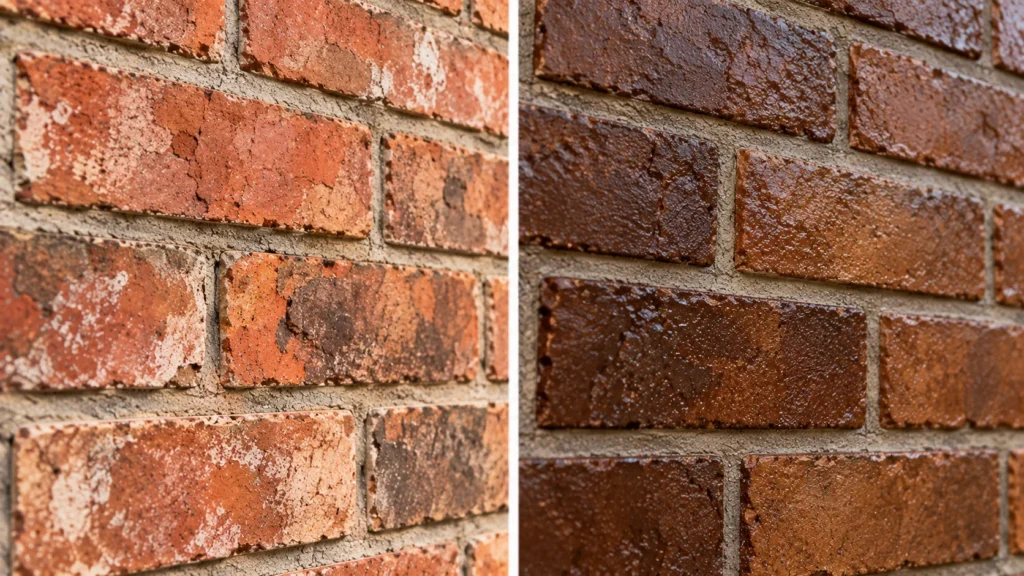
Lighting also changes the apparent result. BrickImaging’s current guidance explains that natural sunlight can significantly influence how masonry stain colors appear, while texture affects light reflection and color perception.
A useful before-and-after comparison should therefore be made under different conditions rather than judging only from one photograph. Check the sample in direct sunlight, shade, morning light, afternoon light, and after sunset under exterior lighting when possible.
15 Things to Compare in Before-and-After Photos
- Overall brightness
- Redness of the original brick
- Visible mortar
- Brick-to-mortar contrast
- Texture visibility
- Color uniformity
- Light reflection
- Shadow depth
- Appearance around windows
- Relationship with roof color
- Relationship with trim
- Door compatibility
- Landscaping compatibility
- Appearance in direct sunlight
- Appearance in cloudy conditions
A photograph is useful for inspiration, but a physical sample on the actual masonry is a more dependable way to evaluate the proposed color.
Fireplace Brick Stain Colors
Fireplace brick stain colors need a slightly different approach from exterior brick because the fireplace is usually a focal point inside a room. The color should work with flooring, walls, furniture, cabinetry, mantel materials, and lighting.
White and warm off-white can make a traditional fireplace appear lighter and more contemporary. Soft gray can create a neutral appearance without completely removing the masonry character. Taupe and warm gray can work well where the room already contains natural wood and beige tones.
For a bold design, charcoal or another deep neutral can create contrast around a light mantel or surrounding wall. A semi-transparent stain can be useful when you want the original brick texture and variation to remain noticeable.
Sherwin-Williams notes that water-based stains can be suitable for indoor masonry applications such as fireplaces and accent walls because they are generally lower odor and easier to clean up than some other stain categories.
15 Fireplace Brick Color Ideas
- Bright white
- Warm white
- Cream
- Ivory
- Light beige
- Sand
- Taupe
- Greige
- Soft gray
- Warm gray
- Medium gray
- Slate gray
- Charcoal
- Muted brown
- Natural brick enhancement
Always verify that the selected product is appropriate for the specific fireplace surface and application conditions, and follow the manufacturer’s instructions.
Brick Paver Stain Colors
Brick paver stain colors are commonly considered for patios, walkways, outdoor seating areas, and other masonry surfaces. Pavers can be exposed to foot traffic, weather, moisture, dirt, and sunlight, so color selection should be considered alongside product suitability and expected maintenance.
Warm paver colors include terracotta, reddish brown, tan, and earthy brown. More contemporary landscapes may use gray, charcoal, slate, or combinations of neutral shades.
The desired finish matters as much as the color. A heavily pigmented appearance can make older pavers look more uniform, while a more transparent approach may retain the natural variation between individual pieces.
Not every brick stain is automatically appropriate for horizontal pavers. Always confirm that the product is designed for the specific surface and traffic conditions before application.
Jump into Other Related Article
- How to Remove Ink Stains from Clothes, Fabric, Leather & More
- How to Remove Coffee Stains | Easy Methods for Clothes, Teeth, Carpet & More
- How to Remove Stains from Carpet | Complete Guide for Coffee, Pet, Wine, Urine & More
15 Brick Paver Color Directions
- Natural red
- Burnt red
- Terracotta
- Red-brown
- Chestnut brown
- Walnut brown
- Earth brown
- Sand
- Beige
- Tan
- Taupe
- Warm gray
- Medium gray
- Slate
- Charcoal
For outdoor areas, evaluate a sample after it has dried completely and observe it under actual sunlight.
Sherwin-Williams Brick Stain Colors
Searches for Sherwin Williams brick stain colors often combine two different ideas: Sherwin-Williams masonry-stain guidance and the company’s broader exterior stain color system.
Sherwin-Williams currently explains that brick staining can be approached through different transparency levels and stain formulations, and it emphasizes matching the color with surrounding exterior elements.
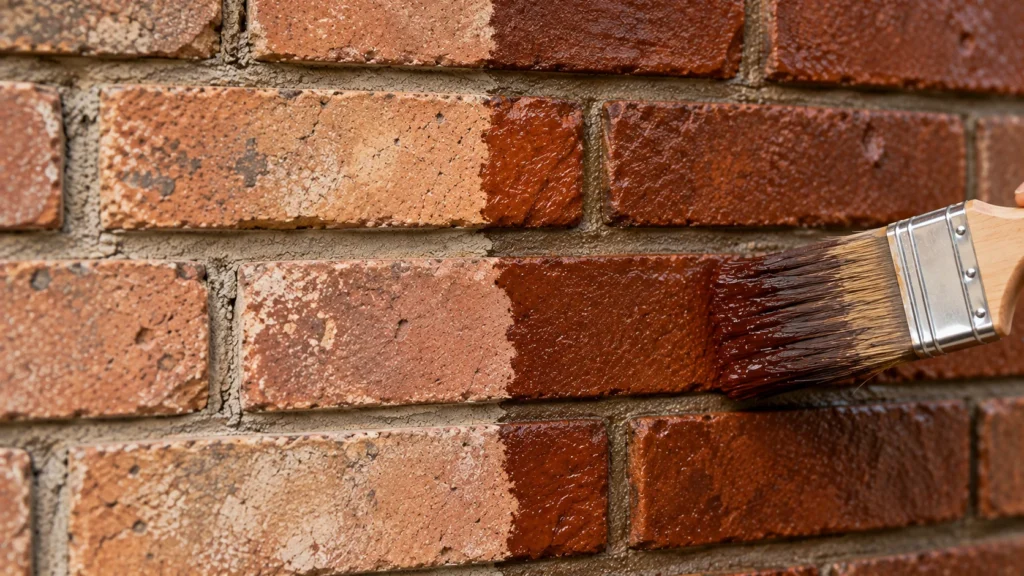
The company also has individual stain colors such as SW 3061 Brick, which is listed as an exterior solid stain color. However, a color shown on a website should not automatically be assumed to represent how that exact shade will appear on every masonry surface. Sherwin-Williams itself warns that computer monitors can affect color accuracy and recommends checking physical color cards.
This is especially important when searching for Sherwin-Williams brick stain colors because a product’s suitability for brick and its appearance on brick are separate questions.
Stayntech Brick Stain Colors
Stayntech is a masonry staining system from BrickImaging that provides a useful example of how modern brick stain palettes are organized. The company says its Stayntech stains are designed for vertical brick, block, stone, mortar, and concrete and are available in 12 primary colors, with additional accent colors through Stayntech Enhance.
The documented Renew palette includes White, Cinder, Hidden White, Aspen, Moon Dust, Metro, Cozy Gray, River Rock, Modern Aluminum, Slate, Modern Soya, and Ironclad.
These names demonstrate the broad direction of current masonry palettes. The collection ranges from whites and warm neutrals to light gray, medium gray, brown-gray, slate, and deep charcoal.
BrickImaging also emphasizes that digital monitors cannot perfectly reproduce stain colors and recommends physical color charts or samples before making a final selection.
Permatint Brick Stain Colors and Mineral Masonry Palettes
Homeowners searching for Permatint brick stain colors or broader mineral-stain palettes may encounter a variety of masonry coloring systems. Product names and available colors can change, so the actual manufacturer’s current chart should always be checked before purchasing.
Mineral Stains, for example, currently presents a masonry color chart with 45 colors ranging from whites and neutrals to earth tones, blues, reds, and deep charcoal shades. The company says its physical samples are intended to show more realistic color depth than a digital representation and recommends testing the stain on the specific surface.
This illustrates an important point about brick stain colors: a palette can contain many shades, but the useful choice is the one that works with your particular masonry and surrounding design.
Mineral Stains also states that custom matching is available for systems including Sherwin-Williams and Benjamin Moore, subject to its custom-color process.
Interior Brick Stain Colors
Interior masonry gives homeowners more flexibility because it is not exposed to the same outdoor weather conditions as exterior walls. Fireplaces, accent walls, exposed brick columns, basements, and architectural details can all use different color strategies.
Light interior brick stain colors can make a room feel brighter and visually larger. Warm neutrals can maintain a cozy atmosphere, while gray can create a more contemporary industrial appearance.
For an accent wall, the original brick variation can be valuable. A semi-transparent stain may preserve the character of individual bricks instead of creating a completely uniform surface.
For a fireplace, consider the relationship between the brick and mantel. A very dark stain can become the dominant element of the room, while a light stain may allow furniture and artwork to become the primary visual focus.
15 Interior Brick Color Ideas
- Soft white
- Warm white
- Cream
- Ivory
- Beige
- Sand
- Taupe
- Greige
- Light gray
- Warm gray
- Cool gray
- Medium gray
- Slate
- Charcoal
- Natural brick enhancement
Water-based masonry stains can be worth considering for interior projects where low odor and easier cleanup are important, subject to the specific manufacturer’s instructions.
Outdoor Brick Stain Colors for Patios and Walkways
Outdoor brick surfaces often need a color that complements landscaping rather than competing with it. Natural brown, tan, red, terracotta, and gray tones can work well with stone paths, garden beds, wood features, and outdoor furniture.
A darker color can visually define a patio, while a lighter neutral can create a brighter outdoor living area. Red-brown and terracotta can maintain a traditional appearance, whereas gray and charcoal can support a modern landscape.
Weather exposure should be considered before selecting a stain system. Sherwin-Williams explains that solvent-based stains are designed for strong durability and UV resistance, while different stain bases have different drying, odor, and maintenance characteristics.
The product’s intended substrate also matters. A stain designed for vertical brick should not automatically be assumed to be appropriate for a horizontal patio or walkway.
Choosing Brick Stain Colors for a Red Brick House
When selecting deck stain colors for a red brick house, the goal is usually coordination rather than exact matching. A deck or wood feature does not need to have the same color as the brick to look cohesive.
Warm brown deck stains can reinforce the warm undertones of red brick. Natural wood tones can soften the contrast, while deeper brown can create a more formal exterior.
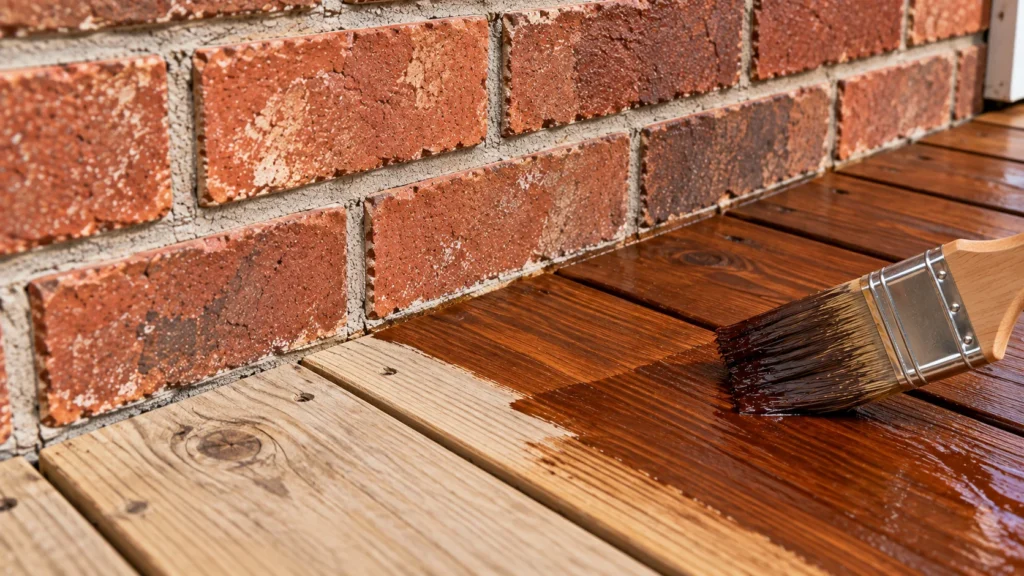
Gray deck stains create a cooler contrast against red brick and can work especially well when the home’s trim, roof, or doors already contain gray or black elements.
15 Deck Stain Directions for Red Brick Homes
- Natural cedar
- Warm honey
- Golden brown
- Medium brown
- Chestnut
- Walnut
- Dark walnut
- Warm taupe
- Gray-brown
- Greige
- Weathered gray
- Medium gray
- Charcoal
- Deep brown
- Natural transparent wood tone
The most cohesive combination usually comes from repeating at least one undertone between the brick, deck, trim, roof, or door rather than trying to match every surface exactly.
What Colors Can You Stain Brick
There is no single universal list of brick stain colors because manufacturers formulate different palettes. In general, brick can be stained in a broad range of white, cream, beige, tan, brown, red, terracotta, taupe, gray, slate, charcoal, and other custom colors, depending on the product.
Some systems offer custom color matching. Mineral Stains, for example, says it can match Sherwin-Williams, Benjamin Moore, NCS, and RAL colors through its custom process. BrickImaging also states that custom Stayntech colors are available.
The practical limitation is not simply whether a color exists on a chart. The more important question is how that color interacts with the original masonry.
A very light color applied over a dark red brick may not look identical to the same light color applied over pale brick. Likewise, a gray stain over warm red masonry can produce a different perceived tone than it would on gray concrete brick.
Selecting the Right Brick Stain Color
Choosing a stain should begin with the existing brick, not the color chart. Identify whether the masonry is predominantly red, orange, brown, tan, gray, or mixed. Then decide whether you want to preserve those variations or significantly change them.
Next, examine the architectural surroundings. Exterior projects should consider the roof, trim, windows, doors, stone, gutters, landscaping, and driveway. Interior projects should consider floors, walls, cabinetry, furniture, lighting, and fireplaces.
Then choose the desired transparency. A more transparent stain allows more of the original brick to remain visible, while an opaque approach produces a more noticeable transformation. Sherwin-Williams specifically recommends making this decision before selecting the stain.
Finally, test the actual product on the actual brick. BrickImaging and Mineral Stains both emphasize the value of physical samples because digital screens do not reproduce masonry colors perfectly.
15-Step Brick Stain Color Selection Process
- Identify the brick type.
- Examine the existing brick color.
- Check the brick’s porosity.
- Examine the mortar color.
- Photograph the wall in daylight.
- Identify the roof color.
- Identify trim colors.
- Consider doors and windows.
- Decide how much color change you want.
- Choose transparent or opaque coverage.
- Shortlist three to five color families.
- Obtain physical samples.
- Test several areas of the actual brick.
- Observe samples in different lighting.
- Select the color only after the sample has fully dried.
This process is more reliable than selecting a color solely from Pinterest, Instagram, a product website, or a computer screen.
Brick Stain Color Mistakes to Avoid
The biggest mistake is choosing a color without considering the original masonry. Because stain interacts with the existing brick, the same product can produce different results on different surfaces.
Another common mistake is treating digital color charts as exact representations. BrickImaging explicitly warns that monitor settings can alter the appearance of its Stayntech colors, while Sherwin-Williams gives a similar warning about viewing stain colors on a computer.
Applying one color sample to only one brick can also produce misleading results. Brick varies naturally, and one brick may not represent the entire wall.
Finally, homeowners sometimes select the color before determining whether the product is appropriate for their particular application. Exterior walls, fireplaces, patios, pavers, and other masonry surfaces can have different requirements.
15 Brick Staining Mistakes to Avoid
- Choosing from a screen alone
- Ignoring existing brick undertones
- Ignoring mortar color
- Testing only one brick
- Skipping a sample area
- Forgetting natural sunlight
- Ignoring evening lighting
- Choosing color before transparency
- Assuming all stains work on all masonry
- Using a vertical-wall product on an unsuitable surface
- Ignoring product instructions
- Applying without proper preparation
- Comparing wet color with dry color
- Forgetting surrounding architectural colors
- Selecting a dramatic color without viewing a larger test area
Avoiding these mistakes can make the color-selection process much more predictable.
Brick Stain Colors Comparison Guide
| Brick Project | Common Color Directions | Main Consideration |
| Exterior red brick | Gray, taupe, white, brown, muted red | Roof and trim |
| Modern exterior | Gray, slate, charcoal, white | Architectural contrast |
| Traditional exterior | Red, brown, cream, beige | Warm undertones |
| Fireplace | White, cream, gray, taupe | Interior lighting |
| Brick accent wall | Gray, white, natural, warm neutral | Furniture and flooring |
| Patio pavers | Red, terracotta, brown, gray | Traffic and weather |
| Walkway | Brown, tan, gray, charcoal | Landscape |
| Red brick house | Brown, natural wood, gray | Exterior coordination |
| Light brick | Taupe, gray, warm white | Avoid excessive contrast |
| Dark brick | Light gray, cream, soft white | Brightness |
| Commercial masonry | Neutral, gray, charcoal | Building architecture |
| Rustic masonry | Brown, red, earth tones | Natural character |
| Modern farmhouse | White, off-white, warm gray | Trim and roof |
| Industrial style | Gray, slate, charcoal | Metal and wood |
| Classic design | Cream, beige, muted red | Traditional palette |
This comparison is intended as a starting framework rather than a universal ranking of colors.
Conclusion
The right brick stain colors can significantly change the appearance of masonry while allowing the texture and character of brick to remain visible. Popular color directions include white, off-white, cream, beige, taupe, brown, red, terracotta, gray, slate, and charcoal, with many manufacturers offering their own variations and custom options.
For exterior brick stain colors, coordinate the masonry with the roof, trim, doors, windows, landscaping, and architectural style. For fireplace brick stain colors, consider the room’s lighting, flooring, mantel, and furniture. For brick paver stain colors, verify that the product is appropriate for the specific outdoor surface and expected use.
The original brick matters just as much as the stain itself. Sherwin-Williams notes that brick type, porosity, original color, desired opacity, and surrounding colors all influence the final result. BrickImaging likewise explains that texture and lighting can alter how a stain appears and recommends physical samples for accurate color evaluation.
For homeowners comparing brick stain colors before and after, the safest approach is to test several colors directly on the actual masonry. A physical sample provides much more useful information than a digital swatch because the brick’s texture, porosity, undertones, and lighting all affect the finished appearance.
Whether the goal is a bright white exterior, a soft gray fireplace, a warm red-brown patio, or a deep charcoal modern facade, the best result comes from matching the stain’s characteristics to the masonry and the overall design rather than choosing a color in isolation.
What are the most popular brick stain colors?
Common brick stain color families include white, off-white, cream, beige, taupe, brown, red, terracotta, gray, slate, and charcoal. Actual color names and availability vary by manufacturer.
What colors can you stain brick?
Brick can generally be stained in many neutral, warm, cool, and darker color families, depending on the product. Some masonry-stain manufacturers also offer custom color matching. Mineral Stains, for example, offers custom matching for several color systems.
What are good exterior brick stain colors?
Popular exterior directions include warm white, off-white, taupe, gray, slate, charcoal, brown, muted red, and terracotta. The appropriate choice depends on the original brick and surrounding roof, trim, doors, windows, and landscaping.
What are good brick stain colors for a fireplace?
White, cream, warm gray, taupe, greige, slate, and charcoal can all be considered for fireplaces. The choice should coordinate with the room’s walls, flooring, mantel, furniture, and lighting.
What are the best brick stain colors for red brick?
For red brick, options include muted red, terracotta, brown, taupe, gray, greige, white, and charcoal. The desired amount of original red showing through should determine whether a more transparent or opaque stain is appropriate.
What are brick stain colors before and after?
Before-and-after results show how staining changes the existing brick’s color while potentially preserving some of its texture and variation. The final appearance depends on the original brick, stain, transparency, application, lighting, and surface texture.
Are white brick stain colors available?
Yes. White and off-white masonry stains are available from various manufacturers. Stayntech, for example, offers White and Hidden White among its documented masonry colors.
What are Sherwin-Williams brick stain colors?
Sherwin-Williams provides guidance for selecting brick and masonry stains and has a broader exterior stain color collection. It also lists colors such as SW 3061 Brick as an exterior solid stain. Physical color cards should be checked because digital displays can vary.
What are Stayntech brick stain colors?
Stayntech’s documented Renew palette includes White, Cinder, Hidden White, Aspen, Moon Dust, Metro, Cozy Gray, River Rock, Modern Aluminum, Slate, Modern Soya, and Ironclad. The system also offers accent colors through Stayntech Enhance.
Can brick stain be used on a fireplace?
Some masonry stains are suitable for interior masonry and fireplaces, but the individual product must be checked before use. Sherwin-Williams identifies water-based stains as an option for certain indoor masonry projects such as fireplaces and accent walls.
Can brick pavers be stained?
Some products are designed for masonry and pavers, but suitability depends on the specific product and surface. Always confirm that the stain is intended for horizontal pavers and the expected traffic and weather conditions.
Does brick stain cover the original brick completely?
It depends on the stain’s opacity. Semi-transparent stains retain more of the original appearance, while opaque stains can produce a much stronger color transformation.
Does brick texture affect stain color?
Yes. Brick texture can affect stain absorption and how light reflects from the surface. This means the same stain can appear somewhat different on smooth, rough, porous, or irregular masonry.
Does sunlight change how brick stain looks?
Yes. Natural sunlight can substantially affect the perceived appearance of masonry stain. A color may look different in direct sun, shade, cloudy weather, and evening light.
Should brick stain colors be tested before the whole project?
Yes. Testing a physical sample on the actual masonry is one of the most reliable ways to evaluate the final color. Both BrickImaging and Mineral Stains recommend physical samples because digital color representations may not accurately reproduce the finished masonry appearance.