

Ink stains can happen in seconds from a leaking pen in a shirt pocket to a marker that accidentally touches upholstery, carpet, or a leather bag. The good news is that many ink stains can be treated successfully when you use the right method for the ink type and surface. Fresh ink is generally easier to handle, while dried or heat-set stains may require repeated treatment.
The most important rule is do not rub the stain aggressively. Blot excess ink, test any solvent on an inconspicuous area, and avoid putting stained clothing in the dryer until you know the mark has been removed. Alcohol-based products are commonly recommended for many fabric ink stains, but they are not automatically suitable for every material.
How to Remove Ink Stains from Clothes
The best approach for how to remove ink stains from clothes depends on whether the mark came from a ballpoint pen, gel pen, fountain pen, marker, or another type of ink. Tide notes that ballpoint ink is generally thicker and oilier, while water-based inks can be easier to treat; permanent inks can be more difficult.
For a washable garment, first check the care label and test your chosen treatment on a hidden section. Place a clean paper towel or white cloth behind the stain, then use a suitable alcohol-based solvent to help loosen the ink. Blot rather than scrubbing so the dissolved ink transfers onto the absorbent material instead of spreading across the garment.
After the solvent treatment, apply laundry detergent as a pretreatment and wash using the hottest temperature permitted by the care label. Check the clothing before putting it in the dryer. If ink remains, repeat the treatment rather than drying it.
15 Steps for Removing Ink from Washable Clothes
For most washable fabrics, this sequence provides a practical starting point:
- Check the garment’s care label.
- Identify whether the mark is pen, gel, marker, or another ink.
- Treat the stain as soon as possible.
- Blot fresh excess ink with a clean paper towel.
- Place another clean towel underneath the stained area.
- Test rubbing alcohol or another solvent on a hidden area.
- Check that the fabric color does not transfer or change.
- Apply a small amount of the tested solvent to the ink.
- Blot the area gently rather than scrubbing.
- Replace the towel underneath when it becomes saturated with ink.
- Rinse the treated area with cool water when appropriate.
- Apply liquid laundry detergent as a pretreatment.
- Allow the detergent to work according to its instructions.
- Wash at the hottest temperature allowed by the care label.
- Air-dry and inspect before using the dryer.
Tide specifically recommends testing a solvent first, placing paper towel beneath the stain, pretreating with detergent, and repeating the process if the stain remains before drying.
How to Remove Ink Stains from Clothing with Rubbing Alcohol
Rubbing alcohol is commonly used for ink because it can help loosen certain inks before laundering. Tide recommends testing rubbing alcohol on an inconspicuous area first to make sure the fabric does not lose color or become damaged.
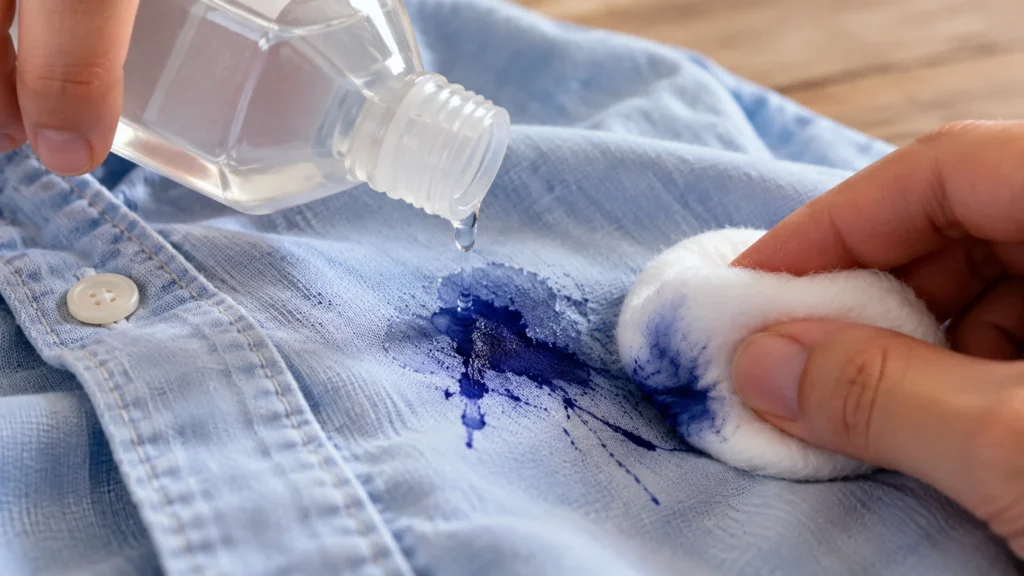
For a washable garment, place a white cloth or paper towel behind the stain. Dab a small amount of rubbing alcohol onto the ink rather than flooding the entire garment. As the ink transfers, move to a clean section of the towel so you do not put the dissolved ink back onto the fabric.
After treatment, rinse as appropriate and follow with laundry detergent and a normal wash. Remember that alcohol is a solvent, so testing first is essential, particularly on dark, brightly colored, coated, or delicate fabrics.
How to Remove Pen Ink Stains from Clothes
Pen ink can vary considerably, which is why how to remove pen ink stains from clothes is not always a one-method problem. Ballpoint ink often contains dyes and oily components, while water-based inks may behave differently. Permanent ink can be particularly stubborn.
For a fresh ballpoint mark on washable fabric, blot first and then test an alcohol-based treatment. Apply it carefully and use an absorbent white towel to collect the ink as it loosens. Follow with liquid laundry detergent and wash according to the garment label.
If the pen stain has already dried, expect to repeat the process. Clorox reports that dried pen ink can sometimes still be treated using an alcohol-based hand sanitizer followed by a suitable fabric stain remover and washing.
How to Remove Old Ink Stains from Clothes
Old ink stains can be more difficult because the ink has had time to dry and may have already been exposed to washing or heat. However, a dried stain does not necessarily mean the garment is beyond saving. Clorox specifically notes that dried pen and marker stains can sometimes be treated successfully.
Start by testing an alcohol-based product on an inconspicuous area. If the fabric remains stable, treat the stain gradually and blot away the loosened ink. Follow with a compatible laundry stain remover and wash according to the care label.
If the stain has already gone through a hot dryer, patience becomes even more important. You may need several treatment cycles, and you should inspect the garment after each wash before applying more heat.
How to Remove Ink Stains from Colored Clothes
Colored clothing needs extra caution because the product that removes the ink can potentially affect the garment’s original dye. This is why both Tide and Clorox recommend testing treatments before applying them broadly.
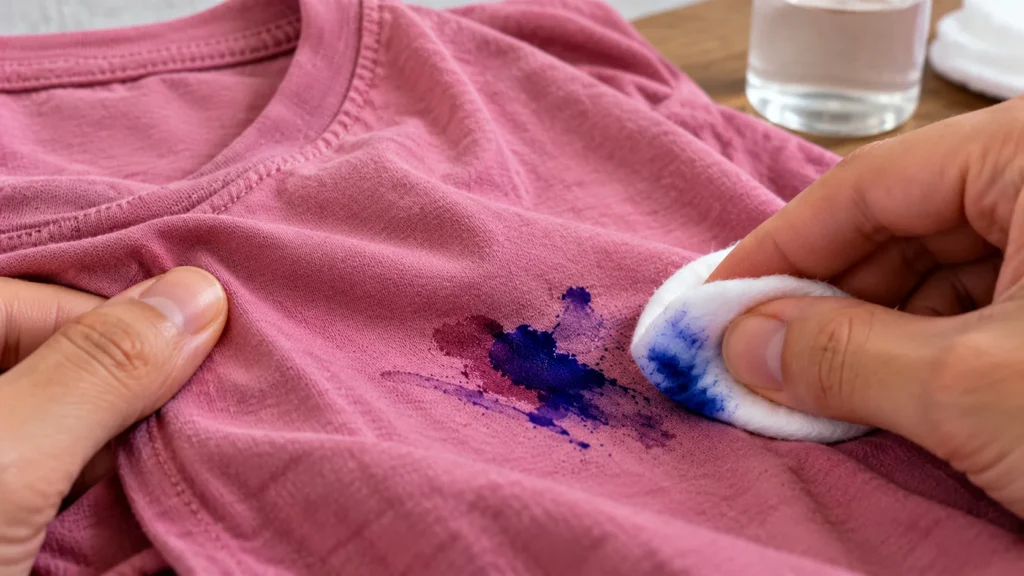
For how to remove old ink stains from colored clothes, begin with a hidden-area test using your intended solvent. If there is no noticeable color transfer or fading, apply the product to the ink and blot carefully.
Clorox recommends an alcohol-based hand sanitizer followed by a bleach-free fabric stain remover for many colored, machine-washable fabrics. The company’s directions specifically distinguish this from chlorine bleach, which should not be used on fabrics such as wool, silk, leather, mohair, or spandex.
How to Remove Ink Stains from White Clothes
White clothing gives you more options, but you should still begin with the least aggressive appropriate treatment. Blot the stain, test your solvent, and pretreat before washing.
For white bleach-safe clothing, a bleach treatment may be possible when the garment label and bleach instructions allow it. Clorox specifically advises against applying full-strength bleach directly to an ink stain and identifies fabrics such as wool, silk, mohair, leather, and spandex as unsuitable for chlorine bleach.
If the white garment contains spandex or another bleach-sensitive fiber, use a compatible bleach-free stain remover instead. Always follow both the clothing label and cleaning-product label.
How to Remove Ink Stains from Jeans, Pants and Cotton
Jeans and many cotton garments can tolerate practical stain-treatment methods, but colorfastness still matters. Tide recommends testing the treatment first and describes rubbing alcohol as one option for ink on jeans, followed by rinsing and normal laundering.
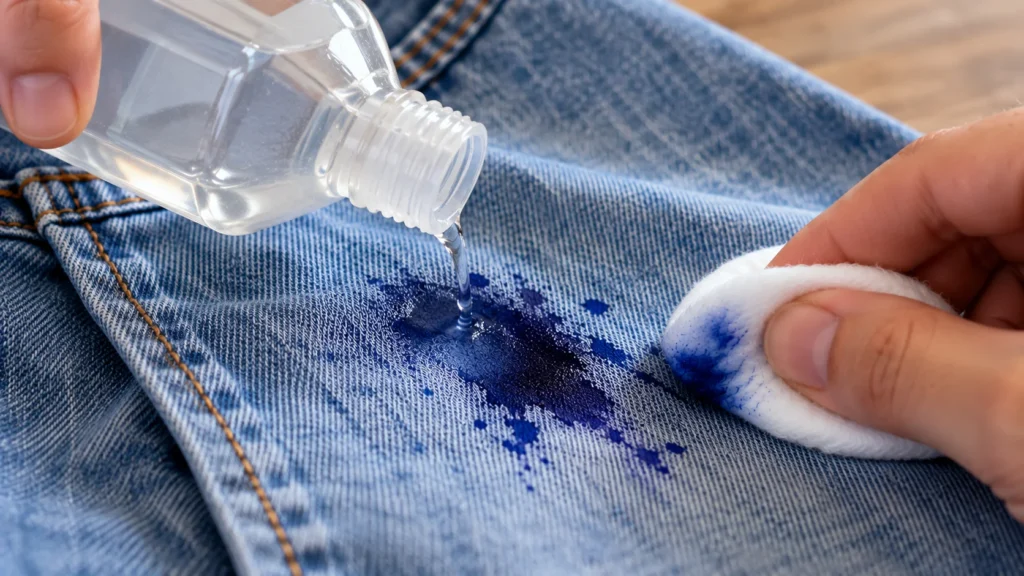
For how to remove ink stains from jeans, place a clean white towel behind the mark and apply a small amount of rubbing alcohol. Gently work the treatment into the affected area, rinse with cold water, and launder according to the care label.
For cotton shirts, pants, and other washable cotton clothing, treat the stain before it dries whenever possible. Tide also provides fabric-specific guidance for cotton, polyester, nylon, canvas, linen, and other materials.
How to Remove Ink Stains from Clothes After Drying
If you accidentally washed and dried an ink-stained garment, don’t automatically throw it away. How to remove ink stains from clothes after drying generally requires a repeatable pretreatment process rather than a single wash.
Clorox recommends alcohol-based hand sanitizer as a pretreatment for certain dried ink stains, followed by a compatible fabric stain remover and laundering. It notes that dried stains may require repeating the process.
Apply the treatment carefully, wash according to the garment’s instructions, and air-dry while checking the result. If the stain is still visible, repeat the treatment rather than exposing it to another dryer cycle.
How to Remove Ink Stains from Leather
Leather requires a different approach from washable fabric. Do not automatically treat a leather purse, leather couch, or leather jacket with the same solvent you would use on cotton. Alcohol and other solvents can affect finishes, dyes, or the surface of leather.
For how to remove old ink stains from leather, first check the manufacturer’s care instructions. If the item is valuable, expensive, heavily finished, or the stain is extensive, professional leather cleaning is a safer option than experimenting with household chemicals.
Never use chlorine bleach on leather. Clorox specifically lists leather among materials that should not be bleached.
How to Remove Ink Stains from Carpet
For how to remove ink stains from carpet, the Carpet and Rug Institute recommends acting quickly, blotting with a dry white absorbent cloth, and testing any cleaning solution in an inconspicuous area before treating the visible stain.
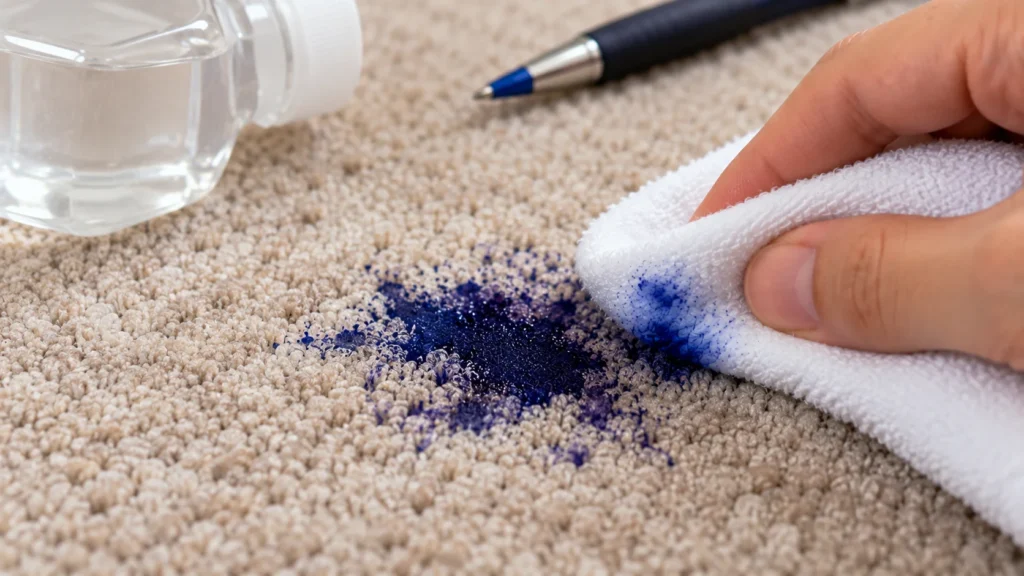
The Institute specifically identifies 70% isopropyl rubbing alcohol as an option for ballpoint ink on carpet, but recommends applying it to a cloth or paper towel rather than pouring it directly onto the carpet.
Work from the outside of the stain toward the center and blot rather than scrub. Once the stain is removed, rinse appropriately and blot away moisture. Excessive liquid can create additional problems, so avoid soaking the carpet.
How to Remove Old Ink Stains from Carpet
Old carpet ink requires patience because aggressive scrubbing can damage the carpet pile while spreading the stain. The Carpet and Rug Institute recommends pretesting cleaning solutions and repeatedly blotting rather than rubbing.
If the stain does not respond to the first treatment, repeat according to the cleaner’s instructions instead of immediately switching to a stronger chemical. Some stains may require professional equipment, particularly when the ink has penetrated deeply or the carpet is valuable.
For how to remove old ink stains from carpet, professional cleaning can be preferable when repeated home treatment risks discoloration or fiber damage.
How to Remove Ink Stains from Couch Upholstery and Fabric Sofa
Ink on a couch should be treated according to the upholstery fabric and manufacturer’s instructions. Start by checking the cleaning code or care information, then test your selected treatment somewhere hidden.
For how to remove ink stains from fabric couch, use a small amount of an appropriate cleaning agent on a white cloth and blot the stain from the outside toward the center. Avoid saturating the upholstery because excess moisture can travel deeper into cushions.
The same principle applies to how to remove ink stains from couch fabric and how to remove ink stains from fabric sofa: test first, use minimal product, blot rather than scrub, and allow the area to dry properly.
How to Remove Ink Stains from Dryer Drum
If a pen accidentally went through the dryer, ink can transfer onto the drum and potentially mark later loads. Start by unplugging the appliance if the manufacturer’s instructions call for it before cleaning the interior.
Use a soft cloth and a cleaner recommended by the dryer manufacturer. Avoid pouring solvent directly into the drum and avoid creating excessive fumes. After cleaning, wipe the drum thoroughly and check for remaining residue before drying clothes.
Because dryer interiors and finishes vary by model, the manufacturer’s cleaning instructions should take priority over a generic household remedy.
Jump into Other Related Article
- How to Remove Chocolate Stains | Clothes, Carpet, Couch & More
- How to Remove Coffee Stains | Easy Methods for Clothes, Teeth, Carpet & More
- How to Remove Stains from Carpet | Complete Guide for Coffee, Pet, Wine, Urine & More
How to Remove Ink Stains from Wood, Plastic and Floor Tiles
Hard surfaces such as sealed wood, plastic, and ceramic tile can respond differently to ink-removal products. A solvent that works on one surface may dull a finish or damage another, so always test a hidden area first.
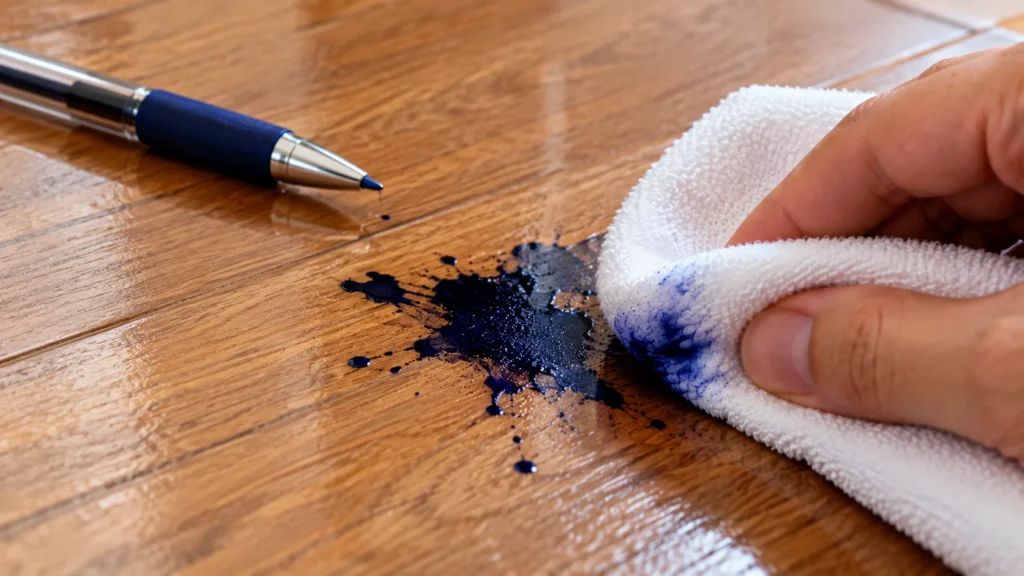
For how to remove ink stains from wood, begin with the gentlest cleaner recommended for the particular finish. Do not aggressively sand or scrub a finished surface simply to remove a small ink mark.
For plastic and floor tiles, use a compatible household cleaner and a soft cloth. Avoid abrasive tools that could scratch the surface. If ink has penetrated unfinished wood, professional refinishing may be preferable to aggressive chemical treatment.
Common Mistakes When Removing Ink Stains
Ink removal often goes wrong because people try to solve a small stain with too much product or too much force. The safest approach is gradual treatment, careful testing, and patience.
- Do not rub fresh ink aggressively.
- Do not skip the care-label check.
- Do not use an untested solvent on colored fabric.
- Do not pour large amounts of alcohol directly onto clothing.
- Do not mix cleaning chemicals.
- Do not automatically use chlorine bleach.
- Do not bleach leather.
- Do not bleach wool or silk.
- Do not bleach spandex.
- Do not put stained clothing directly into the dryer.
- Do not use colored towels when blotting stains.
- Do not scrub carpet with a stiff brush.
- Do not oversaturate upholstery.
- Do not assume every ink has the same formula.
- Do not give up after one treatment if the fabric remains in good condition.
The Carpet and Rug Institute similarly emphasizes white absorbent cloths, pretesting, gentle blotting, and avoiding aggressive scrubbing for carpet stains.
Conclusion
Learning how to remove ink stains starts with identifying the surface and ink type rather than using one universal recipe. For washable clothing, blot first, test an appropriate solvent, pretreat with detergent or a suitable stain remover, wash according to the care label, and inspect the garment before drying. Alcohol-based treatments are commonly recommended for many pen stains, but colorfastness testing is essential.
For leather, carpet, upholstery, wood, and other surfaces, use material-specific methods instead of treating everything like clothing. When a stain is old, heat-set, extensive, or located on a valuable or delicate item, professional cleaning may be safer than repeated experimentation.
How do you remove ink stains from clothes?
Blot excess ink, test an appropriate solvent on a hidden area, treat the stain carefully, apply laundry detergent, and wash according to the care label. Do not dry the garment until you have checked the stain.
Can rubbing alcohol remove ink from clothes?
Rubbing alcohol can help loosen many types of ink, particularly some pen stains. Always test it first for colorfastness and fabric compatibility.
How do you remove dried ink stains from clothes?
Use a tested alcohol-based treatment or suitable stain remover, followed by laundering according to the care label. Dried stains may require multiple treatments.
How do you remove ink stains from jeans?
Test rubbing alcohol on an inconspicuous area, apply a small amount to the stain, gently treat the area, rinse with cold water, and wash normally according to the care label.
How do you remove ink stains from leather?
Check the leather manufacturer’s care instructions first. Avoid automatically applying alcohol or bleach because solvents can affect leather finishes. For valuable leather goods, professional cleaning is often the safer option.
Can toothpaste remove ink stains from clothes?
Toothpaste is sometimes suggested as a home remedy, but it is not a universal ink-removal solution. A fabric-tested stain treatment or appropriate solvent is generally more predictable. Always test any home remedy before applying it broadly.
How do you remove ink stains from carpet?
Blot with a white absorbent cloth, pretest the cleaning solution, and gently treat the stain without scrubbing. The Carpet and Rug Institute identifies 70% isopropyl alcohol as an option for ballpoint ink when applied to a cloth rather than directly to the carpet.
How do you remove ink stains from clothes after drying?
Treat the stain again before putting the garment through another dryer cycle. Clorox notes that dried ink can sometimes be removed with repeated pretreatment and laundering.
Can vinegar remove ink stains from clothes?
Vinegar is included in some home stain-removal methods, but its suitability depends on the fabric and ink. Test it on an inconspicuous area first and follow the garment’s care instructions. Tide lists white vinegar among alternative treatments for some ink stains.