

Learning how to remove sweat stains can help restore shirts, hats, sheets, pillowcases, and other everyday fabrics before yellow or white marks become permanent-looking. Sweat itself is mostly water, but discoloration can develop when perspiration interacts with body oils, dirt, bacteria, and sometimes deodorant ingredients. This is why armpit and collar stains can become especially noticeable over time.
The key is to treat sweat stains before they sit for too long and to avoid drying stained clothing until you have checked the result. Depending on the fabric, useful treatments can include mild detergent, diluted white vinegar, baking soda, or an oxygen-based stain remover. Always check the care label and test a cleaning solution on an inconspicuous area first.
How to Remove Sweat Stains from Clothes
The easiest way to remove fresh sweat stains from clothes is to pretreat the affected area before washing. Start by checking the garment’s care label, particularly if it is made from silk, wool, leather, or another delicate material. For washable fabrics, a mild detergent or suitable stain remover can be applied to the stained area before laundering.
Fresh stains generally require less effort than old, yellowed marks. If you notice sweat stains on a shirt after wearing it, avoid leaving it compressed in a laundry hamper for several days. Martha Stewart’s laundry experts recommend treating sweat stains as soon as possible because older stains can become harder to lift.
After pretreatment, wash the garment at the temperature permitted by its care label. Do not automatically choose the hottest setting, especially for delicate or synthetic fabrics. Most importantly, inspect the garment before putting it into the dryer because heat can make a remaining stain more difficult to remove.
15-Step Method for Fresh Sweat Stains
Use this general process for washable shirts, clothing, and other suitable fabrics:
- Check the garment’s care label first.
- Identify whether the stain is fresh, old, yellow, or white.
- Treat the stain as soon as possible.
- Turn the garment inside out if the care instructions permit.
- Focus on the underarm, collar, or other affected area.
- Apply a small amount of mild liquid laundry detergent.
- Gently work the detergent into the stain.
- Allow the pretreatment to sit according to the product instructions.
- For suitable fabrics, consider a diluted white-vinegar treatment.
- Rinse the treated area with cool water when appropriate.
- For stubborn stains, consider a fabric-safe oxygen stain remover.
- Wash the garment using the recommended water temperature.
- Check the stain immediately after washing.
- Repeat the treatment if the stain remains.
- Air-dry instead of using the dryer until you know the stain is gone.
OxiClean also recommends pretreating sweat stains before washing and following the garment manufacturer’s temperature and cleaning instructions.
How to Remove Yellow Sweat Stains from White Clothes
Yellow sweat stains on white clothes are often associated with perspiration interacting with substances on the fabric, including body oils and some deodorant ingredients. Aluminum-containing deodorants can contribute to yellow discoloration when they interact with sweat, according to Martha Stewart’s cited laundry experts.

For washable white shirts, start with pretreatment rather than immediately reaching for chlorine bleach. A suitable oxygen-based stain remover can be useful for bleach-safe garments. OxiClean recommends soaking suitable white garments in its oxygen-based product according to its instructions and then washing normally.
Do not assume that every white garment is suitable for every whitening product. Wool, silk, leather, and dry-clean-only fabrics require different care, and product instructions should always be followed.
How to Remove Sweat Stains from White Shirts
White shirts often develop yellow marks around the armpits, neckline, and collar. To remove sweat stains from white shirts, pretreat the affected areas before washing and give particular attention to the inside of the garment where perspiration and deodorant accumulate.
For suitable white fabrics, an oxygen-based laundry treatment can be used according to its label. OxiClean recommends checking the garment label, dissolving the product as directed, soaking the garment for the recommended period, and then washing normally.
If the shirt is still stained after washing, repeat the treatment instead of immediately drying it. Martha Stewart also advises against putting stained garments into the dryer because drying can make remaining sweat stains harder to remove.
How to Remove Sweat Stains with Vinegar and Baking Soda
White vinegar and baking soda are two commonly used household options for treating perspiration marks. They should not be treated as universal solutions, however, because fabric type, dyes, finishes, and stain age can all affect the result.
Martha Stewart’s current guide describes diluted distilled white vinegar as one treatment for suitable fabrics: equal parts water and vinegar are dabbed onto the stain, followed by rinsing and washing with mild detergent. It also describes making a baking-soda-and-water paste, allowing it to sit for about 20 minutes, rinsing, and laundering.
Always test the treatment on a hidden area first. Never mix vinegar with chlorine bleach, and do not use a household method simply because it worked on another type of fabric.
When to Use Each Treatment
The right treatment depends on the condition and material of the item:
- Fresh sweat mark: Start with mild liquid detergent.
- Light odor: Wash promptly with normal detergent.
- Yellow underarm stain: Consider a suitable oxygen-based treatment.
- White cotton shirt: Oxygen bleach may be suitable if the label permits it.
- Colored shirt: Test any treatment for colorfastness first.
- Old sweat stain: Use repeated pretreatment rather than aggressive scrubbing.
- White shirt collar: Pretreat the collar before washing.
- Dress shirt: Follow the fabric and care-label instructions.
- Polyester shirt: Use a method approved for synthetic fabrics.
- Silk garment: Follow the silk-care instructions rather than experimenting.
- Wool garment: Avoid unsuitable bleach and harsh treatments.
- Bra: Check the care label and use a gentle method.
- Hat: Check whether the hat is washable before soaking.
- Sheets: Pretreat the affected area before laundering.
- Mattress: Use minimal moisture and avoid soaking the mattress.
These distinctions matter because a cleaning method suitable for cotton clothing may not be appropriate for silk, wool, leather, or dry-clean-only items. OxiClean specifically excludes silk, wool, leather, and dry-clean-only fabrics from several of its sweat-stain treatments.
How to Remove Sweat Stains from Hats and Baseball Caps
Hats can absorb perspiration around the sweatband, crown, and brim. If you’re looking for how to get sweat stains out of hats, begin by checking the hat’s cleaning instructions. Some machine-washable, colorfast hats can tolerate soaking, while structured or delicate hats may require a gentler approach.

OxiClean recommends using its Versatile Stain Remover on suitable washable, colorfast hats by dissolving the product, soaking the hat, and then washing it with normal detergent. Its instructions recommend a 1–6 hour soak depending on the severity of the stain.
For a baseball cap or baseball hat, avoid assuming that every cap can be fully submerged. Structured brims, decorative details, adhesives, and specialty materials can require different care.
How to Remove Sweat Stains from Colored Shirts and Black Clothes
Colored and dark garments require extra caution because the stain remover itself can potentially affect the original dye. Before treating sweat stains from colored shirts, test the selected product in an inconspicuous area and check for color transfer or fading.
A chlorine-free oxygen-based product may be appropriate for some colored, machine-washable fabrics when its label permits it. OxiClean states that its Odor Blasters product is chlorine-free and suitable for colors, while still requiring a hidden-area test and care-label compliance.
For black clothes, dark shirts, and black hats, avoid aggressive bleaching products unless the manufacturer specifically says they are safe. A mild detergent and fabric-appropriate pretreatment are usually a better starting point.
Jump into Other Related Article
- How to Clean Stainless Steel Sink | Stains, Hard Water, Rust & Scratches
- How to Remove Coffee Stains | Easy Methods for Clothes, Teeth, Carpet & More
- How to Remove Stains from Carpet | Complete Guide for Coffee, Pet, Wine, Urine & More
How to Remove Sweat Stains from Polyester
Polyester is common in shirts, sportswear, uniforms, and moisture-wicking clothing. Sweat, body oils, and odors can become trapped in performance fabrics, especially when sweaty clothing remains in a gym bag or laundry basket for an extended period.
For how to get sweat stains out of polyester, pretreat the affected area with a suitable laundry stain remover and wash according to the garment label. OxiClean recommends treating stains on athletic fabrics before washing and using the warmest temperature the fabric will accept.
Turn activewear inside out before washing when appropriate, and avoid excessive heat during drying. These steps can help reduce buildup while protecting the fabric.
How to Remove Sweat Stains from Dress Shirts and Collars
Dress shirts frequently develop perspiration marks around the collar and underarms. For how to get sweat stains out of dress shirts, begin by treating the collar and underarm areas before washing instead of waiting until discoloration becomes severe.
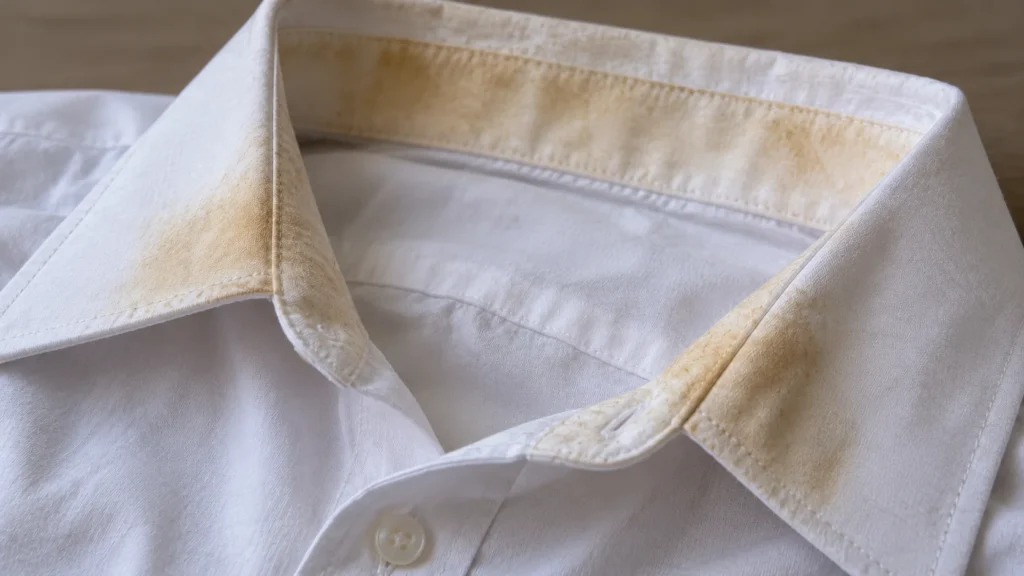
The Tie Bar recommends checking dress shirts for sweat stains around the underarms and collar and generally recommends cold or lukewarm water for washing dress shirts, depending on the fabric and garment instructions.
For stubborn collar stains, apply a suitable mild detergent or stain treatment before laundering. Avoid using excessive heat simply because the shirt is white; the correct temperature depends on its fabric and care label.
How to Remove Sweat Stains from Sheets, Pillowcases and Pillows
Sweat stains can accumulate on bedding because sheets and pillowcases are exposed to perspiration for several hours at a time. How to get sweat stains out of sheets starts with pretreating visible discoloration before the normal wash cycle.
For washable sheets and pillowcases, apply a suitable stain treatment and wash according to the care label. Oxygen-based products can be used on compatible fabrics when their instructions permit it. OxiClean specifically lists sheets and other fabrics among items that can be treated for sweat stains and odors.
For actual pillows, check the manufacturer’s washing instructions first. Some pillows are machine washable, while others require spot cleaning or professional care.
How to Remove Sweat Stains from a Mattress
A mattress requires a different approach because it cannot simply be placed in a washing machine. For sweat stains on a mattress, start by removing the bedding and checking the mattress manufacturer’s cleaning instructions.

Use as little moisture as practical and treat the affected area rather than soaking the entire mattress. After cleaning, allow the area to dry thoroughly before replacing bedding.
For memory foam mattresses, be especially cautious about excessive water. Follow the manufacturer’s instructions because some memory-foam products have specific cleaning requirements.
How to Remove Sweat Stains from Silk and Bras
Silk is much more delicate than ordinary cotton or polyester clothing. OxiClean specifically advises against using its sweat-stain treatment on silk and silk blends.
For how to remove sweat stains from silk, follow the garment’s care label and consider professional cleaning if it is marked dry-clean only. Avoid experimenting with strong household chemicals.
For how to get sweat stains out of bras, use the washing method recommended by the manufacturer. Many bras contain elastic, lace, padding, or delicate fabrics that can be damaged by aggressive scrubbing, high temperatures, or unsuitable stain removers.
How to Remove Old Sweat Stains
Old sweat stains often need repeated treatment rather than one quick wash. Start by identifying the fabric and checking whether the garment has already been exposed to heat.

For washable clothing, apply a suitable pretreatment and allow it to work according to the product instructions. An oxygen-based soak may be appropriate for compatible garments. OxiClean recommends soaking sweat-stained clothing for several hours depending on the product and severity, followed by normal washing.
If the stain remains, repeat the process before drying. Do not assume that using a stronger chemical will automatically produce a better result.
Common Mistakes When Removing Sweat Stains
Avoiding common laundry mistakes can make sweat-stain removal much easier.
- Do not leave sweaty clothes sitting for days unnecessarily.
- Do not rub delicate fabrics aggressively.
- Do not skip the care-label instructions.
- Do not use chlorine bleach automatically.
- Do not mix vinegar with chlorine bleach.
- Do not use an untested stain remover on colored fabric.
- Do not soak silk without checking its care instructions.
- Do not use unsuitable products on wool.
- Do not apply laundry chemicals while wearing the garment.
- Do not put a visibly stained shirt straight into the dryer.
- Do not oversaturate a mattress.
- Do not soak a structured hat without checking its instructions.
- Do not use excessive heat on delicate clothing.
- Do not assume white clothing is automatically bleach-safe.
- Do not stop after one treatment if the stain can safely be retreated.
Martha Stewart’s laundry guidance specifically recommends treating stains promptly, checking care labels, avoiding the dryer while stains remain, and considering professional cleaning for delicate or dry-clean-only fabrics.
Conclusion
The best way to remove sweat stains is to treat them early, choose a method that matches the fabric, and avoid unnecessary heat. For washable clothes, mild detergent, diluted white vinegar, baking soda, or a suitable oxygen-based stain remover can be useful depending on the garment and product instructions.
For yellow sweat stains, white shirts, hats, polyester, sheets, mattresses, bras, silk, and dark clothing, the cleaning process should be adjusted to the material. Always test unfamiliar products, follow the care label, and inspect stained clothing before putting it in the dryer.
What is the easiest way to remove sweat stains?
Pretreat the stained area with a suitable laundry detergent or stain remover, allow it to work according to its instructions, and wash according to the garment’s care label. Avoid drying until you have checked the stain.
How do you remove yellow sweat stains from white clothes?
For compatible white fabrics, an oxygen-based stain remover can be used according to its instructions. Soaking followed by normal laundering is one manufacturer-recommended approach.
How do you get sweat stains out of hats?
Check the hat’s care label first. Washable, colorfast hats may be soaked in a suitable stain-removing solution and then washed with detergent, while structured or delicate hats may need a different method.
How do you remove sweat stains from black clothes?
Use a color-safe treatment and test it on an inconspicuous area first. Avoid chlorine bleach and follow the garment’s washing instructions.
How do you remove sweat stains from polyester?
Pretreat the affected area with a suitable stain remover, then wash at the temperature allowed by the care label. Performance fabrics should not be exposed to unnecessary heat.
Can baking soda remove sweat stains?
Baking soda can be used as a paste with water for suitable washable fabrics. Martha Stewart’s method recommends leaving the paste on the stain for about 20 minutes before rinsing and washing.
Can vinegar remove sweat stains?
Diluted distilled white vinegar is one household treatment described for sweat stains. Test it first on an inconspicuous area and rinse before laundering.
Why should you avoid the dryer when sweat stains remain?
Heat can make remaining stains more difficult to remove. If a sweat stain is still visible after washing, repeat an appropriate treatment before drying.
How do you remove old sweat stains?
Pretreat the stain with a compatible laundry product and, where appropriate, use an oxygen-based soak before washing. Old stains may require repeated treatment rather than one wash.
Can you remove sweat stains from silk?
Silk requires special care. Many standard oxygen-based stain products specifically exclude silk, so follow the garment’s care label or use professional cleaning when recommended.