
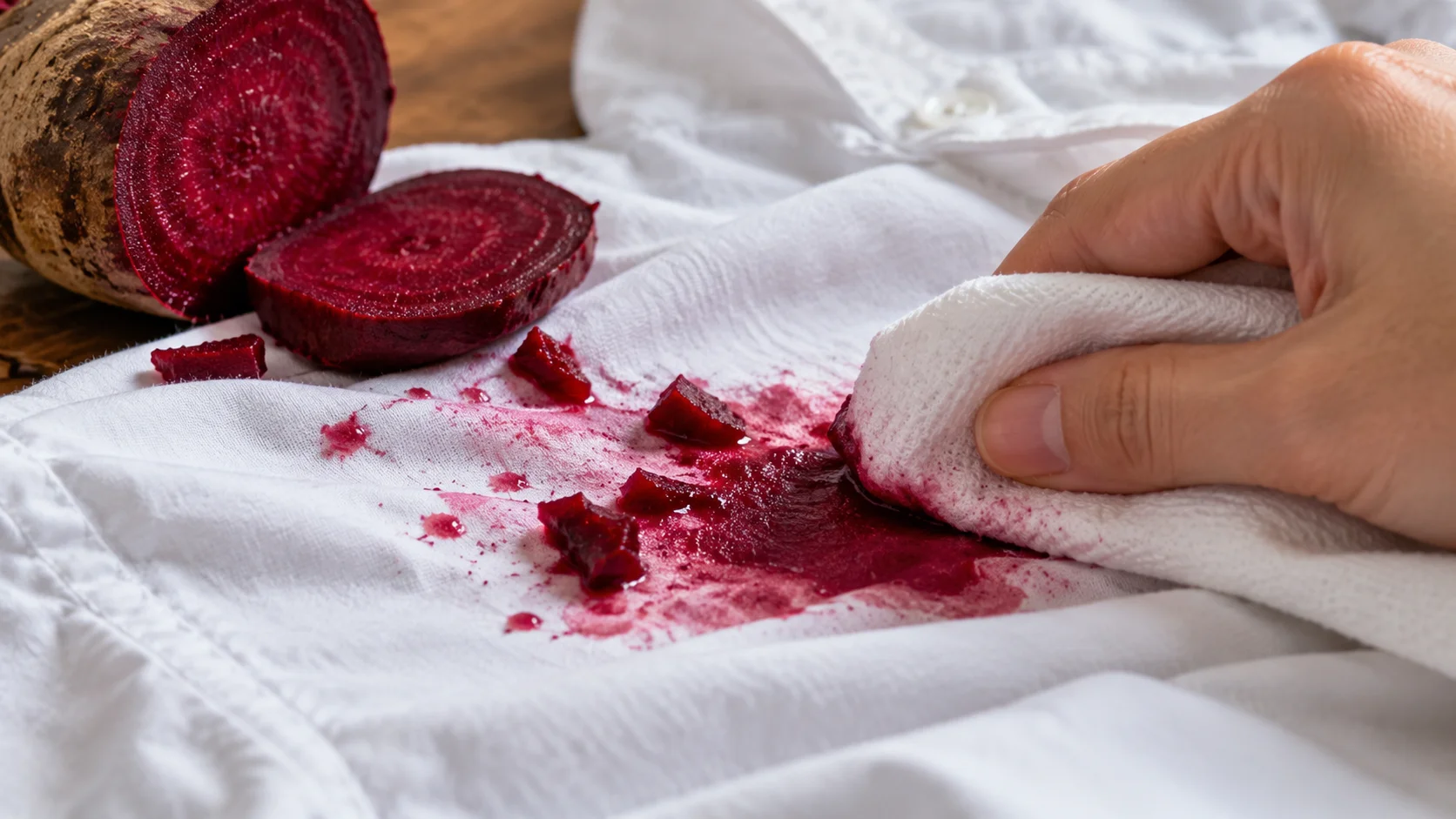
If you have ever cut fresh beets, you know how quickly their deep red-purple juice can transfer to clothing, hands, countertops, and kitchen surfaces. How to remove beet stains depends largely on the material involved, but acting quickly is one of the most important steps. Beet stains can become more difficult to remove once they dry, so scraping away solids, blotting liquid, and rinsing promptly can make a significant difference.
The good news is that a beet stain does not automatically mean an item is ruined. With the right approach, you can treat beet stains from clothes, fabric, carpet, skin, hands, white shirts, and cutting boards without relying on unnecessarily harsh methods.
How to Remove Beet Stains from Clothes
When learning how to remove beet stains from clothes, start by dealing with the spill as soon as possible. First remove any pieces of beet without pushing them deeper into the fabric. Then rinse the stained area with cold water, preferably from the back of the fabric, so the water helps push the pigment away rather than further into the fibers. Vanish recommends this approach for beetroot stains before applying an appropriate stain treatment.
After rinsing, pretreat the remaining mark with a suitable laundry stain remover or liquid detergent. Always check the garment care label and test a new product on an inconspicuous area when colorfastness is uncertain. The American Cleaning Institute recommends pretreating stains and avoiding the dryer until the stain has been removed.
15 Steps to Remove Beet Stains from Clothing
Use this sequence for most washable garments, adjusting the products to suit the fabric:
- Act quickly as soon as beet juice reaches the clothing.
- Lift solid beet pieces with a spoon or dull edge.
- Avoid rubbing the fresh stain into the fabric.
- Rinse with cold water as soon as possible.
- Flush from the back of the stained area when practical.
- Blot excess liquid with a clean white cloth if rinsing is not immediately possible.
- Apply liquid laundry detergent or a suitable stain remover.
- Gently work the treatment into washable fabric.
- Allow the pretreatment to work according to the product directions.
- Rinse the treated area before laundering.
- Wash according to the garment’s care label.
- Use a fabric-safe oxygen stain remover for persistent stains when appropriate.
- Inspect the garment after washing.
- Repeat the treatment if a visible beet mark remains.
- Keep it out of the dryer until you are satisfied that the stain is gone.
Vanish’s beetroot guide similarly recommends removing excess beetroot, rinsing with cold water, pretreating, and washing according to the garment instructions.
How to Remove Beet Juice Stains from White Shirts
Beet juice stains on white shirts can look particularly dramatic because of the contrast between the red-purple pigment and the fabric. Start with cold water rather than immediately applying a strong bleaching product. After rinsing, pretreat with a suitable stain remover and wash according to the care label.
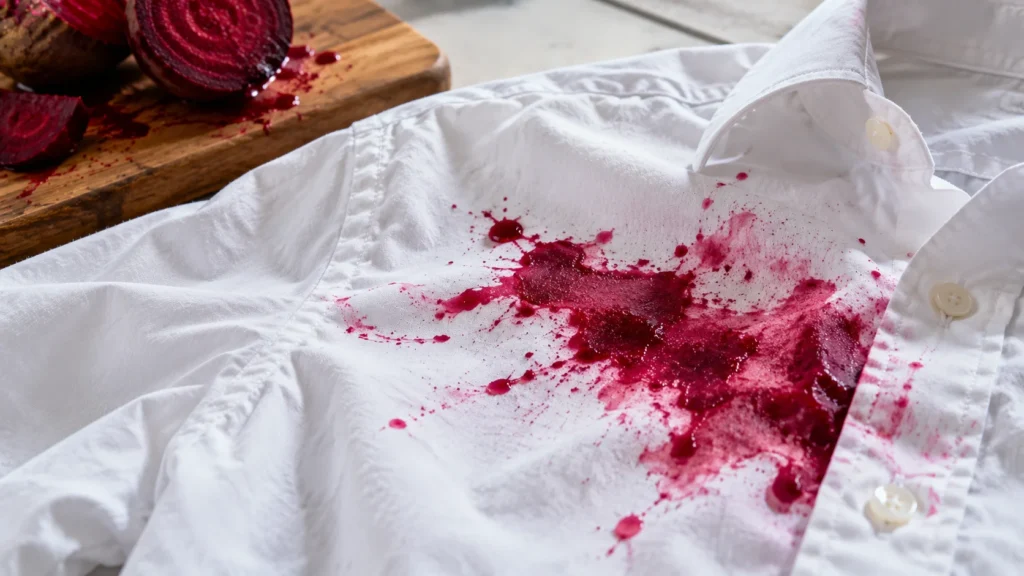
For persistent stains, a fabric-safe oxygen-based product can be useful if the garment’s instructions permit it. Some commercial oxygen products are specifically formulated for colored or white laundry, but their directions and fabric restrictions vary, so follow the label rather than assuming every product works on every garment.
Most importantly, check the shirt before putting it in the dryer. The American Cleaning Institute recommends repeating stain treatment rather than drying a garment while the stain is still visible.
How to Remove Beet Stains from Fabric
The safest method for beet stains from fabric depends on whether the fabric is washable, delicate, upholstered, or dry-clean-only. For ordinary washable fabric, cold-water rinsing followed by pretreatment and laundering is a practical starting point.
For silk, wool, heavily embellished clothing, or dry-clean-only garments, avoid experimenting with household acids, bleach, or aggressive scrubbing. Instead, follow the care label and consider a professional cleaner for valuable pieces.
Old stains may require repeated treatment rather than one aggressive application. ACI notes that older stains can sometimes respond to pretreatment or soaking, but the fabric’s care requirements still determine which products and temperatures are appropriate.
How to Remove Beet Stains from Carpet
If beet juice spills onto carpet, do not scrub it aggressively. The Carpet and Rug Institute recommends blotting liquid spills with a dry white absorbent cloth or plain white paper towel and warns that scrubbing or brushing can damage carpet fibers.
First scoop up any pieces of beet with a spoon. Then blot the liquid repeatedly until you have removed as much as possible. Apply a carpet-safe stain treatment to a clean white cloth rather than flooding the carpet, and work gently from the outside of the stain toward the center.
Always pretest the cleaning solution in an inconspicuous area. The Carpet and Rug Institute specifically recommends testing spot-removal solutions for color transfer or carpet damage before treating the visible stain.
If the beet juice has soaked deeply into the carpet, the stain is old, or the carpet is made from a delicate material, professional carpet cleaning may be safer.
How to Remove Beet Stains from Skin and Hands
Beet stains on skin are usually a temporary cosmetic problem rather than something that requires harsh chemicals. If you are searching how to remove beet stains from hands, start by washing thoroughly with soap and water.
For more persistent discoloration, Sunset’s test-kitchen method recommends using baking soda with a little water, rubbing it over the stained areas, and rinsing before repeating if needed.
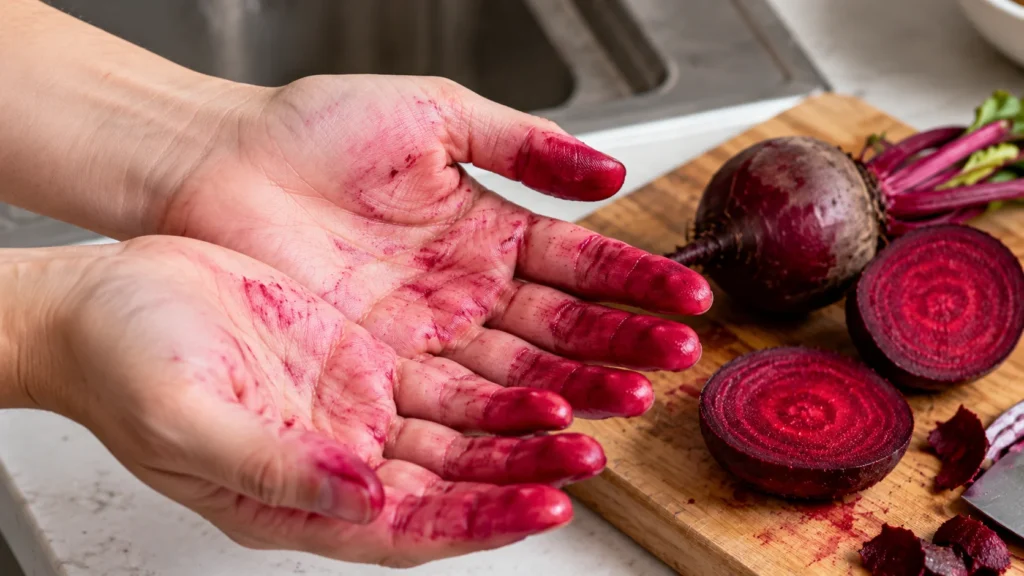
Another important strategy is prevention. Wearing disposable gloves while peeling or slicing beets can prevent much of the pigment from reaching your hands in the first place. Martha Stewart also recommends gloves as a practical way to avoid beet staining during preparation.
Avoid aggressive scrubbing if your skin becomes red, painful, or irritated. The stain will generally become less noticeable as the outer layer of skin naturally sheds.
How to Remove Beet Stains from a Cutting Board
Fresh beets can leave strong red-purple discoloration on cutting boards, particularly wooden boards. For how to remove beet stains from a cutting board, begin by washing away food residue with mild dish soap and warm water.
For a wooden board, salt and lemon can help lift surface discoloration. Martha Stewart recommends sprinkling coarse salt over the board and scrubbing with the cut side of a lemon as a way to minimize beet staining.
Food52 also recommends a coarse salt, water, and baking-soda paste for stained wooden boards, followed by rinsing and thorough drying.
Remember that salt and lemon are cleaning aids, not substitutes for proper food-safety sanitation. Martha Stewart’s food-safety guidance notes that salt is an abrasive rather than a sanitizer, so a cutting board should still be properly washed after stain treatment.
Jump into Other Related Article
- How to Remove Peanut Butter Stains | Easy Ways to Clean Clothes, Fabric & More
- How to Remove Coffee Stains | Easy Methods for Clothes, Teeth, Carpet & More
- How to Remove Stains from Carpet | Complete Guide for Coffee, Pet, Wine, Urine & More
How to Remove Beet Stains from Countertops and Kitchen Surfaces
Beet juice can stain countertops, especially porous or textured materials. Wipe up the spill as soon as possible, then clean the surface with a product recommended for its specific material.
For sealed, nonporous countertops, mild dish soap and water may be sufficient for a fresh spill. If discoloration remains, use a cleaner approved for the countertop instead of automatically reaching for bleach, vinegar, lemon juice, or abrasive powders.
Natural stone requires particular caution. Marble, granite, quartz, laminate, and butcher block have different care requirements, so a cleaning method that works on one surface may damage another. Always consult the manufacturer’s care instructions and test an unfamiliar treatment in an inconspicuous location.
How to Remove Dried or Old Beet Stains
Old beet stains can be harder to remove because the pigment has had more time to dry into the material. Begin by softening the residue rather than immediately scrubbing it.
For washable clothing, wet the stain with cool water, apply an appropriate laundry pretreatment, and allow it to work according to its directions before washing. Repeat the process if necessary.
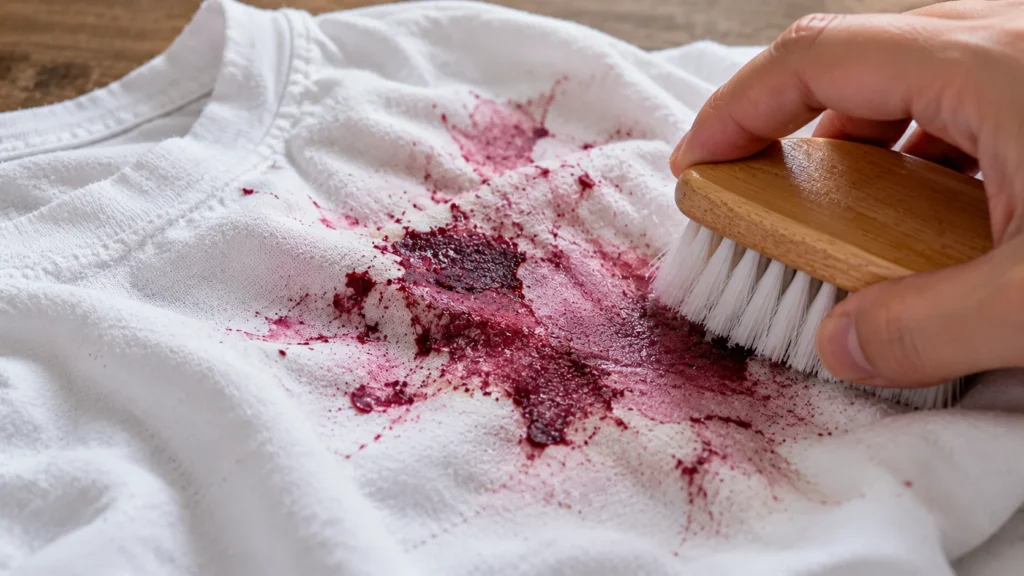
For carpet, old stains should still be treated by blotting and controlled application rather than aggressive brushing. The Carpet and Rug Institute notes that complete removal may require repeating the same treatment several times or moving to another suitable solution.
There is no universal guarantee that an old beet stain will disappear completely. Results depend on the surface, dye, age of the stain, and previous cleaning attempts.
What to Avoid When Removing Beet Stains
Trying to remove a stubborn stain by using the strongest available chemical can create a second problem: discoloration or material damage. The American Cleaning Institute recommends identifying the stain, testing for colorfastness, pretreating, and following fabric-care instructions rather than relying on aggressive treatment.
Avoid putting stained clothing into the dryer before checking the result. Also avoid scrubbing carpet with a brush because the fibers can become damaged even if the stain improves.
Never combine cleaning chemicals unless the manufacturer specifically states that they are compatible. If a product contains bleach or another strong active ingredient, follow its label carefully and keep it away from children and pets.
How to Prevent Beet Stains
Preventing beet stains is much easier than removing an old one. If you regularly prepare fresh beets, a few simple habits can reduce the amount of pigment transferred to clothing and kitchen surfaces.
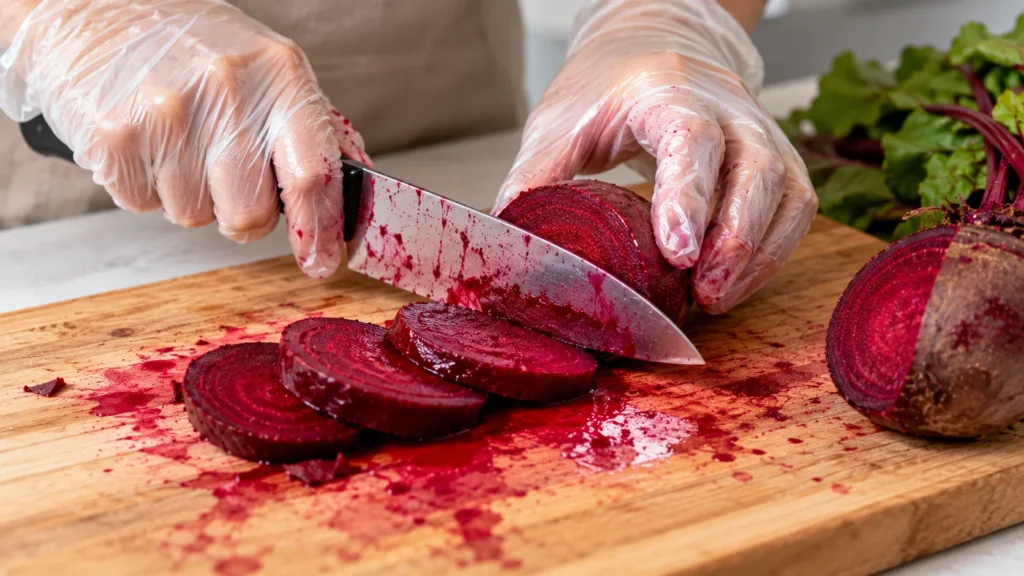
Martha Stewart recommends disposable gloves when peeling and cutting beets and suggests using gold beets when you want to minimize the strong red pigmentation associated with red beets.
You can also use a designated cutting board, wipe spills immediately, and keep a damp cloth nearby while preparing beetroot. For wooden boards, proper drying and regular conditioning can also help maintain the surface.
Conclusion
Knowing how to remove beet stains is mainly about speed, gentle treatment, and choosing a method that matches the material. For clothes, rinse with cold water, pretreat, wash according to the care label, and keep the garment out of the dryer until the stain is gone. For carpet, blot rather than scrub, and always test a cleaning solution before using it over a visible area.
Beet stains on hands and cutting boards can usually be managed with gentler household methods, while delicate fabrics, expensive carpets, and specialized surfaces may require professional treatment. Acting quickly gives you the best opportunity to remove the pigment without damaging the item.
How do you remove beet stains from clothes?
Scrape away any beet residue, rinse the stain with cold water from the back, pretreat with a suitable laundry stain remover or detergent, and wash according to the care label. Check the stain before drying.
How do you remove beet juice stains from a white shirt?
Start with cold-water rinsing and a suitable pretreatment. Wash according to the shirt’s care label, and consider a fabric-safe oxygen stain remover for persistent discoloration if permitted. Do not dry the shirt until you have checked the stain.
How do you remove beet stains from carpet?
Blot the spill with a clean white absorbent cloth, remove solid pieces with a spoon, and use a carpet-safe stain treatment after pretesting it. Do not scrub aggressively.
How do you remove beet stains from hands?
Wash your hands with soap and water first. For persistent red discoloration, baking soda mixed with a little water can be used as a gentle scrub, followed by rinsing.
How do you remove beet stains from a wooden cutting board?
Wash the board with mild dish soap and warm water, then use coarse salt and lemon to help lift surface discoloration. Rinse and dry thoroughly afterward.