
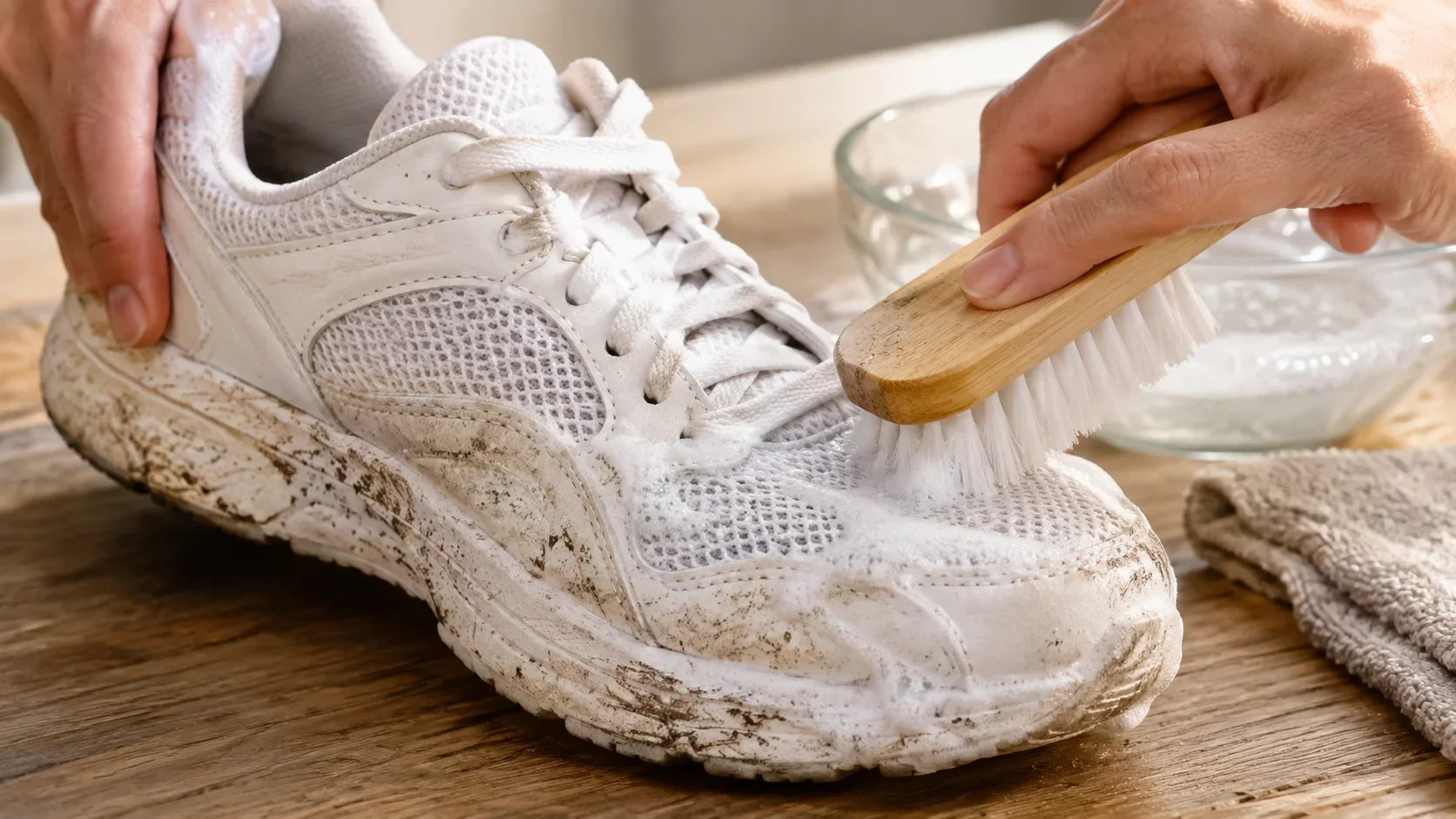
Learning how to wash sneakers properly can help remove dirt, mud, sweat, stains, odors, and everyday buildup while protecting the materials that make up the shoe. Sneakers are made from many different materials, including mesh, canvas, cotton, polyester, knit fabrics, leather, suede, rubber, foam, and synthetic materials. Because these materials react differently to water, detergent, agitation, and heat, the safest cleaning method depends on the specific shoe.
For many athletic and lifestyle sneakers, hand washing is the safest general approach. Nike recommends hand cleaning rather than machine washing because washing-machine agitation and dryer heat can damage shoes. New Balance also advises against putting its shoes in the washing machine or dryer and recommends mild, dye-free detergent, a soft brush, and air drying instead.
Some sneakers, however, are specifically designed to tolerate machine washing. Allbirds, for example, says its washable shoes can be placed in a delicates bag and washed on a gentle, cold cycle with mild detergent, followed by air drying rather than machine drying.
This means there is no universal rule that every sneaker can or cannot go into a washer. The manufacturer’s care instructions should always take priority. Whirlpool says canvas, nylon, cotton, and polyester shoes are generally among the materials that may be suitable for machine washing, while leather, suede, vinyl, cleated athletic shoes, and embellished footwear generally require other cleaning methods.
This complete guide explains how to wash sneakers by hand, how to wash sneakers in the washing machine, how to wash white sneakers, how to clean mesh and canvas shoes, how to handle leather and suede, and how to care for Nike, Skechers, Brooks, Hoka, On, Adidas, New Balance, Allbirds, Vessi, Rothy’s, Converse, and other popular sneaker types.
The Right Cleaning Method Starts With the Sneaker Material
Before washing your sneakers, identify the materials used in the upper, lining, midsole, outsole, and any decorative components. Two shoes that look almost identical can require completely different cleaning methods because one may contain leather or suede while another uses washable mesh.
The care label, manufacturer’s website, or product instructions should be checked before applying water. This is especially important for expensive running shoes and sneakers containing specialty foams, waterproof membranes, glued components, leather overlays, or delicate knit fabrics.
Brooks, for example, specifically recommends hand cleaning its running shoes and warns against machine washing and drying because excessive soaking, spinning, and heat can affect the shoe’s fabric and foam.
New Balance similarly recommends mild, dye-free detergent and a bristle brush, followed by air drying for 24 hours. It specifically recommends specialty cleaners for suede and leather.
15 Things to Check Before Washing Sneakers
- Care label Check whether the shoes are washable.
- Upper material Identify mesh, canvas, leather, suede, knit, or synthetic fabric.
- Outsole Check for rubber, foam, cleats, or specialty compounds.
- Midsole foam Avoid unnecessary soaking and high heat.
- Insoles Determine whether they are removable and washable.
- Laces Remove them before cleaning.
- Colorfastness Test cleaning products on an inconspicuous area.
- Decorations Check logos, metallic parts, embroidery, and glued details.
- Waterproofing Look for membranes or water-resistant finishes.
- Stains Identify mud, grass, grease, food, or sweat.
- Odor Determine whether the problem is surface dirt or odor inside the shoe.
- Manufacturer instructions Check the brand’s current care guidance.
- Washing-machine compatibility Never assume it.
- Drying instructions Check whether air drying is required.
- Shoe condition Old or damaged shoes may need gentler treatment.
How to Wash Sneakers by Hand
Hand washing sneakers is the safest starting point for most shoes because it provides greater control over water, pressure, detergent, and brushing. It also avoids the repeated tumbling that can occur in a washing machine.
Nike recommends hand cleaning sneakers with a mild cleaning solution and air drying, particularly because different shoe materials can respond poorly to machine washing.
Brooks takes an even more conservative approach for its running shoes and recommends a damp cloth or soft brush with mild detergent rather than submerging the shoes.
On’s running-shoe cleaning guidance also recommends removing the laces and insoles, using warm water with mild detergent, gently brushing dirty areas, rinsing away residue, and air drying at room temperature.
Hand washing is particularly useful for running shoes, mesh sneakers, white sneakers, knit shoes, and shoes with foam cushioning when the manufacturer does not specifically approve machine washing.
15-Step Hand-Washing Method
- Remove the laces from both shoes.
- Take out the insoles if they are removable.
- Brush away dry dirt from the uppers.
- Clean the outsole before wet cleaning the upper.
- Prepare lukewarm or warm water according to the manufacturer’s instructions.
- Add a small amount of mild detergent.
- Test the solution on an inconspicuous area.
- Dip a soft brush or cloth into the solution.
- Clean the upper gently using small movements.
- Work on stains separately instead of aggressively scrubbing the entire shoe.
- Clean the rubber outsole with a soft brush.
- Wipe away soap with a clean damp cloth.
- Rinse only as much as the material allows.
- Stuff the shoes lightly with clean paper towels or cloth if appropriate.
- Air dry completely before replacing the insoles and laces.
How to Wash Sneakers in the Washing Machine
The answer to how to wash sneakers in the washing machine depends entirely on whether the manufacturer permits machine washing. Some brands specifically recommend hand cleaning, while others manufacture shoes designed to tolerate a gentle wash cycle.
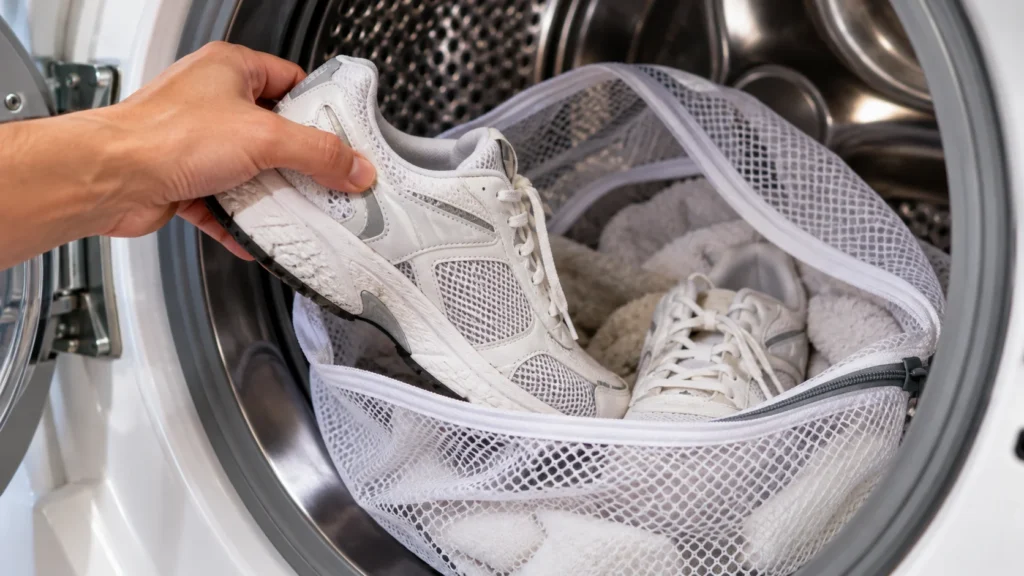
Whirlpool says shoes made from materials such as canvas, nylon, cotton, and polyester are often suitable for machine washing, but it also warns against putting leather, suede, vinyl, cleated sports shoes, and delicate embellished footwear into a washer.
Allbirds provides a specific machine-washing method for its washable shoes: remove laces and insoles, brush off dirt, place the shoes in a delicates bag or pillowcase, use a gentle cold cycle with mild detergent, and air dry.
Other manufacturers take a different position. Nike and New Balance specifically advise against machine washing their shoes.
Therefore, machine washing should never be considered the default sneaker-cleaning method.
15 Washing-Machine Precautions
- Confirm machine washing is allowed.
- Check the exact shoe model.
- Remove the laces.
- Remove the insoles.
- Brush away loose mud.
- Clean the soles before placing shoes in the washer.
- Put approved shoes inside a mesh garment bag.
- A pillowcase can be an alternative where appropriate.
- Add old towels to help cushion the load when the manufacturer allows it.
- Use cold water.
- Choose a delicate or gentle cycle.
- Use a small amount of mild liquid detergent.
- Avoid bleach unless explicitly approved.
- Skip high-temperature settings.
- Air dry unless the shoe manufacturer specifically allows another method.
How to Wash White Sneakers
White sneakers show dirt, grass, mud, sweat, and scuff marks quickly, making regular cleaning especially useful. However, aggressively scrubbing white shoes can create uneven discoloration or damage mesh and knit materials.
Nike recommends using a mild cleaning solution rather than bleach or harsh chemicals for its knit and mesh shoes. The company advises gently brushing the solution into the material and wiping away the residue with a clean cloth.
For white canvas or washable fabric shoes, a mild detergent solution can often remove ordinary dirt. Stubborn marks should be treated gradually rather than attacked with strong chemicals.
White sneakers made from leather or suede need completely different care. Leather should be treated with an appropriate leather cleaner, while suede should be kept away from unnecessary moisture.
How to Wash White Sneakers in the Washing Machine
White sneakers should only be machine washed when their manufacturer permits it. Even when machine washing is allowed, cold water and a gentle cycle are generally preferable to hot, aggressive washing.
Whirlpool recommends checking the care instructions before washing shoes and advises a delicate cold cycle for compatible sneakers.
Allbirds similarly recommends cold water, mild detergent, and a delicate cycle for its washable shoes.
For shoes that are not machine washable, hand cleaning is safer. This is particularly important when the shoes contain leather, suede, glued decorations, delicate mesh, or specialty foam.
15 White-Sneaker Cleaning Rules
- Remove loose dirt first.
- Separate laces from the shoes.
- Check the material.
- Test your cleaner.
- Use mild detergent.
- Avoid chlorine bleach unless the manufacturer permits it.
- Use a soft brush.
- Brush mesh gently.
- Clean rubber separately.
- Treat stains individually.
- Rinse away detergent residue.
- Avoid hot water.
- Avoid high heat during drying.
- Keep white shoes away from dirty surfaces while drying.
- Let them dry completely before wearing.
How to Wash Mesh Sneakers
Mesh sneakers require gentle cleaning because their woven structure can catch dirt and can be damaged by aggressive brushing. Mesh is common in running shoes because it provides flexibility and airflow, but that construction can also make it vulnerable to excessive friction.
Nike recommends a mild soapy-water solution for knit and mesh shoes, using a shoe brush or clean toothbrush in the same direction as the knit. It specifically advises avoiding bleach and other harsh chemicals.
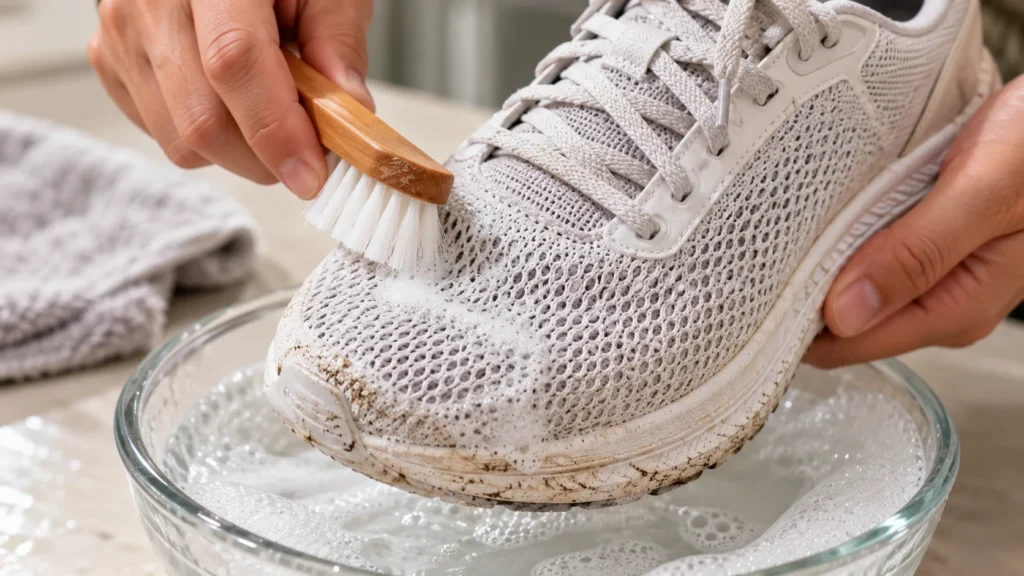
On recommends a soft cloth, sponge, or soft-bristled brush for running shoes and warns against abrasive materials.
The safest technique is to brush lightly and repeat the process rather than applying heavy pressure.
How to Wash Canvas Sneakers
Canvas sneakers are among the more straightforward shoes to clean because canvas can tolerate gentle water-based cleaning when the manufacturer permits it.
Whirlpool identifies canvas among the materials that are generally suitable for machine washing, but it still recommends checking the care instructions before putting any footwear in a washer.
Converse and other canvas sneakers should still be treated according to their specific instructions because adhesives, printed graphics, rubber foxing, and dyes can differ between models.
Hand washing is usually easier to control, particularly when only a small section of the shoe is dirty.
How to Wash Leather Sneakers
Leather sneakers should not be washed like fabric sneakers. Leather can be affected by excessive water, aggressive brushing, unsuitable detergent, and high heat.
Nike recommends extra care with leather and suggests using appropriate leather-care products rather than treating leather like cotton or mesh.
New Balance likewise recommends specialty leather cleaner for leather shoes instead of its standard mild-detergent method.
For leather sneakers, remove surface dirt with a soft cloth, use a product designed for the particular leather, and avoid soaking the entire shoe unless the manufacturer explicitly allows it.
How to Wash Suede Sneakers
Suede sneakers require even more caution than leather. Suede can absorb moisture and develop visible marks when treated with excessive water.
Nike specifically describes suede as a delicate material that can stain easily and recommends suede-specific care rather than conventional wet washing.
New Balance also recommends specialty suede cleaner for suede footwear.
A suede sneaker should generally be brushed with an appropriate suede brush to remove surface dirt, followed by a manufacturer-approved suede cleaning product when necessary. Avoid placing suede sneakers in the washing machine.
How to Wash Smelly Sneakers
Smelly sneakers often need attention to the insoles as well as the exterior. Sweat and moisture can accumulate inside shoes, so cleaning only the outer fabric may not completely resolve the odor.
Whirlpool recommends removing insoles and washing them separately by hand when possible. It notes that non-machine-washable insoles can be wiped with slightly soapy water and deodorized with baking soda after cleaning.
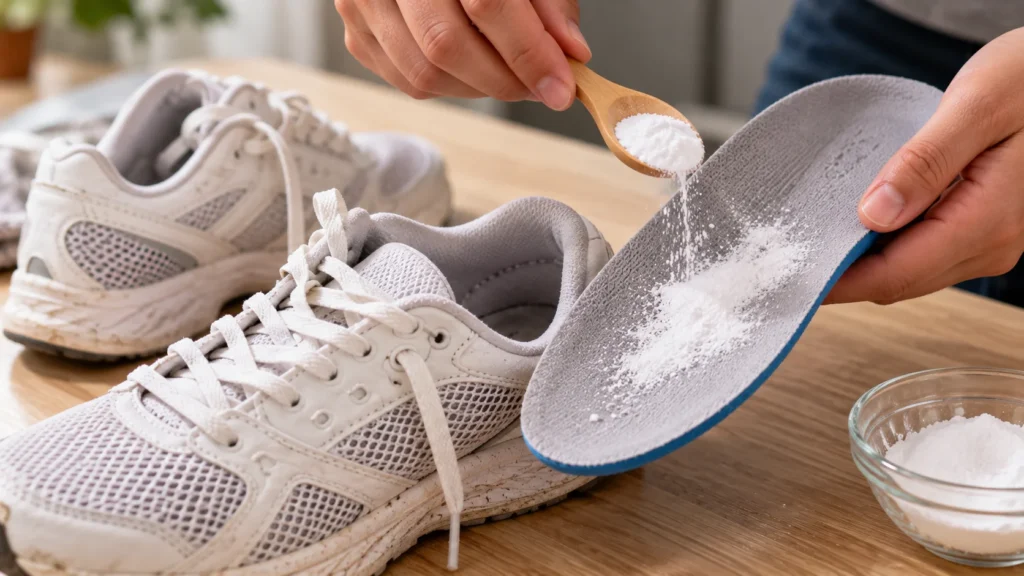
Allbirds similarly notes that absorbent insoles can contribute significantly to shoe odor and provides separate care guidance for them.
Complete drying is also essential. A damp sneaker can develop unpleasant odors again if it is worn or stored before the interior has fully dried.
15 Ways to Reduce Sneaker Odor
- Remove insoles after wearing.
- Allow shoes to air out.
- Clean sweat buildup regularly.
- Wash removable insoles when permitted.
- Let insoles dry completely.
- Use baking soda only where compatible.
- Avoid sealing damp shoes in a closed container.
- Alternate pairs when possible.
- Remove wet socks promptly.
- Dry shoes after exposure to rain.
- Clean the interior gently.
- Avoid excessive detergent.
- Rinse soap residue away.
- Air dry in a well-ventilated area.
- Replace severely worn or persistently odor-filled insoles when appropriate.
How to Wash Running Sneakers
Running shoes require special consideration because their construction often combines mesh, engineered fabric, adhesives, foam, rubber, and cushioning systems.
Brooks specifically recommends hand cleaning rather than machine washing or drying because excessive soaking, spin cycles, and dryer heat can affect the shoe’s materials and foam.
On also recommends hand washing running shoes with warm water, mild detergent, and a soft brush or cloth, followed by room-temperature air drying.
Allbirds is an important exception for its own washable running shoes, which the company says can be machine washed on a gentle cold cycle and air dried.
The lesson is simple: running shoes should be cleaned according to the manufacturer’s instructions rather than according to a generic sneaker-washing rule.
How to Wash Skechers Sneakers
Skechers sneakers include many different materials and product categories, so the correct method depends on the exact model. A shoe described as washable should still be cleaned according to its product instructions.
For washable fabric Skechers, gentle hand cleaning is a reasonable starting point when the label permits it. Remove loose dirt, take out removable insoles and laces, and clean the upper with mild detergent and a soft brush.
For leather, suede, specialty performance materials, or shoes with unusual finishes, use the specific care method recommended for that model.
Avoid assuming that a pair labeled “washable” should automatically go into a hot wash or dryer.
How to Wash Brooks Sneakers
Brooks sneakers should be hand cleaned rather than machine washed or machine dried, according to Brooks’ current care guidance.
Brooks recommends brushing caked-on mud from the outsole, removing the insoles, gently washing the uppers with warm water and mild soap, lightly rinsing, and stuffing the shoes with a dry washcloth or paper towels while they air dry.
The company’s guidance is particularly relevant to running shoes because excessive soaking and heat can affect the structure and cushioning materials.
15 Brooks Sneaker Cleaning Steps
- Brush off dry mud.
- Clean the outsole first.
- Remove the insoles.
- Prepare warm water.
- Add mild soap.
- Use a soft brush or cloth.
- Gently clean the upper.
- Avoid soaking the entire shoe.
- Lightly rinse.
- Wipe away remaining soap.
- Clean the insoles separately.
- Rinse the insoles carefully.
- Stuff shoes with dry cloth or paper towels.
- Air dry naturally.
- Reinsert the insoles only when everything is completely dry.
Jump into Other Related Article
- How to Remove Peanut Butter Stains | Easy Ways to Clean Clothes, Fabric & More
- How to Clean Suede Shoes | Easy Ways to Clean Suede at Home
- How to Clean a Sink Drain | Remove Odors, Hair, Grease & Clogs
How to Wash Hoka Sneakers
Hoka sneakers are performance running shoes, so their cushioning and upper materials should be treated carefully. The exact cleaning instructions can vary between Hoka models and materials.
For ordinary dirt, begin with dry brushing and then use a damp cloth or soft brush with mild soap when the manufacturer’s instructions permit wet cleaning.
Avoid aggressive soaking, high heat, and harsh chemical cleaners. The goal is to remove surface dirt without unnecessarily saturating the cushioning system.
If a particular Hoka model has special materials or care instructions, those instructions should override a general sneaker-cleaning method.
How to Wash On Cloud Sneakers
On Cloud sneakers, commonly referred to as On running shoes, should be cleaned according to the material and model instructions. On’s own running-shoe cleaning guidance recommends removing laces and insoles, brushing away loose dirt, using warm water and mild detergent, cleaning gently with a soft cloth or brush, rinsing thoroughly, and air drying away from direct heat.
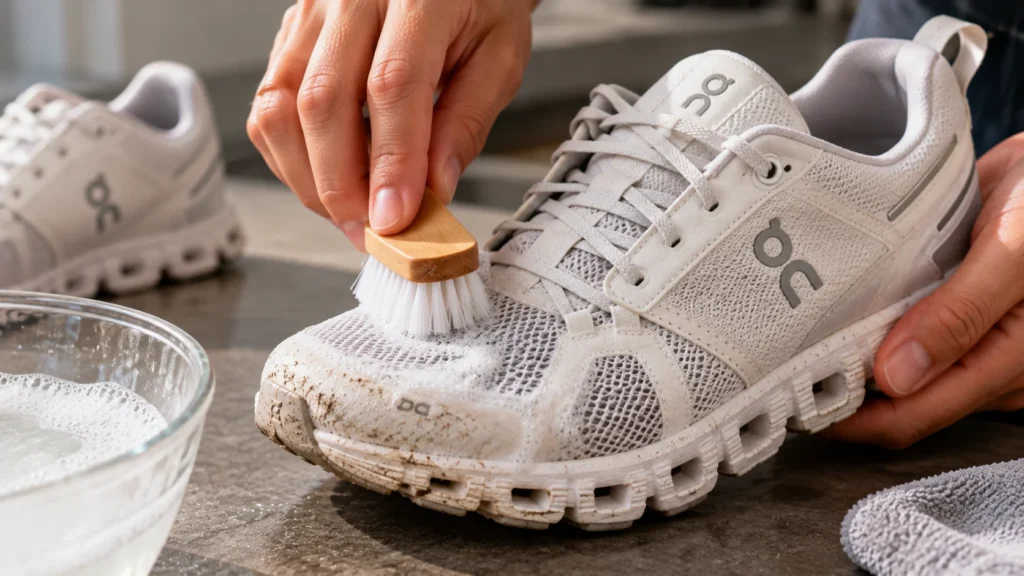
On also recommends stuffing the shoes with scrunched-up paper while they dry to absorb moisture and help maintain shape.
For performance shoes, this gentle approach is preferable to aggressive machine washing unless the specific model expressly permits machine cleaning.
How to Wash Nike Sneakers
Nike sneakers are generally best cleaned by hand. Nike specifically says it does not recommend washing its shoes in a washing machine and recommends hand cleaning with a mild cleaning solution instead.
For knit and mesh Nike shoes, the company recommends a mild soapy-water solution and a shoe brush or clean toothbrush. It advises brushing in the direction of the knit, wiping away soap with a clean cloth, and allowing the shoes to air dry.
Nike also advises extra caution with leather and suede. Those materials should be treated with products designed for them rather than being soaked in ordinary soapy water.
How to Wash Adidas Sneakers
Adidas sneakers come in many materials, including mesh, knit, canvas, leather, suede, and synthetic uppers. Therefore, the specific model’s care instructions should determine whether machine washing is appropriate.
For washable fabric Adidas sneakers, gentle hand cleaning with mild detergent and a soft brush is a conservative approach.
Remove laces and insoles before cleaning, work from the outsole toward the upper, and avoid saturating materials that are not designed for full immersion.
Air drying is preferable when there is any uncertainty about heat tolerance.
How to Wash New Balance Sneakers
New Balance sneakers should not be placed in the washing machine or dryer, according to the company’s current product-care guidance.
New Balance recommends a mild, dye-free detergent and a bristle brush, followed by wiping the shoes with a damp cloth and allowing them to air dry for 24 hours. Leather and suede shoes should be treated with specialty cleaners.
This makes hand cleaning the appropriate general approach for New Balance athletic footwear.
How to Wash Allbirds Sneakers
Allbirds sneakers are a notable machine-washable exception. Allbirds says its washable shoes can be cleaned in a washing machine using a delicates bag or pillowcase, cold water, a gentle cycle, and mild detergent. The company specifically advises against bleach, fabric softener, and machine drying.
The process begins by removing the laces and insoles and brushing off excess dirt. After washing, the shoes should be air dried in a location with good airflow.
This is a good example of why brand-specific instructions matter: a method that Allbirds approves should not automatically be transferred to Nike, Brooks, New Balance, or another brand.
How to Wash Converse Sneakers
Converse sneakers, particularly canvas styles, can often be cleaned with a mild detergent solution when their care instructions permit it.
Hand cleaning gives the greatest control over the canvas upper and rubber areas. Use a soft brush for the upper and a separate brush for the rubber outsole.
Avoid excessive soaking and high heat because adhesives, dyes, and the shape of the shoe can be affected.
White canvas Converse shoes may need repeated gentle cleaning rather than one aggressive treatment.
How to Wash Kids’ Sneakers
Kids’ sneakers often become dirty from mud, grass, food, playground surfaces, and everyday outdoor activity. Because children’s shoes can contain many different materials, inspect the care instructions before washing.
Remove laces and insoles when possible and brush away dry dirt before adding water. This reduces the amount of mud that must be dissolved during wet cleaning.
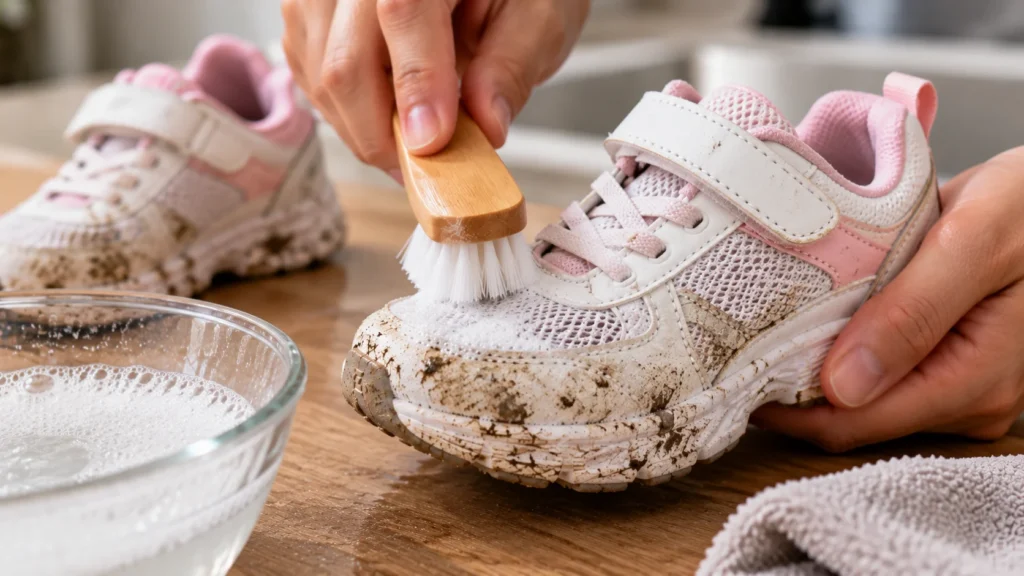
A mild detergent and soft brush are usually more appropriate than harsh stain removers. Allow shoes to dry completely before returning them to regular use.
For school or sports shoes that are worn frequently, regular light cleaning is generally easier on the materials than allowing heavy dirt to accumulate.
How to Wash Rothy’s Sneakers
Rothy’s shoes use different materials across different product lines, so care should be based on the exact model. Some machine-washable Rothy’s footwear has specific washing and drying instructions, while other materials require different treatment.
Do not assume that every Rothy’s sneaker can be cleaned in the same way. Check the product’s current care instructions before putting it into a washing machine.
For a washable model, follow the specified water temperature, cycle, detergent, and drying method exactly.
How to Wash Vessi Sneakers
Vessi sneakers are designed around waterproof materials, which means their care should preserve the shoe’s water-resistant construction.
For ordinary surface dirt, gentle cleaning with mild soap and water is preferable to aggressive chemicals. Use a soft brush or cloth rather than abrasive tools.
Avoid bleach and excessive heat unless Vessi’s specific instructions for the model state otherwise. Allow the shoes to dry naturally after cleaning.
How to Wash APL Sneakers
APL sneakers can contain knit, mesh, synthetic, and other performance materials depending on the model. Check the exact product instructions before deciding whether to machine wash.
For a washable fabric APL sneaker, gentle hand cleaning is a conservative option. Remove the laces and insoles, brush off loose dirt, and clean the upper with mild detergent and a soft cloth or brush.
Avoid aggressive soaking or high heat, particularly when the shoe contains glued components or specialized cushioning.
How to Wash Wool Sneakers
Wool sneakers require more delicate treatment than ordinary synthetic sneakers. Wool can react to excessive heat, agitation, and unsuitable detergents.
If the manufacturer permits wet cleaning, use cool or lukewarm water and a cleaner appropriate for wool. Avoid vigorous brushing and never twist or wring the shoe.
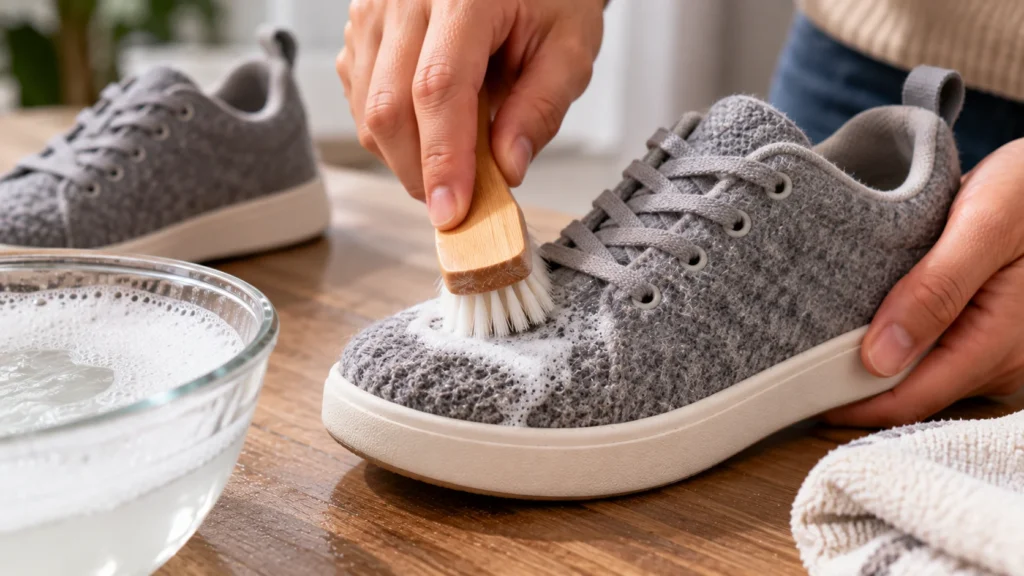
Air drying is the safer choice. Keep wool sneakers away from radiators, heaters, and high-temperature dryers.
How to Wash Cloth Sneakers
Cloth sneakers can generally be cleaned with a mild detergent and soft brush when the manufacturer’s instructions permit water-based cleaning.
Start by removing loose dirt, then clean the fabric in sections. Avoid saturating the shoe unnecessarily, particularly around glued seams.
After cleaning, wipe away detergent residue and allow the shoes to dry naturally.
How to Wash Sneakers in a Front-Loading Washer
A front-load washer can be used for sneakers only when the shoe manufacturer allows machine washing. Front-load machines do not eliminate the risks associated with water, tumbling, detergent, or heat.
Whirlpool recommends using a mesh garment bag, a delicate cold cycle, slow or no spin, and old towels to cushion compatible shoes.
Allbirds similarly permits its washable shoes to be cleaned in a gentle cycle with cold water.
Nike, Brooks, and New Balance, however, recommend hand cleaning instead of machine washing.
Therefore, the washer type is less important than whether the specific sneakers are machine washable.
How to Wash and Dry Sneakers Safely
Drying is one of the most important stages of sneaker care. Excessive heat can shrink fabrics, deform materials, affect adhesives, and damage foam or other components.
Nike advises air drying its shoes and warns that dryer heat can damage them. Brooks also specifically warns against machine drying.
Whirlpool notes that some canvas, cotton, and polyester shoes may be dryer-safe according to their care instructions, but recommends following the shoe manufacturer’s directions and suggests low or no heat when appropriate.
When in doubt, air drying is the safer default.
15 Sneaker-Drying Practices
- Remove excess water gently.
- Never wring the shoes.
- Remove removable insoles.
- Dry insoles separately.
- Use clean paper towels if appropriate.
- Stuff the shoe lightly to preserve shape.
- Replace wet paper as necessary.
- Use a clean dry towel for excess moisture.
- Place shoes in a well-ventilated location.
- Keep them away from direct high heat.
- Avoid hot radiators.
- Avoid heat guns and hair dryers.
- Allow sufficient drying time.
- Confirm the inside is completely dry.
- Reinsert insoles and laces only after drying.
Baking Soda for Sneaker Cleaning and Odor
Baking soda is often associated with sneaker cleaning, particularly for odor and dirty rubber soles. It can be useful in some situations, but it should not replace the manufacturer’s care instructions.
Whirlpool recommends baking soda as an option for deodorizing non-machine-washable insoles after they have been wiped and excess moisture has been removed.
On also suggests a baking-soda-and-water paste for particularly dirty outsoles.
Avoid assuming that baking soda is safe for every upper. Delicate leather, suede, specialty coatings, and dyed materials should be treated with appropriate products.
Common Sneaker-Washing Mistakes
Sneakers are frequently damaged because people use a method that works for ordinary laundry but is inappropriate for footwear. High temperatures, harsh chemicals, aggressive scrubbing, and excessive soaking are common problems.
Nike, Brooks, and New Balance all emphasize gentler cleaning approaches and warn against machine washing or drying for their shoes.
The safest cleaning process is usually the least aggressive method capable of removing the actual dirt.
15 Mistakes to Avoid
- Putting every sneaker in the washing machine.
- Using hot water unnecessarily.
- Putting running shoes in a hot dryer.
- Using chlorine bleach without manufacturer approval.
- Scrubbing mesh aggressively.
- Soaking leather sneakers.
- Soaking suede sneakers.
- Ignoring the care label.
- Washing shoes with heavy mud still attached.
- Leaving removable insoles inside during machine washing.
- Using excessive detergent.
- Failing to rinse away soap.
- Wearing sneakers before they are completely dry.
- Drying shoes directly on a radiator.
- Assuming every shoe from one brand has identical care requirements.
Sneaker Washing Method by Material
| Sneaker Material | Recommended Starting Method | Main Precaution |
| Canvas | Gentle hand cleaning | Avoid unnecessary soaking |
| Cotton | Mild detergent and gentle washing | Check shrinkage risk |
| Polyester | Hand cleaning or approved machine wash | Follow model instructions |
| Mesh | Soft brush and mild soap | Avoid aggressive scrubbing |
| Knit | Mild soapy solution | Brush in material direction |
| Leather | Leather-specific cleaner | Avoid soaking |
| Suede | Suede-specific cleaner | Minimize moisture |
| Wool | Wool-safe gentle cleaning | Avoid heat and agitation |
| Synthetic | Mild detergent | Check coatings |
| Rubber outsole | Soft brush and mild cleaner | Avoid harsh chemicals |
| Foam | Damp cloth/controlled cleaning | Avoid excessive soaking |
| Waterproof fabric | Manufacturer-approved method | Preserve membrane |
| Canvas/mesh combination | Gentle hand wash | Treat materials separately |
| Embellished shoes | Spot cleaning | Protect decorations |
| Performance running shoes | Manufacturer-specific care | Avoid generic machine washing |
Sneaker Washing Safety Guidelines
Cleaning products should be used carefully because sneakers can contain adhesives, coatings, dyes, foam, leather, suede, and other materials that react differently to chemicals.
Do not combine cleaning chemicals simply because one product is designed for fabric and another is designed for stains. Strong chemical combinations can create dangerous fumes or damage the footwear.
Always follow the product label and manufacturer’s instructions. When a shoe manufacturer says not to machine wash, that instruction should take priority over general washing advice.
15 Safety Rules for Washing Sneakers
- Read the sneaker care instructions.
- Read the cleaner’s label.
- Test unfamiliar products.
- Keep cleaning chemicals away from children.
- Keep chemicals away from pets.
- Work in a ventilated area.
- Avoid unnecessary chemical combinations.
- Never mix incompatible cleaning products.
- Wear gloves when the cleaner requires them.
- Avoid eye contact with cleaning solutions.
- Keep leather cleaners away from unsuitable fabrics.
- Keep suede products specific to suede.
- Avoid high heat unless explicitly permitted.
- Stop cleaning if the material begins changing color.
- Seek professional shoe cleaning for valuable or delicate footwear.
How Often to Wash Sneakers
Sneakers do not necessarily need to be washed after every use. Over-cleaning can expose materials and adhesives to unnecessary moisture and mechanical stress.
The ideal frequency depends on how often the sneakers are worn, where they are used, how much the wearer sweats, and how dirty the environment is.
Allbirds suggests a general running-shoe washing interval of around every six months or 200 miles, while also noting that dirt, sweat, and trail conditions can require more frequent cleaning.
For everyday sneakers, light spot cleaning between deeper washes can help prevent heavy buildup. Running shoes used on muddy trails may require cleaning much sooner than casual sneakers worn indoors or on clean pavement.
Final Sneaker-Cleaning Routine
For most washable fabric sneakers, begin by removing the laces and insoles and brushing off loose dirt. Use a mild detergent with water and a soft brush or cloth, focusing on stained areas instead of aggressively scrubbing the entire shoe.
For mesh and knit sneakers, use a gentle brush and avoid abrasive tools. Nike specifically recommends brushing knit and mesh materials in the direction of the fabric and avoiding bleach or harsh chemicals.
For leather and suede sneakers, use material-specific cleaners rather than soaking them in ordinary detergent solution. Nike and New Balance both emphasize special care for these materials.
For running shoes, check the brand instructions before using a washing machine. Brooks and New Balance recommend hand cleaning, while Allbirds permits machine washing for its washable shoes.
After cleaning, remove excess moisture, reshape the shoes, and allow them to air dry completely. Unless the manufacturer explicitly approves machine drying, avoiding high heat is the safest choice.
Conclusion
Knowing how to wash sneakers correctly is mostly about choosing the right cleaning method for the shoe’s material and construction. A gentle hand-washing routine is the safest general option for many sneakers because it gives you control over water, detergent, brushing, and moisture exposure.
For white sneakers, mesh sneakers, canvas sneakers, cloth sneakers, and many everyday athletic shoes, mild detergent, a soft brush, controlled water use, and air drying can provide effective cleaning without unnecessary stress on the materials. Nike, Brooks, New Balance, and On all provide guidance centered around gentle cleaning and air drying for their respective footwear.
Machine washing is not automatically wrong, but it should only be used when the manufacturer allows it. Whirlpool identifies some canvas, cotton, nylon, and polyester footwear as potentially suitable for a gentle machine cycle, while Allbirds specifically approves machine washing for its washable shoes.
At the same time, Nike, Brooks, and New Balance advise against machine washing their shoes, showing why generic sneaker-washing advice should never override brand-specific instructions.
For leather, suede, wool, delicate knit, specialty performance shoes, and valuable sneakers, use the material-specific method rather than treating them like ordinary washable fabric. Most importantly, avoid unnecessary heat, aggressive chemicals, hard scrubbing, and premature use while the shoes are still damp.
With the right method, regular cleaning can remove dirt and odors while helping your sneakers maintain their appearance, structure, and useful life.
Can sneakers go in the washing machine?
Some sneakers can be machine washed, but not all. Whirlpool says certain canvas, nylon, cotton, and polyester shoes may be suitable, while Nike, Brooks, and New Balance advise against machine washing their respective shoes. Always check the exact manufacturer’s instructions first.
What is the safest way to wash sneakers?
Hand washing with mild detergent, a soft brush or cloth, controlled water use, and air drying is the safest general method for many sneakers. This is particularly appropriate when the manufacturer does not approve machine washing.
How do I wash sneakers in a washing machine?
Only machine wash sneakers when the manufacturer permits it. Remove the laces and insoles, brush away loose dirt, place the shoes in a mesh bag or pillowcase when appropriate, use cold water and a gentle cycle, and air dry unless the manufacturer specifies otherwise.
Can I wash white sneakers in the washing machine?
Some white sneakers can be machine washed if their care instructions permit it. However, many brands recommend hand cleaning instead. Use cold water and mild detergent for compatible machine-washable shoes and avoid bleach unless specifically approved.
Can I put Nike sneakers in the washing machine?
Nike does not recommend washing its shoes in a washing machine. Nike recommends hand cleaning with a mild cleaning solution and air drying instead.
Can I put Brooks sneakers in the washing machine?
Brooks recommends against machine washing its running shoes. The company advises hand cleaning with mild soap, a damp cloth or soft brush, and air drying.
Can I put New Balance sneakers in the washing machine?
New Balance does not recommend putting its shoes in a washing machine or dryer. Its current care guidance recommends mild, dye-free detergent, a bristle brush, a damp cloth, and 24 hours of air drying.
Can I wash Allbirds sneakers in the washing machine?
Allbirds says its washable shoes can be machine washed on a gentle cold cycle using mild detergent and a delicates bag or pillowcase. The company recommends removing the laces and insoles first and air drying rather than using a dryer.
How do I wash white mesh sneakers?
Use a mild soapy solution and a soft brush or toothbrush. Brush gently in the direction of the mesh or knit, wipe away soap with a clean damp cloth, and air dry. Nike specifically recommends this type of method for its knit and mesh shoes.