
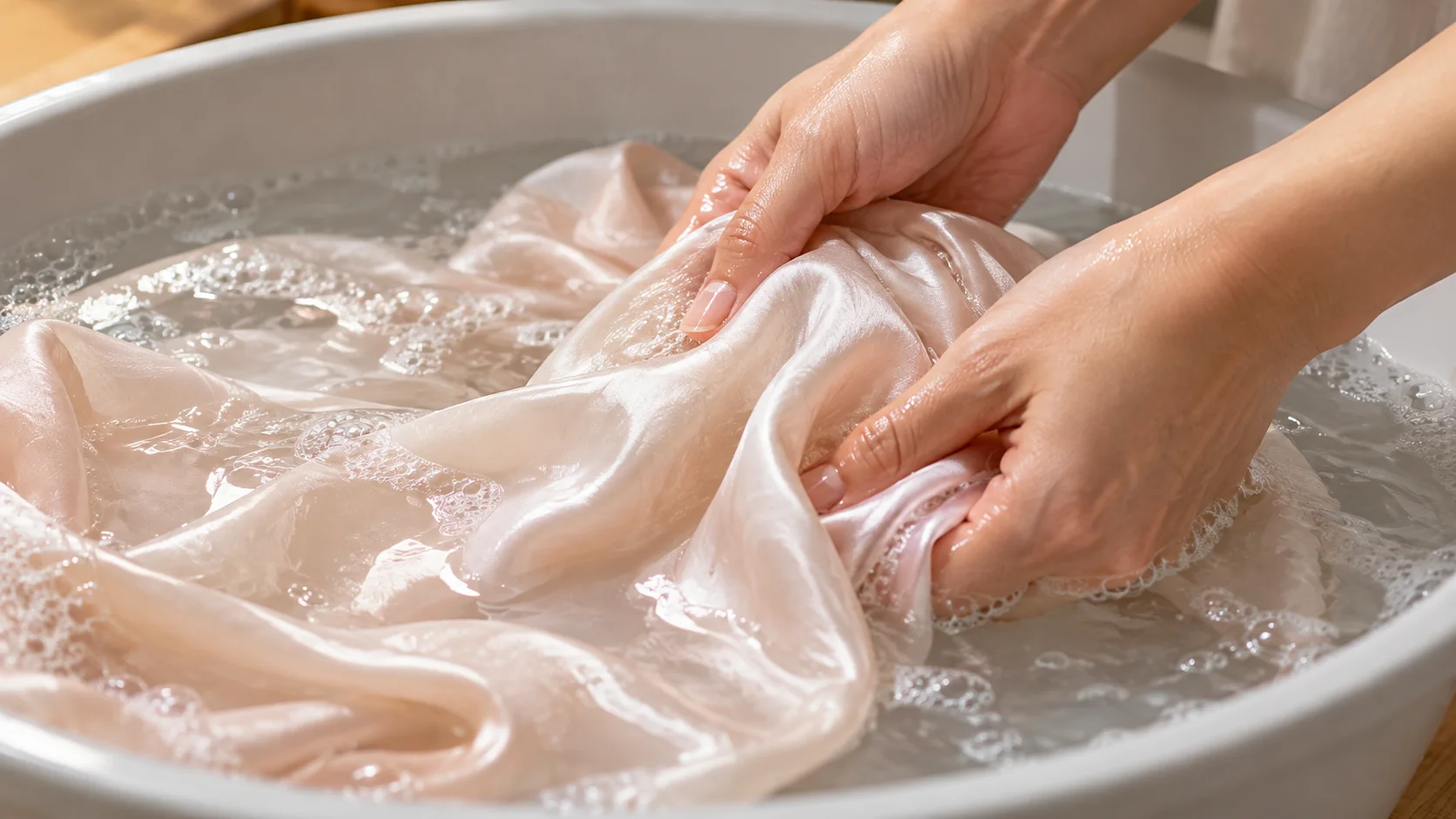
Silk needs a different laundry approach from everyday fabrics because its smooth appearance and delicate structure can be affected by excessive heat, friction, harsh chemicals, and rough handling. Whether you are trying to learn how to wash silk, clean a silk pillowcase, wash silk sheets, or care for a favourite silk shirt, the first step is always to check the item’s care label. Different silk products can have different finishes, dyes, linings, stitching, and construction, so there is no single method that should automatically be applied to every silk item. Tide, Persil, and other fabric-care specialists similarly recommend checking the care instructions before deciding whether a silk item should be hand washed or machine washed.
For washable silk, gentle treatment is the main principle. Hand washing gives you control over the amount of movement and friction, while some modern washing machines provide dedicated Silk or Delicate programmes for approved items. For example, an Electrolux washing-machine manual lists a Silk programme for machine- and hand-washable silk and other delicate fabrics at 30°C with a limited load and reduced spin speed. This guide explains how to wash silk at home, when a washing machine is suitable, how to handle popular silk products, how often certain items may need washing, and how to dry and care for silk afterward.
Know What Your Silk Item Can Safely Handle
Before filling a sink or switching on your washing machine, examine the care label. This small label provides product-specific information that general silk advice cannot replace.
Check the Washing Symbol First
A machine-wash symbol means the item can be washed in a machine according to the accompanying temperature and cycle instructions. A hand-wash symbol indicates that the garment should be washed by hand rather than treated like ordinary machine laundry. A crossed-out wash symbol means the item should not be washed with water.
If the label says dry clean only, professional cleaning is the safer choice. Do not assume that expensive silk or 100% silk automatically means it can be safely hand washed.
Test Colourfastness When Appropriate
Some dyed silk can release colour during washing. Tide and Persil both recommend checking colourfastness before washing certain silk items. One practical approach is to test a hidden area with a damp white cloth and look for colour transfer.
If substantial colour transfers during the test, avoid proceeding with a normal home wash and consider professional cleaning.
How to Hand Wash Silk Without Rough Treatment
Hand washing is a practical option for silk when the care label permits it. It is particularly useful for items such as washable silk scarves, pillowcases, bonnets, shirts, and lightweight garments.
Prepare the Water and Detergent
Fill a clean basin or sink with cool or lukewarm water according to the care label. Add a small amount of detergent formulated for delicate fabrics and mix it into the water before adding the silk.
Avoid chlorine bleach. Persil specifically warns against chlorine bleach because it can damage silk’s natural fibres, while Tide also advises against bleach for silk.
Clean With Gentle Movement
Place the silk into the water and move it gently through the solution. You do not need aggressive scrubbing to clean lightly soiled silk.
For a stained area, blotting is generally preferable to vigorous rubbing. Tide recommends treating stains gently because excessive rubbing in one area can lighten or otherwise affect the fabric.
Once clean, drain the wash water and rinse with fresh cool water until detergent has been removed.
Remove Moisture Without Wringing
Wet silk should not be twisted or wrung aggressively. Instead, place the item on a clean towel, roll the towel around it, and gently press so the towel absorbs excess water.
This approach helps remove moisture without applying the strong twisting force that can distort delicate fabric. Both Tide and Persil recommend towel-based moisture removal for washed silk.
How to Wash Silk in a Washing Machine
Machine washing silk is possible for some products, but it should never be assumed to be safe for every silk item. The care label must permit machine washing.
Choose a Silk or Delicate Programme
If machine washing is allowed, select the gentlest suitable cycle. A Silk, Hand Wash, or Delicate programme is preferable to a regular cotton cycle.
Electrolux documentation provides a useful example: one washing-machine manual lists a Silk programme for machine- and hand-washable silk and other delicate fabrics, using 30°C and an 800-rpm maximum spin for that programme. Exact settings vary by appliance, so your own machine’s instructions should take priority.
Tide similarly recommends a delicate cycle, the temperature specified by the care label, and the shortest appropriate spin for machine-washable silk.
Protect Silk From Snags
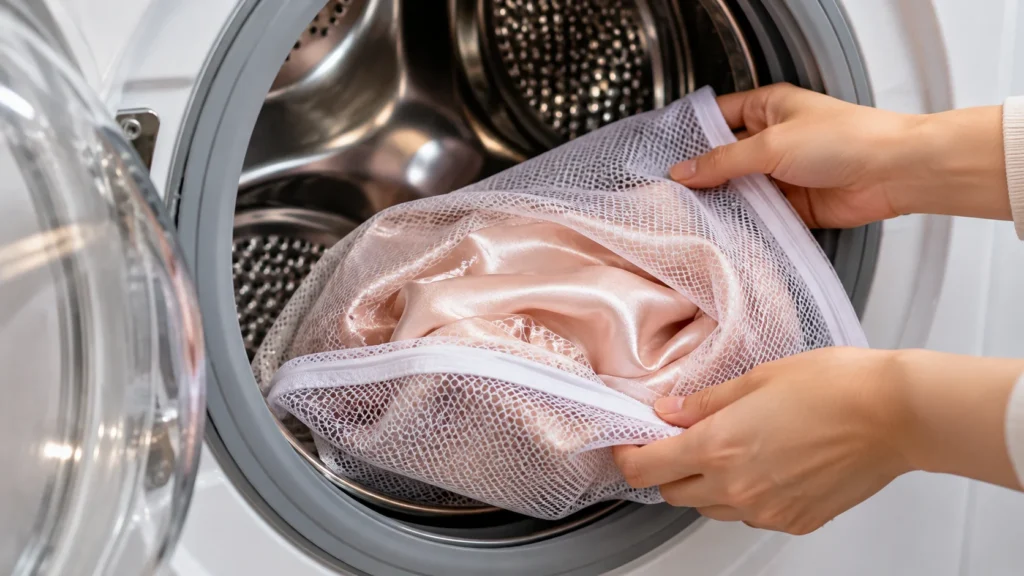
Put suitable small silk items inside a mesh laundry bag before machine washing. This can reduce direct contact with the drum and other garments.
Do not wash silk together with jeans, towels, heavy sweatshirts, or garments containing exposed zippers and rough fasteners. Tide specifically recommends separating silk from heavy clothing because heavier items can cause abrasive damage during washing.
Keep the Drum From Being Overloaded
A crowded washing machine creates more friction and leaves delicate items with less room to move. Tide recommends leaving enough space in the drum rather than overloading it.
After the cycle finishes, remove silk promptly and handle it carefully while damp.
Give Silk Pillowcases and Sheets Their Own Care Routine
Silk bedding comes into regular contact with skin, hair, perspiration, skincare products, and hair products. This makes cleaning important, but the fabric still needs gentle treatment.
Washing Silk Pillowcases
For a washable silk pillowcase, begin by checking whether the manufacturer recommends hand washing or machine washing. If hand washing is permitted, use cool or appropriately specified water with a delicate detergent. Move the pillowcase gently through the water rather than scrubbing it.
If machine washing is allowed, place the pillowcase inside a mesh laundry bag and select the approved delicate or silk programme. Keep it away from towels and rough clothing.
The same approach applies to searches such as how to wash a silk pillow case, how to wash silk pillow cases, and how to wash silk pillowcases: the product’s own care instructions should determine the exact temperature and washing method.
Washing Silk Sheets
Silk sheets are larger and heavier than pillowcases, especially when wet, so careful handling matters. Follow the manufacturer’s instructions before putting them into a washing machine.
If machine washing is permitted, wash them on the recommended delicate or Silk programme and avoid combining them with heavy laundry. If hand washing is required, use a large clean basin or bathtub so the fabric has enough room to move without being compressed.
For how to wash silk sheets in a washing machine, the most important steps are label verification, gentle programming, suitable detergent, adequate drum space, and careful handling after the cycle.
How Often to Wash Silk Pillowcases
There is no universal number of days that applies to every silk pillowcase. Washing frequency depends on how often the pillowcase is used, perspiration, skincare products, hair products, and personal preference.
A pillowcase used every night may need cleaning more frequently than one used occasionally. Visible residue, odour, or noticeable soil are practical signs that it is time to wash it.
Jump into Other Related Article
- How to Remove Peanut Butter Stains | Easy Ways to Clean Clothes, Fabric & More
- How to Remove Beet Stains | Easy Ways to Clean Clothes, Carpet, Skin & More
- How to Remove Stains from Carpet | Complete Guide for Coffee, Pet, Wine, Urine & More
Care for Silk Clothing From Shirts to Dresses
Different silk garments can contain linings, interfacing, buttons, pleats, embroidery, or other components that influence their washing requirements.
Silk Shirts, Blouses, and Pajamas
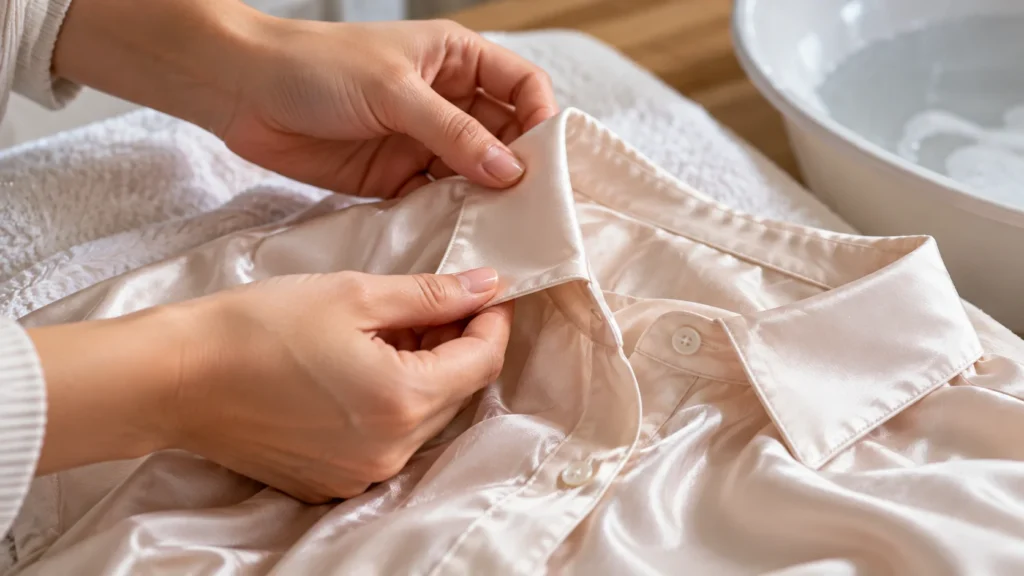
For a washable silk shirt, use the care-label-approved temperature and washing method. If hand washing is permitted, avoid repeatedly rubbing collars and cuffs.
The same principle applies to silk blouses and silk pajamas. Separate them from rough laundry and avoid heavy mechanical action.
For how to wash a silk shirt, how to wash silk shirts, and how to wash a silk blouse, the safest general process is label check, gentle detergent, low mechanical action, thorough rinsing, and careful drying.
Silk Dresses and Robes
Silk dresses can be more complicated because they may contain lining, embellishments, pleats, structured sections, or decorative stitching. Follow the garment-specific label instead of assuming that a simple hand wash is suitable.
A silk robe should also be supported carefully when wet because its loose construction can become heavier when saturated. Avoid pulling it by one sleeve or edge.
For how to wash a silk dress or how to wash a silk robe, professional cleaning may be necessary when the label specifies it.
Handle Silk Accessories and Bonnets Carefully
Small silk products may seem easier to wash, but their construction can still make them vulnerable to damage.
Silk Scarves and Eye Masks
For a washable silk scarf, use the permitted water temperature and a delicate detergent. Gently move the scarf through the water and avoid rubbing printed or decorated areas.
This also covers how to wash silk scarves, how to wash a silk scarf, and how to wash a silk scarf by hand. Rinse thoroughly and remove excess moisture with a towel rather than twisting the scarf.
For a silk eye mask, follow the same label-first approach. If it contains padding, elastic, embroidery, or other materials, those components may determine whether it can safely be washed.
Silk Bonnets
A silk bonnet can collect scalp oils, perspiration, and hair products. If it is washable, hand washing with cool water and delicate detergent is a gentle option.
If machine washing is approved, place the bonnet inside a mesh bag and use the appropriate delicate programme.
How often you wash a silk bonnet depends on how frequently it is worn and how much sweat or product it encounters. A bonnet worn nightly may need more frequent cleaning than one used occasionally.
Understand Mulberry Silk, 100% Silk, and Satin Products
Product names can sometimes make silk care confusing. The fibre description alone does not always determine the washing method.
Mulberry Silk Still Needs Product-Specific Care
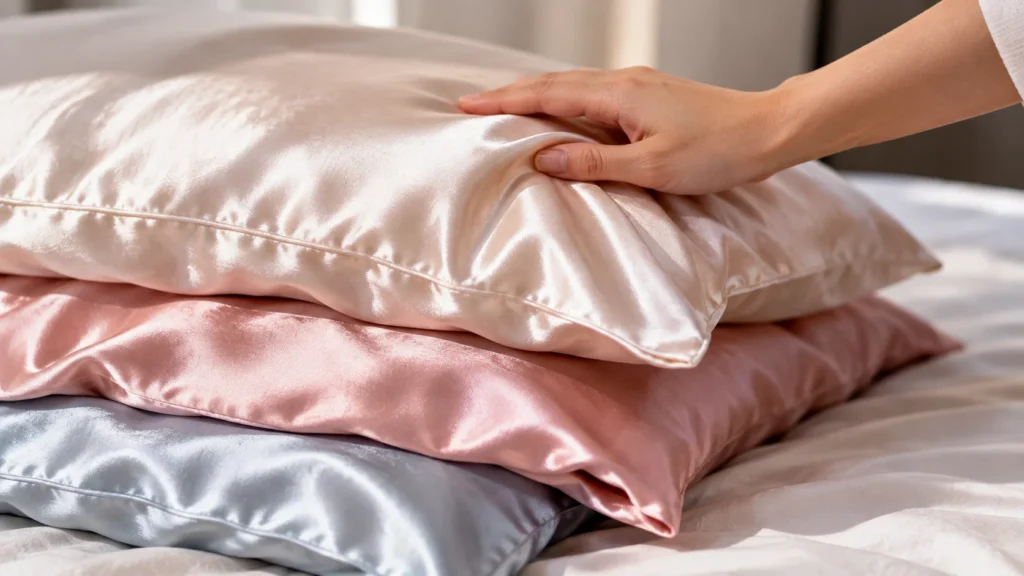
Mulberry silk refers to silk produced primarily from silkworms fed on mulberry leaves, but a mulberry silk pillowcase and a mulberry silk dress can have completely different care instructions.
For how to wash a mulberry silk pillowcase, follow the pillowcase manufacturer’s label. The same applies to other mulberry silk bedding and clothing.
Do not assume that premium silk can tolerate more heat or stronger detergents simply because the material is high quality.
100% Silk Does Not Mean One Universal Wash Method
A product labelled 100% silk may be washable, hand wash only, or dry clean only. Fibre content describes what the fabric is made from; it does not replace the manufacturer’s cleaning instructions.
Therefore, how to wash 100 silk and how to wash 100% silk should always begin with the product’s care label.
Satin and Silk Are Not Automatically the Same
Satin describes a weave rather than a specific fibre. A satin pillowcase or sheet may be made from silk, polyester, or another material.
For satin silk sheets and satin silk pillowcases, identify the actual fibre content first. Then follow the appropriate care instructions rather than assuming every satin product should be washed like silk.
Deal With Stains Before a Full Silk Wash
Stains can tempt people to scrub harder or use powerful chemicals, but that approach can be risky on silk.
Blot Rather Than Scrub
If a fresh stain occurs, gently blot excess liquid with a clean cloth instead of rubbing it deeper into the fabric.
Tide recommends testing a diluted treatment on an inconspicuous area first and gently blotting rather than aggressively rubbing.
For valuable, strongly coloured, vintage, or dry-clean-only silk, professional cleaning is the safer choice when a stain is difficult.
Avoid Random Household Chemicals
Do not automatically use chlorine bleach or strong stain removers. Silk can react differently from more durable fabrics.
If the product’s care instructions recommend professional stain treatment, follow those instructions instead of experimenting.
Dry, Iron, and Store Silk Correctly
Cleaning the fabric correctly is only part of silk care. The drying and storage stages can also affect its appearance.
Keep Excess Heat Away
Tide and Persil both advise against tumble drying silk because high heat can cause damage or shrinkage.
When air drying is permitted, keep silk away from prolonged direct sunlight. Persil notes that direct sunlight can contribute to fading or damage.
Follow the individual item’s drying instructions rather than applying one method to every silk product.
Iron With Care
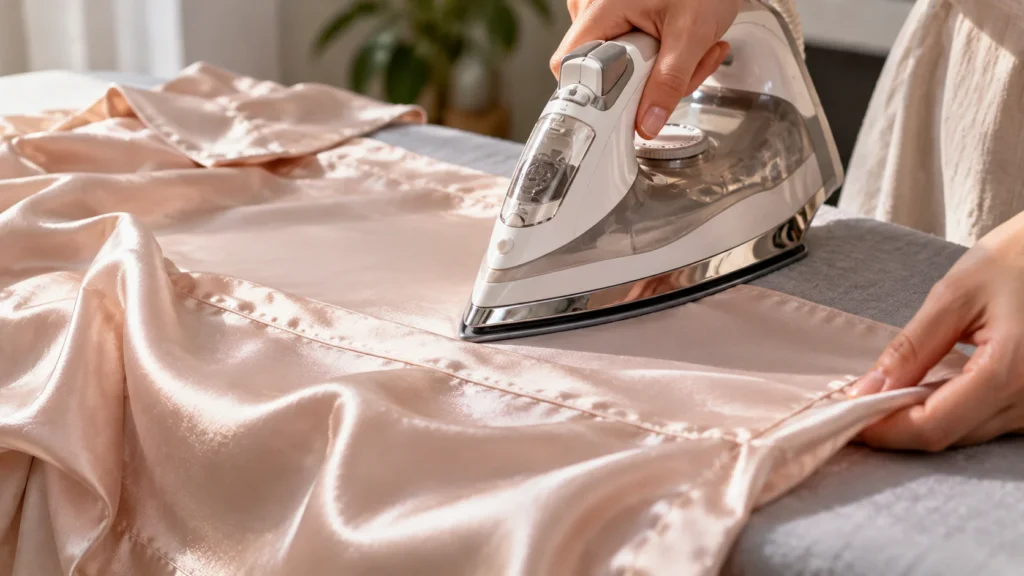
If ironing is allowed, use the temperature specified on the care label. Tide recommends turning silk garments inside out, using low heat or the silk setting, and placing a cloth between the iron and the fabric.
Do not assume that adding water or steam is appropriate for every silk item. The garment’s care instructions should determine the safest approach.
Store Silk Clean and Dry
Make sure silk is completely dry before long-term storage. Store garments in a cool, dry environment and avoid exposing them unnecessarily to prolonged sunlight.
Avoid These Silk Laundry Mistakes
Keeping silk in good condition often comes down to avoiding a few preventable errors:
- Washing without checking the care label.
- Using chlorine bleach.
- Choosing a hot or intensive cycle unnecessarily.
- Washing silk with jeans, towels, or heavy garments.
- Scrubbing stains aggressively.
- Overloading the washing machine.
- Using an unsuitable detergent.
- Twisting or wringing wet silk.
- Leaving wet silk exposed to strong direct sunlight.
- Using a tumble dryer when the care label does not permit it.
- Ironing at excessive heat.
- Assuming every 100% silk item has the same washing instructions.
- Treating satin and silk as automatically identical.
- Machine washing a dry-clean-only item.
- Applying an untested stain-removal chemical to visible silk.
A Simple Silk-Washing Checklist
Before washing, confirm that the item is actually washable and identify whether the label specifies hand washing, machine washing, or professional cleaning. Prepare a suitable delicate detergent and separate silk from abrasive or heavy laundry.
During washing, keep temperature and mechanical action within the manufacturer’s recommendations. Afterward, rinse thoroughly, avoid wringing, remove excess water gently, and dry according to the label. For machine-washable products, a mesh bag and suitable delicate cycle can provide additional protection.
This approach works across many searches related to how to wash silk at home, including silk clothing, pillowcases, sheets, scarves, bonnets, bedding, and other washable silk products.
Conclusion
Learning how to wash silk does not require a complicated laundry routine, but it does require more attention than washing durable everyday fabrics. The most important step is checking the item’s care label before deciding whether to hand wash, machine wash, or use professional cleaning. For washable silk, gentle detergent, appropriate water temperature, limited friction, careful rinsing, and controlled drying can help reduce unnecessary stress on the fabric. Manufacturer instructions should always take priority over generic recommendations because silk products can differ substantially in construction and finish.
Whether you are caring for a silk pillowcase, silk sheets, silk bonnet, silk scarf, silk shirt, silk blouse, silk dress, silk pajamas, silk robe, silk tie, silk comforter, or mulberry silk product, the same basic principle applies: clean it as gently as the care label allows. Avoid harsh chemicals, unnecessary heat, excessive friction, and rough handling, and give the item suitable care after washing. With the right routine, washable silk can remain smooth, attractive, and comfortable for longer.
Can you wash silk at home?
Yes, some silk products can be washed at home when their care labels permit hand or machine washing. Items marked dry clean only should be professionally cleaned.
What is the best way to wash silk?
For washable silk, gentle hand washing is a practical option because it gives you control over movement and friction. Some products can also be machine washed on an approved Silk or Delicate cycle.
Can silk go in the washing machine?
Some silk can go into a washing machine, but only when the item’s care instructions permit it. Use a suitable delicate cycle and avoid heavy laundry.
How do you hand wash silk?
Use the recommended cool or lukewarm water, add a delicate detergent, gently move the silk through the solution, rinse thoroughly, and remove excess water with a towel. Do not wring it.
How do you wash a silk pillowcase?
Check its care label first. If washable, use gentle hand washing or an approved delicate machine cycle. A mesh laundry bag can help protect a machine-washable pillowcase from snags.
How often should you wash a silk pillowcase?
There is no single schedule for everyone. Consider nightly use, perspiration, skincare products, hair products, visible residue, odour, and the manufacturer’s recommendations.
Can silk sheets be machine washed?
Yes, if their care label allows machine washing. Use the specified delicate or Silk programme and avoid washing them with heavy or abrasive garments.
How do you wash a silk bonnet?
If washable, gently hand wash it with suitable detergent and the recommended water temperature. If machine washing is permitted, use a mesh bag and delicate cycle.
How do you wash a silk scarf by hand?
Place the scarf in the recommended cool water with delicate detergent, gently move it through the solution, rinse thoroughly, and towel-press excess water away without twisting.
Can you wash 100% silk?
Some 100% silk products can be washed, while others are dry clean only. The fibre label alone does not determine the correct cleaning method.
Is mulberry silk washable?
Some mulberry silk products are washable, while others require professional cleaning. Follow the individual manufacturer’s care instructions.