
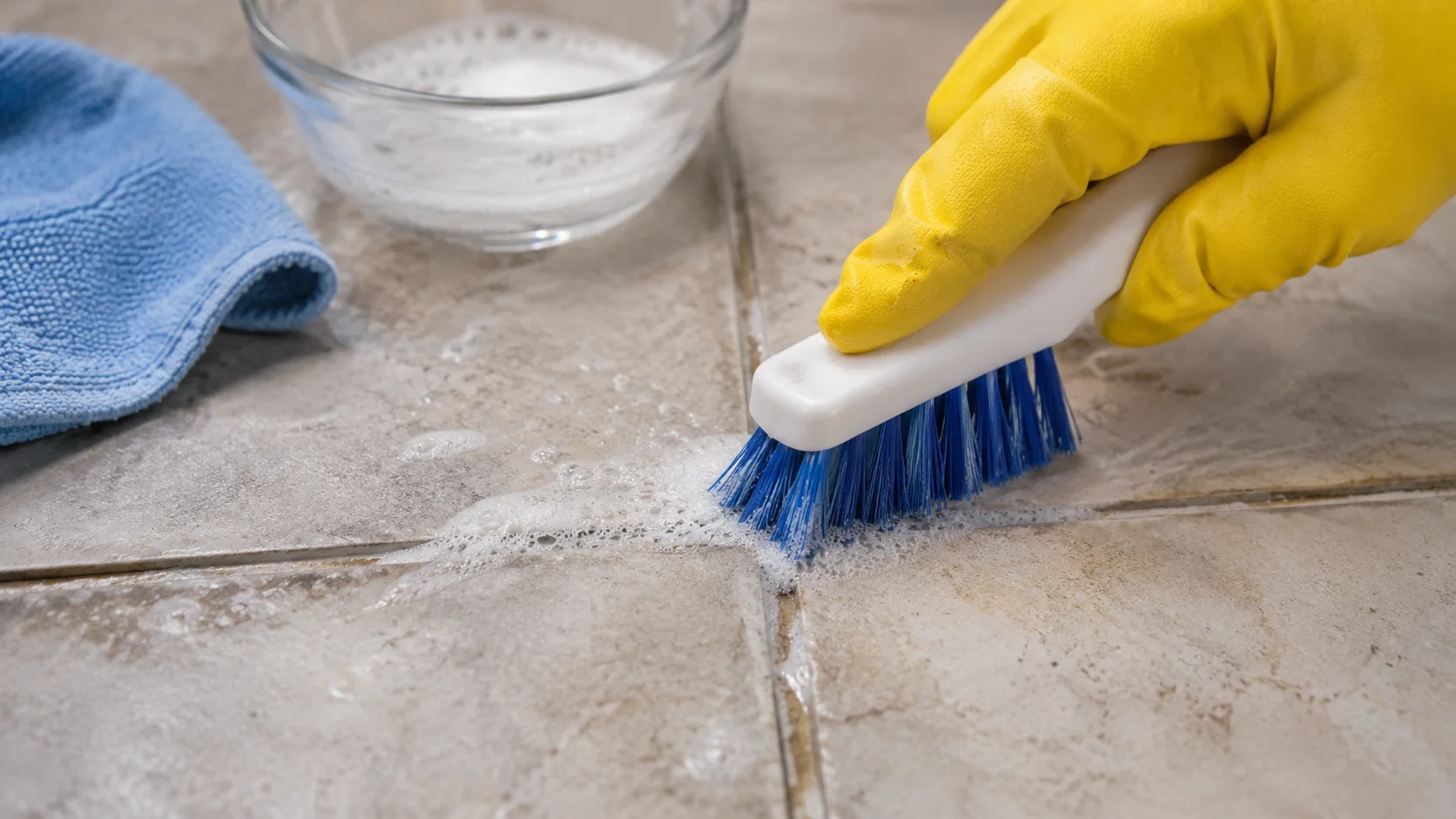
Grout can make even a recently cleaned floor or shower look dirty. Its narrow, often porous lines collect soap residue, dust, grease, and moisture, gradually turning white or light-colored grout gray, brown, or black. In bathrooms, persistent dampness can also encourage mold growth, while kitchen grout may become discolored by food spills and cooking oils.
The best way to clean grout depends on where it is located, how dirty it has become, and whether it is sealed. You can often improve its appearance with a suitable cleaner, warm water, and a soft brush instead of harsh chemicals or aggressive scrubbing. This guide explains how to clean tile grout safely, handle stubborn stains, and keep grout looking cleaner for longer. Let’s learn how to clean grout between tiles.
What You Need Before Cleaning Grout
Gather your supplies before starting so you can clean and rinse each section without letting products dry on the surface.
- A grout-safe or pH-neutral tile cleaner
- Warm water
- A soft-bristled grout brush or toothbrush
- Microfiber cloths or a non-scratch sponge
- A bucket and clean rinse water
- Rubber gloves
- A dry towel
Choose a cleaner compatible with both the grout and the surrounding tile. Natural stone, including marble and travertine, may be damaged by acidic products. Abrasive tools can scratch tile finishes or wear away grout.
Safety matters: Never mix cleaning products. In particular, mixing chlorine bleach with vinegar, ammonia, or other cleaners can release dangerous gases. Read the label, ventilate the room, and keep children and pets away from the cleaning area.
How to Clean Grout Step by Step
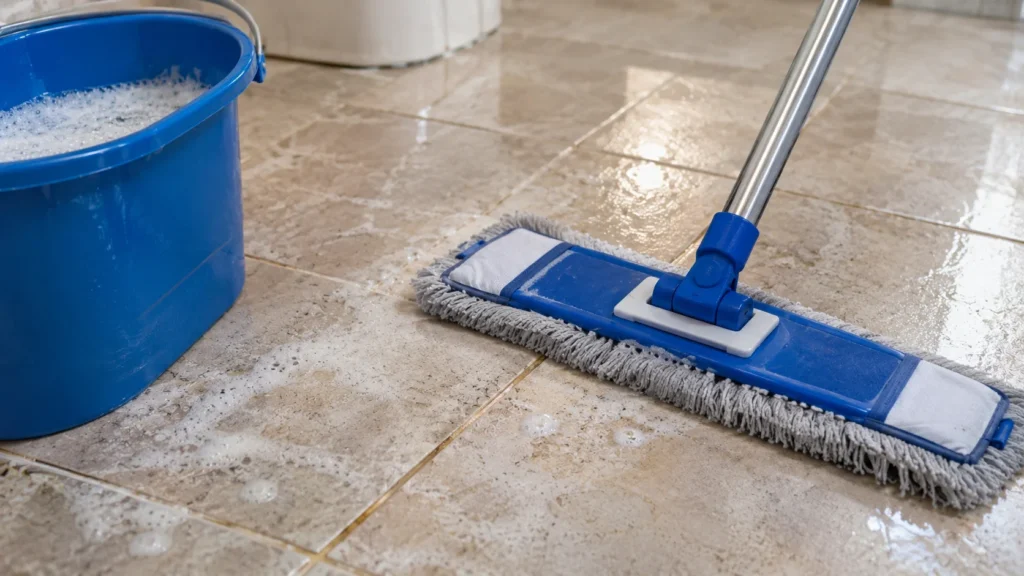
1. Remove Loose Dirt
Sweep or vacuum the floor before cleaning grout on tile floors. In a shower or bathroom, remove hair, soap residue, and other loose debris. This prevents dirt from spreading across the surface when you apply liquid cleaner.
2. Apply a Suitable Cleaner
Use a grout cleaner or mild detergent that is safe for your tile and grout type. Apply it according to the product instructions, focusing on the grout lines rather than unnecessarily soaking the entire floor.
Allow the product to remain on the surface for the recommended contact time. Do not let it dry if the label advises keeping it wet.
3. Brush the Grout Gently
Use a soft-bristled brush to work along the grout lines. Short, controlled strokes can loosen dirt without the excessive pressure that may damage the joints.
Avoid metal brushes and harsh scouring pads. If the grout is crumbling, cracked, or coming loose, stop scrubbing and assess whether repairs are needed.
4. Rinse Away the Dirt
Wipe up loosened grime and rinse the surface with clean water. Change the rinse water when it becomes dirty so that you do not spread residue back over the grout.
Remove all traces of cleaner, especially on floors where leftover product can create a slippery film.
5. Dry the Surface
Use a clean towel or allow the area to air-dry with good ventilation. Drying helps reveal whether the grout is genuinely stained or simply appears darker while wet. It also limits prolonged moisture in bathrooms and showers.
If the grout remains discolored, repeat the treatment only as directed by the product label. Stronger chemicals are not automatically more effective or safer.
How to Clean Grout Without Scrubbing
If you want to clean grout with less effort, allow a suitable cleaner to loosen the dirt before wiping it away. This approach works best for light soil and routine discoloration, not deeply embedded stains or deteriorating grout.
- Sweep or wipe away loose dirt.
- Apply a grout-safe cleaner according to its instructions.
- Wait for the recommended contact time.
- Wipe the grout with a damp microfiber cloth or soft sponge.
- Rinse thoroughly and dry the surface.
For larger tiled floors, work in small sections so the cleaner does not dry before you remove it. A cleaner designed for grout may be more effective than ordinary floor cleaner when buildup is concentrated in the joints.
Can grout always be cleaned without scrubbing? No. Textured grout and heavy staining may need gentle brushing. If dirt remains after the recommended cleaning process, avoid soaking the area in increasingly strong products. The discoloration may be permanent, or the grout may need repair or replacement.
Jump into Other Related Article
- How to Clean Stainless Steel Sink | Stains, Hard Water, Rust & Scratches
- How to Remove Coffee Stains | Easy Methods for Clothes, Teeth, Carpet & More
- Best Deck Stain and Sealer | Complete Guide for Pressure Treated, Cedar, Old, and Full Sun Decks
How to Clean Grout on Tile Floors
Floor grout collects dust, shoe marks, food spills, and everyday dirt. Kitchen floors may also develop greasy buildup, while entryways often accumulate soil carried in from outside.
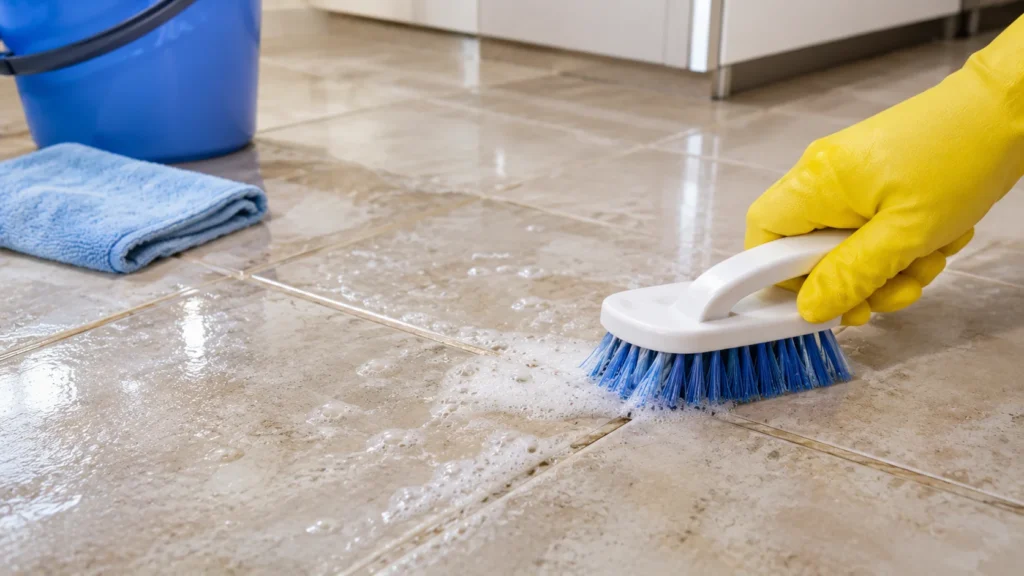
To clean floor grout:
- Sweep or vacuum first to remove grit that could scratch the tile.
- Apply a cleaner approved for your grout and flooring.
- Use a soft grout brush on dirty lines and corners.
- Wipe up the loosened dirt before rinsing.
- Rinse with clean water and remove any slippery residue.
- Allow the floor to dry before walking over it.
For kitchen grout, choose a cleaner labeled for grease if ordinary detergent is not enough. Follow its instructions and test it on a small, inconspicuous area before treating the entire floor.
How to clean grout between floor tiles
Focus the brush on the grout joints instead of scrubbing aggressively across the tile. If the tile is polished, delicate, or made from natural stone, use only a compatible brush and cleaner. Avoid flooding the floor, especially if the grout is cracked or the installation has moisture problems.
How to clean white grout
White grout makes discoloration especially noticeable. Begin with a grout-safe cleaner and a soft brush, then rinse thoroughly. Do not assume chlorine bleach is the best choice: it may affect certain materials or finishes, and it cannot fix damaged or deeply stained grout.
If white grout remains uneven after cleaning, the cause may be permanent staining, wear, or inconsistent grout color. A grout colorant or professional restoration may be more suitable than repeated chemical treatments.
How to Clean Grout in a Shower
Shower grout is exposed to water, soap, shampoo, body oils, and frequent humidity. These conditions can lead to darkened grout and mold or mildew growth, especially in corners and areas with poor ventilation.
- Rinse the area with warm water if appropriate for the tile.
- Apply a shower-safe grout cleaner following its label.
- Gently brush the joints, paying attention to corners and areas around fixtures.
- Rinse away all product and loosened residue.
- Dry the shower and improve ventilation.
Avoid using an abrasive brush that can wear down the grout or damage nearby caulk. If the grout is cracked or missing, cleaning alone will not restore the waterproof integrity of the shower assembly.
How to clean mold from shower grout
For small areas on suitable hard surfaces, clean with detergent and water or a product specifically labeled for the surface, then dry completely. Wear gloves, ventilate the bathroom, and follow all product precautions. Never combine bleach with vinegar, ammonia, or other cleaners.
Mold can return if moisture persists. Check for leaks, improve ventilation, and repair damaged grout or sealant. If the affected area is extensive, keeps returning, or appears to extend behind the tiles, seek professional help. People with asthma, significant allergies, immune suppression, or underlying lung disease should avoid participating in mold cleanup.
For further guidance, see the EPA’s mold cleanup information and the CDC’s cleanup recommendations.
How to Clean Grout That Has Turned Black
Black grout lines can have several causes, including accumulated dirt, staining, mold growth, or moisture-related damage. Black color alone does not prove that the grout contains mold, so start with a careful inspection rather than immediately using bleach.
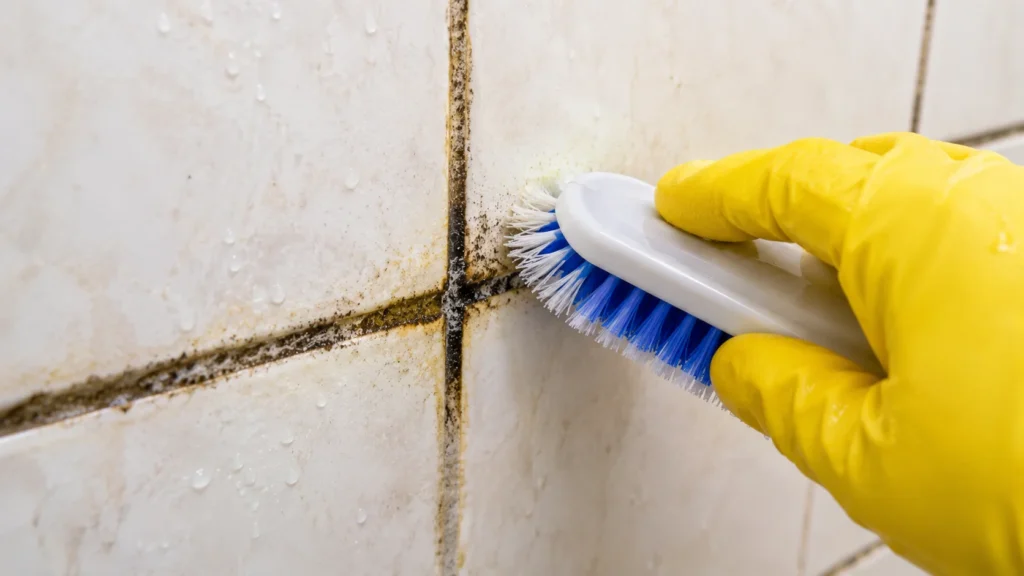
- If the grout is dirty: Apply a compatible grout cleaner and brush gently.
- If the grout is in a damp shower: Clean the surface safely and address ventilation or moisture problems.
- If the grout is crumbling or cracked: Consider repair or replacement instead of further scrubbing.
- If dark marks return quickly: Investigate persistent moisture, leaks, or growth beneath the surface.
Do not use strong chemicals repeatedly in an attempt to force the grout back to its original color. If the discoloration remains after appropriate cleaning, it may be a stain or a sign that the grout needs restoration.
How to Clean Grout With Baking Soda
Baking soda is a common household cleaning ingredient, but it is not ideal for every grout or tile finish. Its mild abrasiveness may help loosen some surface dirt, yet aggressive rubbing can scratch delicate surfaces or leave residue behind.
If you want to try it, first check the tile and grout manufacturer’s care instructions. Test a small, hidden area, use a soft brush, and rinse thoroughly. Avoid this method on delicate or polished finishes unless the manufacturer approves it.
Be cautious with online recipes that combine baking soda with vinegar or bleach. Mixing ingredients does not automatically make a cleaner more effective, and combining incompatible products can create safety risks. A purpose-made grout cleaner with clear usage directions is often the more predictable option.
How to Clean Grout Haze Off Tile
Grout haze is a thin, cloudy film left on tile after grout installation. Unlike ordinary dirty grout, it sits on the tile surface and may remain even when the joints themselves look clean.
For recently installed tile, check the grout manufacturer’s instructions before attempting removal. The appropriate treatment depends on whether the grout is cement-based, epoxy, or another formulation, and on the tile material.
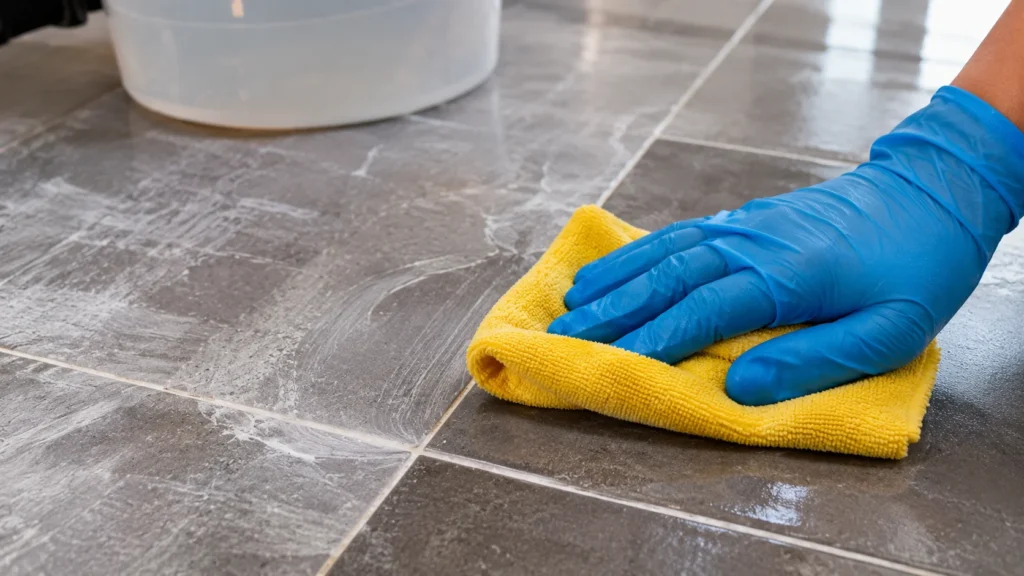
- Start with the method recommended by the grout manufacturer.
- Use a soft cloth or non-scratch sponge.
- Avoid acidic haze removers on marble, travertine, limestone, and other acid-sensitive stone.
- Do not use aggressive scraping tools that could scratch the tile.
- If the haze has hardened or the tile is delicate, ask a tile professional for advice.
Do not confuse grout haze with etching, which is surface damage rather than a removable film. Using a stronger cleaner on etched stone will not restore its original finish.
Should You Seal Grout After Cleaning?
Some types of grout benefit from sealing, but not every grout product requires the same treatment. Cement-based grout is often a candidate for sealing, while many epoxy grouts have different maintenance requirements.
Before applying a sealer:
- Check the grout manufacturer’s instructions to determine whether sealing is recommended.
- Clean the grout and remove all cleaner residue.
- Allow the grout to dry for the period specified by the manufacturer.
- Apply a compatible grout sealer as directed.
- Remove excess sealer from the tile surface within the recommended time.
Sealing does not make grout completely waterproof, eliminate the need for cleaning, or repair cracked joints. If the grout is damaged or moisture is entering behind the tiles, address those problems first.
How to Keep Grout Clean for Longer
A simple maintenance routine can help prevent stubborn discoloration.
- Wipe shower walls and corners after use to reduce lingering moisture.
- Run the bathroom exhaust fan during showers and afterward, following its instructions.
- Clean spills from kitchen floors before they settle into grout.
- Use the right amount of floor cleaner and rinse away residue when required.
- Avoid harsh abrasives that can damage grout or surrounding tile.
- Inspect joints periodically for cracks, missing material, or failing caulk.
- Follow the grout manufacturer’s recommendations for sealing and ongoing care.
The most effective long-term strategy is to remove dirt before it becomes deeply embedded and to address moisture problems before they damage the grout.
Conclusion
Learning how to clean grout begins with identifying the type of dirt, the condition of the joints, and the material of the surrounding tile. For everyday grime, a suitable cleaner, gentle brushing, and thorough rinsing are usually the best starting points. White grout, dark shower joints, and kitchen floor grout may need different approaches, but harsh chemicals are rarely the first answer.
To keep grout looking better for longer, remove residue regularly, dry damp areas, improve bathroom ventilation, and repair damaged joints. If stains persist after appropriate cleaning, investigate the underlying cause rather than repeatedly using stronger products.
What is the best way to clean grout?
For most routine dirt, use a cleaner approved for the grout and tile, gently brush the joints, rinse thoroughly, and dry the surface. The best product depends on the grout type, tile material, and kind of stain.
How do you clean tile grout without damaging it?
Use a compatible cleaner, a soft-bristled brush, and moderate pressure. Avoid metal brushes, aggressive scouring, and chemicals that are unsuitable for the tile or grout. Stop if the grout begins to crumble or loosen.
How do you clean grout in a shower?
Apply a shower-compatible grout cleaner, gently brush the joints, rinse away all residue, and dry the area. Improve ventilation and fix leaks to help prevent recurring dark stains or mold.
How do you clean grout that has turned black?
Start with a grout-safe cleaner and a soft brush. Black discoloration may be dirt, staining, mold growth, or moisture damage, so inspect the area and address any persistent dampness. If the grout is deteriorating or the marks keep returning, consider professional assessment.
Can you clean grout with baking soda?
Baking soda may help loosen some surface dirt, but it is not suitable for every finish. Check the manufacturer’s instructions, test a small area, avoid aggressive rubbing, and rinse thoroughly.
Can vinegar be used to clean grout?
Vinegar is acidic and may damage some tile, grout, sealants, and natural stone. Do not use it unless the relevant manufacturers confirm that it is suitable. Never mix vinegar with bleach or other incompatible cleaners.
How do you clean white grout that has become gray?
Use a compatible grout cleaner, gently brush the joints, and rinse well. If the grout remains gray after appropriate cleaning, it may be permanently stained or worn. A grout colorant or professional restoration may be more effective than stronger chemicals.
How do you clean grout without scrubbing?
Apply a compatible cleaner and allow it to work for the recommended time before wiping with a damp cloth or sponge. This can remove light dirt, but deeply embedded stains may still require gentle brushing.
Is black grout always moldy?
No. Black grout can be discolored by dirt, staining, or moisture-related damage as well as mold. Color alone cannot identify the cause. Clean the surface safely and investigate any persistent moisture or recurring growth.
How often should grout be cleaned?
Clean visible dirt and spills as they occur, and include grout in your regular floor or bathroom cleaning routine. Shower grout may need more frequent attention because it is exposed to moisture and soap residue.