
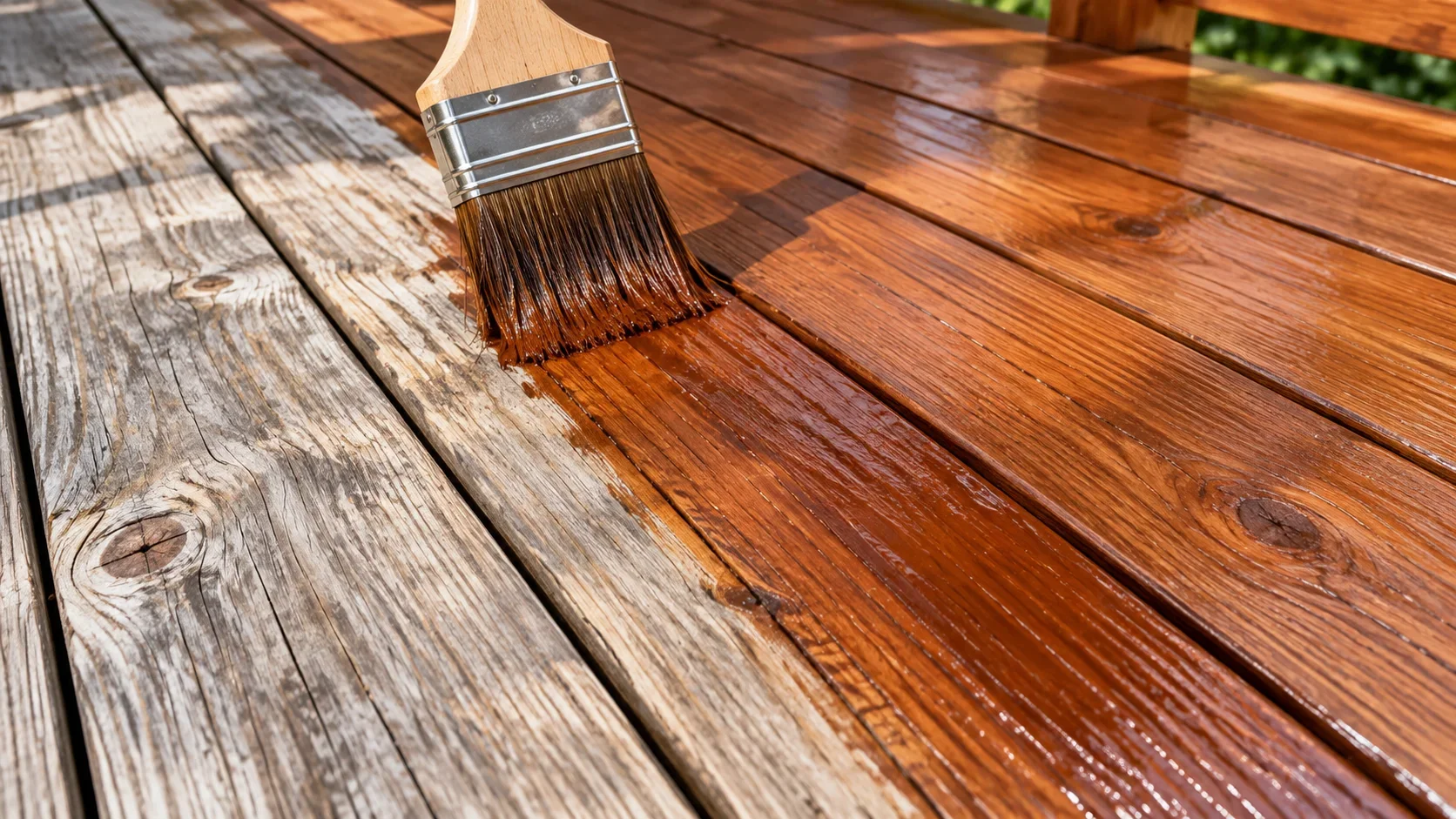
Choosing the best deck stain and sealer depends on much more than the color you want. The wood species, age of the deck, amount of sunlight, moisture exposure, previous coating, desired appearance, and maintenance expectations all affect which type of stain makes sense. A product that works well on a relatively new pressure-treated deck may not be the right choice for an old, weathered deck or a cedar surface.
Deck stains are generally available in clear, transparent, semi-transparent, semi-solid, and solid finishes. Sherwin-Williams explains that these opacity levels change how much of the natural wood grain remains visible and how much color and coverage the coating provides.
Current 2026 testing and product information also show why it is difficult to name one universal product as the best deck stain and sealer for every project. Consumer Reports says it tests wood stains over extended periods because durability, appearance, and protection vary significantly between products and stain types.
This guide breaks down best deck stain and sealer options for pressure-treated wood, cedar, redwood, old decks, full sun, pool decks, and outdoor wood, while also explaining oil-based versus water-based formulas, transparent versus solid stains, preparation, application, maintenance, and common mistakes.
What Makes a Deck Stain and Sealer Effective
A good deck stain needs to do two jobs: improve the appearance of the wood and provide protection against outdoor exposure. Sunlight, rain, snow, moisture, foot traffic, and temperature changes can gradually degrade an unprotected deck.
Consumer Reports explains that wood stain can add both beauty and protection to decks, fences, exterior doors, and outdoor furniture. Its 2026 testing also emphasizes that the type of stain—such as solid, semi-transparent, or clear—can make a substantial difference in longevity and maintenance.
A deck sealer and stain combination can be especially convenient when you want color and protection from one coating. However, “stain and sealer in one” does not mean every product will perform identically on every species or climate.
The best product for a particular deck should therefore be selected according to the wood condition, exposure, appearance requirements, and manufacturer’s application instructions rather than simply choosing the highest-rated container on a retailer website.
15 Features to Look for in a Deck Stain and Sealer
- UV resistance for decks exposed to strong sunlight.
- Water resistance to reduce moisture penetration.
- Suitable opacity for the appearance you want.
- Wood compatibility for the species being treated.
- Penetrating properties when appropriate for the deck.
- Mildew resistance for damp environments.
- Resistance to peeling or blistering where the product formulation provides it.
- Suitable coverage rate for the deck’s size.
- Appropriate recoat requirements for your maintenance schedule.
- Compatibility with pressure-treated lumber when applicable.
- Compatibility with previously stained wood when specified.
- Color retention appropriate for the exposure level.
- Application flexibility for brush, roller, or sprayer when permitted.
- Weather requirements that fit your local conditions.
- Clear manufacturer instructions for preparation and maintenance.
Best Deck Stain and Sealer Types by Project
Instead of treating one product as universally superior, it is more useful to match the stain type to the deck.
A semi-transparent stain is often chosen when you want color while retaining visible wood grain. Sherwin-Williams describes semi-transparent stains as providing rich pigmentation while allowing natural wood grain to remain visible.
A solid stain provides substantially more coverage and can hide discoloration, uneven grain, and weathered areas. Sherwin-Williams describes solid color stains as providing full coverage and high protection.
A clear or transparent product is more appropriate when preserving the natural appearance of the wood is the main objective, although less-pigmented finishes generally provide less UV protection than more heavily pigmented products.
Deck Stain Type Comparison
| Stain type | Wood appearance | Coverage | Typical use |
| Clear | Natural wood remains highly visible | Very low | Newer attractive wood |
| Transparent | Natural grain remains visible | Low | Light color enhancement |
| Semi-transparent | Grain remains visible | Moderate | Many wood decks |
| Semi-solid | More color with some grain | Medium-high | Older or uneven wood |
| Solid | Most grain is covered | High | Weathered or previously coated decks |
Best Deck Stain and Sealer for Pressure-Treated Wood
Pressure-treated wood is one of the most common materials used for outdoor decks, but newly treated lumber contains moisture that can affect staining.
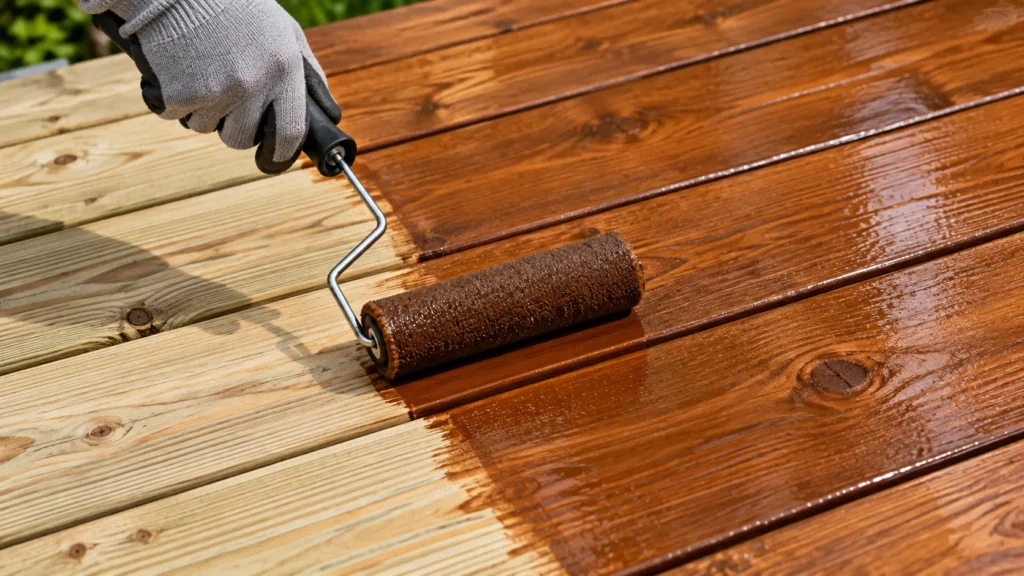
Consumer Reports’ current buying guide says a newly built pressure-treated deck generally needs time to dry before staining and gives a four-to-eight-week waiting period as a general preparation guideline. It also recommends cleaning the surface and allowing it to dry before application.
For an established pressure-treated deck, a penetrating semi-transparent stain can preserve more of the wood’s visible character while adding color and protection. A solid stain may make more sense when the wood has become heavily weathered or visually inconsistent.
The product label remains important because different pressure-treated lumber, climates, and existing finishes can require different preparation.
Pressure-Treated Deck Stain Application
Before staining pressure-treated wood:
- Confirm the wood is sufficiently dry.
- Remove dirt and debris.
- Clean the surface using a suitable deck cleaner.
- Remove failing previous coatings.
- Allow the deck to dry according to the product requirements.
- Sand rough areas when necessary.
- Test the selected stain in an inconspicuous area.
- Apply according to the manufacturer’s recommended coverage.
- Avoid creating puddles or heavy overlapping.
- Allow the coating to cure according to its instructions.
Best Wood Deck Stain and Sealer for Cedar
Cedar has naturally attractive grain and color, so many homeowners prefer a finish that does not completely conceal the wood.
A transparent or semi-transparent stain can allow cedar’s grain to remain visible while adding pigment. Sherwin-Williams offers exterior stain categories ranging from clear and transparent through semi-transparent, semi-solid, and solid formulations.
Cedar decks exposed to strong sunlight can change appearance over time, so UV exposure should be considered when selecting a finish.
For cedar, the choice often comes down to whether you want to preserve the natural appearance or create a more uniform colored surface. A solid stain provides more visual coverage, while semi-transparent finishes preserve considerably more of the original wood character.
Best Deck Stain and Sealer for Redwood
Redwood benefits from a finish that complements rather than completely hides its natural appearance. Semi-transparent and transparent stains are commonly selected when the goal is to retain visible grain.
The wood’s existing condition should influence the choice. Fresh, attractive redwood may suit a lower-opacity product, while weathered boards with uneven coloration may benefit from greater pigmentation.
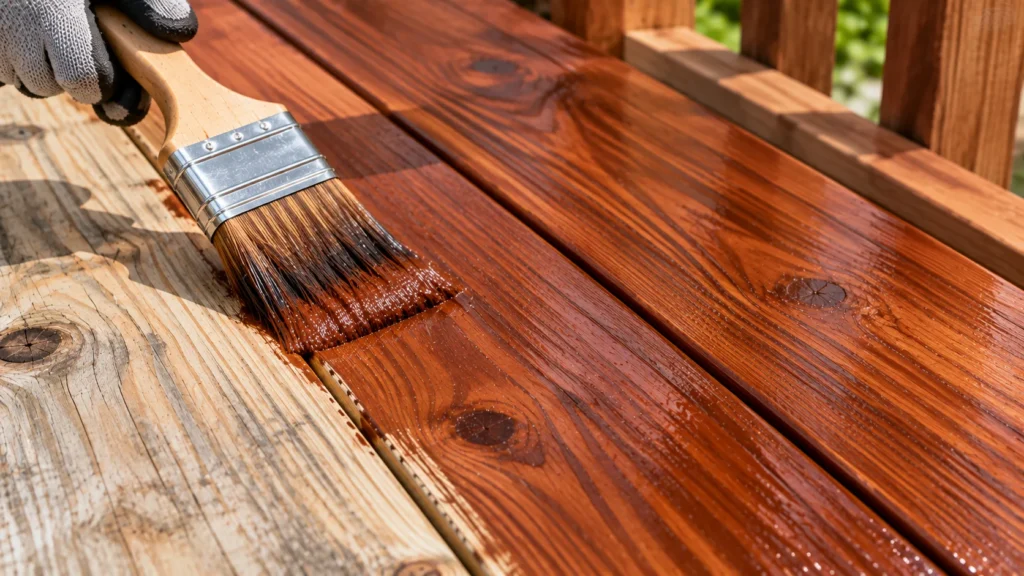
The same preparation principles apply: clean the wood, allow it to dry appropriately, address failed previous coatings, and test the chosen color before treating the entire deck.
A darker stain can also change the visual temperature of the deck by emphasizing some grain patterns more strongly than a lighter transparent finish.
Best Deck Stain and Sealer for Old Decks
Old decks require more preparation than new wood. Weathering can leave the surface gray, rough, dirty, stained, or partially coated with an earlier finish.
Sherwin-Williams recommends different opacity levels according to the condition and appearance desired, noting that severely weathered natural wood may require two coats of a semi-transparent stain under its specified system.
For a heavily weathered deck, solid or semi-solid stains can provide more consistent coverage than transparent products. They can also conceal some uneven coloration that remains after cleaning.
However, the existing coating must be considered. If a deck already has a film-forming or solid finish, applying a penetrating product over it without proper preparation can produce poor results.
Old Deck Preparation Checklist
- Inspect every board.
- Replace badly damaged lumber.
- Remove loose debris.
- Clean the deck.
- Address mildew or organic growth appropriately.
- Remove peeling or failing stain.
- Sand rough areas when required.
- Remove sanding dust.
- Let the wood dry.
- Check the weather forecast.
- Test the stain.
- Begin with a small section.
- Maintain a wet edge when recommended.
- Avoid excessive product buildup.
- Allow the coating to cure before heavy use.
Best Deck Stain and Sealer for Full Sun
Decks that receive direct sunlight for many hours need a finish appropriate for high UV exposure. Pigmented stains generally provide more UV protection than completely clear finishes because pigment helps reduce the effect of sunlight on the underlying wood.
Sherwin-Williams specifically notes that clear stains provide the least UV protection, while more pigmented semi-transparent and solid products provide greater protection.
Consumer Reports also emphasizes the importance of choosing a stain capable of withstanding weathering when the objective is long-term exterior protection.
For a sunny deck, consider:
- Semi-transparent stains with adequate pigment.
- Semi-solid stains for increased coverage.
- Solid stains when maximum visual coverage is desired.
- Products designed for exterior UV exposure.
- Colors appropriate for the amount of sunlight.
- Regular inspection for fading and water absorption.
Dark colors may become visually hotter in direct sun, so appearance and surface comfort should also be considered for decks used frequently with bare feet.
Best Deck Stain and Sealer for Older Wood
Older wood is often uneven in texture and color. It may have gray fibers, small cracks, old stain residue, and areas where the previous coating has disappeared.
A semi-solid or solid stain can help create a more consistent appearance. However, no stain should be expected to repair structurally damaged wood.
Before staining older wood, inspect boards for rot, loose fasteners, splinters, and structural problems. Replace or repair damaged components first.
If the old stain is peeling, clean and remove failing material before applying a new coating. Applying fresh stain over loose old material can shorten the life of the new finish.
Best Semi-Transparent Deck Stain and Sealer
Semi-transparent deck stain is one of the most versatile choices for homeowners who want both color and visible grain. Sherwin-Williams describes this finish as providing pigmentation while allowing the natural wood grain to show through.
It can work particularly well on cedar, redwood, pressure-treated pine, and other exterior wood when the existing surface is suitable for the product.
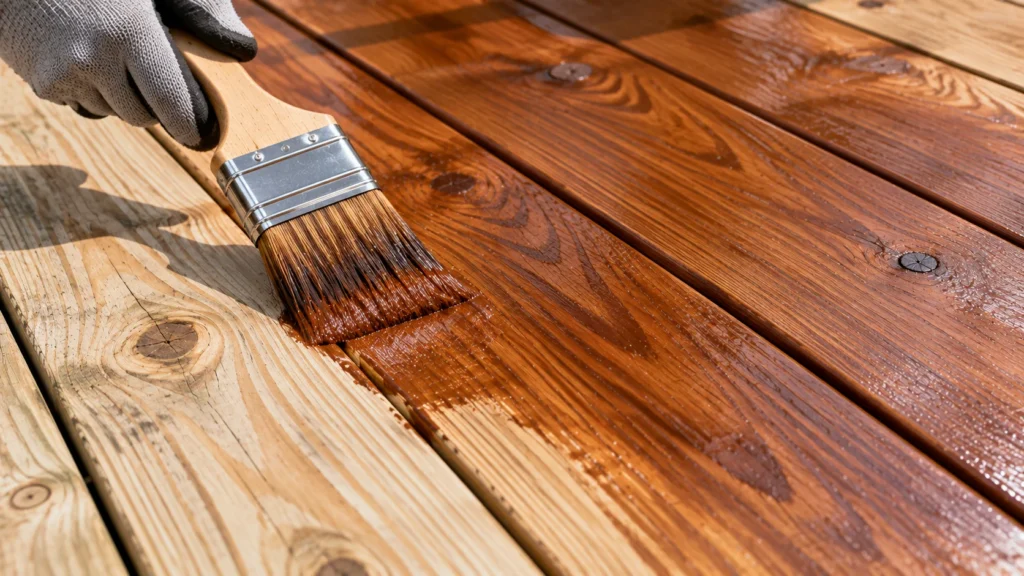
Consumer Reports’ current wood-stain testing includes semi-transparent products from several major manufacturers, demonstrating that this category remains a major part of the exterior wood-stain market.
Semi-transparent stains generally require the wood to have a reasonably attractive underlying appearance because they do not completely hide discoloration.
Best Solid Deck Stain and Sealer
Solid deck stain provides the greatest visual coverage among common stain categories. Sherwin-Williams describes solid color stains as full-coverage finishes that can help conceal wood blemishes and provide strong protection.
This makes solid stain particularly useful for older decks, weathered lumber, boards with inconsistent color, and projects where a uniform appearance is more important than visible grain.
The trade-off is that less of the natural wood character remains visible.
Solid stains can also require careful maintenance if the existing coating begins to fail. Surface preparation becomes particularly important because the new finish depends heavily on the condition and adhesion of the underlying surface.
Best Water-Based Deck Stain and Sealer
Water-based deck stains are widely available and can be attractive for projects where easier cleanup and application characteristics are priorities.
Current Home Depot listings include semi-transparent penetrating water-based deck stains such as Seal-Once Marine Grade and other water-based exterior finishes.
Sherwin-Williams also offers waterborne semi-transparent, semi-solid, and solid deck-stain systems. Its SuperDeck Exterior Waterborne Semi-Solid Color Stain, for example, is designed for exterior horizontal wood surfaces and can be applied to damp wood under the product’s specified conditions.
Water-based does not automatically mean better or worse. It should be evaluated based on the specific wood, climate, existing finish, appearance, application requirements, and manufacturer specifications.
Best Oil-Based Deck Stain and Sealer
Oil-based deck stains remain popular because they can provide a rich appearance and are available in penetrating formulations.
Current Home Depot listings include oil-based semi-transparent deck stains such as Preserva Wood and other exterior products.
Oil-based and water-based stains have different application and cleanup characteristics, so switching between them without checking compatibility can create problems.
Oil-based products may also have different VOC, drying, and cleanup requirements. Always follow the product’s current instructions regarding ventilation, application conditions, and disposal of oil-soaked materials.
Best All-in-One Deck Stain and Sealer
An all-in-one deck stain and sealer combines color and protective properties in one product rather than requiring separate stain and sealing steps.
Retail listings currently include products described as stain and sealer in one, including several semi-transparent and solid exterior wood products.
This can simplify a DIY project, but the phrase “all-in-one” should not be interpreted as a guarantee of longer service life.
The actual formulation, pigment level, penetration, wood condition, application thickness, weather exposure, and maintenance schedule all affect performance.
Jump into Other Related Article
- How to Clean Stainless Steel Sink | Stains, Hard Water, Rust & Scratches
- How to Remove Coffee Stains | Easy Methods for Clothes, Teeth, Carpet & More
- How to Remove Stains from Carpet | Complete Guide for Coffee, Pet, Wine, Urine & More
Best Deck Stain and Sealer for Pool Decks
Pool decks have a combination of sunlight, water exposure, foot traffic, and potentially repeated wetting and drying. These conditions make surface preparation and coating compatibility particularly important.
For a wood pool deck, select an exterior wood product specifically appropriate for horizontal surfaces and the existing finish. A product designed for vertical siding is not automatically suitable for a deck.
Also consider traction and surface temperature. Extremely dark finishes may become hot in strong sunlight, while glossy film-like finishes may not provide the feel or appearance desired around a pool.
Before applying anything near a pool, follow the product’s environmental and curing instructions and keep uncured coatings away from pool water.
Best Exterior Deck Stain and Sealer for Different Exposure Levels
Exposure is one of the most important factors in choosing a deck stain.
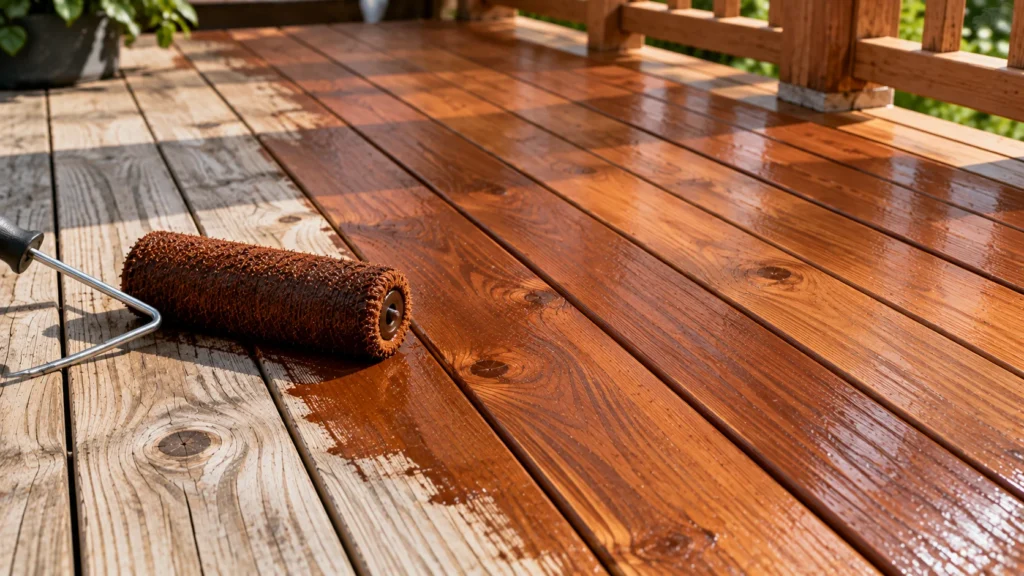
A covered porch experiences less direct sun and rain than an exposed deck. A south-facing deck in a sunny climate may experience substantially more UV stress than a shaded backyard deck.
Sherwin-Williams provides several opacity levels and specialized exterior deck products, allowing the finish to be matched to the desired level of pigmentation and coverage.
Exposure-Based Selection Guide
| Deck condition | Suitable category to consider |
| New attractive wood | Clear or transparent |
| Good-condition cedar | Transparent or semi-transparent |
| Good pressure-treated wood | Semi-transparent |
| Strong full-sun exposure | Pigmented semi-transparent, semi-solid, or solid |
| Older weathered wood | Semi-solid or solid |
| Severely uneven appearance | Solid |
| Natural-grain priority | Clear or semi-transparent |
| Maximum visual coverage | Solid |
| Frequently wet environment | Exterior product specifically rated for the application |
| Previously coated deck | Product compatible with existing finish |
Best Way to Apply Deck Stain and Sealer
Application quality can matter as much as the product itself. Even a high-quality stain can perform poorly when applied over dirty, wet, failing, or improperly prepared wood.
Consumer Reports recommends cleaning and preparing the deck before staining and stresses that proper application affects how the finish protects the wood.
Start by removing furniture and debris. Clean the surface using the appropriate deck-cleaning method. If pressure washing is necessary, use appropriate pressure and technique to avoid damaging the wood.
Allow the surface to dry according to the stain manufacturer’s instructions. Then apply the stain evenly without leaving excessive puddles.
15 Steps for Applying Deck Stain Correctly
- Inspect the entire deck before beginning.
- Replace damaged boards when necessary.
- Remove furniture and debris from the surface.
- Clean the deck thoroughly.
- Remove failing old stain where required.
- Sand rough areas according to the coating system.
- Remove all sanding dust.
- Allow the deck to dry sufficiently.
- Check weather conditions before starting.
- Test the stain color in a small area.
- Use the recommended applicator.
- Work in manageable sections.
- Keep application thickness consistent.
- Avoid puddling and lap marks.
- Allow the coating to cure before returning furniture or heavy traffic.
Deck Stain and Sealer Maintenance
No exterior wood finish lasts forever. Weather, sunlight, rain, snow, foot traffic, and moisture gradually affect the coating.
Consumer Reports notes that the best-performing wood stains in its earlier testing were capable of lasting several years, while weaker-performing products could show significant deterioration much sooner. Its current testing continues to evaluate stains over extended outdoor exposure.
Rather than waiting until the deck is severely deteriorated, inspect it periodically.
One simple indicator is water behavior. Consumer Reports explains that if a deck stain is still protecting the wood, water should generally repel from the surface; loss of water repellency can indicate that maintenance is becoming necessary.
Deck Stain and Sealer Problems to Avoid
Many deck-finishing failures are related to preparation or application rather than the product alone.
Applying stain over dirty wood can prevent proper penetration or adhesion. Applying it over wet wood when the product requires dry wood can also interfere with performance.
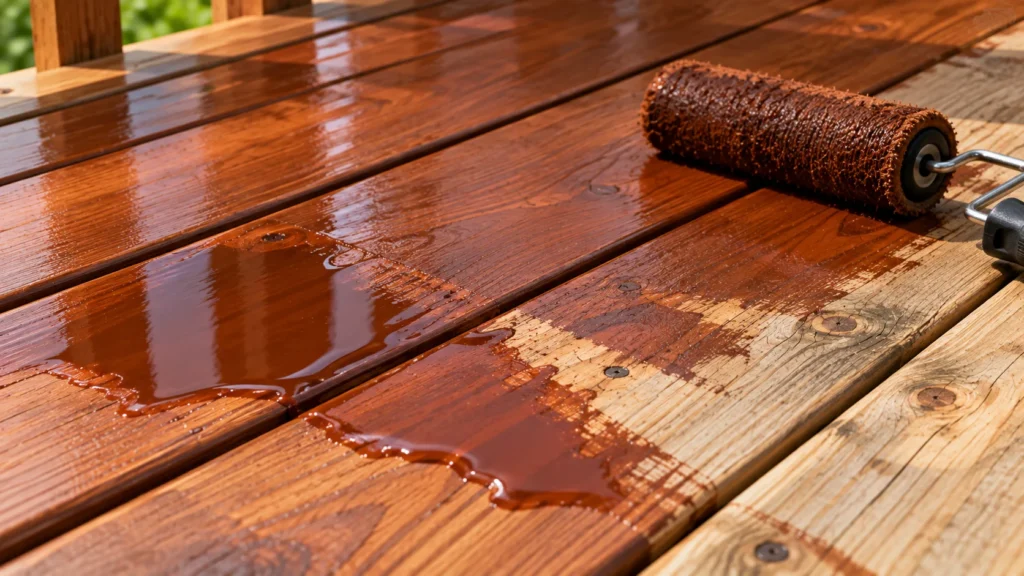
Another common mistake is applying too much stain. More coating is not automatically more protection. Excess material can remain on the surface, creating uneven appearance or premature failure depending on the formulation.
Common Deck-Staining Mistakes
- Staining dirty wood.
- Staining wet wood when the product requires dry wood.
- Ignoring the manufacturer’s weather requirements.
- Applying too much stain.
- Leaving puddles.
- Allowing lap marks to dry.
- Skipping a test area.
- Ignoring an existing failing coating.
- Using the wrong opacity for the deck condition.
- Choosing color without testing it.
- Applying a product designed for vertical wood to a horizontal deck.
- Ignoring UV exposure.
- Walking on the deck before curing.
- Returning furniture too soon.
- Neglecting regular maintenance.
Best Deck Stain and Sealer Brands and Product Categories
Several established manufacturers currently offer exterior deck stains and stain-and-sealer products.
Sherwin-Williams has SuperDeck products spanning semi-transparent, semi-solid, solid, and other exterior deck-coating categories.
Consumer Reports’ 2026 testing covers products from brands including Behr, Olympic, Valspar, Sherwin-Williams, Thompson’s WaterSeal, Cabot, and others.
Home Depot’s current best-rated deck-stain listings include Seal-Once, Preserva Wood, Flood Easy Seal, and Wolman products, with customer ratings varying by product and review count.
The important distinction is that retailer ratings reflect customer experiences, while laboratory or field testing uses a different methodology. Consumer Reports, for example, says it tests wood stains over extended periods, while Home Depot’s ratings are based on customer reviews.
Deck Stain and Sealer Comparison
| Category | Best suited for | Grain visibility | Maintenance consideration |
| Clear sealer | Attractive new wood | Very high | More frequent UV-related maintenance may be needed |
| Transparent stain | Natural-looking wood | High | Requires attractive underlying wood |
| Semi-transparent | General deck staining | Medium-high | Good balance of color and grain |
| Semi-solid | Older or uneven wood | Medium | More coverage than semi-transparent |
| Solid stain | Weathered decks | Low | Surface preparation is especially important |
| Oil-based penetrating stain | Projects suited to oil formulations | Varies | Check drying and cleanup requirements |
| Water-based stain | Projects suited to waterborne systems | Varies | Follow product-specific application requirements |
| Stain-and-sealer-in-one | Simplified finishing projects | Varies | Performance depends on formulation |
Final Selection Guide for the Best Deck Stain and Sealer
If your priority is natural wood grain, look toward transparent or semi-transparent finishes.
If your deck is pressure-treated, select a product specifically compatible with pressure-treated lumber and allow the wood to dry sufficiently before staining.
If you have cedar or redwood, semi-transparent finishes can preserve much of the natural character while adding color.
If your deck is old and weathered, semi-solid or solid stain can provide more uniform coverage.
If the deck receives full sun, consider a sufficiently pigmented exterior stain designed for UV exposure.
If you want a water-based product, choose a waterborne stain that is rated for your specific deck and application conditions.
If you prefer an oil-based finish, select an exterior oil-based product compatible with the wood and existing coating.
If the deck is around a pool, prioritize exterior horizontal-deck compatibility, maintenance requirements, and surface-use considerations.
If the deck already has a solid or film-forming coating, check compatibility before applying a penetrating stain.
The correct choice is ultimately the product that matches the wood, existing finish, exposure, desired appearance, and maintenance plan.
Conclusion
The best deck stain and sealer is not necessarily one particular brand or product for every deck. The most appropriate choice depends on the condition and species of the wood, the amount of sunlight and moisture it receives, the existing coating, and the appearance you want to achieve.
For attractive wood where grain visibility matters, transparent and semi-transparent stains can preserve more of the natural character. For old or weathered decks, semi-solid and solid finishes provide greater coverage. Sherwin-Williams’ current exterior stain system reflects this progression from clear and transparent finishes through semi-transparent, semi-solid, and solid products.
For pressure-treated wood, proper drying and preparation are especially important. Consumer Reports’ current buying guide recommends allowing newly installed pressure-treated wood time to dry before staining and emphasizes cleaning and preparation before application.
Current 2026 product and testing information also shows a wide range of choices from manufacturers such as Sherwin-Williams, Behr, Valspar, Thompson’s WaterSeal, Cabot, Seal-Once, Preserva Wood, Flood, and Wolman.
Rather than choosing a stain based only on the word “best,” match the formula to the deck’s material, age, exposure, existing finish, and desired level of coverage. Careful preparation and correct application are just as important as the product itself.
What is the best deck stain and sealer?
The appropriate deck stain and sealer depends on the deck’s wood species, condition, exposure, existing finish, and desired appearance. Semi-transparent products are often selected when retaining wood grain is important, while solid stains provide much greater coverage.
What is the best deck stain and sealer for pressure-treated wood?
A stain specifically approved for pressure-treated exterior wood is appropriate. Newly installed pressure-treated lumber should be allowed to dry adequately before staining; Consumer Reports gives a general four-to-eight-week drying period for new pressure-treated decks.
What is the best deck stain and sealer for cedar?
A transparent or semi-transparent exterior stain can be suitable when the goal is to preserve cedar’s natural grain. The final choice should also account for sunlight, moisture, and the cedar’s existing condition.
What is the best deck stain and sealer for an old deck?
Semi-solid or solid stains can be useful for older, weathered decks because they provide greater visual coverage. Proper cleaning, removal of failing coatings, and surface preparation are essential before application.
What is the best deck stain and sealer for full sun?
A sufficiently pigmented exterior stain designed for UV exposure can provide more protection than a clear finish. Sherwin-Williams notes that clear stains offer the least UV protection, while more pigmented finishes provide greater protection.
Is oil-based or water-based deck stain better?
Both types have different characteristics. Oil-based stains remain widely available for exterior decks, while waterborne products offer another formulation option. The correct choice depends on the wood, existing coating, climate, application requirements, and manufacturer’s specifications.
Is semi-transparent deck stain better for showing wood grain?
Semi-transparent stain is specifically designed to provide color while allowing natural wood grain to remain visible. Sherwin-Williams describes its semi-transparent category as providing pigmentation while allowing the grain to show through.
Is solid deck stain suitable for old wood?
Solid stain can be suitable for weathered wood because it provides substantially more coverage than transparent or semi-transparent products. It can help create a more uniform appearance when the underlying wood has discoloration or uneven grain.
How long should deck stain last?
Service life varies considerably according to the product, wood, climate, exposure, preparation, application, and maintenance. Consumer Reports’ testing has historically found significant differences between products and notes that some of the stronger-performing stains can last several years under its testing conditions.
Can deck stain and sealer be used on pressure-treated wood?
Yes, products specifically labeled for pressure-treated exterior wood can be used when the wood is sufficiently dry and properly prepared. Always follow the particular product’s application requirements.
Can deck stain be applied to an old stained deck?
It can be, but compatibility with the existing coating is important. Peeling or failing stain should generally be removed or properly prepared before applying a new coating.
What is the best way to apply deck stain and sealer?
Start with inspection and cleaning, remove failing coatings, prepare rough areas, allow the wood to reach the required moisture condition, test the product, and apply an even coat according to the manufacturer’s instructions. Consumer Reports emphasizes proper preparation and application as important parts of successful deck staining.
Can deck stain be applied in full sunlight?
Application conditions depend on the specific product. Temperature, surface temperature, humidity, rain, and direct sunlight can affect application and curing, so the manufacturer’s current instructions should be followed.
Is a deck stain and sealer in one effective?
A stain-and-sealer-in-one product can combine coloring and protective functions in one coating. Current retailer listings include multiple exterior products marketed this way, but actual performance depends on the formulation, wood condition, exposure, and application.
How often should a wood deck be restained?
There is no universal schedule. Inspect the deck regularly for fading, water absorption, peeling, and weathering. Consumer Reports notes that water repellency can help indicate whether a deck’s protective finish is still functioning.