
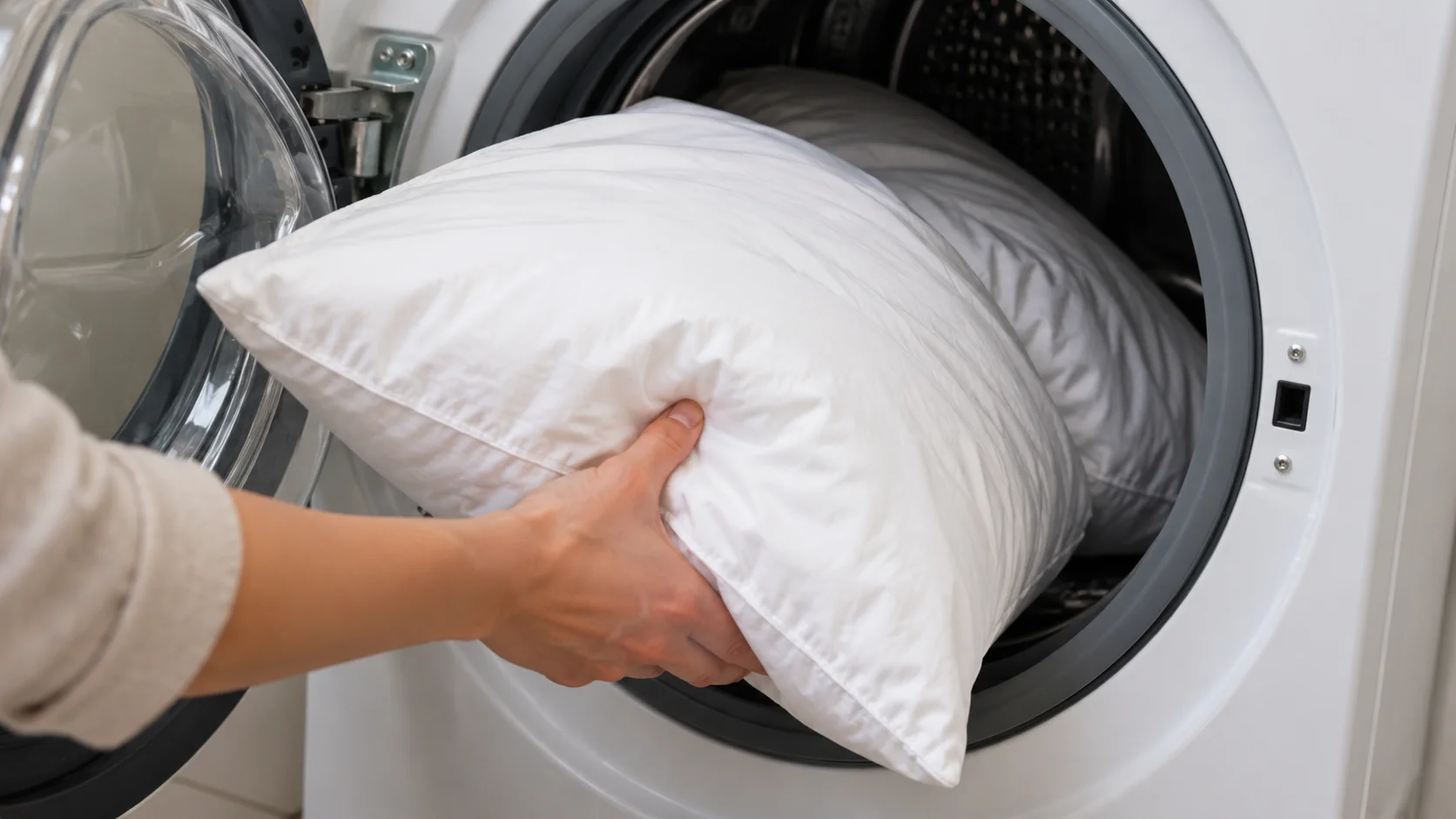
Learning how to wash pillows properly is important because pillows collect more than visible dust. Over time, sweat, body oils, skin products, dead skin cells, stains, odors, and other debris can make their way through pillowcases and into the pillow itself. However, not every pillow should be treated in the same way. A machine-washable polyester pillow can usually handle a gentle wash, while solid memory foam generally should not be placed in a washing machine. Down and feather pillows can often be washed, but they require careful detergent, temperature, washing, and drying choices.
The safest approach to how to wash your pillows starts with the care label. The manufacturer’s instructions should take priority because pillow construction varies even when two pillows look similar. Once you know the fill and the approved cleaning method, you can choose between a washing machine, hand washing, spot cleaning, or another method. This guide explains how to wash pillows in washing machine, how to clean down, feather, polyester, foam, decorative, couch, body, and outdoor pillows, how to dry them without clumping, and how often different pillows should be cleaned.
Before You Wash Your Pillows, Check These Things
Before putting a pillow into a washer or bathtub, take a few minutes to identify its construction. This simple step can prevent damage that may not be reversible.
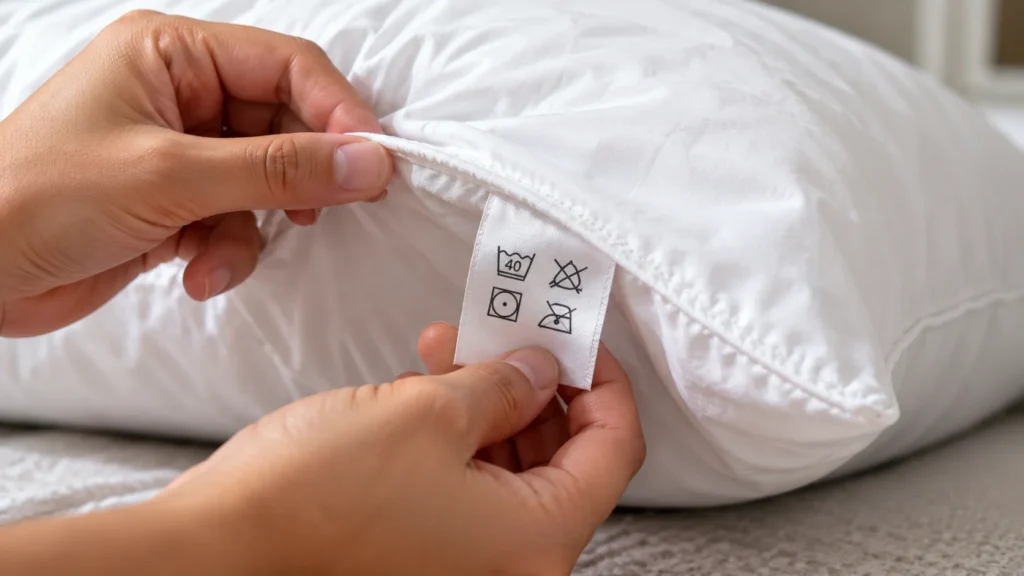
Read the Care Label First
The care label may say:
- Machine washable
- Hand wash only
- Spot clean only
- Dry clean only
- Do not wash
- Do not tumble dry
- Use cold or warm water
- Use low heat
If the label specifically says dry clean only or do not wash, do not assume that a gentle home wash will be safe. Sleep Foundation recommends following the manufacturer’s instructions because some pillow fills and covers can be damaged by water or machine agitation.
Inspect the Pillow for Damage
Before washing, examine the seams and outer fabric. Look for:
- Open seams
- Tears
- Loose stitching
- Holes
- Flattened or damaged areas
- Exposed filling
- Broken zippers on removable covers
A small tear can become a much larger opening during a wash cycle, allowing filling to escape into the washer.
Remove Covers and Pillowcases
Take off pillowcases, decorative covers, and removable protectors before washing the actual pillow. Wash those covers separately according to their own care instructions.
For pillows with a removable outer cover, check whether only the cover is washable. Some foam pillows, for example, should not be submerged even though their removable covers can be machine washed.
How to Wash Pillows in Washing Machine
For pillows labeled machine washable, the process is relatively straightforward. However, the exact temperature, detergent, cycle, and drying method should follow the care label.
If you are wondering how to wash pillows in the washing machine, start by making sure your washer is large enough to accommodate the pillow without forcing it into the drum.
Step-by-Step Machine Washing Method
1. Remove the pillowcase and protector.
Wash these separately.
2. Inspect the pillow.
Repair or avoid washing pillows with damaged seams.
3. Pre-treat visible stains.
Use an appropriate mild stain treatment and follow its instructions. Avoid soaking the entire pillow unnecessarily.
4. Balance the load when appropriate.
If your washer and pillow-care instructions allow it, washing two similar pillows together can help balance the load. Sleep Foundation and Consumer Reports both mention washing pillows in pairs as a way to help balance the machine.
5. Use the recommended water temperature.
Do not automatically choose hot water. Many pillows are better suited to cool or warm water.
6. Select a gentle cycle.
A delicate or gentle cycle reduces aggressive agitation.
7. Use a small amount of mild detergent.
Too much detergent can leave residue inside the filling.
8. Add an extra rinse if recommended.
This can help remove remaining detergent, especially from absorbent fillings.
9. Use an appropriate spin setting.
Removing excess water before drying can make the drying stage easier.
10. Dry the pillow completely.
Never return a damp pillow to the bed.
Consumer Reports recommends reading the label first, using a gentle cycle for washable pillows, and paying particular attention to complete drying because a pillow can remain damp internally even when the exterior feels dry.
How to Wash Different Types of Pillows
There is no single method for every pillow. The filling is one of the most important factors determining whether you can safely machine wash it.
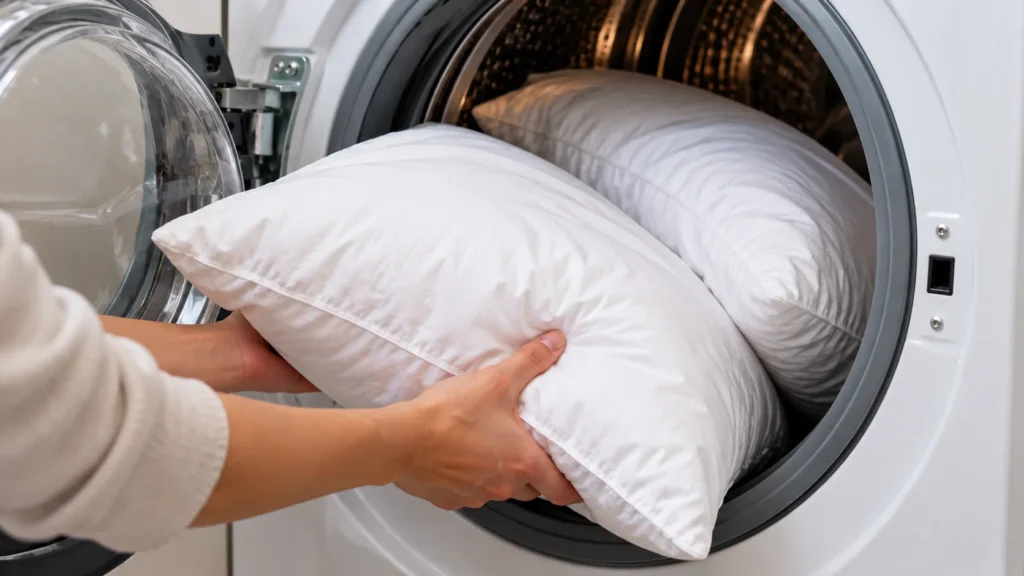
How to Wash Down and Feather Pillows
If you want to know how to wash down pillows or how to wash feather pillows, first check the manufacturer’s instructions. Many down and feather pillows can be machine washed, but some products have specific cleaning requirements.
For a washable down or feather pillow:
- Remove the pillowcase and protector.
- Check carefully for holes or damaged seams.
- Place two pillows in the washer when appropriate to balance the load.
- Use cool or warm water according to the label.
- Choose a delicate cycle.
- Use a small amount of mild or low-sudsing detergent.
- Run an extra rinse if needed.
- Use an additional spin cycle to remove excess water.
- Dry using the manufacturer’s recommended low-heat or no-heat method.
- Stop periodically to fluff the pillow and break up clumps.
Sleep Foundation specifically recommends gentle handling, mild detergent, cool or warm water, and extra rinsing for washable down and feather pillows.
When researching how to wash down pillows in washing machine or how to wash feather pillows in washing machine, remember that drying is just as important as washing. Down and feathers can retain moisture deep inside the pillow.
How to Wash Polyester Pillows
Polyester and down-alternative pillows are commonly easier to clean than solid foam pillows. Consumer Reports recommends warm water and a gentle cycle for polyester pillows, with a limited amount of detergent.
For a washable polyester pillow:
- Remove the cover.
- Check the label.
- Use the gentle cycle.
- Use the recommended water temperature.
- Use mild detergent.
- Avoid excessive detergent.
- Rinse thoroughly.
- Dry completely before use.
If the pillow becomes lumpy during washing, gently redistribute the filling while it is drying.
How to Wash Memory Foam Pillows
This is where many people make a serious mistake.
If you have a solid memory foam pillow, do not automatically put it in the washing machine. Sleep Foundation says most memory foam pillows should not be machine washed or machine dried because excessive moisture, agitation, and heat can damage the foam.
For how to wash memory foam pillows, the safer general approach is:
- Remove the washable cover.
- Vacuum the pillow surface gently.
- Spot-clean stains with a small amount of mild detergent diluted in water.
- Blot rather than aggressively rubbing.
- Remove soap residue with a clean damp cloth.
- Allow the pillow to air dry completely.
Some shredded memory foam pillows may have different care instructions and can sometimes be washed by hand or in a machine. The manufacturer’s instructions are essential for these products.
How to Wash Foam Pillows
Solid foam pillows should generally be treated more cautiously than synthetic-filled pillows. Water can become trapped inside foam, and aggressive washing can alter its structure.
For most foam pillows:
- Remove and wash the cover separately.
- Vacuum surface dust.
- Spot-clean stains.
- Avoid twisting or wringing the foam.
- Allow the pillow to dry thoroughly in an appropriate ventilated location.
If the manufacturer’s instructions specifically permit washing, follow those instructions rather than applying a generic foam-cleaning method.
How to Wash Throw, Decorative, Couch and Body Pillows
Not every pillow found around the home should be cleaned like a standard bed pillow.
How to Wash Throw Pillows
For how to wash throw pillows, begin with the fabric and filling rather than the pillow’s appearance. A removable cover may be machine washable even when the inner insert is not.
If the complete throw pillow is washable:
- Check the label.
- Remove loose decorative pieces if permitted.
- Use a gentle cycle.
- Choose the recommended water temperature.
- Use mild detergent.
- Avoid harsh agitation.
- Dry according to the label.
For how to wash throw pillows without removable cover, check whether the entire insert is washable. If it is not, spot-cleaning is safer than immersing the pillow.
How to Wash Decorative Pillows
Decorative pillows can contain delicate fabrics, embroidery, trims, buttons, beads, or decorative stitching. These features may not tolerate a standard wash cycle.
For how to wash decorative pillows in washing machine, only machine wash when the care instructions specifically allow it. Otherwise, spot-clean the affected area or wash a removable cover separately.
How to Wash Couch Pillows
Couch pillows can be more complicated because some are made from upholstery foam, polyester fiber, down alternative, or other materials.
For how to wash couch pillows with stuffing, check whether the stuffing is removable. If the insert is machine washable, follow its instructions. If the insert is foam or another non-washable material, clean the cover and spot-clean the insert where appropriate.
Do not assume that because a sofa cushion looks like a normal pillow, it can safely go into the washing machine.
How to Wash Body Pillows
For how to wash body pillows, first check their size and washer capacity. Sleep Foundation notes that many body pillows use down-alternative or polyester filling and may be machine washable, but their large size can make home drying difficult if the dryer does not provide enough room for the pillow to move freely.
A body pillow that is tightly compressed inside a small washer or dryer may not clean or dry evenly.
How to Wash Pillows by Hand
Hand washing is useful when the care label permits it but machine agitation is not recommended.
For how to hand wash pillows, use a clean bathtub, large sink, or suitable basin.
- Fill the container with cool or lukewarm water according to the care instructions.
- Add a small amount of mild detergent.
- Mix the detergent into the water.
- Submerge the pillow if its care label permits complete immersion.
- Gently press and squeeze the pillow to work out dirt.
- Drain the dirty water.
- Refill with clean water.
- Gently squeeze the pillow to release detergent.
- Continue rinsing until the water is clear.
- Press out excess water without twisting or wringing.
- Dry according to the pillow’s instructions.
Sleep Foundation recommends gentle squeezing rather than wringing for washable down and feather pillows because twisting can damage the filling.
How to Wash Pillows Without a Washing Machine
You do not always need a washing machine to keep pillows fresh.
For pillows that can be hand washed, the bathtub can provide enough room to clean them without compressing them excessively. For pillows that should not be submerged, surface cleaning is usually more appropriate.
If your pillow is not washable:
- Remove and wash the pillowcase.
- Wash the pillow protector.
- Vacuum the pillow surface gently.
- Spot-clean visible marks.
- Use baking soda only when appropriate for the material and cleaning instructions.
- Allow the pillow to air out in a well-ventilated area.
- Follow the manufacturer’s care instructions.
Sleep Foundation recommends baking soda as one option for freshening some memory foam pillows: it can be left on the surface temporarily and then vacuumed away.
How to Wash Yellow Pillows
Yellow discoloration is common on pillows because sweat, body oils, skin products, and other substances can gradually pass through the pillowcase.
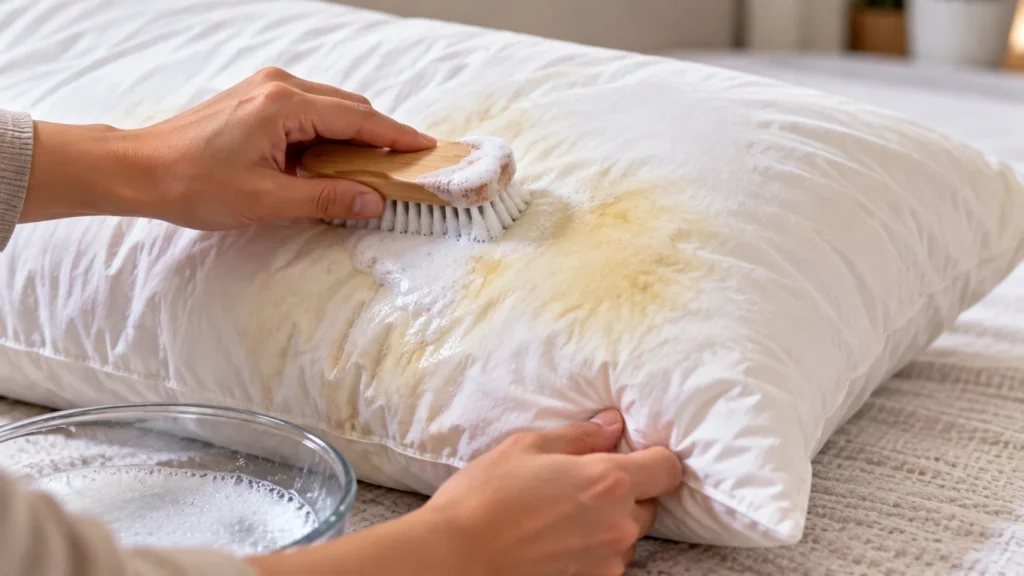
If you are searching for how to wash yellow pillows, do not immediately use the strongest chemical cleaner available. Start by checking the care label and identifying the pillow material.
For a washable pillow:
- Pre-treat the stained area with a suitable product.
- Allow it to work for the period recommended on the product label.
- Wash using the pillow’s approved cycle.
- Rinse thoroughly.
- Dry completely.
Avoid bleach or harsh cleaning chemicals unless the manufacturer specifically permits them. A cleaner that works well on one fabric can damage another.
Jump into Other Related Article
- How to Remove Peanut Butter Stains | Easy Ways to Clean Clothes, Fabric & More
- Does Rayon Shrink? What Happens in the Washer and Dryer
- How to Remove Coffee Stains | Easy Methods for Clothes, Teeth, Carpet & More
- How to Clean Suede Shoes | Easy Ways to Clean Suede at Home
How to Wash Pillows Without Clumping
Clumping can occur when filling shifts during washing or when a pillow is not dried evenly.
To reduce the chance of clumping:
- Use the correct wash cycle.
- Avoid excessive detergent.
- Do not overload the washer.
- Balance washable pillows appropriately.
- Use an extra rinse when recommended.
- Remove excess water before drying.
- Fluff the pillow periodically during drying.
- Break up visible clumps gently.
- Make sure the center is completely dry.
Down and feather pillows can often be fluffed during drying. Sleep Foundation recommends fluffing between dryer cycles and checking for lingering moisture or clumps.
For synthetic pillows, gentle redistribution of the filling can also help restore their shape.
How to Wash Pillows in Front Load and Top Load Washers
The basic principle is the same, but the washer design can affect how the pillow should be loaded.
How to Wash Pillows in Front Loading Washer
A front-loading washer can be useful for bulky pillows because there is no central agitator occupying the middle of the drum.
For how to wash pillows in a front load washer:
- Check that the drum is large enough.
- Do not force oversized pillows inside.
- Balance the load when appropriate.
- Use a gentle cycle.
- Use the recommended temperature.
- Add only the required amount of detergent.
- Run an extra rinse if appropriate.
Consumer Reports suggests that a laundromat’s larger front-loader may be useful when a household machine is not large enough for pillows.
How to Wash Pillows in Top Loading Washer
For how to wash pillows in top loading washer, check whether the machine has a central agitator.
Sleep Foundation recommends that when a washable down or feather pillow is used in a top-loading washer with an agitator, it can be loaded vertically to reduce the possibility of damage.
For any top loader:
- Avoid stuffing the drum.
- Use a gentle setting.
- Keep the load balanced.
- Follow the pillow manufacturer’s instructions.
How to Wash Pillows in a Bathtub
A bathtub can be useful for how to wash pillows in bathtub, particularly for pillows that are too large for a household washing machine but are approved for hand washing.
Fill the tub with the recommended water temperature and add a small amount of mild detergent. Submerge the pillow only if the care label allows it. Gently press the pillow under the water and release it repeatedly to help loosen dirt.
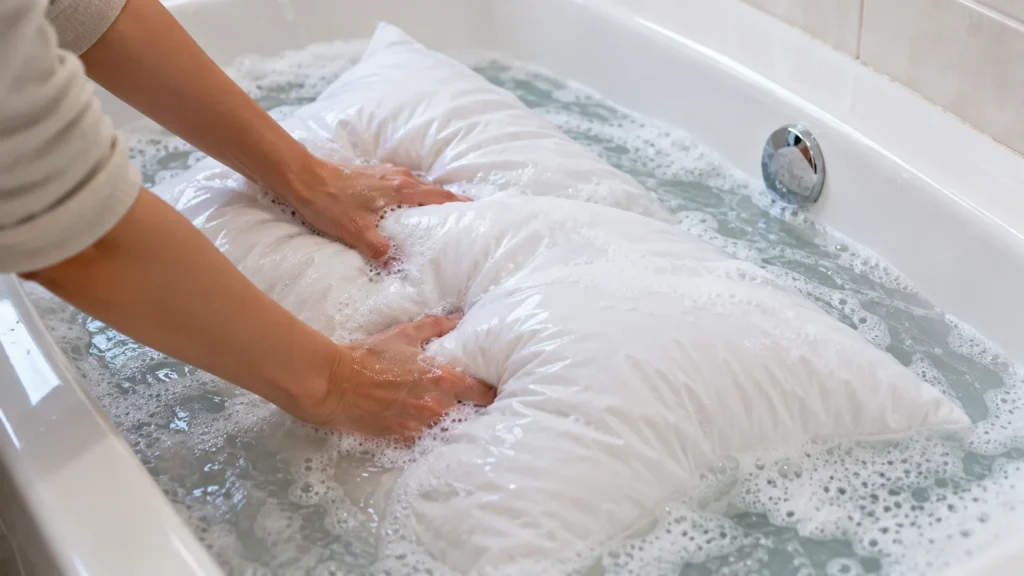
Drain the dirty water and rinse several times with clean water. Continue until detergent is no longer visible.
The most important part is removing excess water without twisting. Press the pillow gently or use clean towels to absorb moisture.
How to Wash and Dry Pillows Properly
Washing is only half the process. Incorrect drying can leave moisture trapped inside the filling.
Machine Drying
If the pillow’s label allows tumble drying:
- Select the recommended low-heat setting.
- Avoid excessive heat.
- Stop periodically to inspect and fluff the pillow.
- Check for moisture deep inside.
- Continue drying until completely dry.
Sleep Foundation recommends low or no heat for washable down and feather pillows and emphasizes checking for lingering moisture.
Consumer Reports also warns that automatic dryer sensors may detect a dry outer surface while the inside of a pillow remains damp.
Air Drying
Air drying can work for pillows whose instructions permit it.
Place the pillow on a clean, breathable surface where air can circulate around it. Turn and fluff it periodically so moisture does not remain concentrated in one area.
A fan can improve airflow. For memory foam, Sleep Foundation recommends keeping the pillow away from direct heat and allowing it to dry thoroughly before use.
Never put a damp pillow back onto your bed simply because the outer fabric feels dry.
How Often to Wash Pillows
The answer to how often to wash pillows depends on pillow material, personal habits, climate, allergies, pillow protectors, and the manufacturer’s instructions.
Consumer Reports recommends washing washable pillows at least twice a year and suggests quarterly cleaning for people who sweat heavily, eat in bed, or allow pets to sleep in bed.
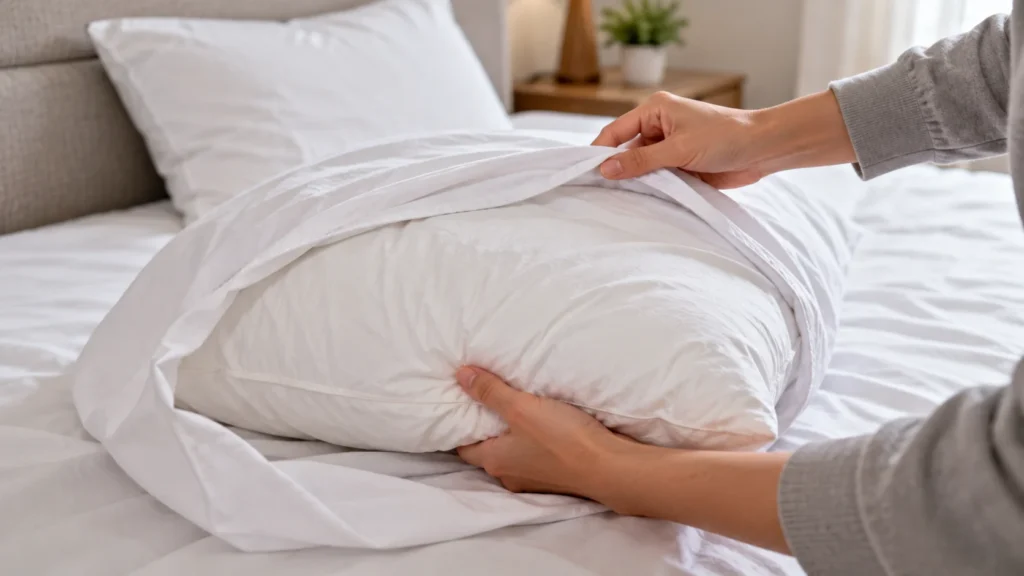
Sleep Foundation also recommends regular cleaning and notes that some down and feather pillows may be washed every few months, depending on their construction and care requirements.
A practical maintenance routine includes:
- Wash pillowcases regularly.
- Wash pillow protectors according to their instructions.
- Fluff pillows regularly.
- Spot-clean spills promptly.
- Air pillows out when appropriate.
- Deep-clean washable pillows according to their care label.
- Replace pillows when they no longer provide adequate support or recover their shape.
A pillow protector can also reduce the amount of sweat, body oils and other material reaching the pillow itself.
Common Pillow-Washing Mistakes to Avoid
Even when a pillow is technically washable, certain mistakes can shorten its useful life.
Putting solid memory foam in the washing machine: Most solid memory foam pillows should not be machine washed.
Using too much detergent: Excess soap can remain inside the filling and may contribute to residue or clumping.
Using very hot water: Heat can damage some fills and fabrics.
Using high dryer heat: High temperatures may damage down, foam, synthetic fibers, or pillow covers depending on the construction.
Wringing a wet pillow: Twisting can damage delicate fillings and change the shape.
Stopping the drying cycle too soon: A pillow may feel dry outside while remaining wet inside.
Ignoring the care label: This is one of the easiest mistakes to prevent.
Overloading the washer: A crowded drum limits water and detergent circulation and can prevent the pillow from being cleaned evenly.
Assuming every pillow is washable: Materials such as solid memory foam require a different cleaning approach.
How to Keep Pillows Fresh Between Washes
Regular maintenance can reduce how frequently a pillow needs deep cleaning.
Try these habits:
- Use a pillowcase plus a washable pillow protector.
- Wash pillowcases regularly.
- Fluff pillows after getting up.
- Address stains promptly.
- Allow suitable pillows to air out.
- Keep hair and skin products from soaking into the pillow.
- Follow the manufacturer’s cleaning instructions.
- Do not store pillows while they are damp.
Sleep Foundation recommends regular fluffing and the use of pillow protectors as part of long-term down and feather pillow care.
Conclusion
Knowing how to wash pillows is less about using one universal cleaning recipe and more about matching the cleaning method to the pillow’s material. Machine-washable polyester, down, feather, and some synthetic pillows can often be cleaned with a gentle cycle, mild detergent, appropriate water temperature, and careful drying. Solid memory foam and many specialty pillows need a different approach, such as vacuuming, spot cleaning, or following specific manufacturer-approved instructions.
The most important rule is simple: check the care label before washing. If the pillow is washable, clean it gently and make sure it is completely dry before putting it back on the bed. Proper washing, regular pillowcase and protector care, occasional fluffing, and timely stain treatment can help keep pillows fresher while protecting their filling and shape.
Can you wash pillows in the washing machine?
Yes, many pillows can be machine washed, but not all. Always check the care label first. Polyester, many down and feather pillows, and some other synthetic pillows may be washable, while most solid memory foam pillows should not be machine washed.
How do you wash pillows in a washing machine?
For a machine-washable pillow, remove the cover, inspect the seams, use the recommended water temperature, select a gentle cycle, add a small amount of mild detergent, rinse thoroughly, and dry completely according to the care instructions.
How do you wash down pillows?
For a washable down pillow, use a gentle cycle, cool or warm water as specified by the manufacturer, a small amount of mild or low-sudsing detergent, and an extra rinse when appropriate. Dry thoroughly on the recommended low-heat or no-heat setting and fluff between cycles.
Can you wash feather pillows in the washing machine?
Many feather pillows can be machine washed, but the care label should always be checked first. Use gentle settings and avoid excessive heat. Some feather pillows have special cleaning requirements.
Can you put memory foam pillows in the washing machine?
Most solid memory foam pillows should not be machine washed. Washing-machine agitation and moisture can damage the foam. Some shredded memory foam pillows have different instructions, so check the manufacturer’s directions.
How do you wash memory foam pillows?
For most solid memory foam pillows, remove the cover, vacuum the surface, and spot-clean stains with a mild detergent solution. Allow the pillow to dry completely and avoid direct heat.
How do you wash throw pillows without a removable cover?
First check the care label to determine whether the entire pillow is washable. If it is not designed for immersion, spot-clean the fabric instead. Do not put decorative pillows into the washing machine simply because they look similar to washable bed pillows.
How often should you wash pillows?
Washable pillows generally need periodic deep cleaning rather than daily washing. Consumer Reports recommends at least twice a year and suggests more frequent cleaning for people who sweat heavily, eat in bed, or sleep with pets.
How do you wash pillows without clumping?
Use a gentle cycle, avoid excessive detergent, rinse thoroughly, remove excess water carefully, and fluff the pillow during drying. Down and feather pillows benefit particularly from periodic fluffing while they dry.
How do you wash yellow pillows?
Check the care label first, then pre-treat visible discoloration with a suitable stain treatment and wash according to the pillow’s instructions. Avoid harsh chemicals unless they are approved for the material.
Can you wash couch pillows in the washing machine?
Some couch pillow inserts can be machine washed, but others contain foam or specialty materials that should not be submerged. Check the insert’s care label and wash only when the manufacturer permits it.
How do you wash pillows by hand?
Fill a clean bathtub or basin with the recommended water, add mild detergent, gently press and squeeze the pillow, drain the dirty water, rinse thoroughly, and press out excess moisture without twisting or wringing.