
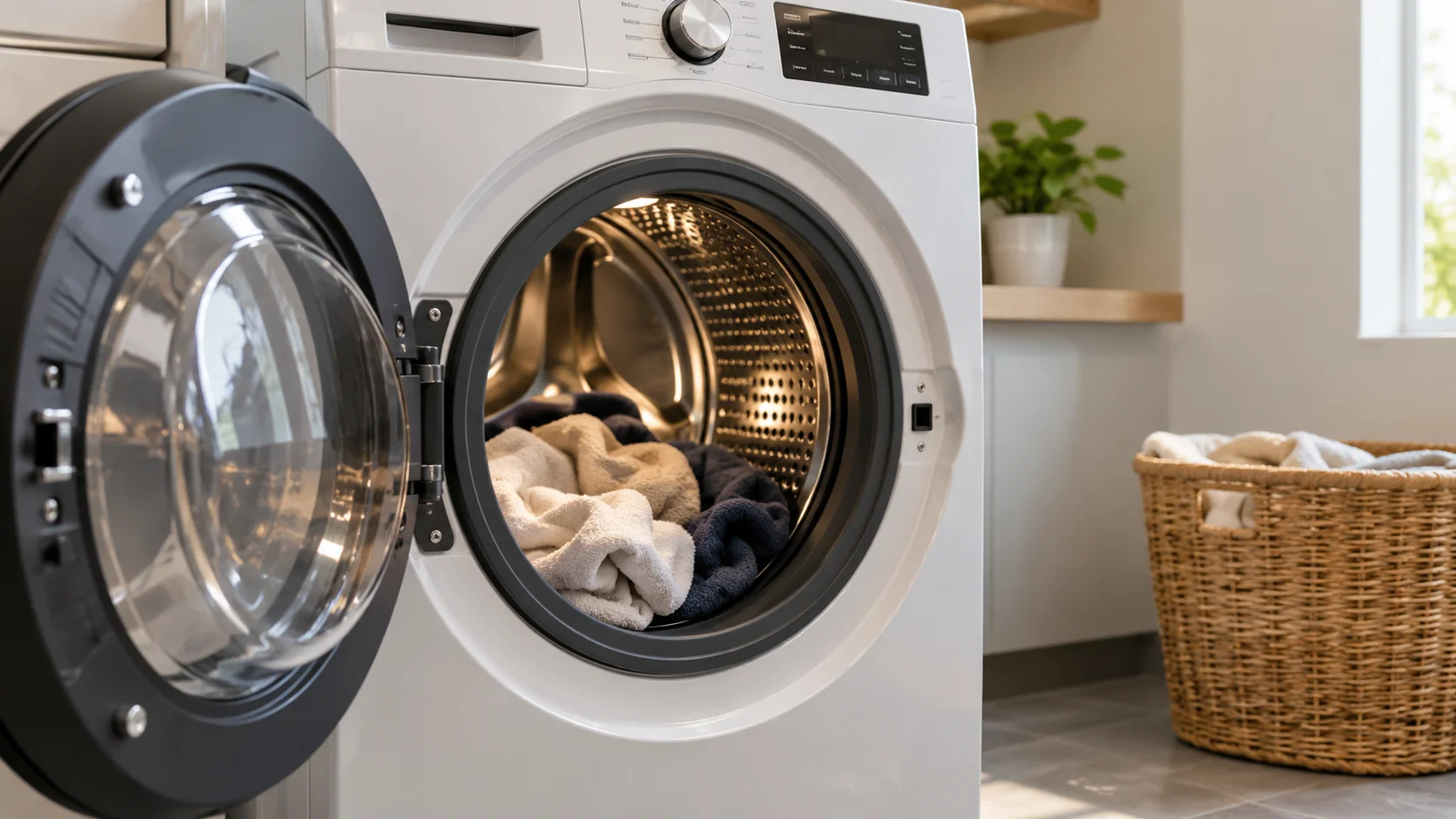
An all in one washer dryer combines a washing machine and clothes dryer inside one appliance. Instead of moving wet clothes from a washer into a separate dryer, you load the drum once, select a wash-and-dry program, and let the machine complete both stages. This design can be particularly useful in apartments, condos, closets, small laundry rooms and homes where installing two separate appliances is difficult. Whirlpool describes a washer dryer combo as a single appliance capable of washing and drying clothes, while Consumer Reports notes that these machines can eliminate the need to transfer wet laundry between appliances.
The growing selection of all-in-one washer dryer combo models from brands such as Samsung, LG, GE, Whirlpool and others also means shoppers have more features and configurations to compare. However, convenience does not automatically mean that a combo is the right choice for every household. Drying can take considerably longer than with a conventional dryer, and you cannot normally wash one load while simultaneously drying another in the same drum. This guide explains how an all in one washer and dryer works, the major benefits and limitations, vented versus ventless designs, important buying considerations, and what to look for when reading all-in-one washer dryer reviews.
What Is an All in One Washer Dryer?
An all in one washer dryer, also called a washer dryer combo or washer-dryer all-in-one, is one appliance that performs both washing and drying functions. It generally uses a front-loading drum and can be programmed for washing only, drying only, or a complete wash-and-dry cycle.
The main difference between this appliance and a conventional washer-and-dryer pair is the laundry workflow. With separate machines, you wash a load and then physically transfer it to the dryer. With a washer dryer all in one, the same drum handles both stages.
This means the basic process is:
- Load your clothes into the drum.
- Add detergent according to the manufacturer’s instructions.
- Select a wash cycle or wash-and-dry program.
- The machine washes, rinses and spins the clothes.
- The drying system removes moisture from the laundry.
- You return to the machine when the complete program is finished.
The single-drum design is one reason these appliances are attractive to people who have limited floor space or want to simplify laundry handling.
How Does an All-in-One Washer Dryer Work?
The washing portion works much like a conventional front-load washing machine. Water and detergent enter the drum, clothes tumble during the wash cycle, and the machine rinses and spins the load to remove excess water.
The drying process depends on the model. Some all in one washer dryer ventless machines use condensation or heat-pump technology rather than sending moist exhaust through a traditional dryer vent. Consumer Reports explains that the combo machines it tested used condensation or heat-pump drying systems, while Whirlpool notes that all-in-one machines can use either vented or ventless drying.
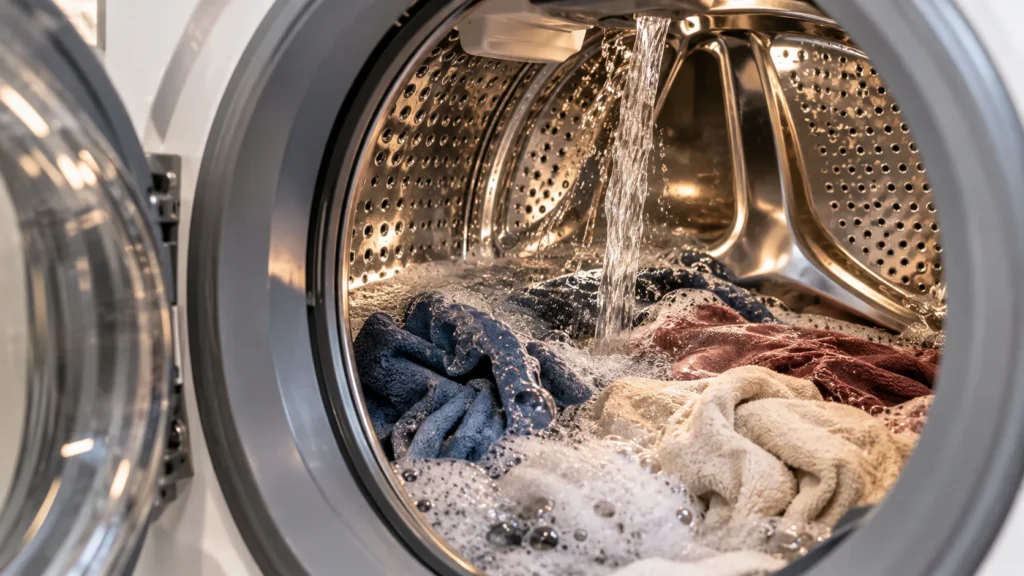
Ventless All in One Washer Dryer
A ventless all in one washer dryer does not require a conventional exhaust duct to the outside. This can make installation more flexible because the appliance does not have to be positioned beside an existing dryer vent.
Heat-pump systems are one type of ventless drying technology. They circulate and reuse heated air while extracting moisture from the clothes. Consumer Reports notes that heat-pump drying can be considerably more energy-efficient than conventional electric drying, although the drying process can take longer.
Vented All in One Washer Dryer
A vented all in one washer dryer uses heated air and an exhaust pathway to remove moisture. Whirlpool describes vented combo dryers as using heated air that is pumped into the drum while laundry tumbles.
When comparing a vented all in one washer dryer with a ventless model, check the installation requirements before purchasing. The correct choice depends on the available ventilation, electrical supply, plumbing and location of the appliance.
Why Choose an All in One Washer and Dryer?
The biggest attraction is convenience. A traditional laundry setup requires you to remember to transfer clothes between machines. A combo can automatically move from washing to drying without that manual step.
1. It Saves Floor Space
A separate washer and dryer require two appliance footprints, even when they are placed side by side. An all-in-one washer and dryer combines those functions into one machine.
This can be particularly helpful for:
- Apartments
- Condos
- Small laundry rooms
- Laundry closets
- RVs and compact living spaces
- Basement laundry areas
- Homes without a dedicated dryer vent
Consumer Reports identifies space savings as one of the major advantages of combo machines.
2. You Do Not Need to Transfer Wet Clothes
This is one of the simplest but most useful advantages. Once you start a complete wash-and-dry program, there is no need to carry a heavy, wet load from the washer to another appliance.
For households where laundry frequently gets forgotten in the washer, automatic transition can be convenient.
3. Installation Can Be More Flexible
Many ventless models do not require a traditional dryer exhaust duct. Consumer Reports notes that the ventless design can allow placement along a wall with the necessary water connection, although installation requirements still vary by model.
Always check the manufacturer’s installation instructions rather than assuming every washer dryer combo all in one has identical requirements.
4. One Appliance Can Handle Multiple Laundry Tasks
A combo can generally operate as:
- Washer only
- Dryer only
- Washer and dryer together
- Automated wash-and-dry cycles
That flexibility makes an all-in-one washer dryer combo useful when you want different approaches for different types of laundry.
All in One Washer Dryer Pros and Cons
Before searching for the best all in one washer dryer, it is important to understand both sides of the design.
Advantages
Space efficiency: One appliance occupies substantially less floor area than two side-by-side machines.
No wet-clothes transfer: A complete cycle can wash and dry without manual intervention.
Flexible installation: Ventless models can be suitable for locations where installing a conventional dryer duct is difficult.
Convenient automation: You can load the machine once and allow the complete cycle to continue.
Potential efficiency benefits: Heat-pump drying technology can use less energy than conventional electric drying, although performance varies by model and cycle.
Useful for smaller households: If you typically process one laundry load at a time, the single-drum workflow may fit your routine well.
Disadvantages
Long drying times: This is one of the most important limitations. Consumer Reports found that drying times for tested combo machines could extend to several hours.
No simultaneous washing and drying: Because there is only one drum, the appliance cannot normally wash your next load while drying the previous one.
Smaller effective drying capacity: A machine may have a relatively large wash capacity but a lower recommended drying load, depending on the model.
Higher purchase price: Some modern all-in-one models cost considerably more than a basic washing machine.
More complex equipment: One appliance contains both washing and drying systems, which can make maintenance and repairs more involved.
Potentially slower laundry days: If you routinely wash many loads back-to-back, separate machines may provide greater throughput because washing and drying can happen simultaneously.
Consumer Reports specifically warns that the convenience of eliminating the transfer step does not necessarily mean the overall laundry process is faster.
How Long Does an All in One Washer Dryer Take?
Drying time is one of the most important questions to ask before buying an all in one dryer washer.
There is no single drying time that applies to every machine. It depends on:

- Load size
- Fabric type
- Spin speed
- Moisture level
- Drying technology
- Selected cycle
- Machine model
- Ambient conditions
- Whether the drum is overloaded
Consumer Reports reported that some tested machines took more than three hours to dry a 12-pound load, while another example required more than two hours for an 8-pound load.
This is why a combo can be convenient for someone who starts laundry and leaves it running, but less convenient for someone who needs several dry loads in quick succession.
If speed is your highest priority, compare published cycle times and independent testing rather than relying only on a product’s marketing description.
All in One Washer Dryer vs Separate Washer and Dryer
The right configuration depends heavily on how you use your laundry appliances.
| Feature | All-in-One Washer Dryer | Separate Washer + Dryer |
| Floor space | Uses one appliance footprint | Requires two appliance spaces |
| Wet-clothes transfer | Not required for combined cycle | Required |
| Simultaneous washing/drying | No | Yes |
| Installation | Often flexible with ventless models | Usually more installation requirements |
| Large-volume laundry | Can take longer | Better suited to multiple loads |
| Convenience | High for one-load workflows | Requires more manual handling |
| Drying speed | Often slower | Generally faster |
| Laundry closet use | Very practical | May require stacking |
| Capacity | Varies by model | Larger dryer capacity is common |
Consumer Reports’ current buying information lists all-in-one washer-dryers with capacities up to about 5.3 cubic feet, while conventional dryers can offer substantially larger drums.
For a person living in a small apartment, the space advantage may matter more than maximum throughput. For a large household doing multiple loads every day, the inability to wash and dry simultaneously can become a significant consideration.
What to Look for in the Best All in One Washer Dryer
There is no universal best all-in-one washer dryer because households have different space, capacity and laundry requirements. Instead, compare the features that matter most to your situation.
Capacity
Look at both washing and drying capacity. Do not assume that the maximum wash capacity automatically means you can dry the same amount in one cycle.
If you regularly wash bedding, towels or bulky clothing, pay particular attention to the manufacturer’s recommended drying capacity.
Drying Technology
Identify whether the machine is:
- Heat pump
- Condenser
- Vented
- Another manufacturer-specific system
Heat-pump systems can offer energy-efficiency advantages, but drying can take longer. Consumer Reports found heat-pump drying more efficient than conventional electric drying while also noting the longer cycle times.
Cycle Time
Look at complete wash-and-dry times rather than only wash times. A machine may advertise a fast washing program while the full combined cycle still takes considerably longer.
Spin Performance
A stronger final spin can remove more water before drying begins. This can affect how much work the drying system has to do.
Maintenance
Check what needs regular cleaning. Consumer Reports recommends maintaining components such as filters, dispensers and the door gasket and using the machine’s self-cleaning function according to the manufacturer’s instructions.
Smart Features
Modern models may include Wi-Fi connectivity, app controls, cycle notifications and other smart features. These can be useful, but they should be secondary to fundamental factors such as drying performance, capacity, reliability information, installation requirements and service availability.
Samsung All in One Washer Dryer
A Samsung all in one washer dryer is one of the options shoppers may encounter when comparing modern combo appliances. Samsung’s Bespoke line is also represented in current retail listings, including ventless heat-pump all-in-one models.

When comparing a Samsung Bespoke all in one washer dryer, focus on the individual model rather than assuming every Bespoke appliance has identical specifications.
Check:
- Capacity
- Drying technology
- Cycle duration
- Electrical requirements
- Smart-home compatibility
- Maintenance requirements
- Warranty and service coverage
Product specifications can change between model years, so the exact model number should always be verified before purchasing.
LG All in One Washer Dryer
An LG all in one washer dryer is another major category in the current market. LG offers washer-dryer combo appliances, while retailers list LG among the major brands in the all-in-one category.
Searchers may encounter terms such as:
- LG WashCombo all-in-one washer-dryer combo
- LG Smart WashCombo all-in-one washer/dryer
- LG all in one washer dryer combo
- LG all-in-one washer/dryer reviews
When comparing an LG all in one washer dryer, use the exact model number to evaluate capacity, drying technology, cycle options and installation requirements.
Do not rely solely on generalized LG all in one washer dryer reviews, because performance, features and specifications can vary between models.
GE All in One Washer Dryer
GE Profile is another prominent name in this category. Current Home Depot listings include GE Profile all-in-one machines using ventless heat-pump technology, with different capacities and model numbers.
This is relevant when researching phrases such as:
- GE all in one washer dryer
- GE Profile all in one washer dryer
- GE all in one washer dryer reviews
- GE Profile washer dryer combo
One GE Profile model tested by Consumer Reports took about 3½ hours to dry a 12-pound load, illustrating why drying performance should be evaluated independently of brand reputation.
Whirlpool All in One Washer Dryer
A Whirlpool all in one washer dryer follows the same basic concept: one appliance performs both washing and drying. Whirlpool’s own educational material explains that combo machines can run wash-only, dry-only or combined programs.
If you are considering a Whirlpool model, compare its:
- Wash capacity
- Dry capacity
- Drying technology
- Cycle times
- Energy use
- Maintenance instructions
- Installation requirements
The same comparison method should be used for Samsung, LG, GE, Bosch, Maytag, Danby, Pinnacle and other brands rather than choosing solely by name.
Are Ventless All in One Washer Dryers Energy Efficient?
Energy performance depends on the specific appliance and drying technology. Heat-pump dryers are generally designed to use less energy than conventional electric resistance dryers, although the trade-off can be longer drying cycles.
Consumer Reports cites ENERGY STAR information indicating that heat-pump dryers use at least 28% less energy than standard dryers. It also notes that its tested heat-pump combo required considerably more time to dry a load while using less energy.
Therefore, energy efficiency and speed should be considered separately.
A machine that takes longer is not automatically inefficient, and a faster machine is not automatically more economical. Compare the energy specifications and independent test results for the exact model you are considering.
Are All in One Washer Dryer Combos Good for Small Spaces?
For many small homes, the biggest advantage of an all-in-one washer dryer combo is the ability to combine two functions without needing two appliance footprints.
A compact laundry closet, bathroom utility area or small apartment can potentially accommodate one machine where a separate washer and dryer would be difficult.
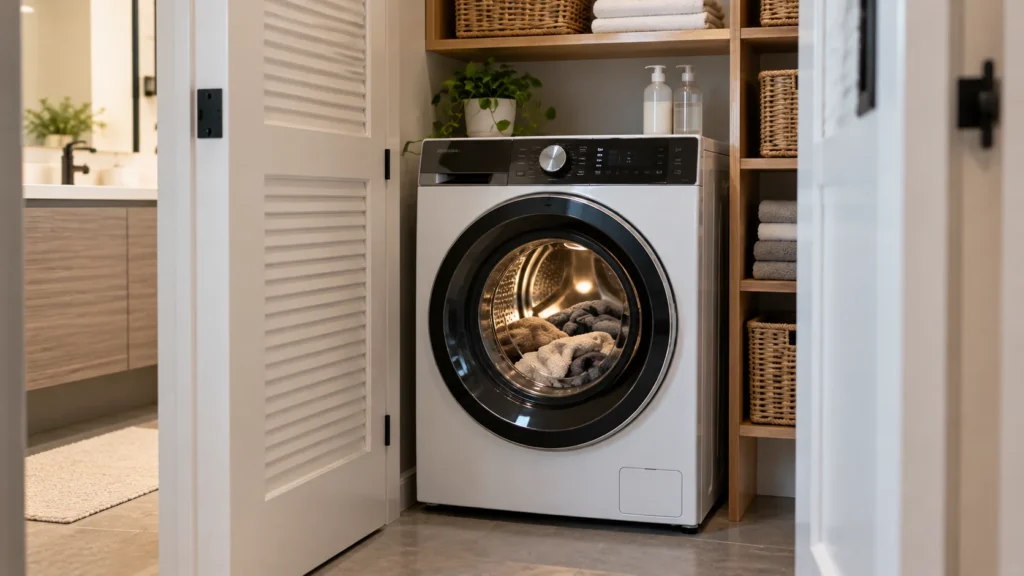
Ventless designs can be especially useful when there is no conventional dryer exhaust duct. However, the appliance still needs the appropriate plumbing, electrical connection, ventilation clearance where specified, drainage and installation space.
Before buying, measure:
- Available width
- Available depth
- Available height
- Door clearance
- Hose and connection space
- Clearance around the appliance
- Route for delivery and installation
Never rely on the advertised exterior dimensions alone. Installation clearances can require additional space.
Jump into Other Related Article
- How to Remove Peanut Butter Stains | Easy Ways to Clean Clothes, Fabric & More
- How to Remove Coffee Stains | Easy Methods for Clothes, Teeth, Carpet & More
- How to Remove Beet Stains | Easy Ways to Clean Clothes, Carpet, Skin & More
How to Read All-in-One Washer Dryer Reviews
When looking through all in one washer and dryer reviews, avoid judging a model solely by its star rating.
Look for recurring comments about:
- Washing performance
- Drying performance
- Actual cycle duration
- Noise
- Vibration
- Ease of cleaning
- Lint management
- Odor
- Reliability
- App connectivity
- Customer service
- Installation
- Repair experiences
Professional testing can be particularly useful because it compares appliances using controlled conditions. Consumer Reports, for example, evaluates combo machines for washing and drying performance, efficiency, noise, fabric gentleness and convenience.
Retailer reviews can add useful real-world information, but individual experiences should not automatically be treated as proof that every unit will behave the same way.
Common Mistakes to Avoid When Buying an All-in-One Washer Dryer
A few mistakes can lead to disappointment even when the appliance itself works as designed.
Choosing Only by Price
The cheapest appliance may not provide the capacity, drying technology or service support you need.
Ignoring Drying Time
This is perhaps the biggest mistake. A shopper who expects a combo to dry clothes as quickly as a conventional dryer may be surprised.
Overlooking Drying Capacity
Always check whether the maximum wash load can also be dried in the same cycle.
Assuming Ventless Means Installation-Free
Ventless does not mean the appliance can be installed anywhere without requirements. Water, drainage, electricity and clearance requirements still apply.
Buying Based Only on Brand
A Samsung, LG, GE, Whirlpool, Bosch or Maytag name does not tell you everything about a specific appliance. Model-level specifications matter.
Ignoring Maintenance
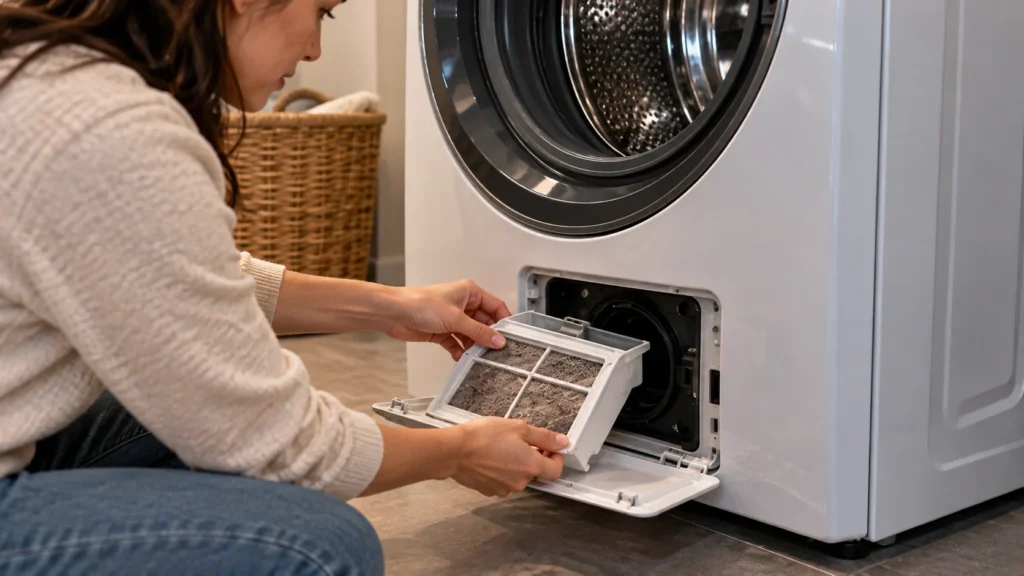
Filters, gaskets, dispensers and cleaning cycles can affect long-term performance. Follow the owner’s manual for the exact maintenance schedule.
Is an All in One Washer Dryer Worth It?
An all in one washer dryer can make sense when space, convenience and simplified laundry handling are major priorities. It is particularly attractive when you want one appliance instead of two, do relatively manageable laundry volumes, or cannot easily install a conventional dryer vent.
It may be less suitable for households that need to process many loads quickly. Because the same drum handles washing and drying, you cannot normally start washing another load while the first one is drying. Consumer Reports highlights this as one of the major limitations of combo machines.
The best approach is therefore to compare your laundry routine with the machine’s actual capabilities. If you typically run one load at a time and value convenience, an all-in-one configuration may fit naturally into your routine. If your priority is maximum laundry throughput and rapid drying, a separate washer and dryer may provide a different workflow.
Final Buying Checklist
Before purchasing an all-in-one washer dryer, use this checklist:
- Check the exact model number.
- Confirm washing and drying capacities separately.
- Compare complete wash-and-dry cycle times.
- Identify whether the unit is vented or ventless.
- Check electrical requirements.
- Confirm water and drainage requirements.
- Measure the available installation space.
- Check door and delivery clearance.
- Review maintenance requirements.
- Research independent washing and drying tests.
- Read customer reviews for recurring issues rather than isolated complaints.
- Compare warranty and local service availability.
- Consider whether you regularly need to wash multiple loads consecutively.
- Compare energy-use information for the exact model.
- Make sure the appliance’s drying capacity matches your typical laundry loads.
Conclusion
An all in one washer dryer brings washing and drying together in one appliance, making it an appealing option for compact homes, apartments, laundry closets and households that value a simpler laundry routine. The biggest practical advantages are the reduced footprint and the ability to complete a wash-and-dry cycle without transferring wet clothes. Ventless heat-pump designs can also provide flexible installation and energy-efficiency benefits, although drying can take substantially longer than conventional drying.
Before choosing the best all in one washer dryer for your home, compare the exact model’s capacity, drying system, cycle times, installation requirements, maintenance needs and independent reviews. Samsung, LG, GE, Whirlpool and other manufacturers offer different approaches, so model-specific specifications matter more than the brand name alone. For shoppers who prioritize space and convenience, an all-in-one machine can be a practical solution; for high-volume laundry households, the longer drying cycles and inability to wash and dry separate loads simultaneously deserve careful consideration.
1. What is an all in one washer dryer?
An all in one washer dryer is a single appliance that combines a washing machine and dryer. It can wash and dry clothes in the same drum, eliminating the need to transfer wet laundry between separate appliances.
2. Are all-in-one washer dryers ventless?
No. All-in-one machines can be vented or ventless depending on the model. Many modern combo machines use ventless condensation or heat-pump drying, but the manufacturer’s specifications should be checked before installation.
3. How long does an all in one washer dryer take to dry clothes?
Drying time varies by model, load size, fabric and technology. Some tested combo machines have taken several hours to dry a load, so buyers should check independent test results and manufacturer cycle information rather than assuming conventional dryer speeds.
4. Can an all in one washer dryer wash and dry at the same time?
It can wash and then dry the same load automatically, but a single-drum combo generally cannot wash one load while simultaneously drying another load. This is an important difference from having separate washer and dryer appliances.
5. Is an all-in-one washer dryer good for a small apartment?
It can be a practical option because one appliance performs two functions and some ventless models do not require a conventional dryer exhaust duct. However, plumbing, electrical, drainage and clearance requirements still need to be satisfied.
6. What brands make all in one washer dryer combos?
Brands represented in the current all-in-one market include Samsung, LG, GE, Whirlpool and other manufacturers. Retail listings show multiple brands and both vented and ventless configurations.