
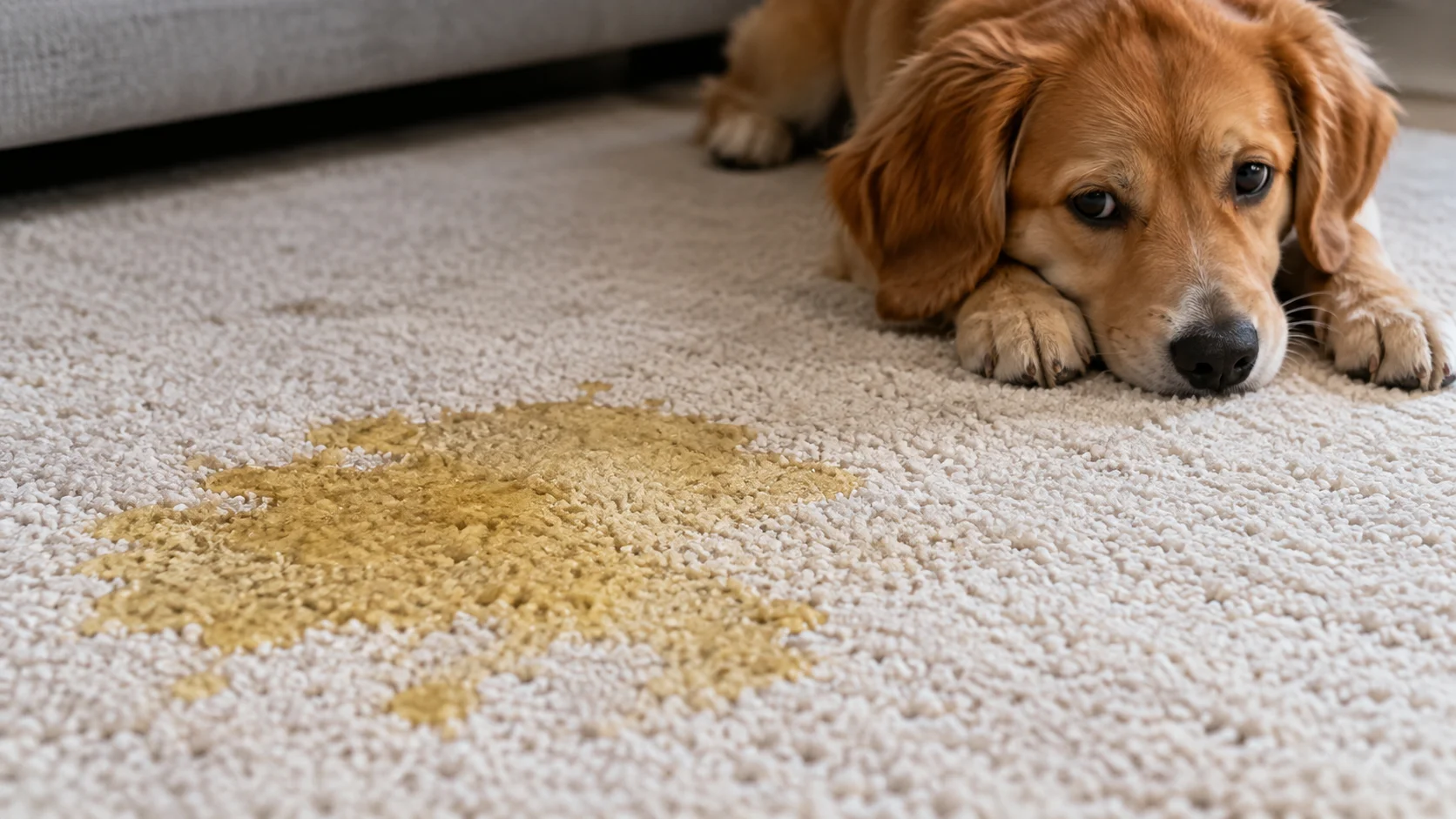
Learning how to remove pet stains naturally can help you deal with accidents from dogs and cats without immediately reaching for harsh cleaning products. Fresh urine, vomit, feces, and other pet messes should be treated as soon as possible because moisture and odor can penetrate carpet, upholstery, bedding, and flooring. Quick absorption is particularly important with urine because lingering odor can encourage a pet to return to the same spot.
Common household ingredients such as baking soda and diluted white vinegar can be useful for some fresh, mild messes, but they are not a universal replacement for purpose-made pet cleaners. Veterinary guidance specifically recommends enzymatic cleaners for urine or fecal deposits when residual odor remains, while natural DIY methods are better viewed as simple options for appropriate surfaces rather than guaranteed solutions.
How to Remove Pet Stains Naturally
The first step is always to remove as much of the mess as possible before applying any cleaning solution. For a fresh urine accident, place absorbent paper towels or clean cloths over the area and press down to draw out the liquid. Avoid vigorous rubbing because it can spread the contamination farther into carpet or fabric.
Once most of the moisture has been absorbed, a small amount of cool water can help flush remaining residue from suitable washable surfaces. Blot the water back out rather than saturating the area. For mild odors, baking soda can be useful as an absorbent deodorizing step, but it needs to be completely removed afterward.
If the stain or smell remains, especially with urine, a pet-specific enzymatic cleaner may be more effective than continuing to layer household ingredients. Enzymatic products break down components of urine and feces rather than simply covering the odor.
15-Step Natural Pet-Stain Cleaning Method
For a fresh accident on a suitable washable or carpeted surface, use this basic sequence:
- Remove your pet from the area temporarily.
- Pick up solid waste carefully with paper towels.
- Blot fresh urine immediately.
- Press rather than scrub the affected area.
- Continue blotting until very little moisture transfers.
- Rinse a washable surface with a small amount of cool water.
- Blot the rinse water thoroughly.
- Test any DIY solution in an inconspicuous location.
- Use diluted white vinegar only when the surface is compatible.
- Apply baking soda separately as an odor-absorbing step when appropriate.
- Allow the area to dry completely.
- Vacuum up all loose baking soda.
- Inspect the area for remaining discoloration.
- Repeat a suitable treatment if necessary.
- Use an enzymatic pet cleaner if urine or fecal odor remains.
The Humane Society of the United States recommends absorbing as much urine as possible, rinsing the accident area with clean cool water, blotting it dry, and using enzymatic cleaning when washing alone does not eliminate the soiling.
How to Remove Fresh Pet Urine Stains Naturally
Fresh urine is generally easier to handle because it has not had as much time to penetrate and dry. Start by placing several layers of paper towels over the wet area and pressing firmly. Replace saturated towels with dry ones until you have extracted as much liquid as possible. The AKC recommends this absorb-and-blot approach for fresh dog urine on carpet and fabric.
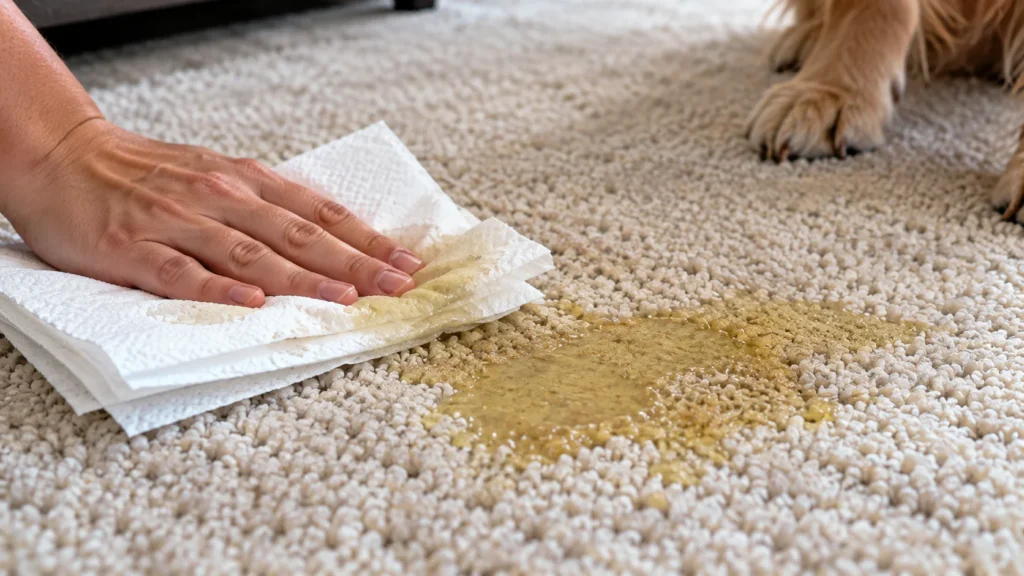
After extraction, lightly rinse the area with cool water if the material permits it, then blot again. This helps remove some remaining urine rather than simply leaving it underneath a layer of deodorizer.
For a mild odor, baking soda can be used after most of the moisture has been removed. The AKC suggests allowing baking soda to sit on a suitable damp spot and then vacuuming it thoroughly.
How to Remove Dried Pet Urine Stains Naturally
Dried pet stains require more patience because urine can penetrate carpet fibers, padding, upholstery, or flooring. Start by rehydrating the affected area with a controlled amount of water and extracting the moisture afterward. The AKC recommends rinsing and extracting dried dog urine from fabric and carpet rather than simply covering the old mark with deodorizer.
Avoid using steam or high heat on urine-stained carpet. Both the AKC and Humane Society advise against steam cleaning for urine odors because heat can make odor removal more difficult.
If a dried urine stain continues to smell after DIY treatment, an enzymatic pet-stain product is usually the more appropriate next step. Veterinary guidance recommends enzyme-containing products because they can break down urine or fecal residues that continue attracting pets to the same location.
How to Remove Pet Stains from Carpet Naturally
Carpet needs special attention because liquid can move below the visible surface and into the padding. For this reason, simply making the top of the carpet look clean does not always mean the accident has been completely removed.
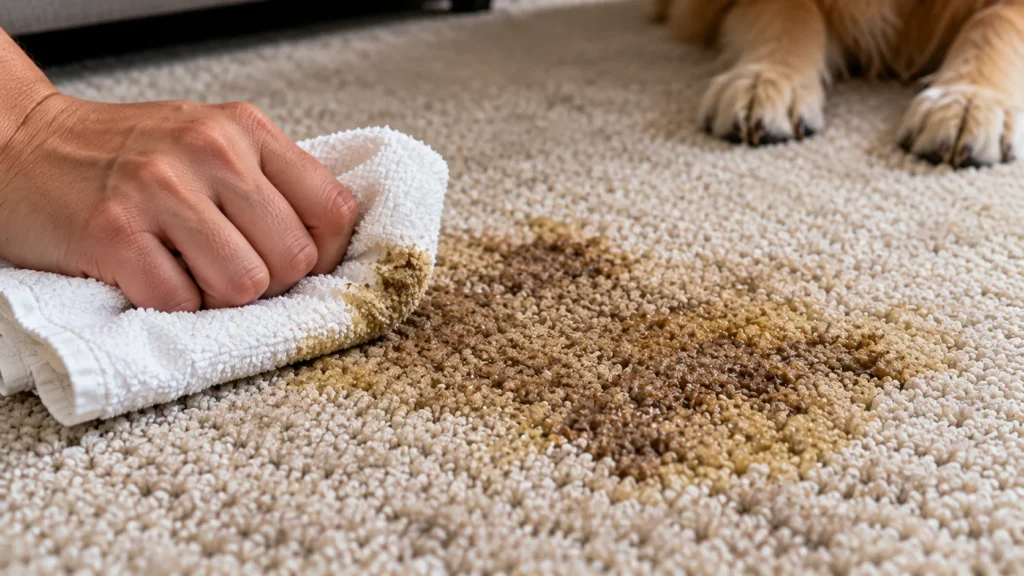
Start by blotting as much liquid as possible. Then use a small amount of cool water and extract it again. The goal is to remove residue without flooding the carpet. The Humane Society recommends soaking up urine with absorbent materials, rinsing the accident zone with clean cool water, and blotting it dry.
For a mild odor, baking soda can be sprinkled over the dry or nearly dry area and vacuumed thoroughly afterward. However, avoid leaving powder buried deep in the carpet pile. If the odor persists, move to an enzymatic cleaner rather than repeatedly adding household ingredients.
How to Remove Dog and Cat Urine Naturally
Dog and cat urine can leave lingering odors that are difficult to eliminate with surface cleaning alone. Pets can detect residual odor even when people can no longer smell it, which is one reason previously soiled areas may attract repeat accidents. Veterinary guidance recommends enzyme-based cleaners for eliminating residual urine and fecal odor.
For a fresh accident, absorb the liquid immediately and rinse with a controlled amount of cool water. Baking soda may help with mild surface odor after most moisture has been removed. Vinegar diluted with water is another commonly used household option, but it should be tested first and should not be treated as a guaranteed urine neutralizer.
If the area continues to smell, especially after drying, an enzymatic cleaner is generally the better choice. “Natural” does not automatically mean more effective, and a pet-safe commercial enzyme product can be appropriate when DIY treatment is insufficient.
How to Use Baking Soda for Pet Stains
Baking soda is popular for natural cleaning because it can absorb odors and is inexpensive. For a fresh urine spot, first remove as much liquid as possible rather than immediately covering a heavily saturated area with powder.

Once the surface is only slightly damp, sprinkle a modest amount of baking soda over the affected area. The AKC recommends allowing it to sit overnight for some mild dog-urine odors and then vacuuming thoroughly.
Baking soda should be viewed mainly as an odor-management step, not a complete solution for deeply absorbed urine. If the smell returns after vacuuming and drying, the source may still be underneath the surface.
How to Use Vinegar for Pet Stains
Diluted white vinegar is another popular household method for pet accidents. The acetic acid in vinegar can help with some household cleaning tasks, and the AKC describes a diluted vinegar-and-water solution as a DIY option for suitable carpet and hardwood situations.
However, cleaning experts caution that vinegar is not a complete stain-removal or sanitizing solution for every type of pet mess. BISSELL’s cleaning chemists specifically note that vinegar does not provide the same stain-lifting chemistry as a purpose-designed carpet formula.
Always test vinegar on an inconspicuous area first. Never combine vinegar with chlorine bleach or other incompatible cleaning chemicals.
Jump into Other Related Article
- How to Clean Stainless Steel Sink | Stains, Hard Water, Rust & Scratches
- How to Remove Coffee Stains | Easy Methods for Clothes, Teeth, Carpet & More
- How to Remove Stains from Carpet | Complete Guide for Coffee, Pet, Wine, Urine & More
How to Remove Pet Stains from Hardwood Floors
Hardwood requires quick action because urine can seep into seams and unfinished areas. Begin by pressing paper towels or a clean cloth onto the accident and replacing them until most of the liquid is gone. The AKC recommends cleaning hardwood promptly to reduce the risk of absorption and damage.
For a compatible sealed floor, a diluted vinegar-and-water solution may be considered after testing. Apply only enough moisture to clean the area and wipe it away rather than leaving the floor wet.
If urine has penetrated the wood, repeated surface cleaning may not solve the odor. In those cases, a wood-specific cleaner or professional treatment may be necessary.
How to Remove Pet Stains from Upholstery and Furniture
Pet accidents on sofas, chairs, and other upholstery need a controlled approach because excess water can penetrate cushions. First check the furniture’s care label or cleaning code before applying any liquid.
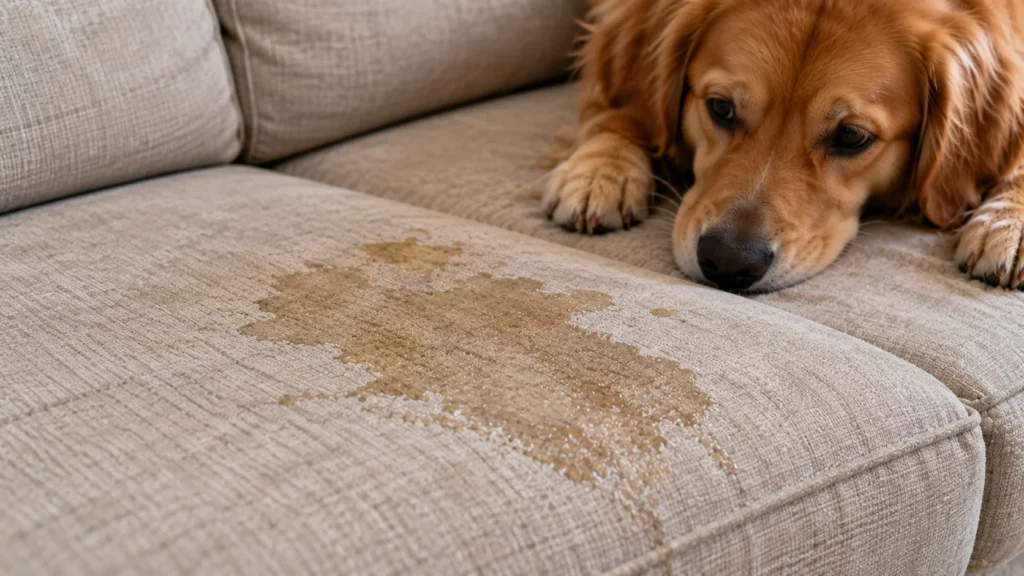
Blot fresh urine or other moisture with clean absorbent towels. If the upholstery permits water-based cleaning, use a small amount of an appropriate solution and blot it back out. Avoid saturating the cushion.
For persistent urine odors, an enzymatic pet cleaner designed for upholstery may be more suitable than repeatedly applying vinegar or baking soda. Professional cleaning may be necessary when the accident has penetrated deep into the cushion.
How to Remove Pet Stains from Bedding and Washable Fabrics
Sheets, blankets, towels, and washable pet bedding can usually be treated more easily than carpet or upholstery. Remove solid material first, then rinse or blot the affected area and launder according to the item’s care instructions.
The Humane Society recommends adding baking soda to detergent for machine-washable items and air-drying when possible. If the stain or smell remains, it recommends washing again with an enzymatic cleaner.
Do not put heavily stained bedding into the dryer before checking the result. If odor remains, repeat an appropriate treatment first.
Natural Methods for Pet Vomit and Feces Stains
Not every pet stain is urine. Vomit and feces require solid material to be removed first, followed by treatment of the remaining residue. Use disposable paper towels or gloves and avoid spreading the material across a larger surface.
For washable fabrics, rinse and launder according to the care label. For carpet or upholstery, blot and use a compatible cleaner rather than soaking the area.
Veterinary guidance recommends enzyme-containing products for urine or fecal deposits when residual odor remains, so a natural household ingredient should not be considered sufficient in every situation.
Natural Pet-Stain Cleaning Mistakes to Avoid
Natural cleaning does not mean that every household ingredient is automatically safe for every surface or pet. Avoid these common mistakes:

- Do not rub a fresh urine stain aggressively.
- Do not leave urine sitting for hours if you can clean it immediately.
- Do not flood carpet with water.
- Do not oversaturate upholstery.
- Do not use steam on urine-stained carpet.
- Do not mix vinegar with chlorine bleach.
- Do not assume baking soda removes deeply embedded urine.
- Do not rely on fragrance to cover pet odors.
- Do not skip a hidden-area test.
- Do not use hydrogen peroxide without checking colorfastness.
- Do not use essential oils simply because they are “natural.”
- Do not allow pets to lick wet cleaning products.
- Do not leave baking soda where pets can ingest it.
- Do not repeatedly layer different cleaning chemicals.
- Do not ignore persistent repeat accidents.
The AKC specifically cautions that essential oils can be harmful to pets if used improperly, while its DIY cleaning guidance recommends testing peroxide because it can discolor some carpets.
How to Prevent Pet Stains from Coming Back
Cleaning the visible stain is only part of the solution. If urine odor remains, pets may continue returning to the same location. VCA notes that dogs and cats can be attracted to previously soiled areas and recommends removing residual odor thoroughly.
Clean accidents promptly, wash pet bedding regularly, and restrict access to a recently cleaned area until it is completely dry. If accidents suddenly become frequent in a previously house-trained pet, do not assume it is simply a cleaning or behavior problem. VCA recommends veterinary evaluation when house-soiling begins suddenly because medical problems can contribute to inappropriate elimination.
Conclusion
The most practical way to remove pet stains naturally is to act quickly, absorb as much of the mess as possible, use controlled amounts of water, and choose a household treatment that is appropriate for the surface. Baking soda can help with mild odors, while diluted vinegar can be useful for some compatible surfaces, but neither should be treated as a guaranteed solution for deeply absorbed pet urine.
For persistent urine or fecal odors, veterinary guidance supports enzymatic cleaners because they break down odor-causing residues rather than simply masking them. If a stain has penetrated carpet padding, upholstery, or wood, or if repeated accidents continue, professional cleaning or veterinary advice may be appropriate.
What is the best natural way to remove pet stains?
For a fresh accident, blot as much liquid as possible, rinse suitable surfaces with a small amount of cool water, and blot again. Baking soda can help with mild odors after most moisture has been removed.
Does baking soda remove pet urine stains?
Baking soda can help absorb odors, but it may not completely remove deeply absorbed urine. If odor remains after drying and vacuuming, an enzymatic pet cleaner is generally more appropriate.
Can vinegar remove pet urine odor?
Diluted vinegar is a commonly used DIY option, but its effectiveness varies by surface and stain. It should not be considered a guaranteed replacement for an enzymatic cleaner.
How do you remove old pet urine stains from carpet?
Rehydrate and extract the affected area carefully, avoiding steam or excessive heat. If the odor remains, use an enzymatic pet-stain cleaner according to its label or consider professional carpet cleaning.
Is hydrogen peroxide safe for pet stains?
Hydrogen peroxide can help with some stains, but it can also bleach or discolor carpet and fabric. Always test an inconspicuous area first, and keep pets away from wet cleaning solutions.
Can I use natural cleaners around my dog or cat?
A household ingredient being natural does not automatically make every application safe. Use products according to their intended purpose, prevent pets from licking wet cleaning solutions, ventilate the area, and avoid essential oils unless you have verified their safety for the specific animal.
Why does my pet keep returning to the same stained area?
Residual urine or fecal odor can remain even when a spot looks clean to people. Dogs and cats can detect odors that humans cannot, which is why thorough odor removal is important.
Should I use a steam cleaner on pet urine?
It is generally better to avoid steam on urine-stained carpet. The AKC and Humane Society both advise against steam cleaning for urine odors because heat can make the odor more difficult to remove.
When should I call a professional cleaner?
Consider professional cleaning when stains are extensive, repeatedly return, have penetrated carpet padding or upholstery, or remain after appropriate home treatment. The AKC specifically recommends professional help when persistent odors remain despite repeated cleaning.