

Finding the best stain remover for clothes is not really about choosing one product that works perfectly on every mark. Different stains have different compositions, so the most effective treatment for grease may not be the right choice for ink, blood, rust, wine, or baby-food stains. The American Cleaning Institute (ACI) recommends identifying the stain first, pretreating it, and then laundering according to the garment’s care instructions.
For everyday laundry, useful choices include liquid laundry detergent, enzyme-based stain removers, oxygen-based products, sprays, gels, sticks, and selected DIY treatments. Recent Good Housekeeping testing of more than 40 laundry stain removers found meaningful differences between formulas depending on the stains being tested, which reinforces the idea that the best stain remover depends on the job.
What Is the Best Stain Remover for Clothes?
The best stain remover for clothes should be chosen according to the stain, fabric, color, and how long the stain has been sitting. A good pretreatment should loosen or break down the stain without unnecessarily damaging the garment. ACI recommends treating stains as early as possible because older stains are generally harder to remove.
Liquid laundry detergent is a useful all-purpose starting point, particularly because it can be applied directly to many washable stains. Enzyme-containing products are particularly useful for certain protein-based stains such as blood, dairy, egg, and some bodily-fluid stains. Oxygen bleach can be useful for many stubborn stains when it is safe for the fabric.
There is also no need to automatically choose the strongest available product. A gentle treatment that is compatible with the garment can be preferable to an aggressive product that risks fading, weakening, or discoloring the fabric.
Best Stain Remover for Different Types of Clothes and Stains
Different stain categories respond to different cleaning approaches. Oil and grease benefit from pretreatment with laundry detergent or a suitable stain remover, while blood should generally be treated with cold water because heat can set it. Ink may require an alcohol-based treatment, while rust needs a fabric-safe rust remover rather than chlorine bleach.
This is why labels such as best grease stain remover for clothes, best ink stain remover for clothes, and best oil stain remover for clothes should be considered separately. The same product may perform very differently across those categories.
Jump into Other Related Article
- How to Clean Stainless Steel Sink | Stains, Hard Water, Rust & Scratches
- How to Remove Coffee Stains | Easy Methods for Clothes, Teeth, Carpet & More
- How to Remove Stains from Carpet | Complete Guide for Coffee, Pet, Wine, Urine & More
Which Stain Remover Should You Choose?
Use the stain and fabric as your starting point rather than choosing solely by product format or advertising claims. These are practical categories to consider:
- Everyday food stains: liquid laundry detergent or prewash stain remover.
- Oil stains: liquid detergent or a dedicated prewash stain remover.
- Grease: detergent-based pretreatment followed by the hottest safe wash.
- Blood: cold-water treatment followed by an enzyme-containing product when appropriate.
- Ink: rubbing alcohol or a suitable ink stain treatment, followed by laundering.
- Wine: cool-water treatment and a suitable prewash stain remover.
- Coffee: cool water followed by detergent or stain remover.
- Grass: an enzyme-containing treatment can be useful.
- Baby food: enzyme-containing stain treatment can be particularly useful.
- Perspiration: stain remover, detergent, or bar soap followed by laundering.
- Deodorant marks: detergent for light marks and oxygen bleach when appropriate for heavier stains.
- Rust: use a fabric-specific rust remover; chlorine bleach can intensify rust discoloration.
- Old stains: pretreat or soak with an appropriate stain remover or enzyme product.
- White clothing: oxygen or chlorine bleach may be options when the care label permits.
- Colored clothing: choose a color-safe product and test for colorfastness first.
ACI specifically notes that rust stains should not be treated with sodium hypochlorite bleach because it can intensify the discoloration.
Best Stain Remover Spray for Clothes
A stain remover spray for clothes is convenient because it can be applied directly to an isolated mark before washing. Sprays are particularly useful for shirts, children’s clothing, collars, cuffs, and other areas where stains occur frequently.
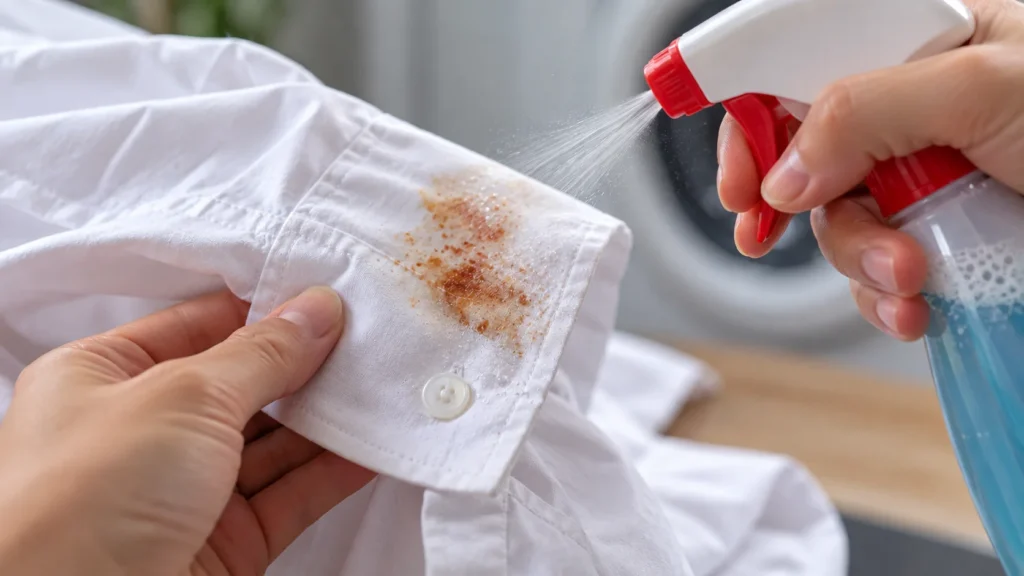
Recent Good Housekeeping testing found that spray, gel, powder, stick, foam, and liquid formats can all have different advantages. Its 2026 testing included more than 40 stain removers and assessed effectiveness, ease of use, directions, and safety information.
When choosing the best stain remover spray for clothes, look for a formula that identifies the types of stains it is designed to treat and clearly lists compatible fabrics. Apply only as directed, give the product its recommended dwell time, and wash according to the garment label.
Best Stain Remover for White Clothes
White garments provide more opportunities for stain treatment, but they are not automatically safe for every bleaching product. The American Cleaning Institute explains that chlorine bleach can work on many suitable whites and colorfast washable fabrics, while oxygen bleach is generally gentler and can be used on washable fabrics according to product directions.
For best stain remover for white clothes, an oxygen-based product can be useful for many stubborn stains without relying on chlorine. For garments that are specifically bleach-safe, chlorine bleach may be an option when used exactly as directed.
Never assume that a white garment can tolerate bleach. Wool and silk, for example, should not be treated with chlorine bleach. Always read both the garment label and stain-remover label first.
Best Stain Remover for Colored Clothes
Colored clothing requires more caution because a stain remover can potentially affect the original dye. Before using a new product, ACI recommends testing it on an inconspicuous area to check colorfastness.
For stain remover for colored clothes, choose a product specifically labeled as color-safe. Oxygen-based products can be appropriate for many washable colored garments, but the manufacturer’s instructions still matter.
Avoid automatically using chlorine bleach on colored clothing. If the product is too aggressive, you could remove both the stain and some of the garment’s original color.
Best Stain Remover for Baby Clothes and Kids Clothes
Baby and toddler clothing often has food, milk, formula, grass, dirt, and bodily-fluid stains. For best stain remover for baby clothes, the important considerations are fabric compatibility, effective stain removal, and following the care label rather than simply choosing the strongest formula.
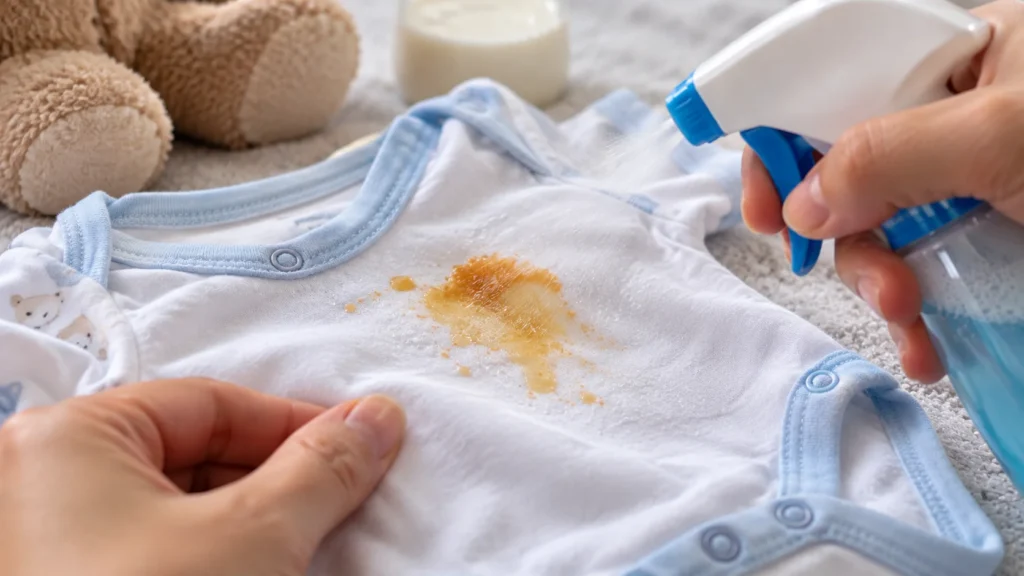
ACI specifically recommends enzyme-containing products for baby-formula stains and other protein-based stains, with soaking particularly useful for older marks.
For best stain remover for kids clothes, enzyme-containing products can also be useful for food and grass stains. Wash children’s garments thoroughly after pretreatment and use only products appropriate for the fabric and the manufacturer’s instructions.
Best Grease and Oil Stain Remover for Clothes
Oil and grease are different from many water-based stains because they are oily soils. ACI recommends pretreating light grease and oil stains with a prewash stain remover, liquid laundry detergent, or liquid detergent booster, followed by laundering at the hottest temperature safe for the fabric.
This makes a good oil stain remover for clothes particularly useful when it can be applied directly before washing. For heavier grease stains, placing the stained area facedown on clean paper towels and treating from the back can help transfer the oily material away from the fabric.
Do not put a greasy garment into the dryer before checking the stain. If the mark remains, pretreat and wash again rather than applying additional heat.
Best Enzyme Stain Remover for Clothes
An enzyme stain remover for clothes can be particularly useful for stains containing proteins, fats, or carbohydrates. ACI recommends enzyme-containing products for stains such as baby formula, dairy, egg, blood, bodily fluids, fruit, and some grass stains.
Enzymes are not a universal answer for every stain, however. Ink, rust, and some chemical or dye stains require different approaches. This is another reason that choosing a stain remover according to the stain type is more reliable than using one product for everything.
Best Homemade and DIY Stain Remover for Clothes
A homemade stain remover for clothes can be useful for simple laundry problems, but DIY recipes should not automatically be considered safer or more effective than tested commercial products. Common household ingredients include baking soda, white vinegar, and liquid laundry detergent, but each has limitations.

For many ordinary washable stains, liquid laundry detergent itself is a practical at-home pretreatment. ACI recommends liquid detergent or a paste made from powdered detergent and water as pretreatment options.
If you use a DIY solution, test it first and avoid mixing incompatible chemicals. In particular, never mix chlorine bleach with ammonia or acidic products such as vinegar.
Best Natural and Non-Toxic Stain Remover for Clothes
People searching for a natural stain remover for clothes or non toxic stain remover for clothes should look beyond marketing language and check the actual product label. “Natural” does not automatically mean that a product will remove a particular stain effectively, while “chemical” does not automatically mean unsafe when a product is correctly formulated and used as directed.
For a lower-ingredient approach, liquid laundry detergent and carefully selected oxygen-based products can be practical options depending on the stain. For sensitive households, fragrance-free and dye-free formulas may also be worth considering when available and appropriate.
The most important safety step is to follow the label and garment-care instructions rather than assuming that a homemade or plant-based ingredient is harmless on every fabric.
Best Stain Remover for Set-In and Old Stains
Best stain remover for clothes that have been dried is a particularly difficult category because heat can make some stains much harder to remove. ACI recommends checking freshly washed clothes before putting them in the dryer and repeating pretreatment and washing if a stain remains.
Old stains can sometimes respond to soaking or enzyme-containing products, but results depend heavily on the stain and fabric. Good Housekeeping also notes that certain stainsb including rust, dried paint, ink, and some dyes may be impossible to remove completely.
For a set-in stain, apply a suitable pretreatment, allow it to work according to the label, wash appropriately, and inspect the garment before drying. Repeating a compatible treatment is preferable to immediately increasing the chemical strength.
How to Use Stain Remover Correctly
Even the good stain remover for clothes can perform poorly if it is applied incorrectly. Start by identifying the stain and reading the garment label. Then test the product on a hidden seam or another inconspicuous area before treating the visible stain.
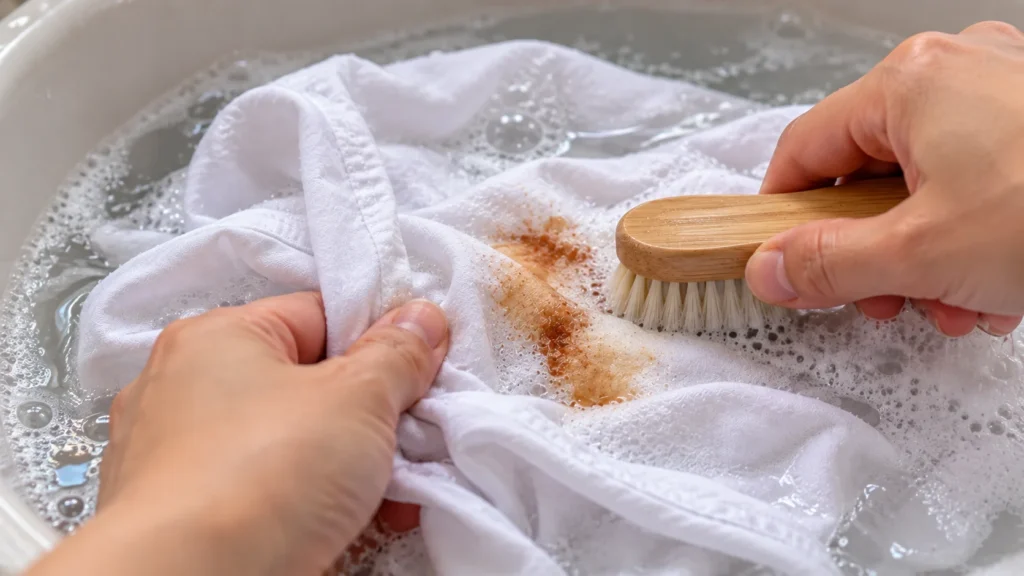
Pretreating before washing generally gives the product more opportunity to work. After washing, inspect the garment while it is still wet. If the stain remains, repeat the treatment instead of putting the garment into the dryer. ACI specifically warns that drying can permanently set some stains.
For older stains, soaking may help when the product instructions recommend it. Never exceed the manufacturer’s recommended concentration, soaking period, or fabric compatibility.
Common Stain Remover Mistakes to Avoid
Choosing a strong product is only part of successful stain removal. The wrong technique can spread a stain or damage the fabric.
- Do not rub every stain aggressively.
- Do not skip the garment care label.
- Do not skip a colorfastness test.
- Do not mix different stain removers.
- Do not mix chlorine bleach with ammonia.
- Do not mix chlorine bleach with vinegar.
- Do not use chlorine bleach on unsuitable fabrics.
- Do not put a visible stain into the dryer.
- Do not use hot water automatically.
- Do not assume every stain is protein-based.
- Do not treat rust with chlorine bleach.
- Do not oversoak delicate fabrics.
- Do not use excessive stain remover.
- Do not leave products on fabric longer than the label permits.
- Do not assume an old stain will disappear after one treatment.
ACI emphasizes identifying the stain, treating it promptly, testing products for colorfastness, following garment-care instructions, and repeating treatment when necessary.
Conclusion
The best stain remover for clothes depends on what caused the stain, what the garment is made from, and whether the mark is fresh or set in. Liquid detergent is a useful starting point for many everyday stains, while enzyme products can be especially helpful for protein-based stains and oxygen-based products can provide another option for many stubborn marks.
For oil, grease, ink, blood, rust, white clothes, colored clothes, baby clothes, and old stains, choosing a treatment specifically suited to the problem is more reliable than looking for one universal product. Always check the label, test for colorfastness, pretreat promptly, and never dry clothing while a visible stain remains.
What is the best stain remover for clothes?
There is no single stain remover that is best for every type of stain. A good choice depends on the stain, fabric, color, and whether it is fresh or set in. Recent Good Housekeeping testing found substantial differences between stain-removal products depending on the stains tested.
What is the best homemade stain remover for clothes?
Liquid laundry detergent is one of the simplest at-home pretreatment options. ACI also describes detergent paste and certain other treatments for specific stains, but the appropriate method depends on the stain and fabric.
What is the best stain remover for oil on clothes?
A liquid laundry detergent or prewash stain remover is a practical starting point. ACI recommends pretreating oil and grease stains and laundering at the hottest temperature that is safe for the fabric.
What is the best stain remover for white clothes?
Oxygen bleach can be useful for many washable fabrics, while chlorine bleach can be used on appropriate bleach-safe whites according to its label. Wool and silk should not be treated with chlorine bleach.
What is the best stain remover for colored clothes?
Choose a color-safe product and test it on an inconspicuous area before applying it to the visible stain. This helps reduce the risk of fading or dye transfer.
Is an enzyme stain remover good for clothes?
Yes, enzyme-containing stain removers can be particularly useful for protein- and food-based stains such as blood, dairy, egg, baby formula, and some grass stains.
What is the best stain remover for old stains?
Old stains may respond to pretreatment or soaking with a suitable stain remover or enzyme-containing product. However, some stains become extremely difficult or impossible to remove after drying or heat exposure.
Can I use stain remover on baby clothes?
You can use a product that is specifically labeled as suitable for the garment’s fabric and intended use. For baby-formula stains, ACI recommends enzyme-containing products and soaking before laundering.
Should I dry clothes after using stain remover?
Only after checking that the stain has been removed. If a stain remains, pretreat and wash again because dryer heat can set some stains and make them much harder to remove.