Honey is sticky, sugary, and surprisingly difficult to clean once it dries. A fresh spill can usually be removed fairly easily, but dried honey may leave behind a tacky residue that attracts dirt and creates a noticeable mark. The key is to remove as much of the honey as possible before treating the remaining stain.
If you’re wondering how to remove honey stains from clothes, the safest approach is to scrape away excess honey, rinse or pre-treat the area appropriately, and then wash according to the garment’s care label. For carpets and upholstery, the process is different because excessive moisture and aggressive scrubbing can damage fibers or spread the stain. The Carpet and Rug Institute recommends scooping semisolid food spills, blotting rather than scrubbing, and testing carpet-cleaning products before use.
Why Honey Stains Can Be Difficult to Remove
Honey is primarily a concentrated sugar solution, which makes it highly sticky. When fresh honey gets onto fabric, simply wiping it can spread the sticky material across a larger area. Once it dries, the residue becomes harder and may attract dust or other particles.
The first priority is therefore physical removal rather than immediately adding lots of water. Scraping or scooping removes the bulk of the material without forcing it deeper into the fibers.
For washable fabrics, stain-treatment guidance recommends following the garment’s care label and testing cleaning products on an inconspicuous area first. These precautions are particularly important for colored or delicate fabrics.
Carpet requires similar care. The Carpet and Rug Institute specifically advises scooping semisolid food spills and avoiding scrubbing because brushing or aggressive rubbing can damage carpet texture.
How to Remove Honey Stains from Clothes
When honey spills onto a shirt, T-shirt, dress, jeans, hoodie, or other washable garment, start by removing the excess. Use the edge of a spoon or another dull tool to gently lift the honey from the fabric.
After removing the bulk of the spill, rinse or sponge the affected area according to the garment’s care instructions. A suitable liquid laundry detergent or pre-wash stain remover can then be used to treat the remaining discoloration. UGA textile guidance emphasizes reading the care label and pretesting cleaning agents before treating stains.
Don’t automatically use a strong chemical simply because the stain looks stubborn. Different fibers and dyes react differently to cleaning agents, and a product that works on one garment can damage another. If the garment is labeled dry clean only, professional cleaning is generally the safer option.
15-Step Honey Stain Removal Checklist for Fabric
Use these steps as a practical guide for washable clothing while adapting them to the garment’s care label:
- Remove the garment from the affected area if possible.
- Gently scrape off excess honey with a spoon.
- Avoid spreading the honey across clean fabric.
- Do not aggressively rub the sticky spot.
- Check the garment’s care label.
- Test any cleaning product on an inconspicuous area.
- Rinse or sponge the stain as appropriate for the fabric.
- Apply a suitable liquid laundry detergent.
- Use a commercial pre-wash stain remover if appropriate.
- Follow the product’s recommended contact time.
- Wash the garment using its permitted cycle.
- Use the appropriate water temperature for the fabric.
- Inspect the stain before drying.
- Repeat treatment if sticky residue or discoloration remains.
- Air-dry when practical until you are certain the stain has disappeared.
Following the care label is particularly important because stain-removal procedures aren’t universally suitable for every fabric. UGA recommends both checking care instructions and pretesting cleaning agents for colorfastness.
How to Remove Dried Honey Stains
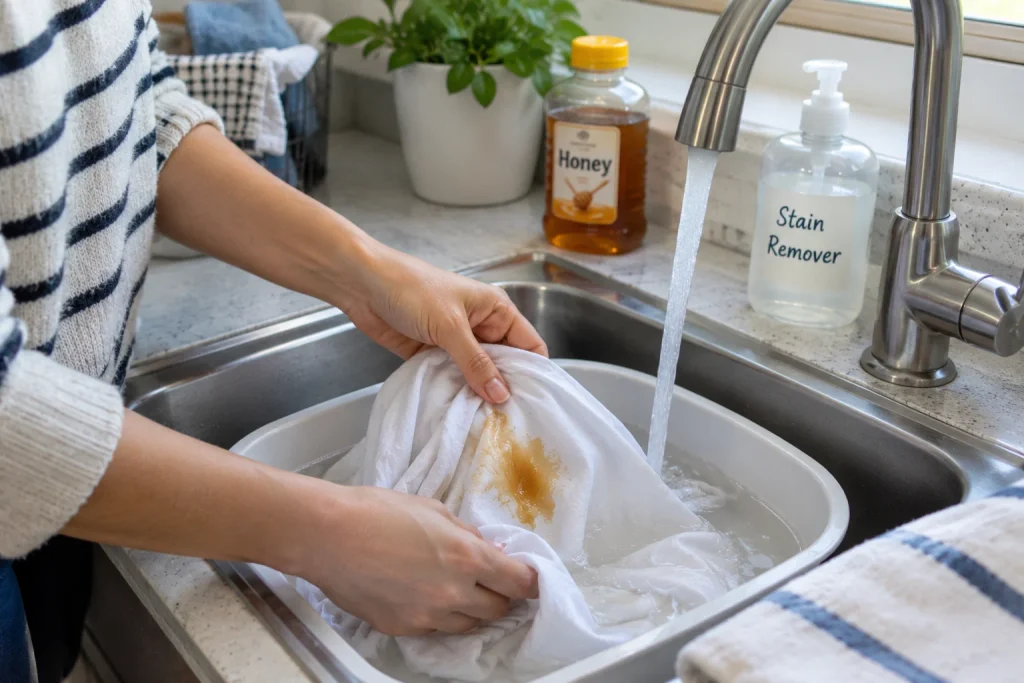
Dried honey can be more frustrating because the sticky material has hardened onto the surface. Instead of immediately scrubbing the area, first loosen the residue carefully.
For washable fabric, gently scrape away hardened honey with a dull edge. You can then use an appropriate stain-treatment product and launder the garment according to its care instructions. If a visible mark remains, repeat the treatment rather than assuming that one washing cycle will remove everything.
Avoid applying unnecessary heat while a stain is still present. Checking the fabric after washing gives you an opportunity to treat any remaining residue before it becomes harder to address.
For carpet, dried pieces can often be carefully removed mechanically before the remaining spot is treated. The Carpet and Rug Institute notes that solid, dried bits can be vacuumed, while semisolids should be scooped up rather than rubbed into the carpet.
How to Remove Honey from Carpet
Carpet needs a controlled approach because honey can work its way between fibers and excessive moisture can create additional problems. Start by removing as much honey as possible with a spoon or other suitable tool.
For any remaining liquid or sticky residue, use a clean white absorbent cloth and blot rather than scrub. Colored towels can potentially transfer dye to damp carpet, so the Carpet and Rug Institute specifically recommends plain white absorbent materials.
Apply a suitable carpet-cleaning product according to its instructions and use only the amount necessary. The Carpet and Rug Institute recommends applying cleaner to a white cloth, working gently from the edges toward the center, and blotting rather than scrubbing.
After treatment, blot away excess moisture. If the carpet remains heavily stained or the material is delicate, consult the carpet manufacturer’s cleaning instructions or a professional cleaner.
How to Remove Honey Stains from Upholstery
Honey on a sofa, chair, mattress, or fabric car seat should be treated carefully because upholstery can contain layers of padding beneath the fabric. Too much liquid can move beyond the visible stain and create moisture-related problems.
Begin by lifting away the excess honey. Don’t spread it by rubbing. Then check the upholstery manufacturer’s cleaning code or care instructions before applying a cleaning solution.
Use a compatible upholstery product sparingly and blot the area with a clean cloth. Avoid soaking the fabric. UGA stain-removal guidance repeatedly warns about excessive moisture when treating upholstered materials because solvents and liquids can affect backing and padding.
For expensive furniture, antique upholstery, or materials such as delicate wool or specialty fabrics, professional cleaning may be preferable to experimentation.
How to Remove Honey from Hard Surfaces
Honey can also end up on countertops, tables, floors, walls, kitchen cabinets, or other hard surfaces. In these situations, the sticky residue is usually easier to remove, but the cleaning method still needs to match the surface.
Start by wiping or scraping away the bulk of the honey. A soft cloth dampened with suitable warm water can then help dissolve remaining sugary residue on compatible washable surfaces.
Avoid flooding unfinished wood, porous materials, or surfaces with vulnerable finishes. If you’re cleaning painted walls or finished furniture, test the cleaning method in a hidden area first.
For specialty materials such as natural stone, delicate finishes, or antique furniture, use the manufacturer’s recommended cleaner rather than relying on a generic homemade solution.
Common Mistakes When Removing Honey Stains
The biggest mistake is rubbing immediately. Honey is sticky, so rubbing can distribute it across the surrounding material and push it deeper into fabric or carpet.
Another problem is using too much water. While water can help with many sugar-based residues, soaking upholstery or carpet can create a larger damp area than the original stain.
Using an untested chemical is another avoidable risk. UGA recommends pretesting cleaning agents on an inconspicuous area and following the material’s care instructions.
You should also avoid combining different cleaning chemicals unless the product instructions specifically allow it. Strong cleaners can damage dyes, fibers, finishes, or carpet backing.
How to Prevent Honey Stains from Becoming Worse
Quick action is usually the easiest way to keep a small honey spill from becoming a difficult stain. The longer sticky food remains on a surface, the more likely it is to collect dirt and become harder to remove.
For carpet, the Carpet and Rug Institute recommends acting quickly, removing semisolid food with a spoon, and blotting rather than scrubbing.
For clothing, keep the stain from being exposed to unnecessary heat until you’ve checked whether it has disappeared. Always follow the garment’s care label before selecting a washing or stain-treatment method.
Conclusion
Knowing how to remove honey stains starts with removing the excess honey without spreading it. On clothes, gently scrape away the residue, use an appropriate pre-treatment, and wash according to the fabric’s care instructions. Dried honey may need repeated treatment, particularly when it has been left on the material for a long time.
For carpet and upholstery, use a gentler approach: scoop or scrape away the bulk, blot rather than scrub, apply a suitable cleaner sparingly, and avoid excessive moisture. Testing cleaning products first and following manufacturer instructions can help protect the material while giving you the best chance of removing the stain.
How do you remove honey stains from clothes?
First scrape away the excess honey without rubbing it into the fabric. Then treat the remaining stain with an appropriate laundry detergent or pre-wash stain remover and wash according to the garment’s care label.
How do you remove dried honey stains?
Gently loosen and remove the hardened honey first. Treat the remaining residue with a suitable cleaning product and repeat the process if necessary rather than aggressively scrubbing the material.
Can honey stains be removed from carpet?
Yes. Scoop away semisolid honey, then blot the remaining area with a clean white cloth and use a suitable carpet-cleaning product according to its instructions. Avoid scrubbing.
Does honey permanently stain clothes?
Honey itself does not necessarily cause a permanent stain, especially when treated promptly. However, the result depends on the fabric, dye, how long the honey remained on the material, and whether the stain was previously exposed to heat or inappropriate cleaning products.